Greater Bird's-foot-trefoil
Greater Bird's-foot-trefoil - Lotus pedunculatus
About 40 or 50 cm in height and with a hollow, more or less erect stem. Flowers yellow or orange-yellow 10 to 18 mm in heads of 5 to 12.
Lotus corniculatus

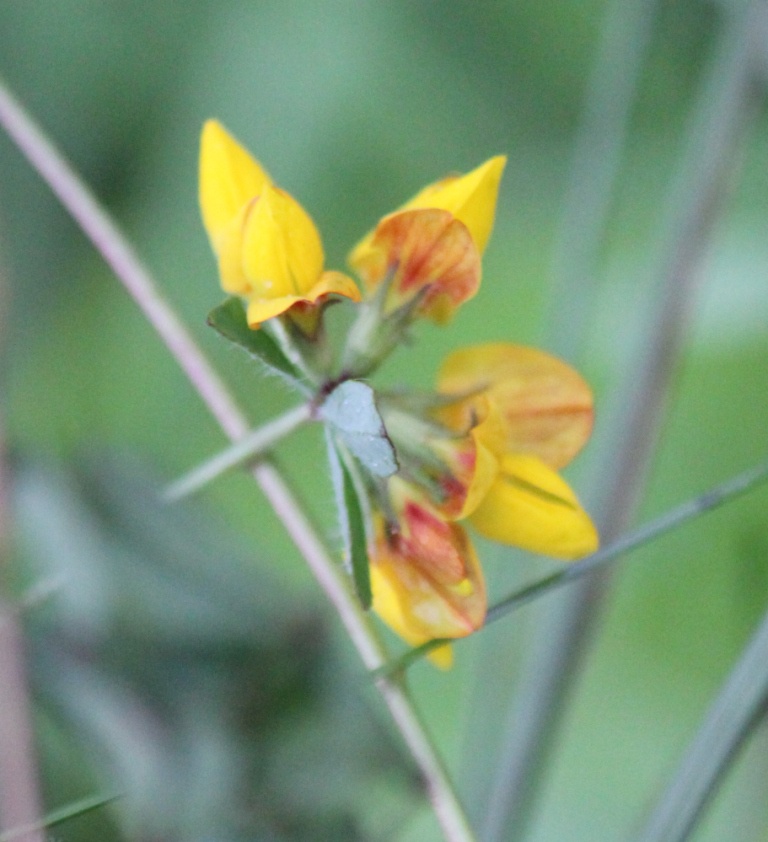
The stems are hollow, and the 2 upper calyx-teeth on the flowers have an acute angle between them (less than a right-angle). It is usually hairy, but glabrous forms exist.
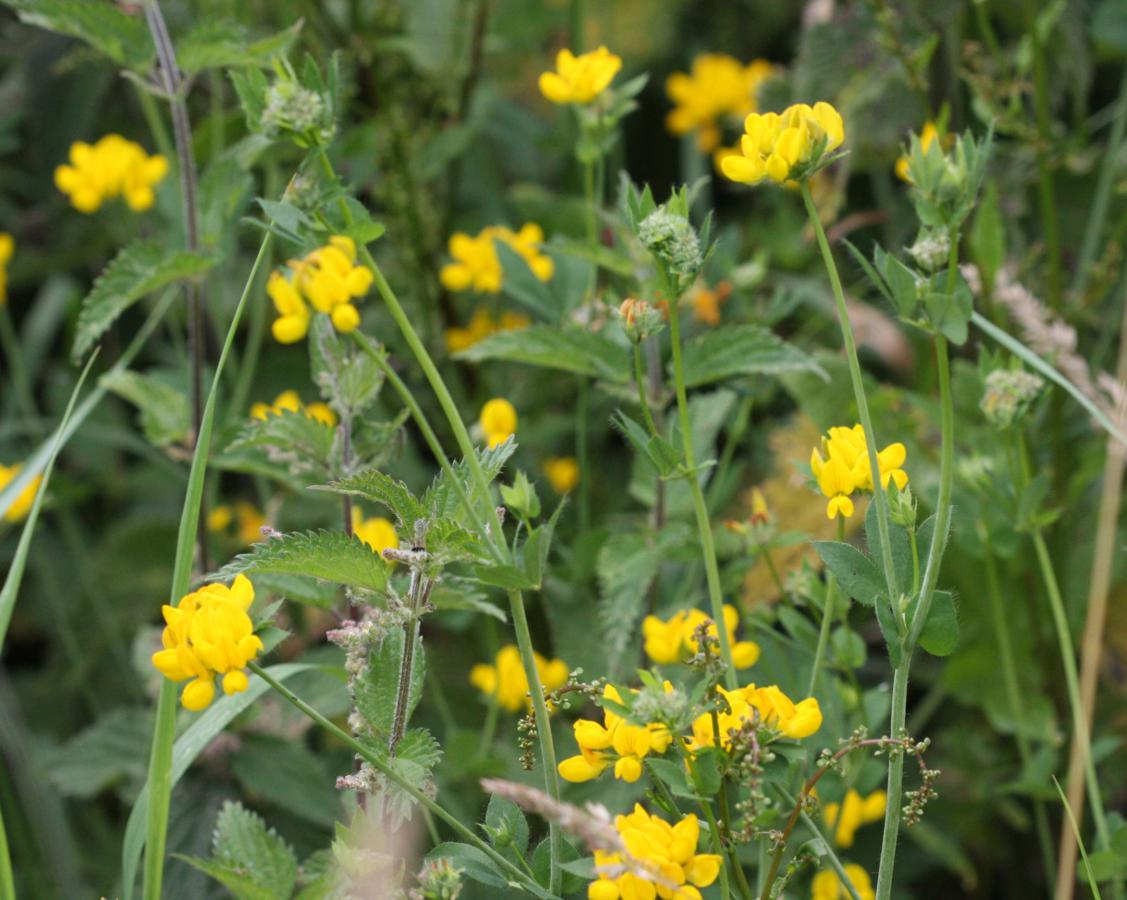
General photo of plant in habitat; close up of flowers showing calyx-teeth from above, and/or hollow stems
Damp pastures wet ditches and other damp places.
June to August.
Perennial.
Fairly frequent throughout Britain.
Fairly frequent in Leicestershire and Rutland. In the 1979 Flora survey of Leicestershire it was found in 308 of the 617 tetrads.
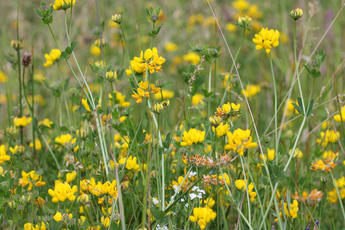 David Nicholls
Ulverscroft
14 July 2011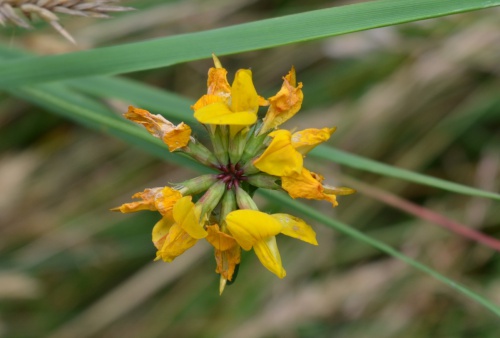 Steve Mathers
Ulverscroft NR
11 August 2017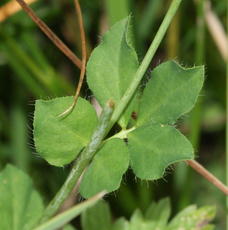 David Nicholls
Cloud Wood
07 July 2011
stem leaves Wet Ditch in 'The Park' Field Sapcote SP 4851 9330 (taken 10.8.2008),,.JPG) Graham Calow
Graham Calow
The Park Field, Sapcote
10 August 2008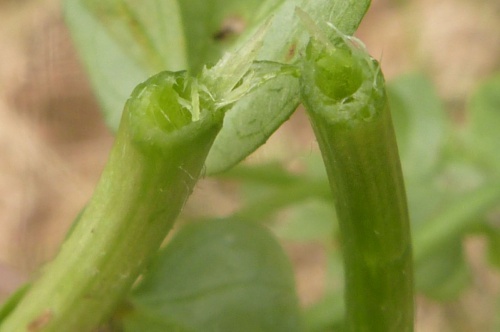 Graham Calow
High Cross Road, Claybrooke Magna
11 July 2016
hollow stems
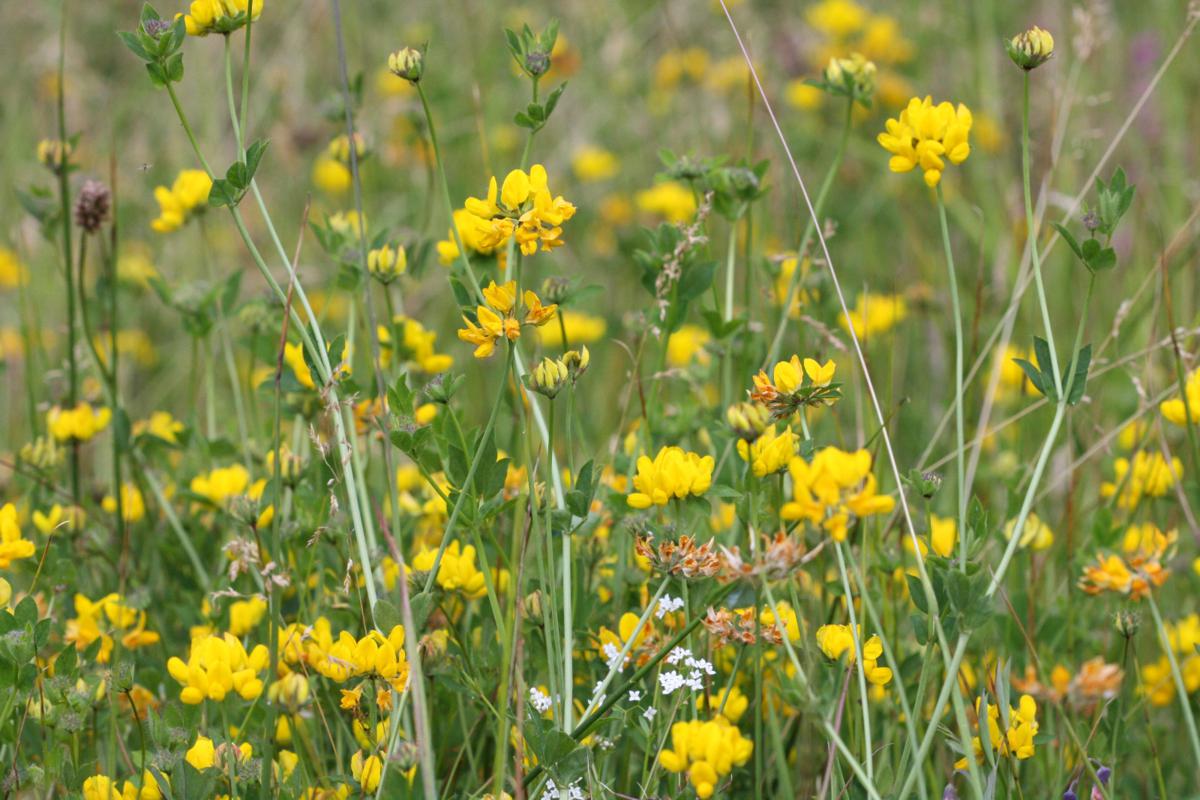
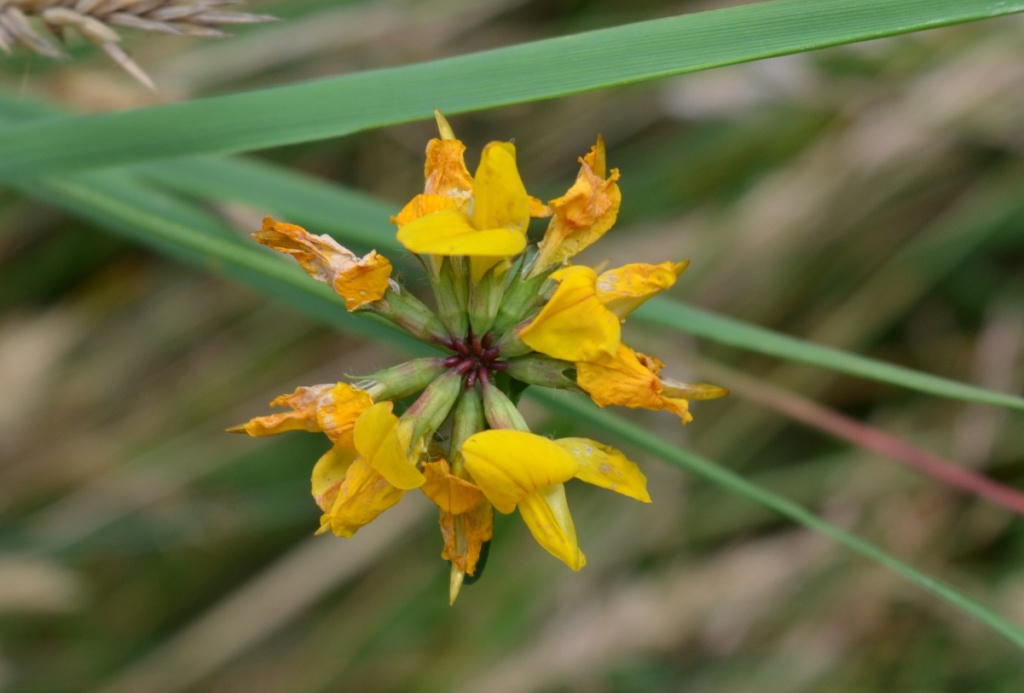
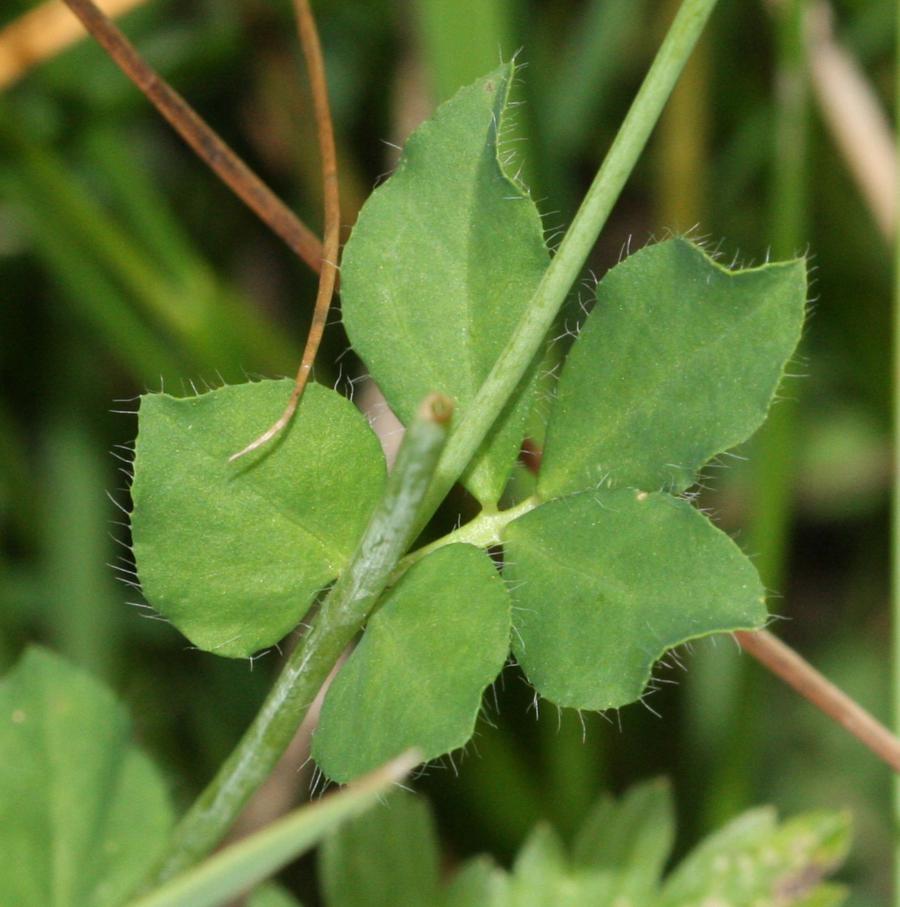
 Wet Ditch in 'The Park' Field Sapcote SP 4851 9330 (taken 10.8.2008),,.JPG)
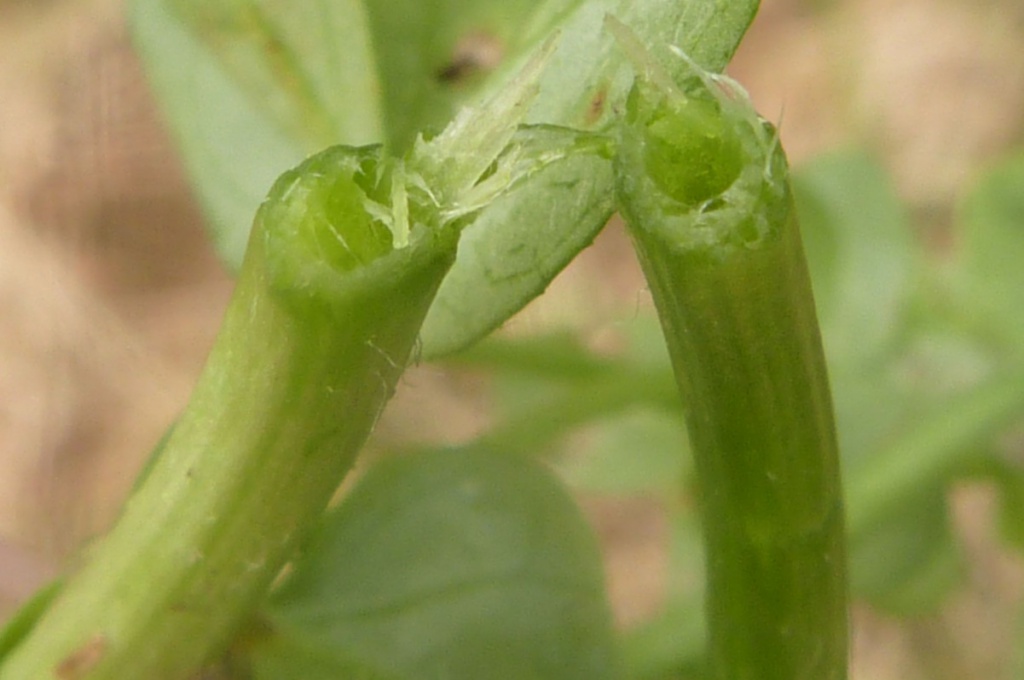
Leicestershire & Rutland Map
Enter a town or village to see local records
MAP KEY:
Yellow squares = NBN records (all known data)
Coloured squares = NatureSpot records: 2025+ | 2020-2024 | pre-2020
UK Map
Additional images
 Wet Ditch in 'The Park' Field Sapcote SP 4851 9330 (taken 10.8.2008)..JPG)
 Wet Ditch in 'The Park' Field Sapcote SP 4851 9330 (taken 19.9.2008).JPG)
All NatureSpot records
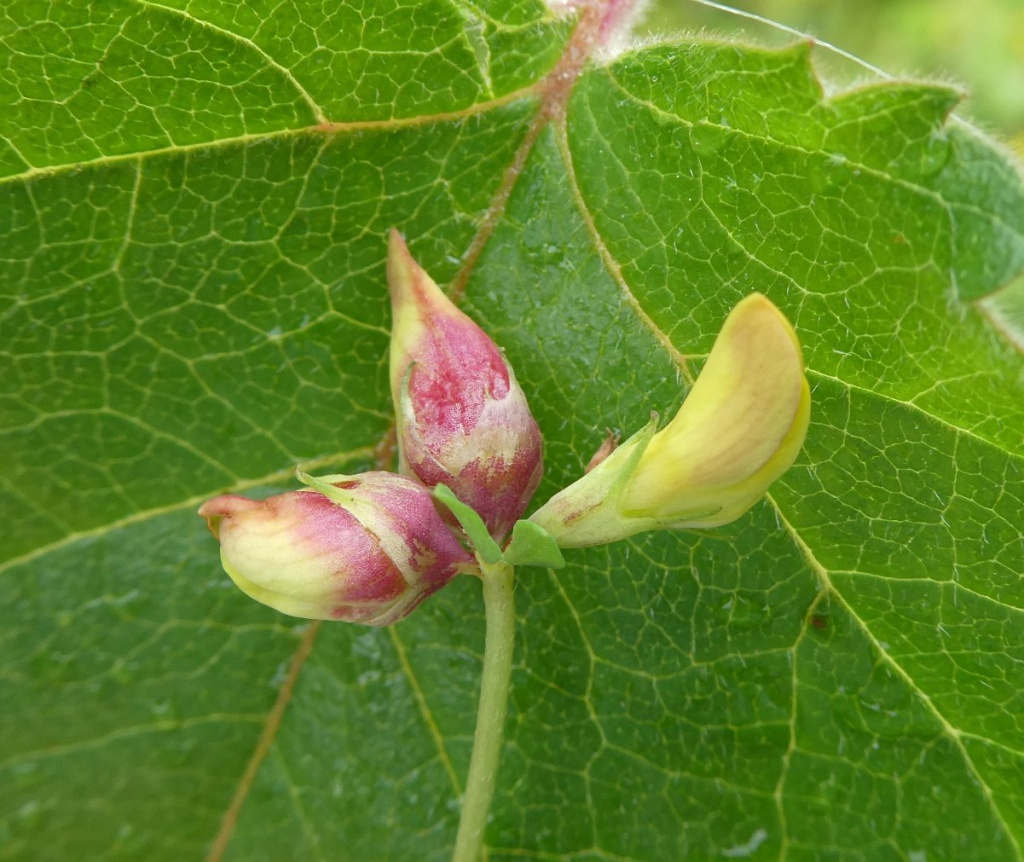
Contarinia loti
The larvae of the gall midge Contarinia loti gall members of the Fabaceae family of plants, particularly causing galls in the flower buds of Bird's-foot-trefoils. The buds may become swollen, up to 12mm long, distorted or remaining closed. The galls are yellow-green and first becoming red later. The galls may contain one, or more, yellow or white larvae which can jump.