Grasshopper Warbler
Grasshopper Warbler - Locustella naevia
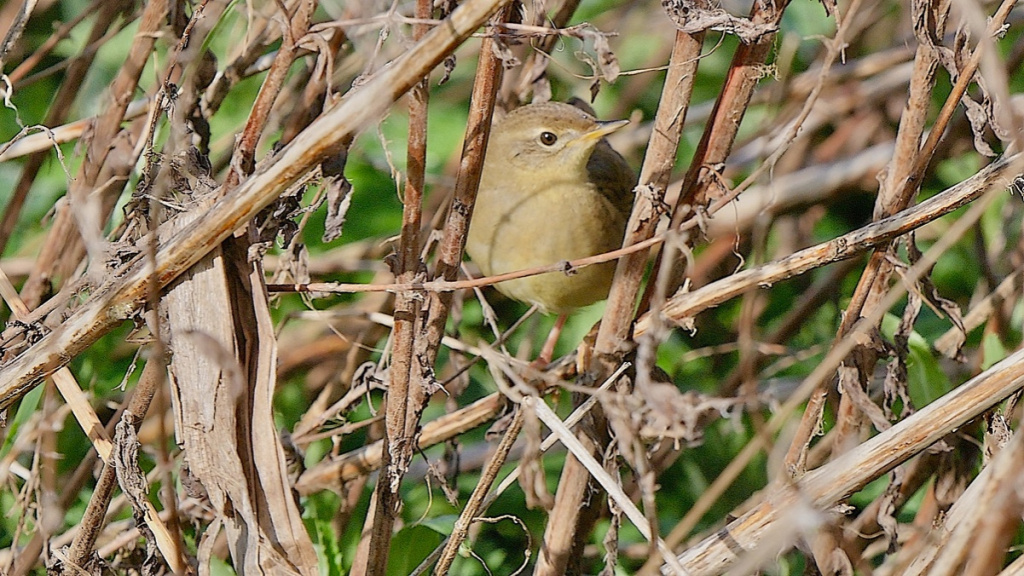
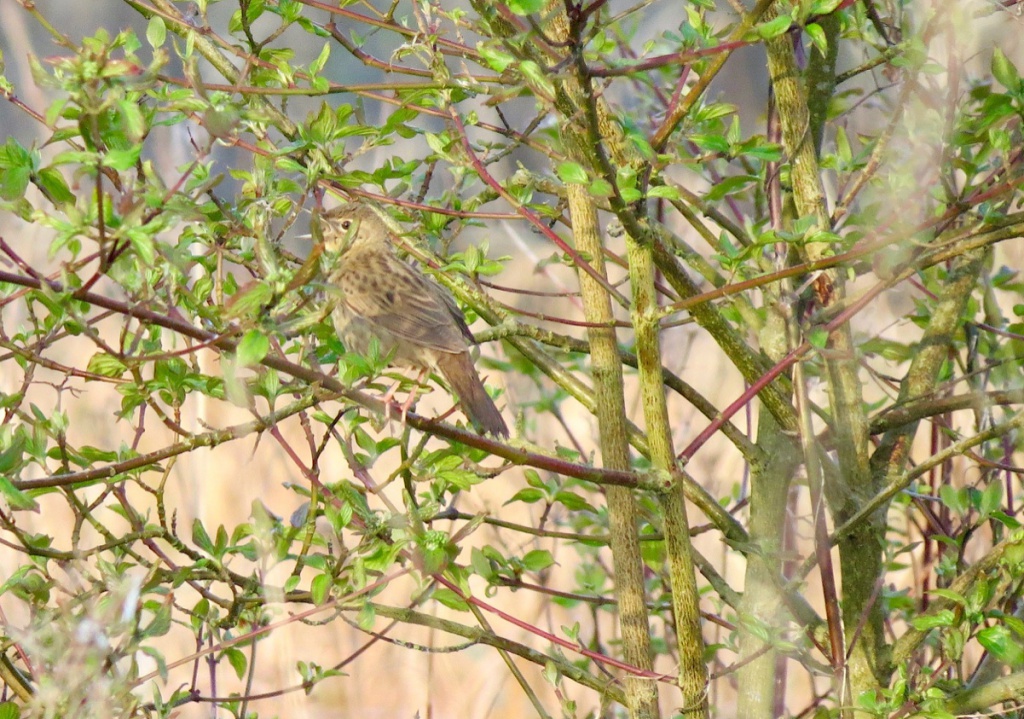
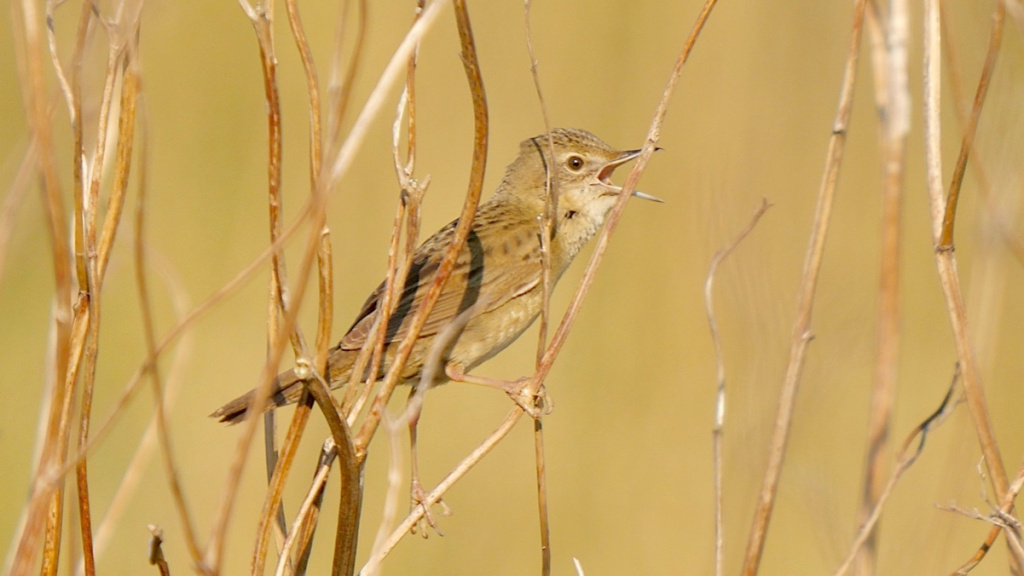
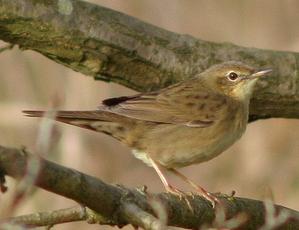
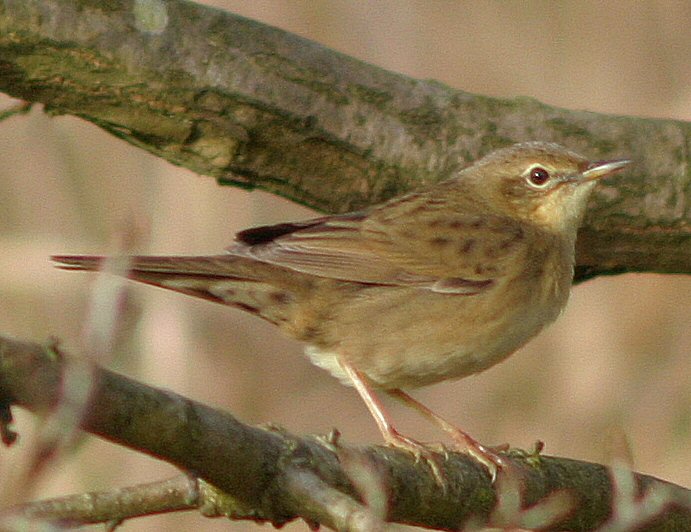
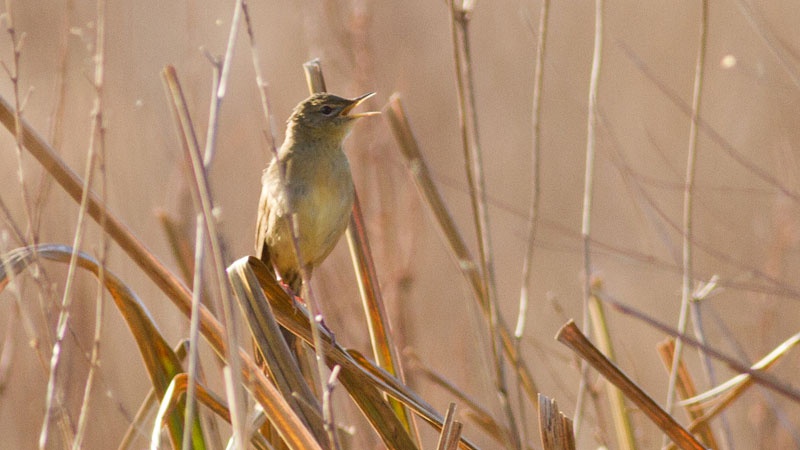
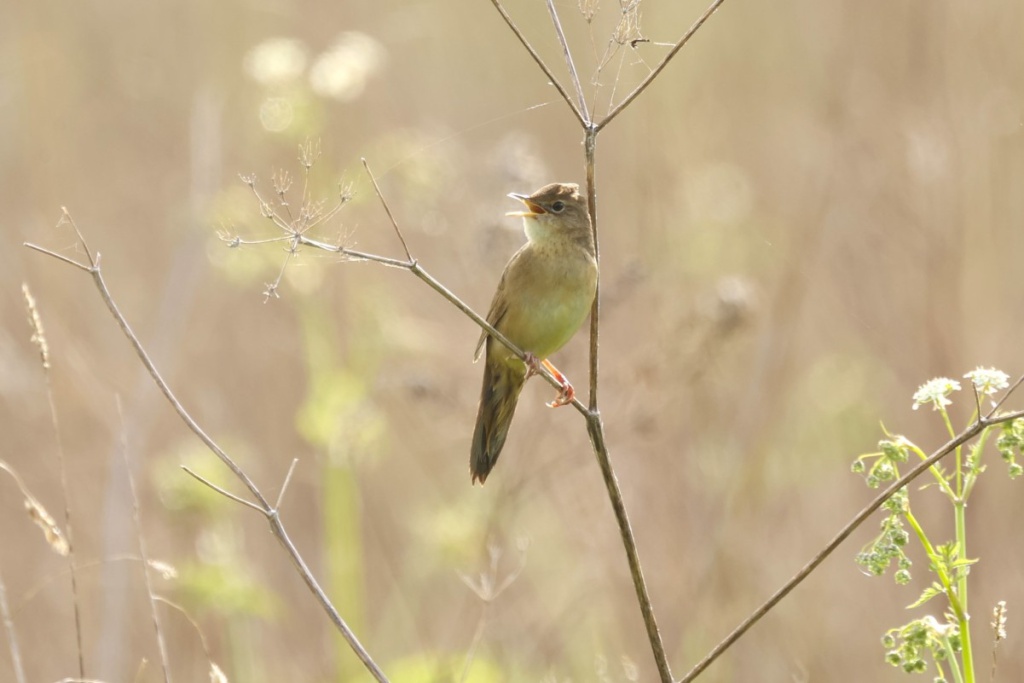
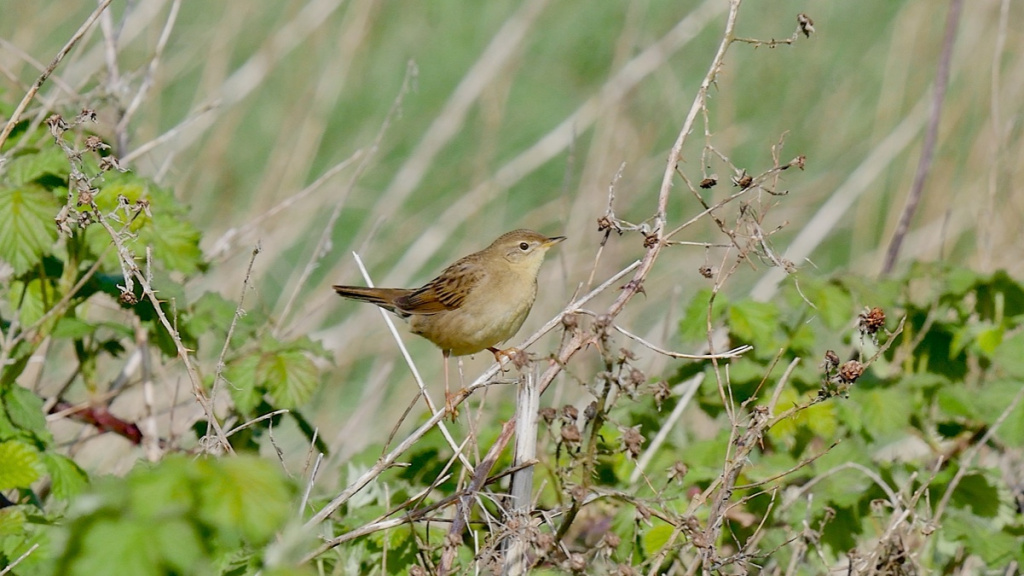
Heavily streaked olive-brown upperparts and pale underparts with some spotting to the breast. However, identification is best made from the song as the high, insect-like reeling song of the Grasshopper Warbler is the best clue to its presence. Even when you hear one it can be difficult to locate it due to the ventriloquial effect of its singing. If seen on migration and when approaching its nest, it moves like a little mouse, creeping through the foliage.

Likes areas of scrub, thick grassland, the edges of reed beds, new forestry plantations and gravel pits with plenty of scattered bushes.
Birds arrive from mid-April and leave again in August and September. Best listened for between April and July when they perch and sing from song posts, mostly at dawn and dusk but often through the night.
Insect feeder.
Found scattered across the UK in summer, although less common in Scotland, dramatic population declines have made this a Red List species.
Uncommon migrant breeder
 Tim Caldicott
Stanford Reservoir
15 April 2003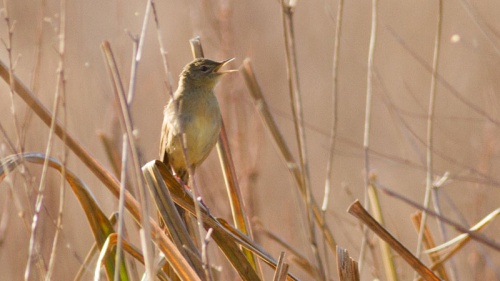 Rod Baker
Watermead Country Park
23 April 2013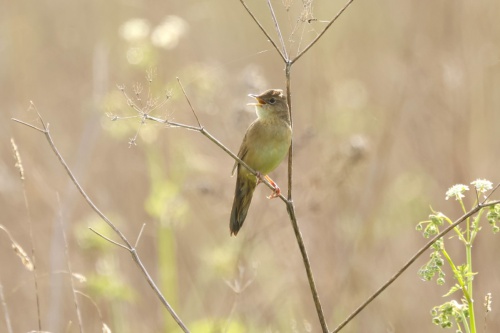 Brendon Brockway
Watermead Country Park
05 May 2023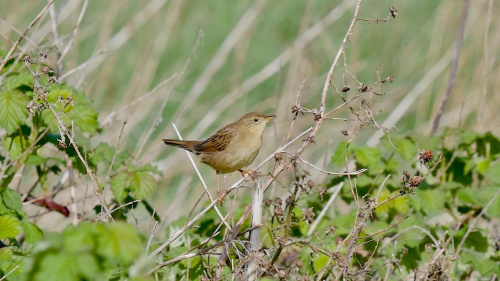 rockfowl
Aylestone Meadows
13 April 2026
Grasshopper Warbler
Leicestershire & Rutland Map
Enter a town or village to see local records
MAP KEY:
Yellow squares = NBN records (all known data)
Coloured squares = NatureSpot records: 2025+ | 2020-2024 | pre-2020
UK Map
Additional images