French Crane's-bill
French Crane's-bill - Geranium endressii
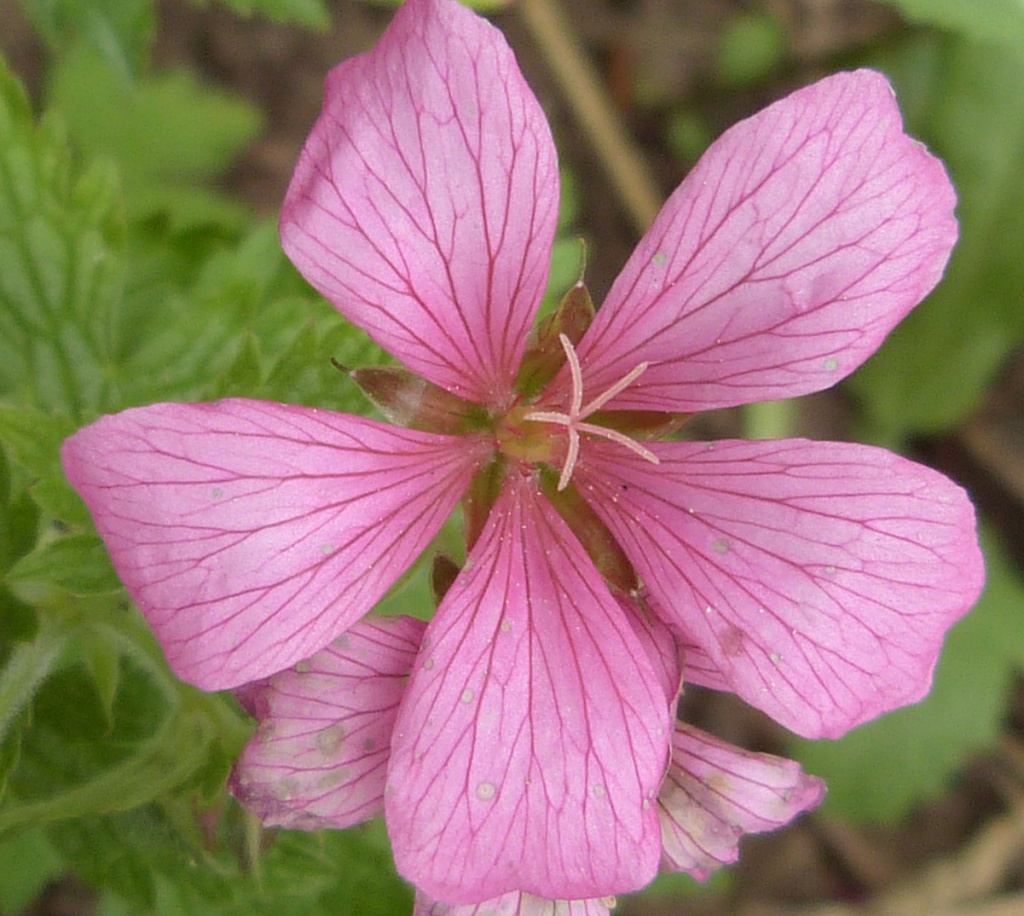
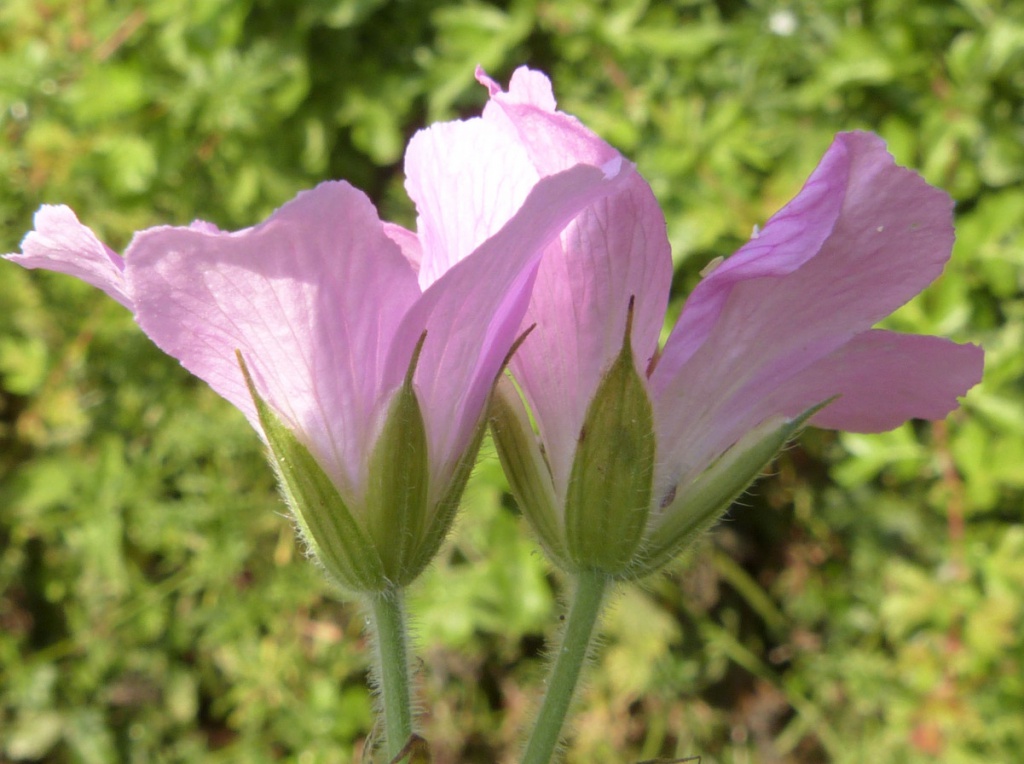
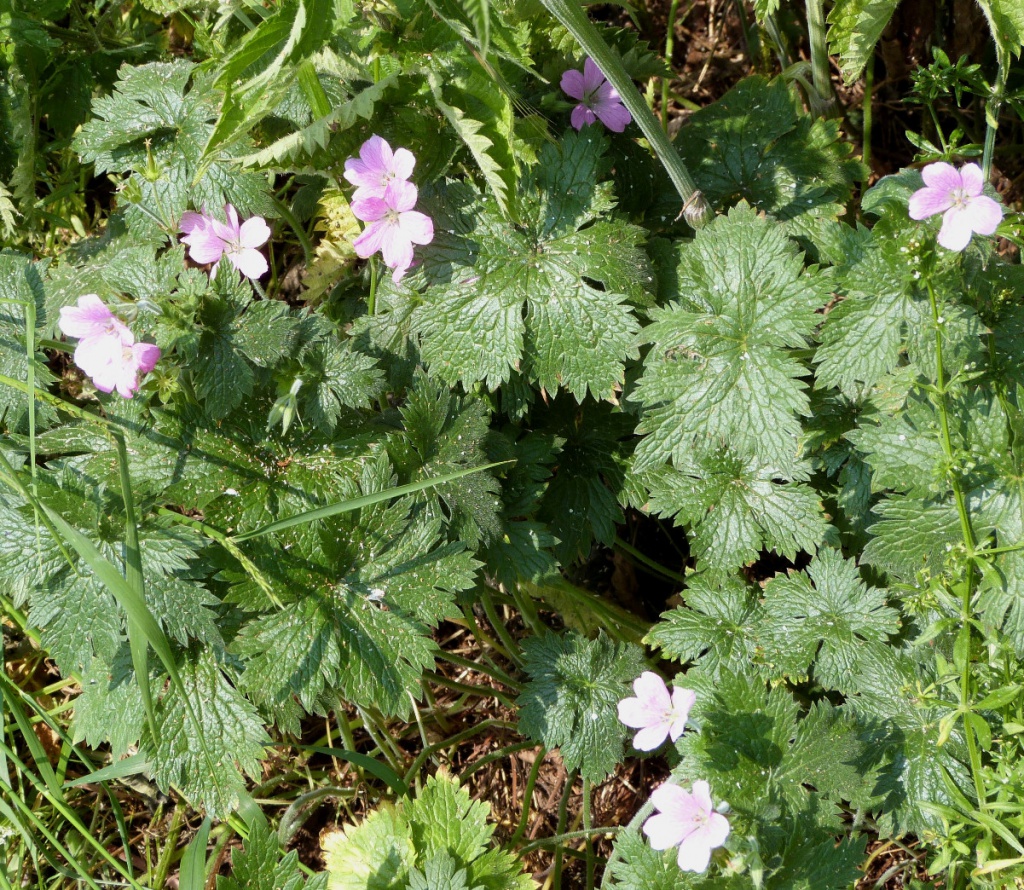
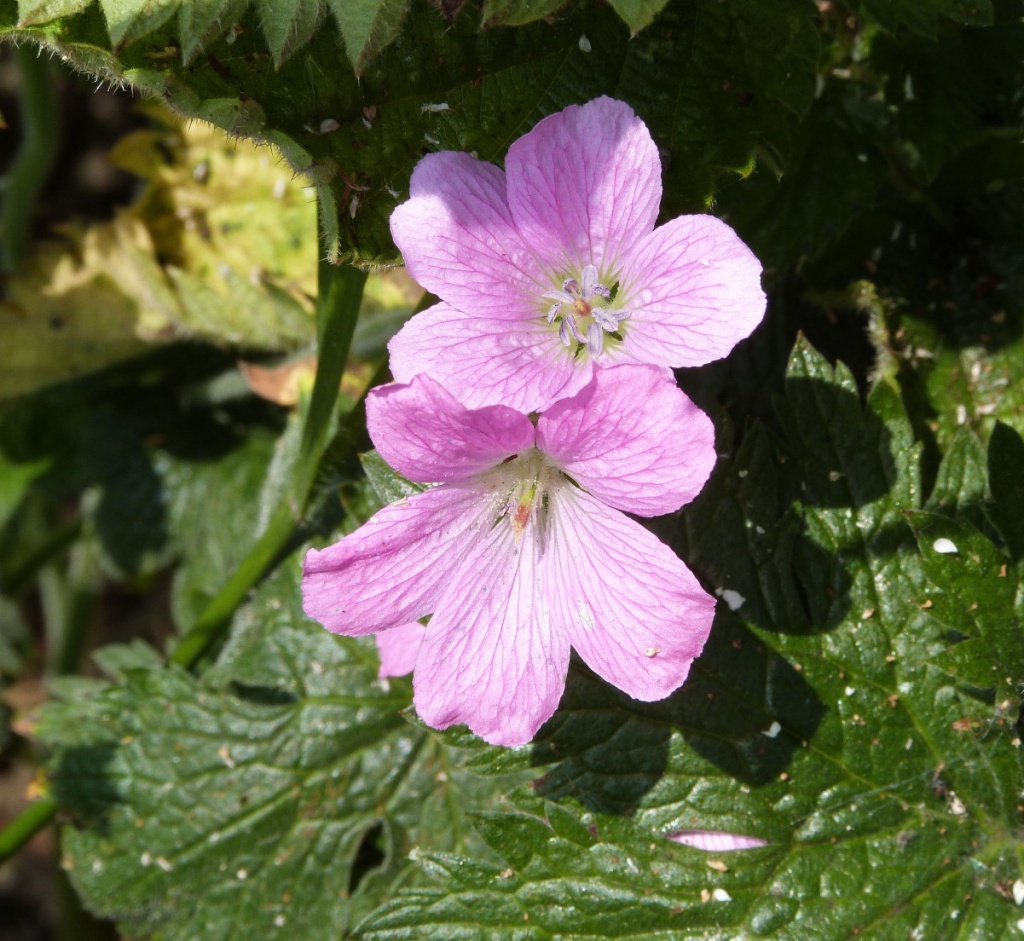
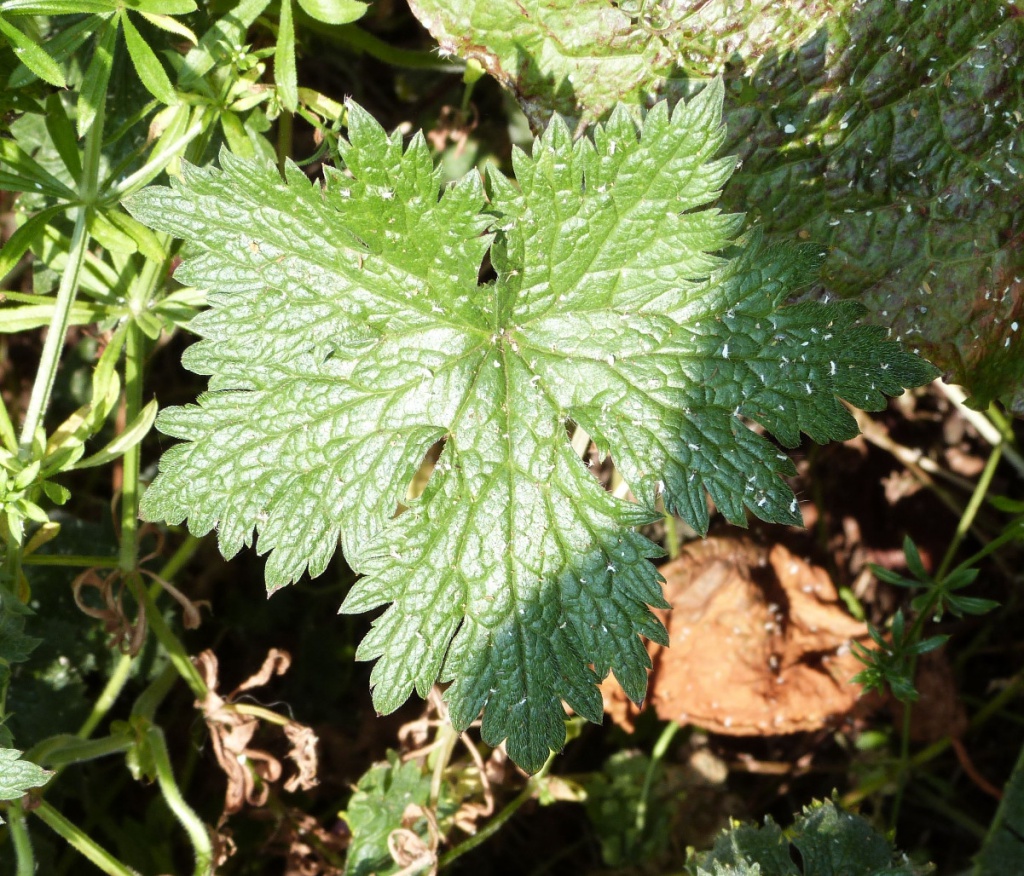
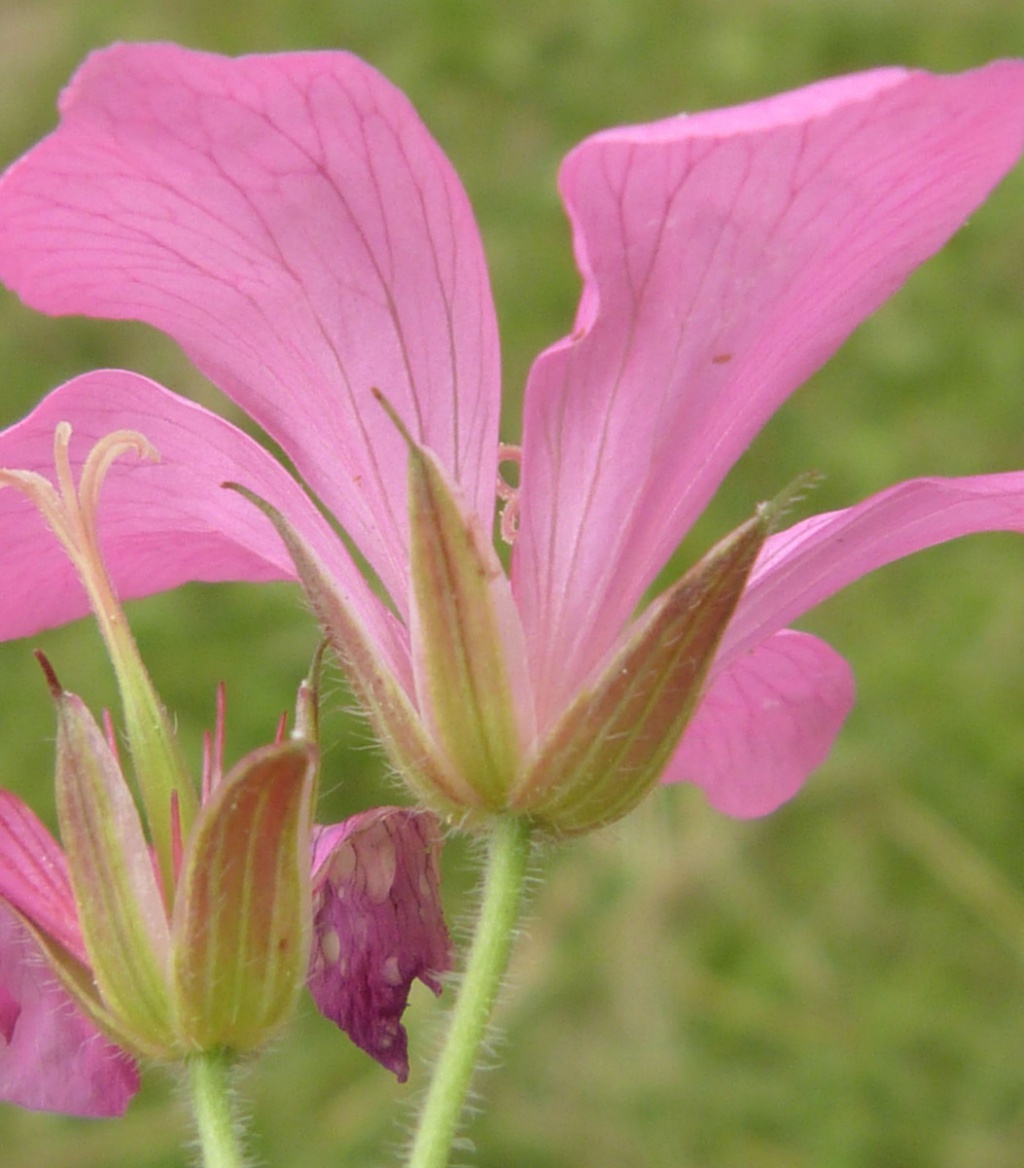
Medium to tall hairy plant. Leaves rounded or pentagonal in outline, divided to more than halfway into five broadly oval, irregularly toothed lobes. Flowers pink, 24 to 28 mm, with paler veins or veins of the same colour. Flowers generally in pairs, petals not or only slightly notched.
Geranium versicolor (white to pale pink petals with darker veins) or the hybrid Geranium x oxonianum (pale to deep pink petals, with or without darker veins)

Veins pale or same colour as ground colour of petals
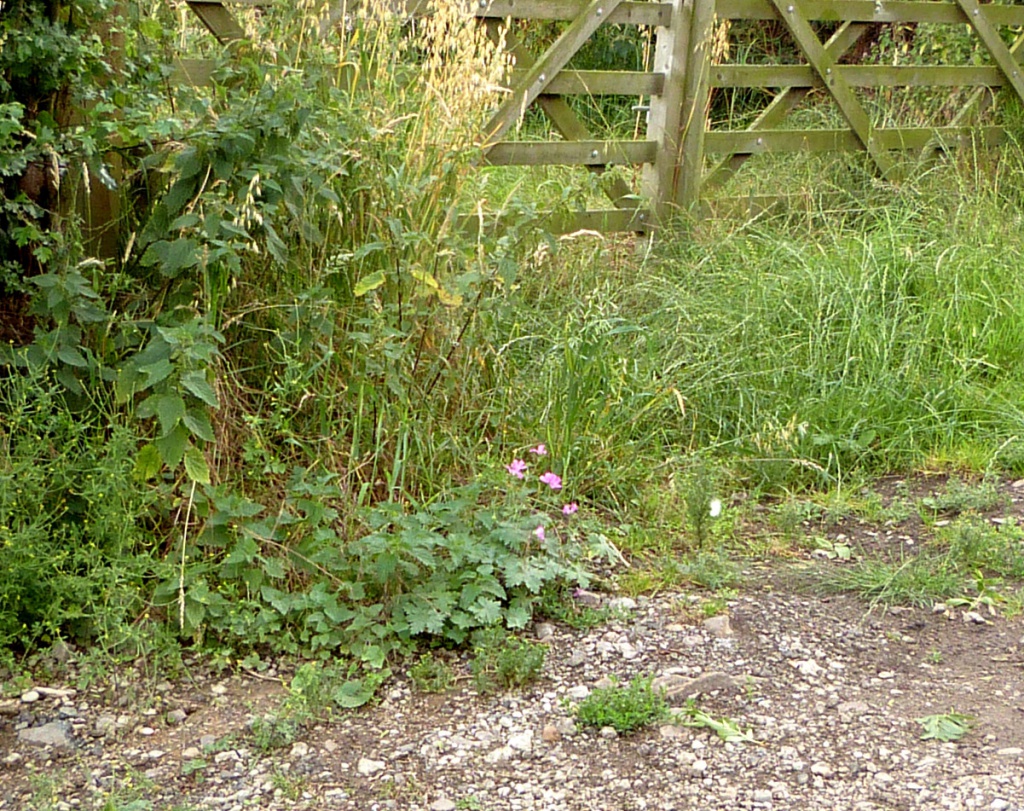
Often found as an escape from cultivation and established on roadside verges etc. Quite often close to habitation.
Flowers in June and July.
Perennial.
Widespread and fairly frequent in the wild in Britain.
Infrequent as an established wild plant in Leicestershire and Rutland. In the 1979 Flora survey of Leicestershire it was found in 2 of the 617 tetrads.
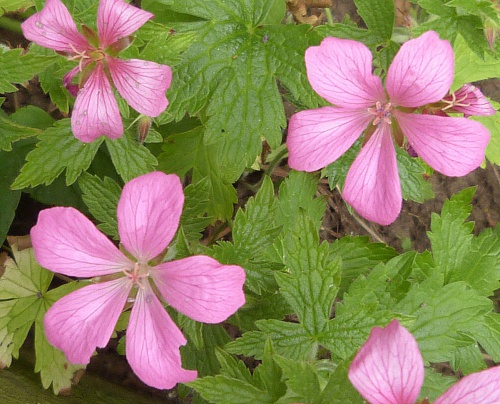 Graham Calow
Wykin Canal Towpath
26 June 2015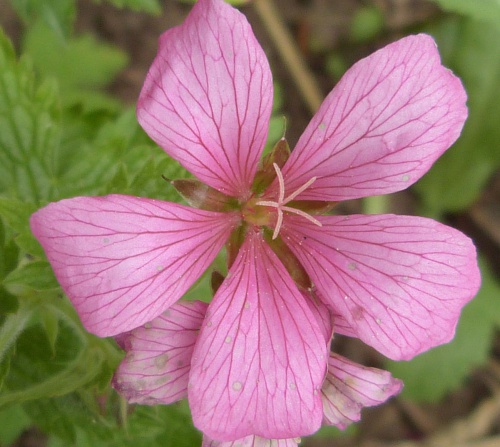 Graham Calow
Wykin Canal Towpath
26 June 2015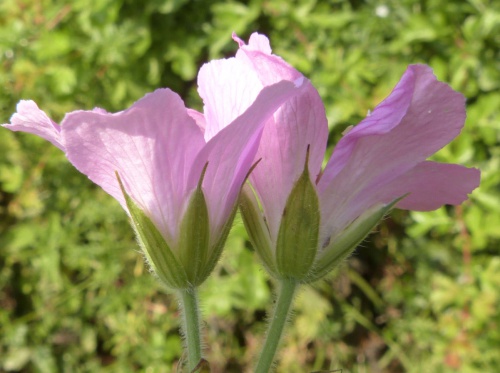 Graham Calow
Near High Cross
09 June 2016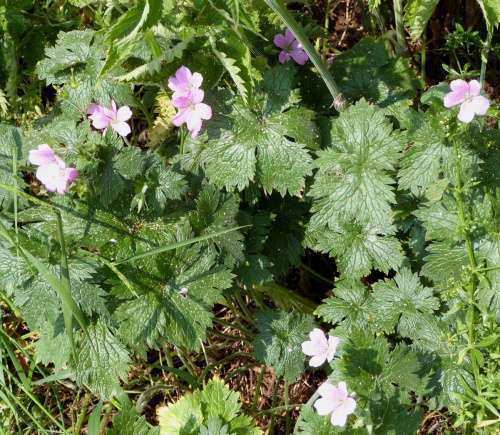 Graham Calow
Near High Cross
09 June 2016 Graham Calow
Near High Cross
09 June 2016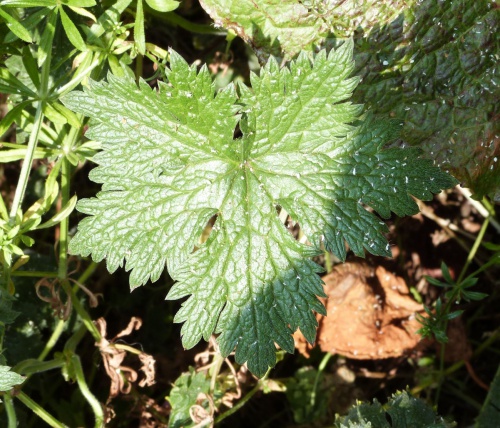 Graham Calow
Near High Cross
09 June 2016

Leicestershire & Rutland Map
Enter a town or village to see local records
MAP KEY:
Yellow squares = NBN records (all known data)
Coloured squares = NatureSpot records: 2025+ | 2020-2024 | pre-2020
UK Map
Additional images


All NatureSpot records
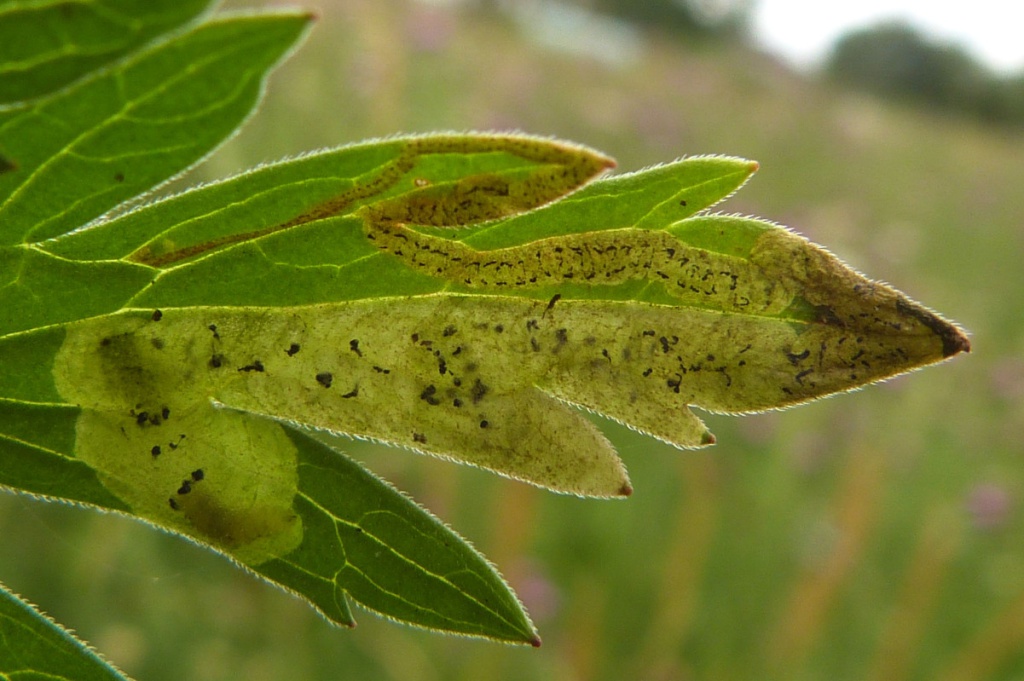
Agromyza nigrescens
The larva of the Agromyzid fly Agromyza nigrescens mines the leaves of Geranium and Erodium species. The start of the mine is corridor-like and usually follows the leaf margin, before widening considerably into a secondary blotch, with irregular sides. Primary and secondary feeding lines are clearly visible and frass is mostly in large clumps.
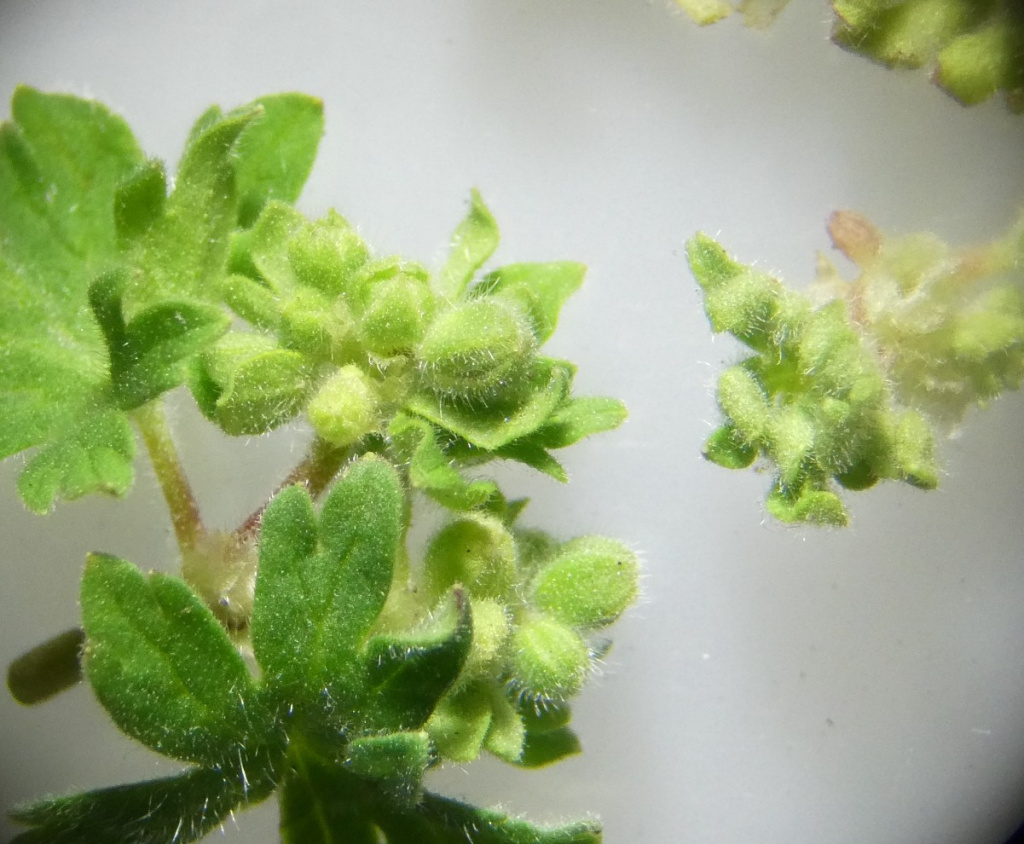
Aceria geranii
The mite Aceria geranii causes galls on the leaves of Geranium species. The leaves are paler than usual, thickened and rolled into a mophead at the shoot tip. The mites live inside the leaves, and are minute, whitish and worm-like; they cannot be seen with the naked eye but are just discernible using a stereo microscope.
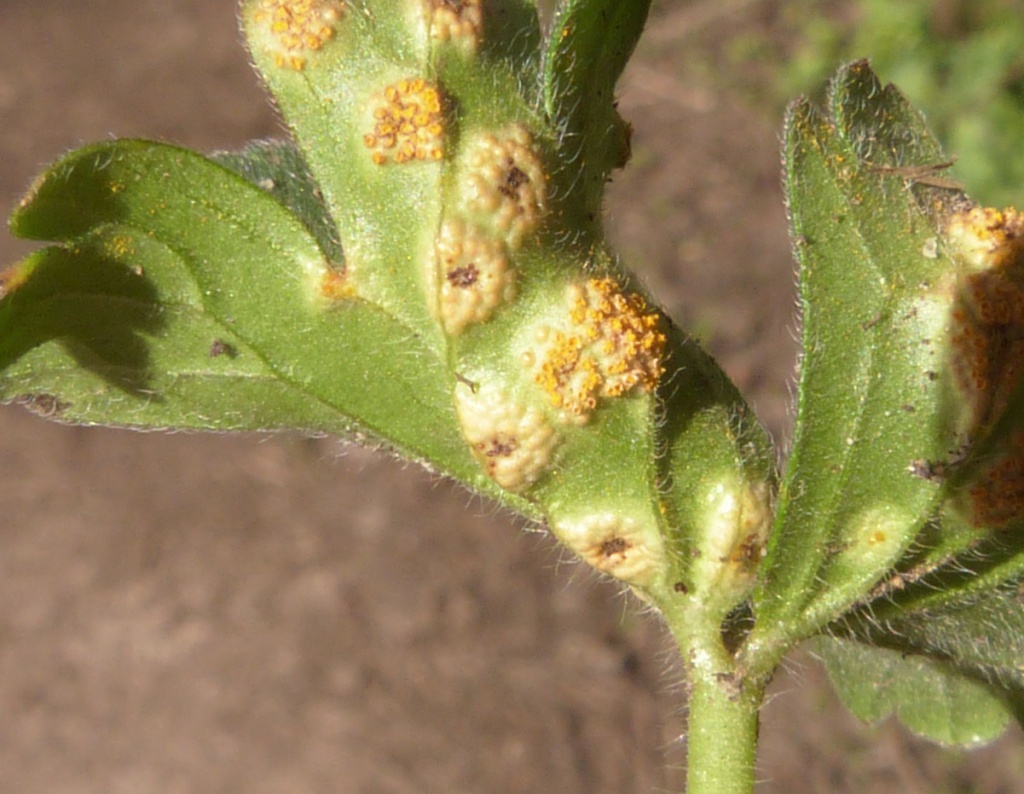
Uromyces geranii
Uromyces geranii is a rust fungus that galls the leaves of various Geranium and Erodium species (Crane's-bills and Stork's-bills); there is no host-plant alternation. Aecia are orange, on leaf undersides and petiole; later pale brown uredinia and darker telia appear on the leaf underside.