Field Horsetail
Field Horsetail - Equisetum arvense
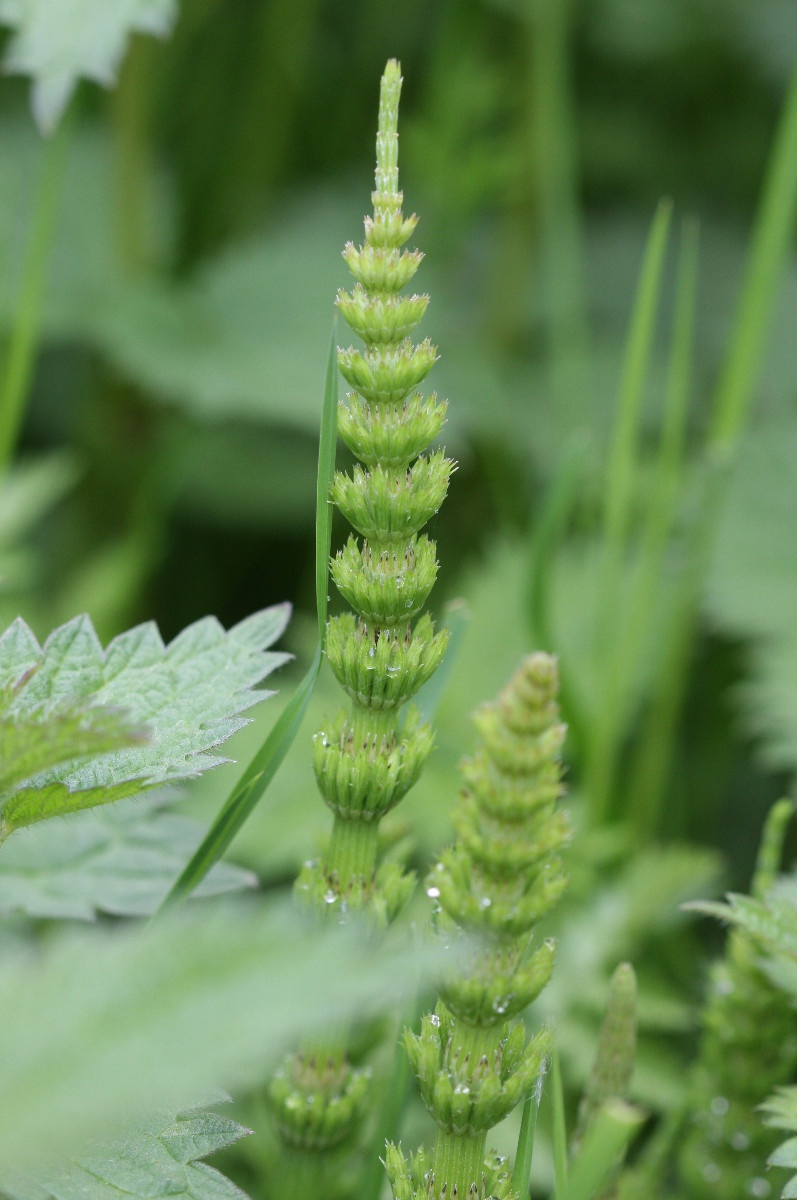
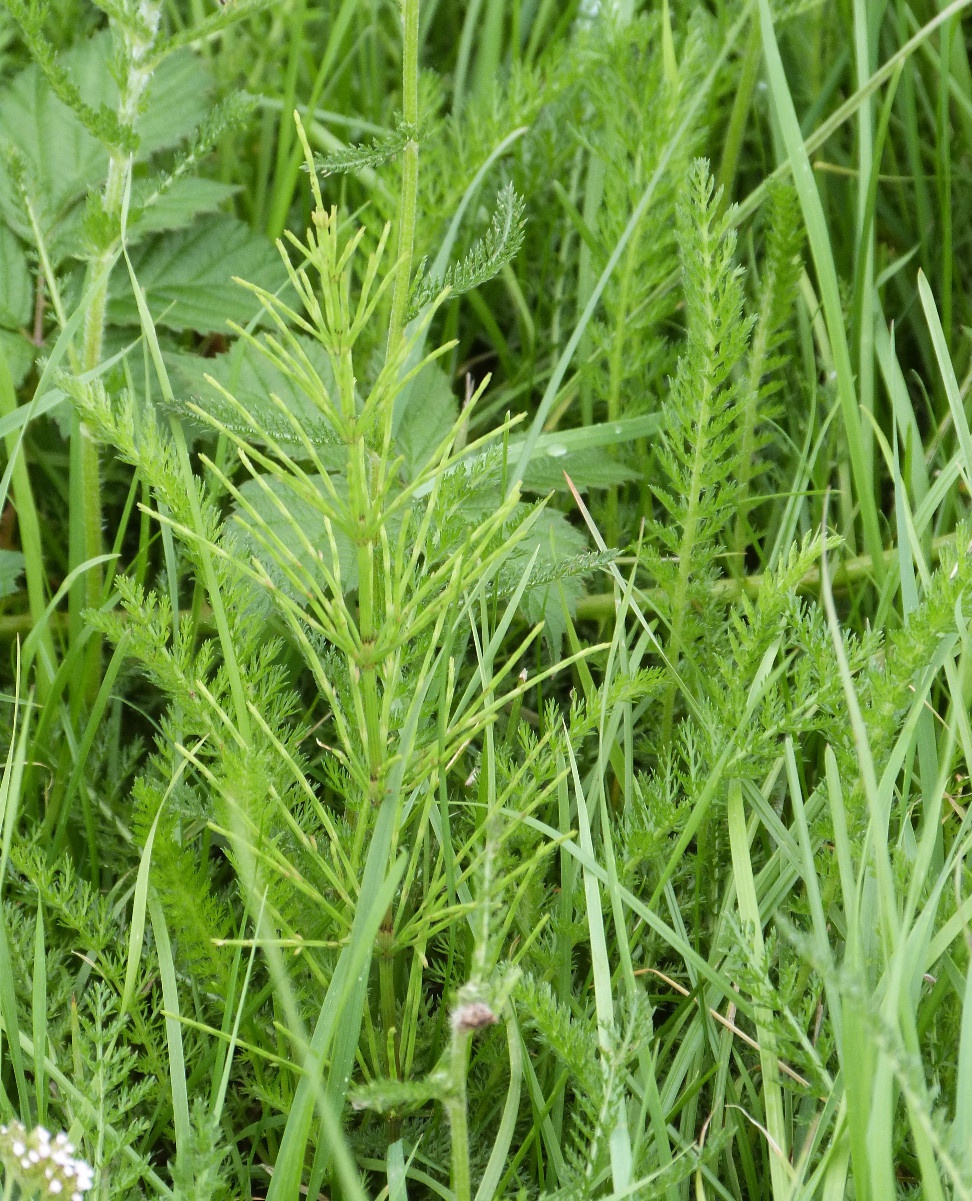
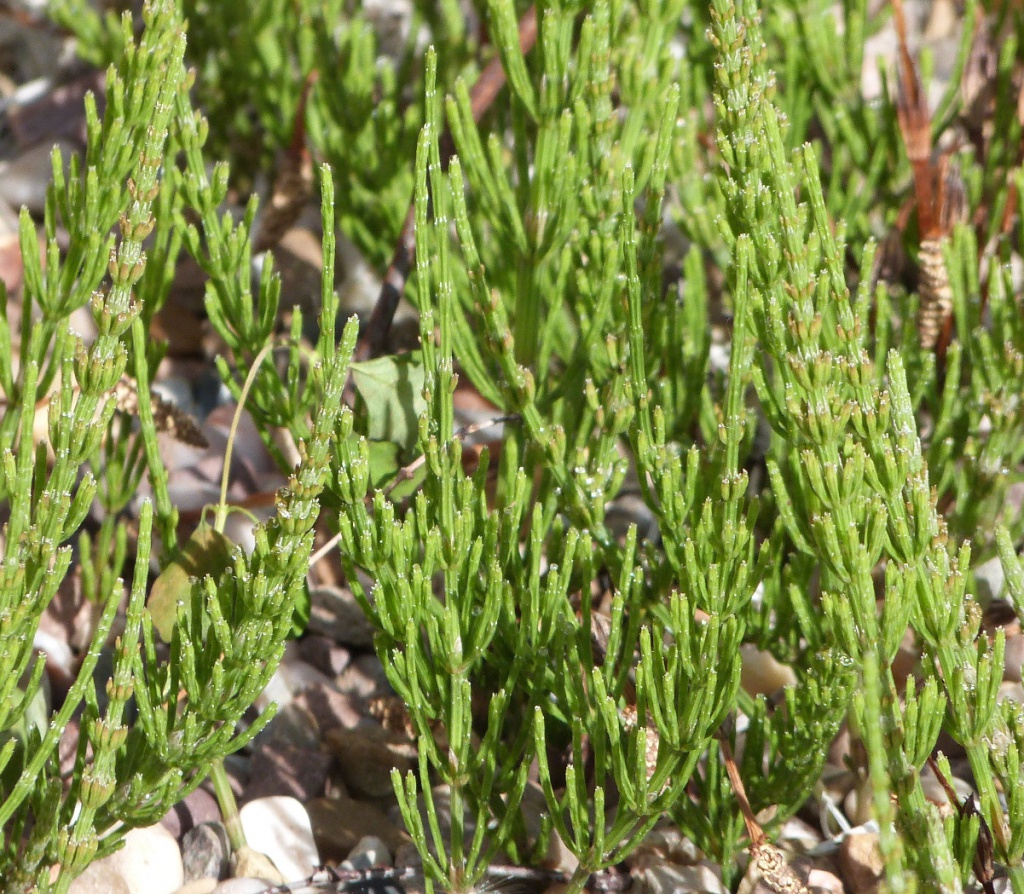
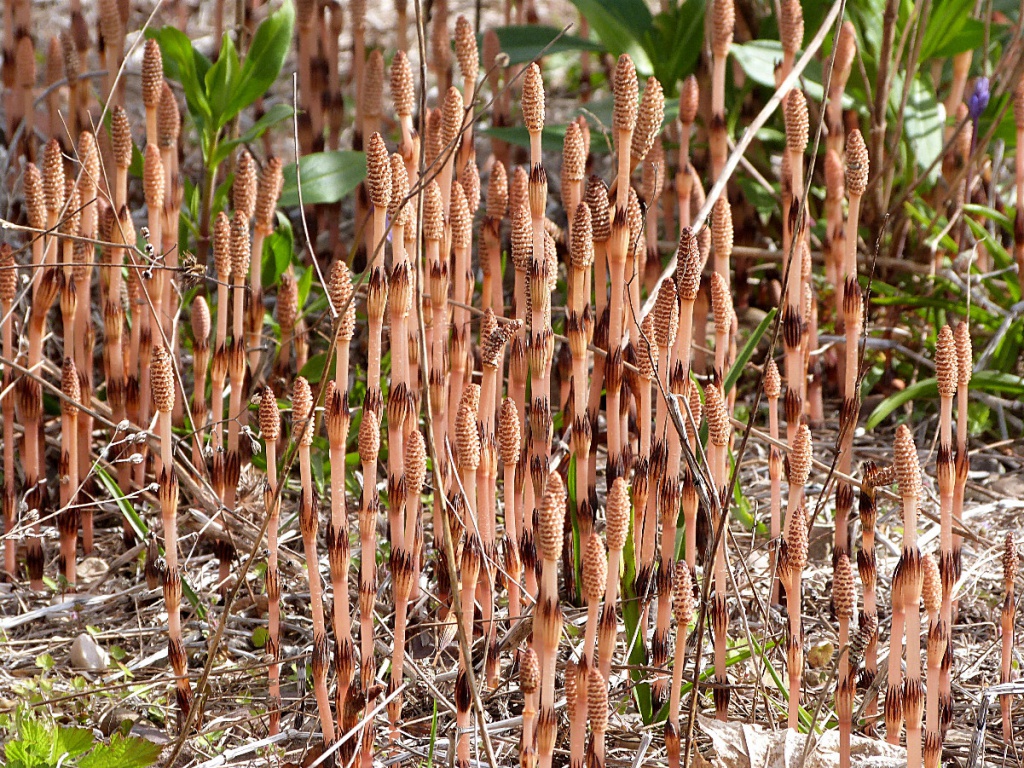
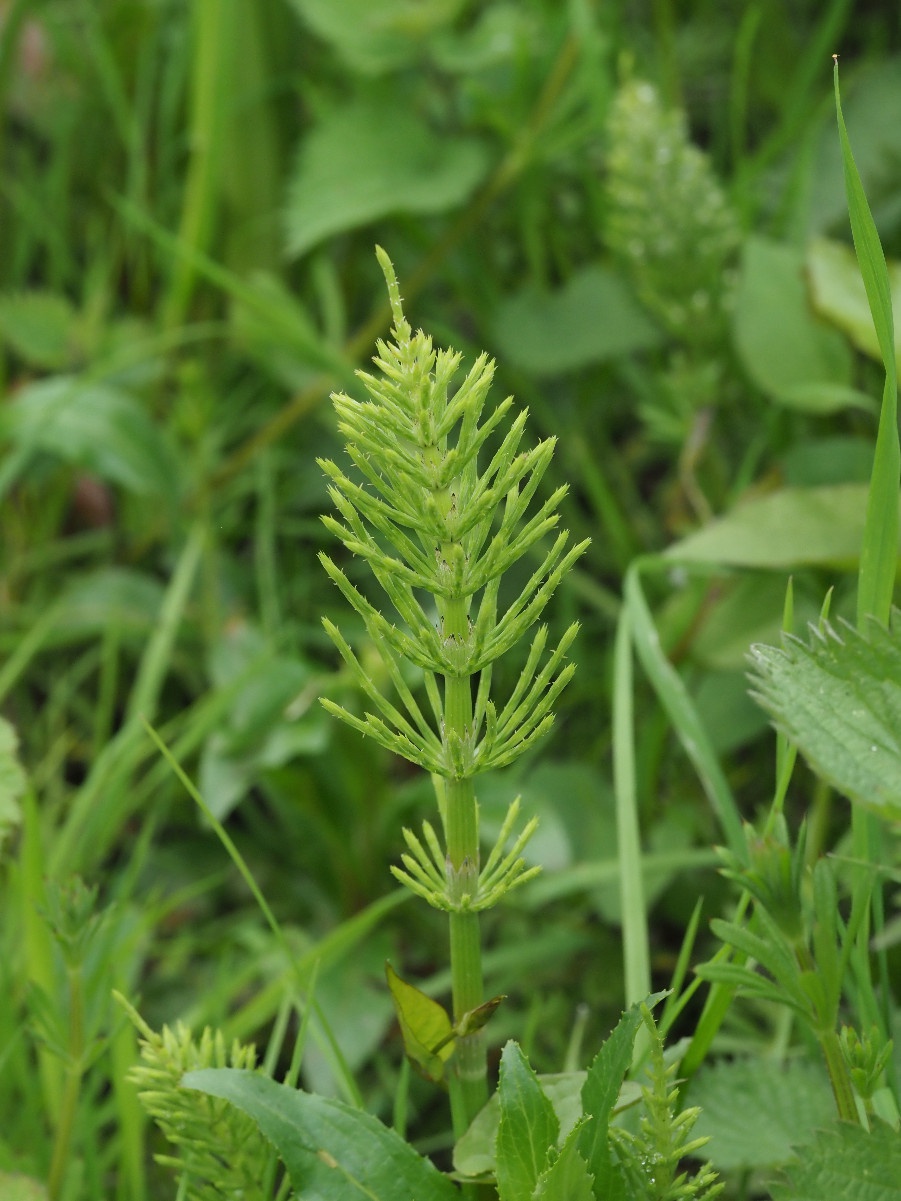
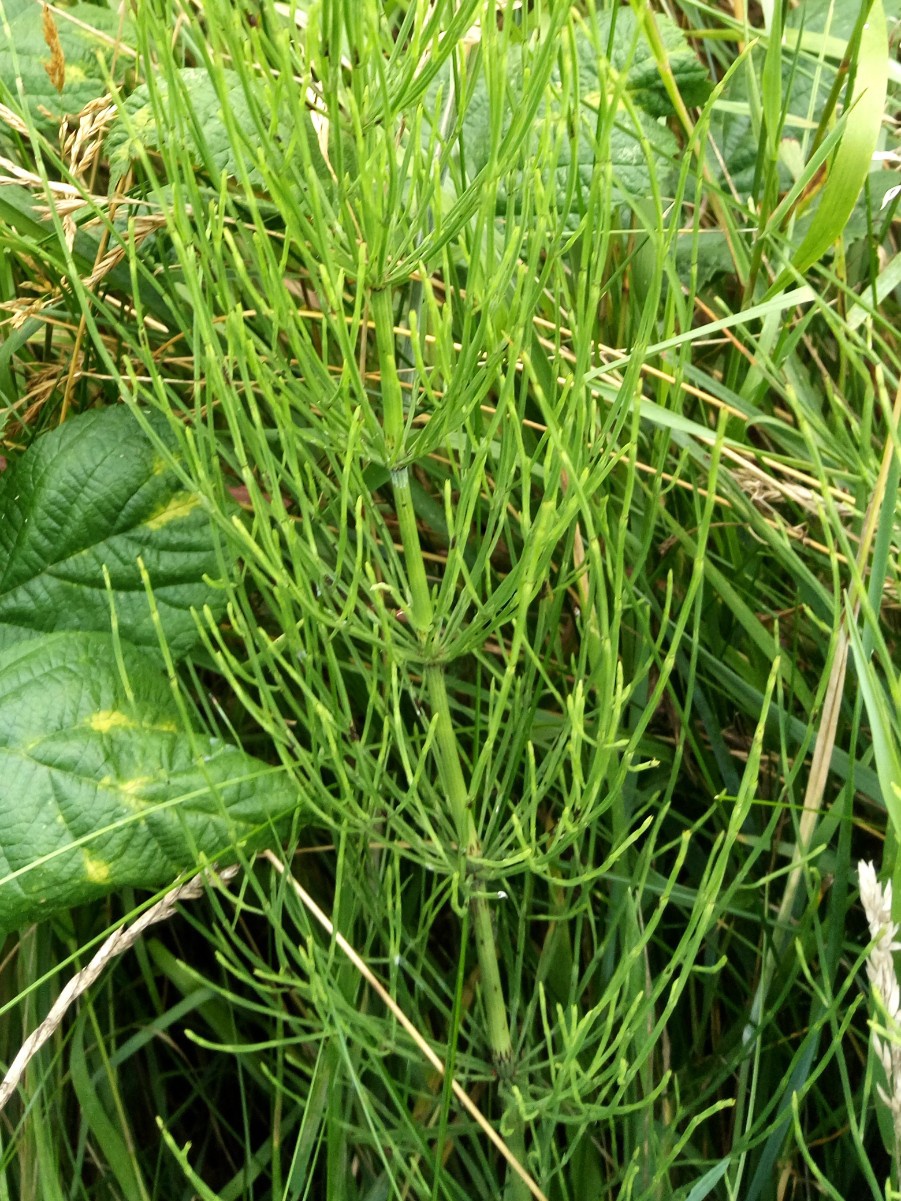
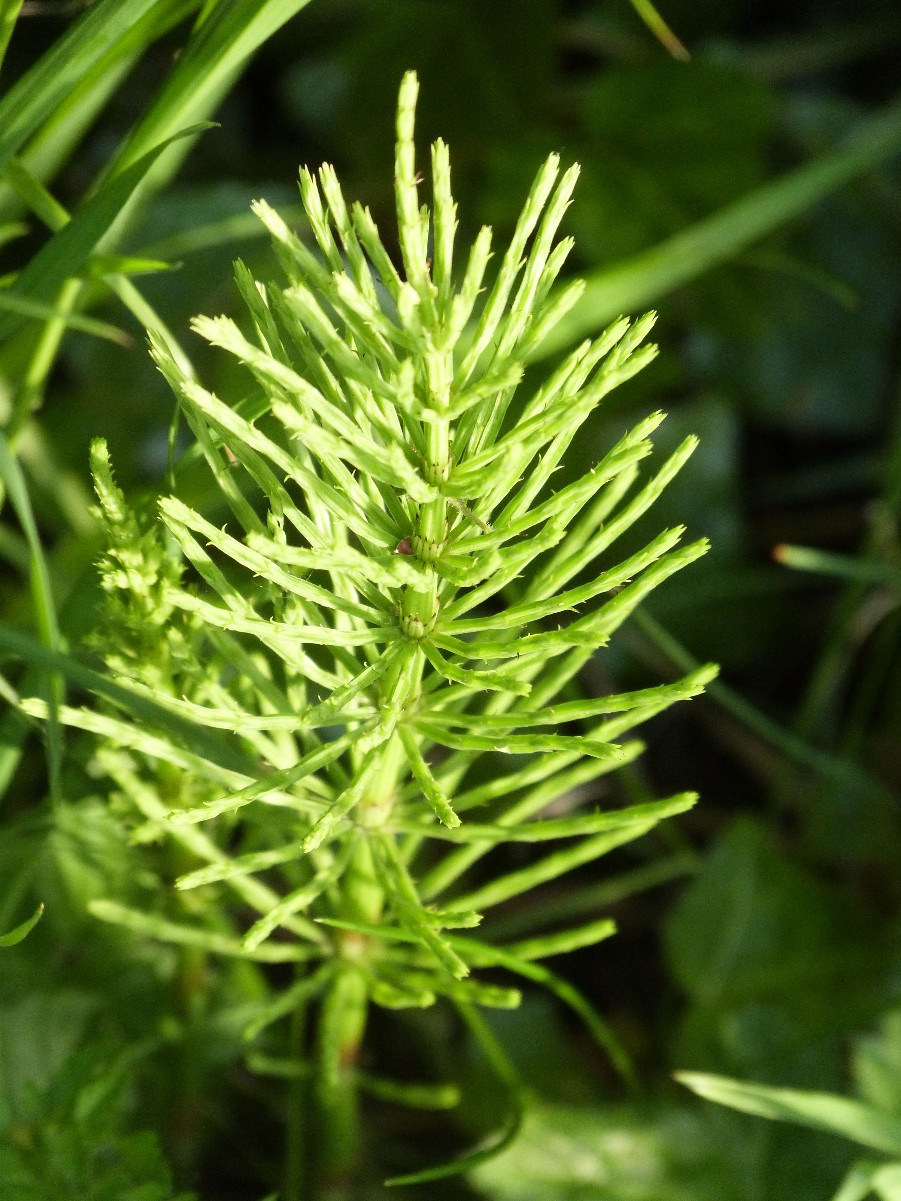
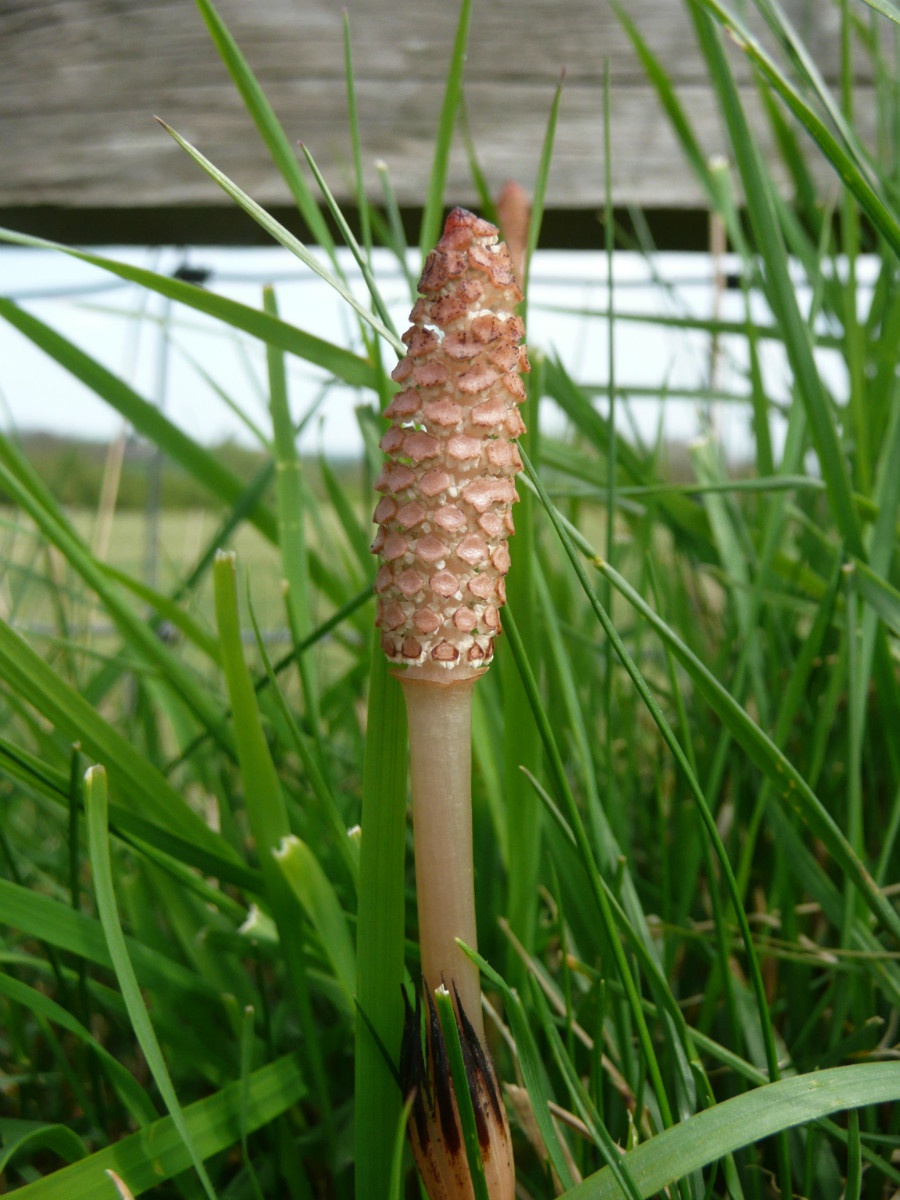
A rhizomatous plant, it has sterile, green stems 20 to 80 cm, erect or decumbent, slightly rough, with 6 to 18 vertical ridges shallower than in Marsh Horsetail. Branches numerous in regular whorls. Sheaths loose green with erect black teeth lacking obvious white edges. Cones in spring are 1 to 4 cm long and terminal on ivory to pinkish thicker unbranched stems whose sheaths are large and pale brown.
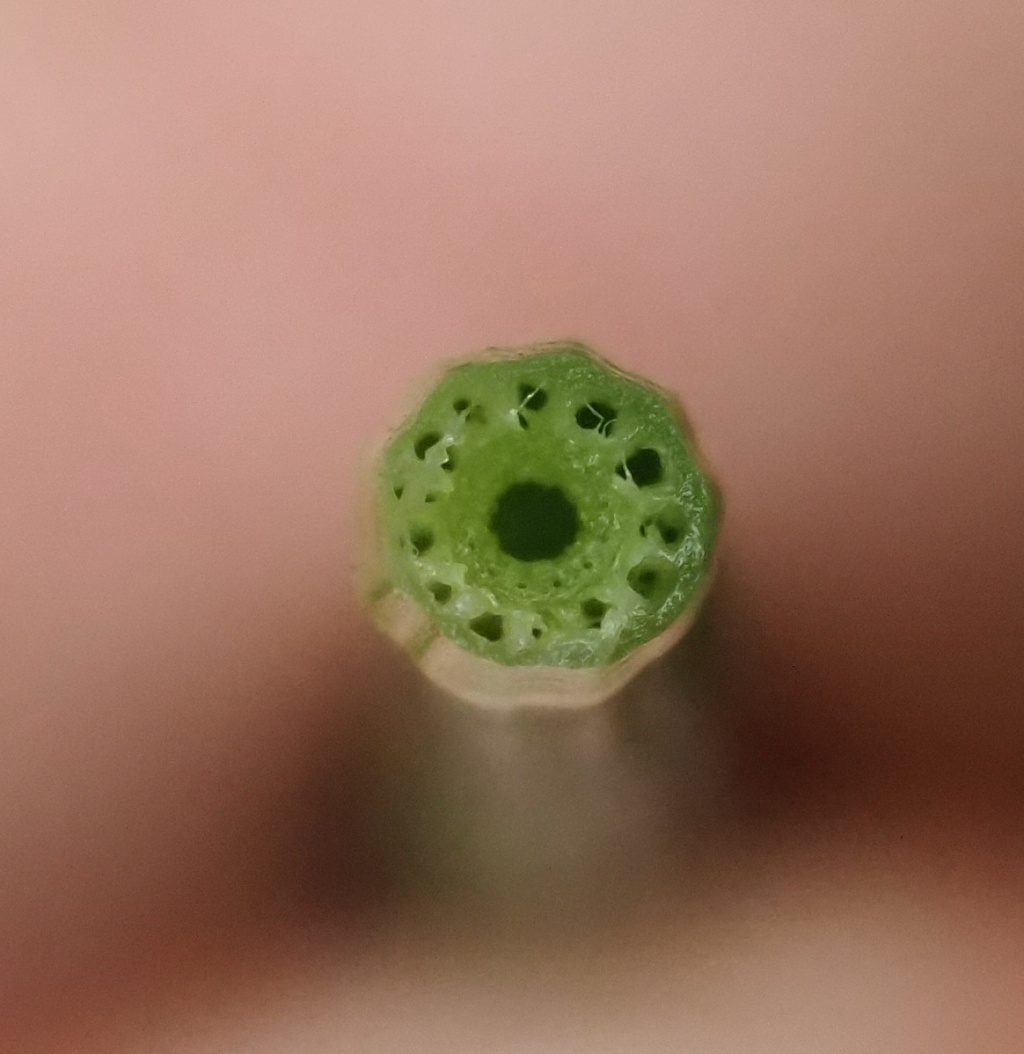
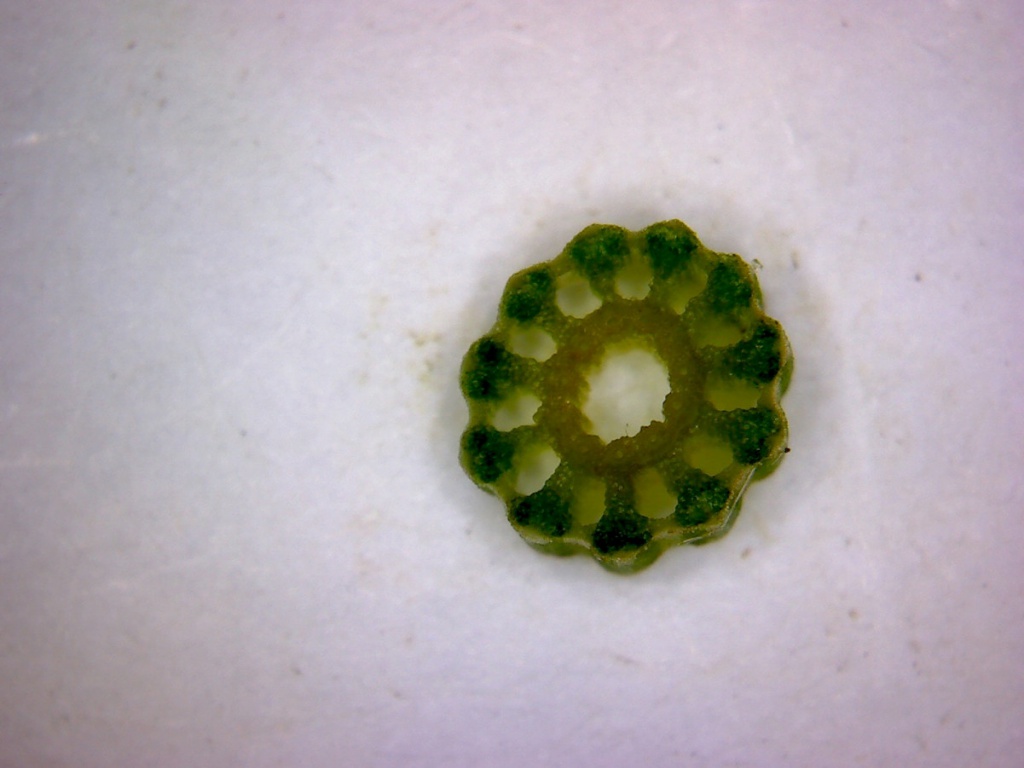
If in doubt, cut through the central stem to look at the arrangements of hollows. The central hollow of E arvense is at least twice the size of the peripheral hollows, unlike E palustre, where the central hollow is about the same size as the peripherals. E fluviatile has a large central hollow, more than three-quarters the width of the stem.
Other horsetails, especially Equisetum palustre and E fluviatile; all can grow in marshy places

Cultivated land and gardens, waste ground.
Fertile cones ripe March to May. Sterile shoots May to October
Perennial
Very common throughout Britain.
Very common (sometimes invasive) in Leicestershire and Rutland. In the 1979 Flora survey of Leicestershire it was found in 555 of the 617 tetrads.
 Graham Calow
Earl Shilton footpath to sewage works
17 April 2022
fertile cones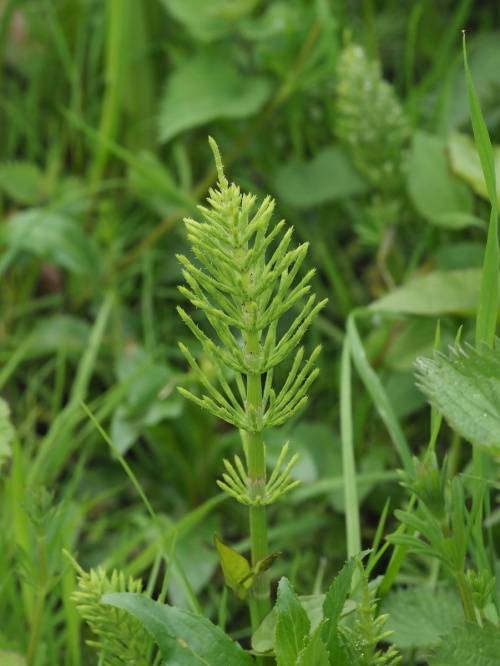 David Nicholls
Ratby village pond and meadow
02 May 2023
sterile green stem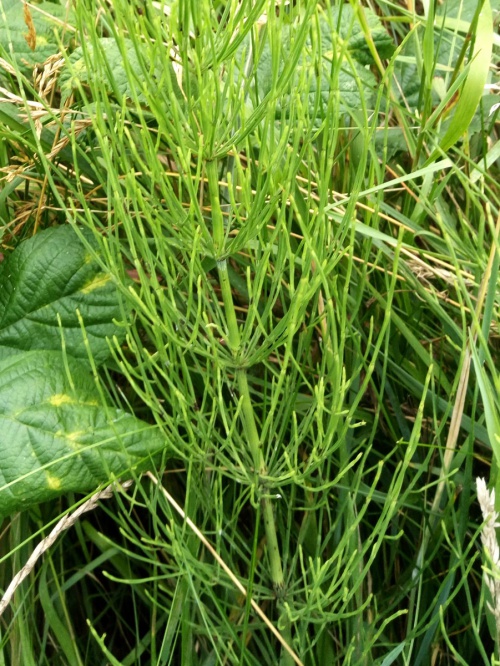 Peter Smith
Cropston, Puddledyke
03 August 2021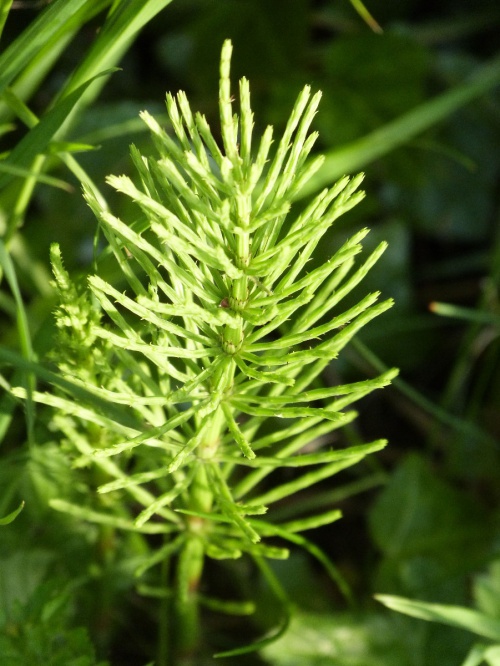 Craig Mabbett
Countesthorpe Leicester Rd verge
01 June 2021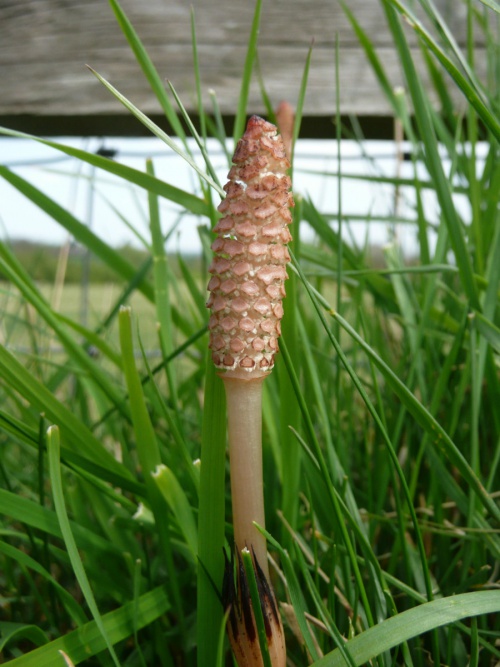 Barbara Cooper
Clawson Hill
07 May 2013
fertile cone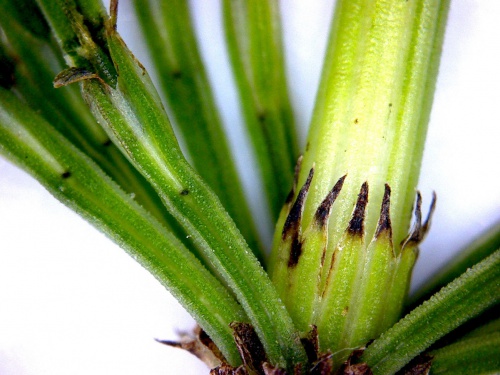 Melinda Bell
Moira, Moira Junction Reserve
02 September 2020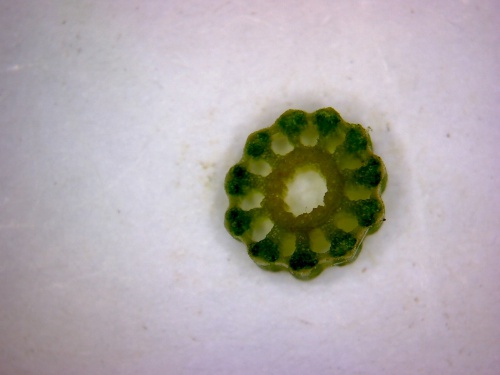 Melinda Bell
Albert Village, Lake
25 May 2021
T.S stem


Leicestershire & Rutland Map
Enter a town or village to see local records
MAP KEY:
Yellow squares = NBN records (all known data)
Coloured squares = NatureSpot records: 2025+ | 2020-2024 | pre-2020
UK Map
Additional images