European Larch
European Larch - Larix decidua
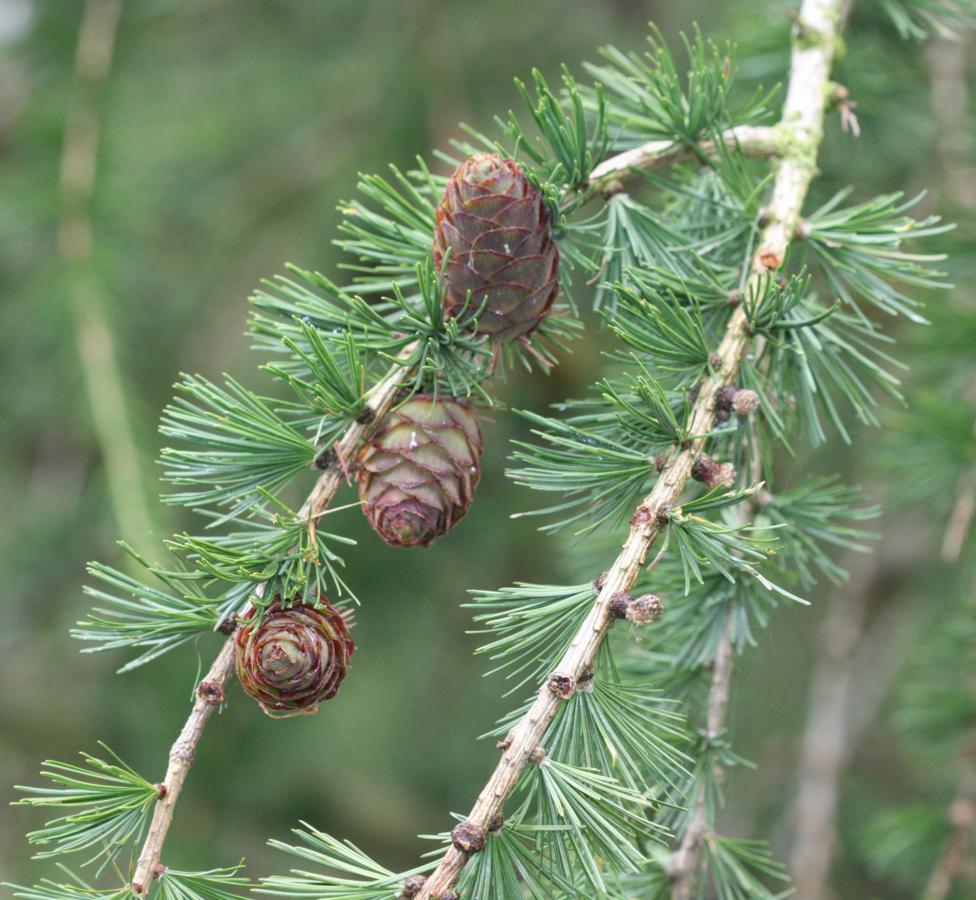
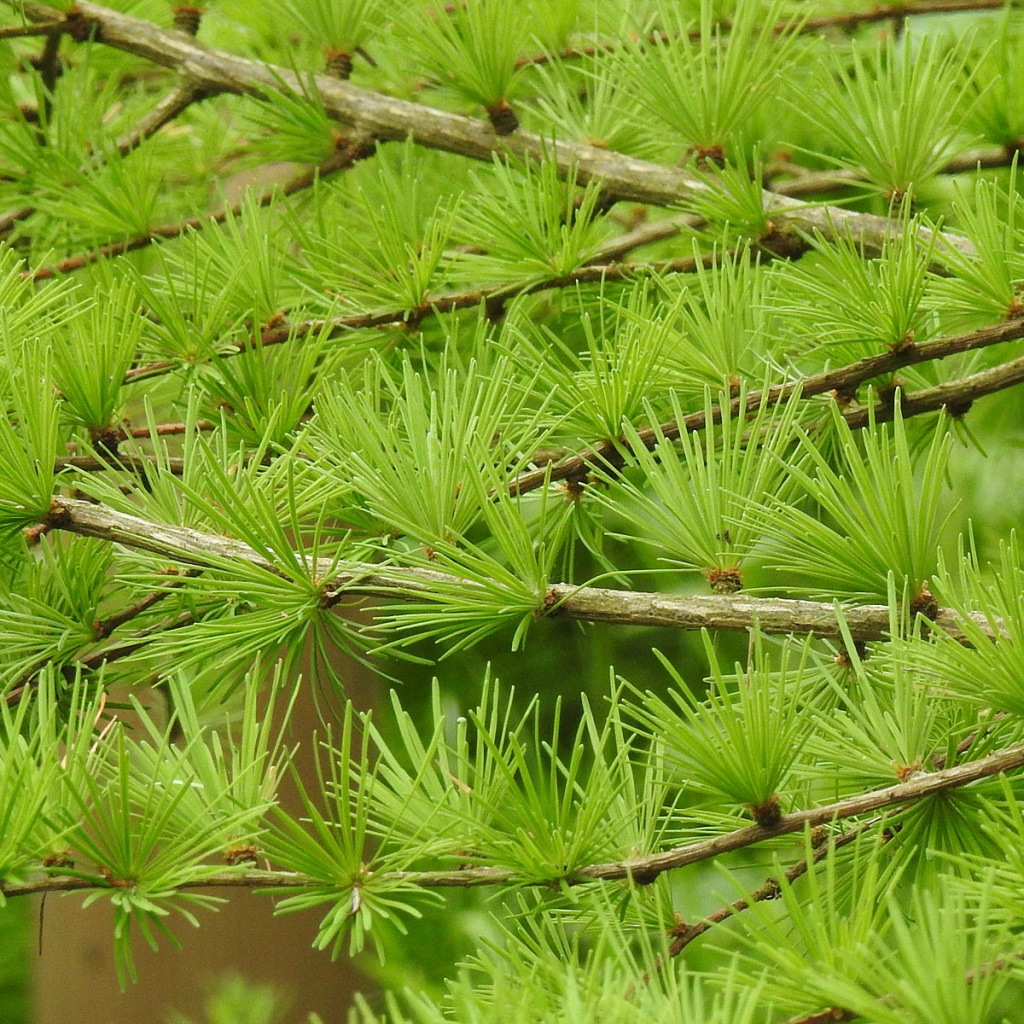
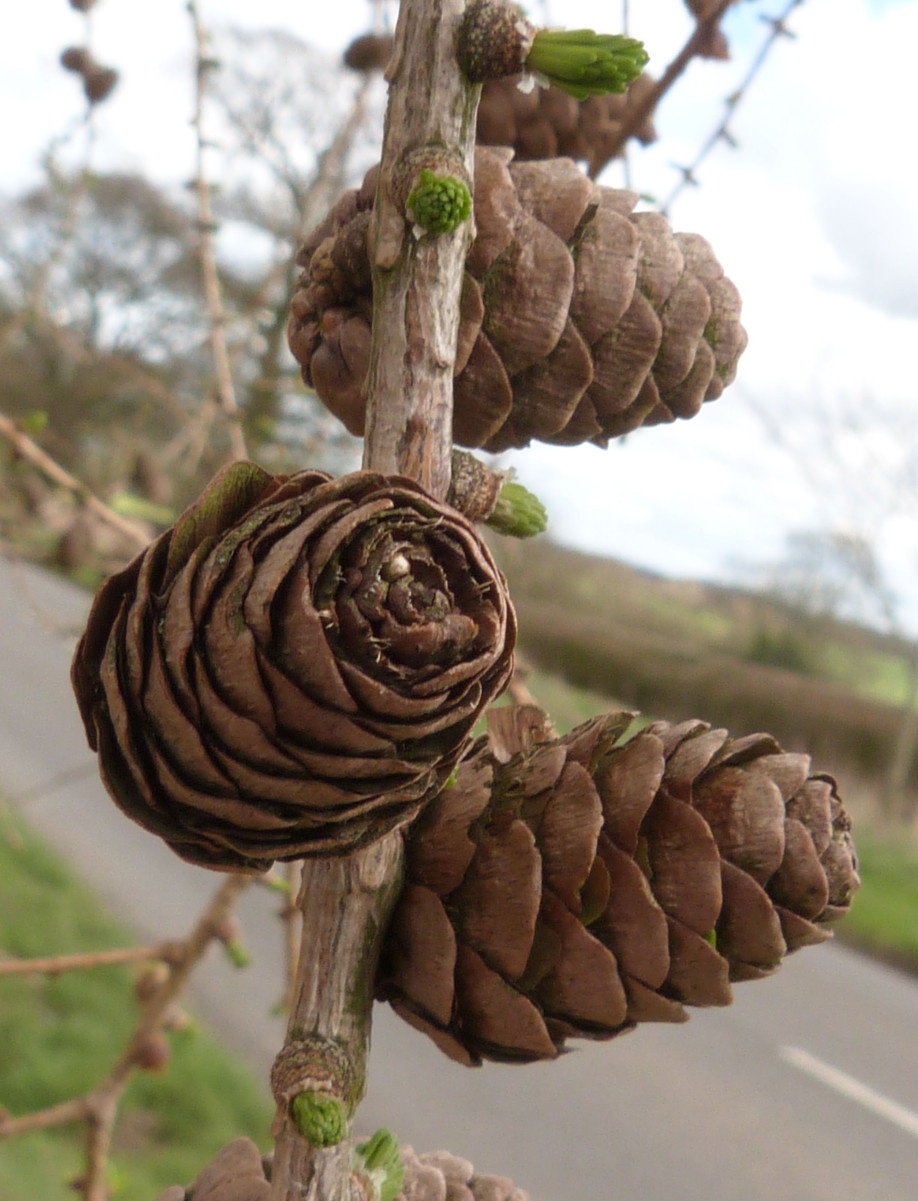
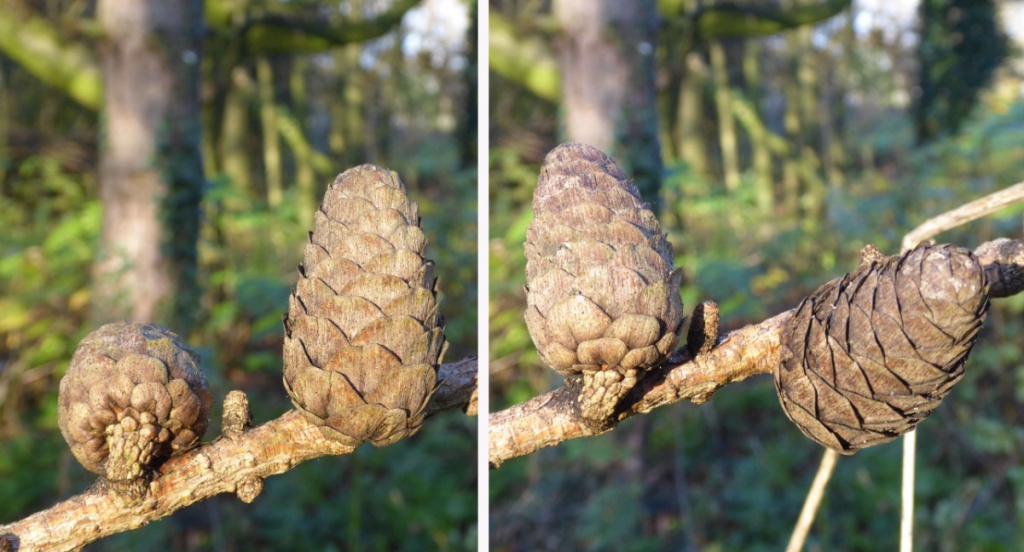
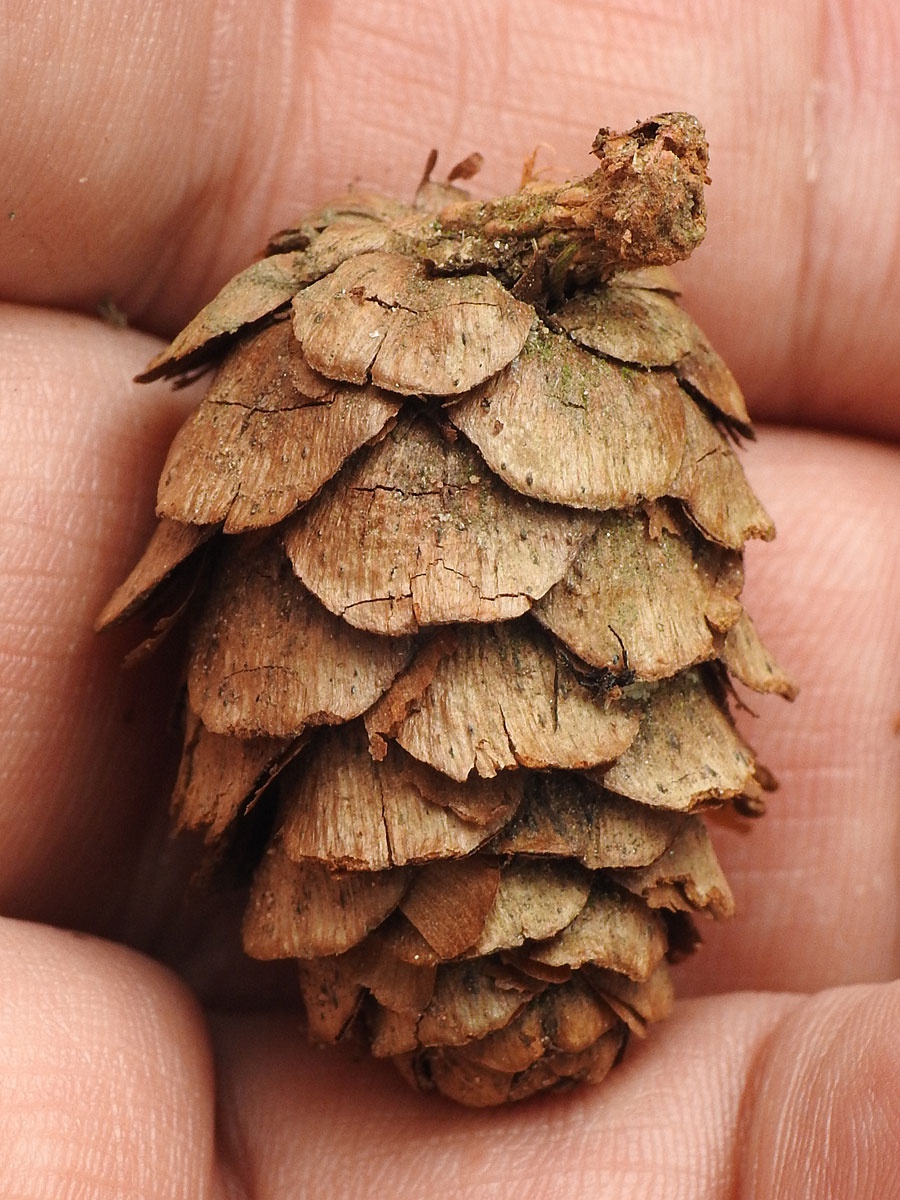
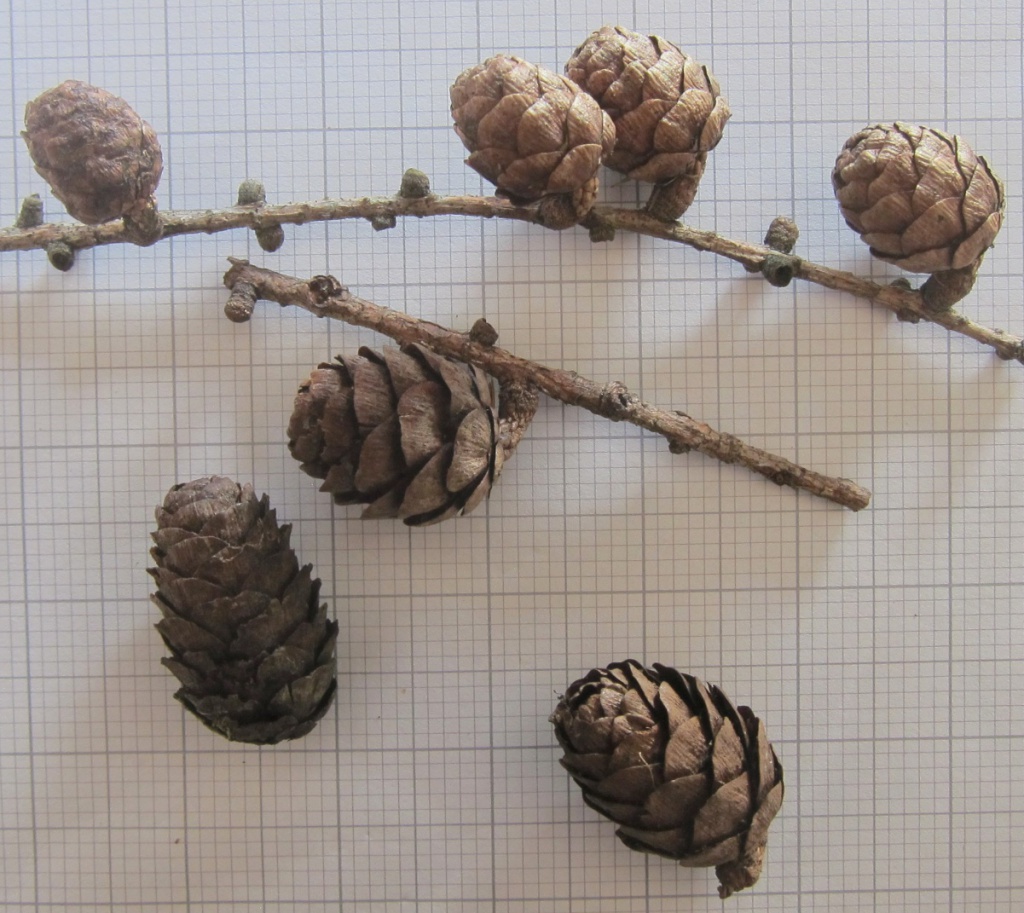
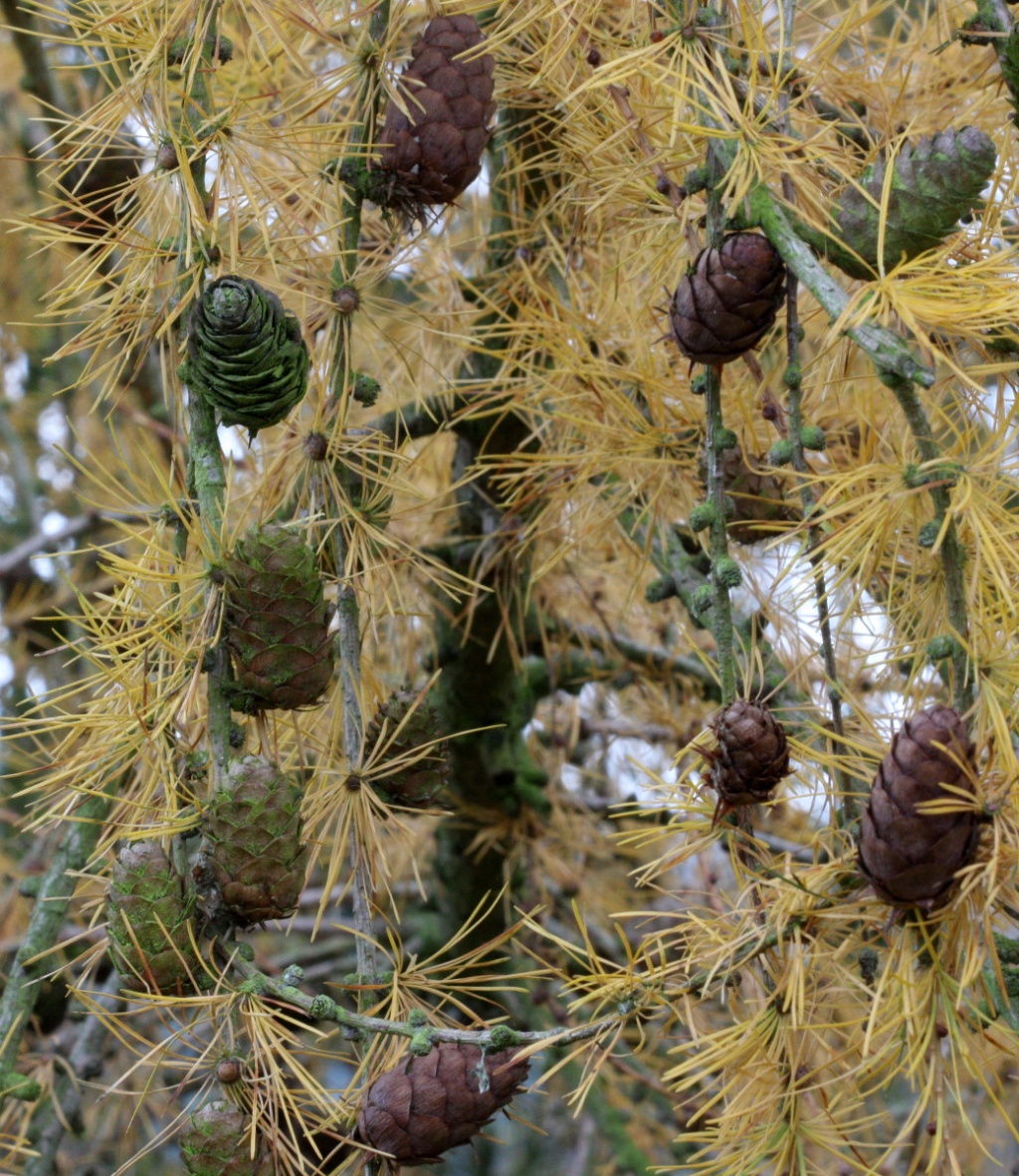
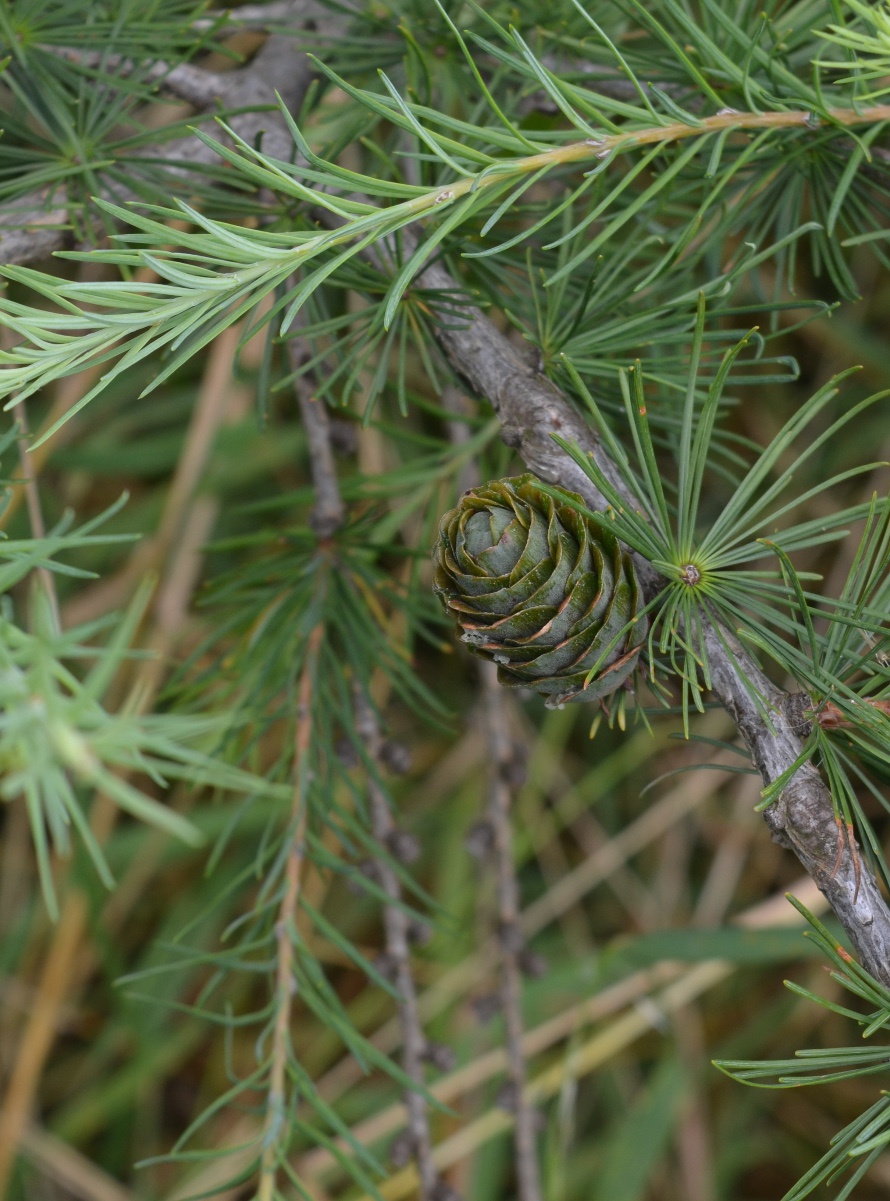
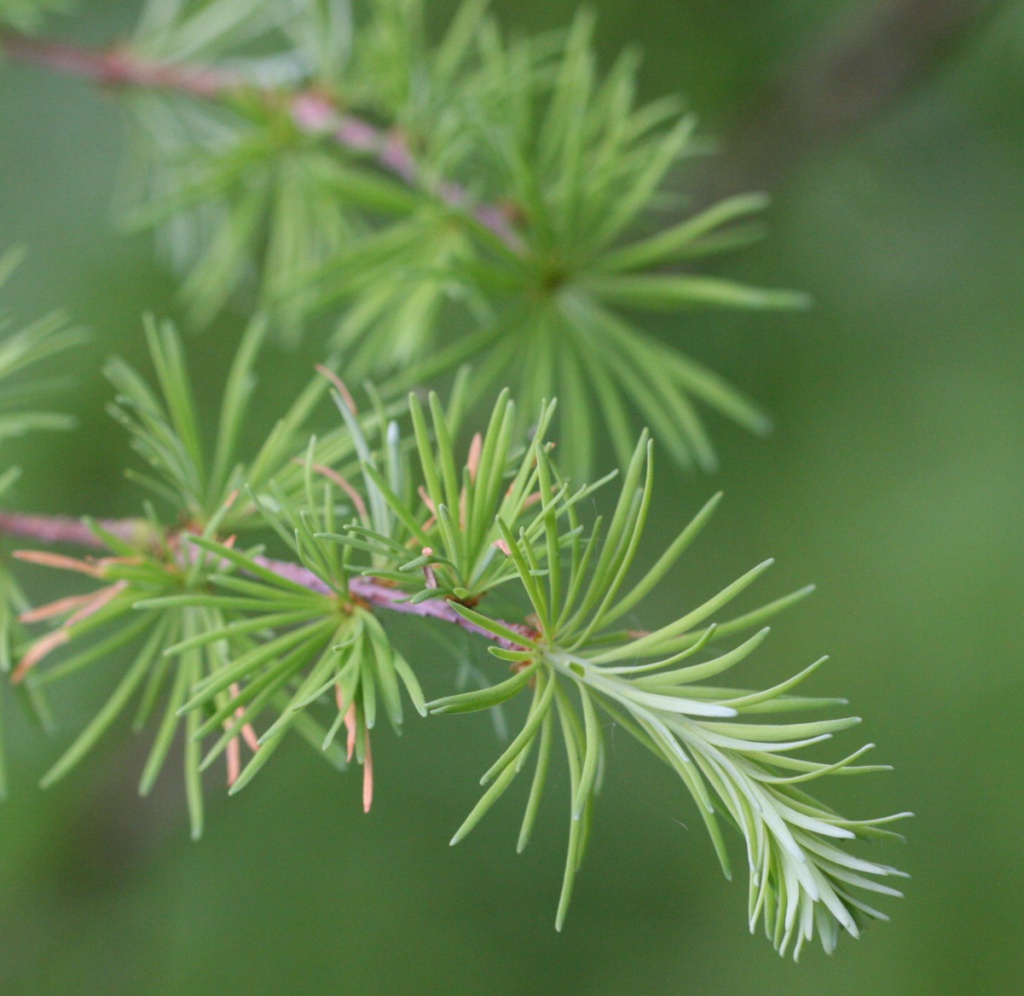
Tree to 35 metres with irregularly whorled branches, leaves in tufts on short lateral shoots, or spirally arranged on leading shoots, rather pale green,12 to 30 mm long that have inconspicuous greenish stripes on the undersurface . It has tall, ovoid cones with erect scales and yellow twigs.
The commonest confusion species are L. kaempferi and L. x marschlinsii, which have cones with patent scales that have recurved tips, and leaves with conspicuous whiteish stripes on the undersurface.
L. kaempferi - pink to red twigs with leaves 15 to 40 mm long and short ovoid cones
and
L. x marschlinsii - pink-orange-brownish twigs with leaves 40 to 50 mm long and mid-height ovoid cones.
Sometimes it is very difficult to identify material, but the tall cones, erect scales and shorter leaves of L. decidua are good characters. The hybrid can be very difficult to separate from the species.

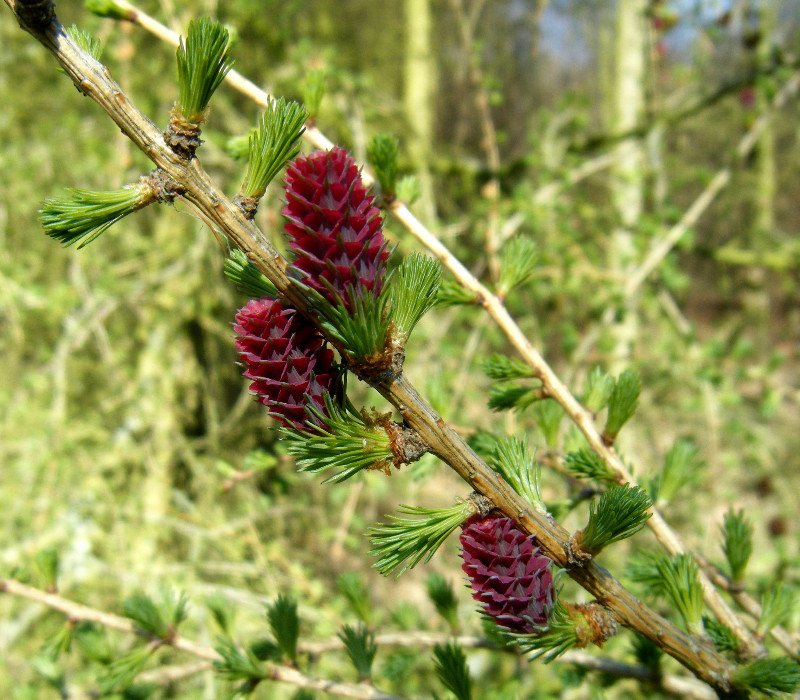
Female cone-scales erect
Photo of cones and shoot; photo of whole tree
Various. Often found in plantations, but sometimes naturalised.
March April.
Deciduous.
Widespread throughout Britain, often in plantations.
Fairly frequent in Leicestershire and Rutland. In the 1979 Flora survey of Leicestershire it was found in 172 of the 617 tetrads.
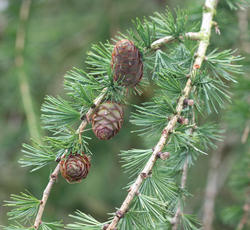 David Nicholls
Fosse Meadows
08 July 2011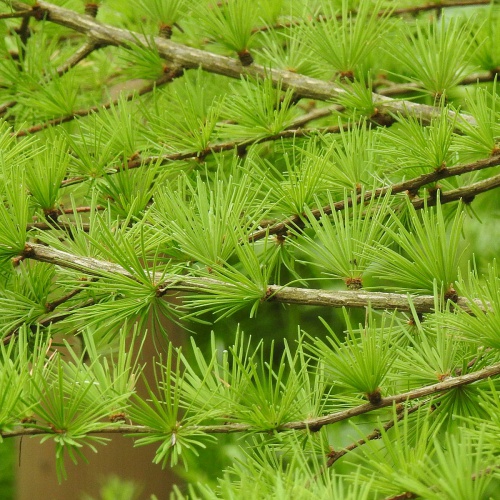 David Gould
Brown's Hill Quarry, Holwell NR
11 May 2017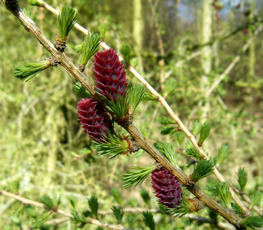 Graham Calow
Fosse Meadows, Sharnford
27 March 2012
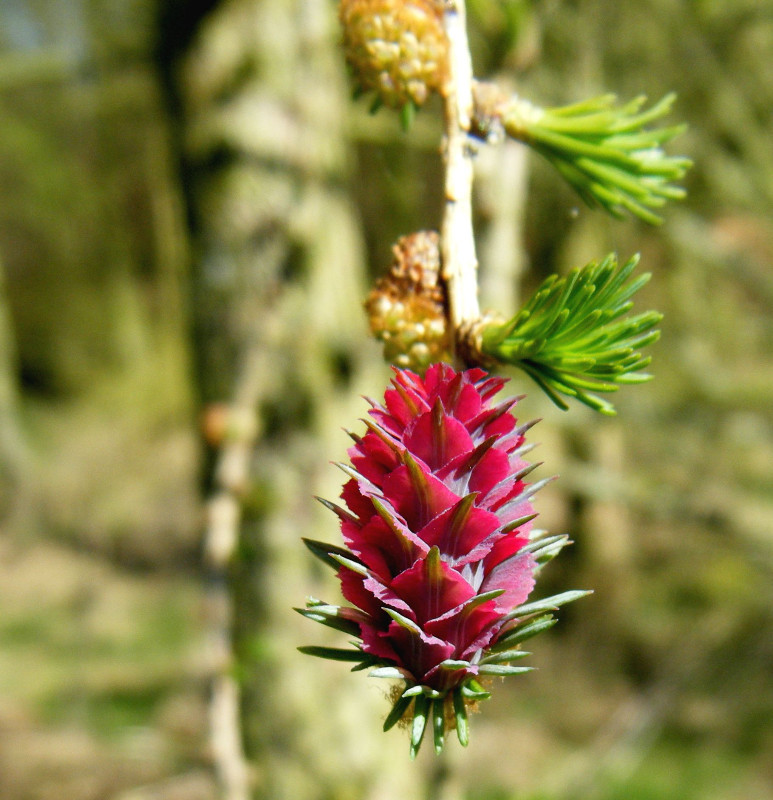
female flowers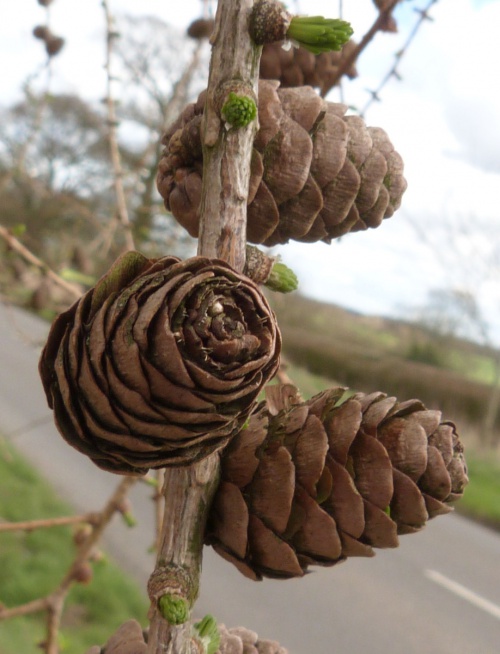 Graham Calow
Highcross Road, Claybrook Magna
28 March 2016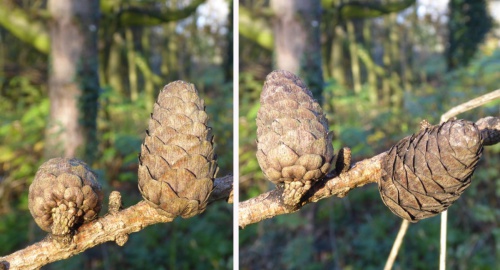 Saharima Roenisch
Leicester Victoria Park
27 November 2020
Leicestershire & Rutland Map
Enter a town or village to see local records
MAP KEY:
Yellow squares = NBN records (all known data)
Coloured squares = NatureSpot records: 2025+ | 2020-2024 | pre-2020
UK Map
Additional images
, Behind Leicester Road Quarry Sapcote SP 4980 9348 (taken 31.5.2006)..JPG)
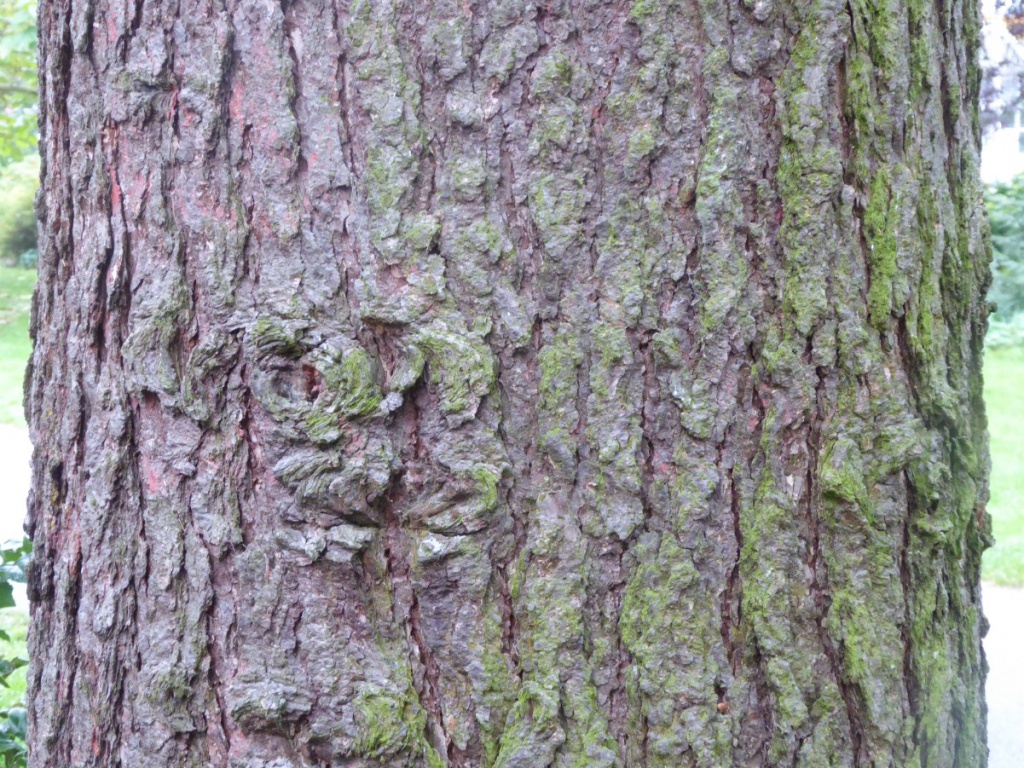
All NatureSpot records
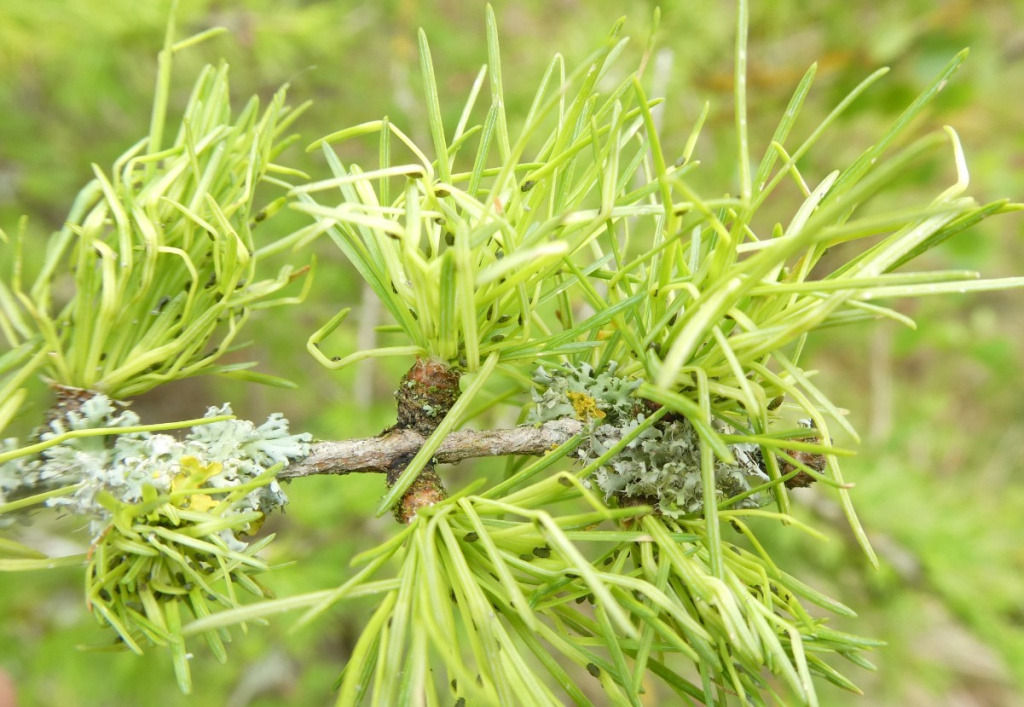
Sacchiphantes viridis
The secondary host of the adelgid Sacchiphantes viridis is Larch. Nymphs feed on larch needles, causing them to bend sharply into 'elbows', with a slightly swollen, yellowish patch at the bend.
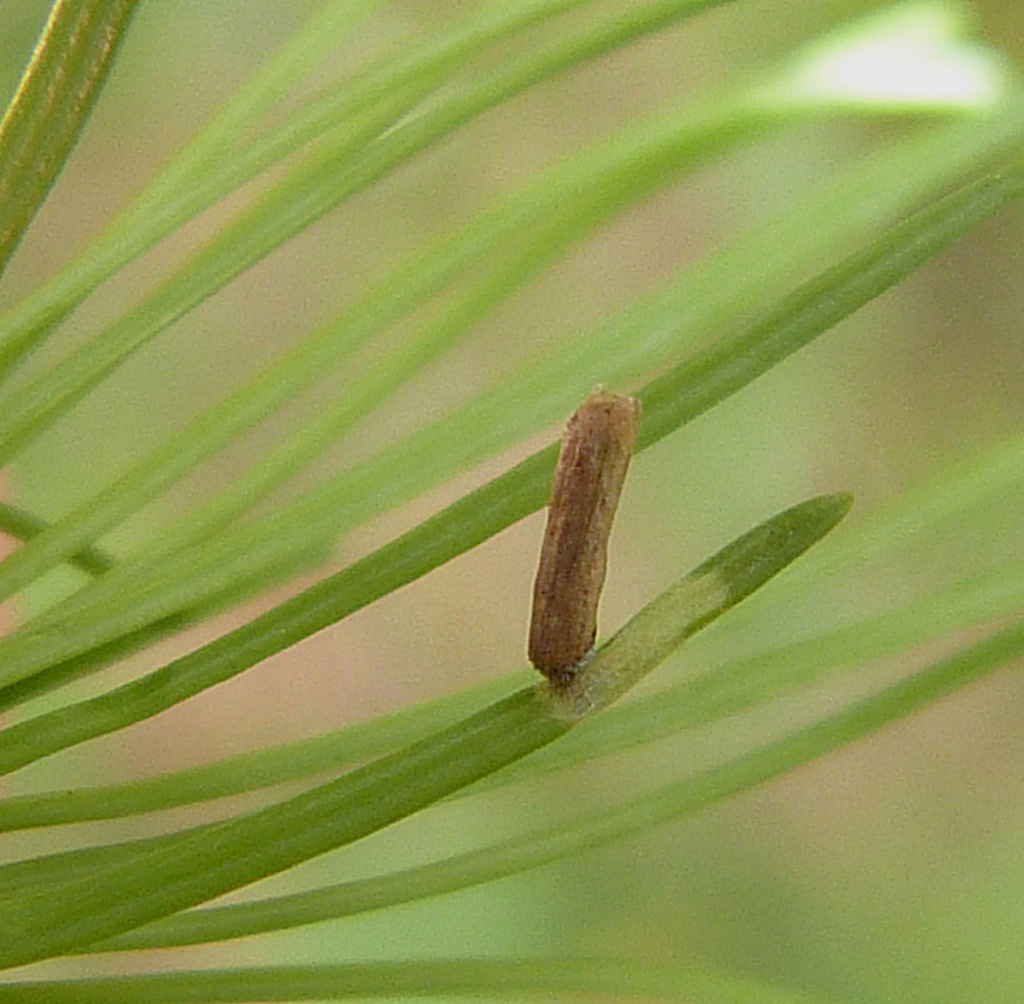
Larch Case-bearer
The cased larvae of the Larch Case-bearer moth (Coleophora laricella) feed on Larch and may be seen grazing on the needles in Springtime.
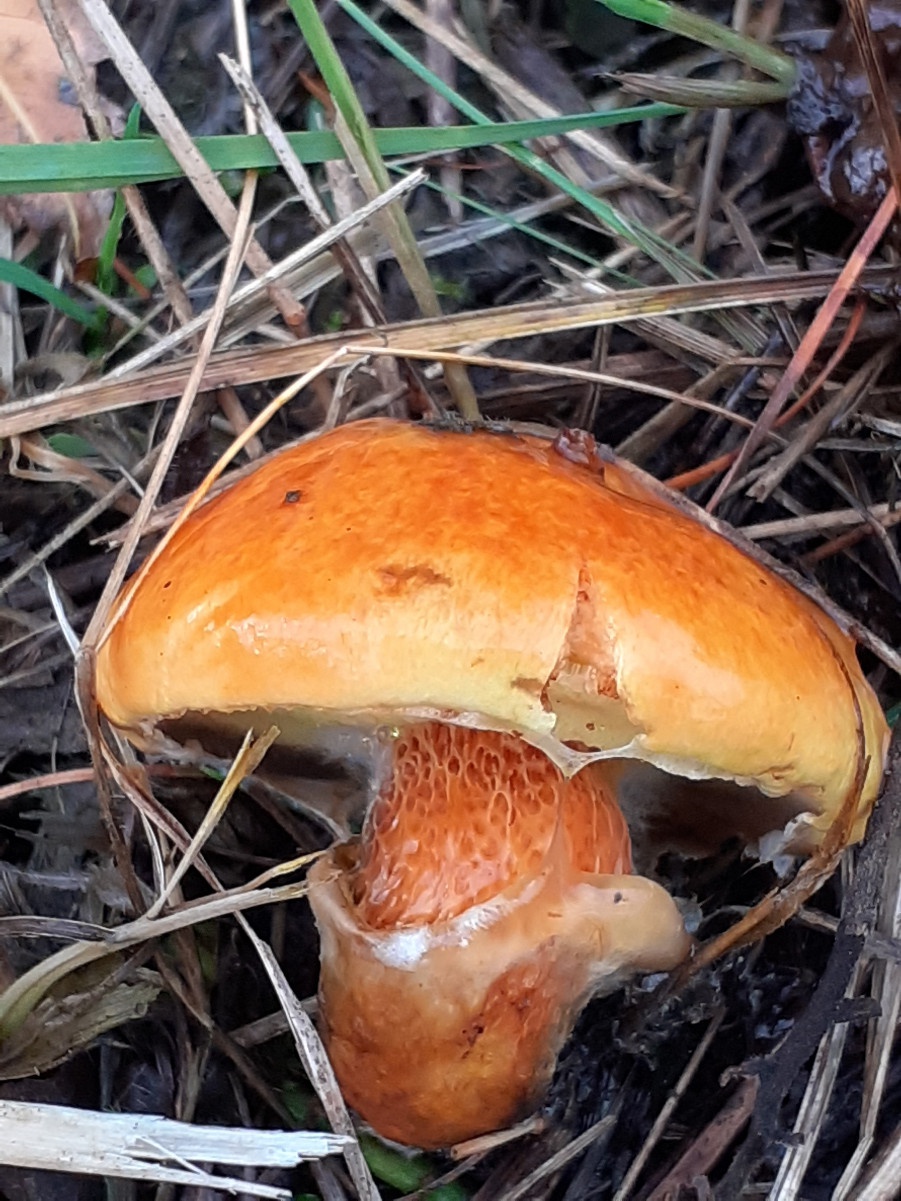
Larch Bolete
The Larch Bolete fungus (Suillus grevillei) may be various shades of yellow through to almost orange and has a very slimy cap, especially when wet. It grows beneath Larch trees.