Epiclerus panyas
Epiclerus panyas
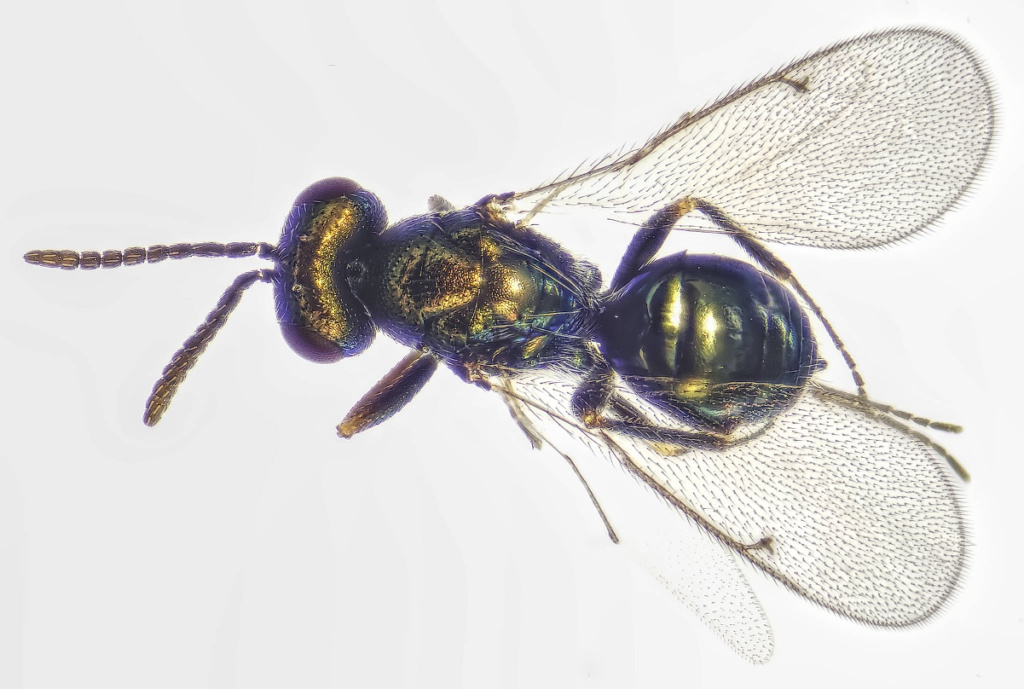
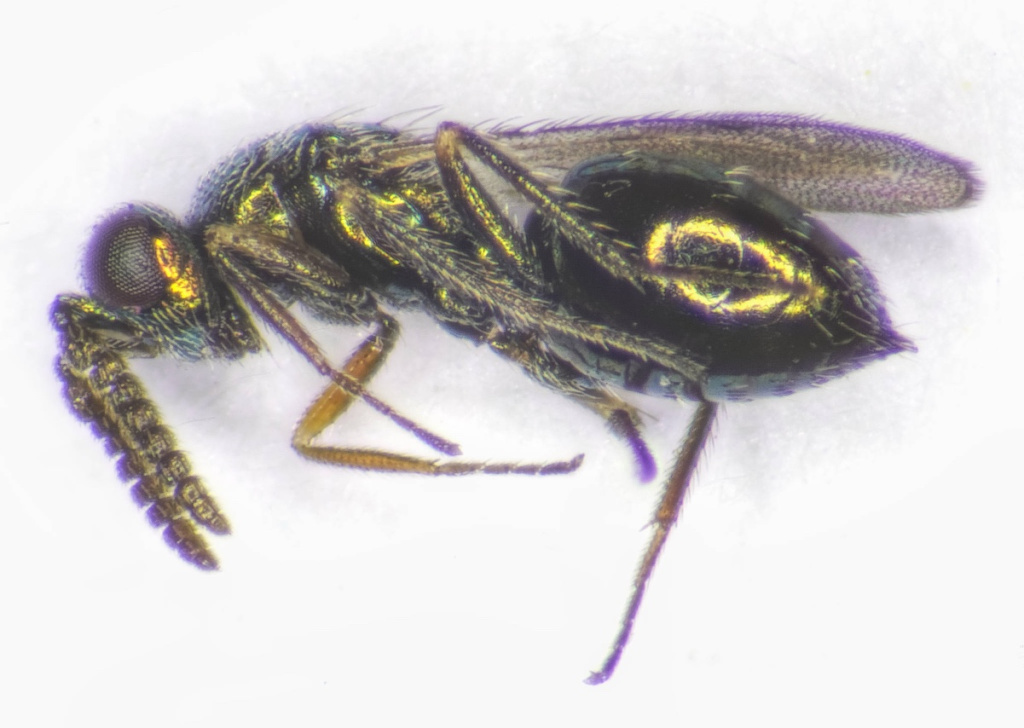
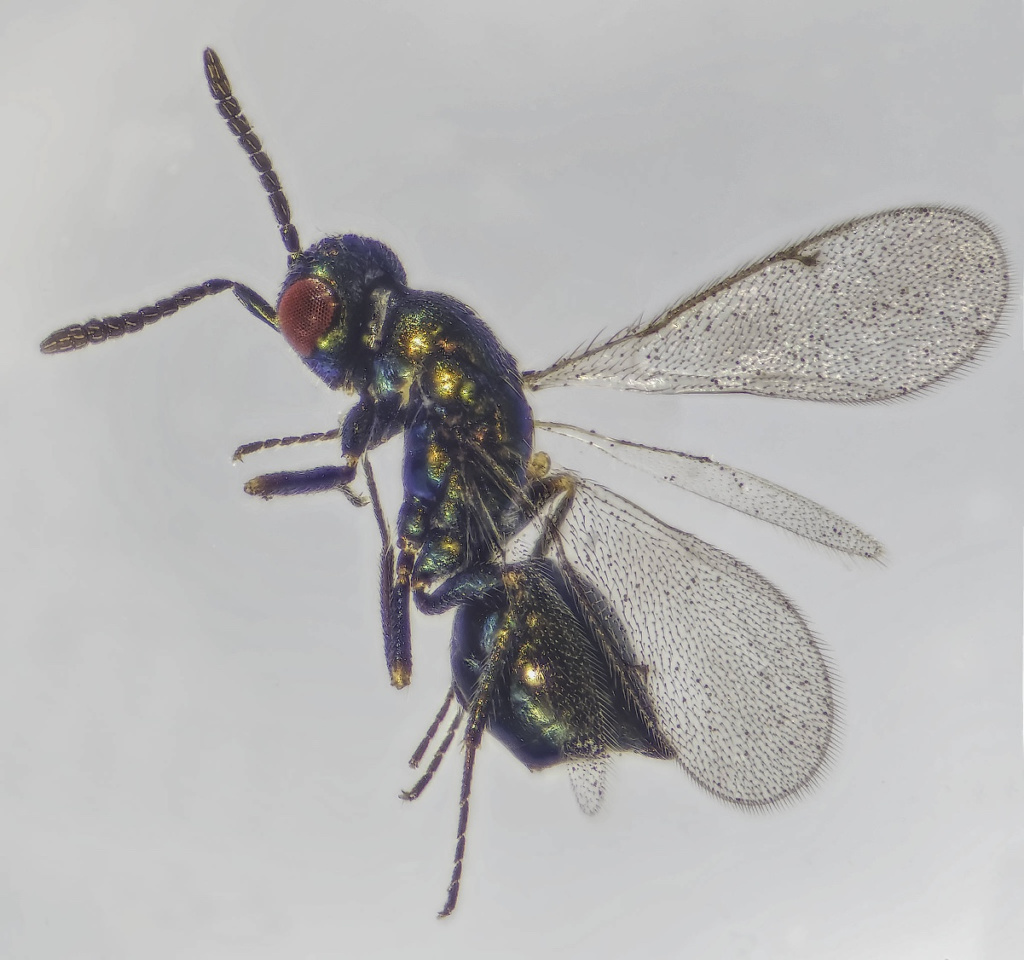
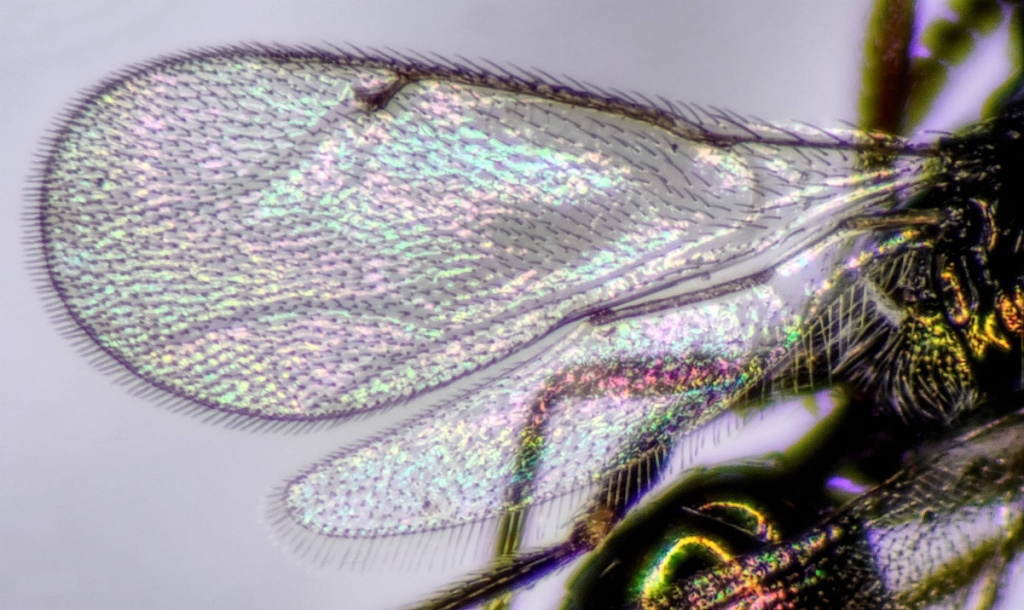
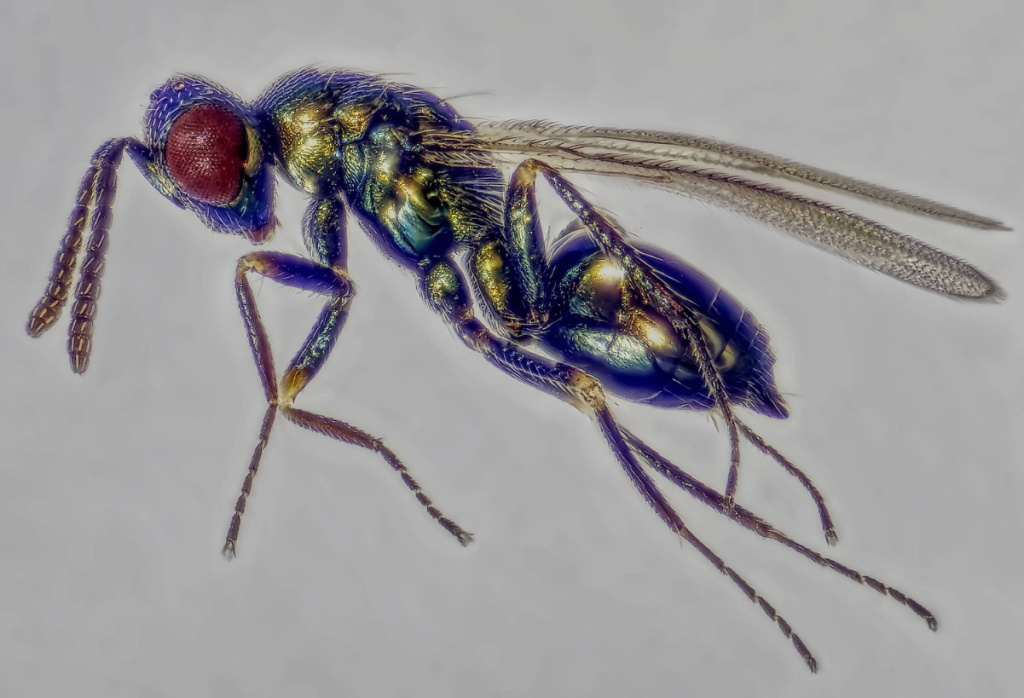
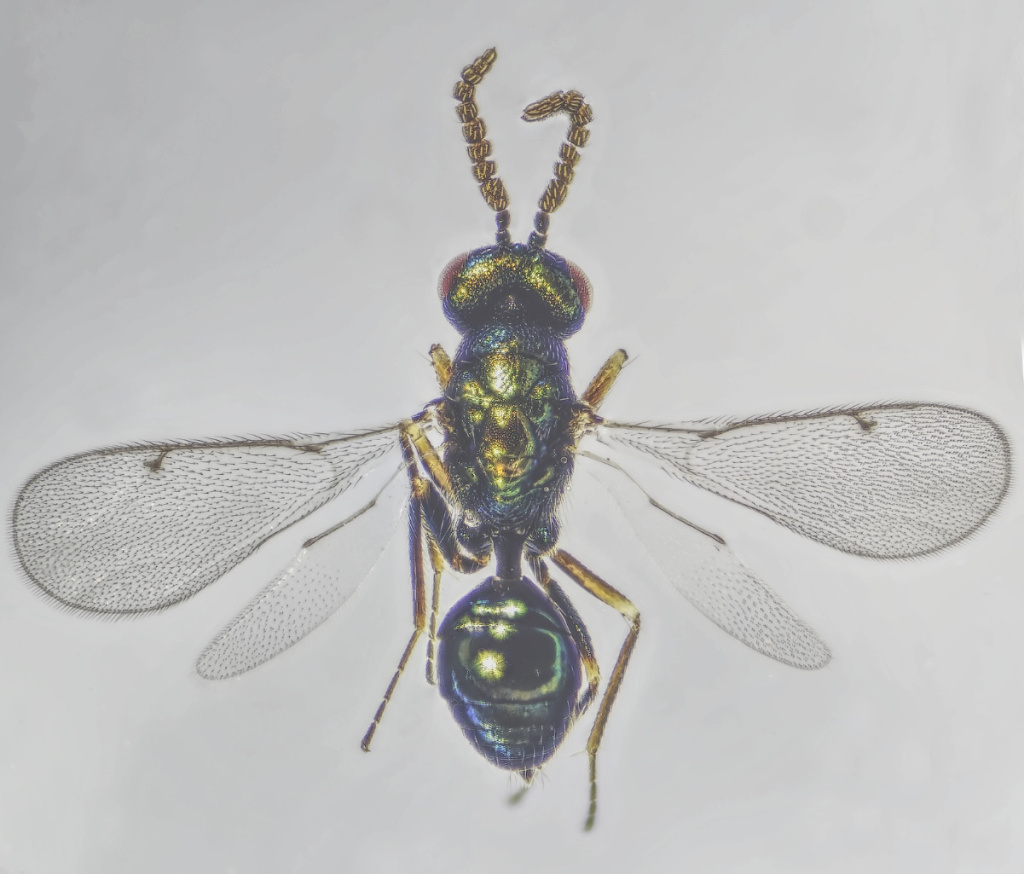
A tiny (~2mm) "jewel wasp" with a dark, shimmering metallic blue-green or bronze appearance. Legs are mostly dark (concolorous with the body) at the base (coxae), but the tibiae are often paler or yellowish-brown. Males have 4-segmented tarsi on all legs, females have 5-segmented tarsi. The antennae are geniculate (elbowed) and provide the best way to distinguish E. panyas from its close relatives. The antennae typically have a 11-segmented antennae (including a tiny ring-like segment called an anellus). The marginal vein of the forewing is very long compared to the other veins. The postmarginal vein is significantly longer than the stigmal vein (the little "thumb" vein). In many similar wasps, these two are roughly equal, but in Epiclerus, the postmarginal vein clearly extends much further along the wing edge.
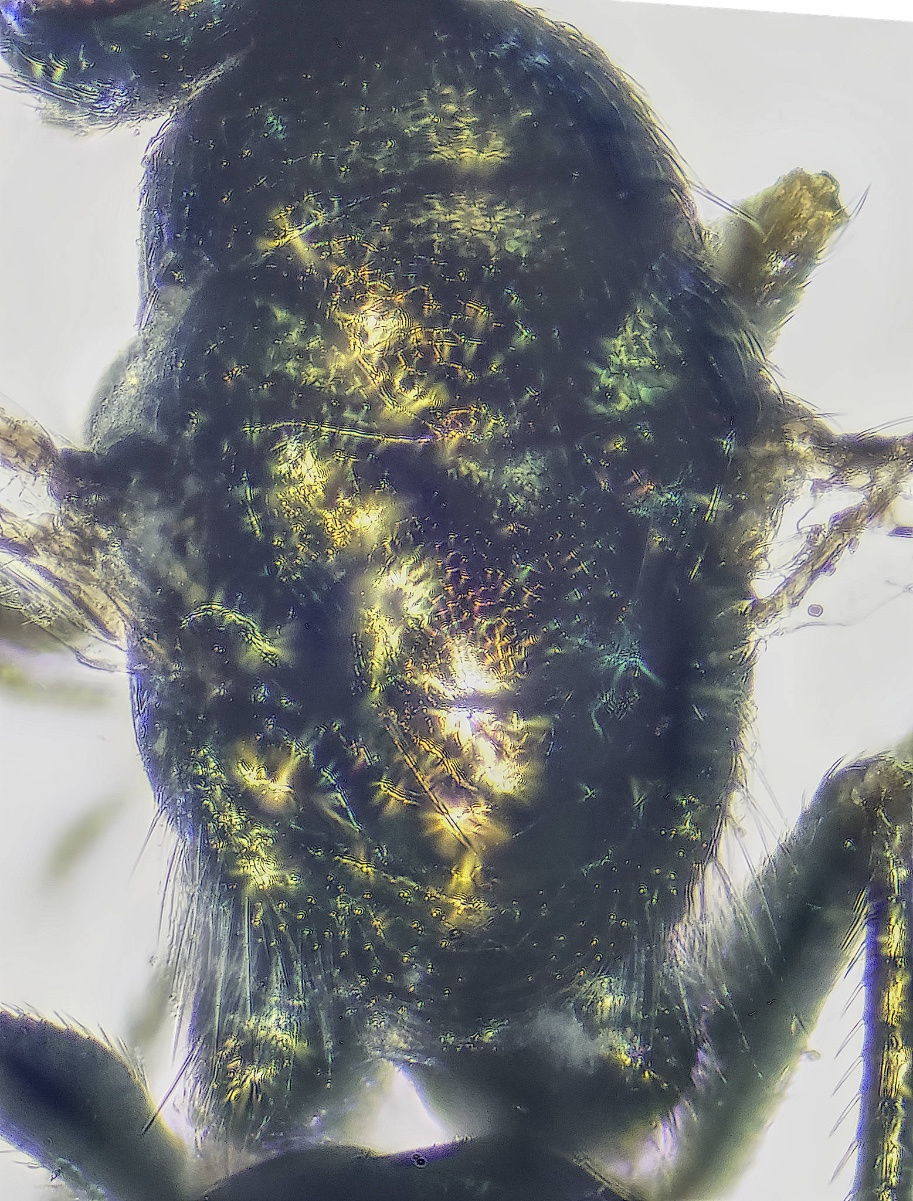
Females: tarsi 5-segmented; propodeum very densely setose, medially with many punctures
bearing white hairs, without reticulations; petiole with almost parallel edges, twice as
long as broad in the middle; the last flagellar segment transverse.

Microscopic examination and photos of key features required.
Primarily found in grassy areas where its hosts - leaf-mining flies such as Chromatomyia & Phytomyza - are abundant. One of the primary parasitoids of the common fly-miner Phytomyza ranunculi on Creeping Buttercup.
Very few observations due to identificaton difficulty. Probably common.
Unknown.
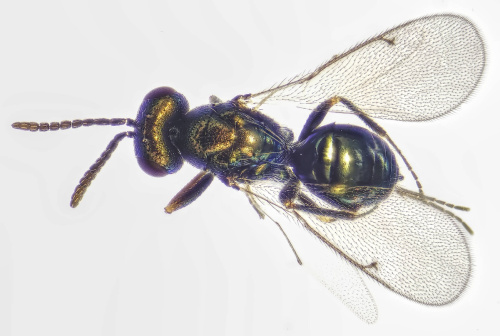 AJ Cann
Billesdon Woodland Pool
17 February 2026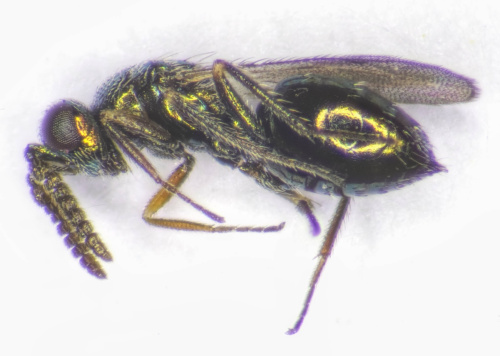 AJ Cann
Leicester St Mary Magdalen
28 January 2026
male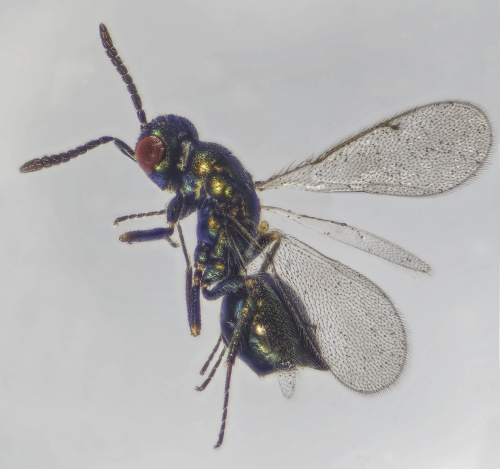 AJ Cann
Croft Glebe
14 February 2026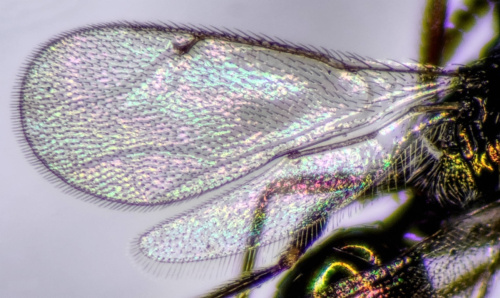 AJ Cann
Leicester St Mary Magdalen
28 January 2026
postmarginal vein significantly longer than the stigmal vein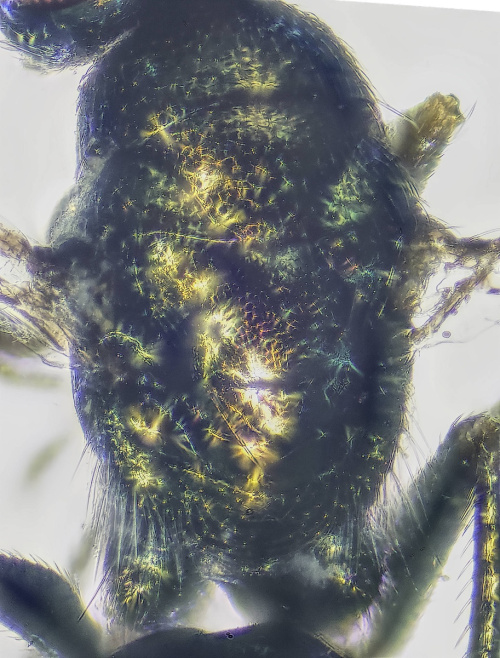 AJ Cann
Croft Glebe
14 February 2026
female propodeum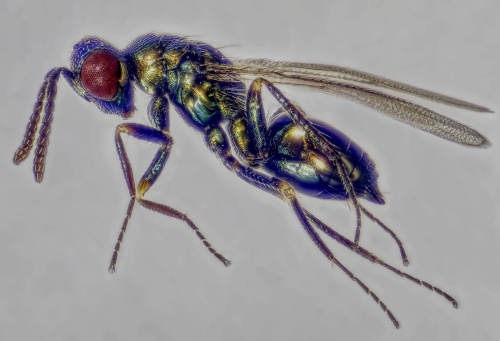 AJ Cann
Billesdon Woodland Pool
17 February 2026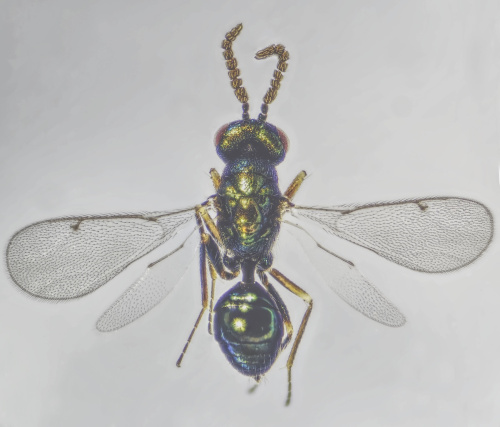 AJ Cann
Leicester St Mary Magdalen
28 January 2026
male
Leicestershire & Rutland Map
Enter a town or village to see local records
MAP KEY:
Yellow squares = NBN records (all known data)
Coloured squares = NatureSpot records: 2025+ | 2020-2024 | pre-2020
UK Map
Additional images
No additional images available for this species.