Early Dog-violet
Early Dog-violet - Viola reichenbachiana
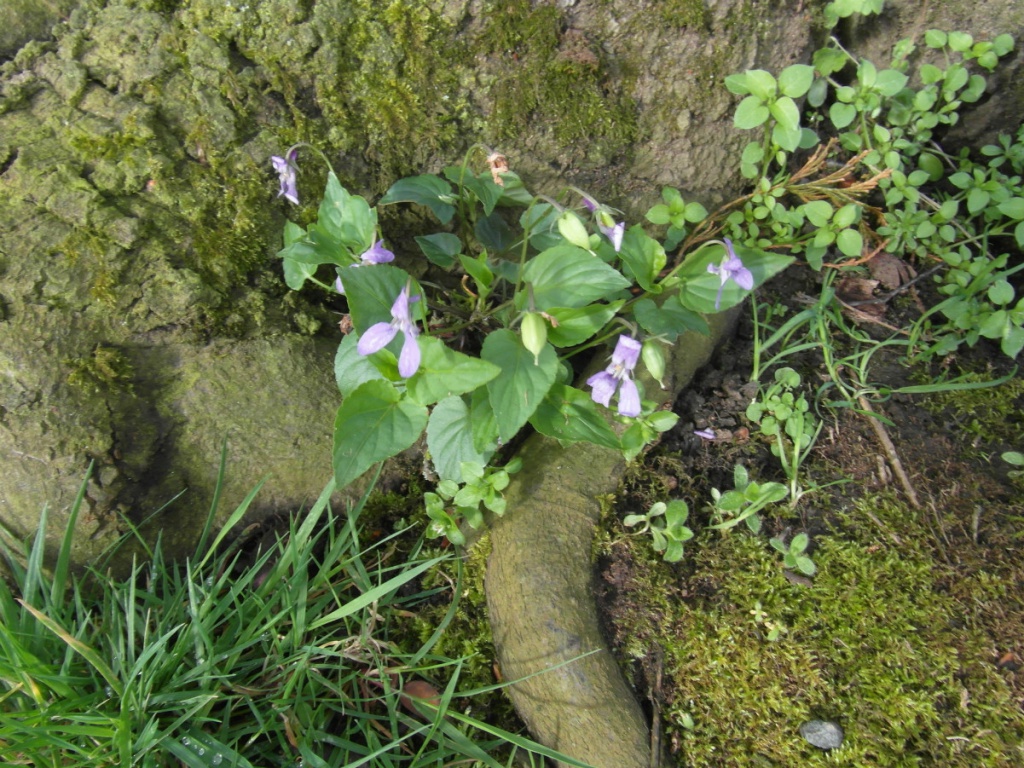
Glabrous or sligthly hairy, low growing plant with a slight basal leaf rosette, and lateral leafy flowering stems. Leaves heart shaped, as long as wide. Flowers violet, generally darker in the centre 12 to 18 mm; not fragrant, with a slender straight dark violet-blue spur, not furrowed or notched.
Very similar to Common Dog-violet and both flower early in the year. Common Dog-violet has a pale, almost white spur which is distinctly notched at the rear. It can also be confused with Sweet Violet.

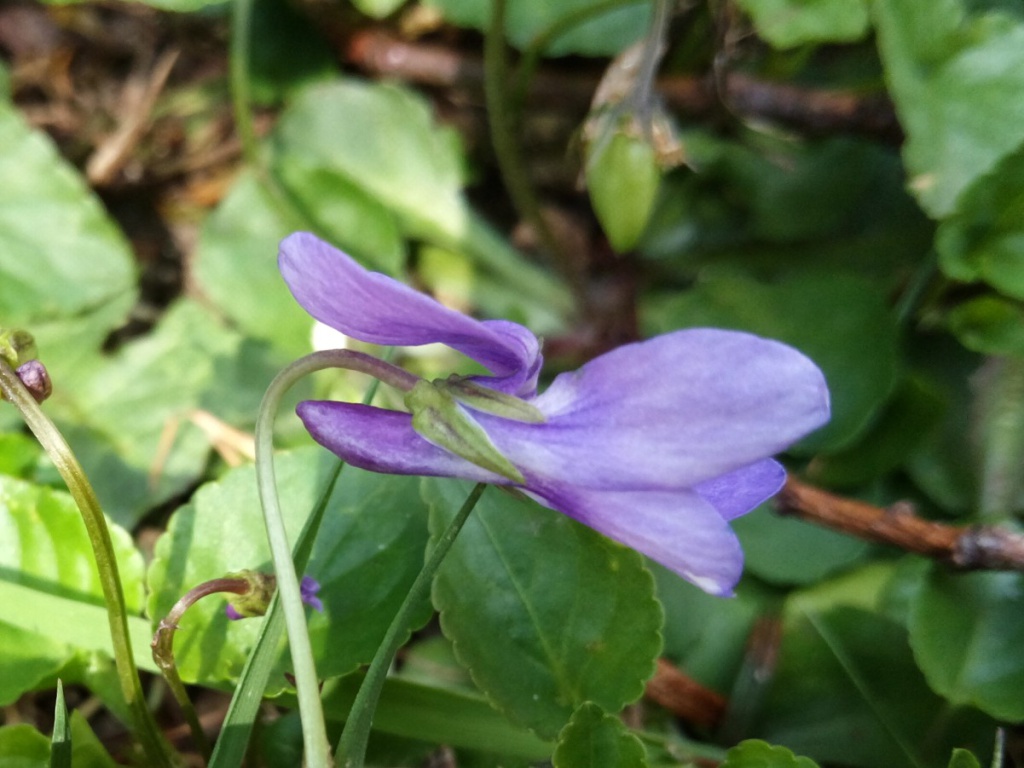
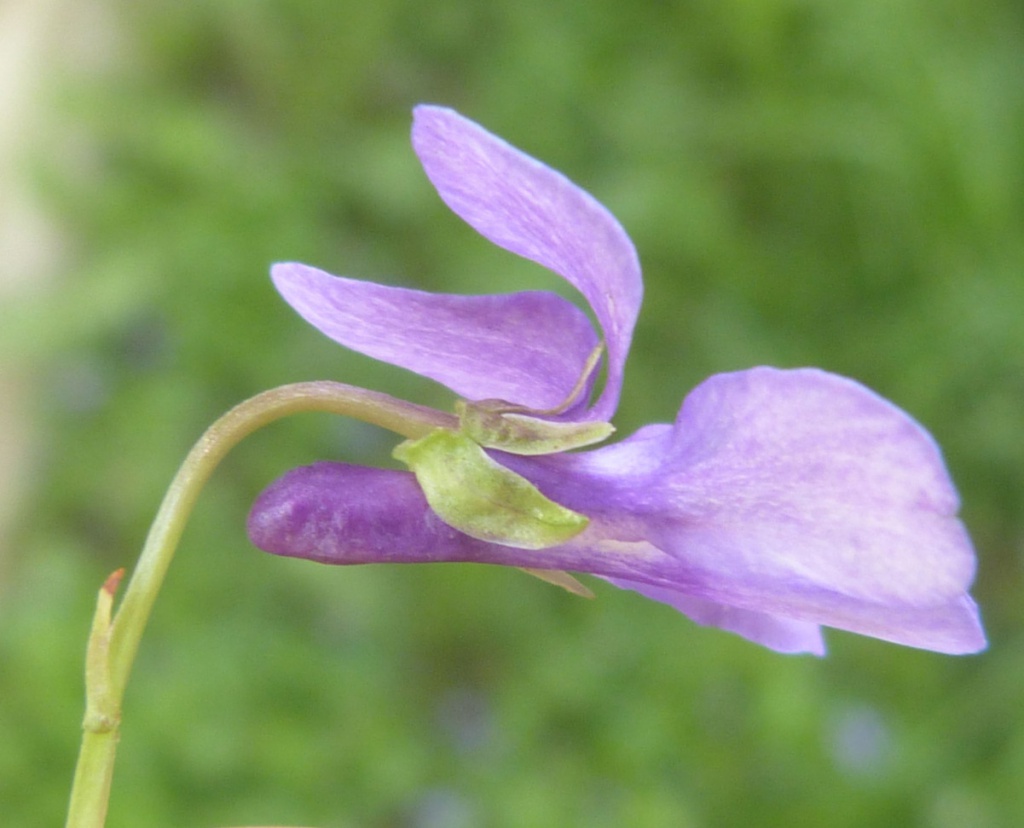
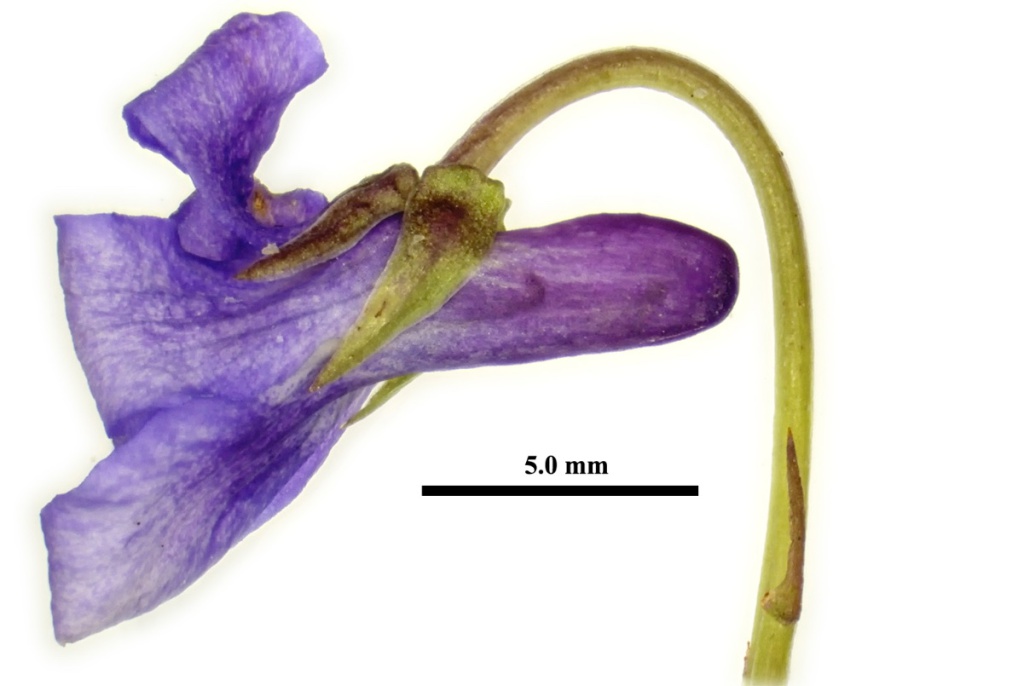
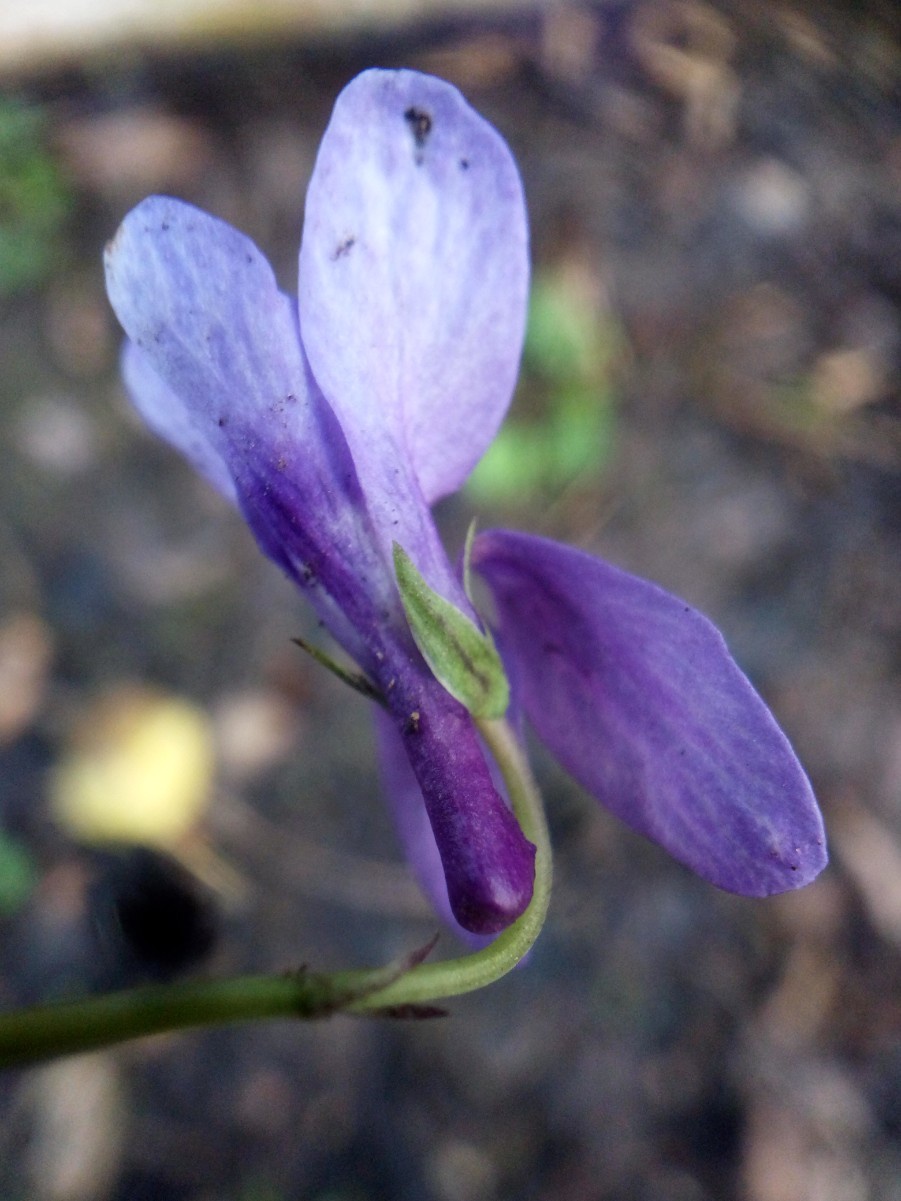
Sepal appendages are short (less than 1.5mm) - this is the part that projects backwards towards the stems. Sepals are lanceolate (long and pointed).Spur is darker than petals, and usually straight, narrow and un-notched.
Side-on photos showing the spur and sepals are needed. This cannot be identified from a 'full-face' photo.
Woods, shady habitats, coppices and hedgebanks.
March to June.
Perennial.
Locally frequent or even locally common in some parts of England but scarce or rare elsewhere in Britain.
Occasional in Leicestershire and Rutland. In the 1979 Flora survey of Leicestershire it was found in 27 of the 617 tetrads.
The current Checklists (Jeeves 2011) has it listed as Native, in old woodland; occasional, but sometime locally frequent.
 Bath House Jitty Sapcote SP 4902 9365 (taken 1.4.2009).JPG) Graham Calow
Graham Calow
Sapcote
01 April 2009
note the dark violet spurs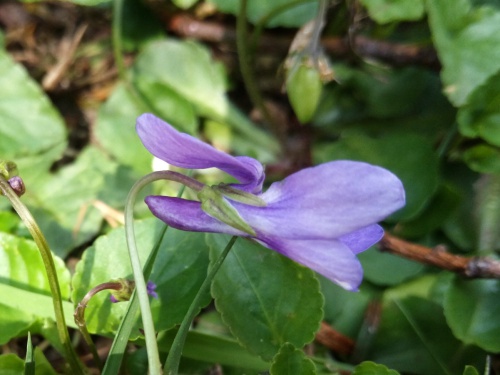 Peter Smith
Ryhall churchyard
23 April 2022
narrow spur, un-notched, and darker than flower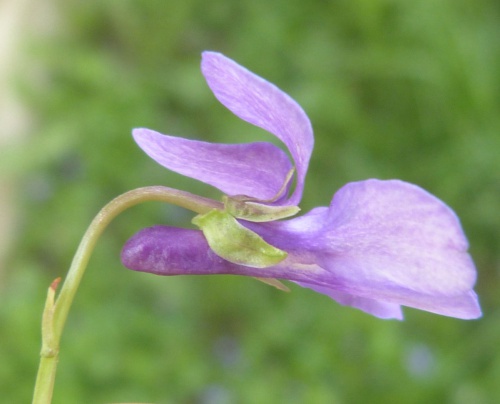 Graham Calow
Church Lane, Wigston Parva
07 May 2016
un-notched purple spur and pointed sepals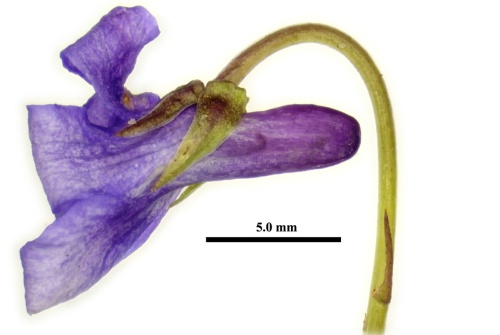 Paul Palmer
Melton Mowbray Garden
16 April 2023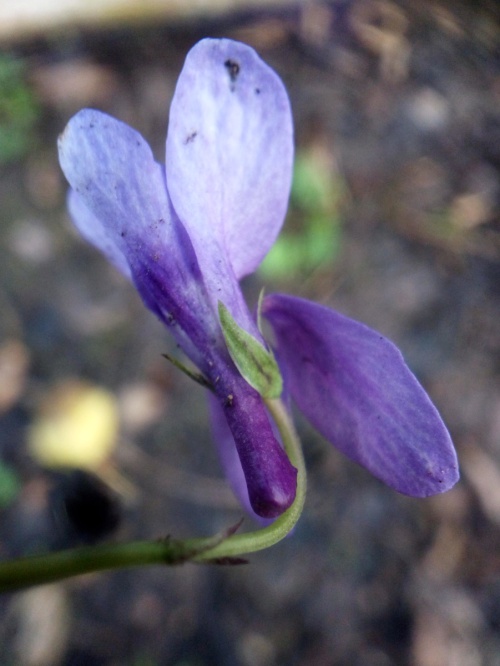 Peter Smith
Cropston, Footpath to Thurcaston Mill
29 April 2023
View from below; spur not notched
 Bath House Jitty Sapcote SP 4902 9365 (taken 1.4.2009).JPG)
Leicestershire & Rutland Map
Enter a town or village to see local records
MAP KEY:
Yellow squares = NBN records (all known data)
Coloured squares = NatureSpot records: 2025+ | 2020-2024 | pre-2020
UK Map
Additional images
 Bath House Jitty SP 4902 9365 (taken 28.4.2009).JPG)
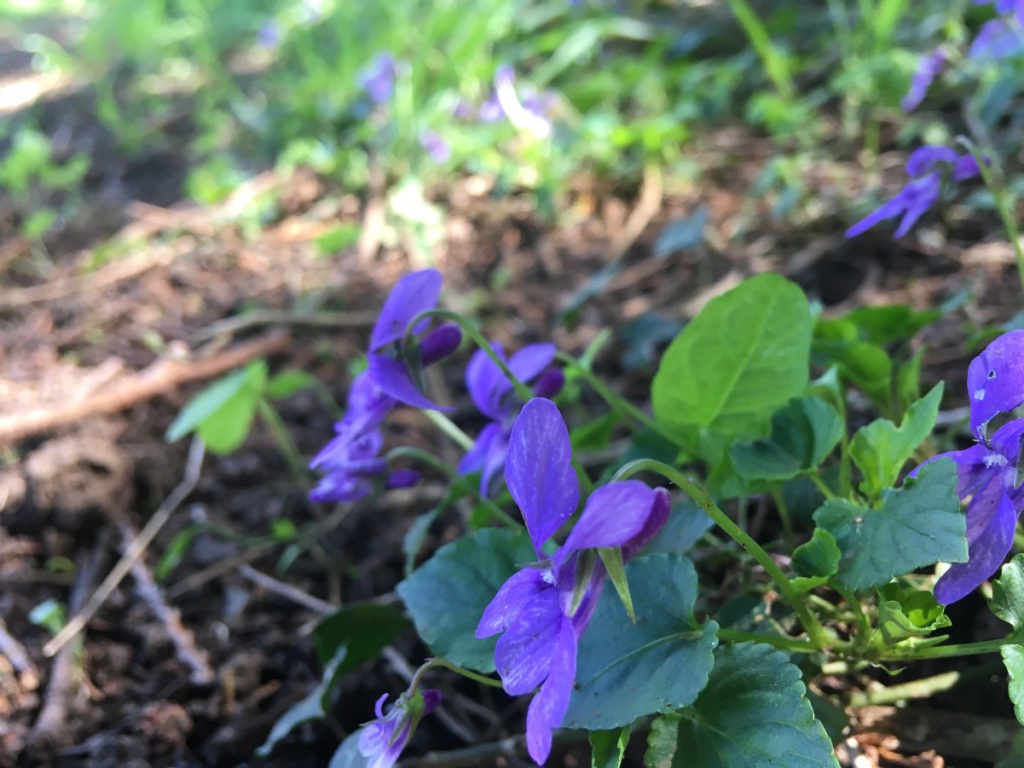
All NatureSpot records
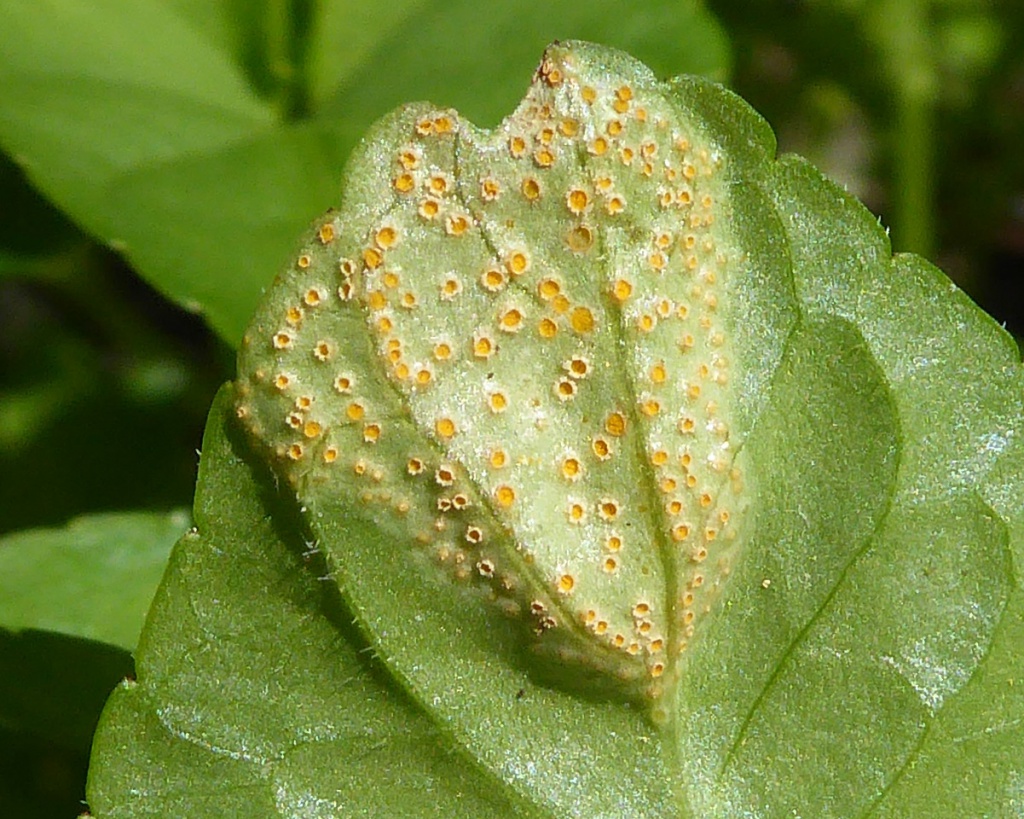
Puccinia violae
Puccinia violae is a rust that causes galls on members of the Viola family, including cultivated varieties. There is no host alternation. Orange aecia are borne on distorted, swollen areas on the leaves, stems and petioles. Uredinia and dark brown telia (non-galling) appear later.
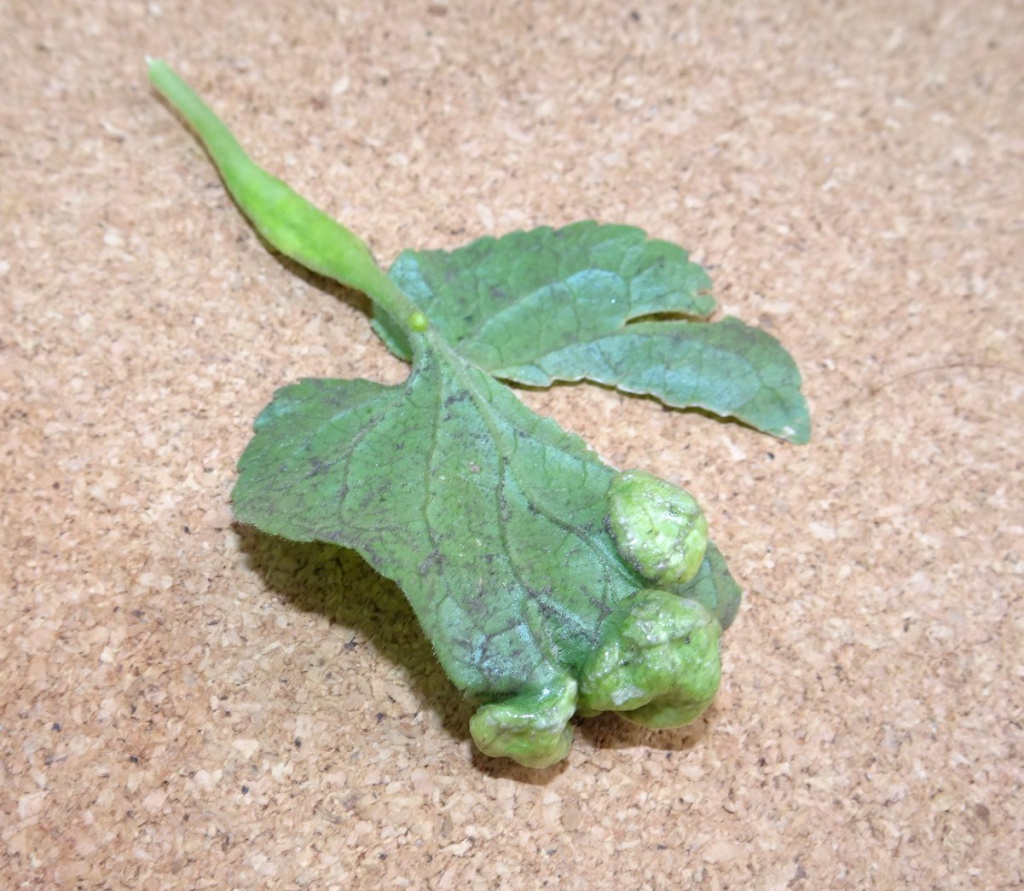
Violet Smut
The smut fungus Urocystis violae induces elongate swellings on the petioles and leaf veins, and/or leaves of Violet species (Viola sp.). Affected parts are usually swollen and strongly distorted and may also be recorded as a gall. The swellings open to release a black spore mass, composed of many individual balls of spores.