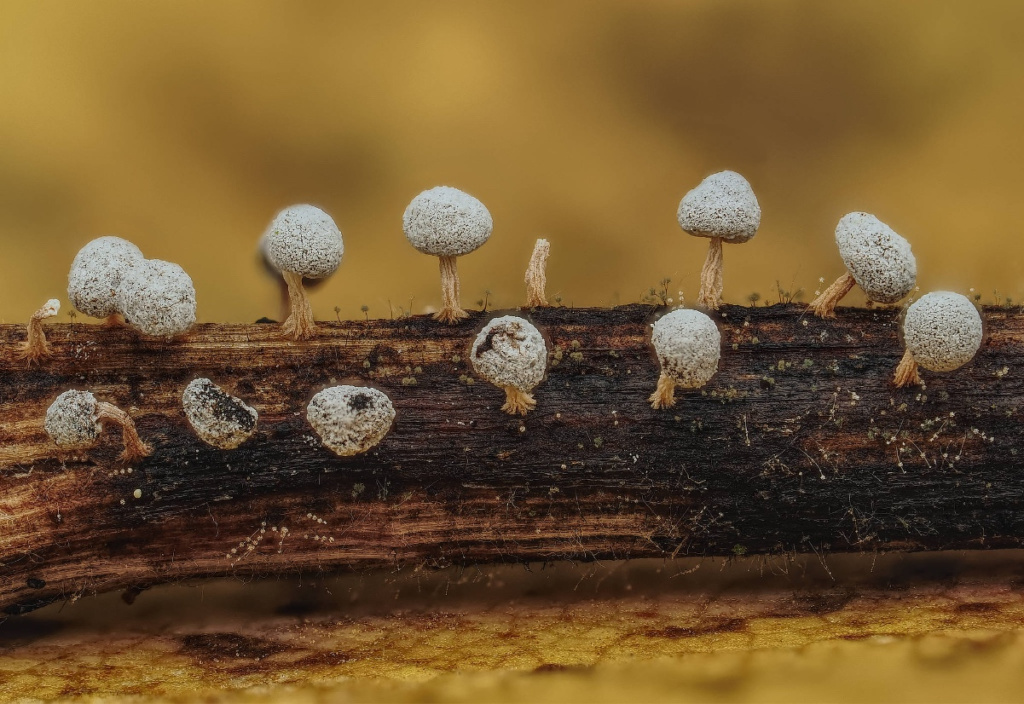
Didymium squamulosum
Didymium squamulosum
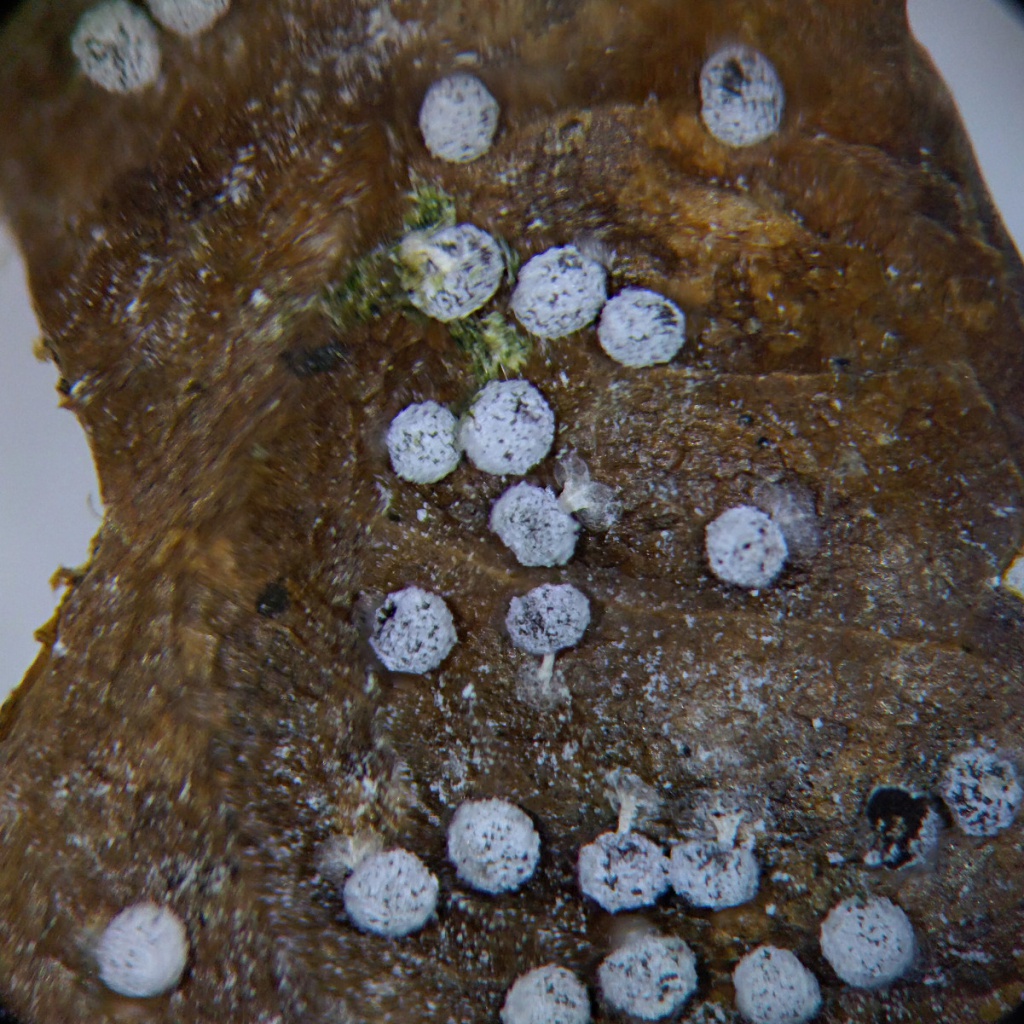
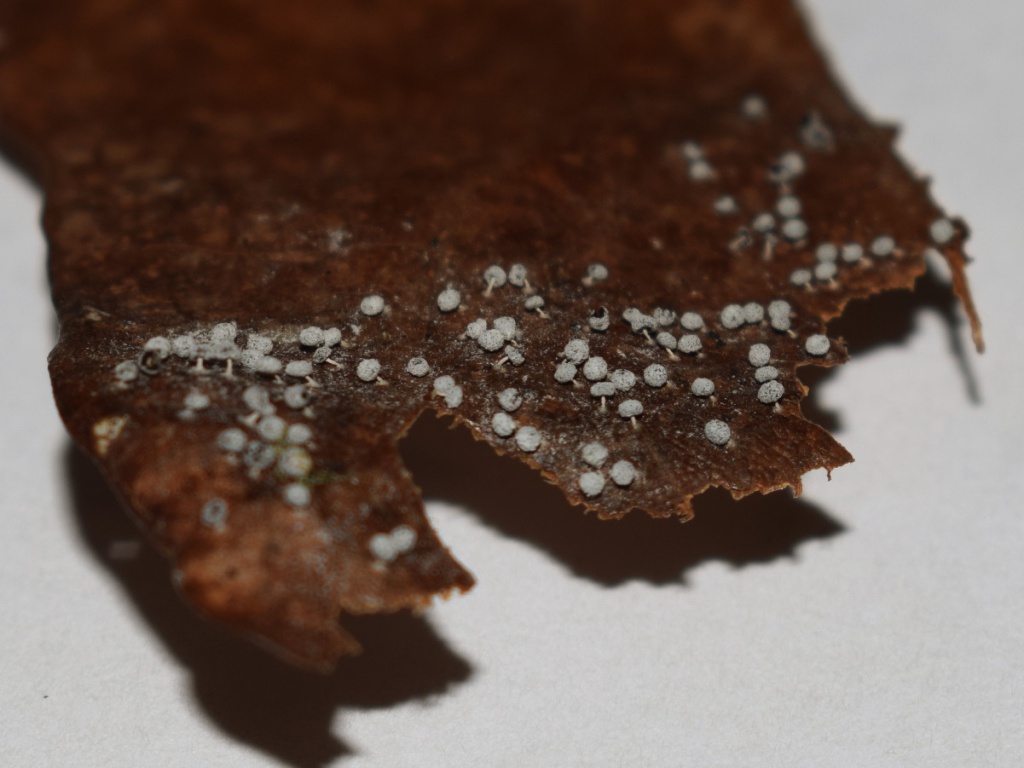
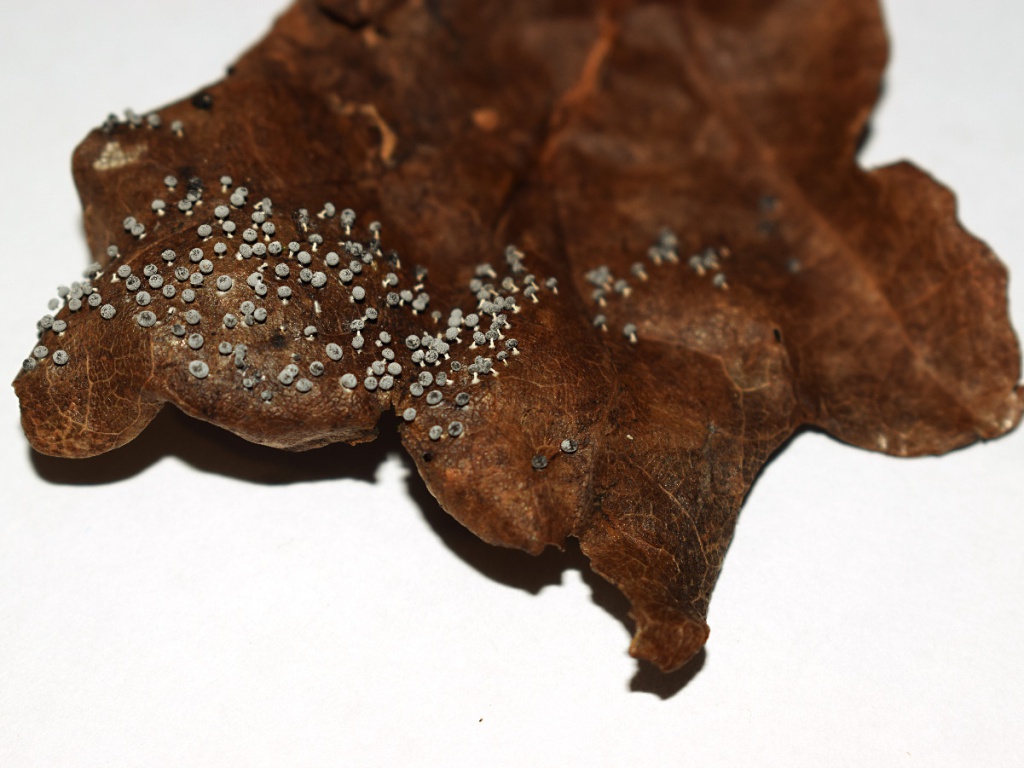
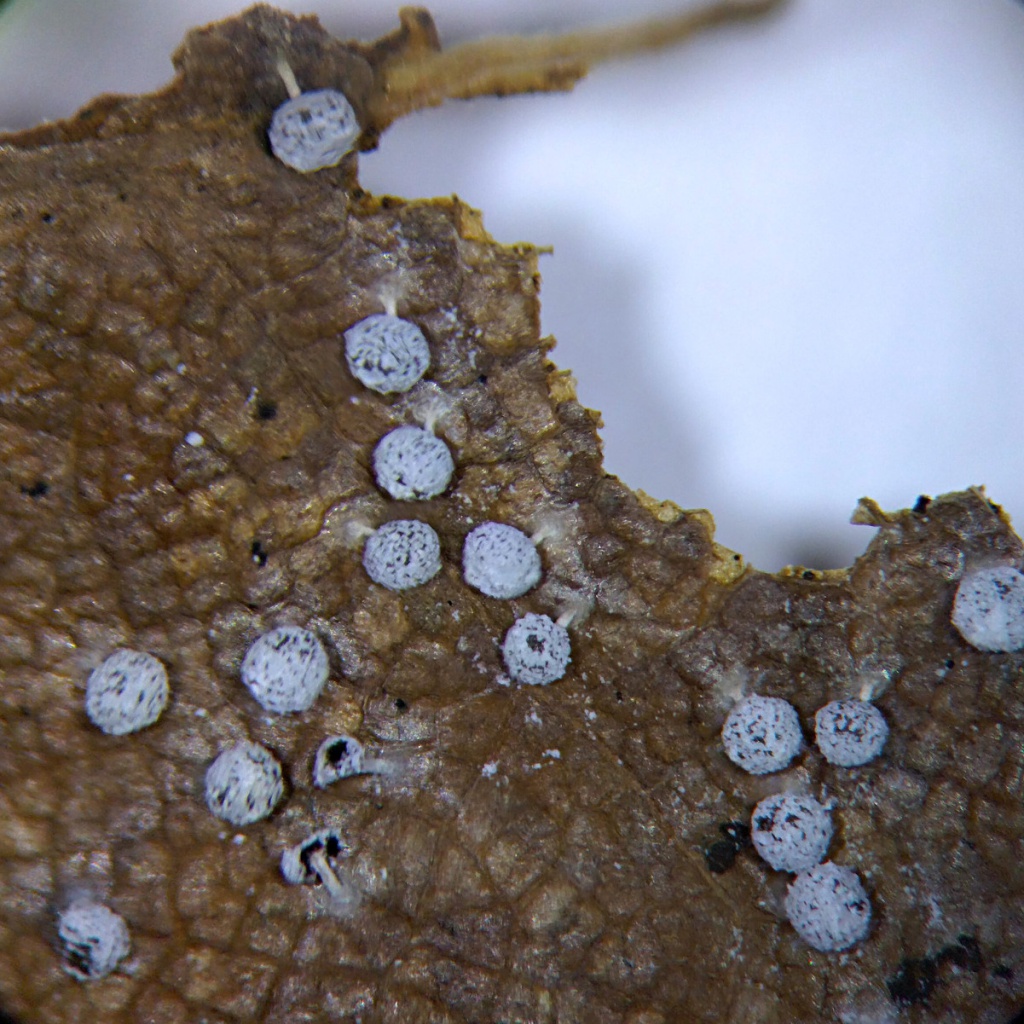
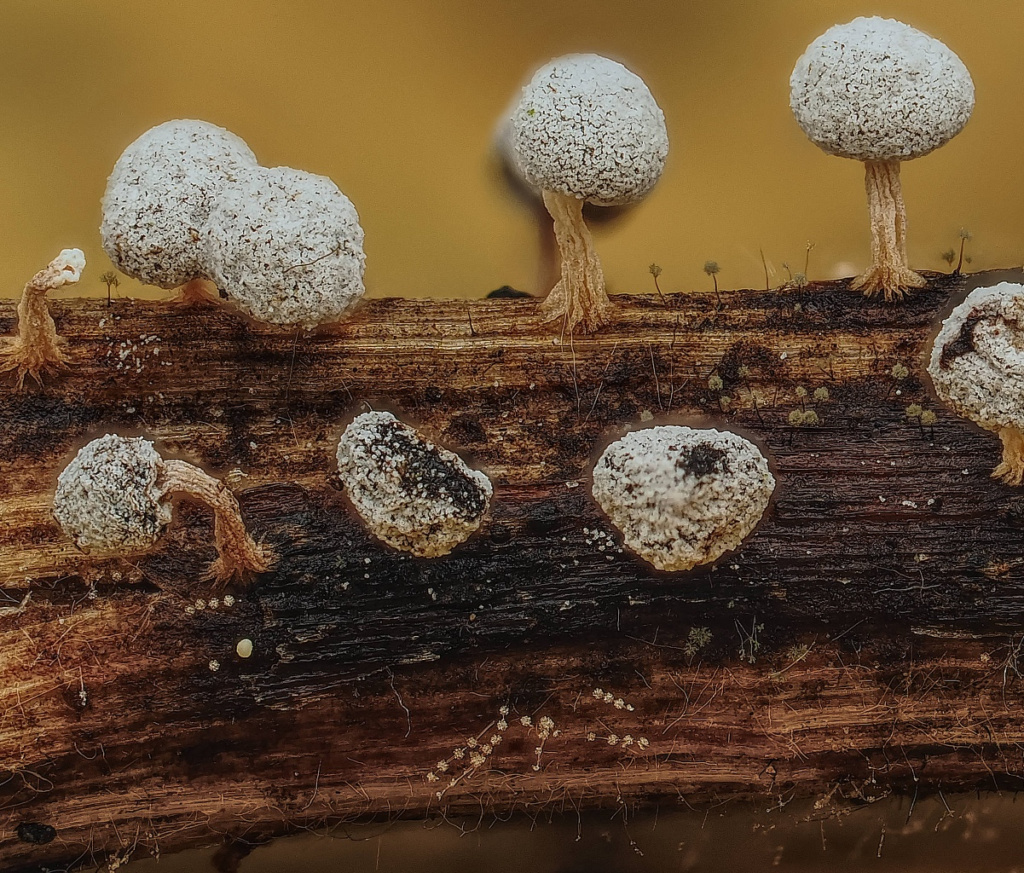
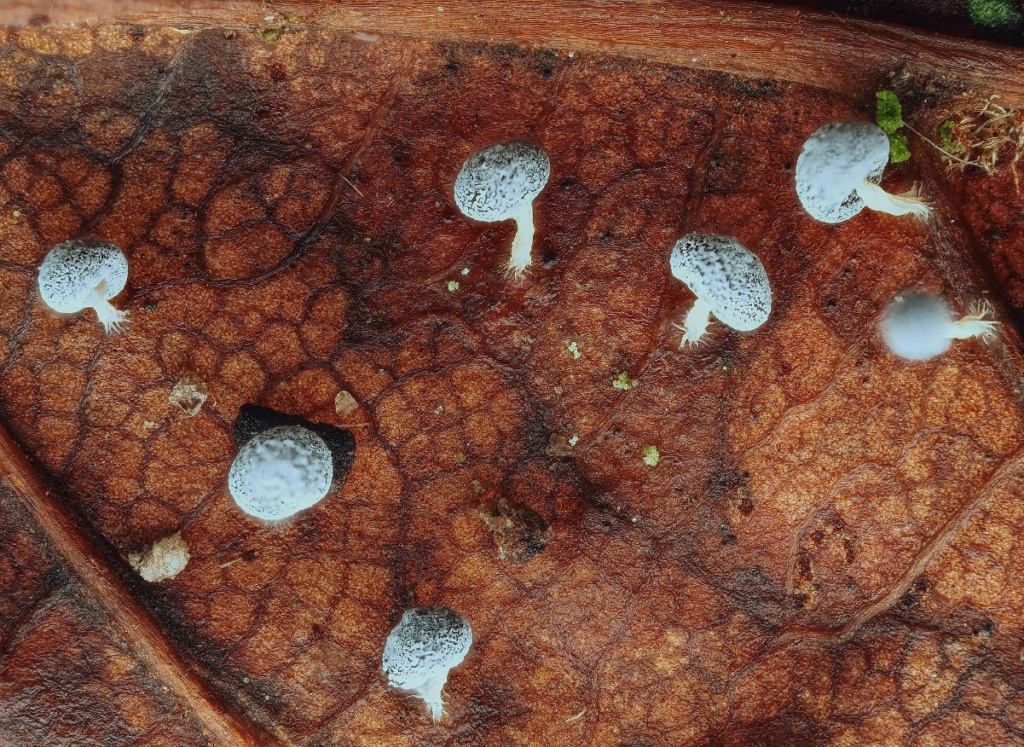
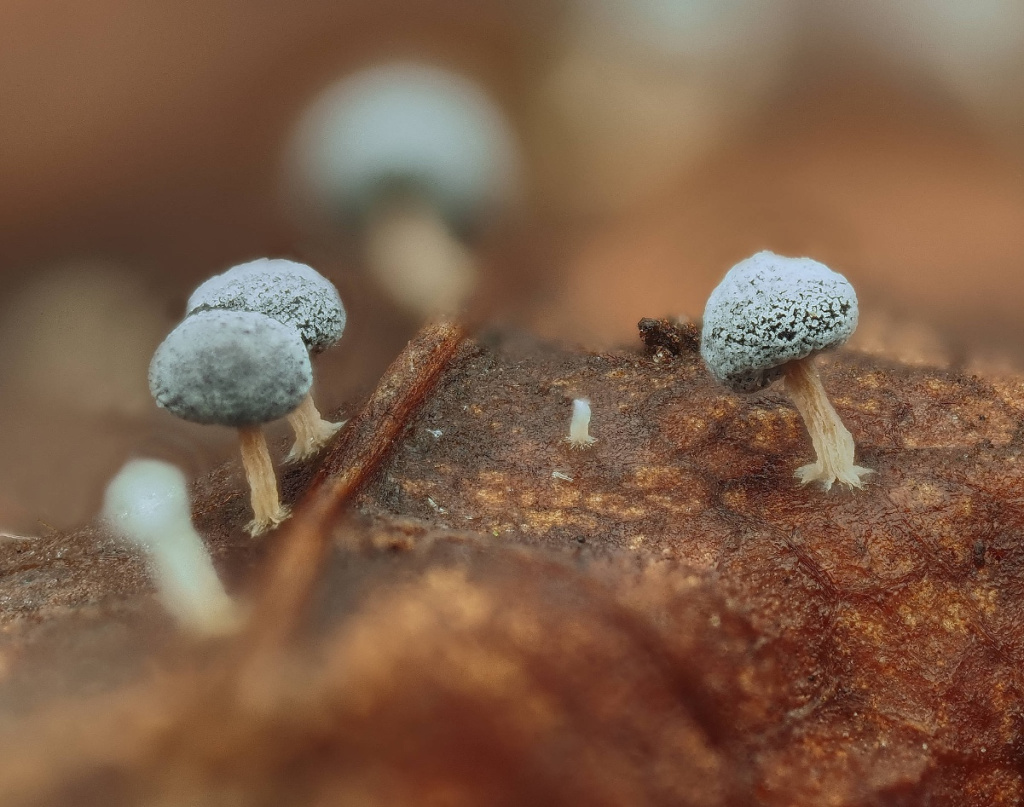
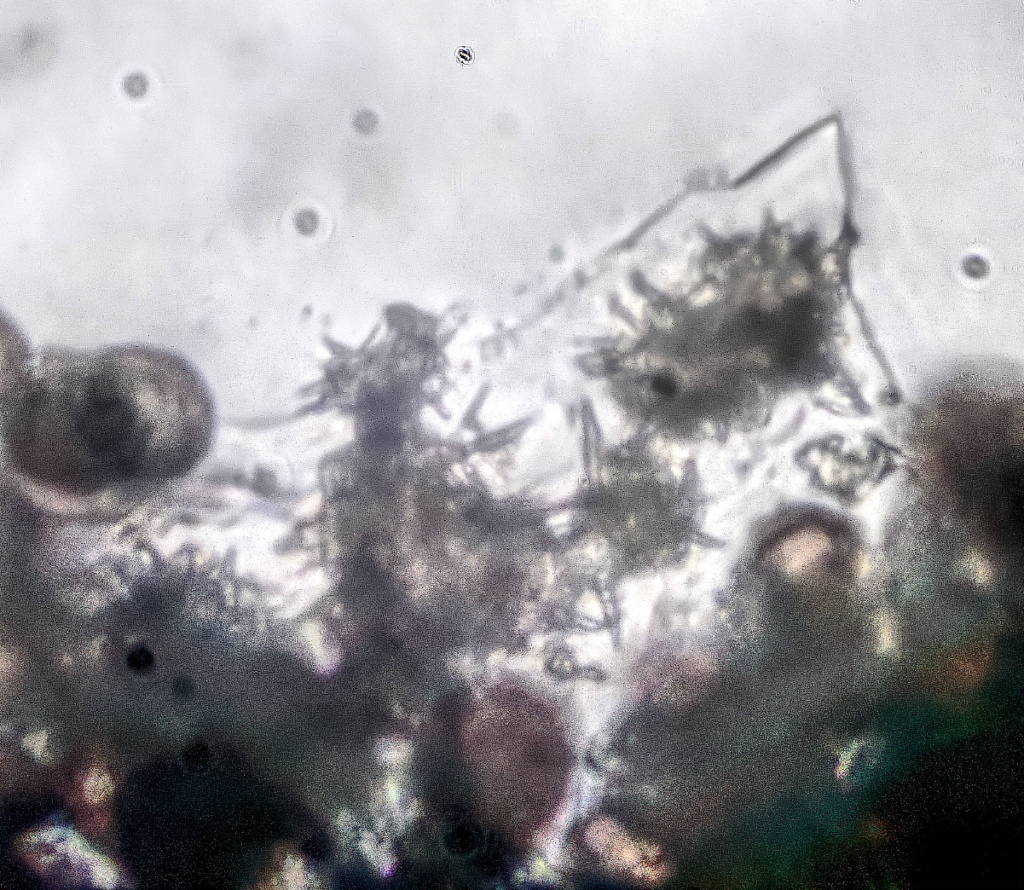
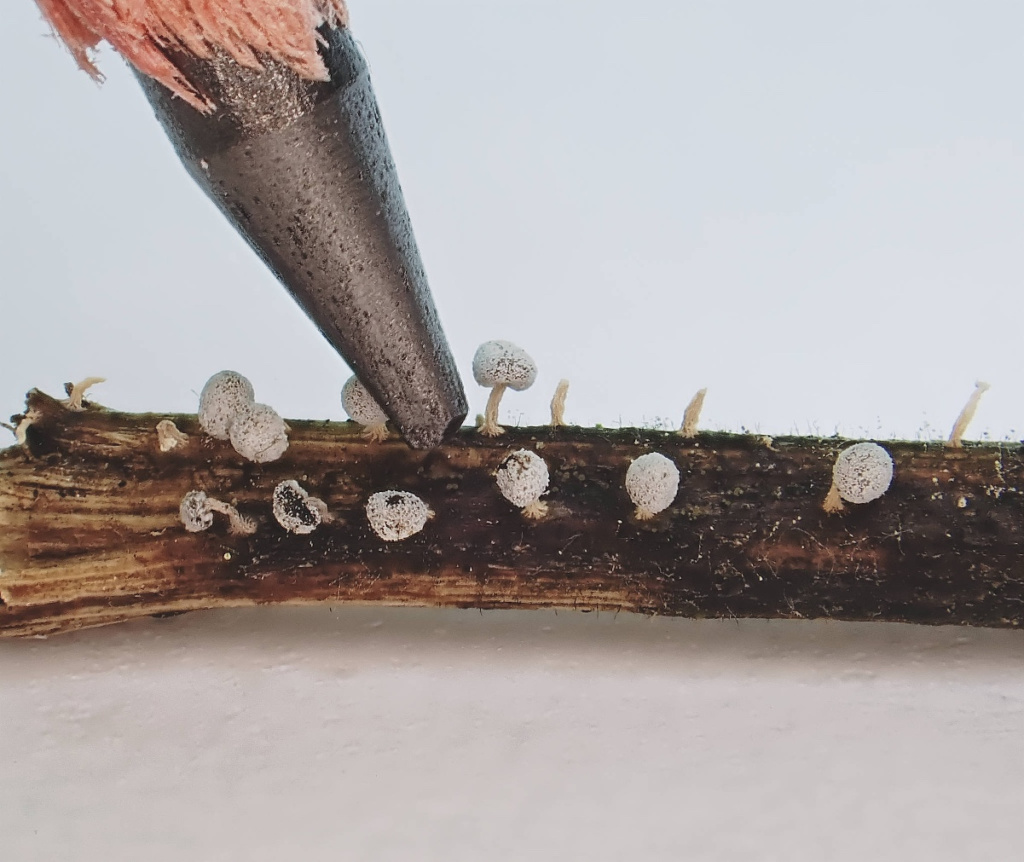
Tiny, white, stalked (or sometimes sessile) spheres covered in white crystals. Typically 0.5–1.5 mm in total height. The key feature is the white covering (peridium) consisting of stellate (star-shaped) lime crystals, not round granules (visible with a hand lens).
Sporotheca (head): Globose (round) to discoid (flattened), often with a deep dimple (umbilicus) on the underside where the stalk attaches. Colour white to grey, from a crust of calcium carbonate crystals. As the specimen ages, the white crust may flake off, revealing the dark spore mass underneath (appearing shiny or iridescent). Texture rough or "scaly" (squamulose) due to the lime crystals.
Stalk (stipe): Usually white or pale calcareous (chalky). This is a crucial differentiator from similar species that have black stalks. Texture "fluted" (grooved vertically) and covered in lime crystals. Length highly variable, distinct and upright, or very short, appearing almost sessile/stalkless.
To confirm identification, you must examine the lime crystals and spores under a microscope. Mount the white crust in water to see stellate (star-shaped) lime crystals (fizz in vinegar). Note: If the lime is composed of round/amorphous granules rather than sharp crystals it is likely a Diderma species, not Didymium.
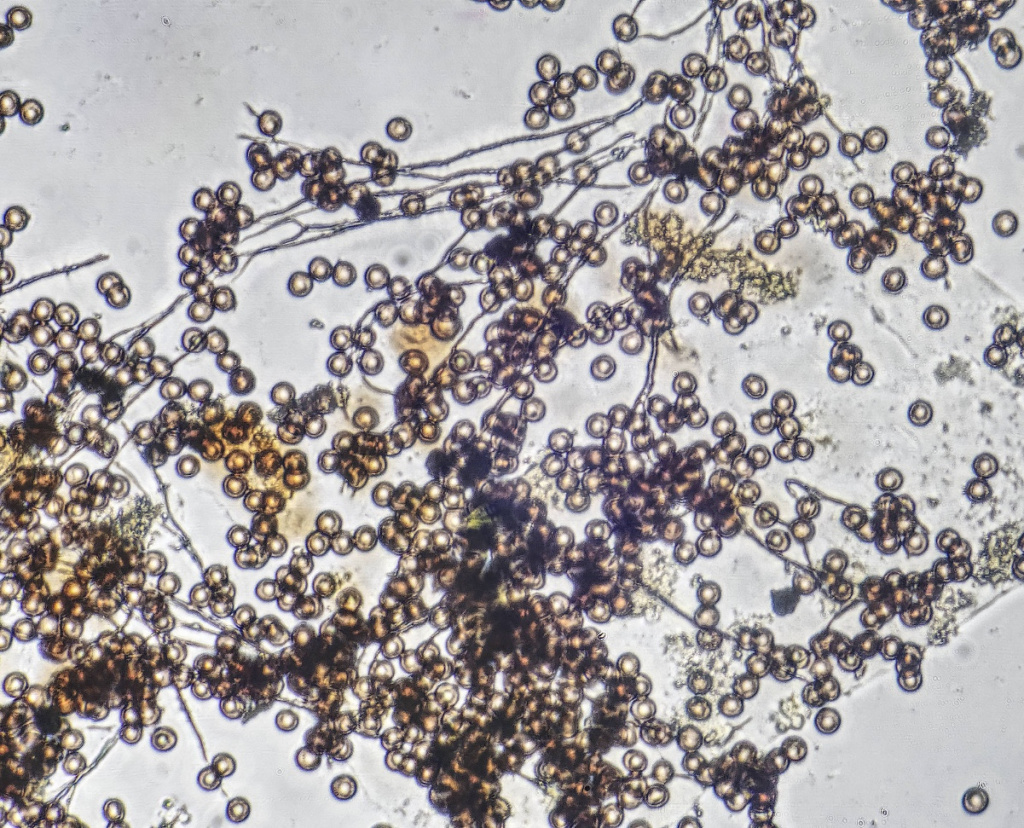
Spores: Dark brown to black in mass; violaceous-brown (purple-brown) when viewed with transmitted light. Size: 8–11 µm diameter. Minutely warted or spiny (spinulose).
Capillitium (Internal Threads): In D. squamulosum, these are are variable: usually colorless or pale brown, slender, and can be simple or branching. They do not contain lime (unlike the genus Physarum).

Microscopy is needed to identify this species. Please describe the key you used and the key characters used to confirm the identification.
Usually found on damp leaf litter (especially decaying holly or oak leaves), straw, twigs, and on herbivore dung (rabbit, sheep, deer).
Autumn and early winter.
Widespread and fairly frequent in Britain.
Status in Leicestershire and Rutland not known.
Download: Didymium squamulosum cribsheet
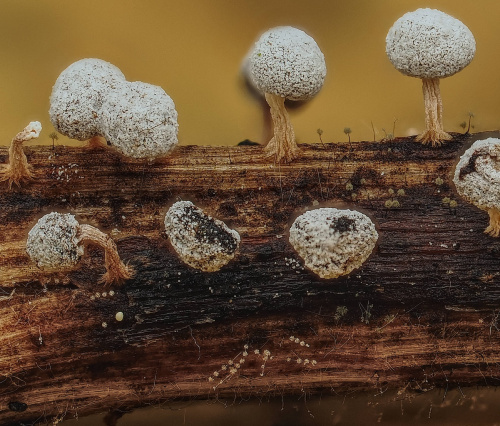 AJ Cann
Croft Glebe
18 November 2025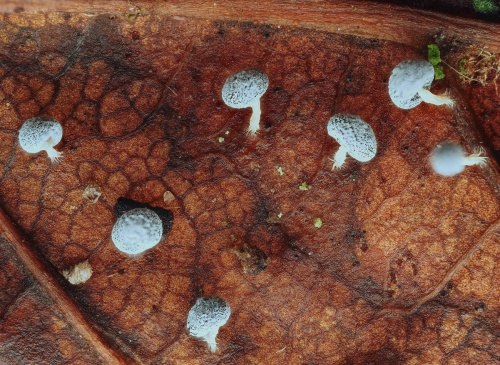 AJ Cann
Croft Glebe
18 November 2025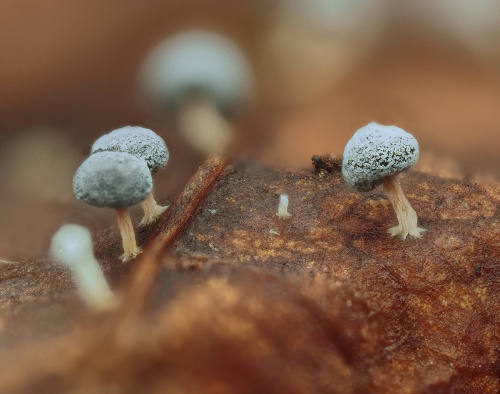 AJ Cann
Croft Glebe
18 November 2025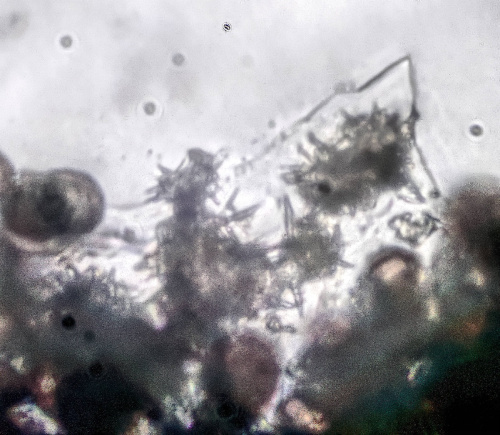 AJ Cann
Croft Glebe
18 November 2025
stellate CaCO3 crystals in peridium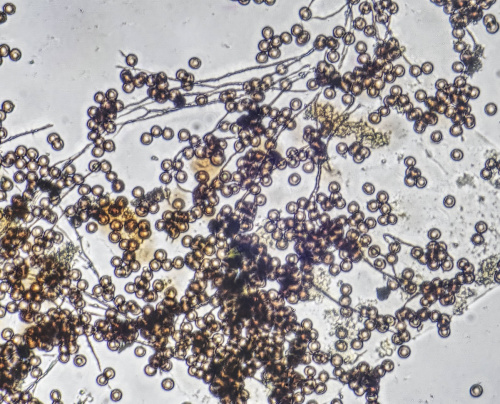 AJ Cann
Croft Glebe
18 November 2025
spores & capillitium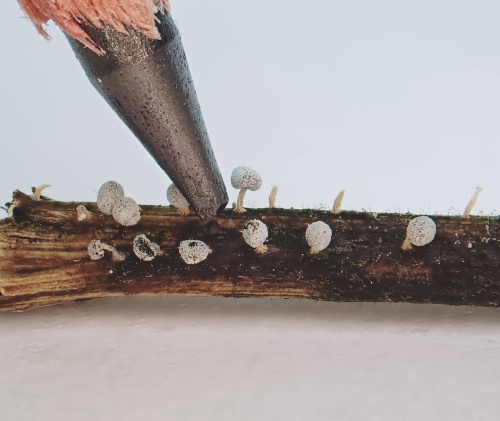 AJ Cann
Croft Glebe
18 November 2025
Leicestershire & Rutland Map
Enter a town or village to see local records
MAP KEY:
Yellow squares = NBN records (all known data)
Coloured squares = NatureSpot records: 2025+ | 2020-2024 | pre-2020
UK Map
Additional images