Dicymbium nigrum
Dicymbium nigrum
Females 1.9 to 2.5 mm, males 1.8 to 2.4 mm.
Dicymbium brevisetosum and Dicymbium nigrum are very difficult to separate. Separation of these species can only be based on males, with females being indistinguishable from each other. The genitalia of the two species are identical. The British Arachnological Society record these two as separate species with females being grouped together as Dicymbium nigrum/brevisetosum and males needing detailed microscopic examination before acceptance to species level. Identification is made more difficult as there are intermediate specimens, and by the fact that the two species may be able to interbreed as they have identical genitalia. Any records of females, or of males which have not been microscopically examined and shown to be conclusively of one species should be recorded to the aggregate page.

Confirmation of conclusive microscopic features required for positive identification.
A common aeronaut which has been found in a wide variety of habitats including sphagnum bogs, grassland, damp woodland, heathland, marshes, wastelands and detritus.
Adults have been recorded throughout the year with peaks in early summer and autumn.
Fairly widespread in Britain but difficulty of identification make it difficult to arrive at a true status.
Status in Leicestershire and Rutland is not known.
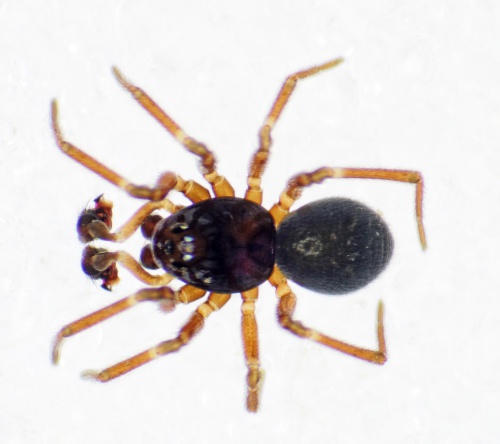 AJ Cann
Ingarsby
04 March 2020
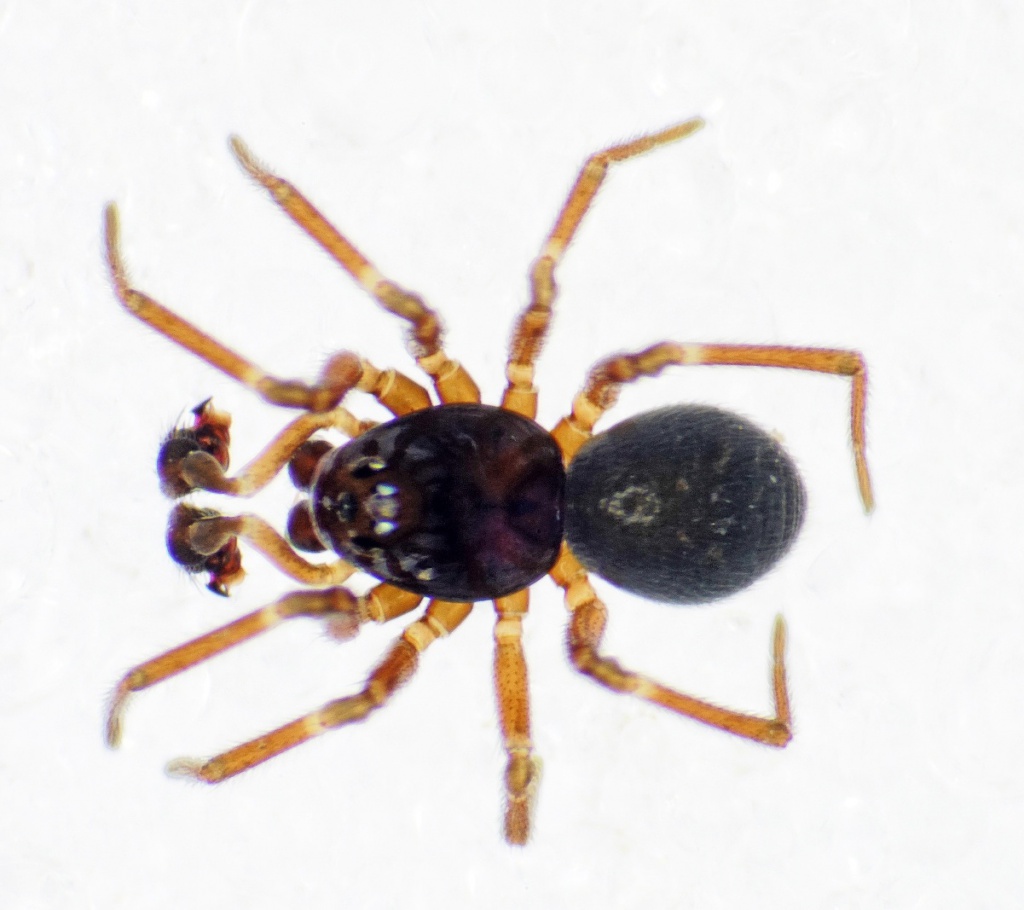
Male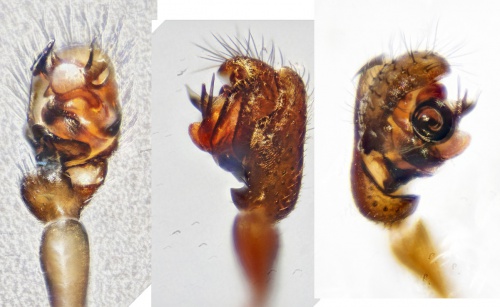 AJ Cann
Ingarsby
04 March 2020
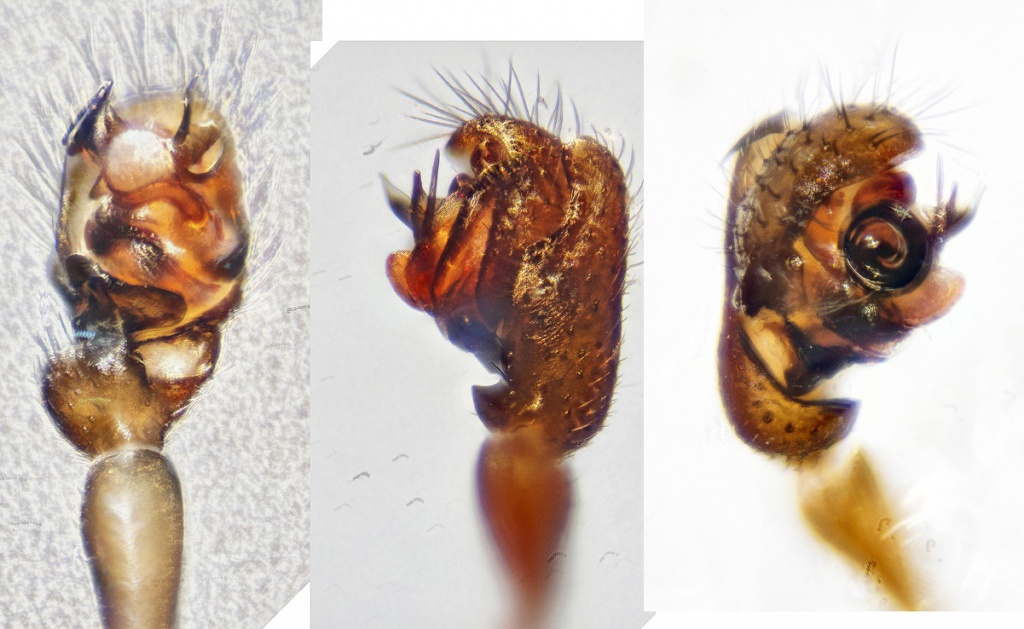
Palp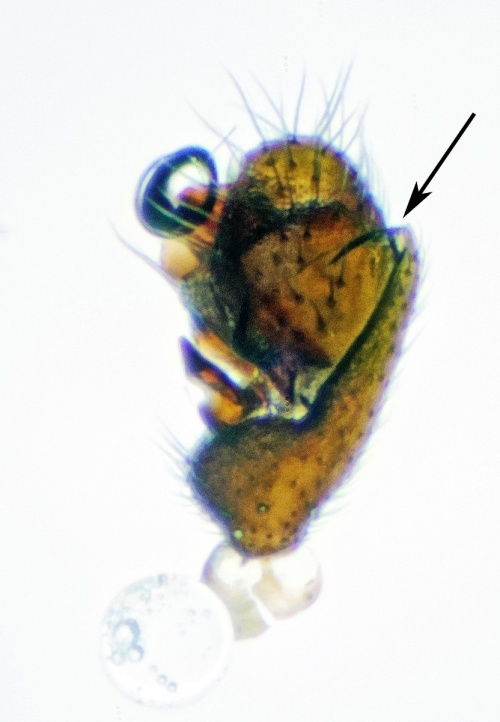 AJ Cann
Washbrook
24 March 2020
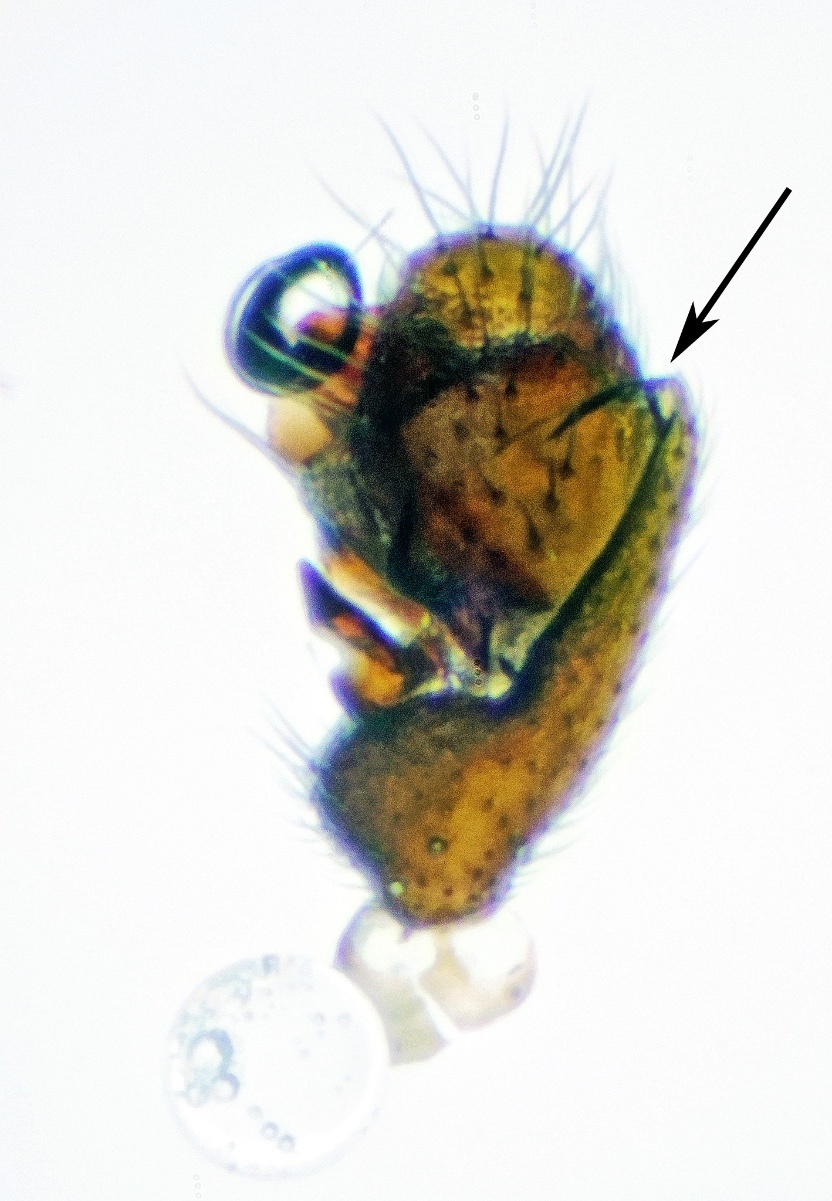
Tibial apophysis hook-shaped, bent out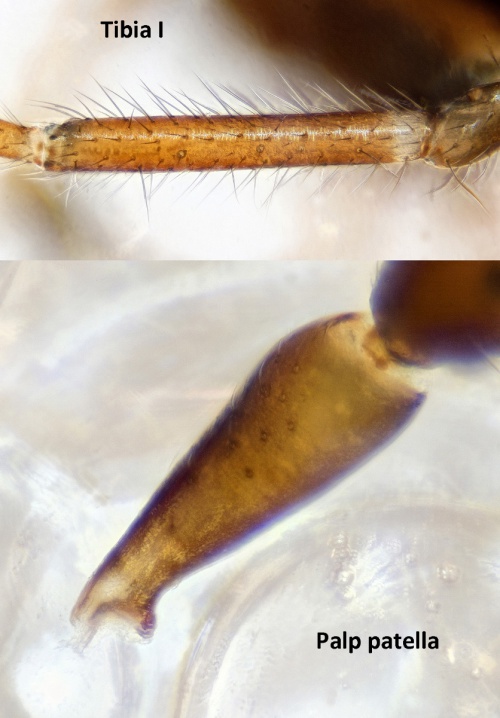 AJ Cann
Ingarsby
04 March 2020
Leicestershire & Rutland Map
Enter a town or village to see local records
MAP KEY:
Yellow squares = NBN records (all known data)
Coloured squares = NatureSpot records: 2025+ | 2020-2024 | pre-2020
UK Map
Additional images
No additional images available for this species.