Cuspidate Earth-moss
Cuspidate Earth-moss - Tortula acaulon
Shoots form fresh, green patches 2 to 6 mm tall. The broad leaves are 1 to 3 mm long, and surround and partly hide the spherical capsules, which are borne on an extremely short (up to 0.5 mm long) seta and have a small protuberance at the top. Phascum cuspidatum varies considerably, both in size of the plants and in features of the leaves, and several varieties have been described (Smith, pp. 363365). In P. cuspidatum var. piliferum the nerve runs out well beyond the leaf tip.

P. cuspidatum is a very common, lowland moss of disturbed, bare soil in gardens and fields, woodland rides, tracks and paths, banks, anthills, waste ground and sides of water courses. It does not grow on humus or peat. The variety piliferum (Smith, p. 364) occurs on rather base-rich, sandy soil near the sea.
All year round.
Widespread and fairly frequent in Britain.
Status in Leicestershire and Rutland not known.
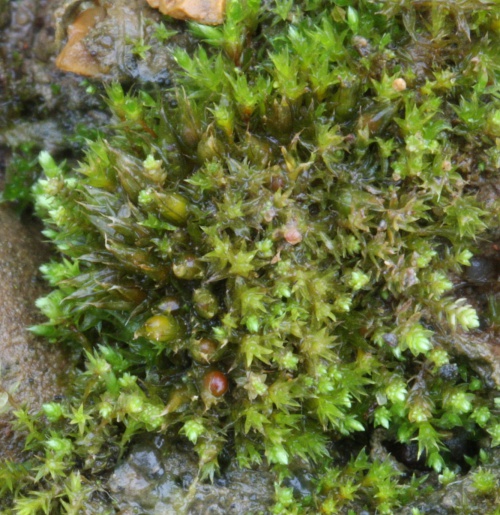 David Nicholls
Cossington Meadows
25 February 2017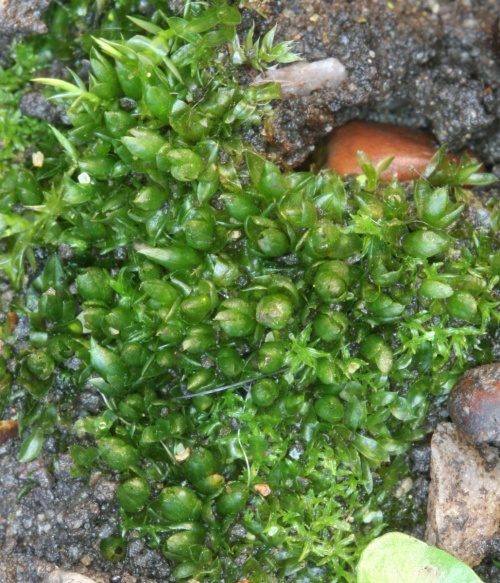 David Nicholls
Ratby garden
07 December 2012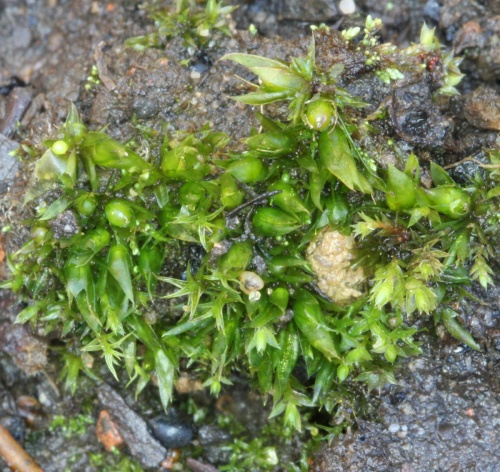 David Nicholls
Ratby garden
07 December 2012


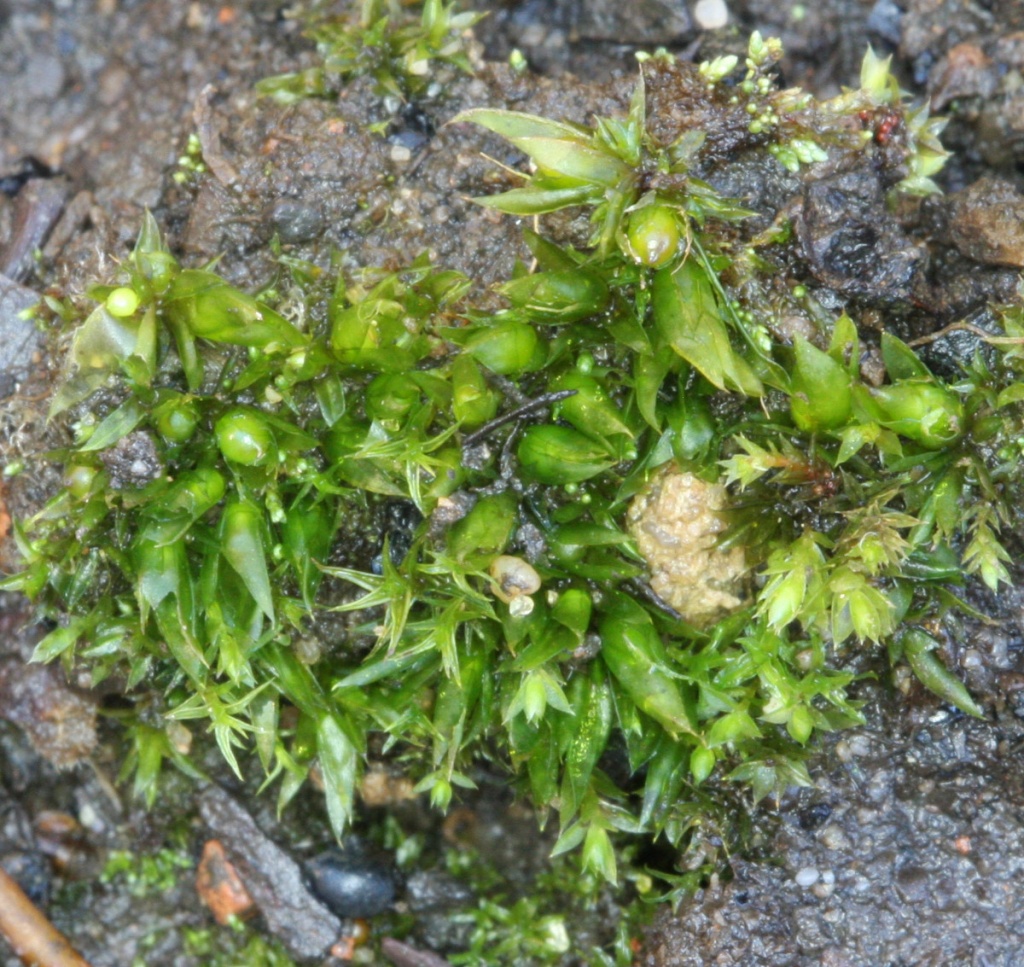
Leicestershire & Rutland Map
Enter a town or village to see local records
MAP KEY:
Yellow squares = NBN records (all known data)
Coloured squares = NatureSpot records: 2025+ | 2020-2024 | pre-2020
UK Map
Additional images
No additional images available for this species.