Creeping Comfrey
Creeping Comfrey - Symphytum grandiflorum
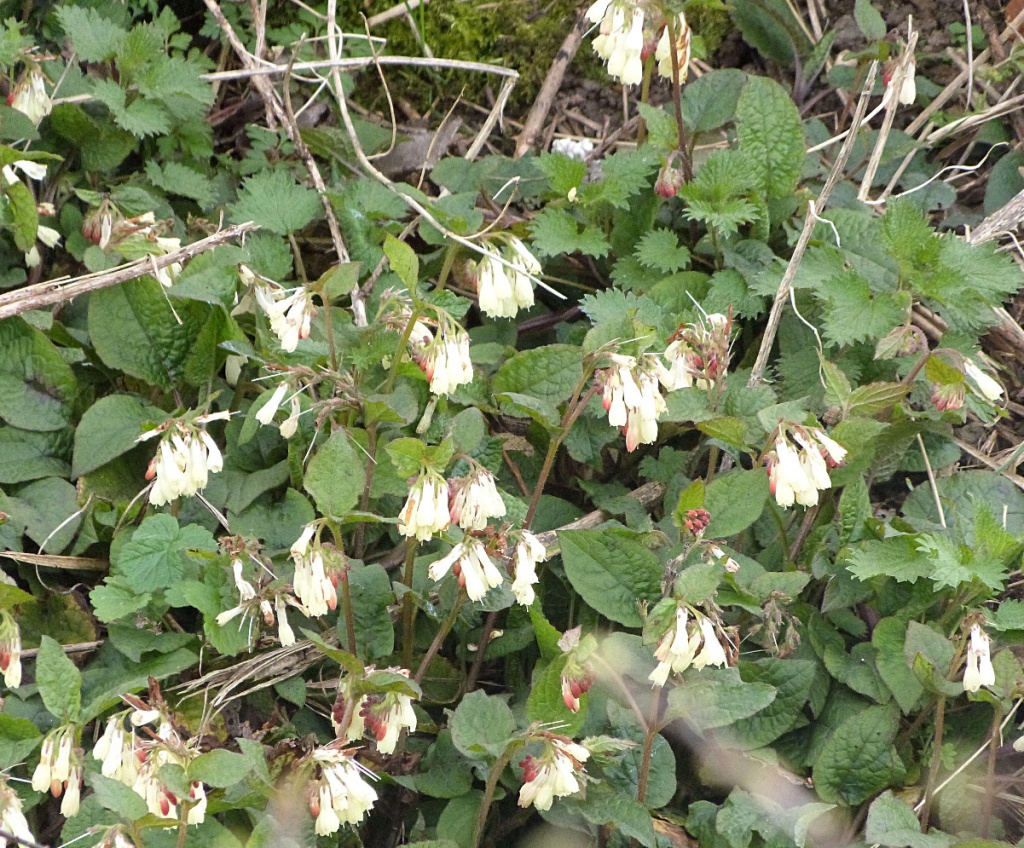
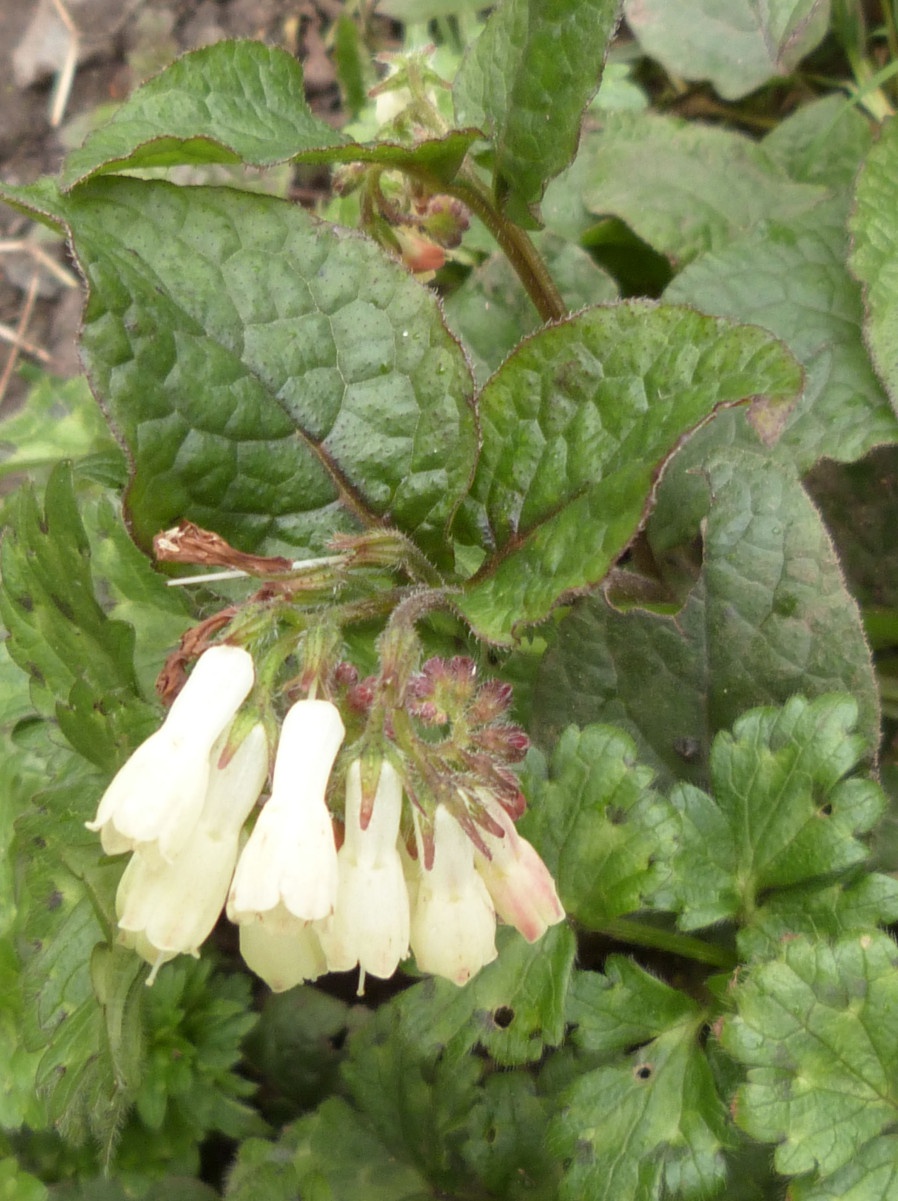
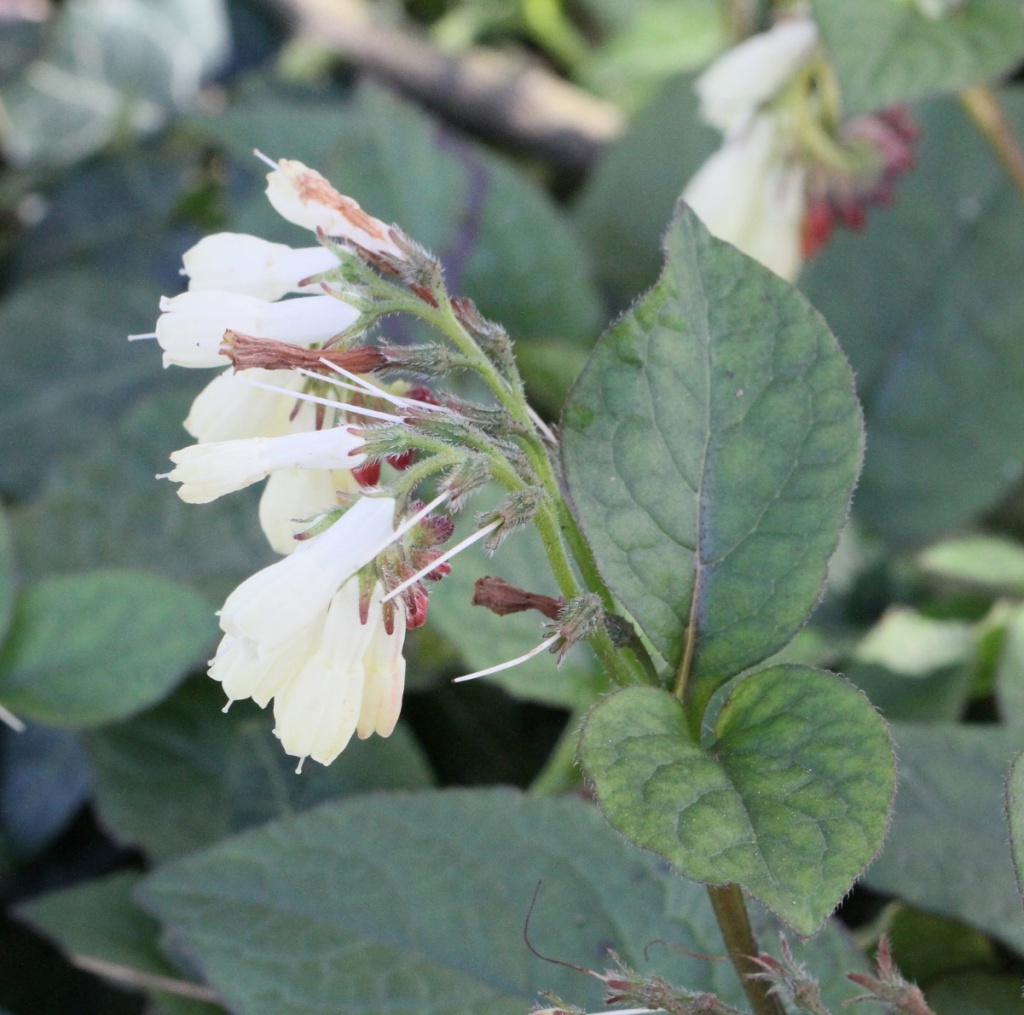
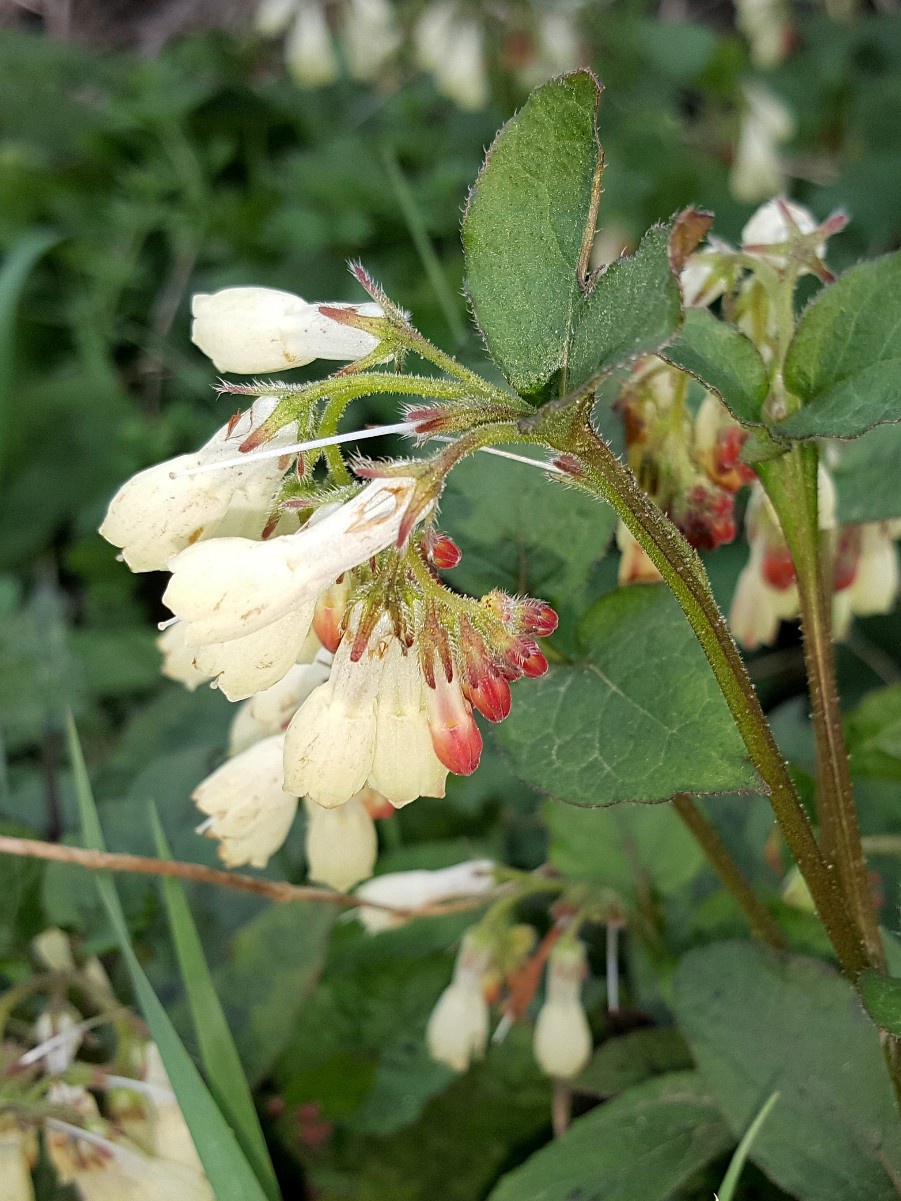
Crinkled, elliptic to ovate, medium to dark green leaves grow to 7 inches long on decumbent stems but to only 2 inches long on flowering stems. Tubular, bell-like, creamy yellow to white flowers appear in drooping clusters.
There are other comfreys with yellow or cream flowers, or with stolons

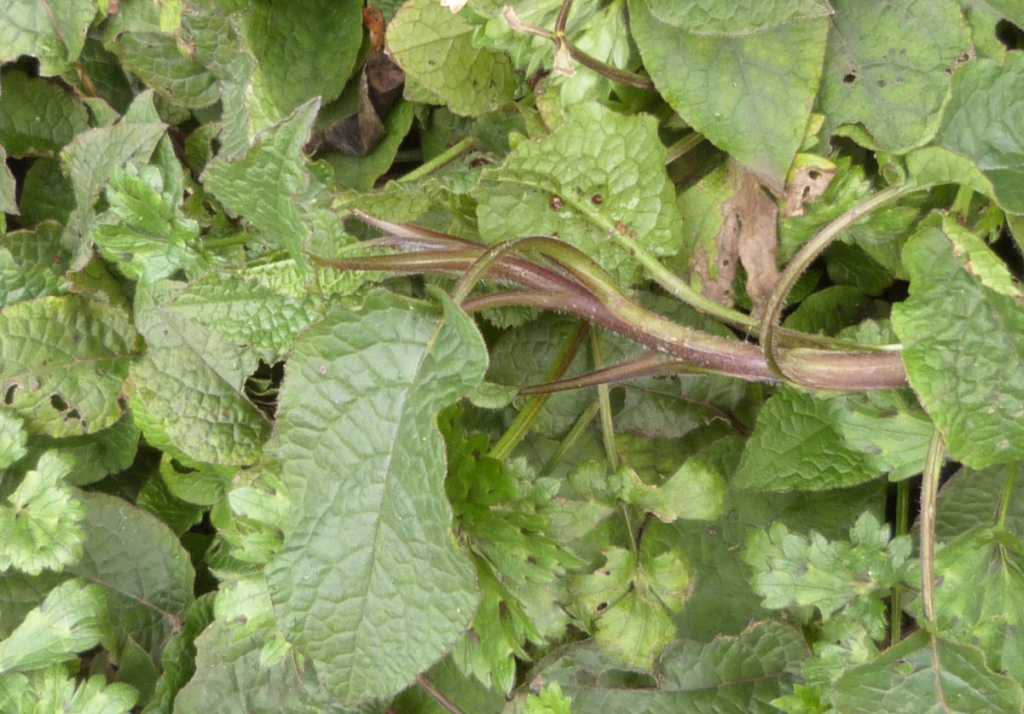
With stolons. The only other stoloniferous comfrey keyed out in Stace (4th edn.) is S x hidcotense, a hybrid with S grandiflorum with blue or pink flowers.
Photograph of whole plant, plus flowers; confirmation that plant is stoloniferous
Usually encountered as an escape from cultivation which establishes in waste places, verges etc. often close to habitation.
Flowering May and June.
Herbaceous perennial.
Occasional but widespread in England and Wales.
Uncommon in the wild in Leicestershire and Rutland. It was not recorded in the 1979 Flora survey of Leicestershire.
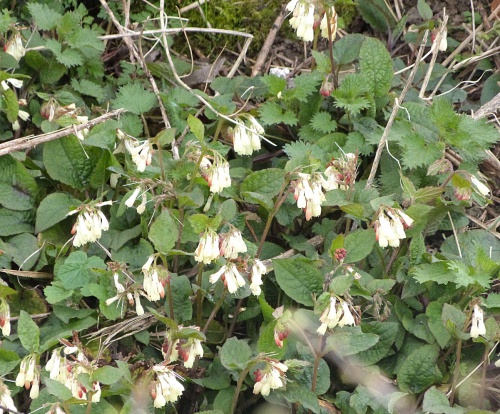 Graham Calow
Sapcote, B4114
21 March 2020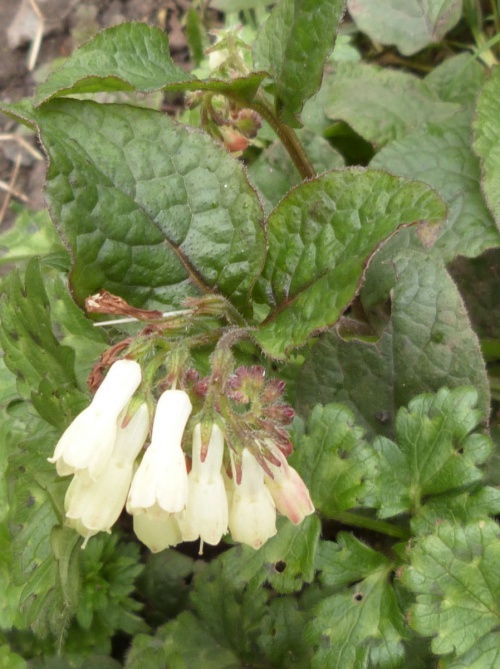 Graham Calow
Footpath off Park Road, Cosby
04 April 2016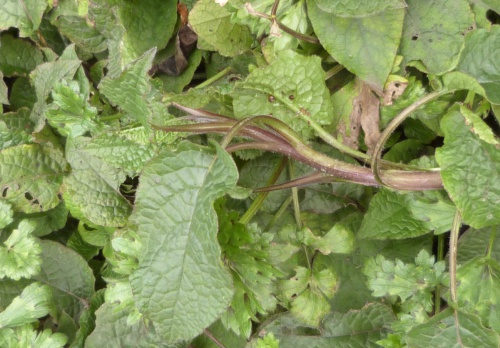 Graham Calow
Footpath off Park Road, Cosby
04 April 2016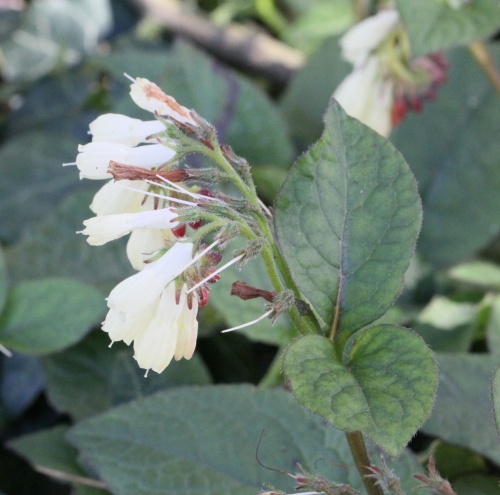 Craig Mabbett
Lutterworth Bitteswell Road
12 March 2020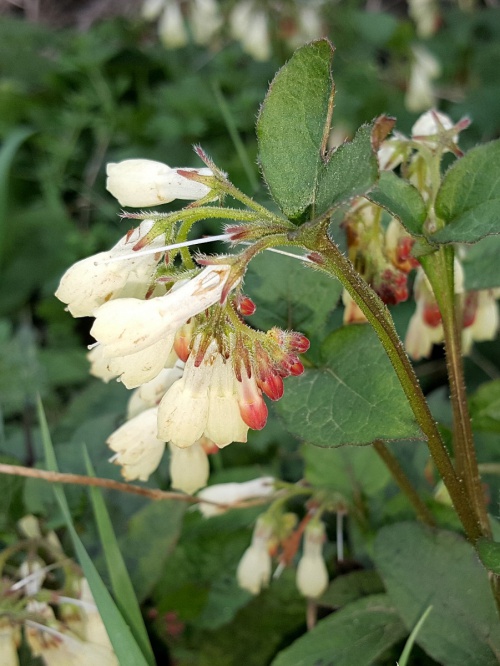 Mike Higgott
Thurcaston
19 March 2017
Leicestershire & Rutland Map
Enter a town or village to see local records
MAP KEY:
Yellow squares = NBN records (all known data)
Coloured squares = NatureSpot records: 2025+ | 2020-2024 | pre-2020
UK Map
Additional images
No additional images available for this species.
All NatureSpot records
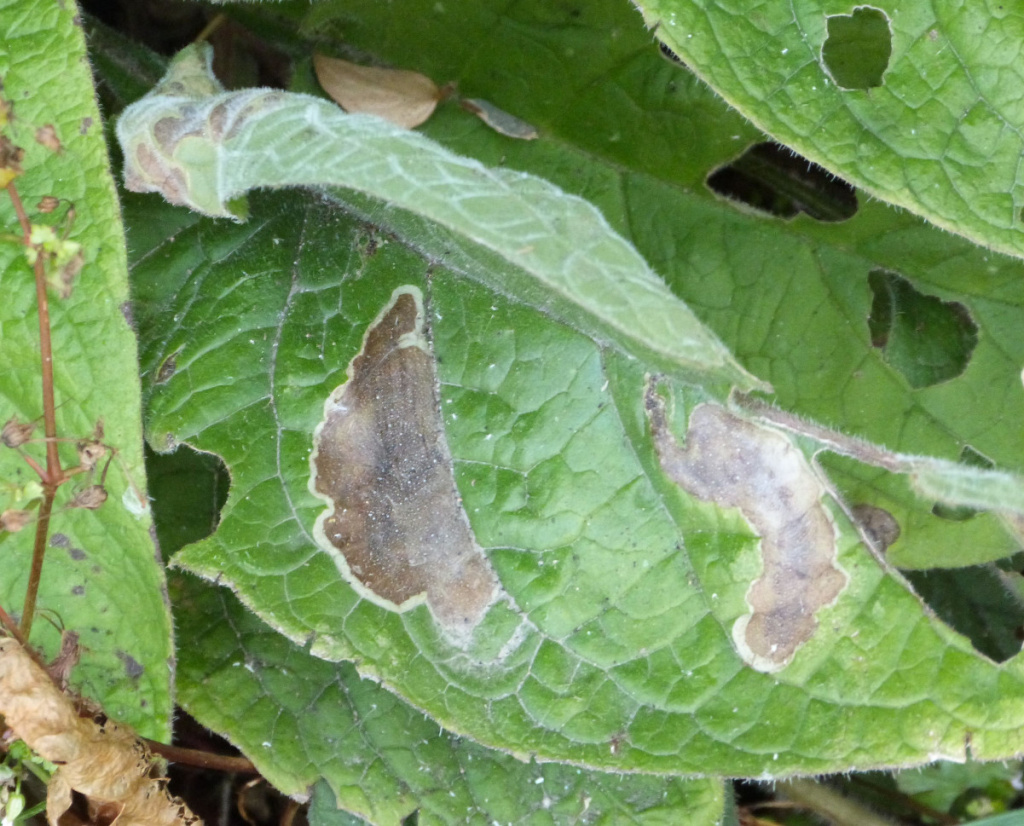
Agromyza abiens/myosotidis/lithospermi agg.
The larvae of the Agromyzid flies Agromyza abiens, Agromyza myosotidis and Agromyza lithospermi produce identical mines on the leaves of several food plants in the Boraginaeceae family, such as Borage, Comfrey and Green Alkanet plus a number of other host plants. The initial narrow gallery contains frass in a double line, which it then expands to form a blotch mine. Several larvae may occupy a leaf to form a large blotch. Because the mines on these plants cannot be reliably separated to species level we treat them as an aggregate.