Common Valerian
Common Valerian - Valeriana officinalis
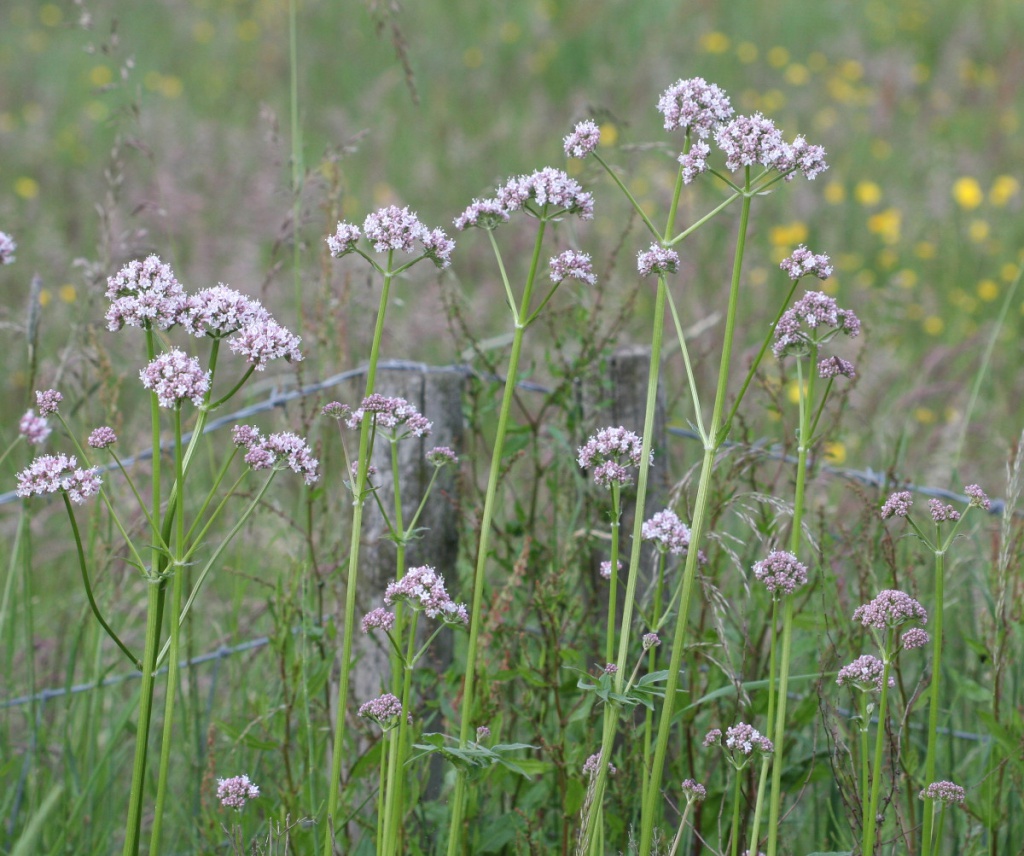
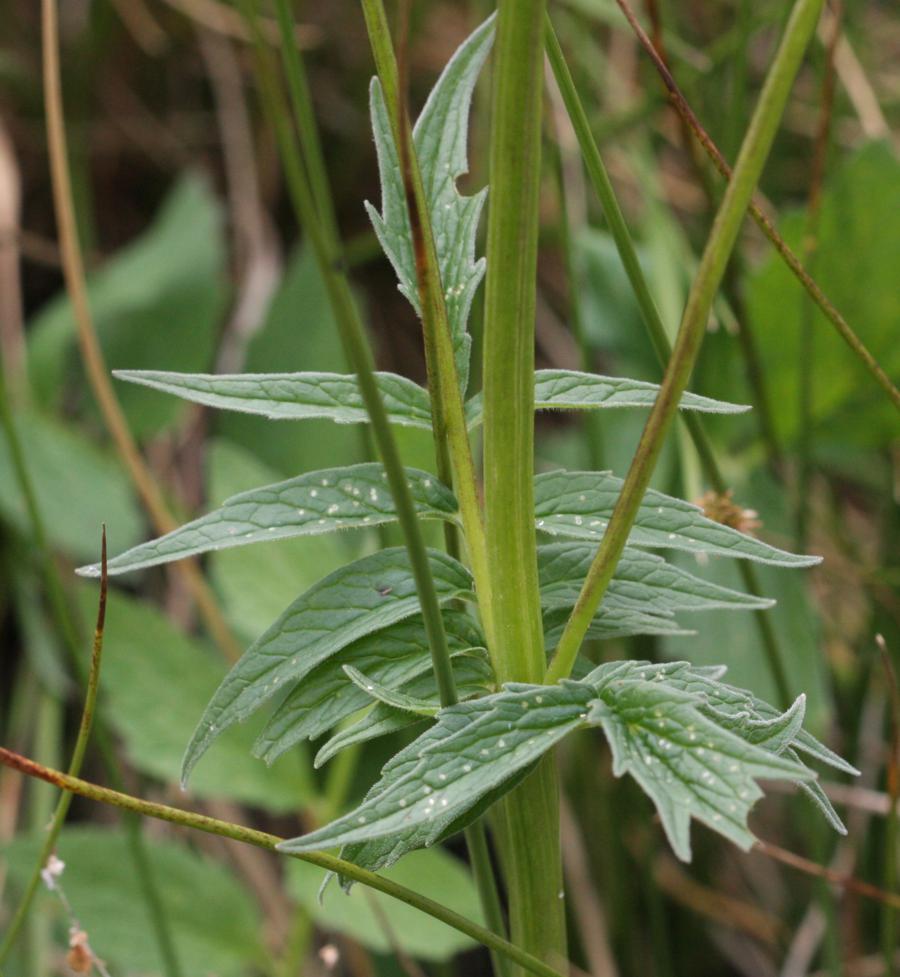
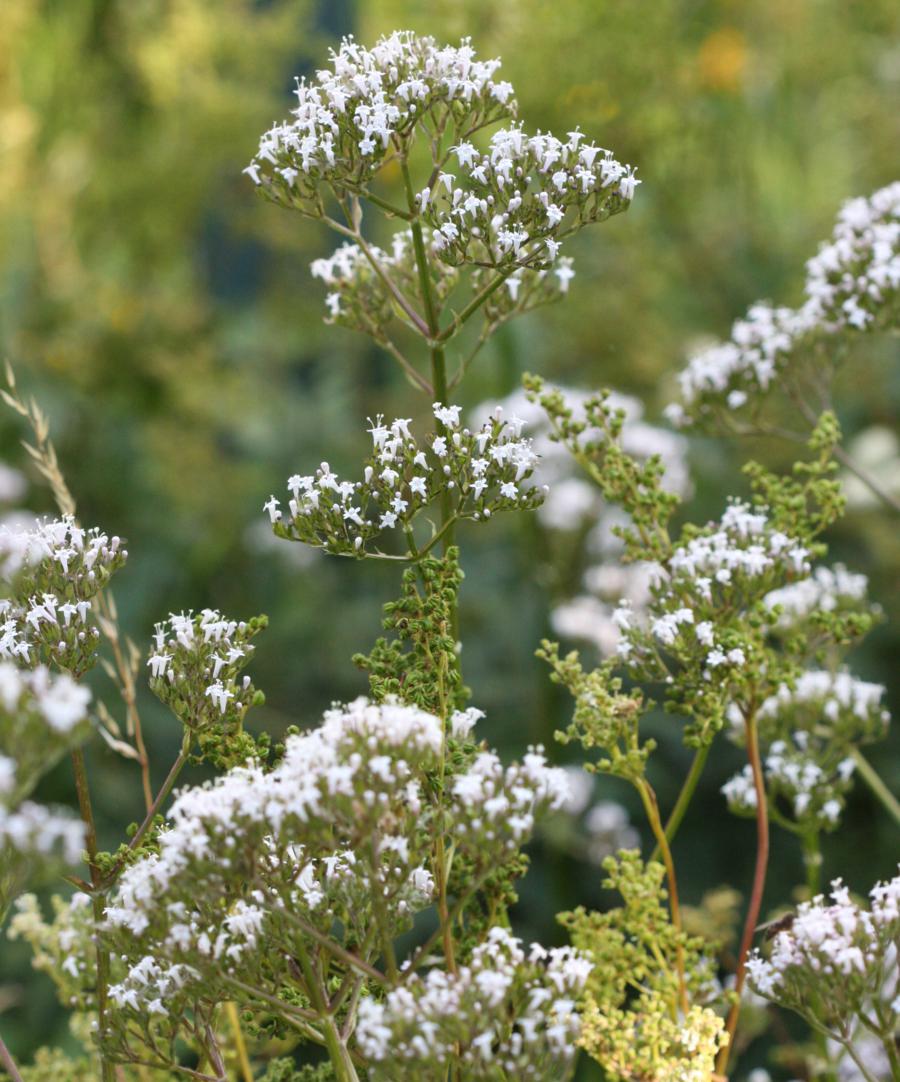
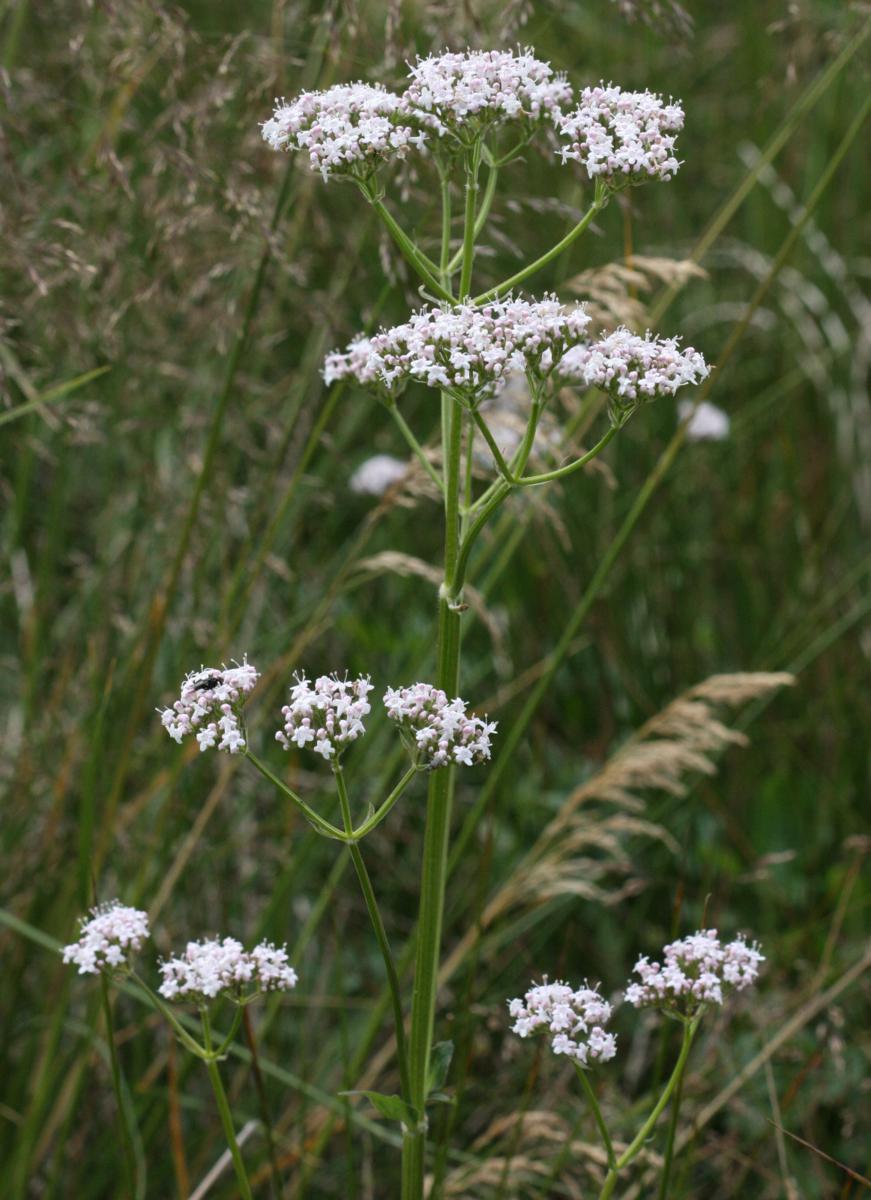
Medium to tall plant to 1.5 metres. Leaves pinnate or pinnately lobed, toothed or untoothed, the lower long-stalked, the upper much smaller and unstalked. Flowers white or pinkish, 2.5 to 5 mm long, in almost rounded clusters
Marsh Valerian

Stem and basal leaves pinnate.
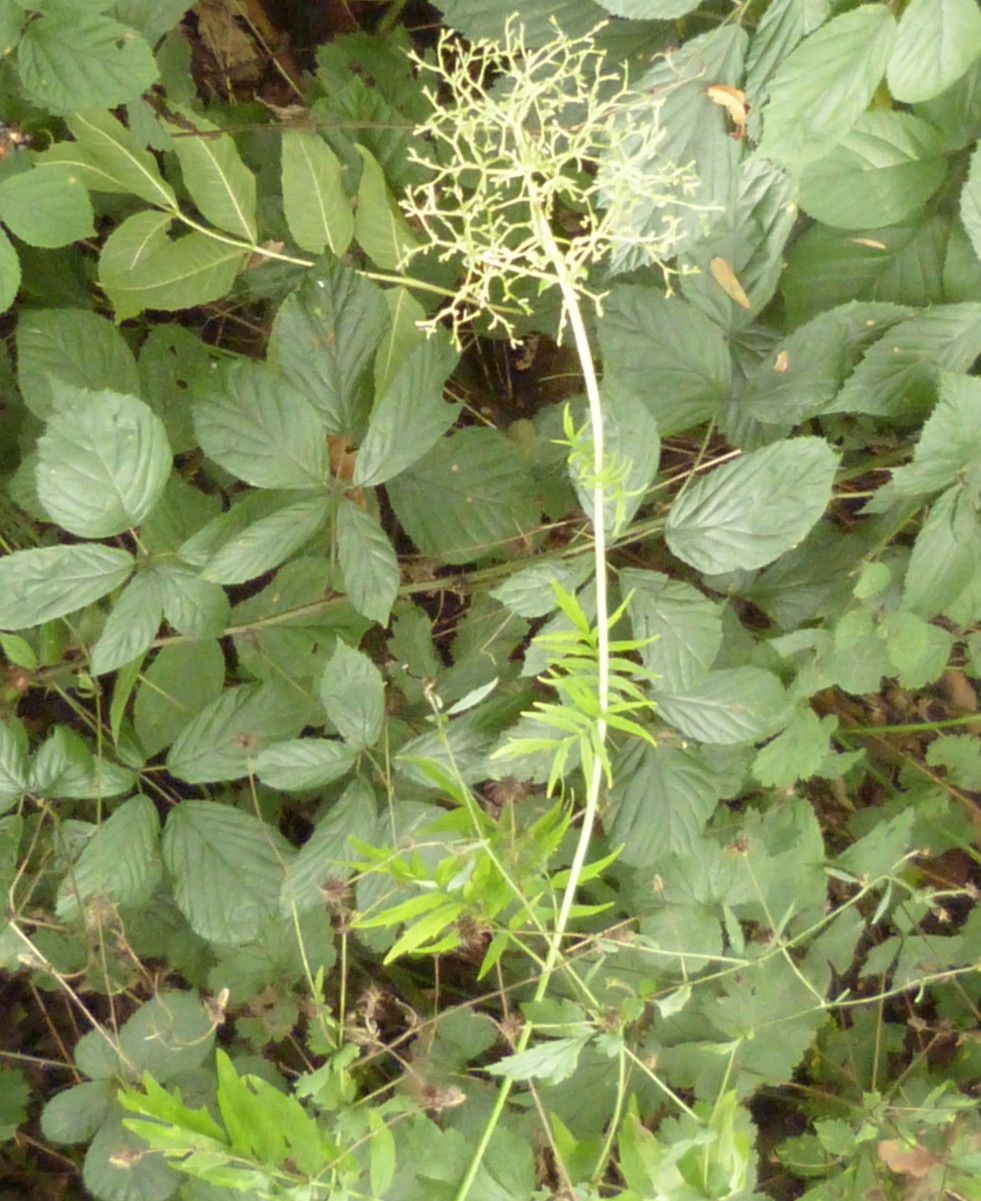
Photographs must show leaves as well as flowers - this plant can't be verified from a picture of the flowers alone (RPR)
Woodland clearings and ditches.
June to August.
Perennial.
Widespread throughout Britain, but not common.
Local, but declining due to habitat-loss.
In the Flora of Leicestershire (Primavesi and Evans 1988) it was found in 94 of the 617 tetrads, and in 13 tetrads in the Flora of Rutland (Messenger 1971).
In the VC55 checklist (Jeeves 2011) it is listed as Native; occasional, but locally frequent where it occurs
| It is listed on the current VC55 Rare Plant Register (Hall and Woodward 2022) because of its threat-level |
 Freeholt Wood Sapcote SP 4611 9390 (taken 23.7.2008).JPG) Graham Calow
Graham Calow
Sapcote
23 July 2008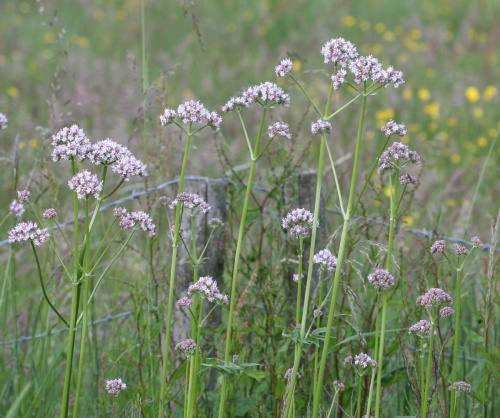 David Nicholls
Charity Fields, Desford
25 June 2013. Freeholt Wood Sapcote SP 4611 9390 (taken 6.9.2007).JPG) Graham Calow
Graham Calow
Sapcote
06 September 2007
leaves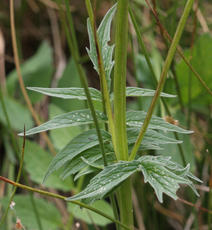 David Nicholls
Lea Meadows
07 July 2011
 Freeholt Wood Sapcote SP 4611 9390 (taken 23.7.2008).JPG)
. Freeholt Wood Sapcote SP 4611 9390 (taken 6.9.2007).JPG)
Leicestershire & Rutland Map
Enter a town or village to see local records
MAP KEY:
Yellow squares = NBN records (all known data)
Coloured squares = NatureSpot records: 2025+ | 2020-2024 | pre-2020
UK Map
Additional images
All NatureSpot records
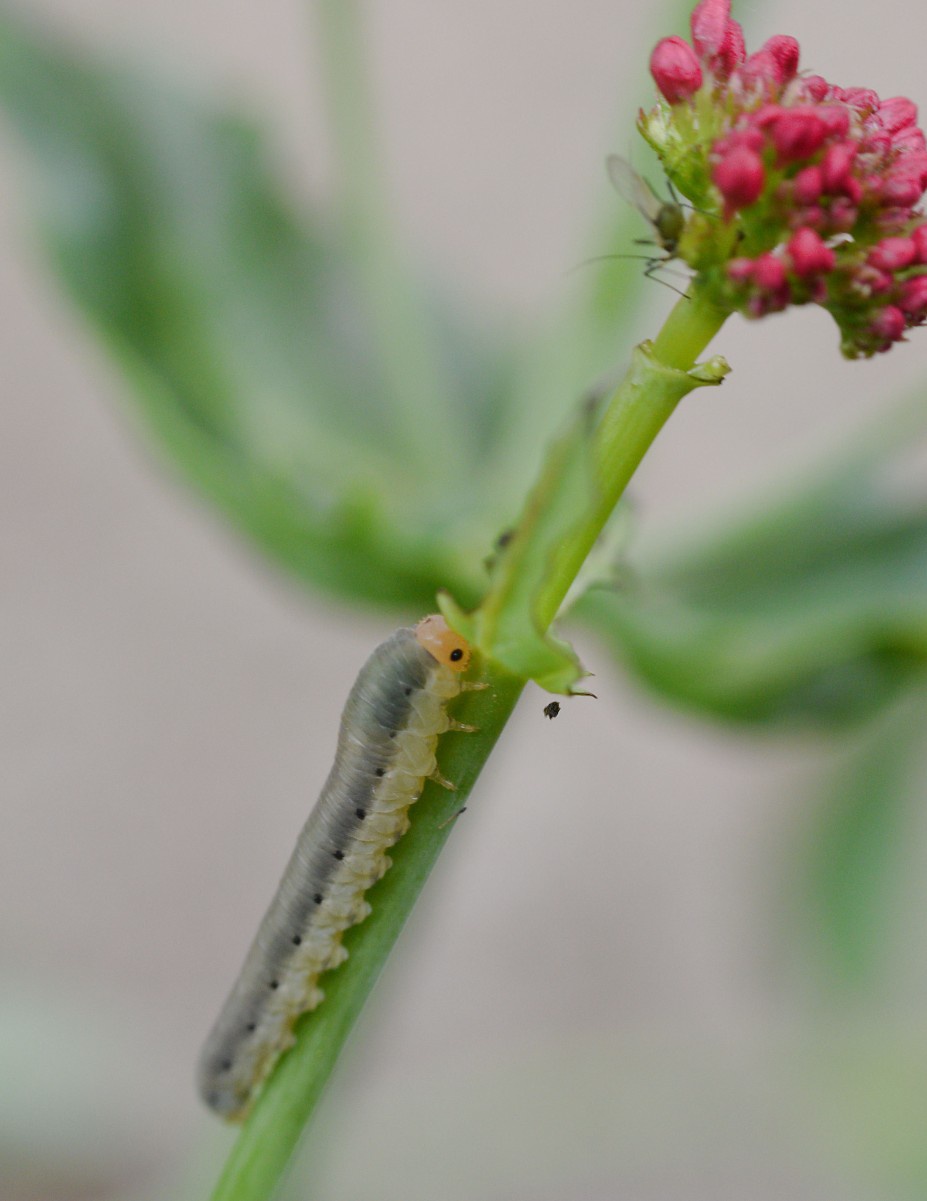
Macrophya albicincta
The larvae of the sawfly Macrophya albicincta feed on Elder as do those of Macrophya ribis and Macrophya alboannulata, but only Macrophya albicincta is also reported as feeding on Common Valerian.
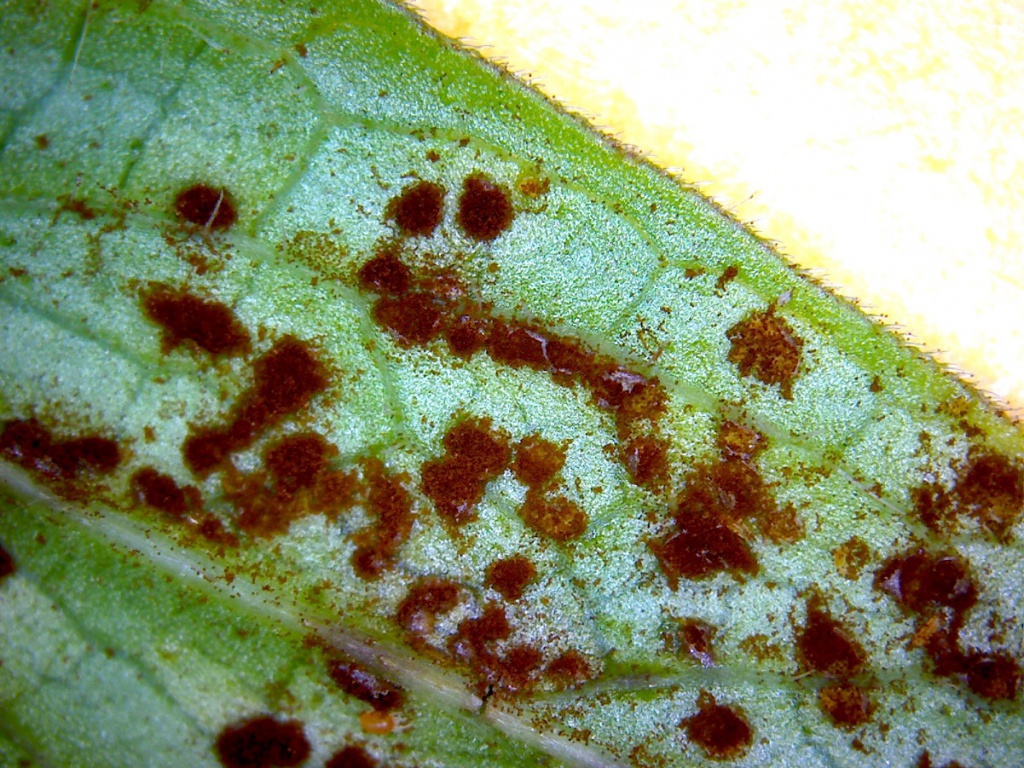
Uromyces valerianae
Uromyces valerianae is a gall-causing rust fungus affecting Common Valerian and Marsh Valerian. The small uredinia and telia are brown.