Common Puffball
Common Puffball - Lycoperdon perlatum
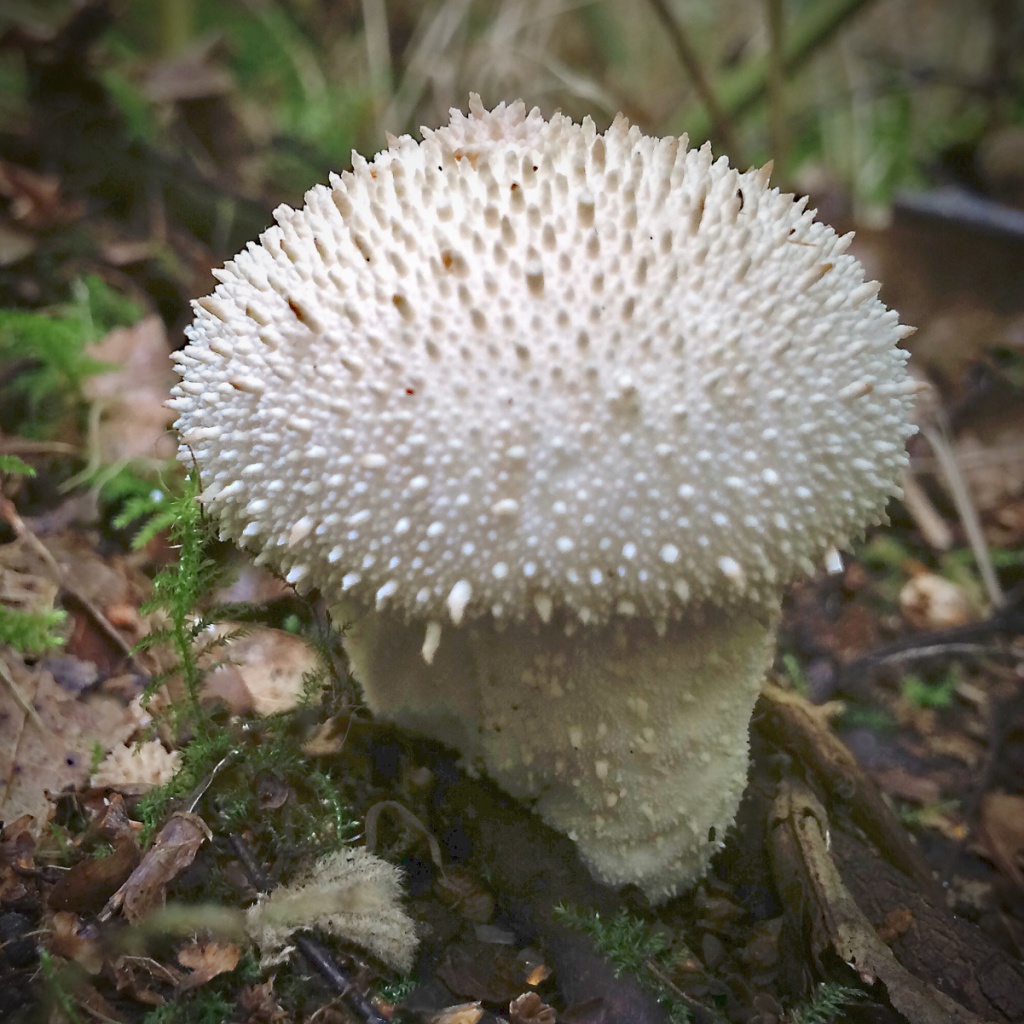
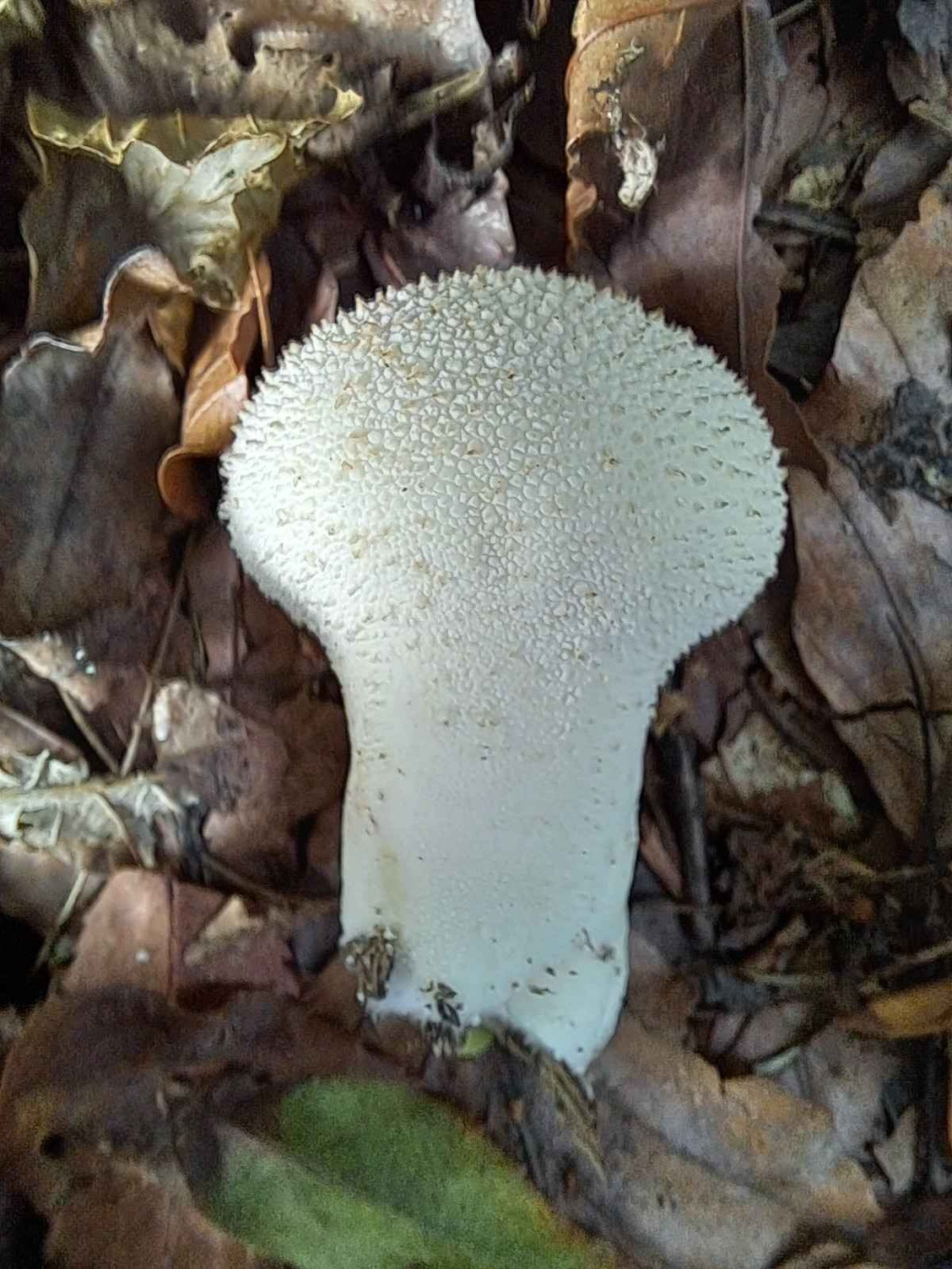
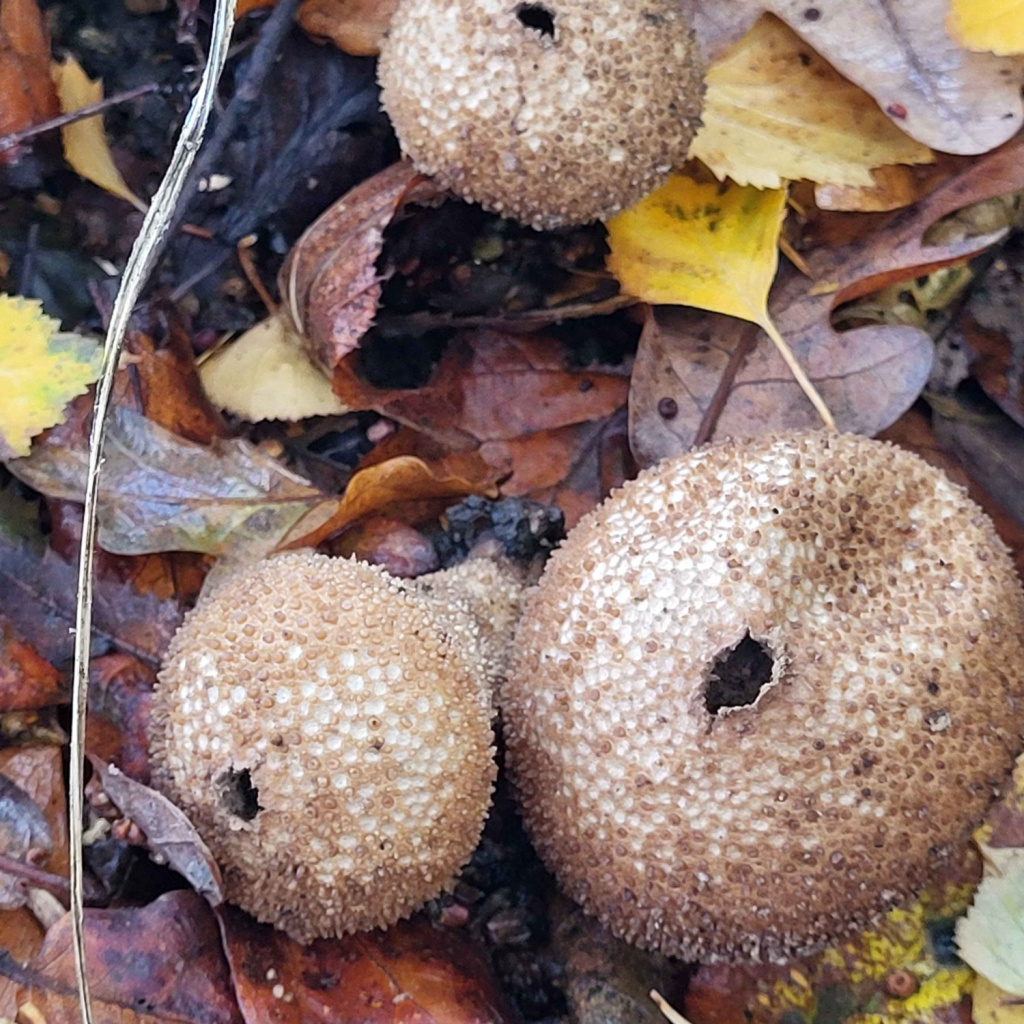
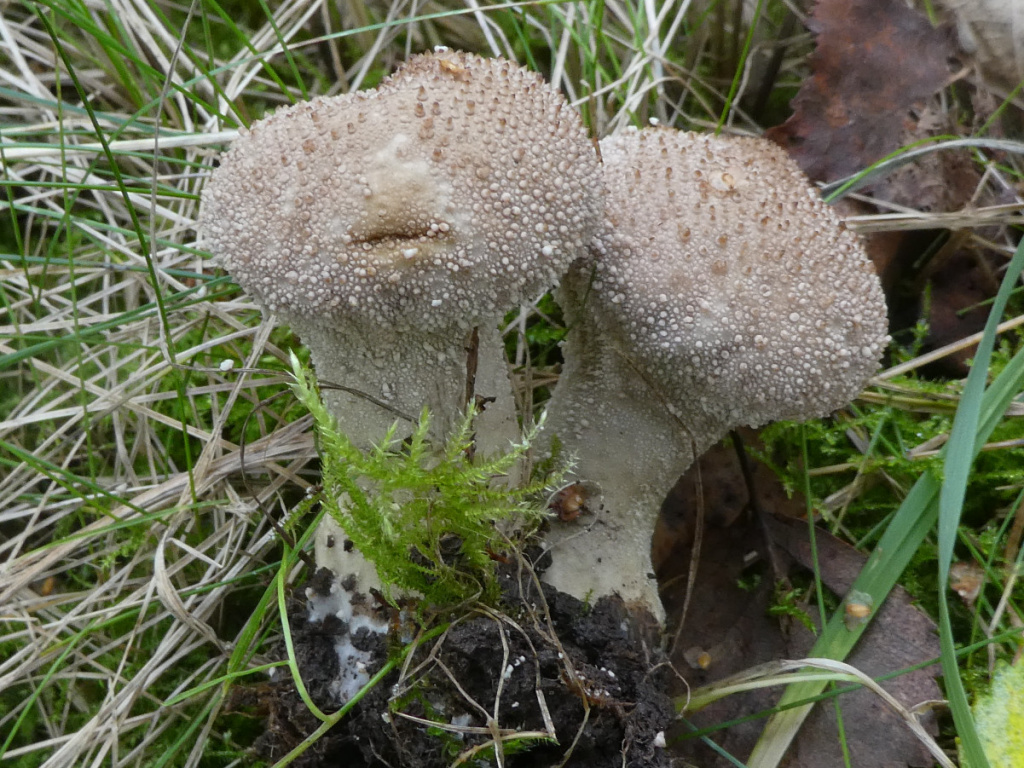
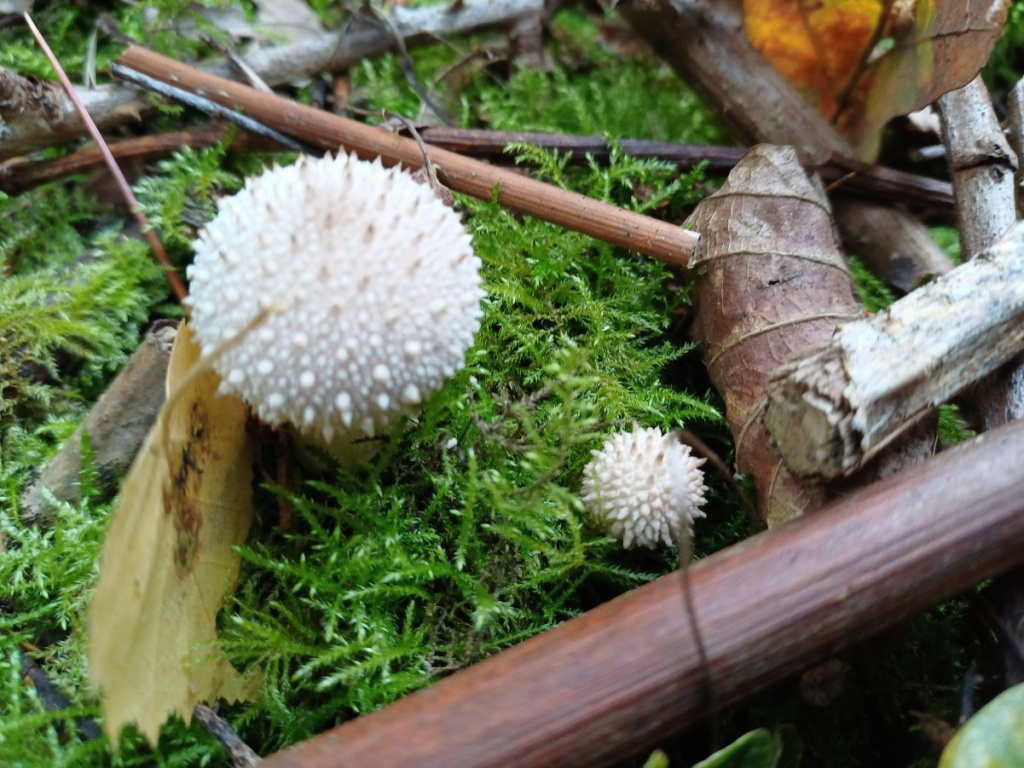
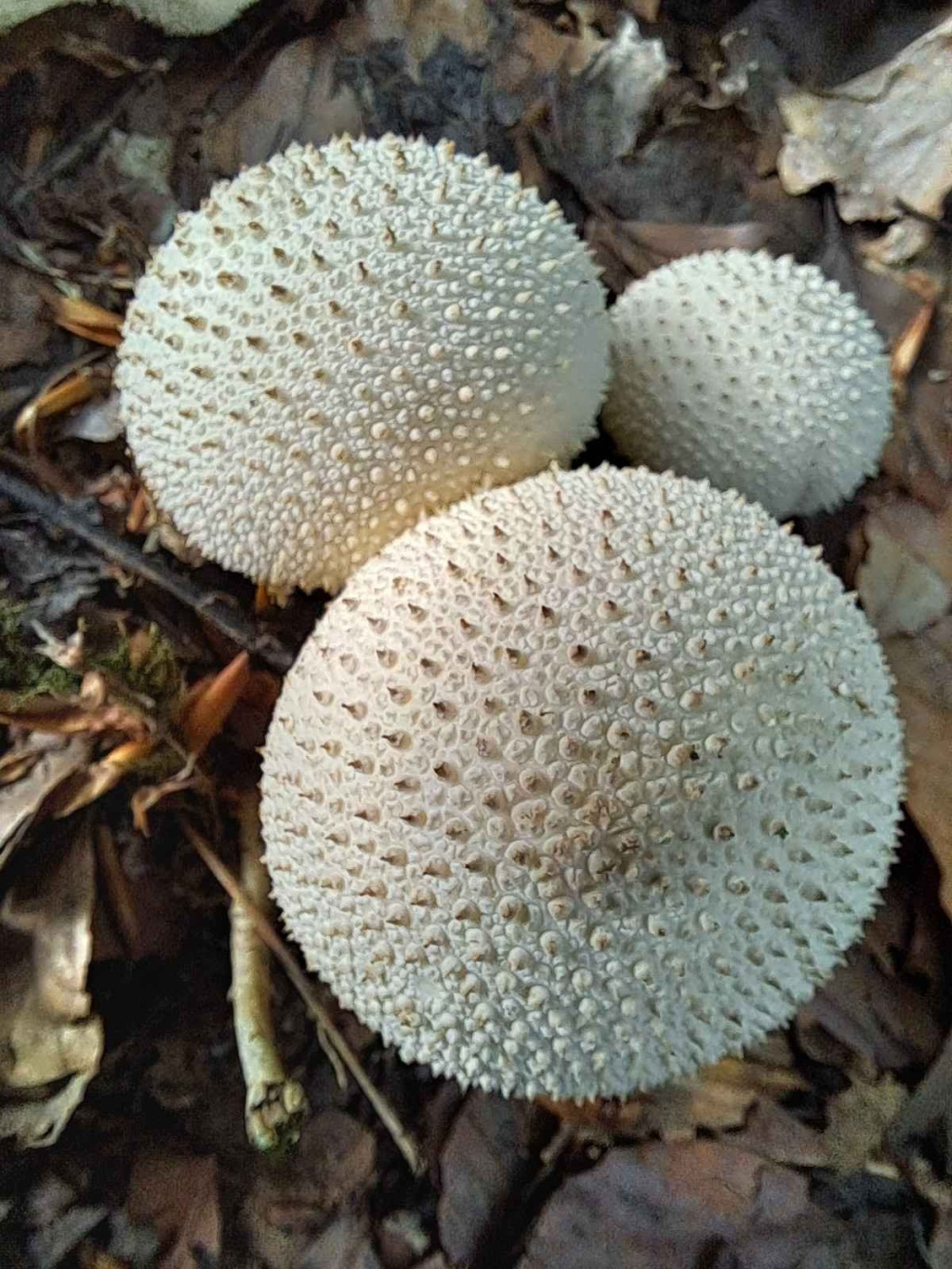
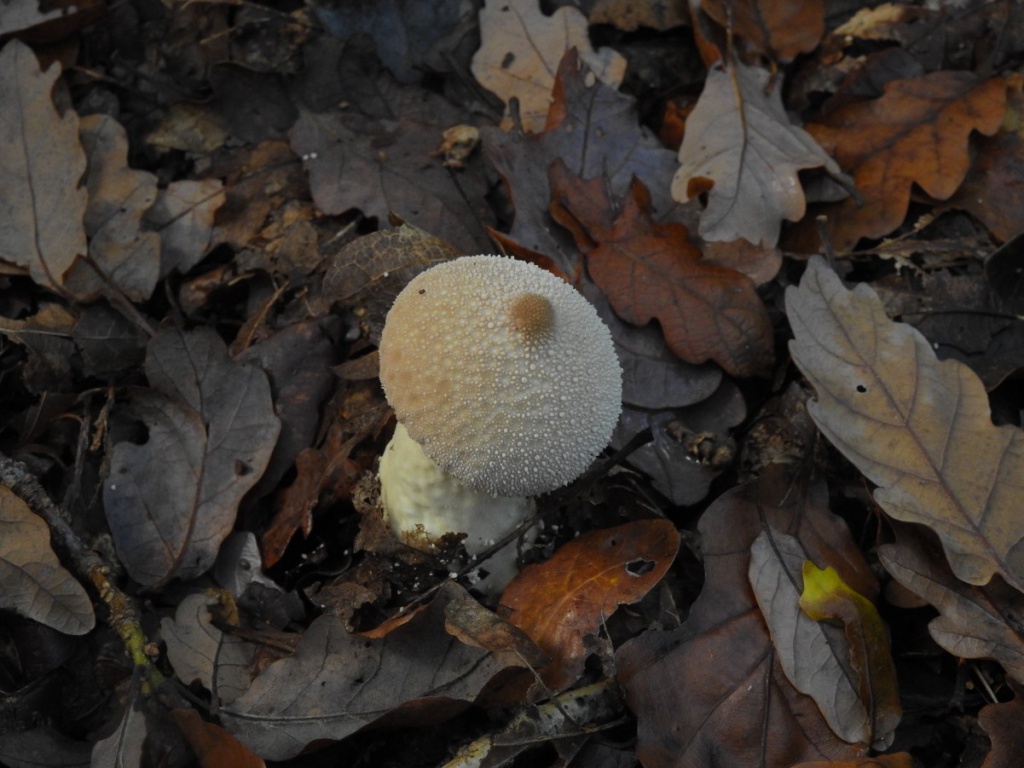
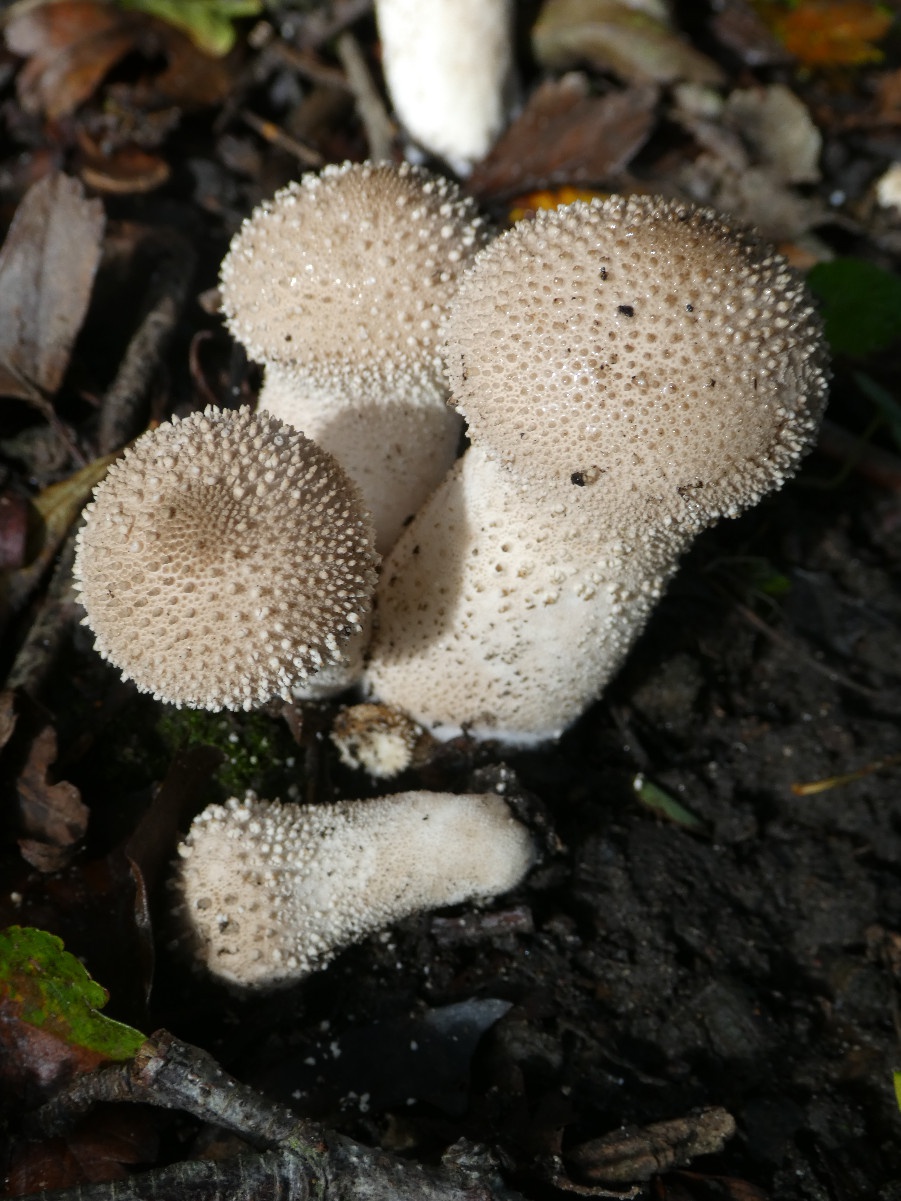
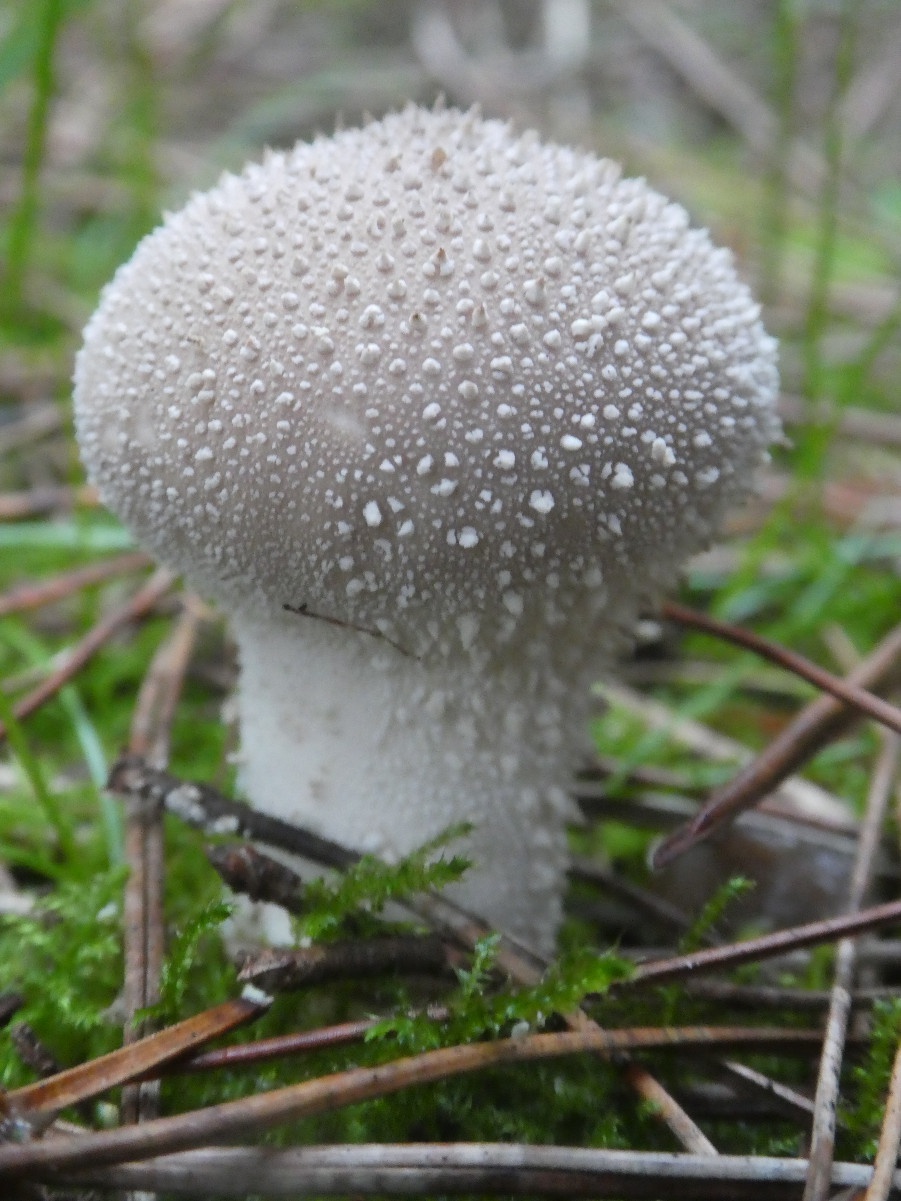
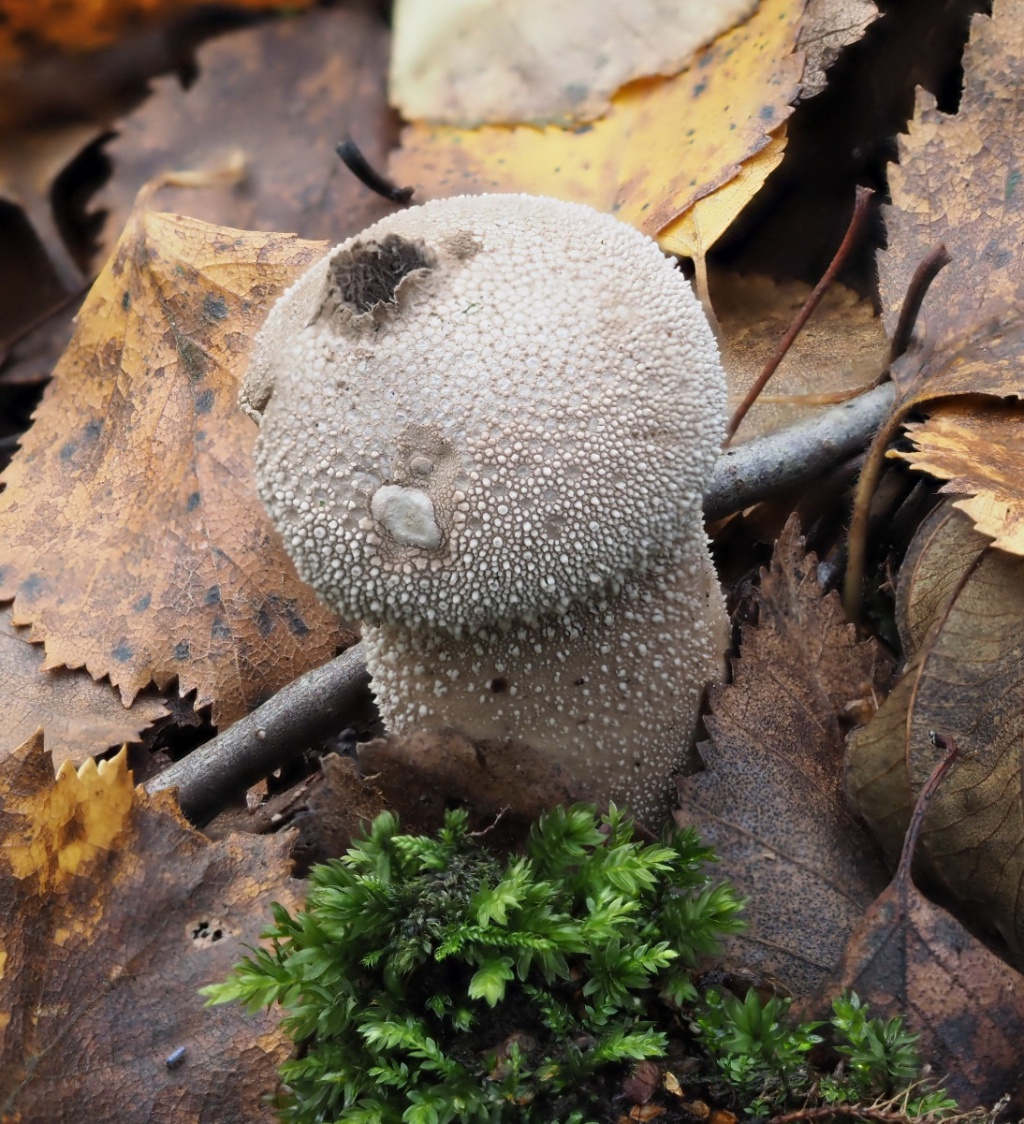
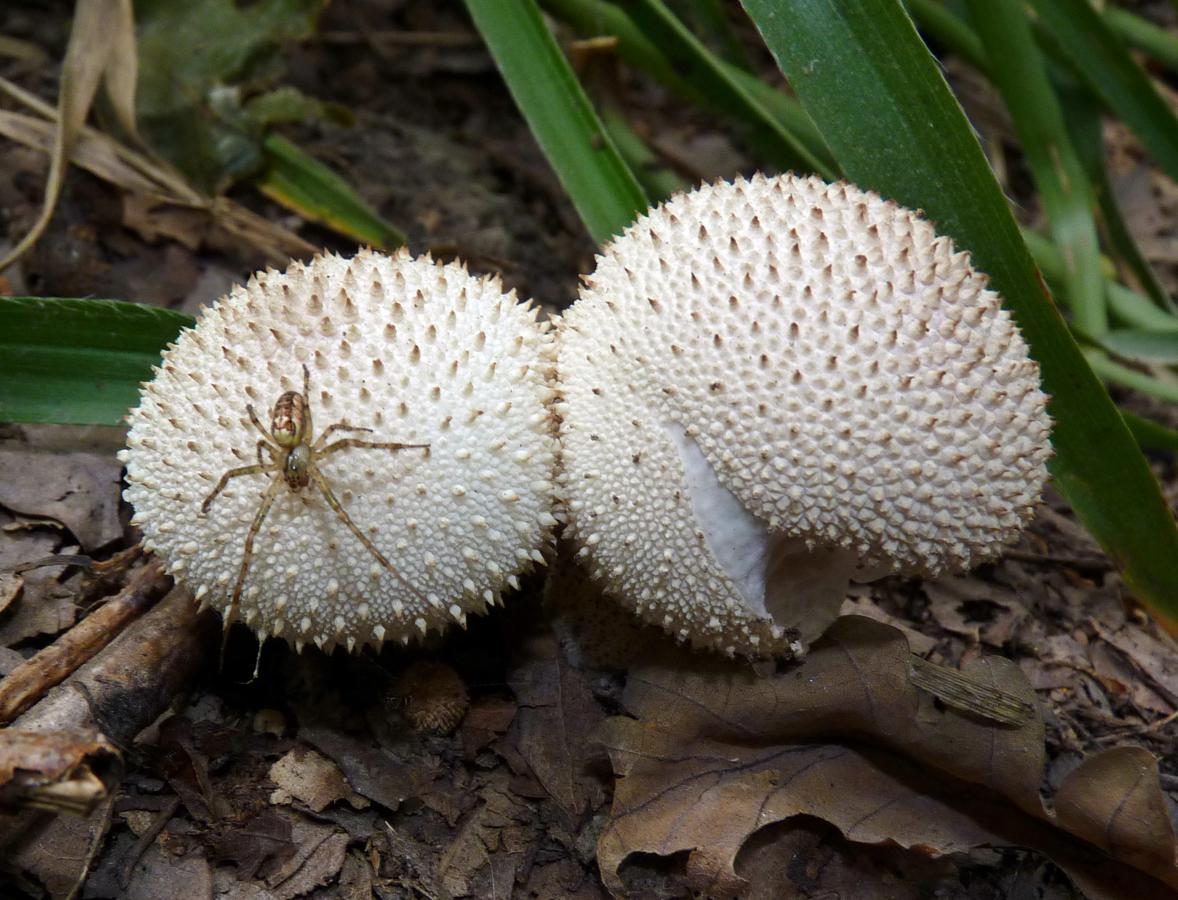
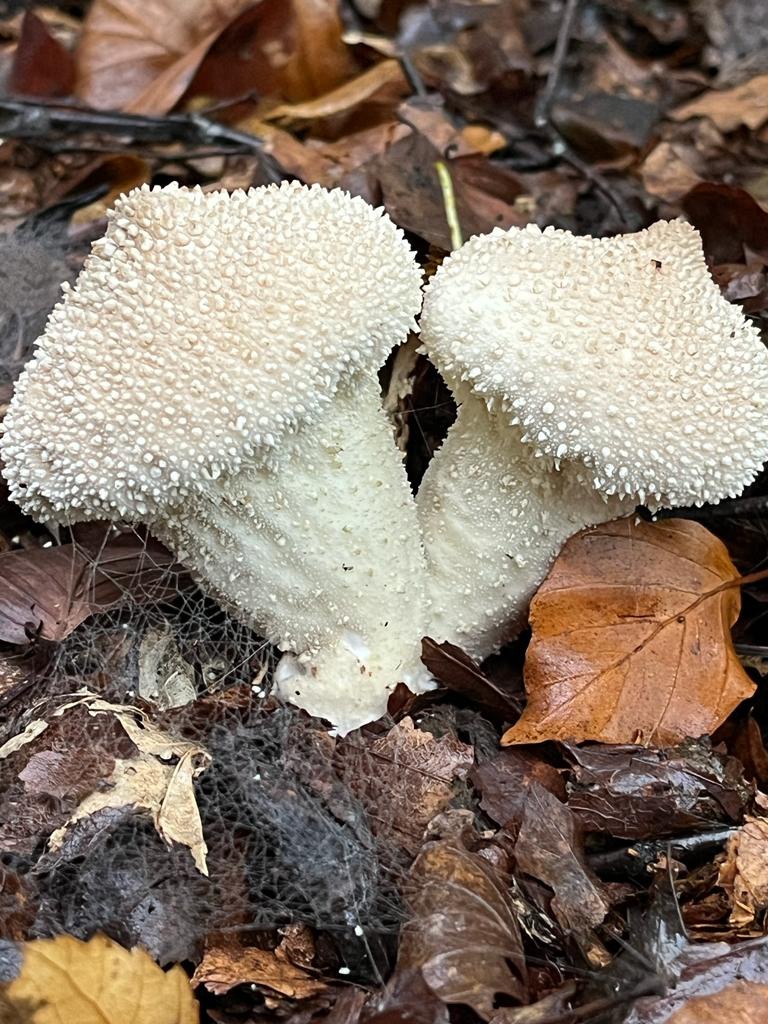
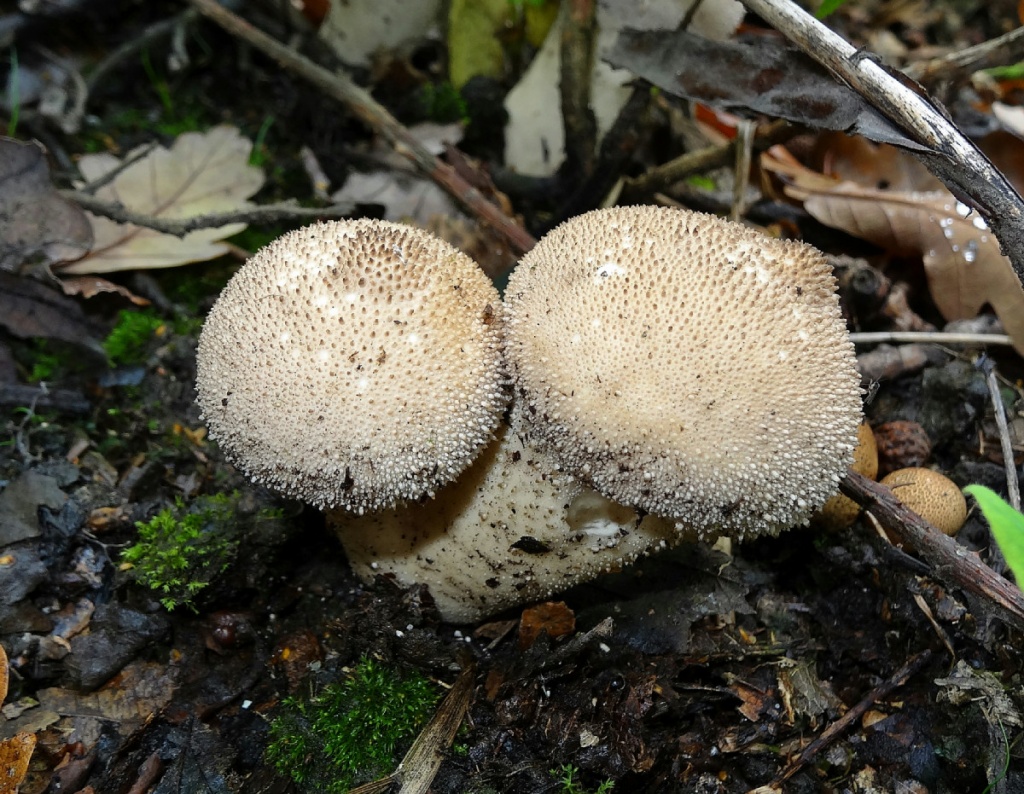
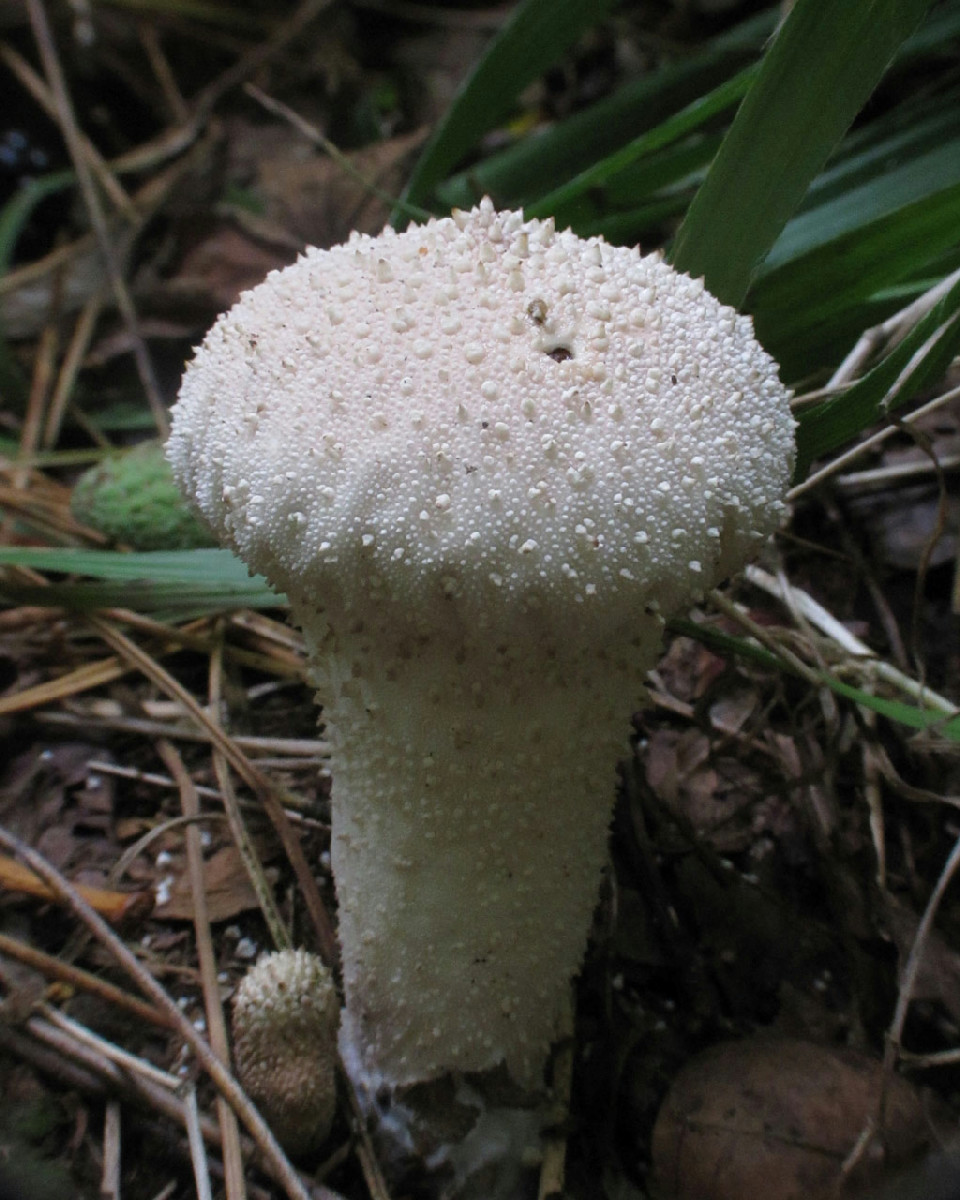
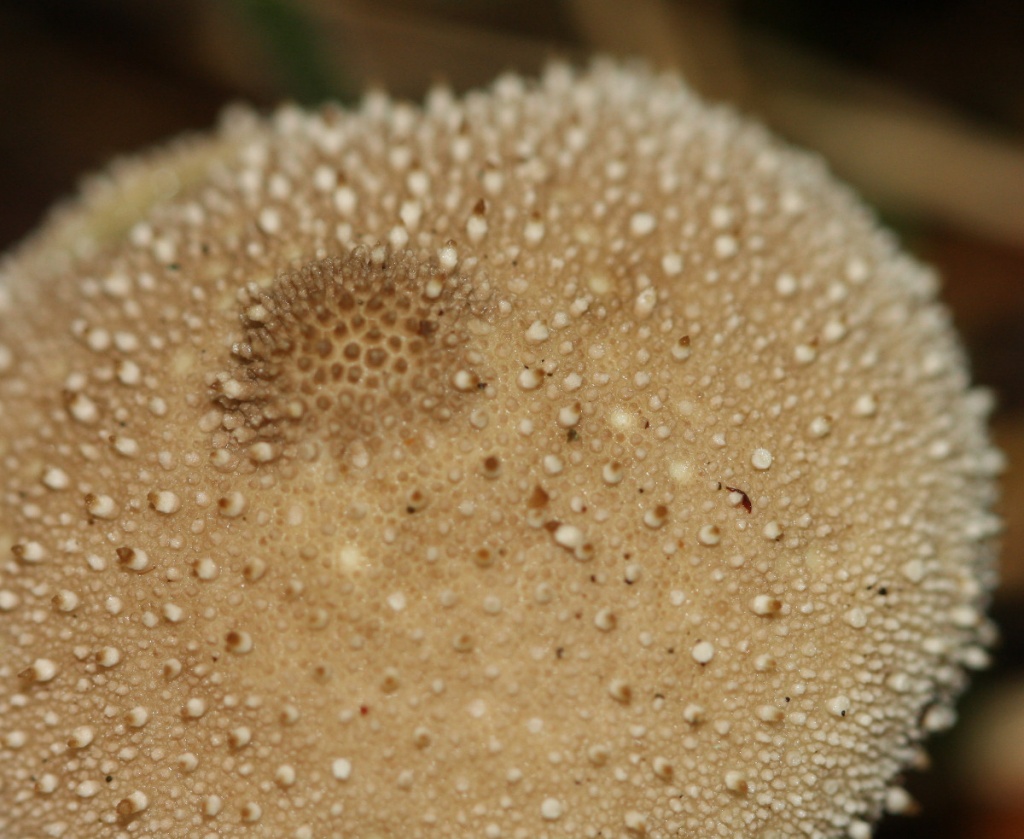
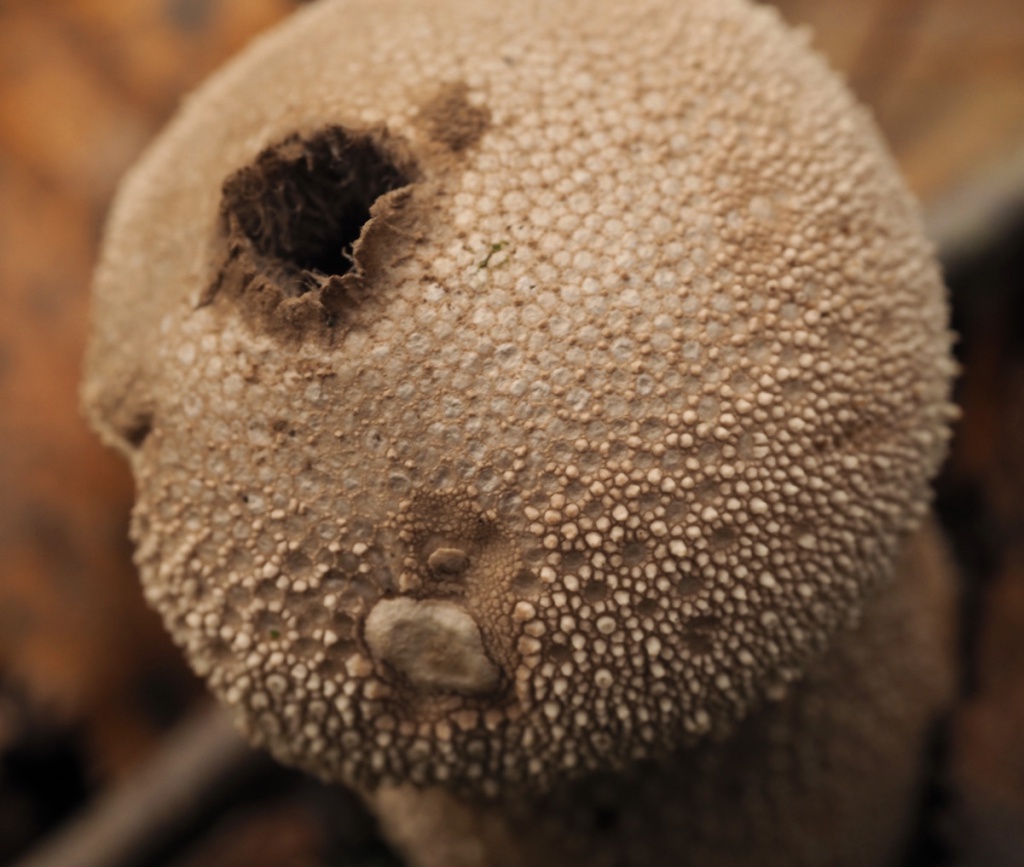
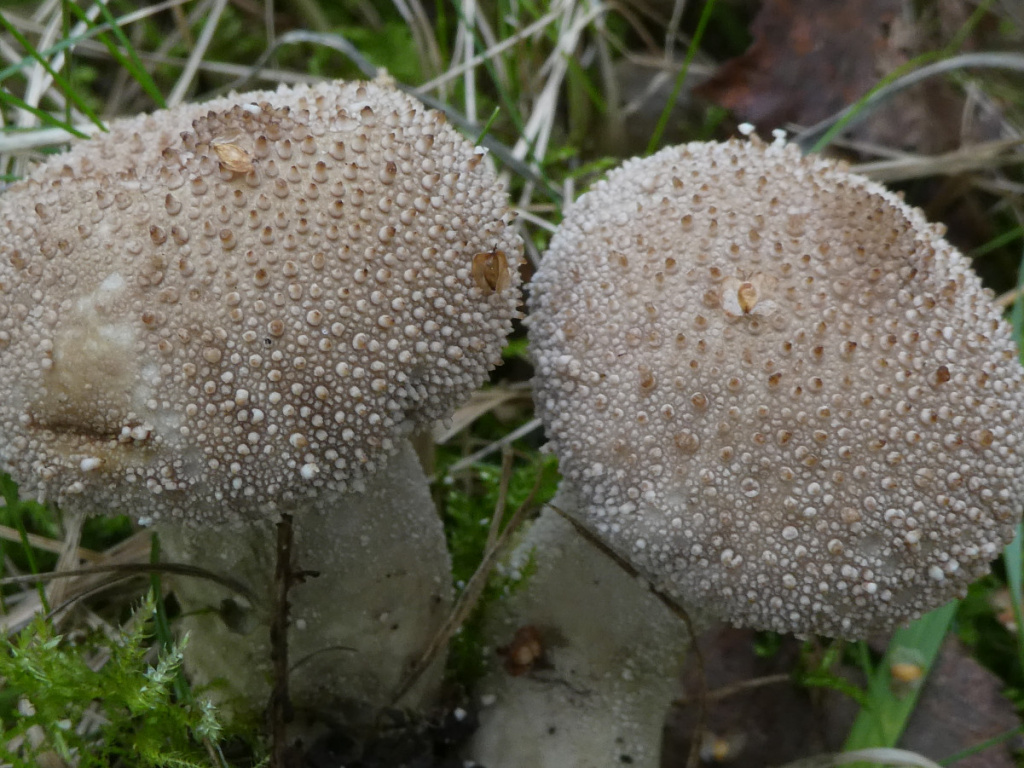
A medium-sized, pear-shaped puffball with a tapering stem; pale initially but darkening as it matures. It is covered in short conical blunt warts (not spines) of varying sizes; these wear off older specimens leaving a net-like mosaic pattern. When mature, the puffball has a small apical opening from which the mass of dark brown spores are released.
Other puffballs with small spines or convergent spines arranged in groups of three or more can look very similar, especialy older ereoded specimens. The following species are frequently or occasionally recorded in VC55:
- The Dusky Puffball Lycoperdon nigrescens: darker and has longer, convergent spines leaving a net-like pattern when they fall
- The Stump Puffball Apioperdon pyriforme: long stems, central pore, often troops on stumps/buried wood; spines soon rub off.
- The Spiny Puffball Lycoperdon echinatum: very short stem, long convergent spines that leave a net-like pattern when they fall
- The Pestle Puffball Lycoperdon excipuliforme: a tall stem and lacks a central pore; young specimens have fine pale spines.
- The Meadow Puffball Lycoperdon pratense is small with very fine spines or a mealy surface, and a central irregular opening
- The Soft Puffball Lycoperdon molle: large and pale with fragile often convergent spines; short stem and central pore
- The Grassland Puffball Lycoperdon lividum is small; small conical warts or short spines, becoming smooth; central pore
- The Mosaic Puffball Lycoperdon utriforme is large with a wide stem and scaly skin; it lacks a central pore

Good quality photographs of fresh specimens, showing surface ornamentation and central pore; avoid recording very old specimens unless you have examined the spores. Note habitat and substrate.
Woodlands, grasslands on soil or leaf litter, rarely on wood.
Usually found from summer to late autumn
Common throughout Britain
Very common in Leicestershire and Rutland.
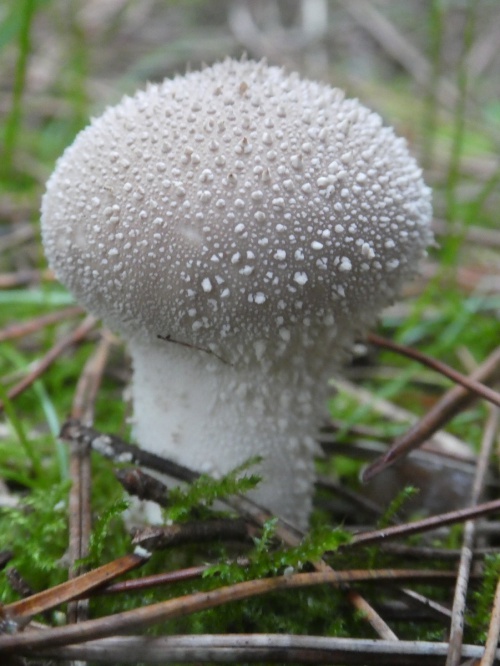 Melinda Bell
Ibstock,Sence Valley
19 November 2021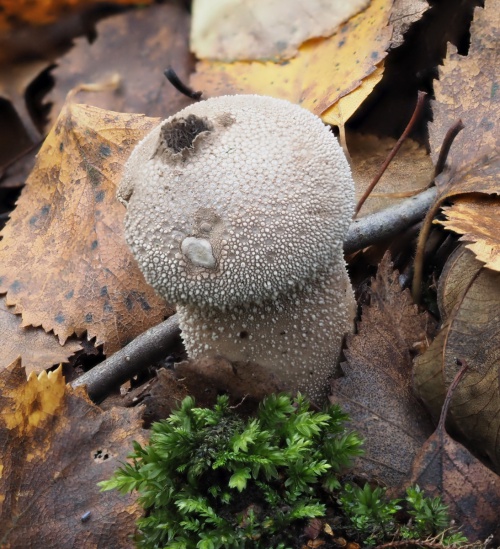 David Nicholls
Sandhill Lodge woodland
08 November 2022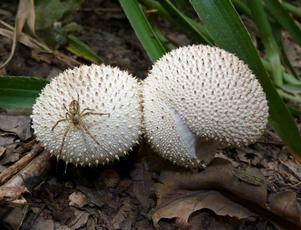 Lostash
Swithland Woods
04 September 2010 Lostash
Swithland Woods
26 October 2014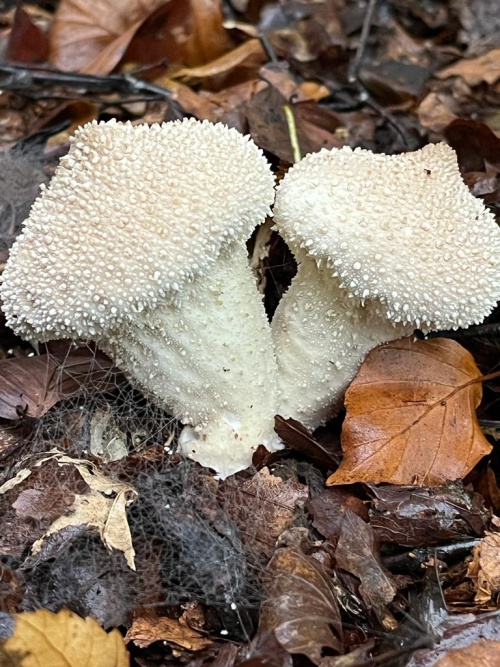 Hazel Graves
Rocky Plantation
27 October 2023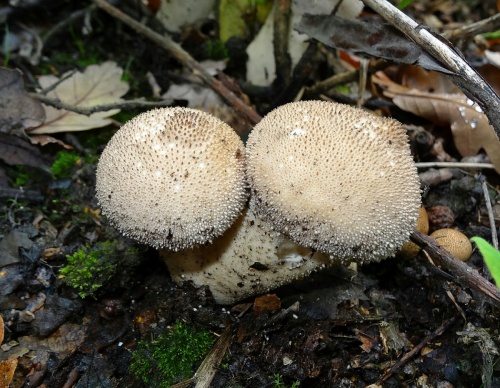 Lostash
Swithland Woods
18 October 2012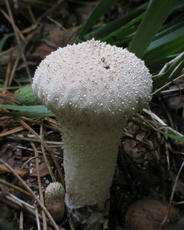 David Gould
Martinshaw Wood
09 September 2011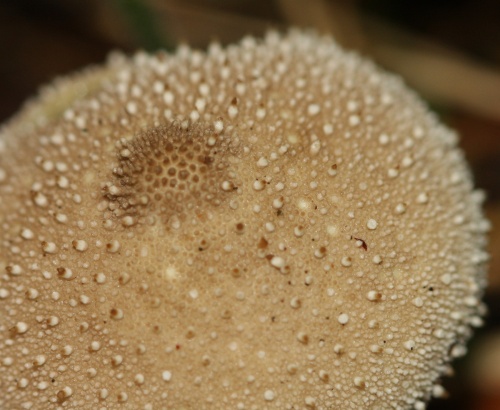 David Nicholls
Martinshaw Wood
19 October 2012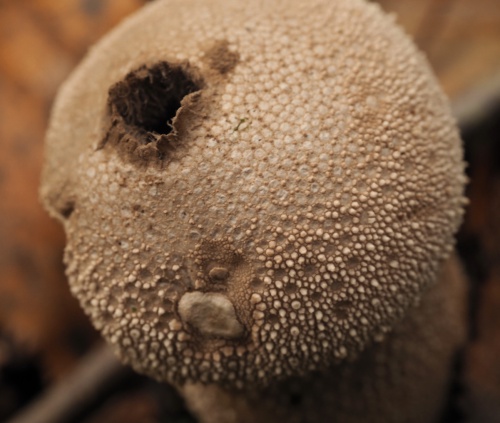 David Nicholls
Sandhill Lodge woodland
08 November 2022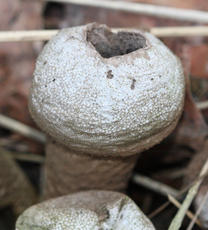 David Nicholls
Martinshaw Wood
23 February 2012 Lycoperdon perlatum (Common Puffball) Freeholt Wood SP 4605 9410 (taken 16.10.2006).JPG) Graham Calow
Graham Calow
Sapcote
16 October 2006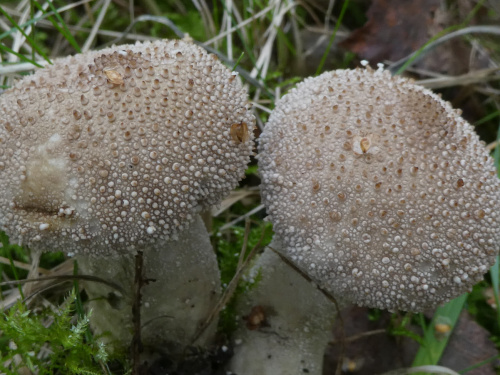 Melinda Bell
Bagworth Heath Woods
13 October 2024


 Lycoperdon perlatum (Common Puffball) Freeholt Wood SP 4605 9410 (taken 16.10.2006).JPG)
Leicestershire & Rutland Map
Enter a town or village to see local records
MAP KEY:
Yellow squares = NBN records (all known data)
Coloured squares = NatureSpot records: 2025+ | 2020-2024 | pre-2020
UK Map
Additional images