Common Fleabane
Common Fleabane - Pulicaria dysenterica
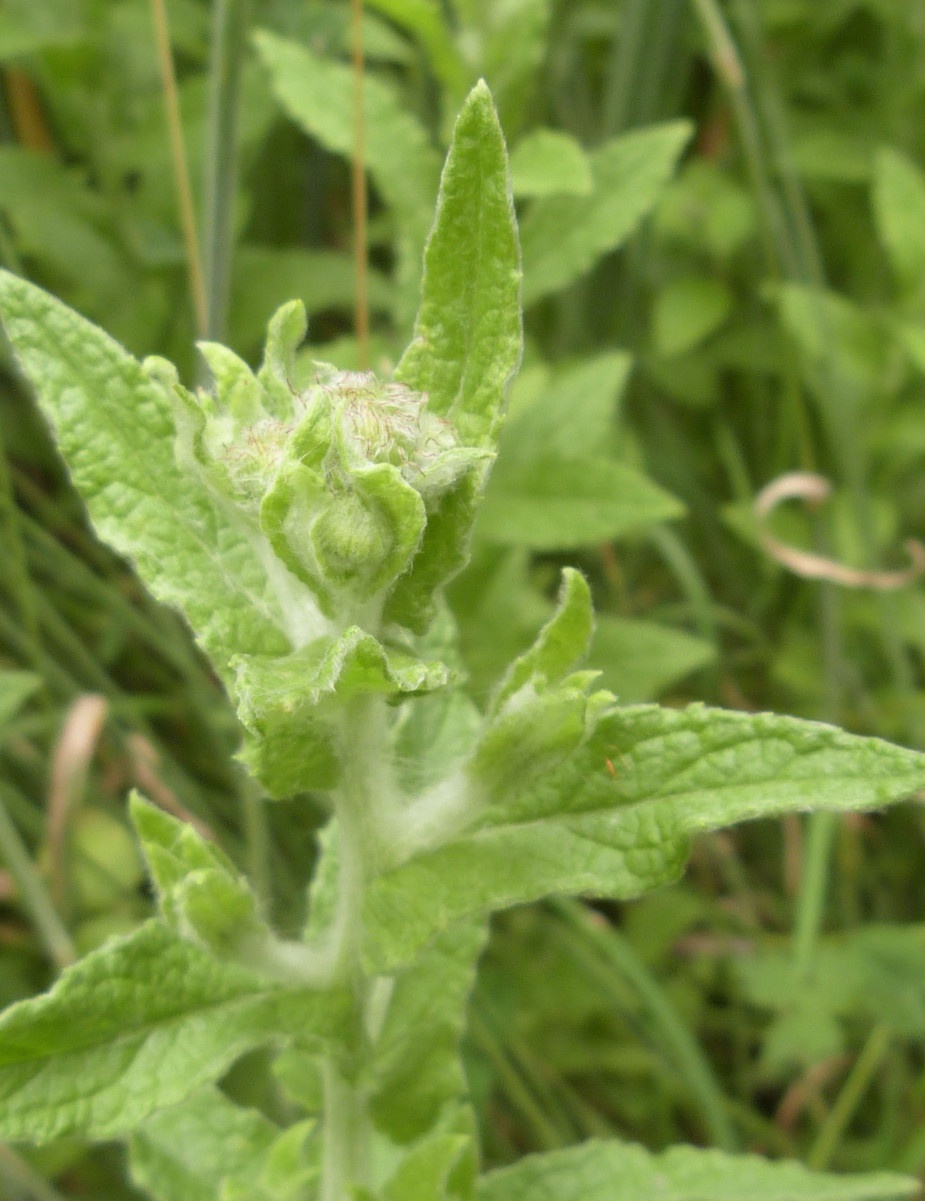
Medium, hairy, stoloniferous plant. Stems erect, branched above. Basal leaves wither by flowering time. Flowerheads daisy like, golden yellow 15 to 30 mm in lax flat topped clusters, rays numerous linear.

Damp habitats, water margins, wet ditches, marshes and wet meadows.
August and September.
Perennial.
Found throughout Britain except in Scotland.
It is fairly frequent in Leicestershire and Rutland in suitable habitats. In the 1979 Flora survey of Leicestershire it was found in 96 of the 617 tetrads
 Fosse Meadows (Taken 17.9.2008).JPG) Graham Calow
Graham Calow
Fosse Meadows, Sharnford
17 September 2008 Graham Calow
Sharnford
03 August 2014 Graham Calow
Burbage Common and Woods
11 September 2012 Graham Calow
Jubilee Walk, Leire
02 August 2011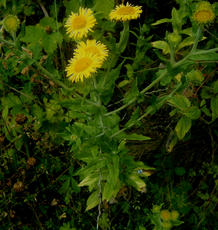 Graham Calow
Jubilee Walk, Leire
02 August 2011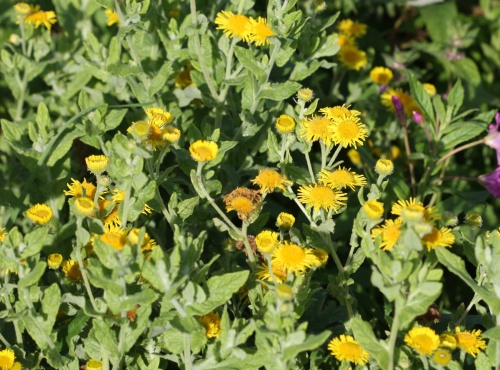 David Nicholls
Watermead Country Park
06 September 2012
 Fosse Meadows (Taken 17.9.2008).JPG)

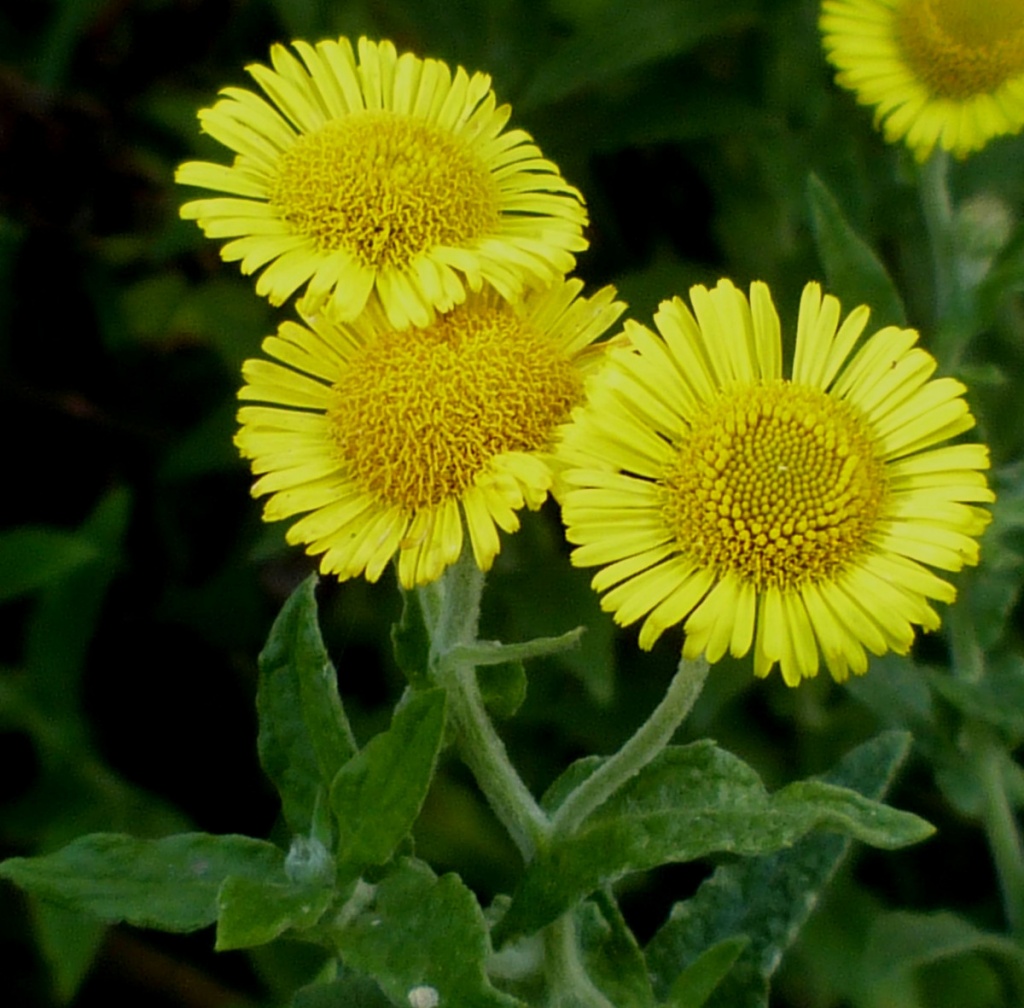
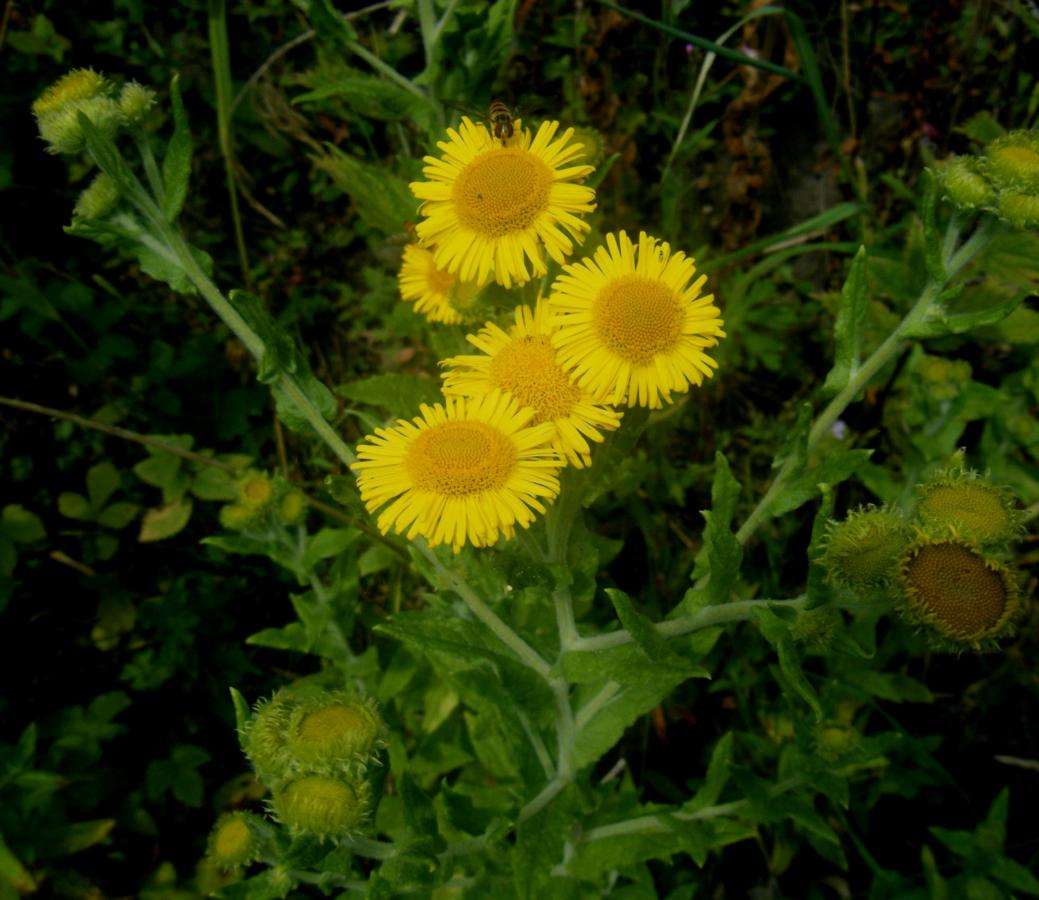


Leicestershire & Rutland Map
Enter a town or village to see local records
MAP KEY:
Yellow squares = NBN records (all known data)
Coloured squares = NatureSpot records: 2025+ | 2020-2024 | pre-2020
UK Map
Additional images
All NatureSpot records
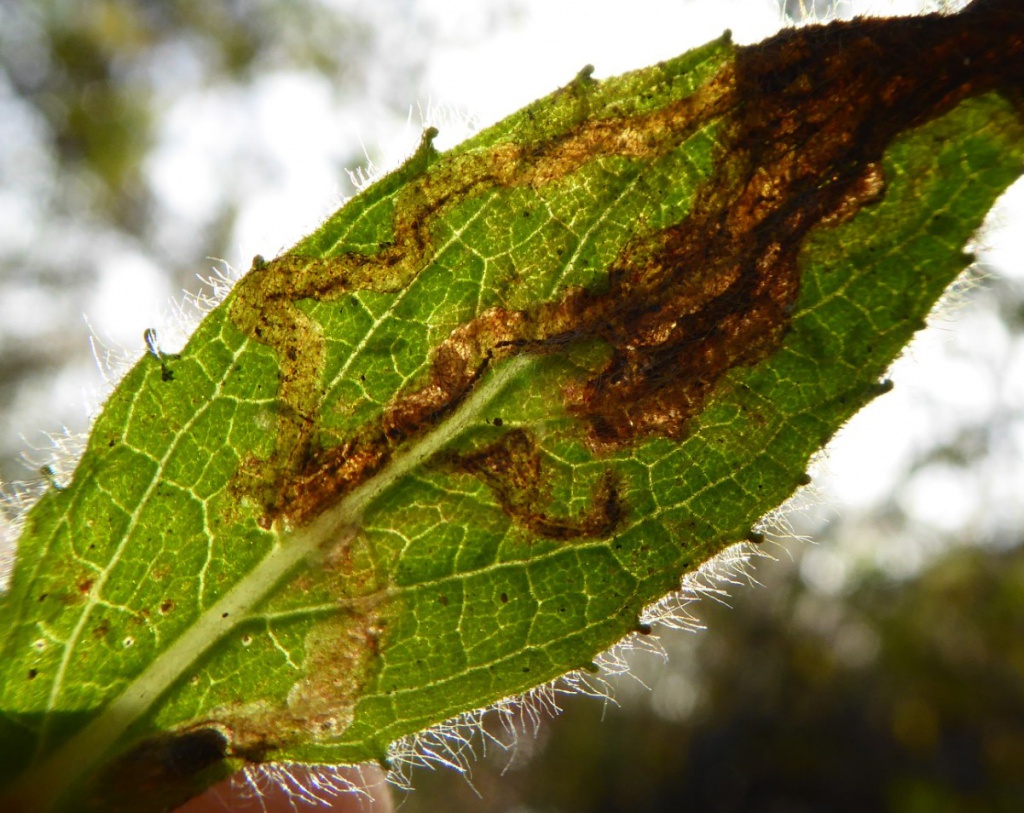
Phytomyza conyzae
The larva of the Agromyzid fly Phytomyza conyzae mines the leaves of various Fleabanes, including Common Fleabane. The mine can be either an upper or lower surface corridor, often located by the midrib. Frass often appears in in pearl strings. The mine initially starts pale but soon becomes darker.