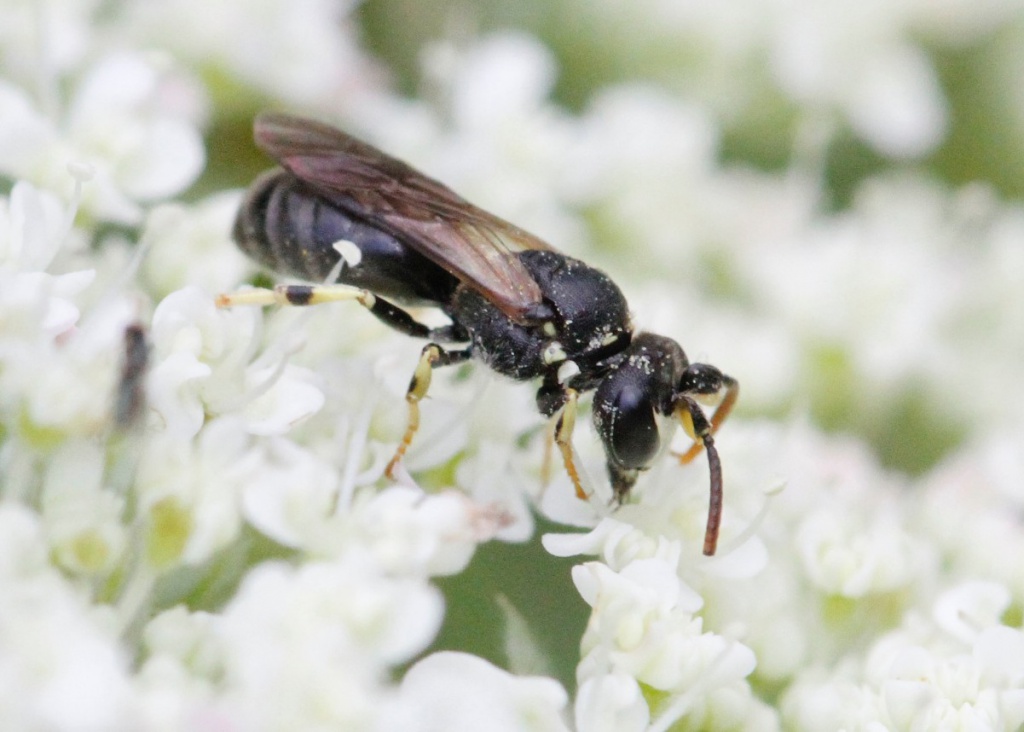
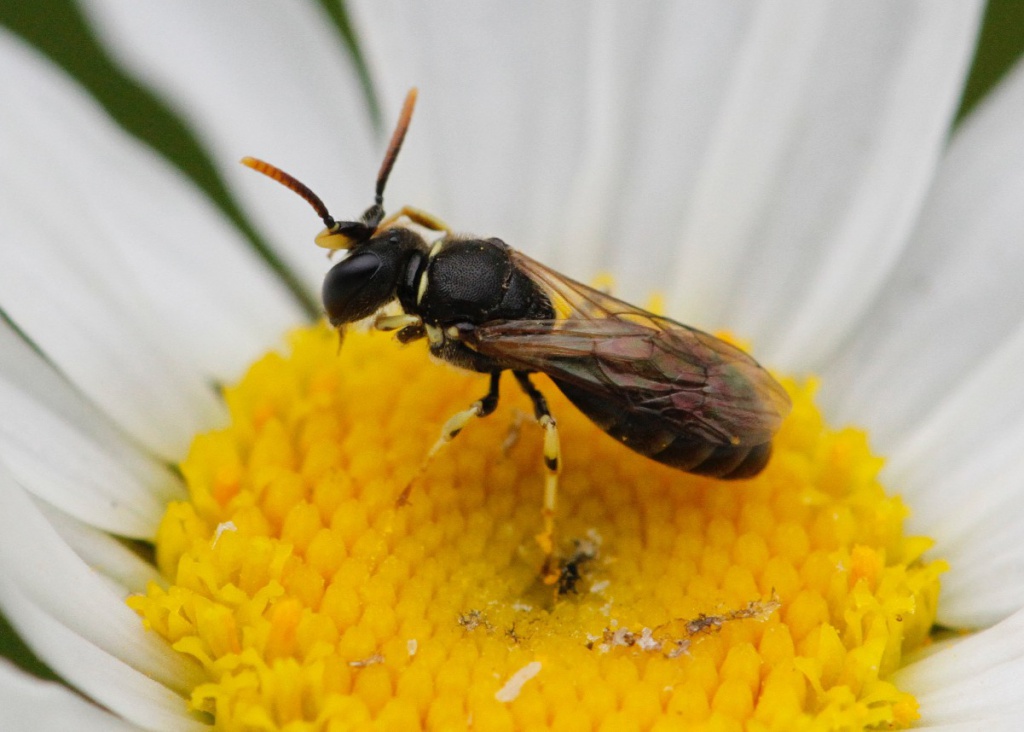
Chalk Yellow-face Bee
Chalk Yellow-face Bee - Hylaeus dilatatus
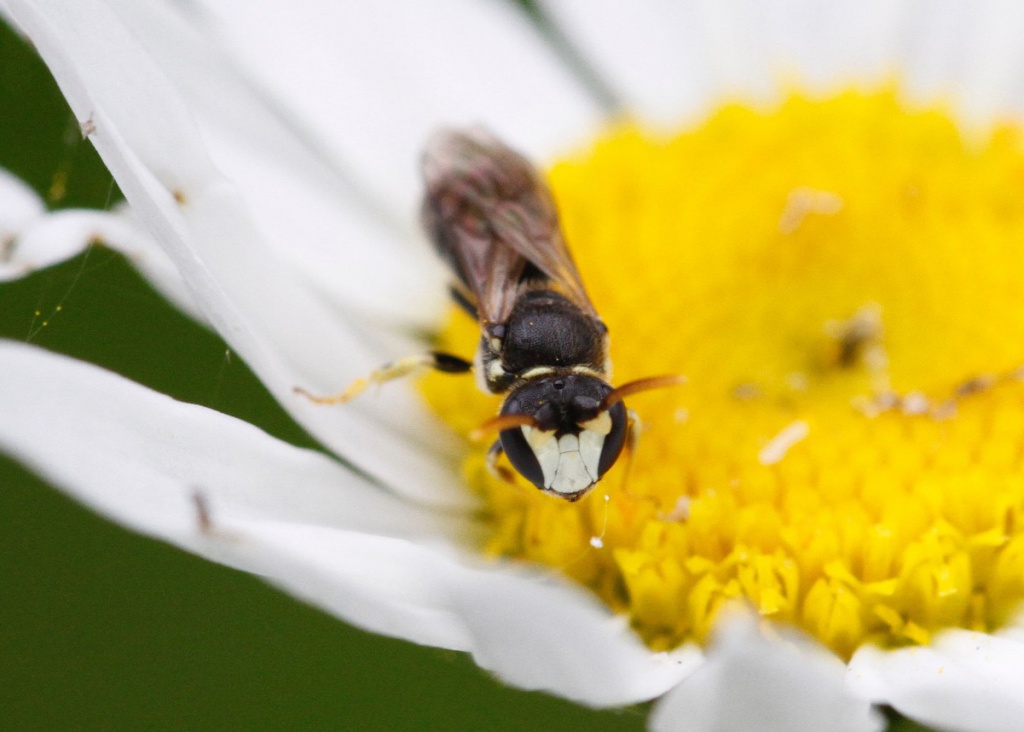
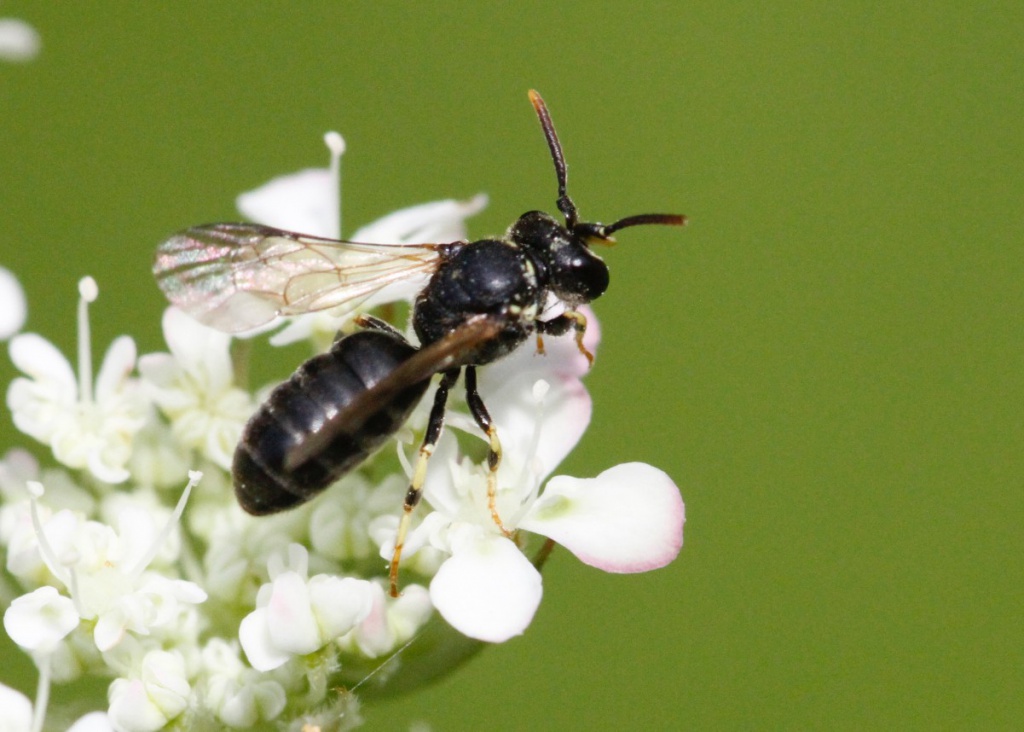
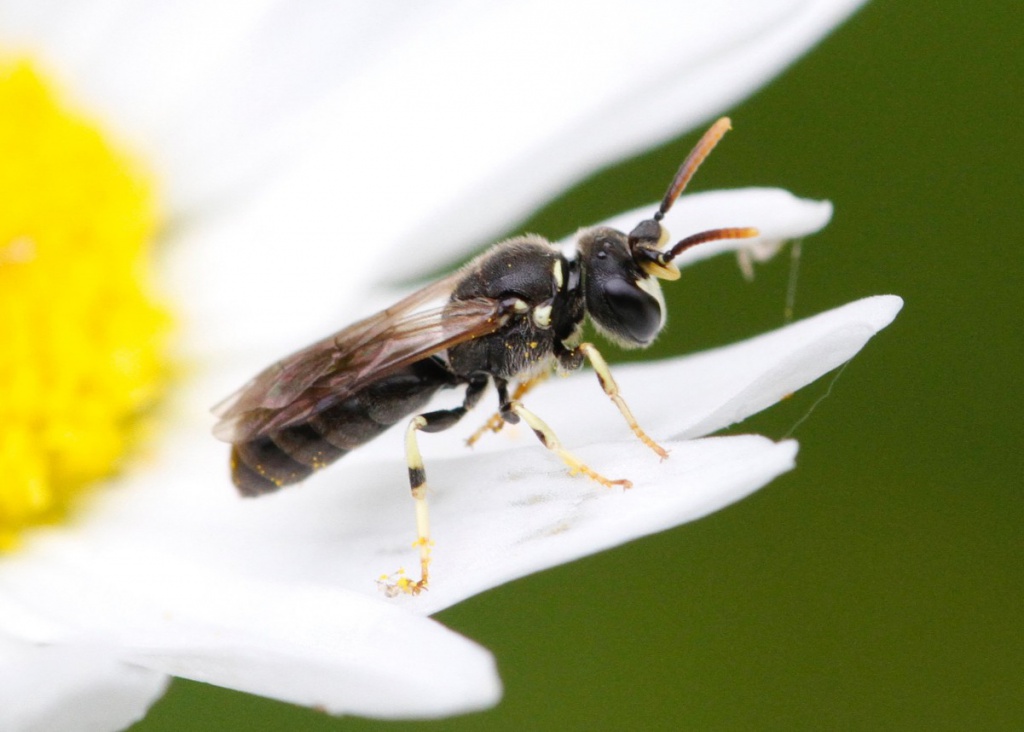
British representatives of the subgenus Lambdopsis are restricted to Hylaeus dilatatus and H. annularis (formerly H. spilotus).The females of both differ from other British Hylaeus in the reduced, circular (not wedge-shaped or linear) paraocular markings; the males have greatly dilated, yellow and black-marked, sub-rectangular antennal scapes (easily visible to the naked eye).

Most solitary bees and wasps are difficult to identify, and can rarely be identified from photos taken in the field. All red-rated records should include a photo, or set of photos, showing the key characters, which may require the specimen. Please include a face shot, side, top and wings. Note whether male or female, explain how the specimen met the key characters and the key used. We will accept records identified by a recognised local or national expert, or that have been identified via the BWARS’ Facebook noting the name of the person/organisation identifying the record (e.g. ‘Stuart Roberts, BWARS Facebook’).
The species is often locally common on calcareous grassland, but has been reported from coastal sites, fens and open woodland.
Univoltine; early June to late August or early September. As with all British Hylaeus, the females are often long lived (the males having a considerably shorter adult life).
Nest burrows are made in old bramble stems and n the stems of some other plants.
Widely distributed, though local, in southern England; the range extends north to the Midlands (Leicestershire). In Wales, only recorded from South Glamorgan.
Status in Leicestershire and Rutland no known.
 Matthew Berriman
Ketton Quarry NR
21 June 2019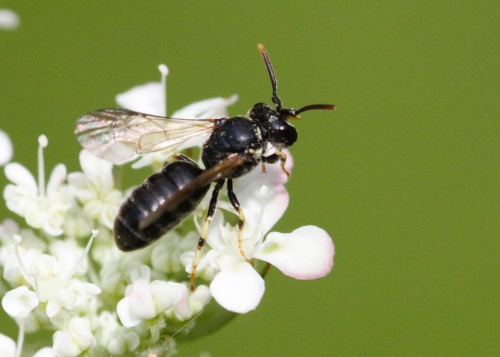 Matthew Berriman
Ketton Quarry NR
20 July 2019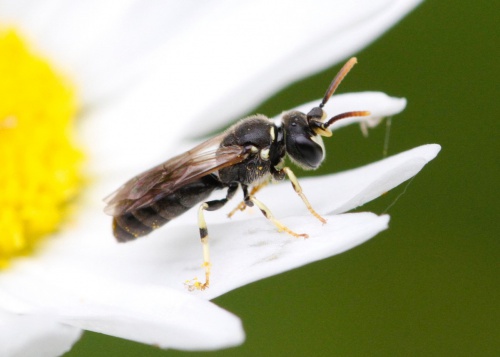 Matthew Berriman
Ketton Quarry NR
21 June 2019
Leicestershire & Rutland Map
Enter a town or village to see local records
MAP KEY:
Yellow squares = NBN records (all known data)
Coloured squares = NatureSpot records: 2025+ | 2020-2024 | pre-2020
UK Map
Additional images