Cantharis nigricans
Cantharis nigricans
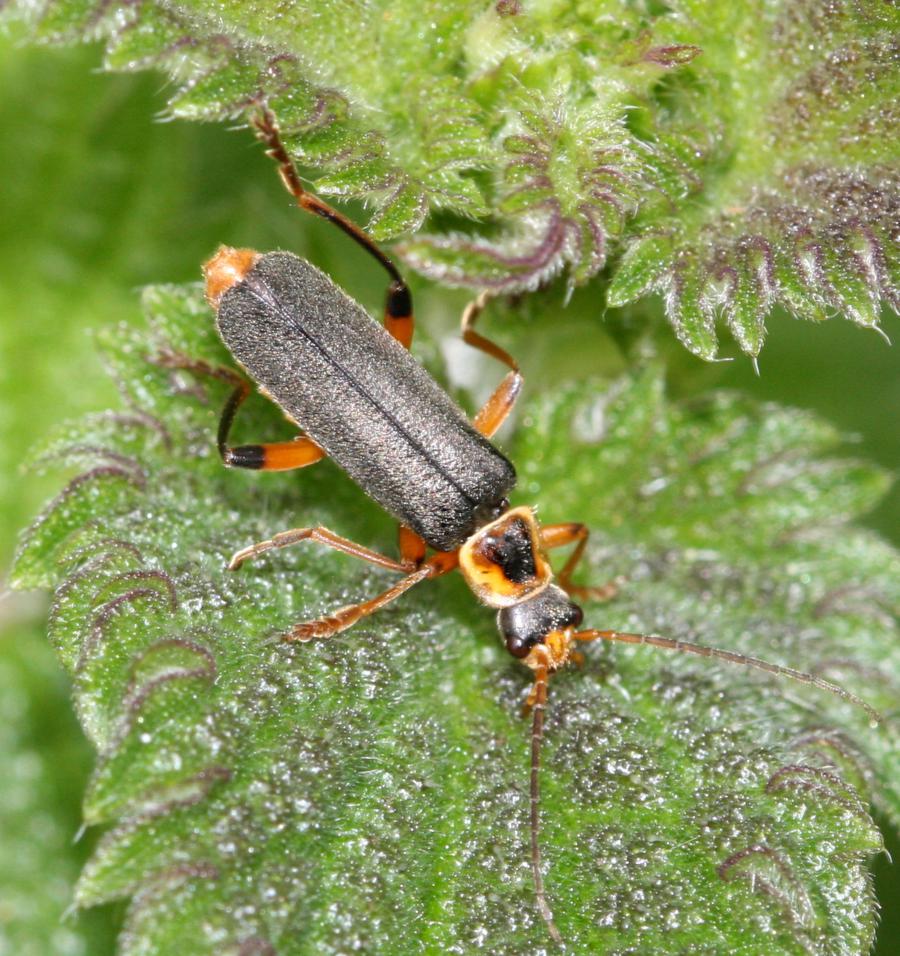
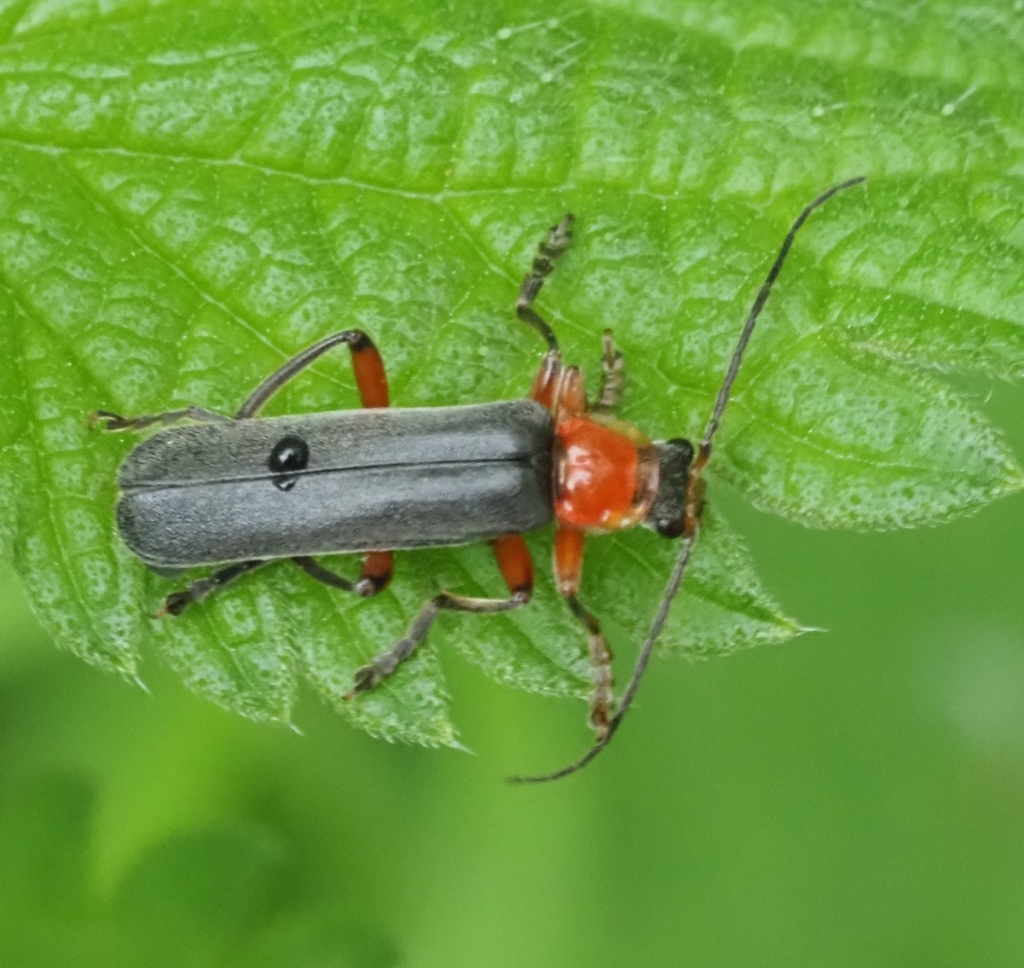
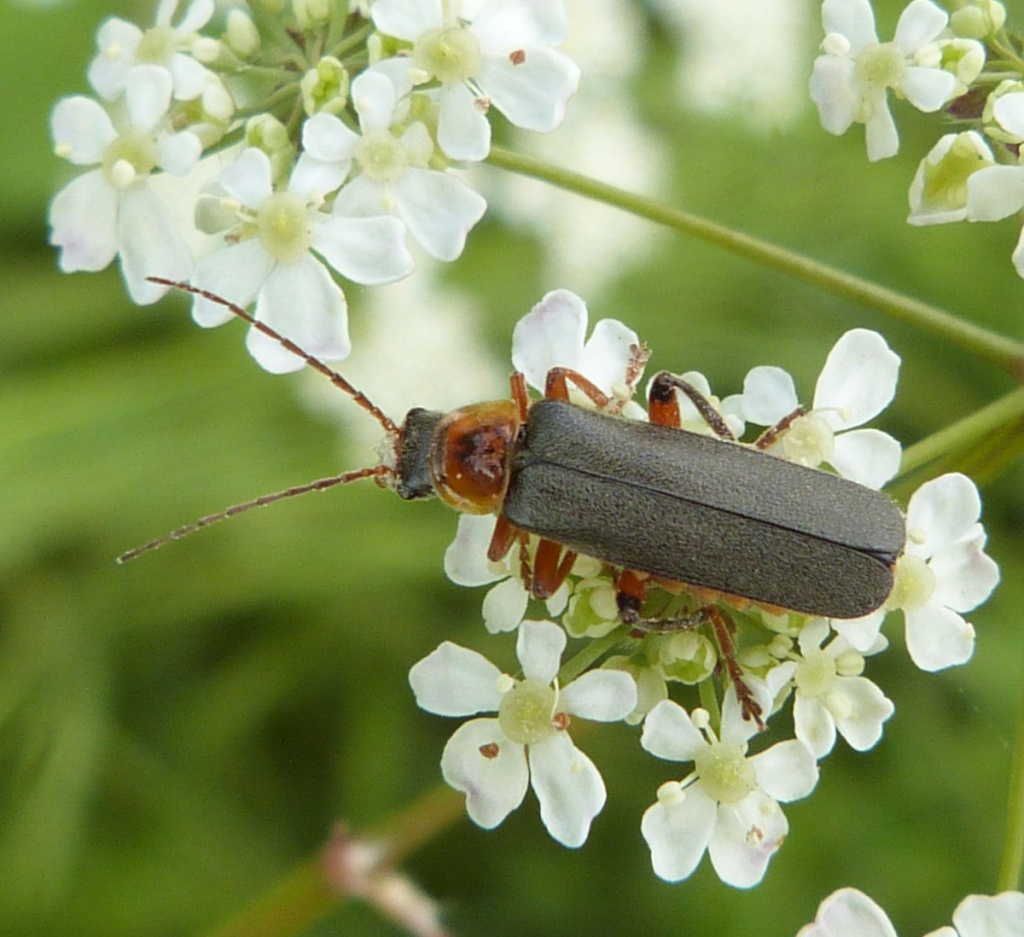
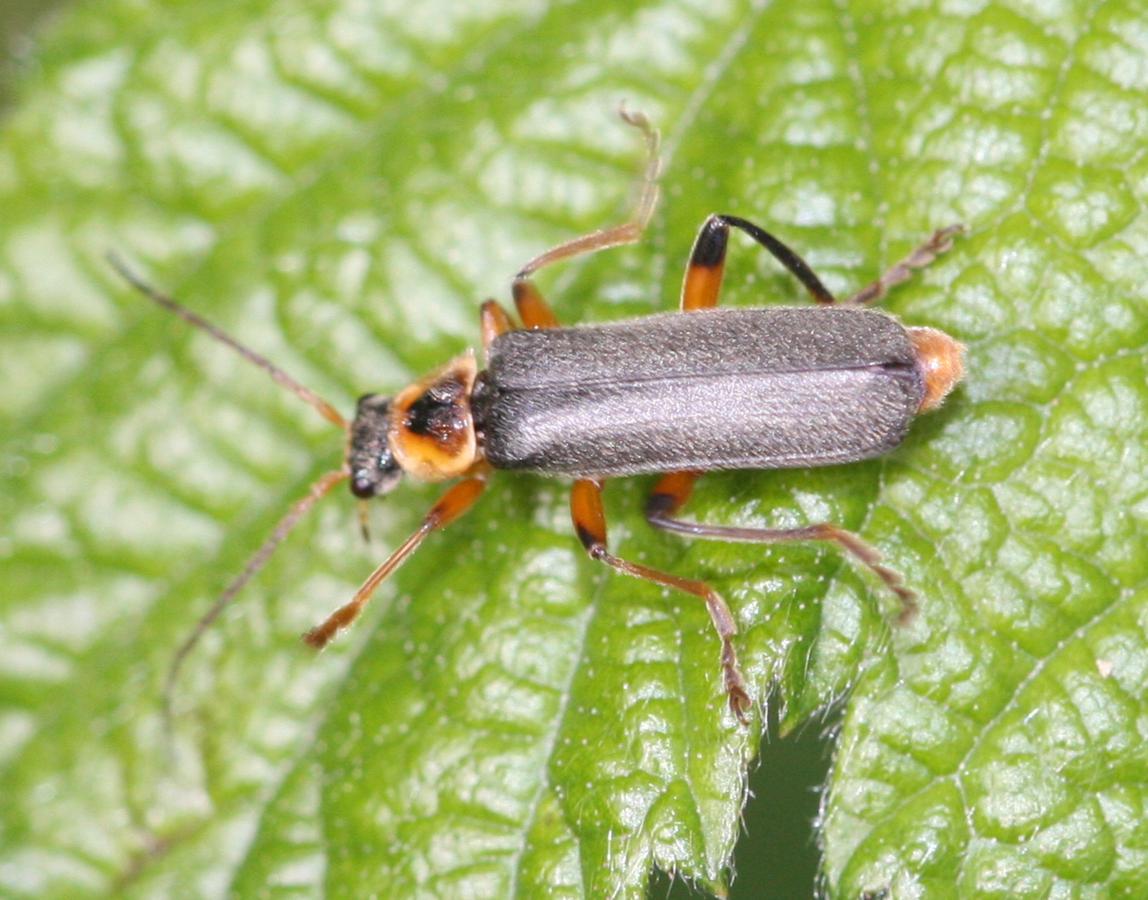
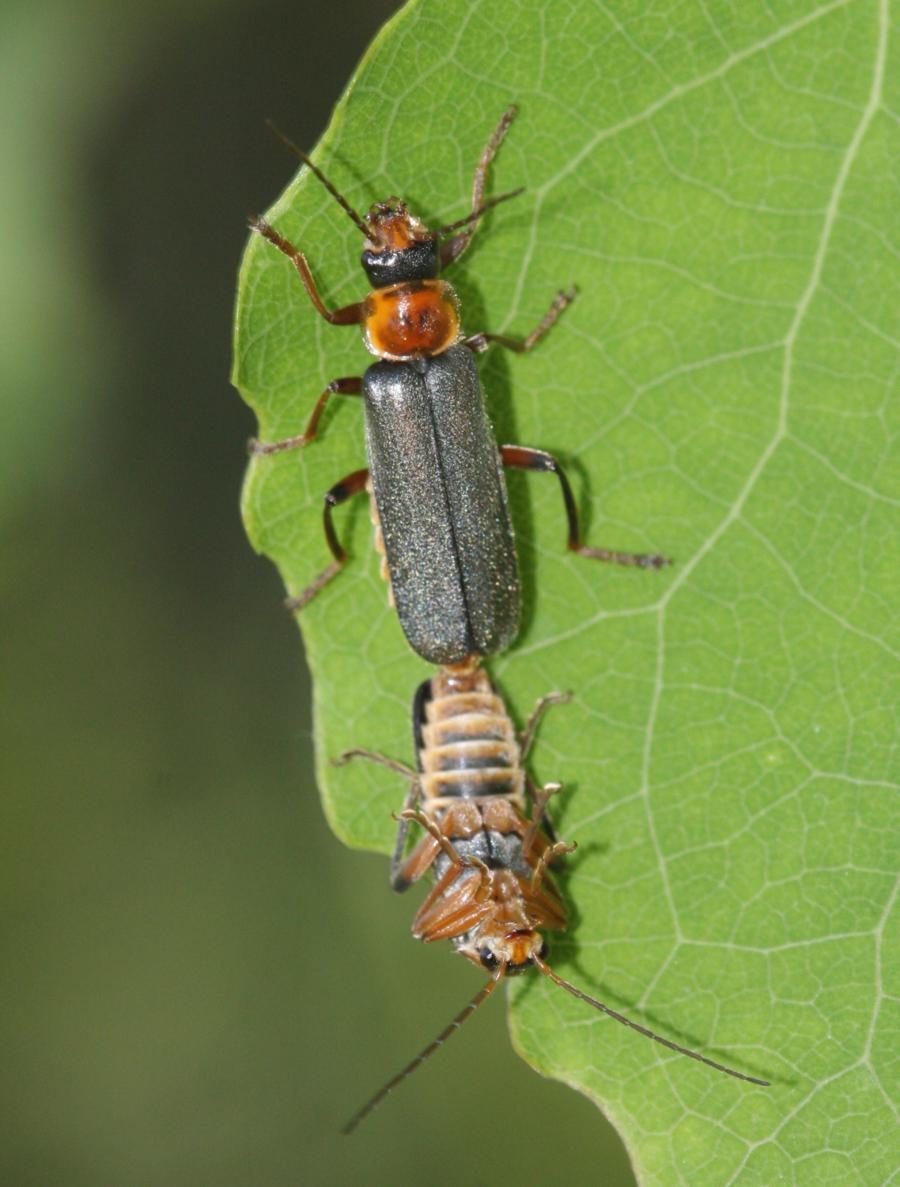
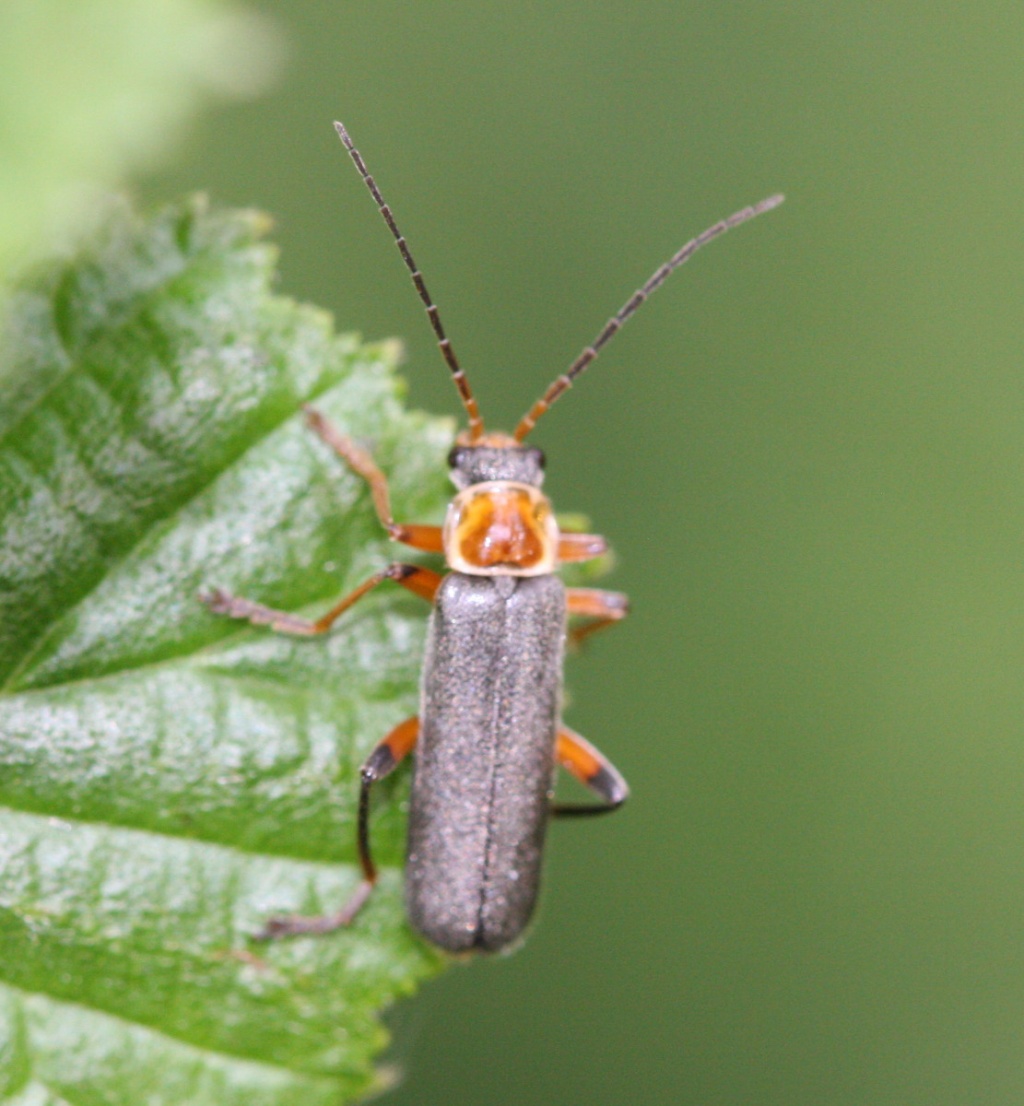
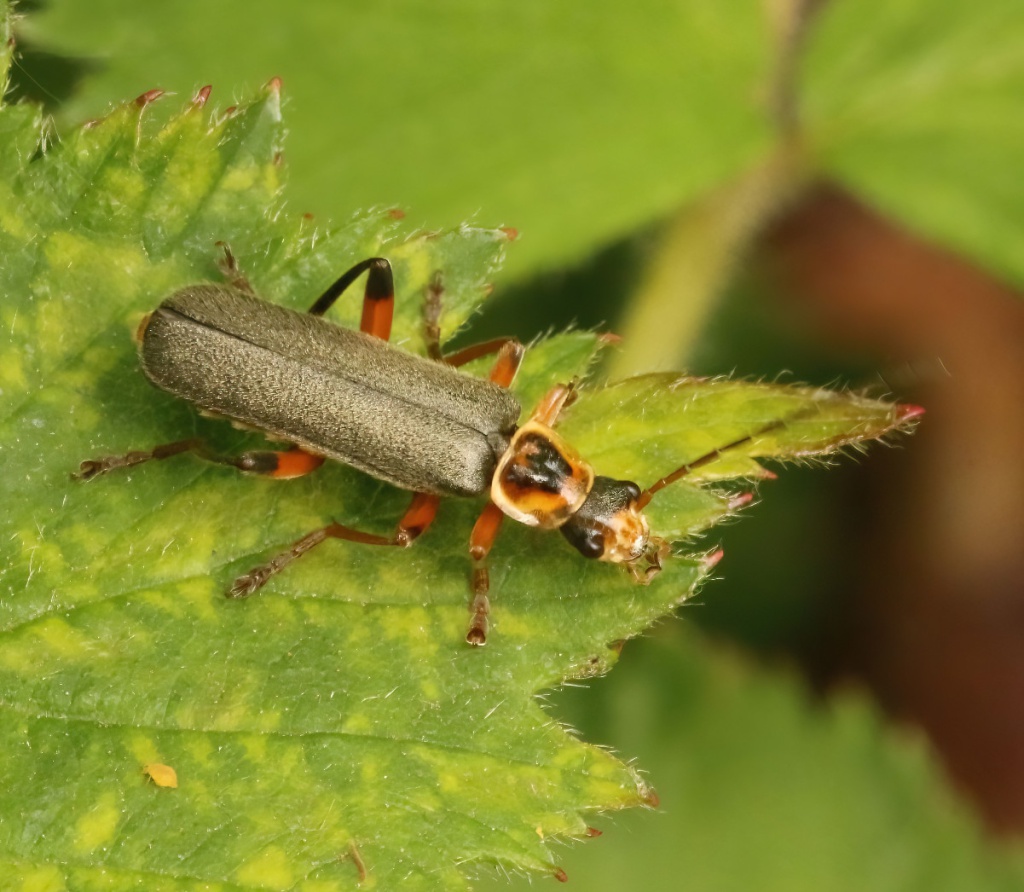
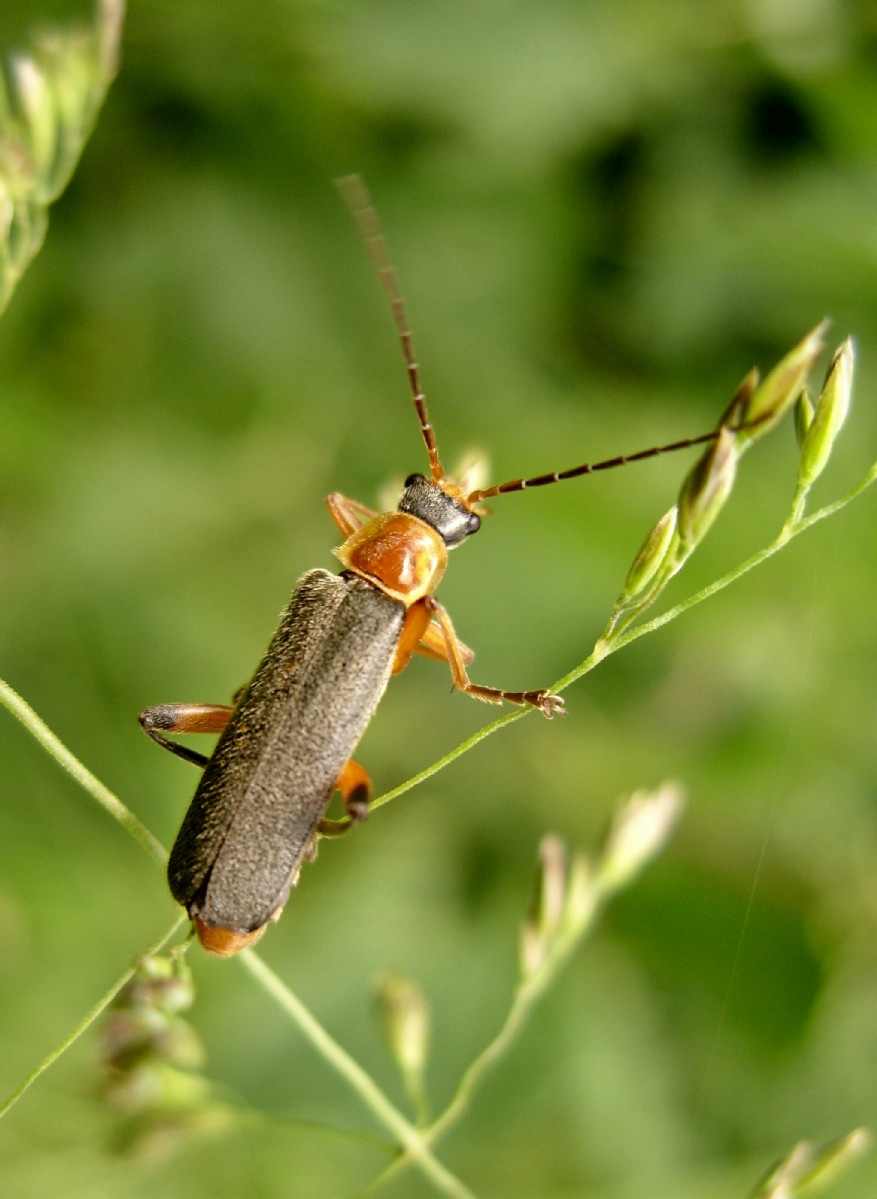
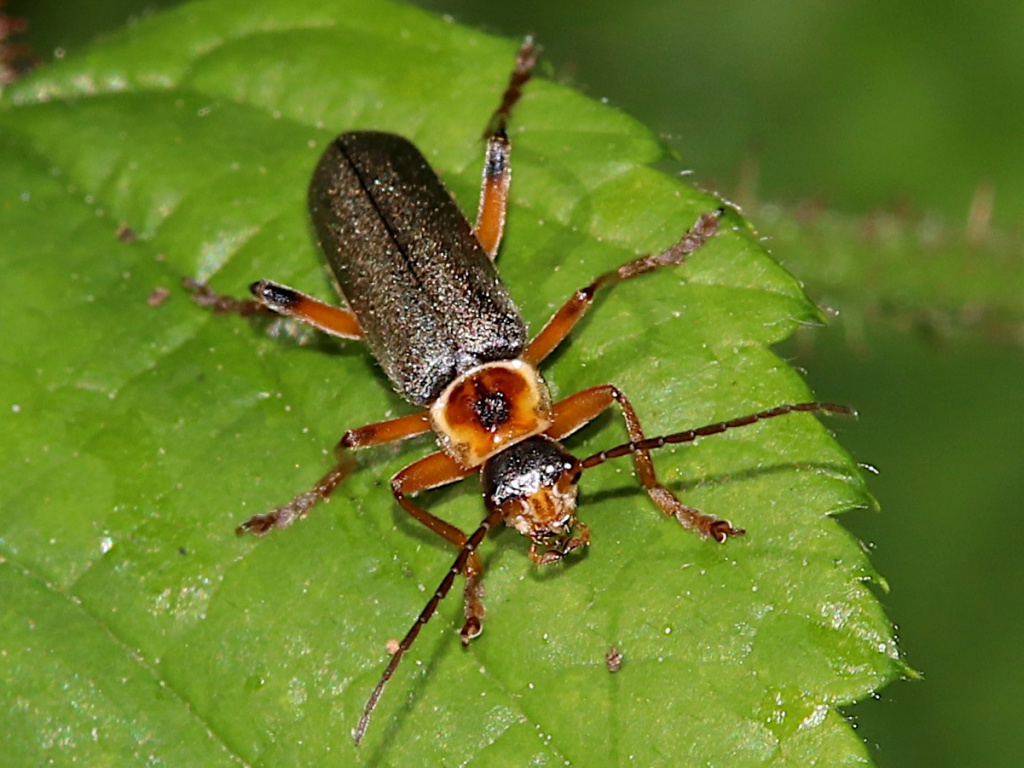
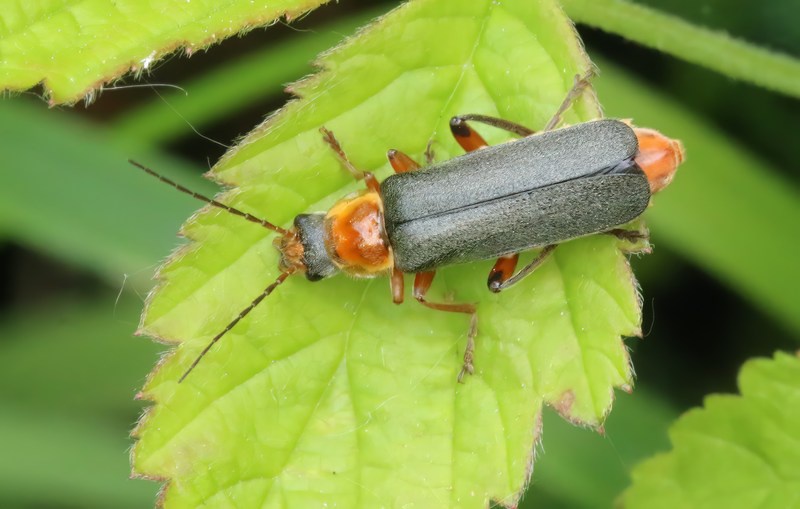
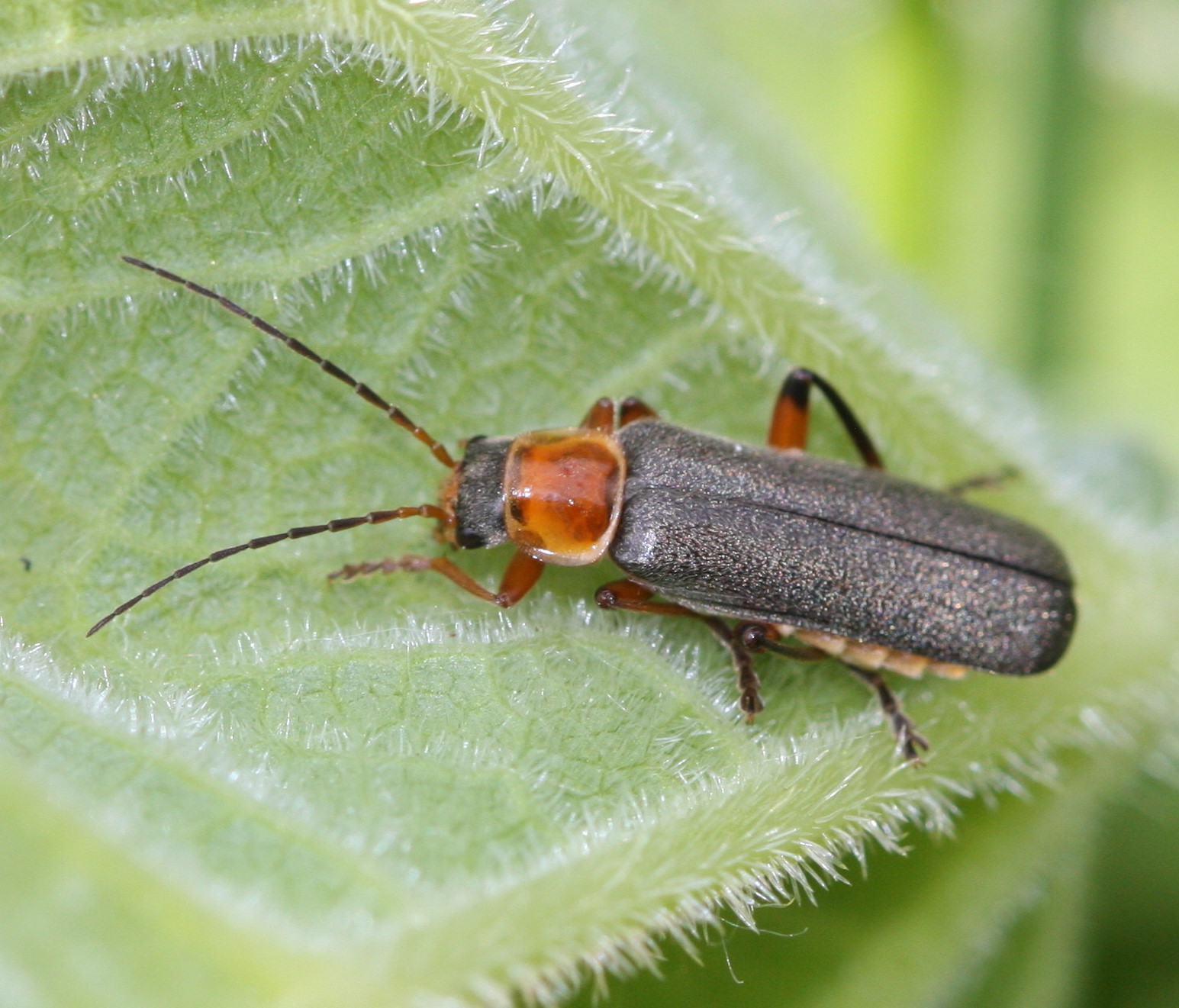
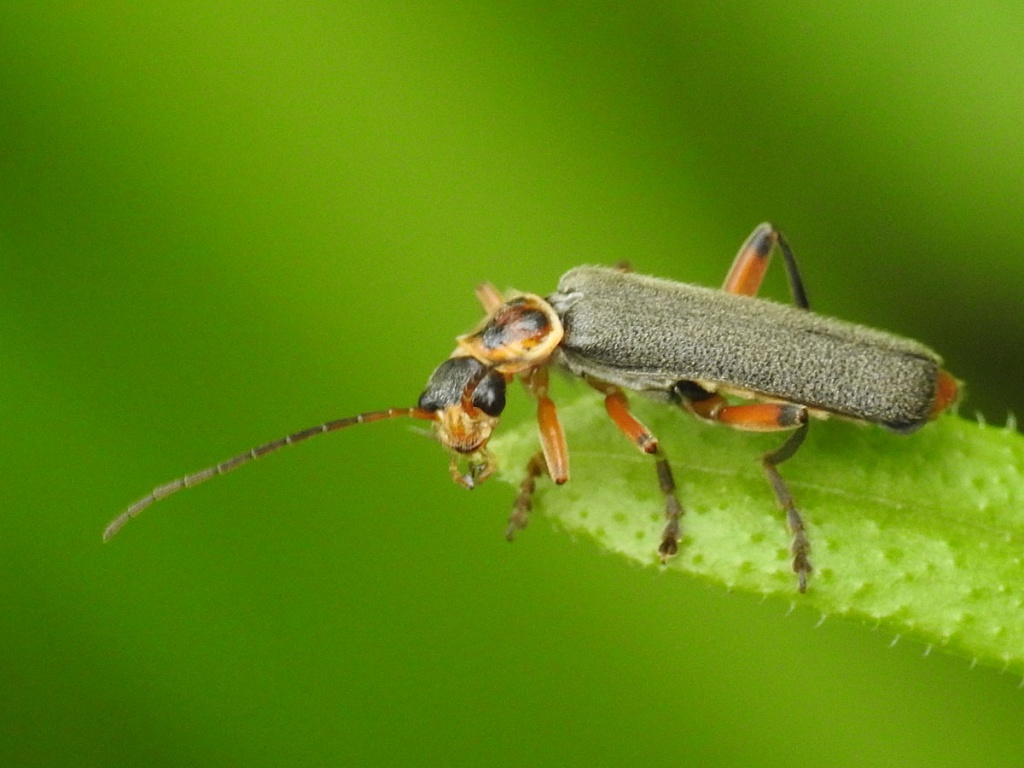
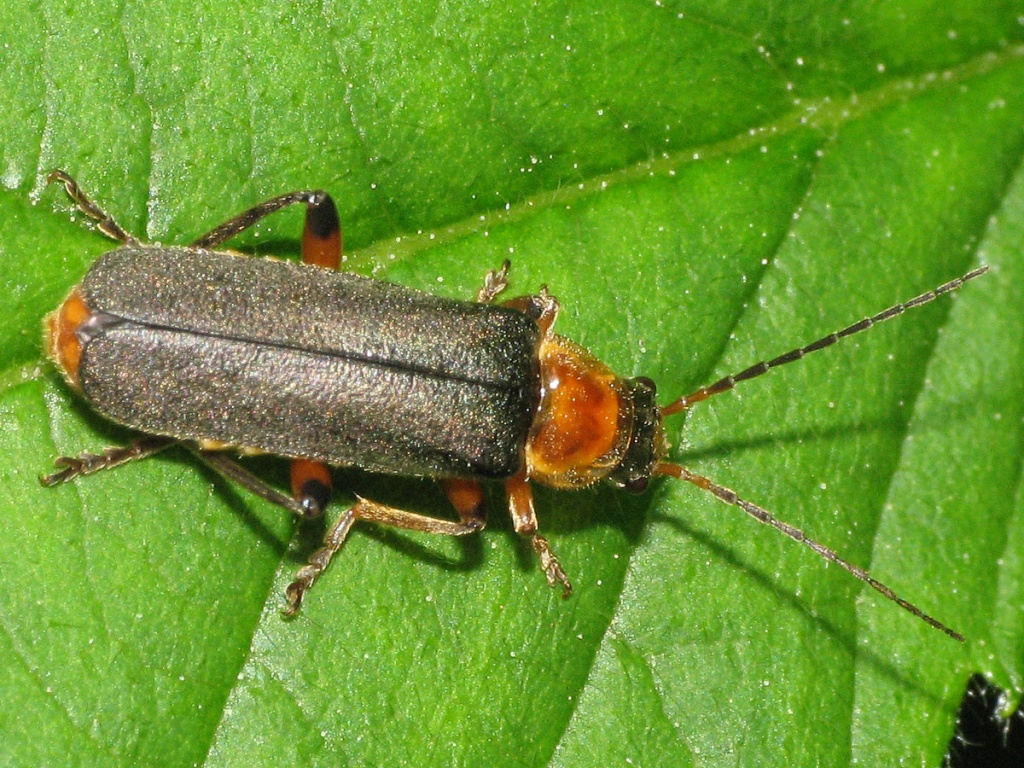
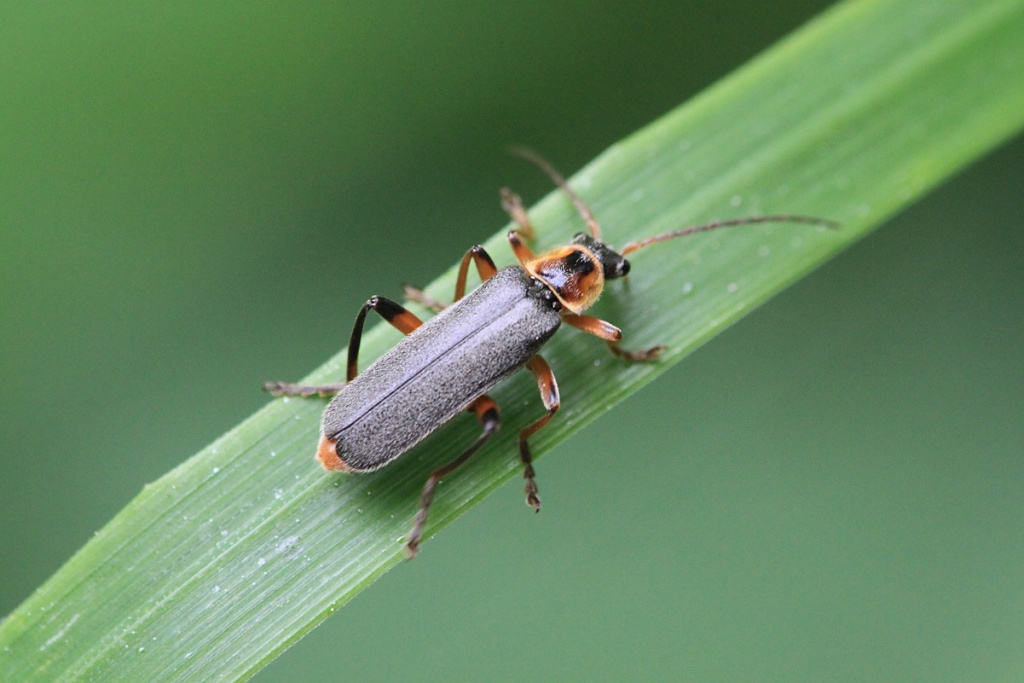
Length 9 to 11 mm. The elytra appear grey from the coating of short flat hairs amongst the longer ones. The yellow-orange pronotum may have a central darker mark and typically has a lighter orange ring around the edge. There is a broad black band on the hind legs at the tip of the femora (broader than that in the similar C. pellucida). Usually, the mid tibia are orange, though older specimens may show some darkening.
Cantharis pellucida has narrow black bands at the tip of the femora, not broad like those on C. nigricans.

Your specimen should have these features:
- 8-11mm
- grey elytra (with short flat hairs)
- orange pronotum (may also have dark markings in the centre)
- paler rim around the pronotum
- broad black bands at the tips of the femora
Hedgerows and flower meadows where they visit blossom and flowers such as Hogweed.
Peaking May to July
Cantharidae larvae live on the ground and are carnivorous, feeding on smaller insects. The adults are also carnivorous, but are greatly attracted to flowers where they hunt other flower-visiting insects.
Widespread and quite common in Britain.
Common in Leicestershire and Rutland.
 David Nicholls
20 Acre Piece NR
28 May 2010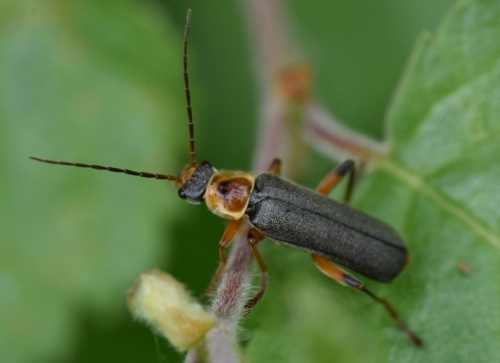 stepgray4
Cloud Wood
10 June 2021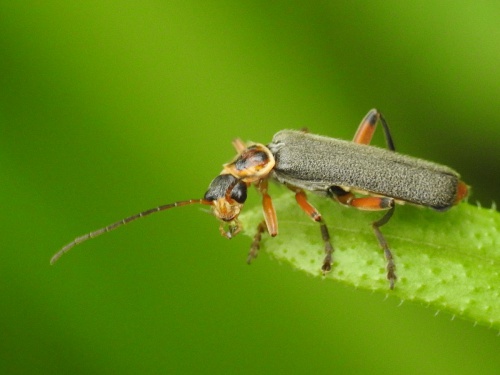 David Gould
Brown's Hill Quarry, Holwell NR
11 May 2017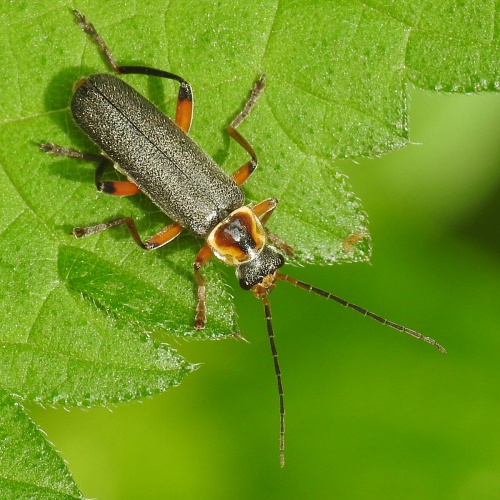 David Gould
Braunstone, Wood Close Plantation
02 June 2022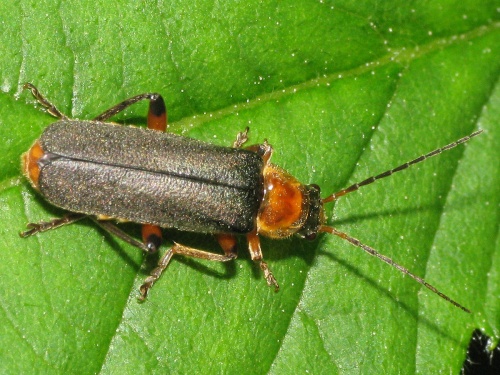 David Gould
Osiers Nature Area
21 May 2008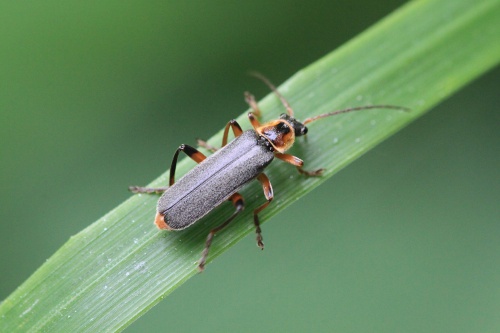 Paul Ruddoch
Melton Country Park
27 May 2015


Leicestershire & Rutland Map
Enter a town or village to see local records
MAP KEY:
Yellow squares = NBN records (all known data)
Coloured squares = NatureSpot records: 2025+ | 2020-2024 | pre-2020
UK Map
Additional images