Brown Rat
Brown Rat - Rattus norvegicus
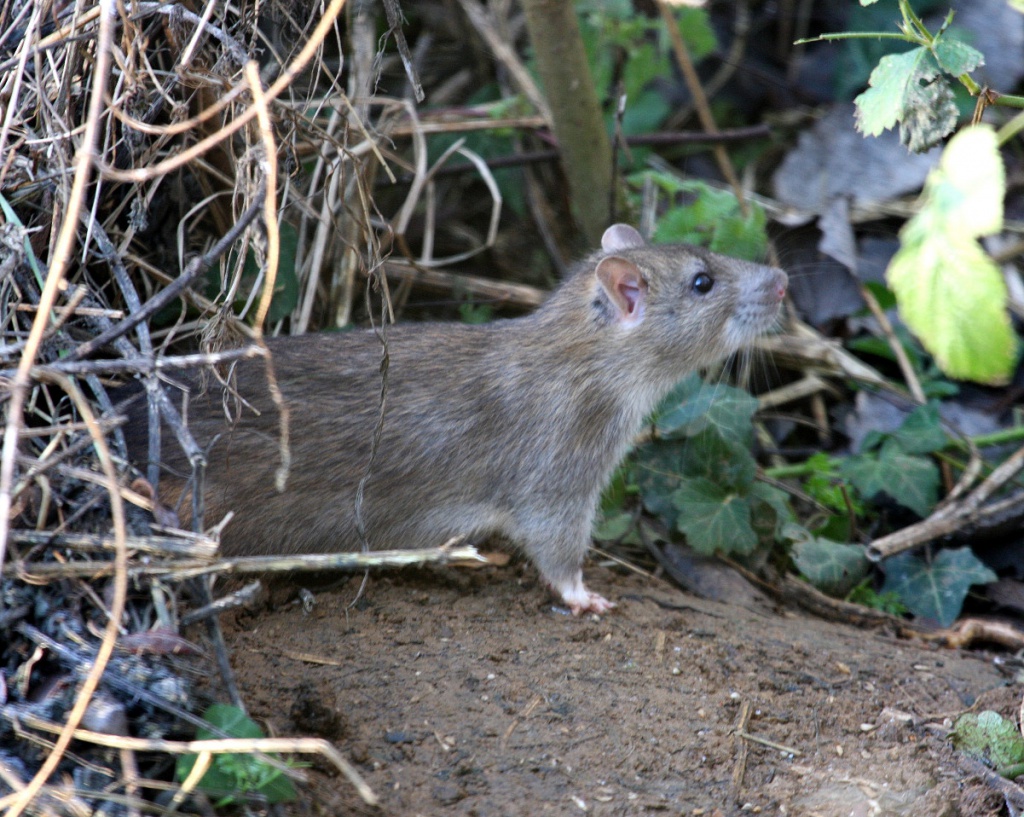
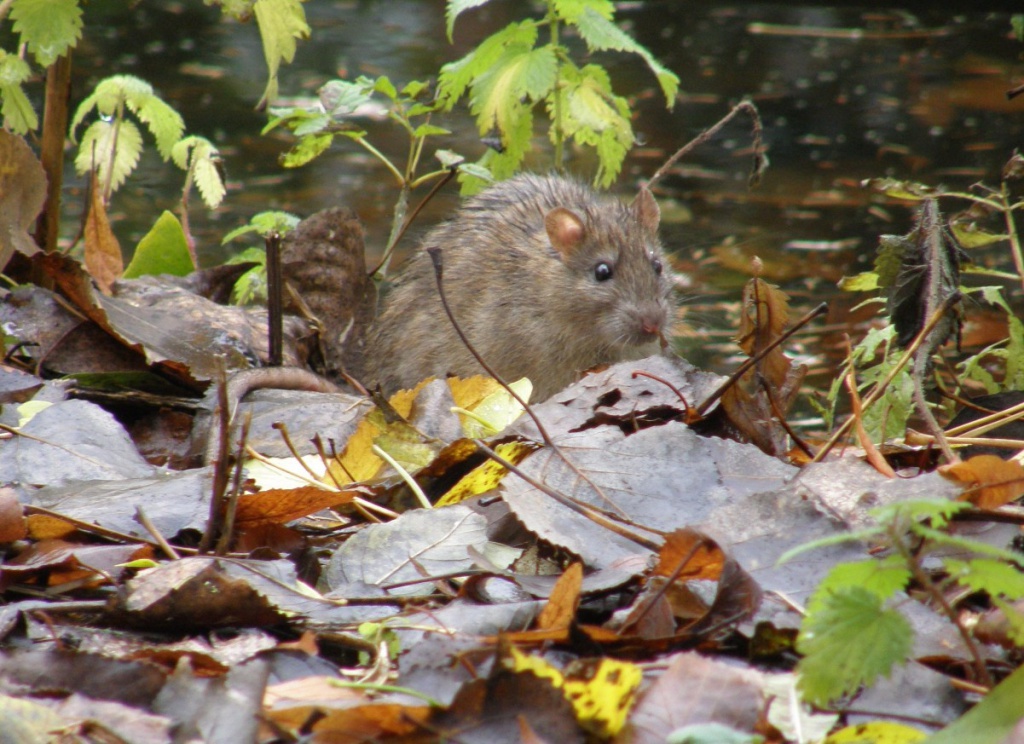
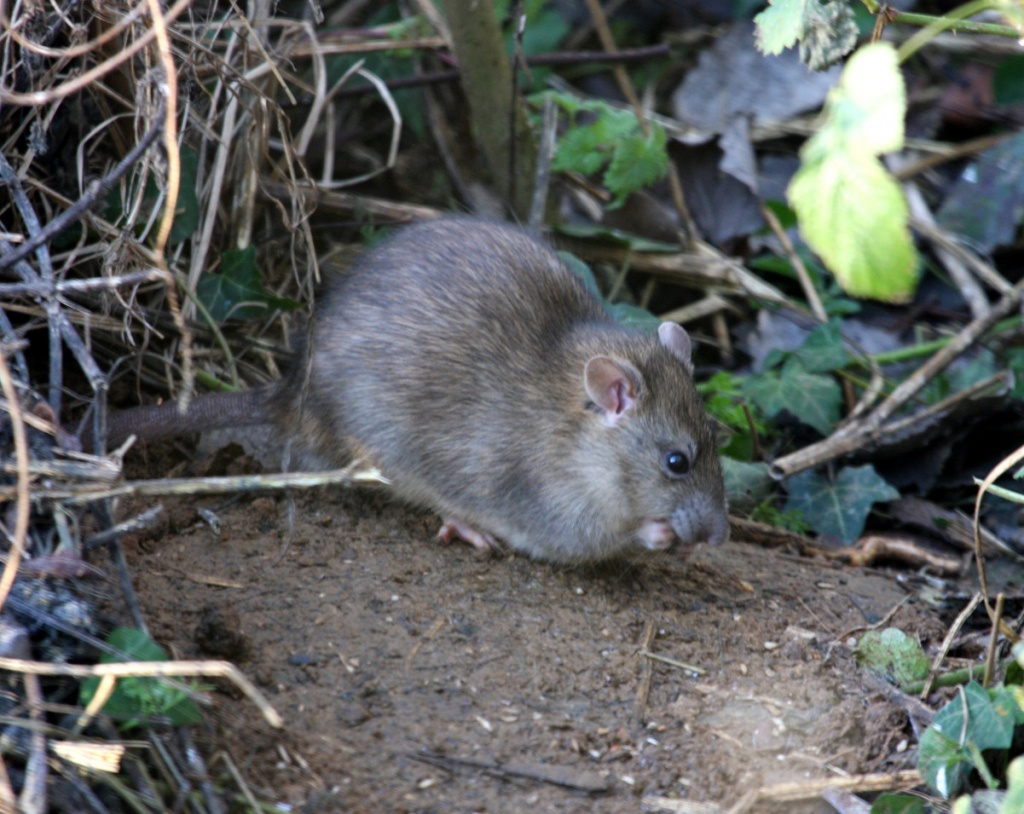
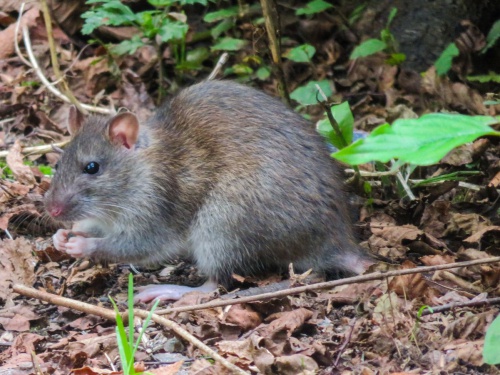
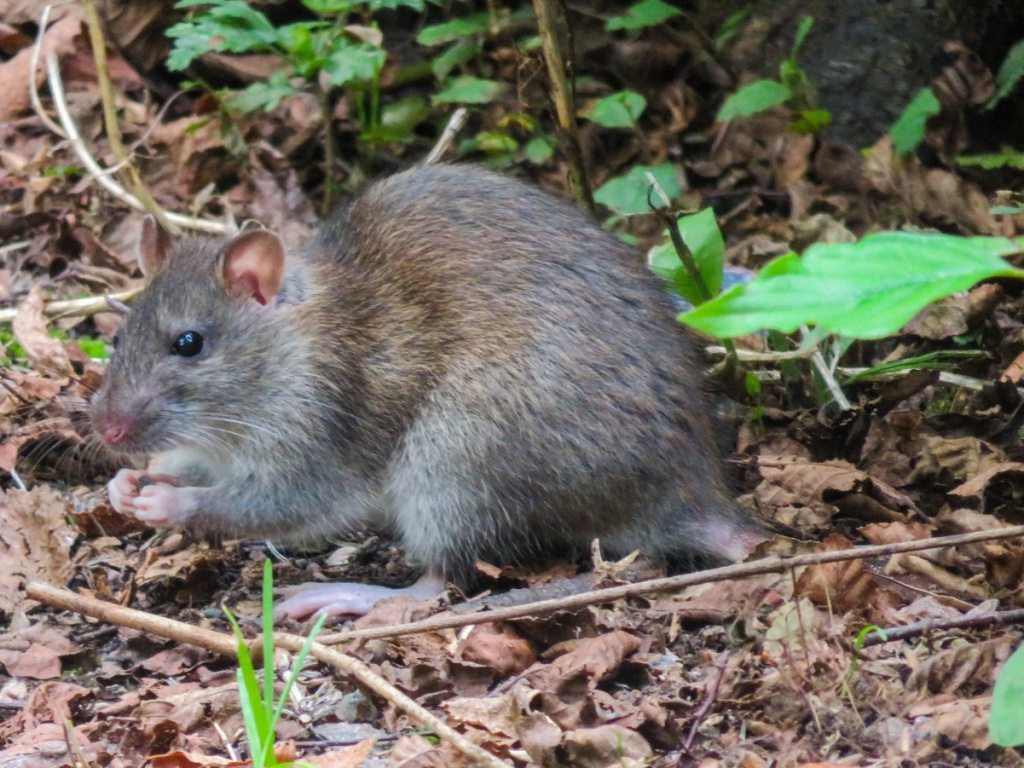
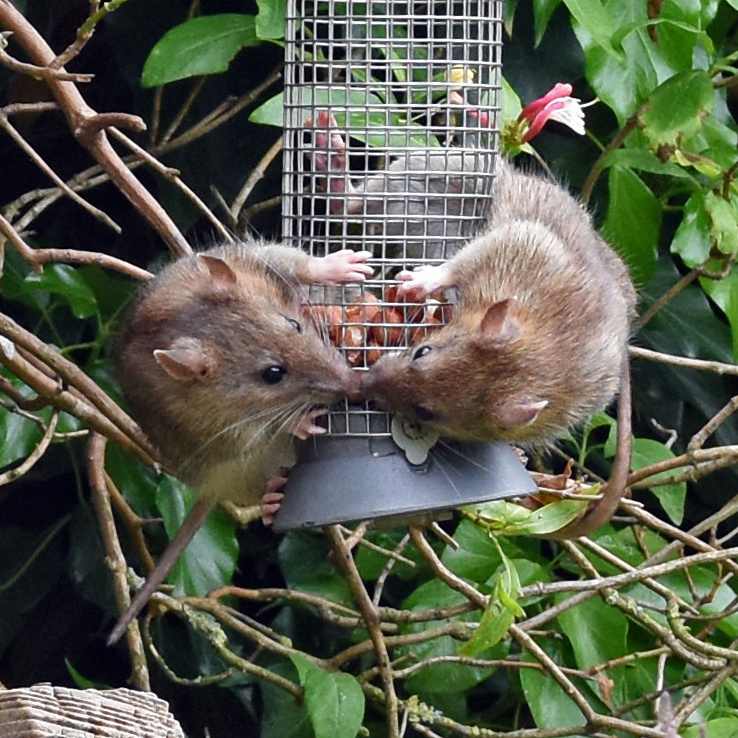
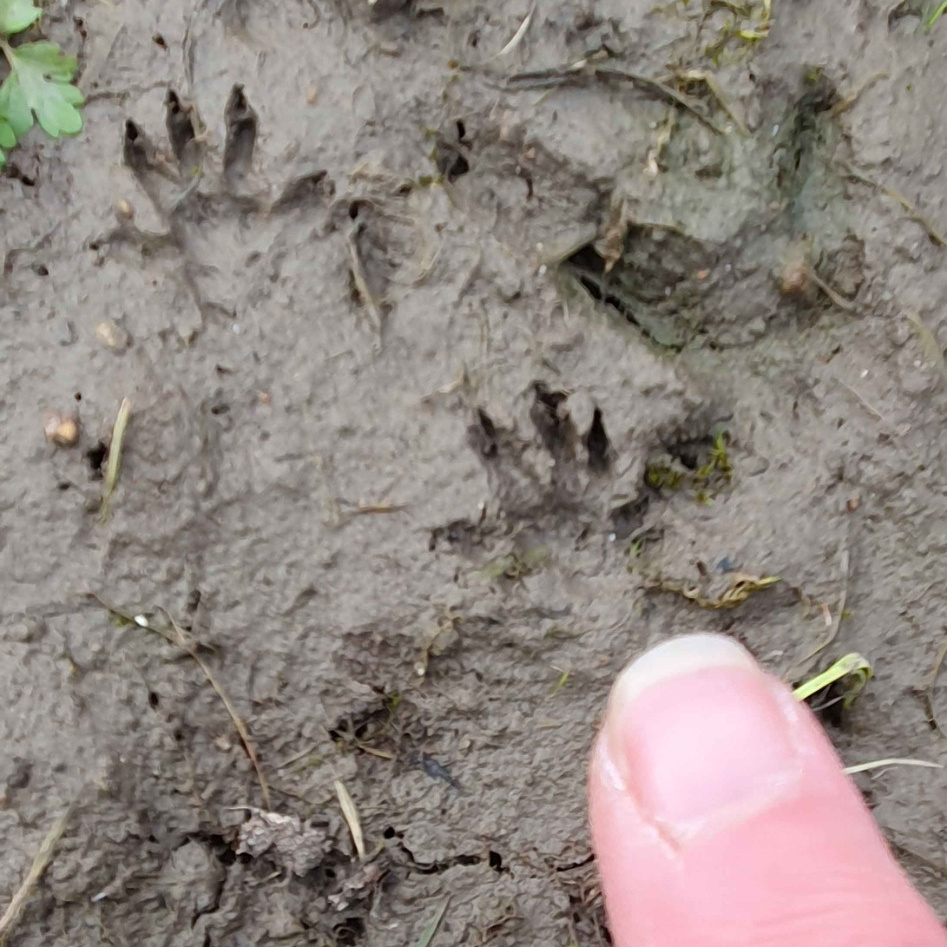
Brown Rats have coarse brown or brown-grey fur (occasionally black), with a paler underside. They have a long, scaly tail which is a little shorter than the head-body length which often dangles down if they are observed up high. They have a prominent pointed snout and furless ears that protrude from the upper side of their head. Head and body length: up to 28 cm. Weight: 200-400g.
Water Vole

A pointed snout, large protruding ears, beady eyes, brown or grey-brown fur, a long, scaly tail
Submit a clear photograph of key ID features to assist verification
Almost anywhere but has adapted particularly well to live in association with humans, feeding off refuse and scraps. Often found near barns and arable field edges in rural areas, around bird feeders and compost heaps in gardens or where food is readily discarded in urban areas.
All year round.
Burrows and swims well (quite upright out of water compared to a Water Vole). Life span of up to 18 months in the wild. Brown Rats breed throughout the year and can produce five litters a year. Females give birth to an average of eight young after a gestation of 22-24 days. These are weaned after 3-4 weeks.
Common and found all over Britain except for exposed mountain regions and some small offshore islands, often subject to pest control.
Common in Leicestershire and Rutland.
 EddieK
Melton Mowbray Town Park
21 August 2019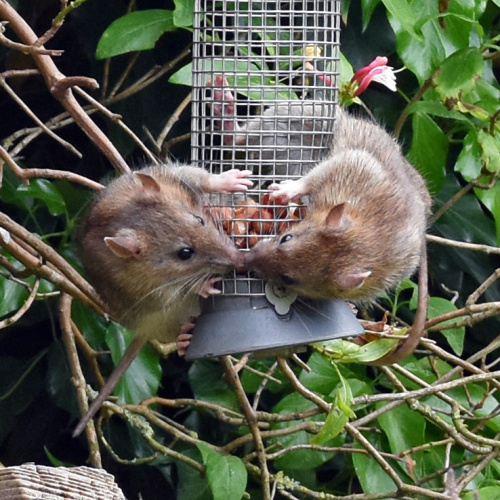 Andy's Rutland
Empingham garden
04 June 2026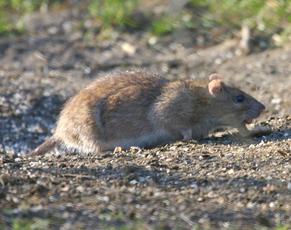 David Nicholls
Rutland Water, Egleton NR
02 February 2007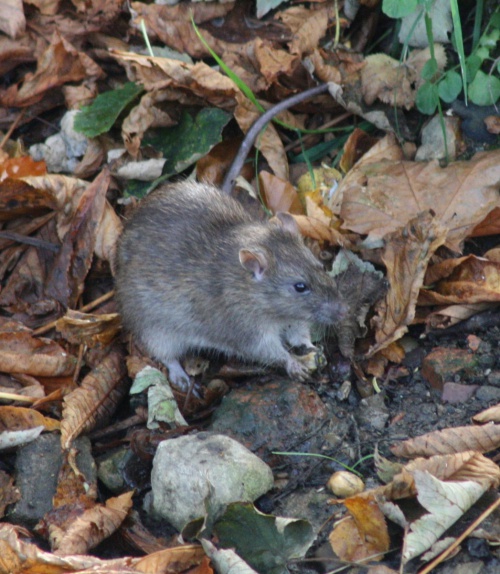 Craig Mabbett
market harborough brook
11 October 2014 Adrian Baker
Burbage, Sketchley Brook
15 April 2023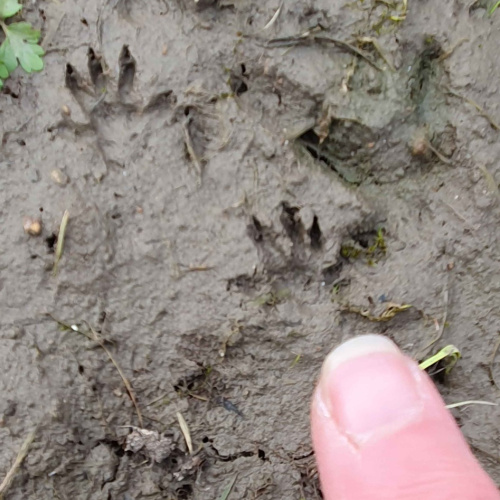 Helen O'Brien
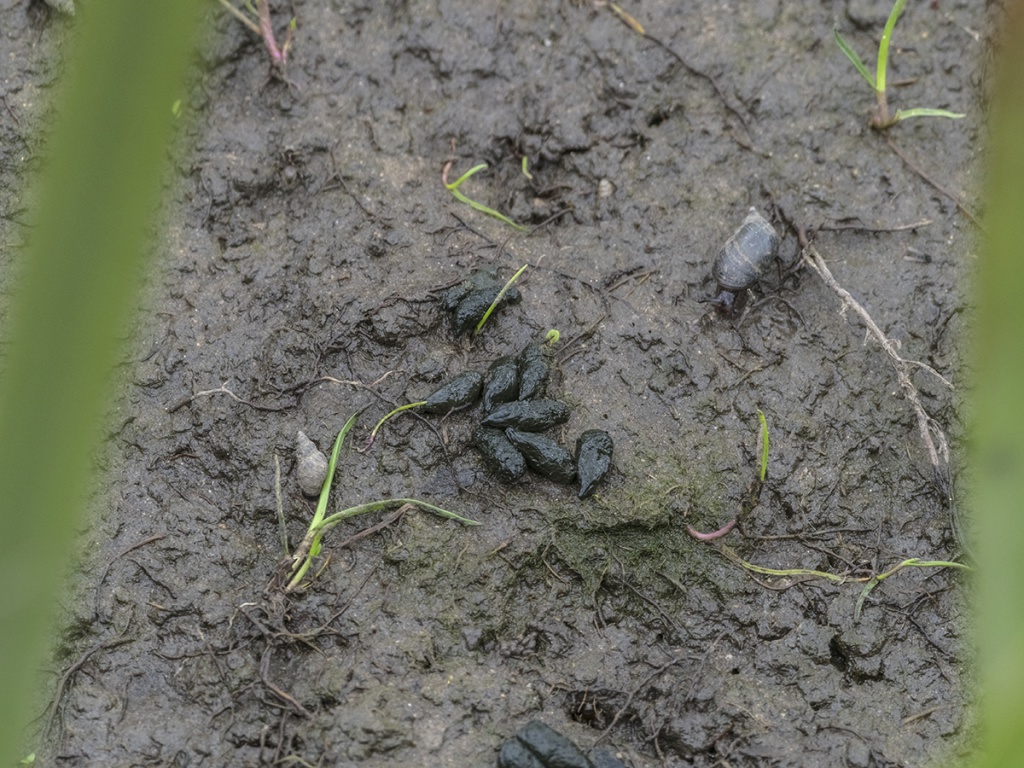
Potters Marston, Leicestershire
23 March 2026


Leicestershire & Rutland Map
Enter a town or village to see local records
MAP KEY:
Yellow squares = NBN records (all known data)
Coloured squares = NatureSpot records: 2025+ | 2020-2024 | pre-2020
UK Map
Additional images


 Burbage Wood SP 4522 9420 (taken 24.4.2010).JPG)