Broad-leaved Everlasting-pea
Broad-leaved Everlasting-pea - Lathyrus latifolius
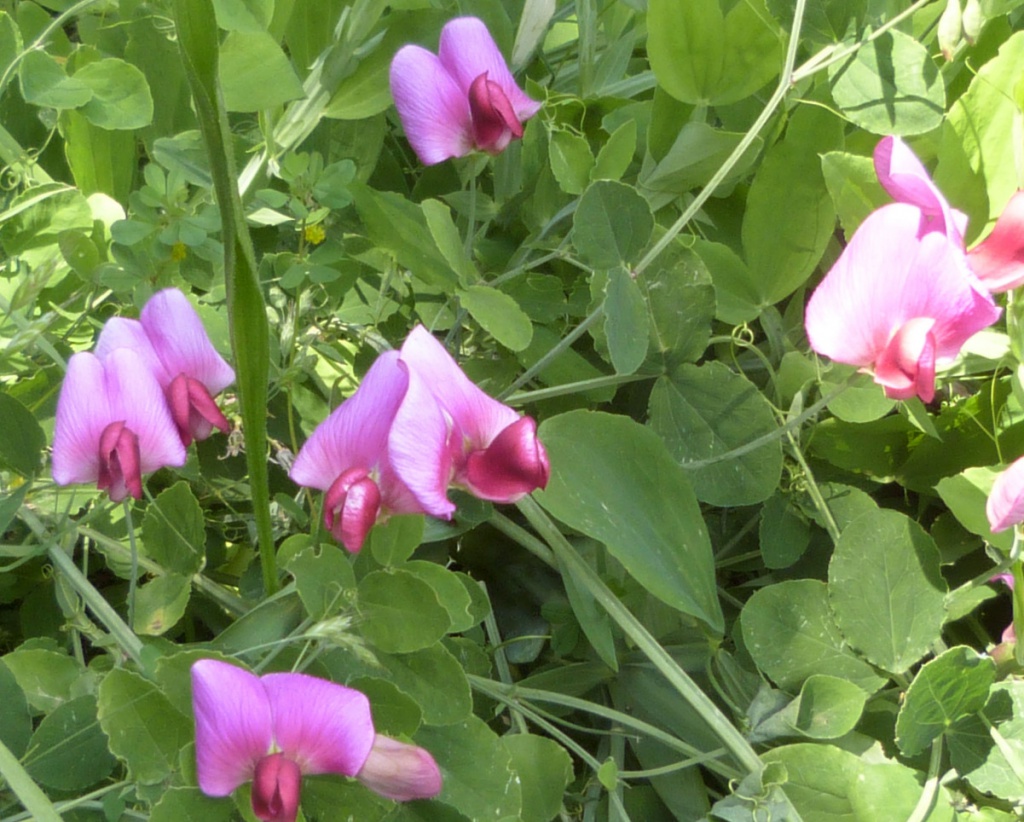
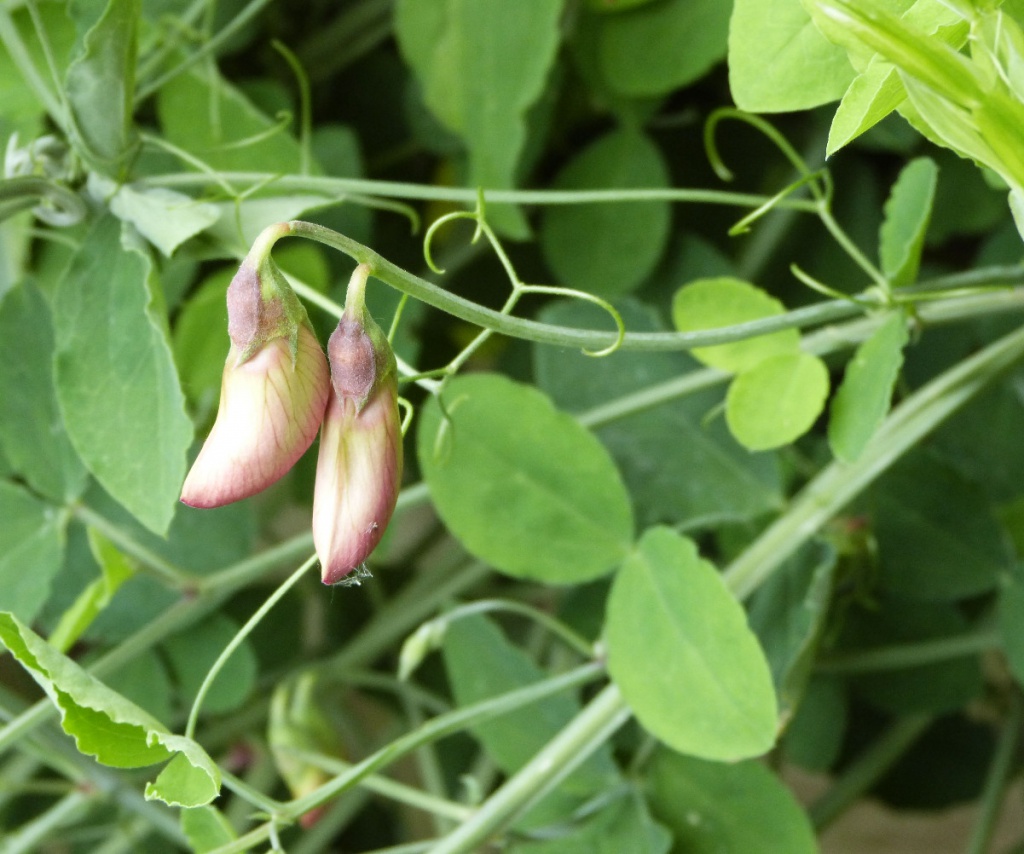
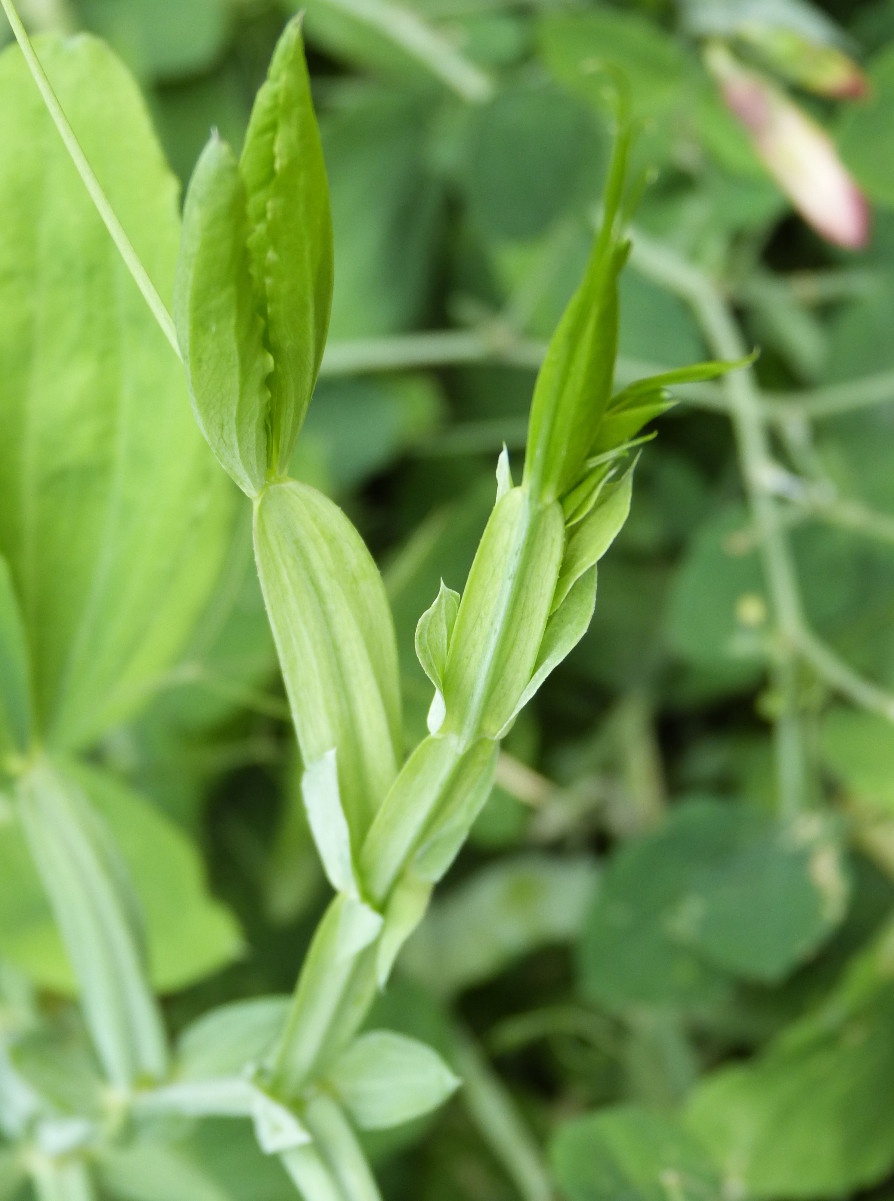
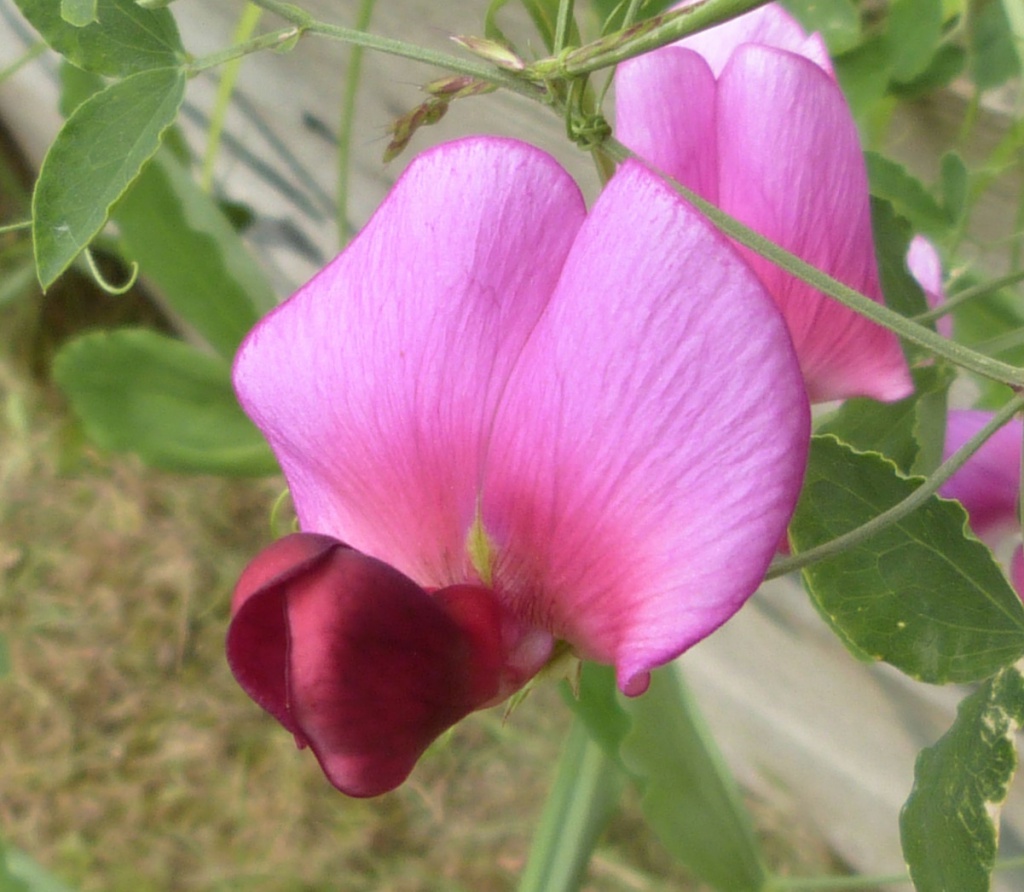
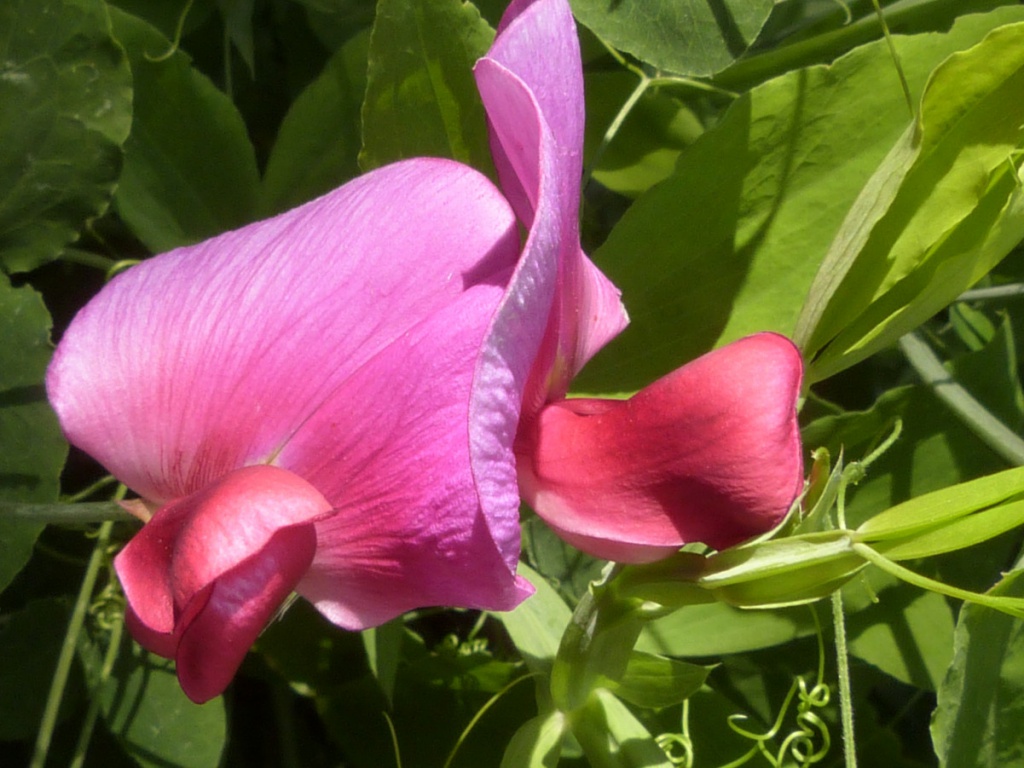
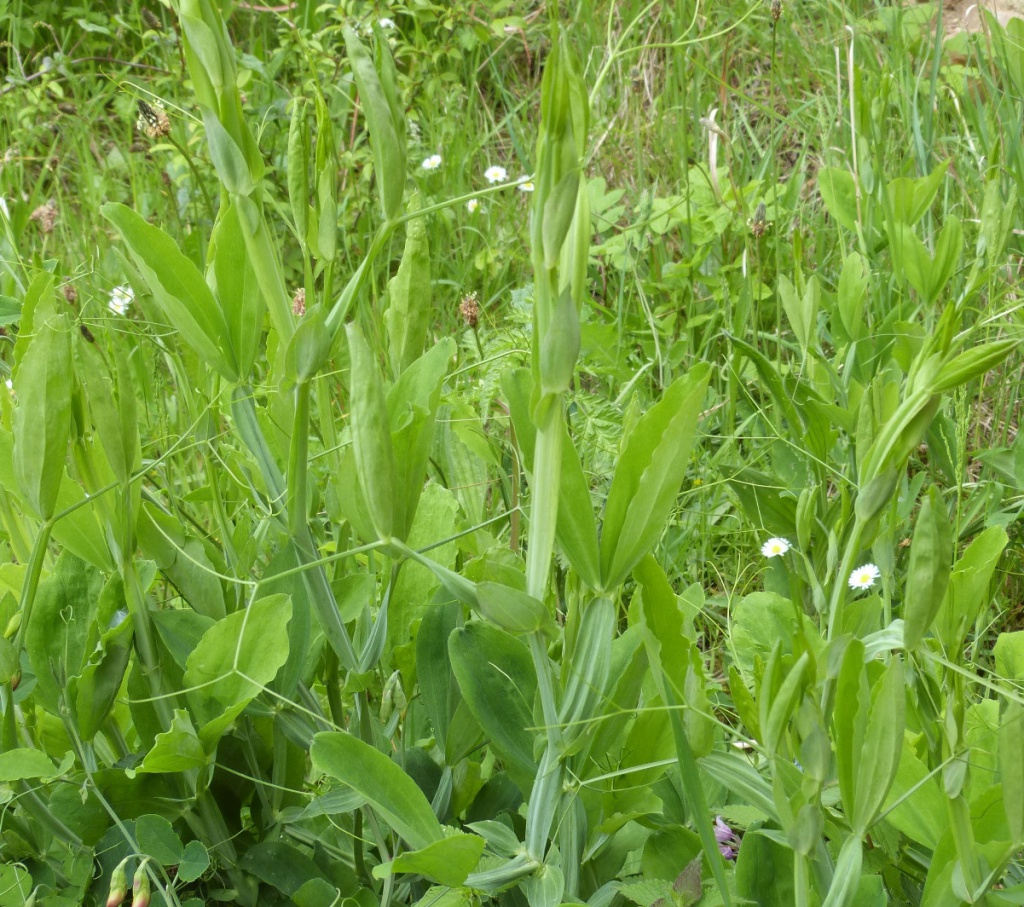
A very variable tall, clambering plant to 3 metres. It has widely winged stems and leaflets with prominent parallel veins. The pea like flowers are magenta-purple or pink, 20 to 30 mm in long stalked racemes.
Lathyrus grandiflorus

One pair of leaflets. The stems are winged.
A photo of the whole plant, showing stems and leaves as well as flowers
Disturbed ground, railway verges etc., often as an escape from cultivation.
Flowers June to September.
Perennial.
Infrequent but widespread in Britain, particularly from Yorkshire southwards. Usually found as an escape from cultivation that has established in the wild.
Infrequent in Leicestershire and Rutland, usually as an escape from cultivation that has established in the wild. In the 1979 Flora survey of Leicestershire it was found in 19 of the 617 tetrads.
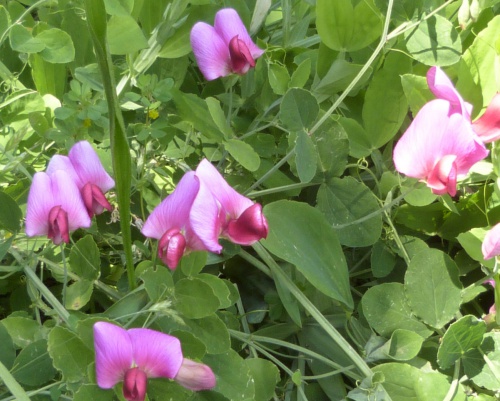 Graham Calow
Wykin Canal Towpath
07 June 2015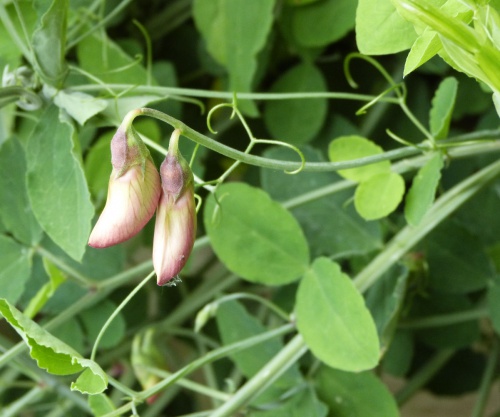 Graham Calow
Wykin Canal Towpath
25 May 2015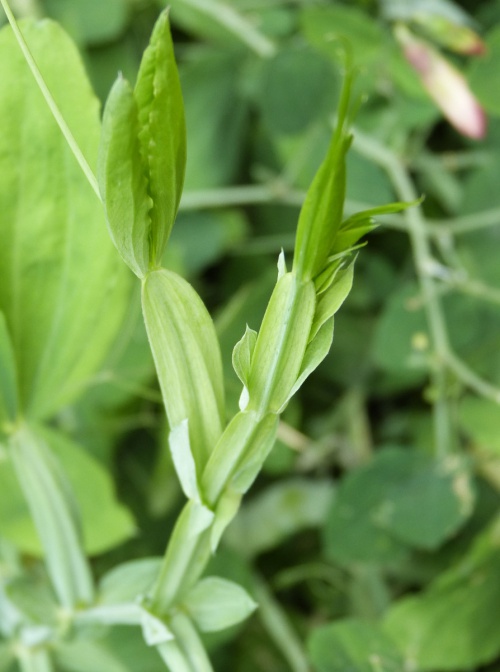 Graham Calow
Wykin Canal Towpath
25 May 2015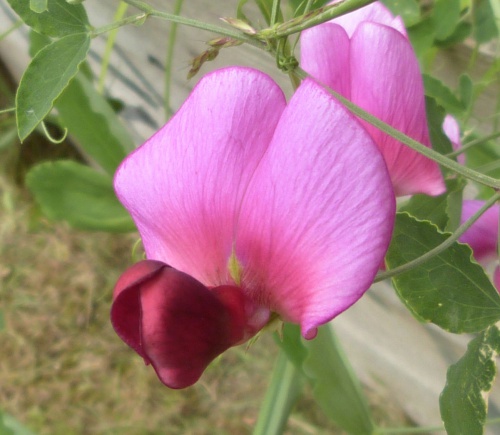 Graham Calow
Wykin Canal Towpath
26 June 2015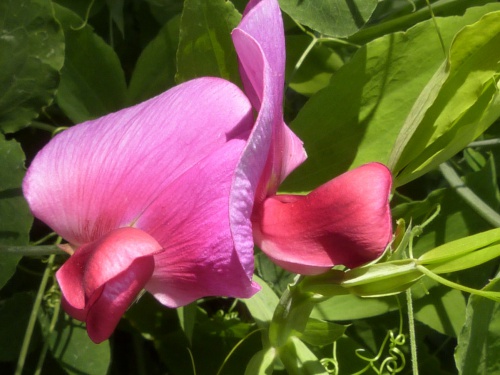 Graham Calow
Wykin Canal Towpath
07 June 2015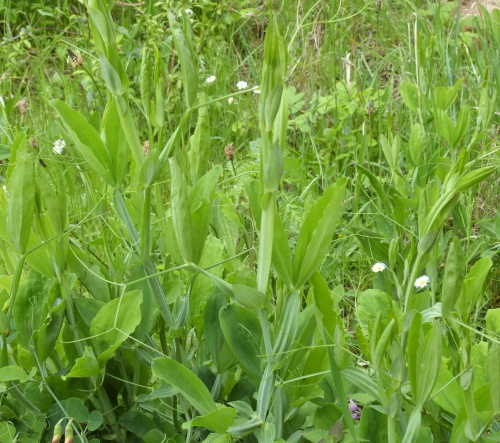 Graham Calow
Wykin Canal Towpath
25 May 2015
Leicestershire & Rutland Map
Enter a town or village to see local records
MAP KEY:
Yellow squares = NBN records (all known data)
Coloured squares = NatureSpot records: 2025+ | 2020-2024 | pre-2020
UK Map
Additional images
No additional images available for this species.
All NatureSpot records
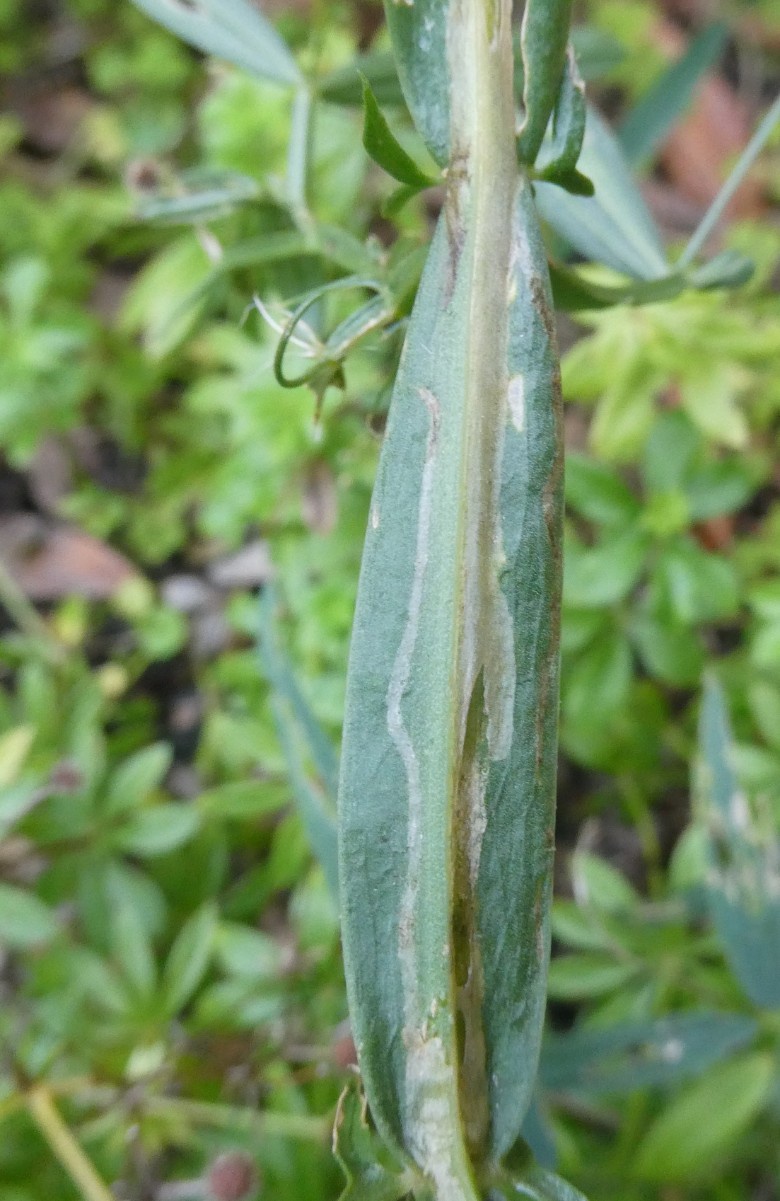
Agromyza varicornis
The larva of the Agomyzid fly Agromyza varicornis mines the winged stems and leaves of Everlasting Peas (Lathyrus latifolius and Lathyrus sylvestris). The long white mine is in the wing of the stem, but often starts in leaf (though not always).
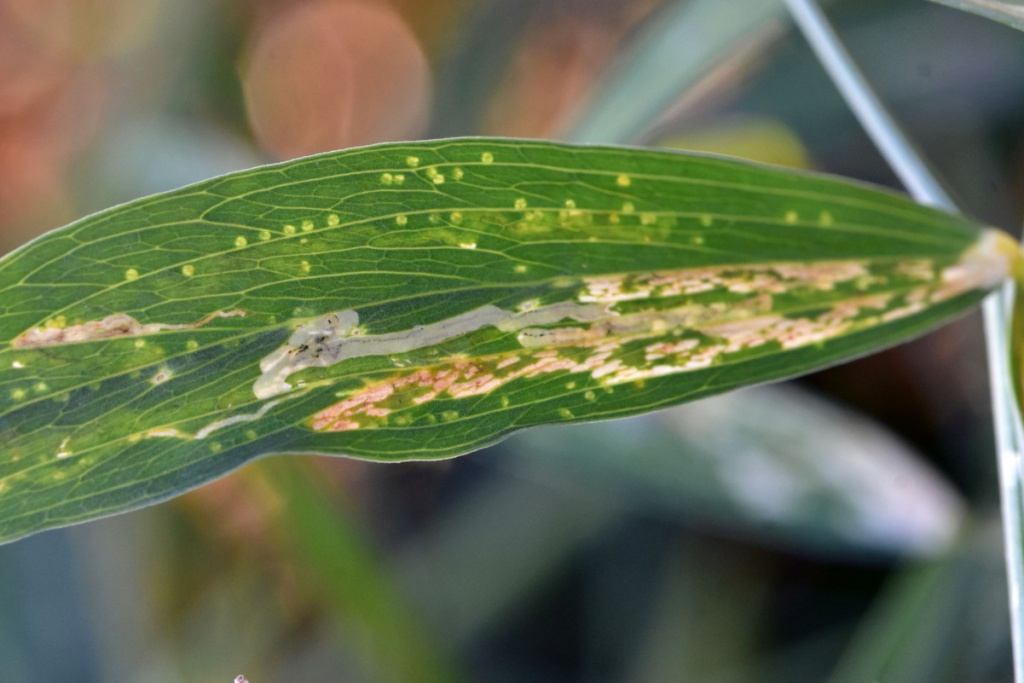
Liriomyza pisivora
The larva of the Agromyzid fly Liriomyza pisivora mines the leaves of species in the pea family, including Garden Pea, Broad-leaved Everlasting-pea and Tufted Vetch. They create a long linear mine which starts on the lower surface of the leaf but then penetrates to the upper surface, giving the leaf looking mottled. Several larvae can be found on affected leaves. The frass appears in thin threads, alternating along the gallery.