Box
Box - Buxus sempervirens
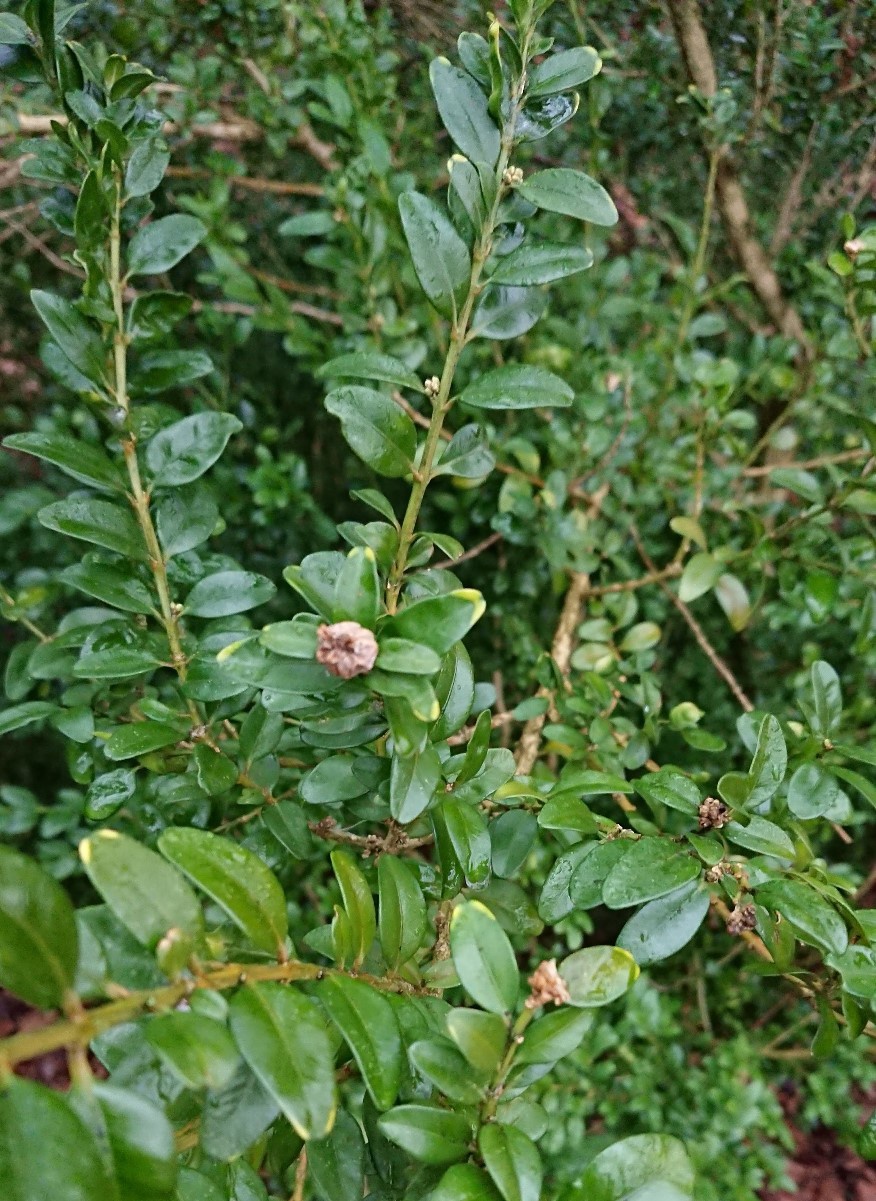
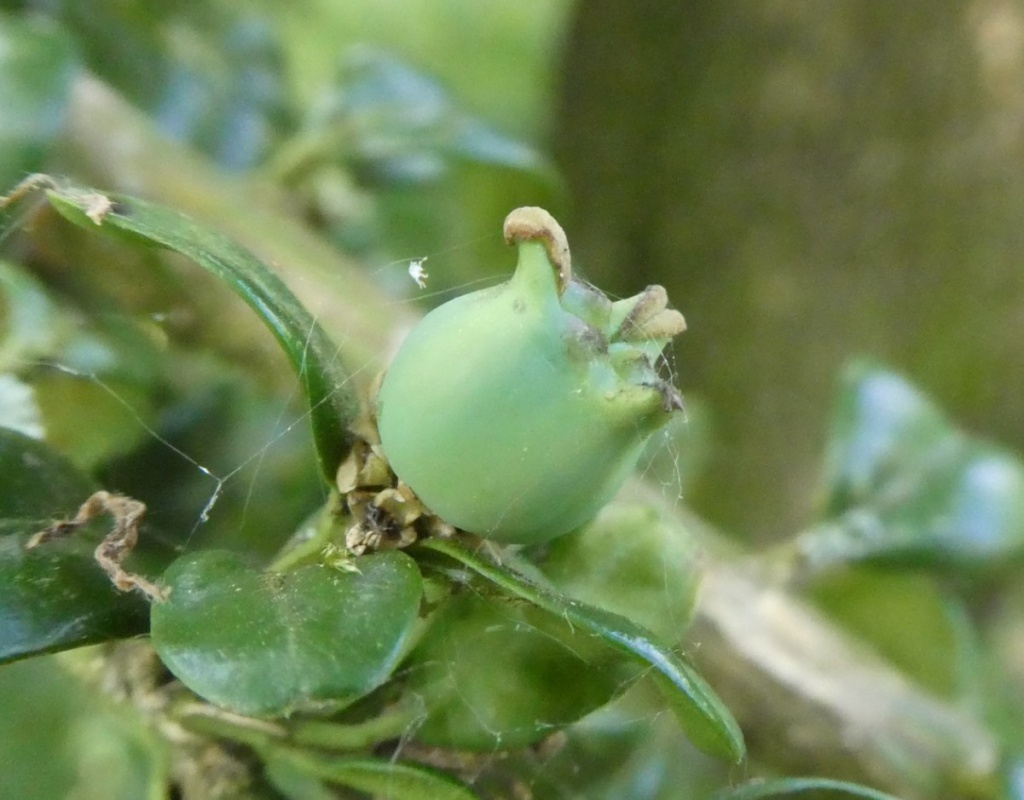
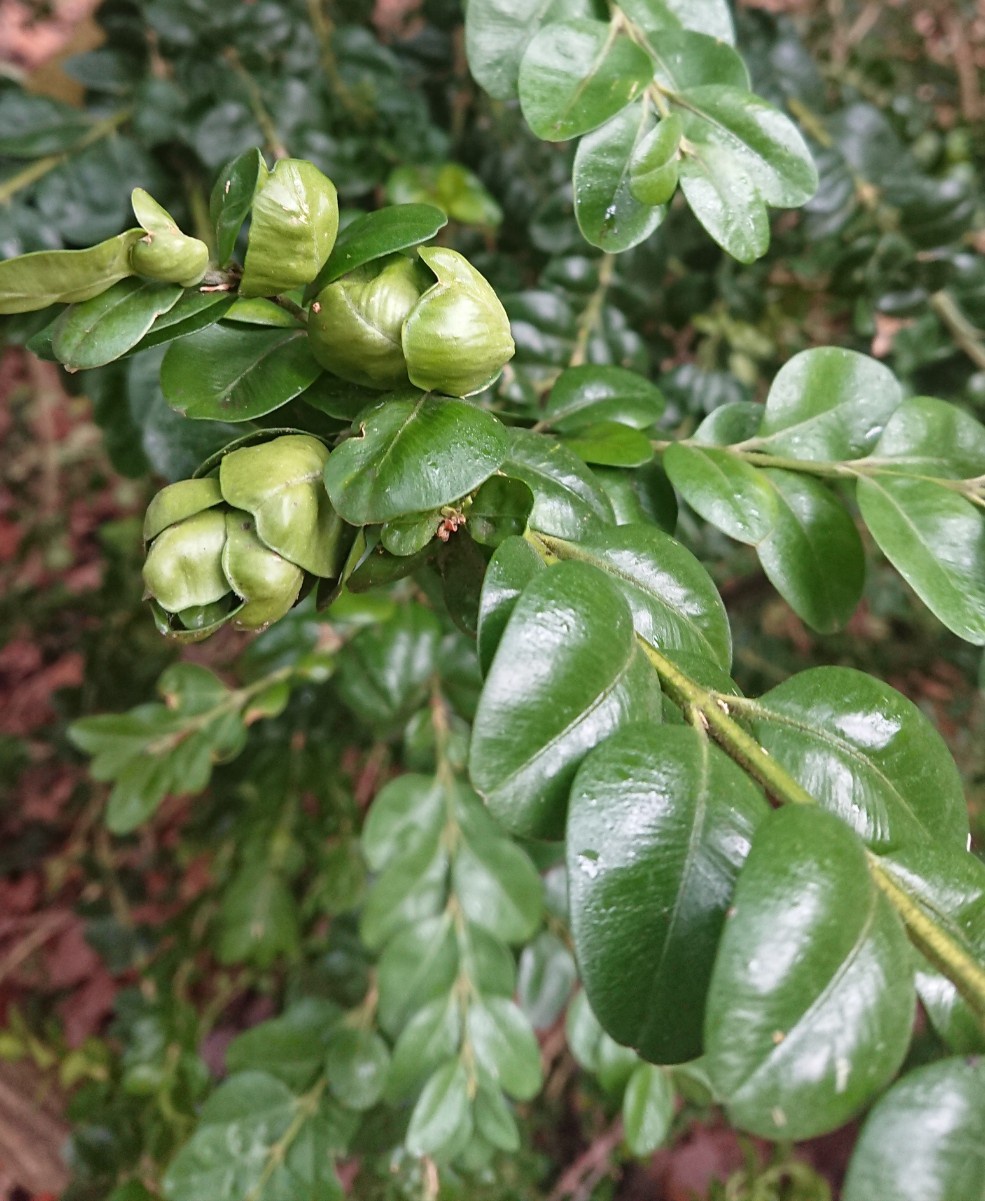
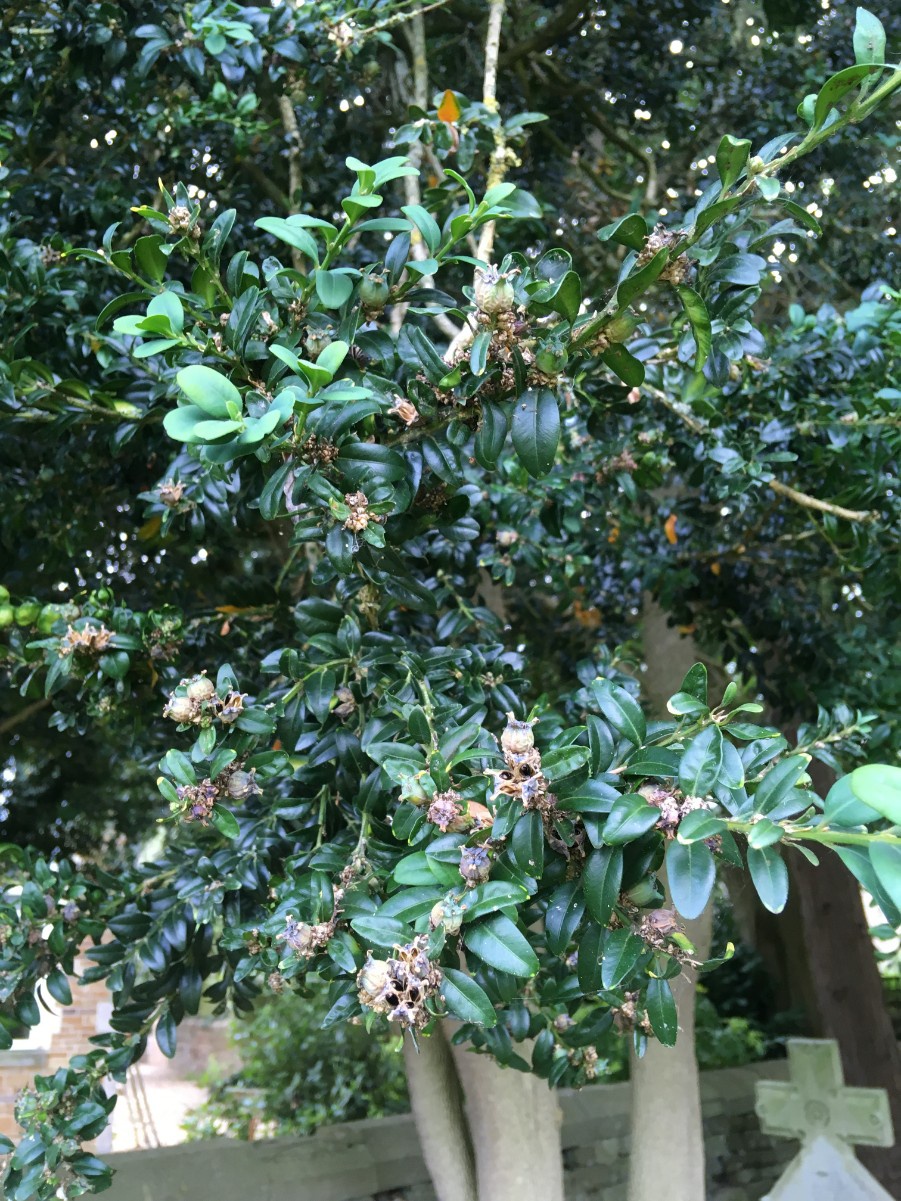
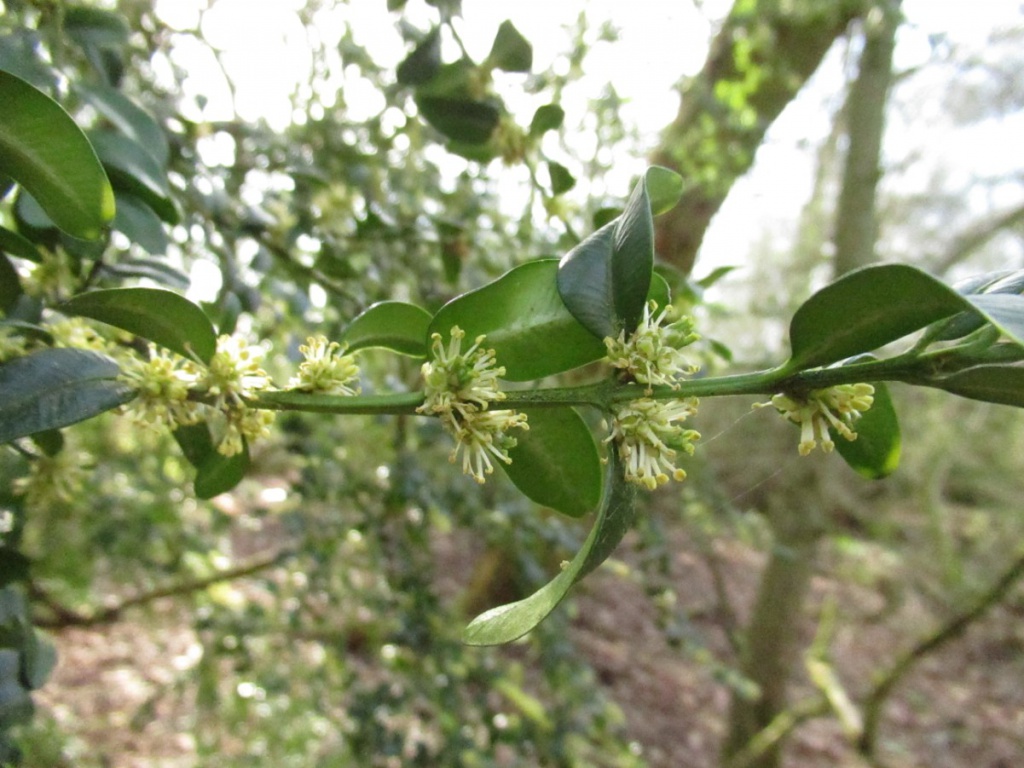
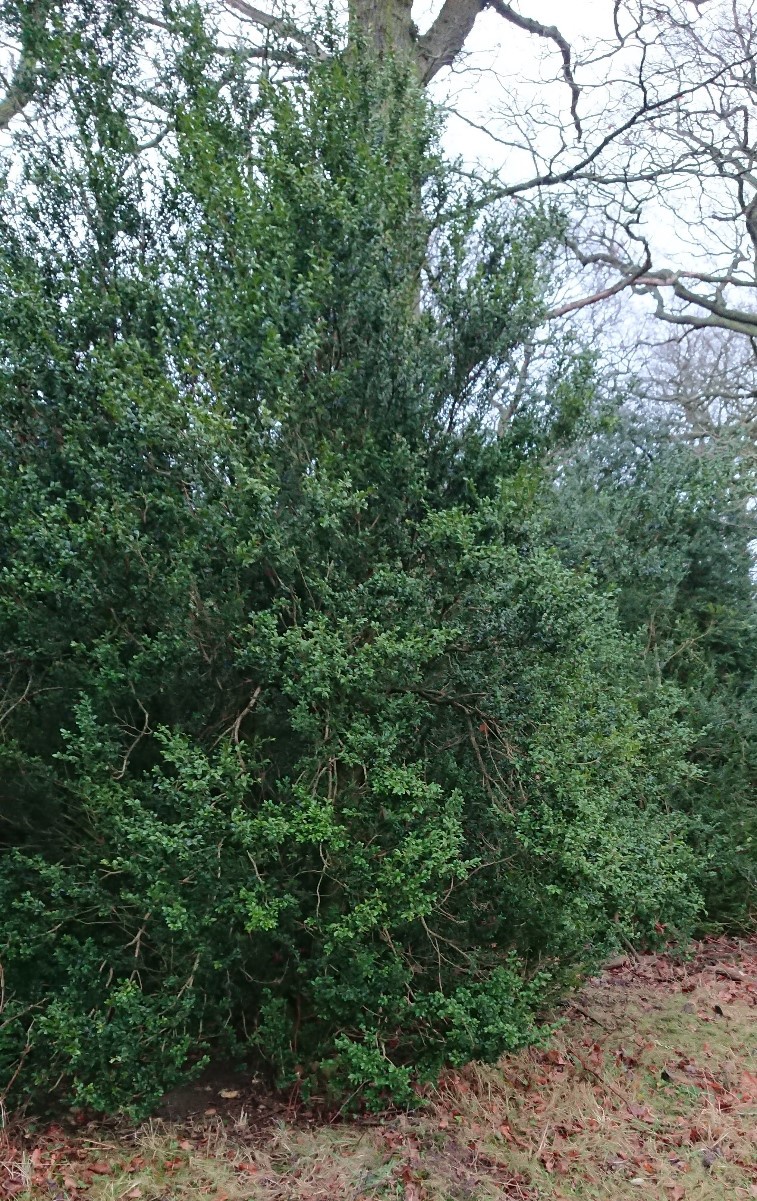
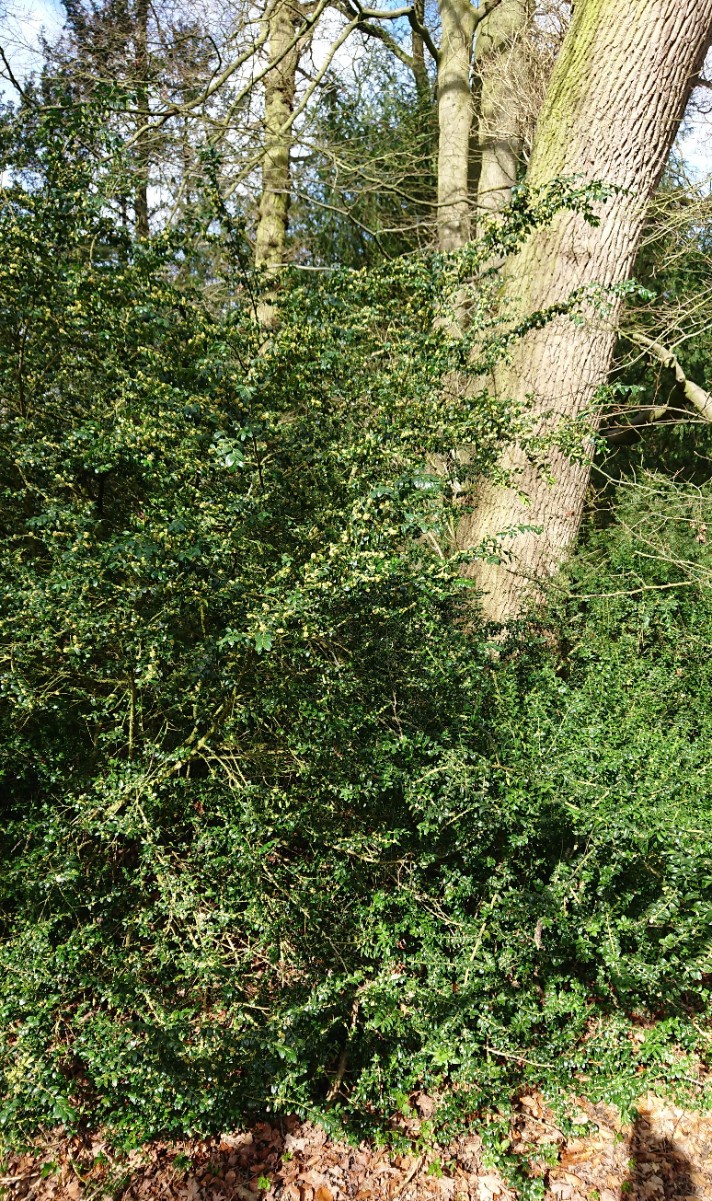
Evergreen shrub or small tree. Leaves opposite, oval to elliptical. Flowers greenish yellow, tiny (2 mm) in lateral clusters with male and female borne on the same plant. Fruit small three horned capsule containing black seeds.
Very similar to Wilson's Honeysuckle and Box-leaved Honeysuckle, but quite different when in flower and fruit.

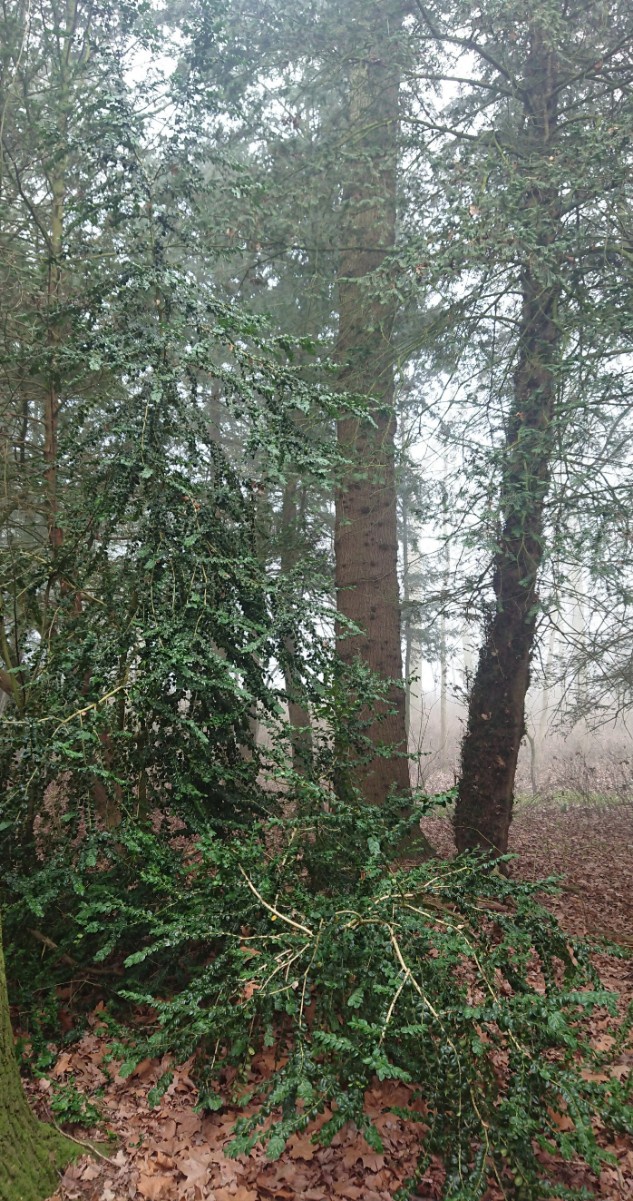
Woodland, large bushes surviving as a result of deliberate planting for landscape or amenity reasons, or for pheasant cover. Common as a trimmed ornamental bush or low hedge (often non-flowering) cultivar in parks, gardens, churchyards and cemeteries.
Flowers April and May.
Evergreen.
Widely planted throughout Britain but rarely naturalised; native only in a small area in S England.
Occasional as a planted bush in woodland and parkland in Leicestershire and Rutland. In the 1979 Flora survey of Leicestershire it was found in 44 of the 617 tetrads.
 steven lewis
Stapleford Park
21 January 2018 steven lewis
Wymondham Rough
08 March 2020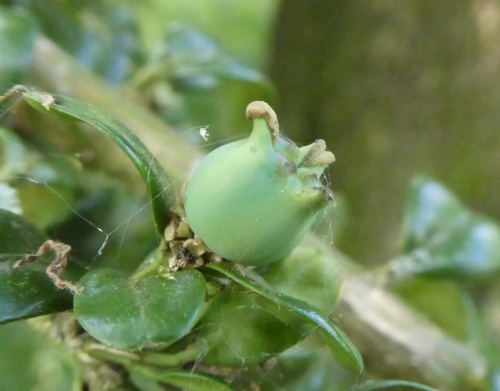 sue
sue
Groby, Lady Hay Wood, N part
22 May 2023
fruit steven lewis
Preswold hall
24 February 2019 steven lewis
Wymondham Rough
08 March 2020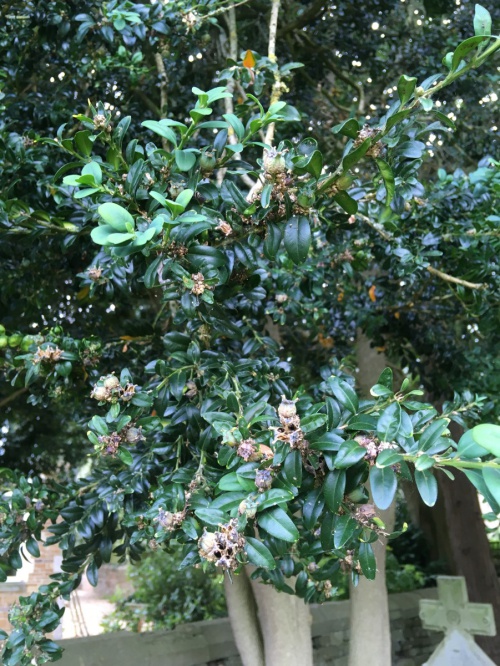 marianmarkham@btinternet.com
Ashwell Churchyard
21 August 2023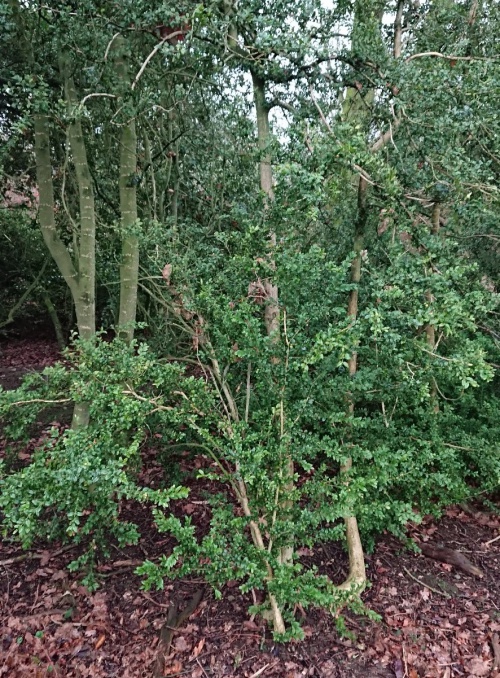 steven lewis
Stapleford Park
21 January 2018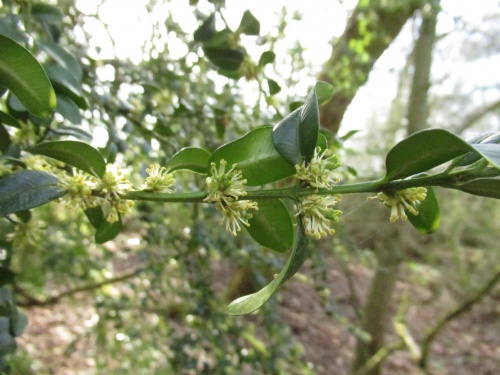 Sally Cunningham
wymondham rough
22 March 2020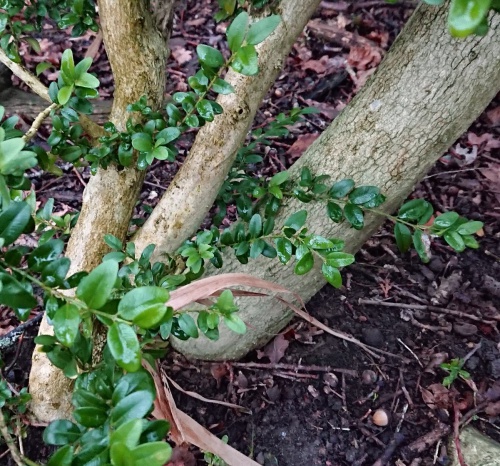 steven lewis
Stapleford Park
21 January 2018 martindgrimes
Great Casterton Cemetery
08 April 2019 steven lewis
Stapleford Park
21 January 2018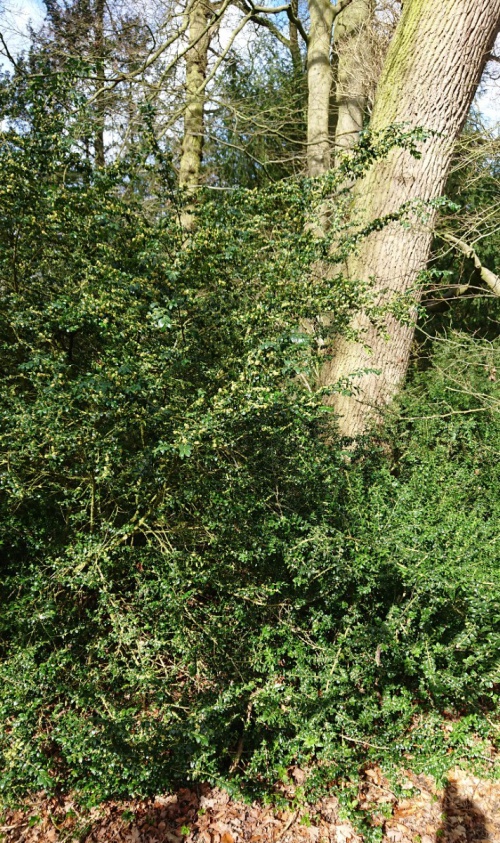 steven lewis
Wymondham Rough
08 March 2020 steven lewis
Preswold hall
24 February 2019





Leicestershire & Rutland Map
Enter a town or village to see local records
MAP KEY:
Yellow squares = NBN records (all known data)
Coloured squares = NatureSpot records: 2025+ | 2020-2024 | pre-2020
UK Map
Additional images
No additional images available for this species.
All NatureSpot records
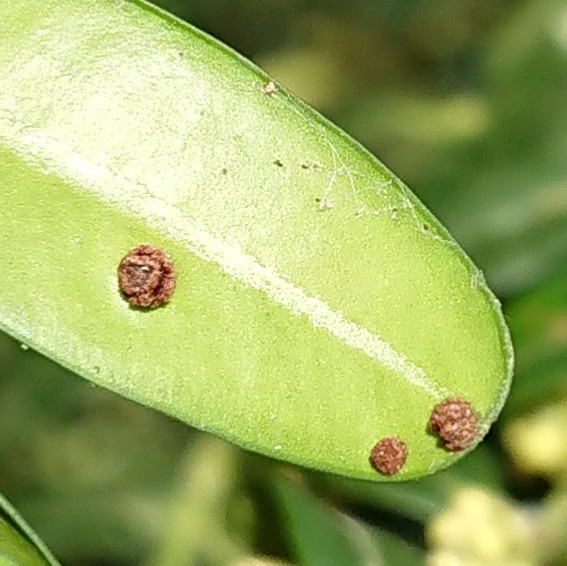
Box Rust
Box Rust (Puccinia buxi) causes galls on Box. There is no host alternation, and only brown telia are formed on yellowish patches, which become slightly swollen.
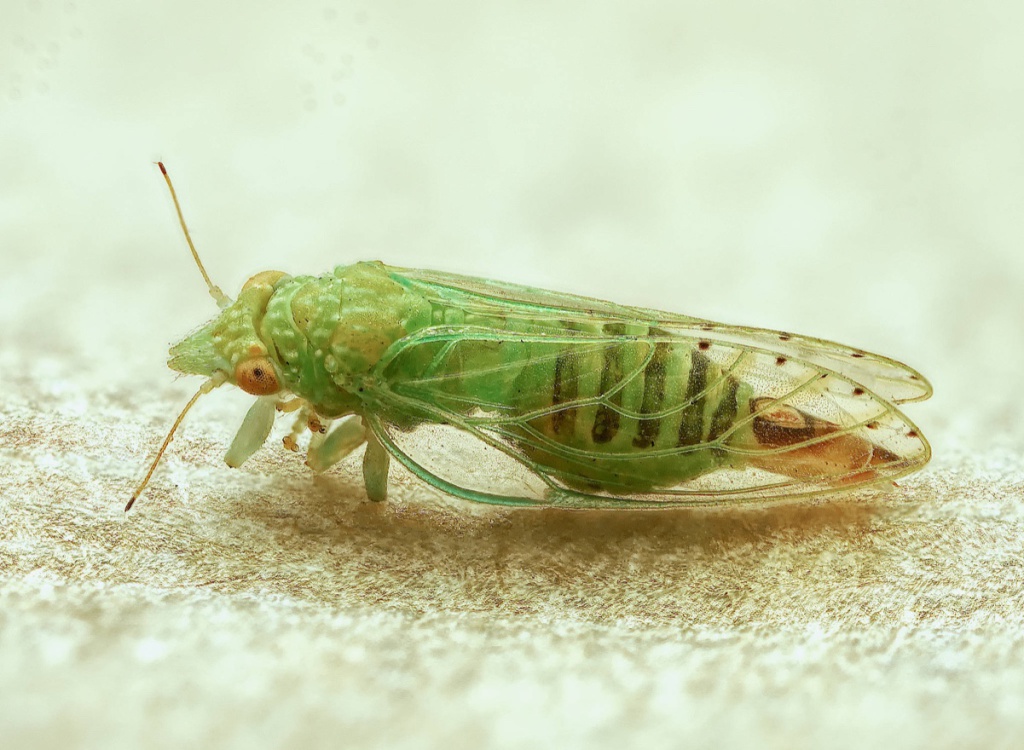
Spanioneura fonscolombii
Spanioneura fonscolombii is a Jumping Plant Louse (similar to an aphid) found only on Box plants.
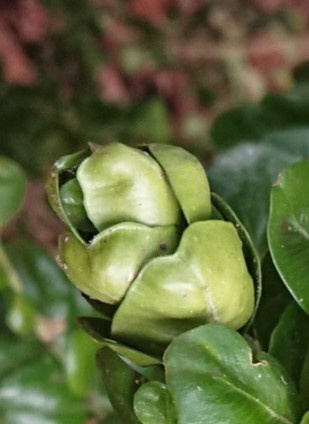
Psylla buxi
The psyllid Psylla buxi causes galls to form on the shoot tips of Box. These galls take the form of pale, cabbage like clusters, the bunched leaves being strongly concave and slightly thickened. During the summer they conceal numerous tiny pale green nymphs covered with white wax.