Black Medick
Black Medick - Medicago lupulina
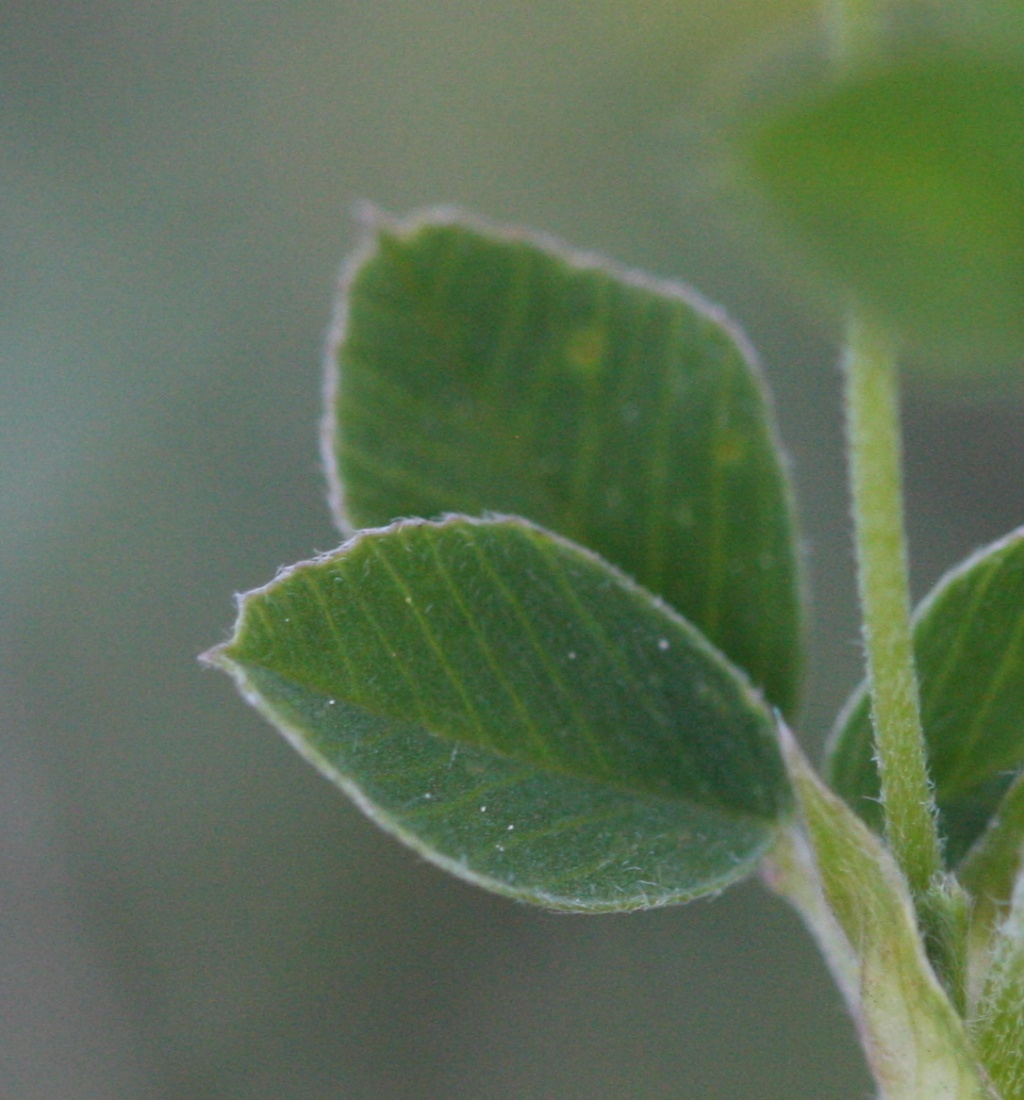
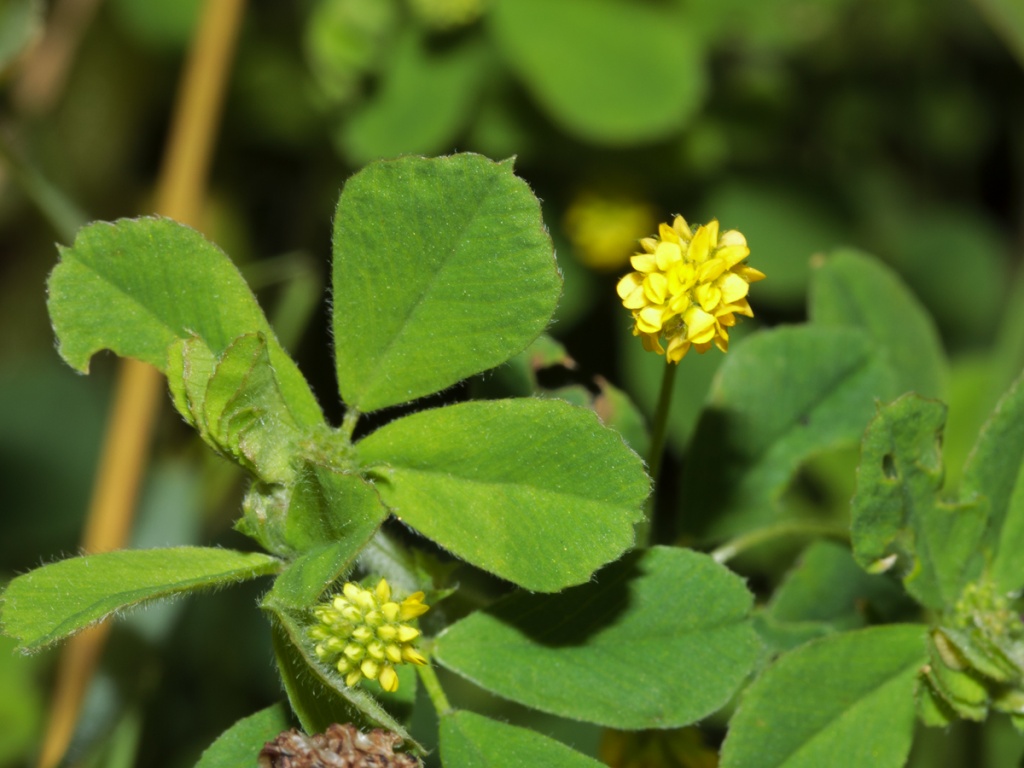
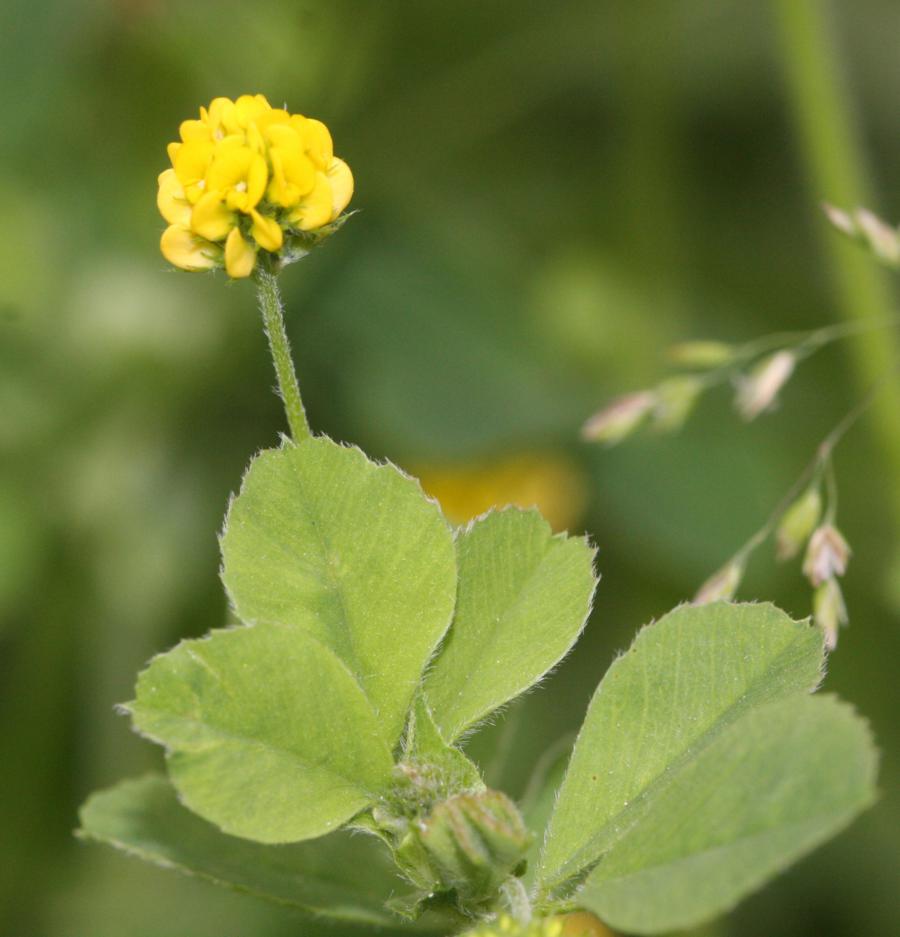
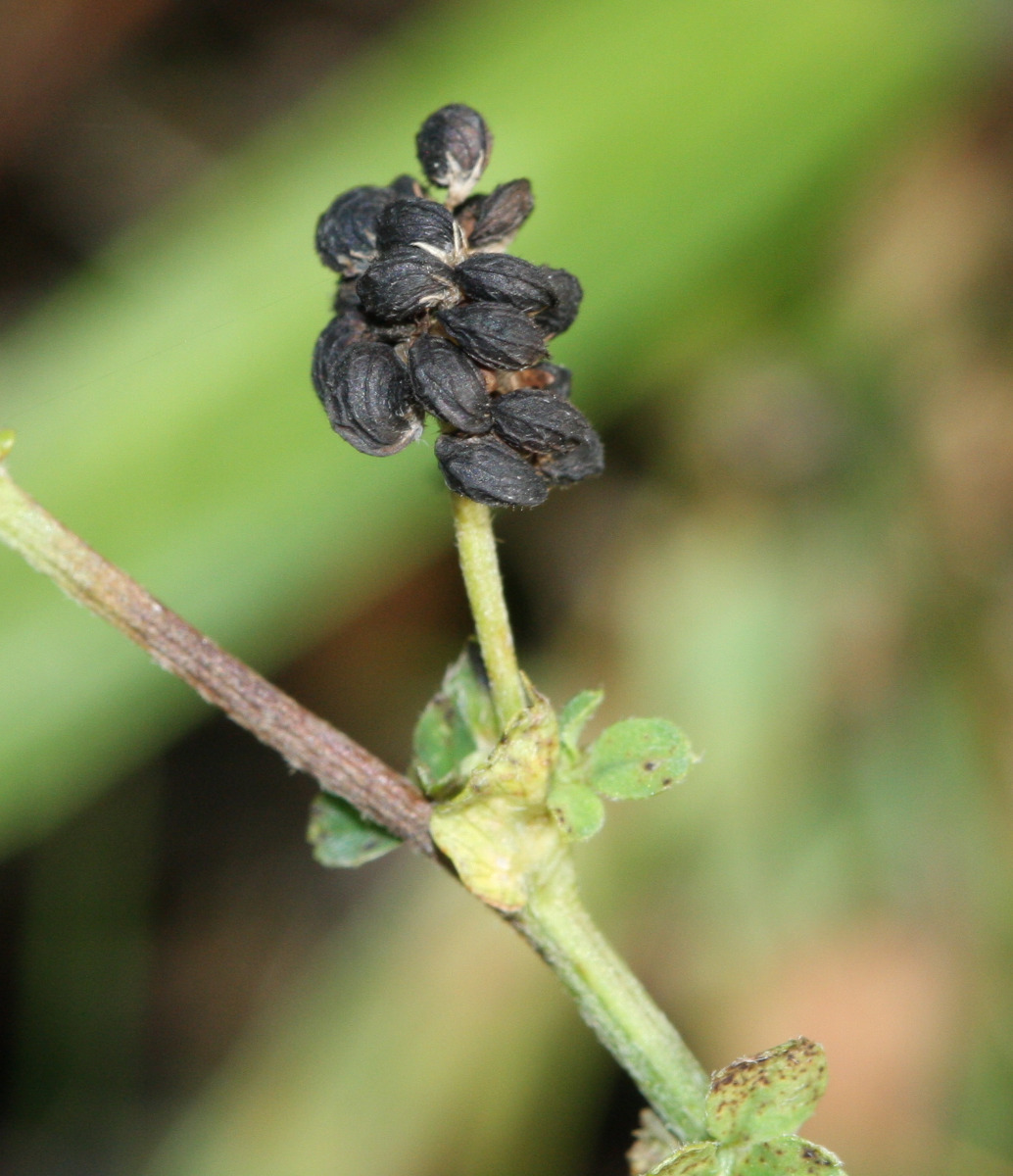
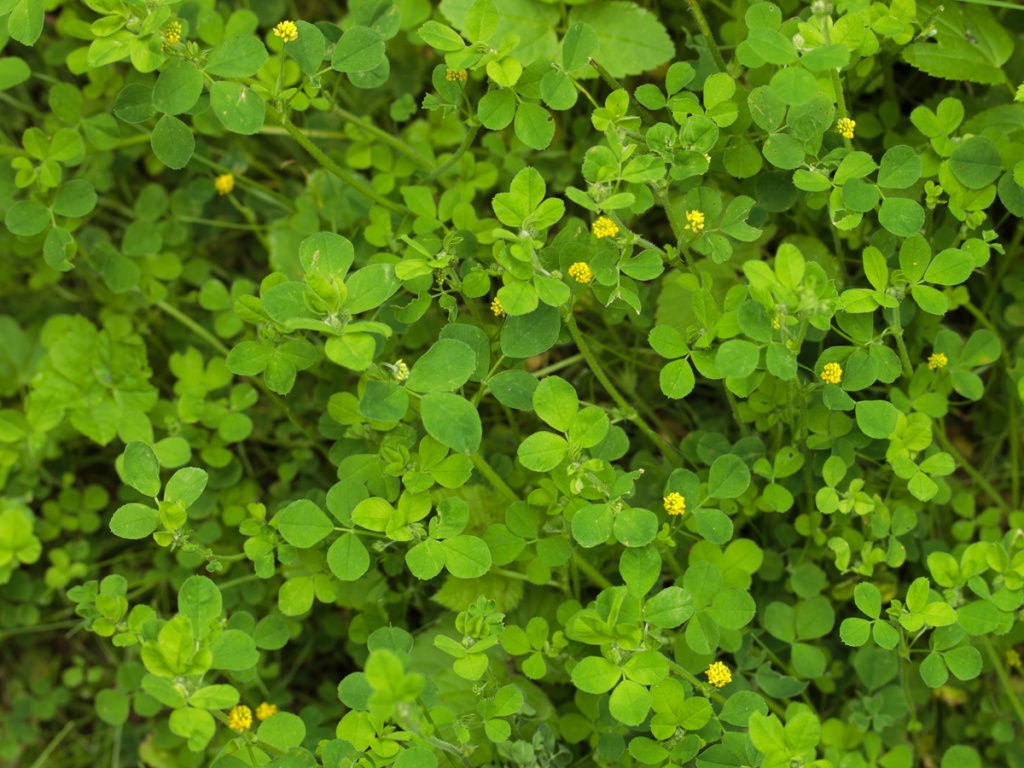
Low, often prostrate, hairy plant. Leaves are trifoliate and widest above the middle, with a nerve protruding at the broad end of each leaflet in the centre. Flowers yellow, 2 to 3 mm, many to a raceme. Pods coiled, sickle or kidney shaped, 1.5 to 3 mm, black when ripe.
Hop-trefoils - Trifolium dubium, campestre and micranthum

If there aren't any fruits, distinguished from the Hop-trefoils by the apiculate leaves - i.e. with a short fine 'needle' at the apex of the leaf. The leaves are also much hairier than the leaves of Hop-trefoils.
General photo in habitat, and close up of leaves and/or seed pods
Grass verges, mown areas.
April to September.
Annual.
Common in England and Wales, scarcer further north, mainly coastal in Scotland.
Very common in Leicestershire and Rutland. In the 1979 Flora survey of Leicestershire it was found in 538 of the 617 tetrads.
 B4114 Sapcote SP 5020 9299 (taken 19.6.2006).JPG) Graham Calow
Graham Calow
Sapcote
19 June 2006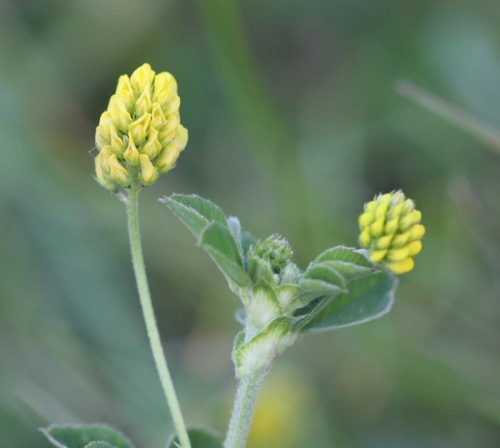 David Nicholls
Evington Park
25 May 2012 Sharnford Road Sapcote SP 4921 9296 (taken 16.8.2007).JPG) Graham Calow
Graham Calow
Sapcote
16 August 2007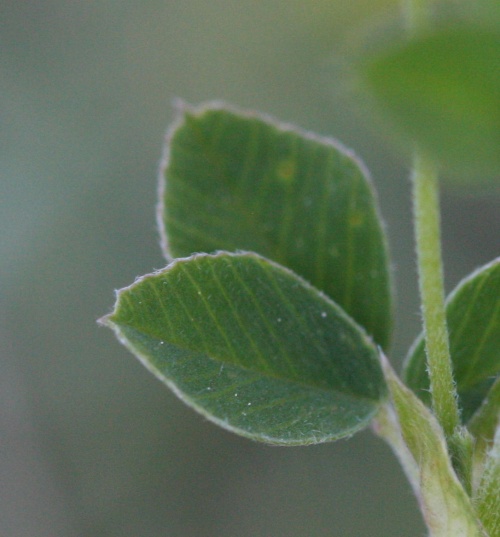 David Nicholls
Evington Park
25 May 2012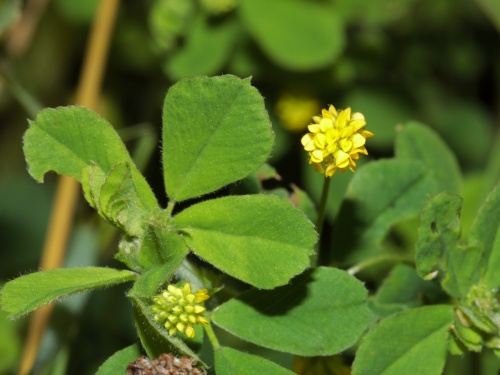 HAPeacock
The Orchards
26 June 2012
 B4114 Sapcote SP 5020 9299 (taken 19.6.2006).JPG)
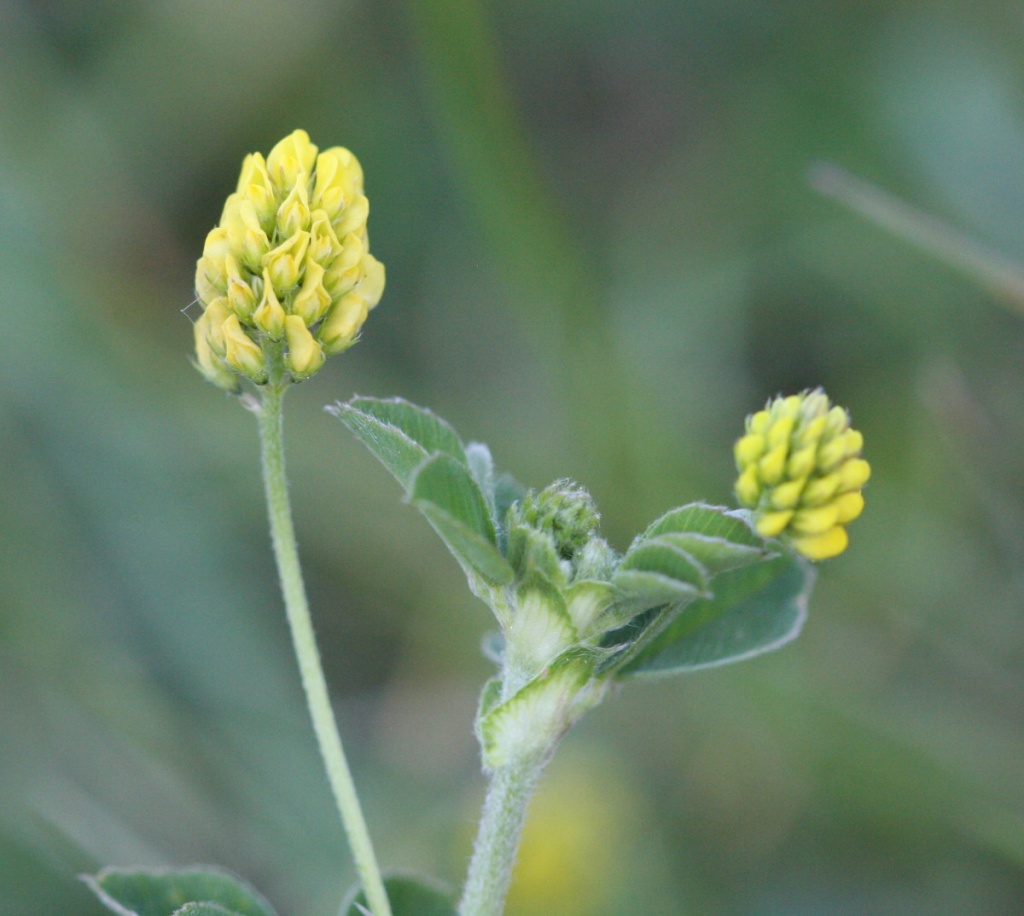
 Sharnford Road Sapcote SP 4921 9296 (taken 16.8.2007).JPG)
Leicestershire & Rutland Map
Enter a town or village to see local records
MAP KEY:
Yellow squares = NBN records (all known data)
Coloured squares = NatureSpot records: 2025+ | 2020-2024 | pre-2020
UK Map
Additional images
All NatureSpot records
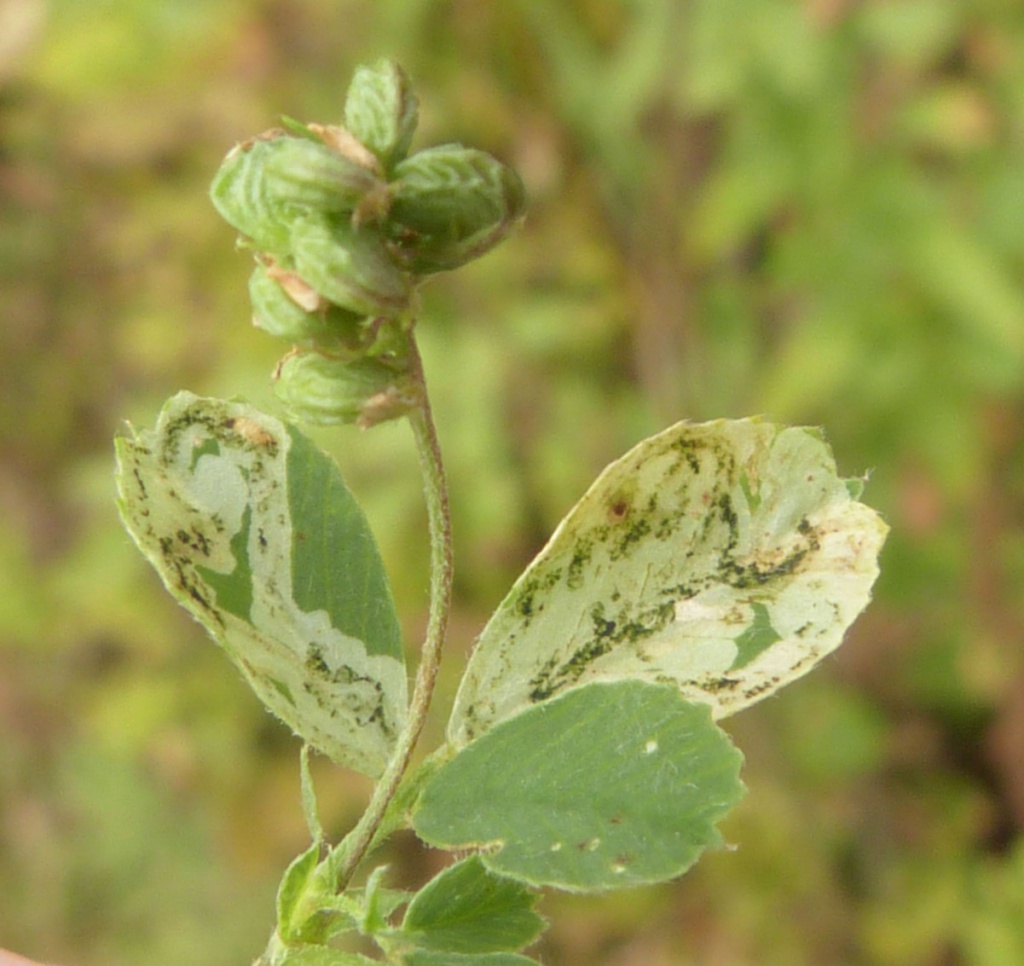
Liriomyza congesta
The larva of the Agromyzid fly Liriomyza congesta mines the leaves of various Legumes such as Peas, Medicks, Lucernes and Vetches. The mine is on the upper surface of the leaf and the frass shows in a green strips.