Birdsfoot-trefoil
Birdsfoot-trefoil - Lotus corniculatus
Birdsfoot-trefoil
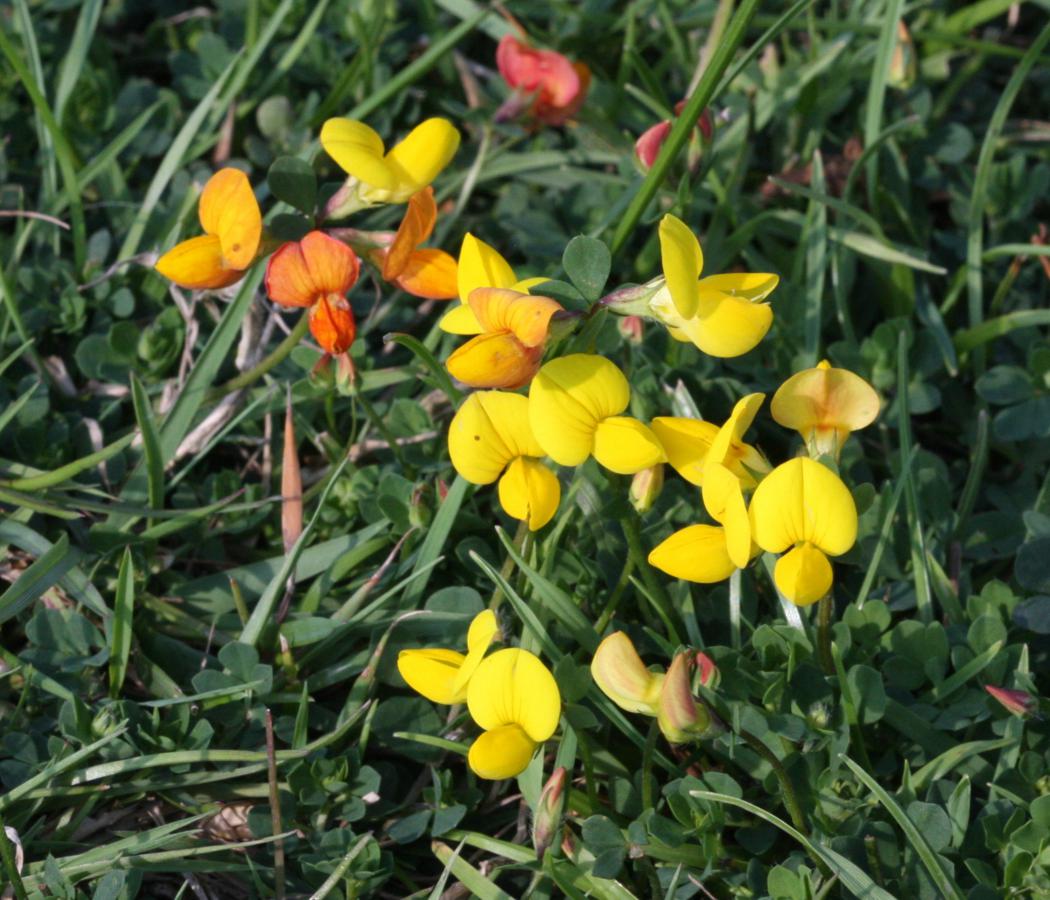
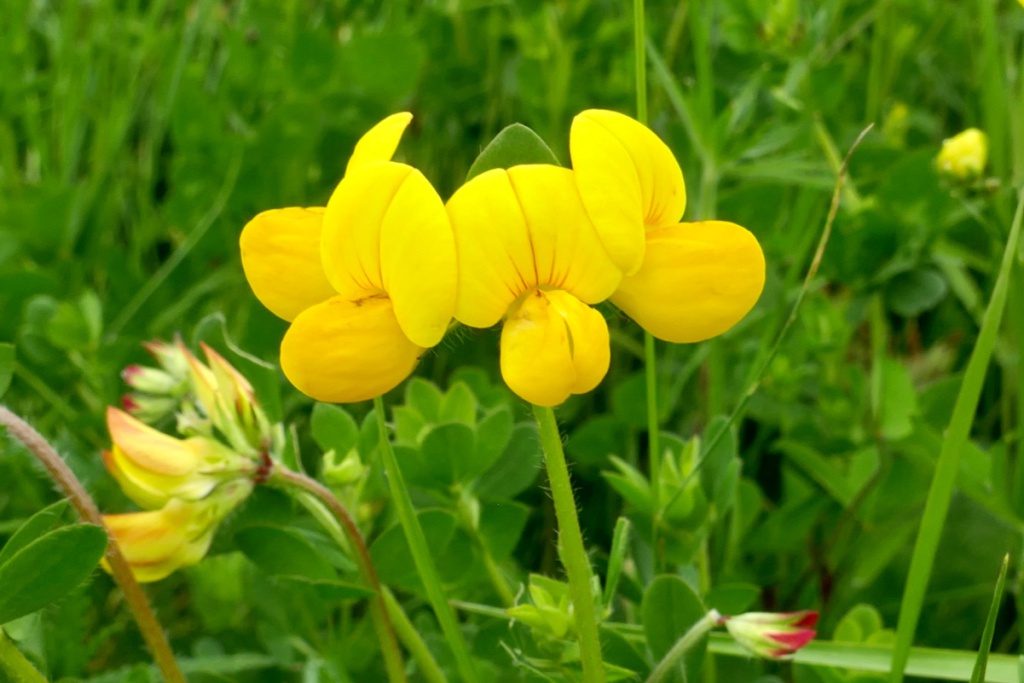
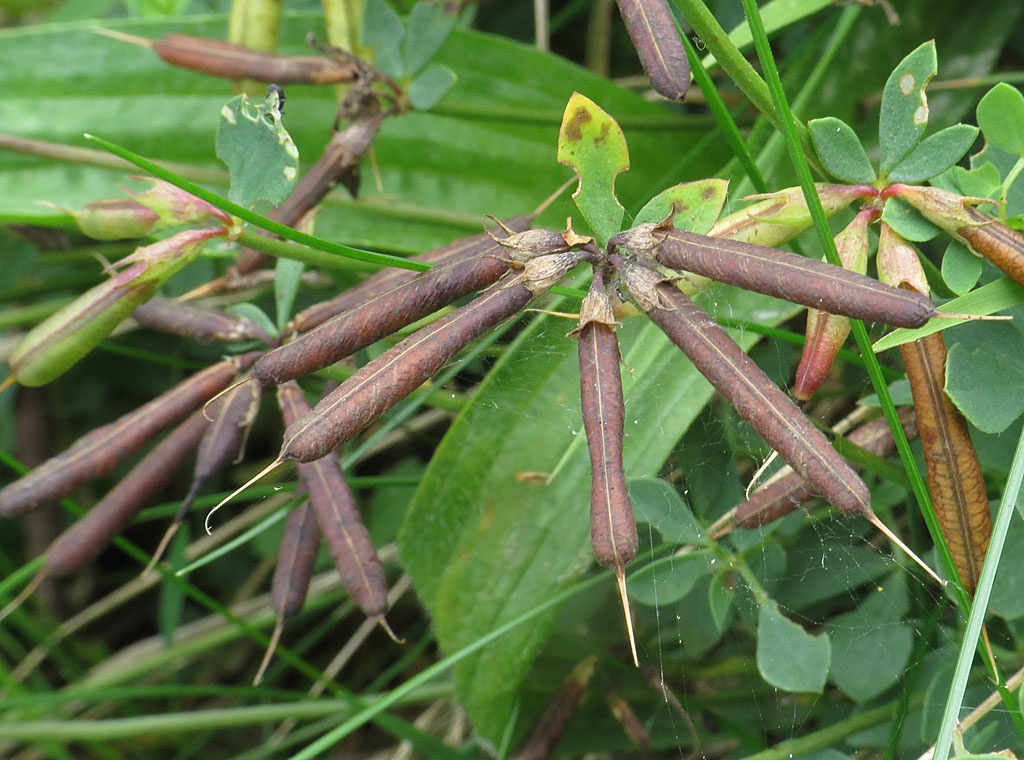
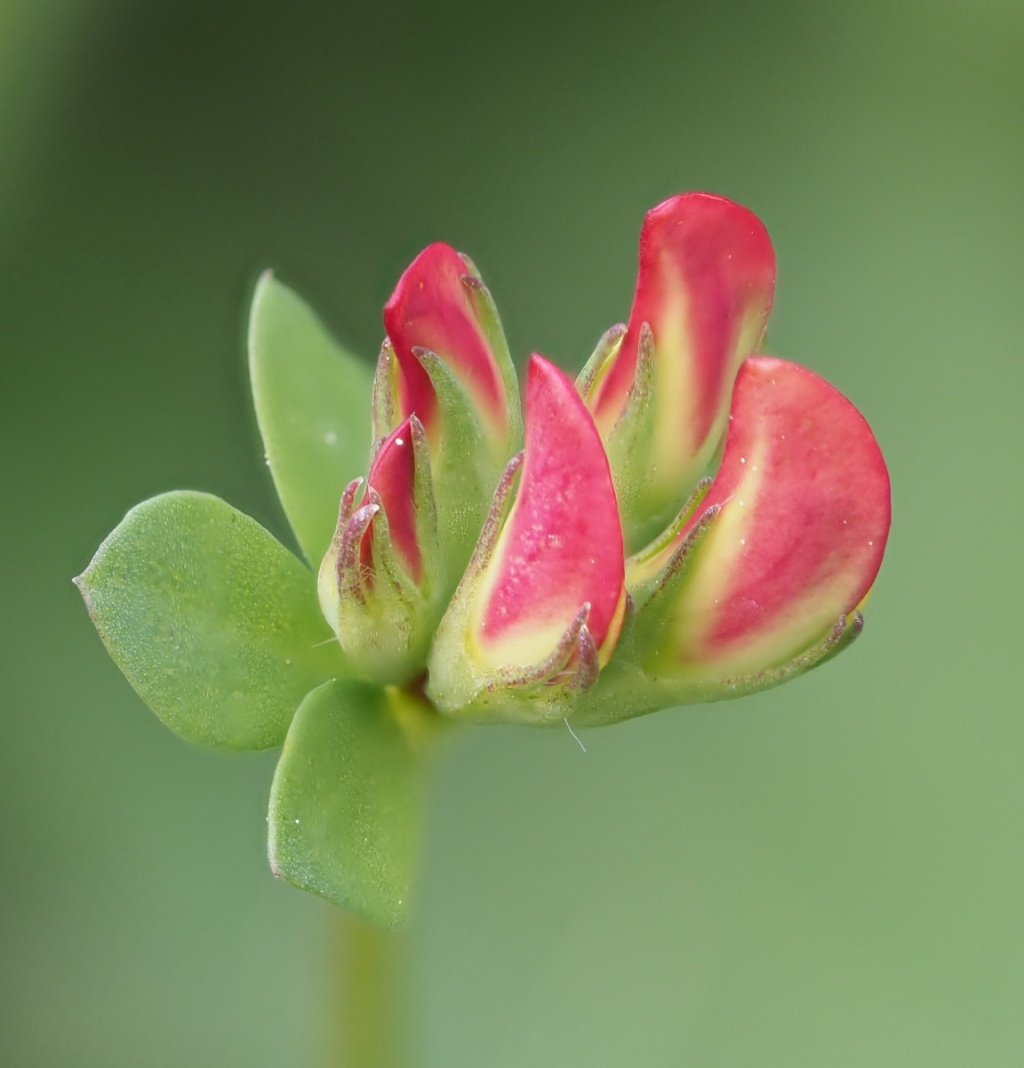
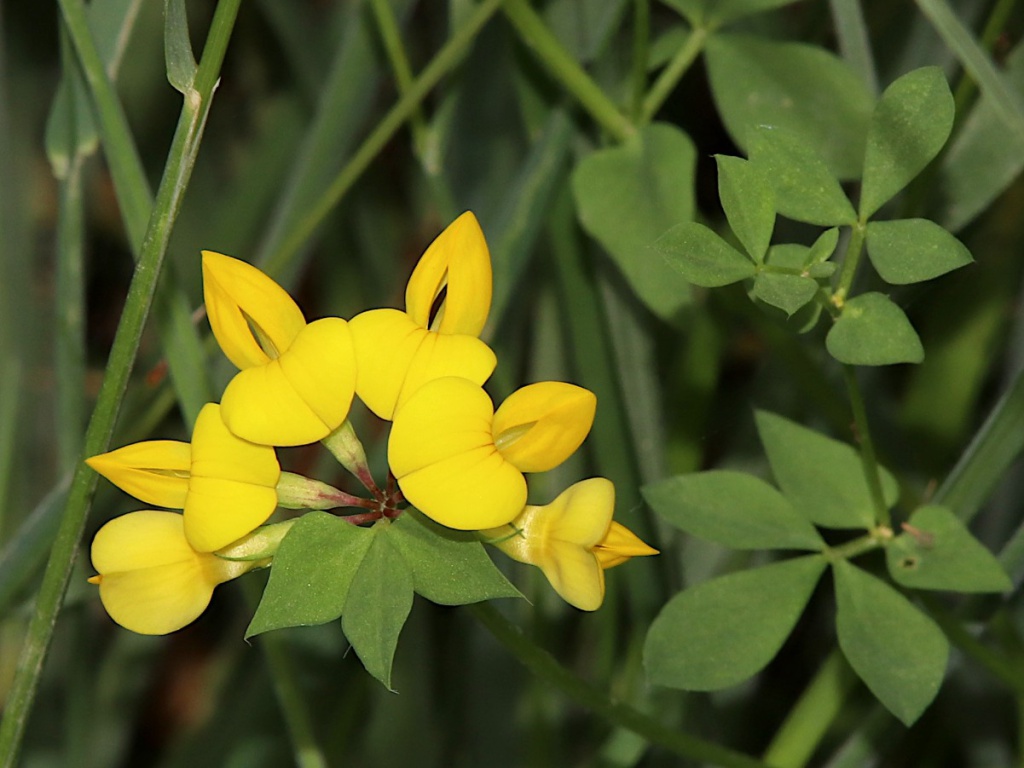
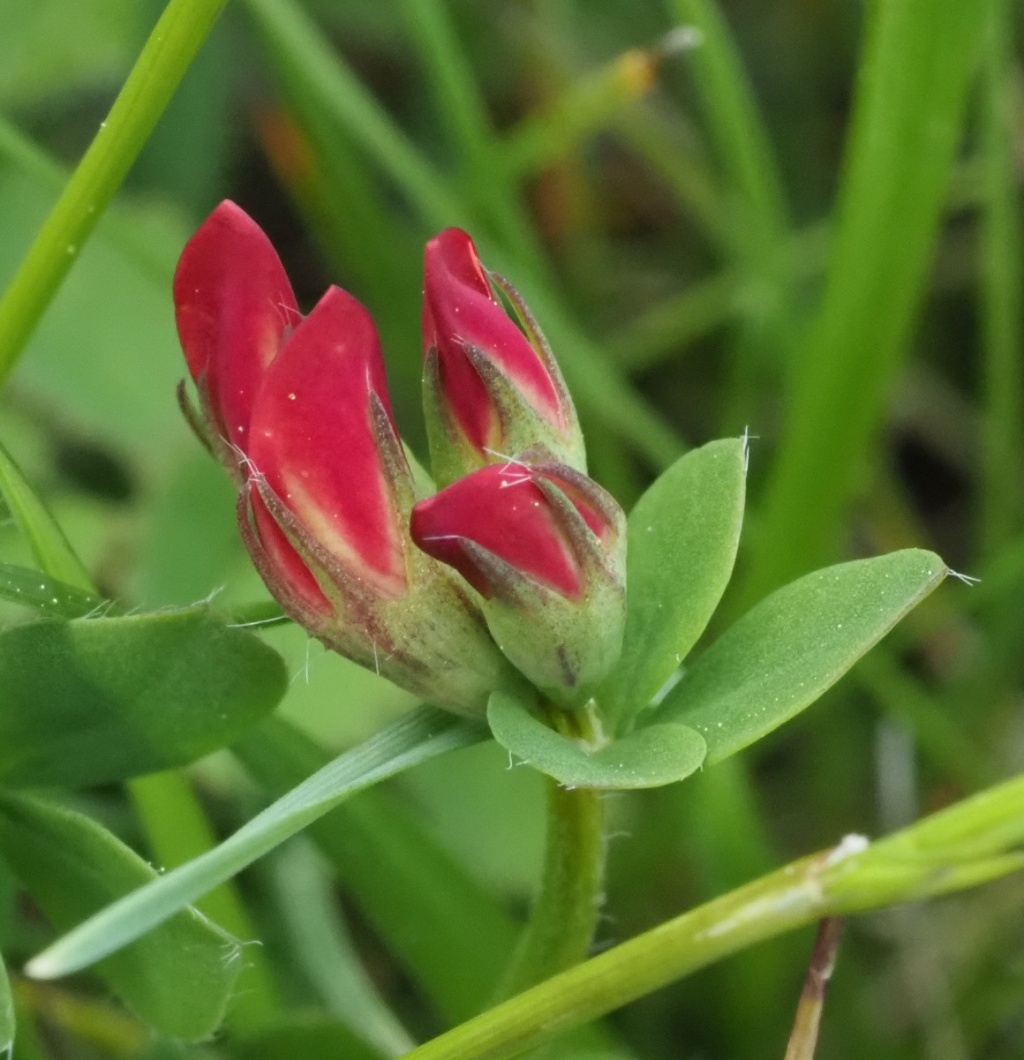
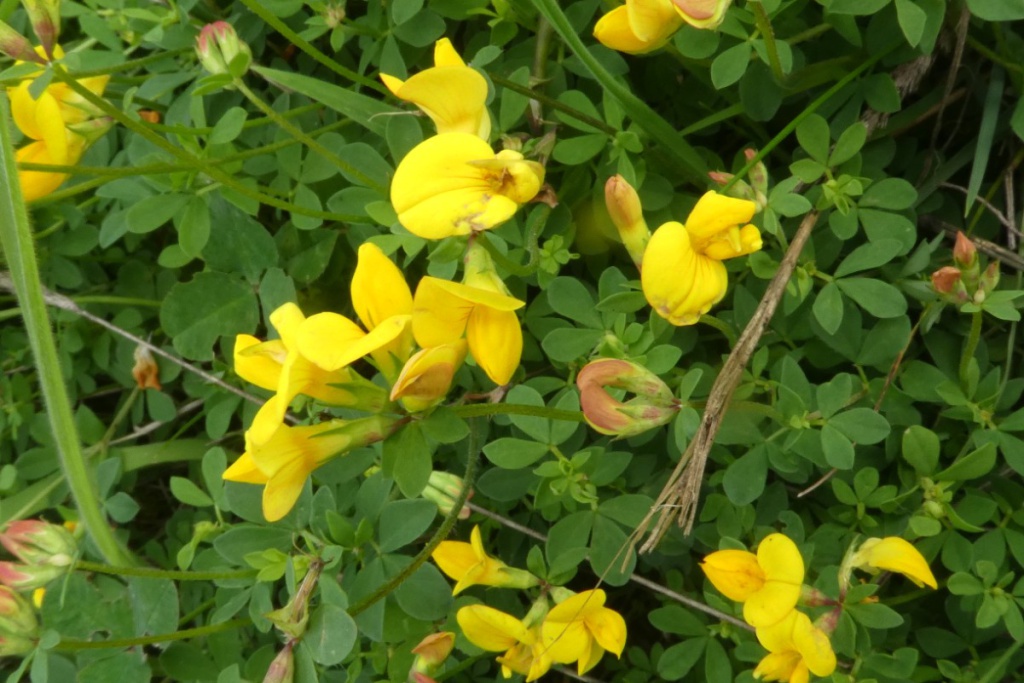
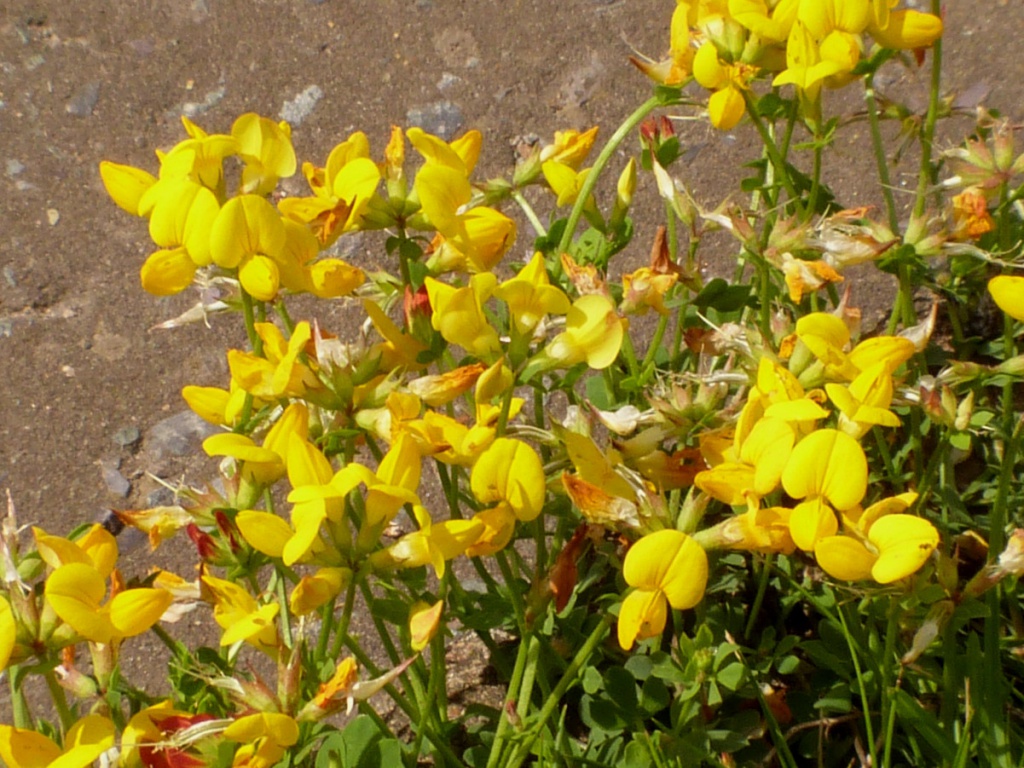
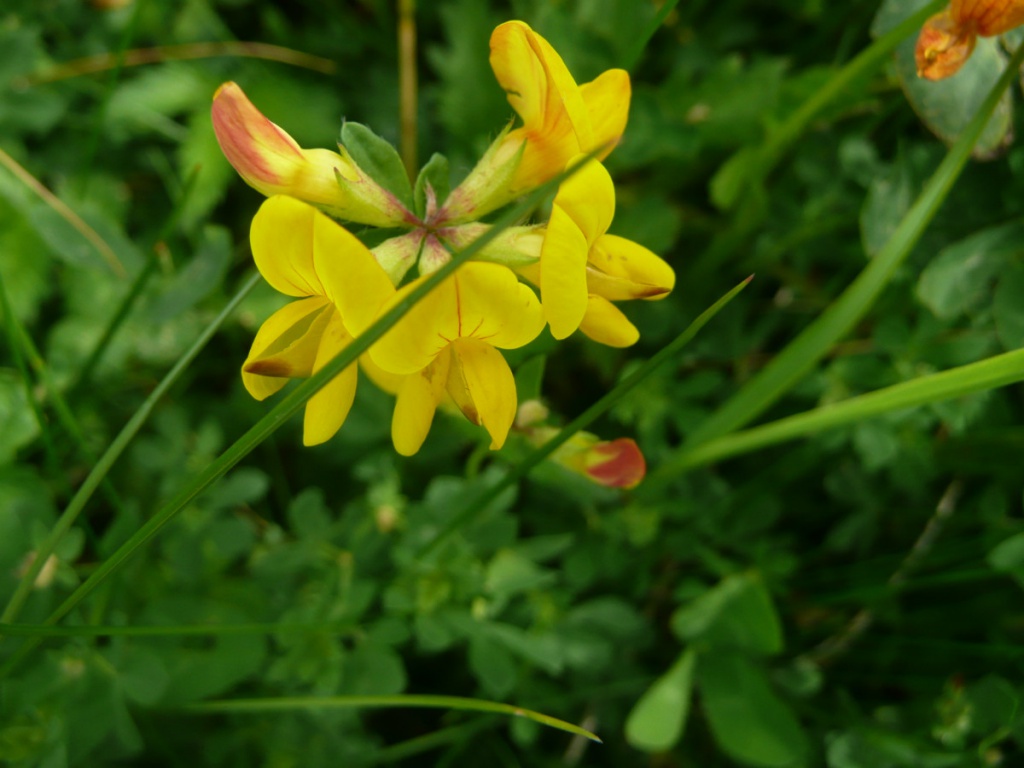
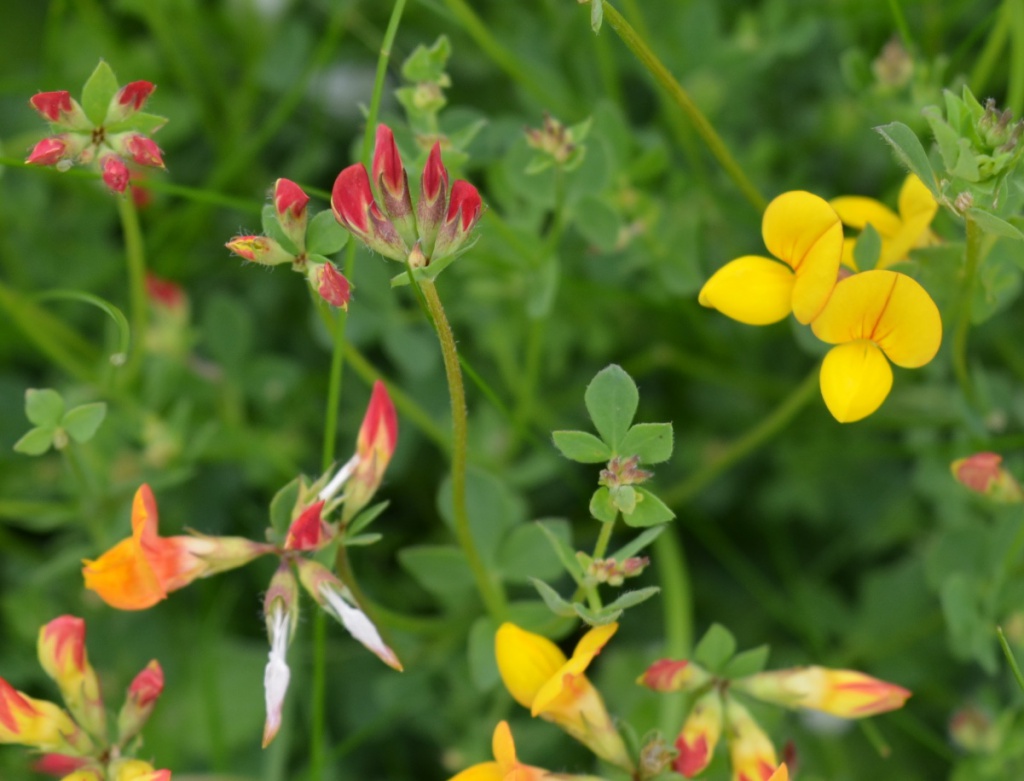
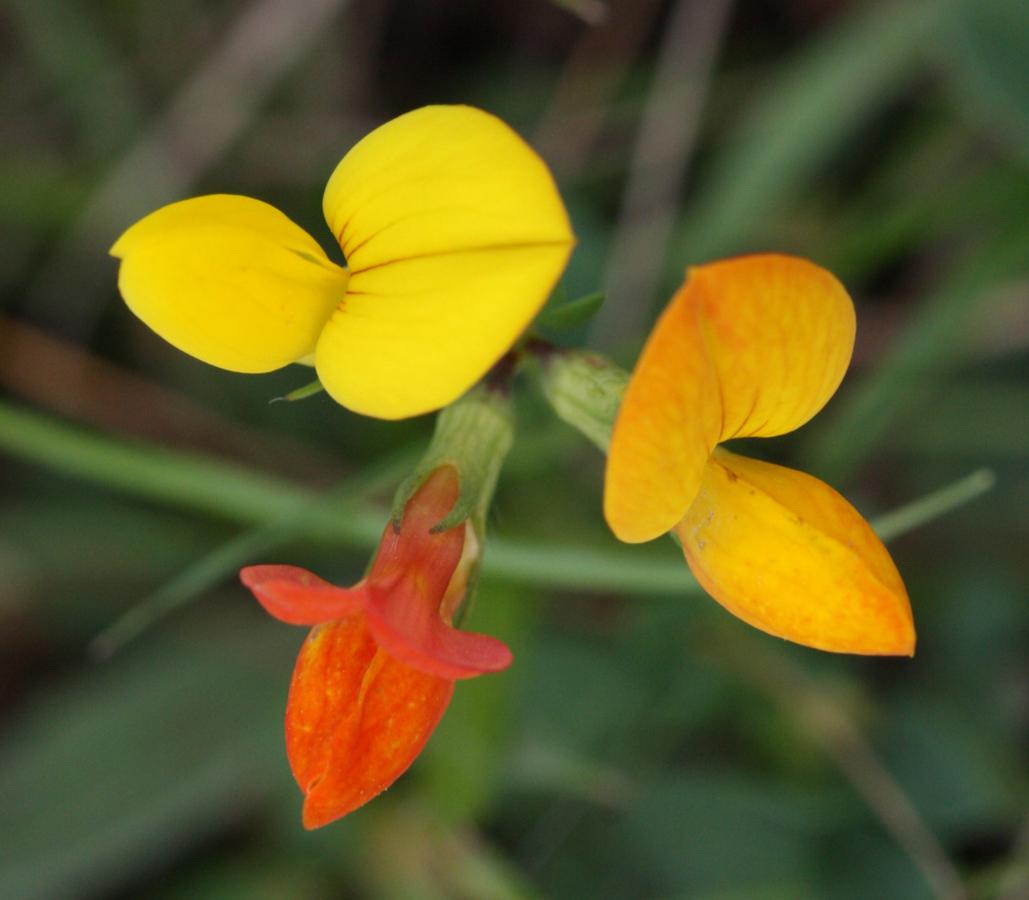
Variable but usually 10 to 20 cm in height, rather sprawling with a solid, woody stem at the base. Flowers yellow or orangey, sometimes tinged red, especially when just emerging. 10 to 16 mm in clusters of 2 to 7. Seed pod 15 to 30 mm straight.
Greater Bird's-foot Trefoil (Lotus pedunculatus) and Narrow-leaved Bird's-foot Trefoil (Lotus tenuis)

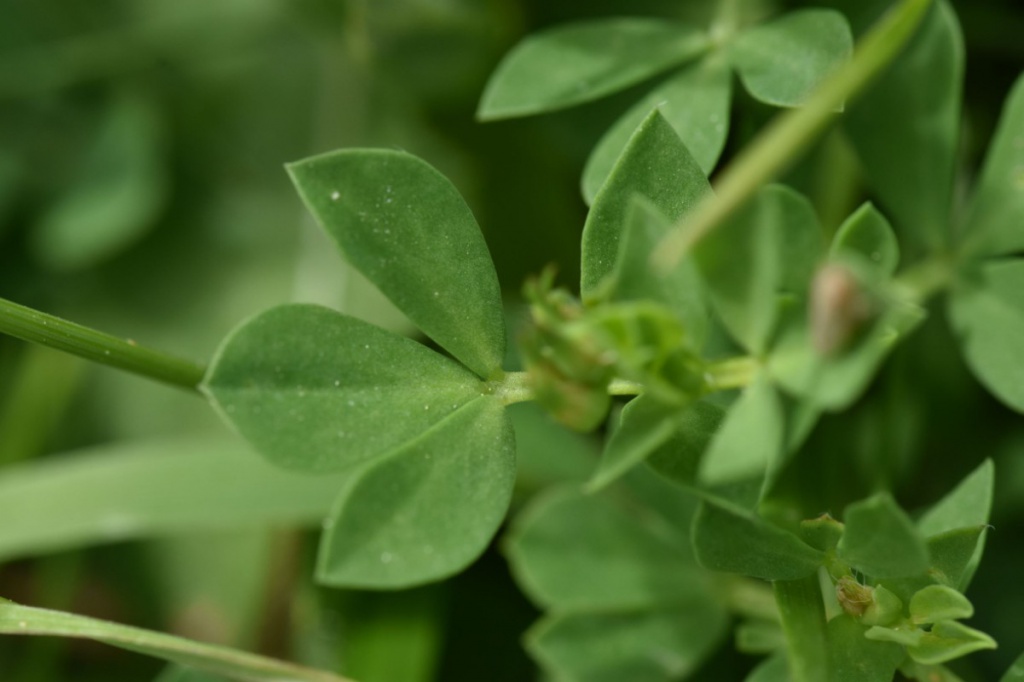
Solid stems and obtuse angle between the upper two calyx teeth (i.e more than a right-angle) distinguish it from Greater Bird's-foot Trefoil (which is usually larger, hairier, taller and found in marshy places). Narrow-leaved Bird's-foot trefoil is uncommon in VC55 and very similar in flower but has leaflets that are mostly >4 times as long as wide; Common Bird's-foot trefoil leaflets are mostly <3 times as long as wide.
Short grassy habitats, road verges, etc.
May to September.
Perennial.
Very common throughout Britain.
Very common in Leicestershire and Rutland. In the 1979 Flora survey of Leicestershire it was found in 553 of the 617 tetrads.
 B4114 junction with Leicester Road Sapcote SP 5028 9306 (taken 28.5.2006).JPG) Graham Calow
Graham Calow
Sapcote
28 May 2006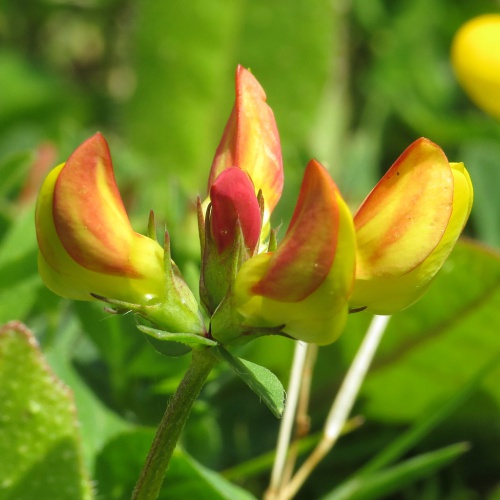 David Gould
Wolsey Island, Leicester
15 May 2015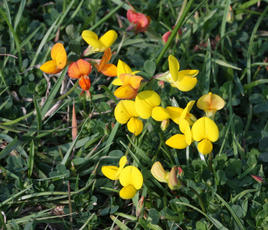 David Nicholls
Ratby Disused Railway
09 July 2011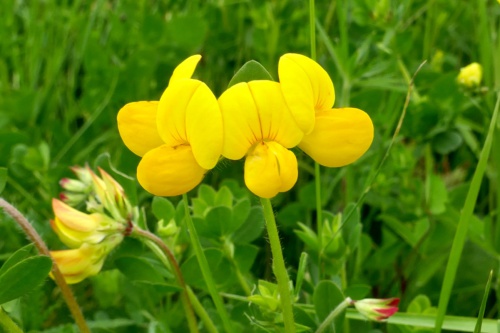 granniejo
Billesdon Wildlife Pool
01 June 2022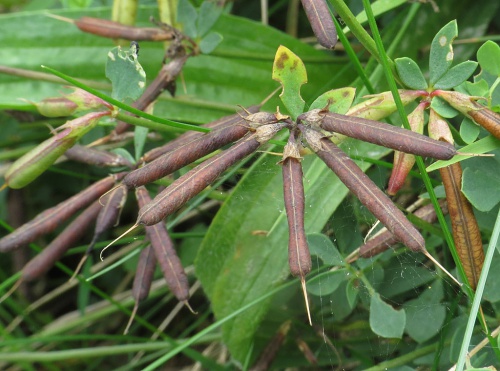 David Gould
Aylestone Meadows
04 September 2014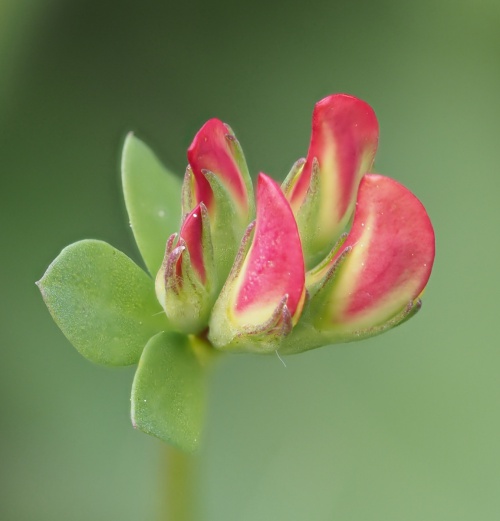 David Nicholls
Lea Meadows NR
15 May 2023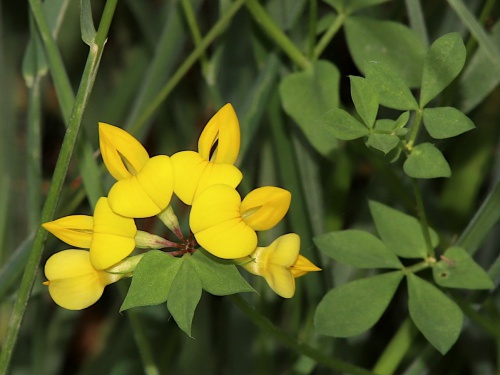 Mike Higgott
Anstey, Link Road Playing Fields 5
30 June 2022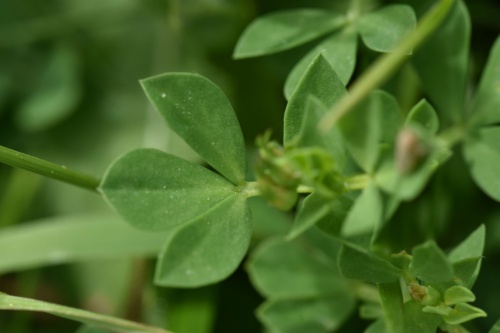 stepgray4
Wymeswold Meadows
14 June 2021
 B4114 junction with Leicester Road Sapcote SP 5028 9306 (taken 28.5.2006).JPG)
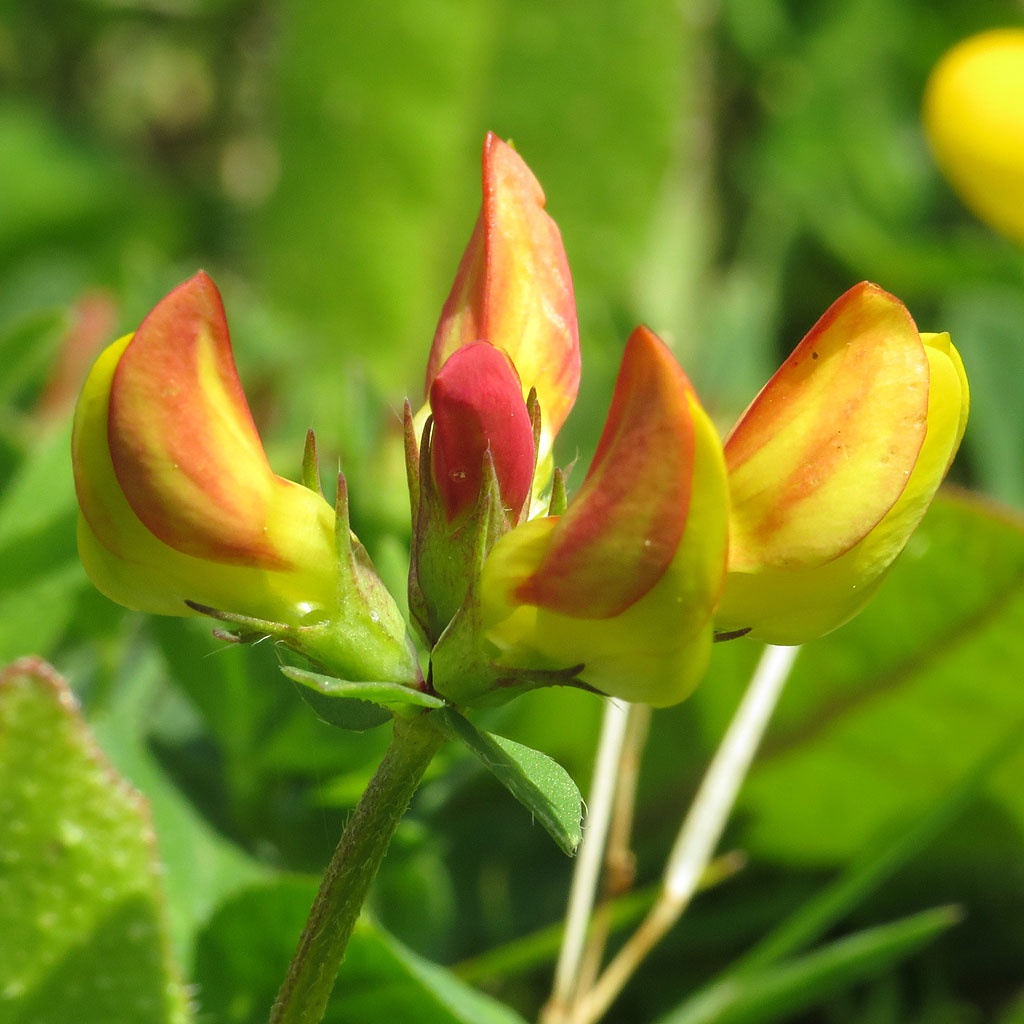
Leicestershire & Rutland Map
Enter a town or village to see local records
MAP KEY:
Yellow squares = NBN records (all known data)
Coloured squares = NatureSpot records: 2025+ | 2020-2024 | pre-2020
UK Map
Additional images
All NatureSpot records
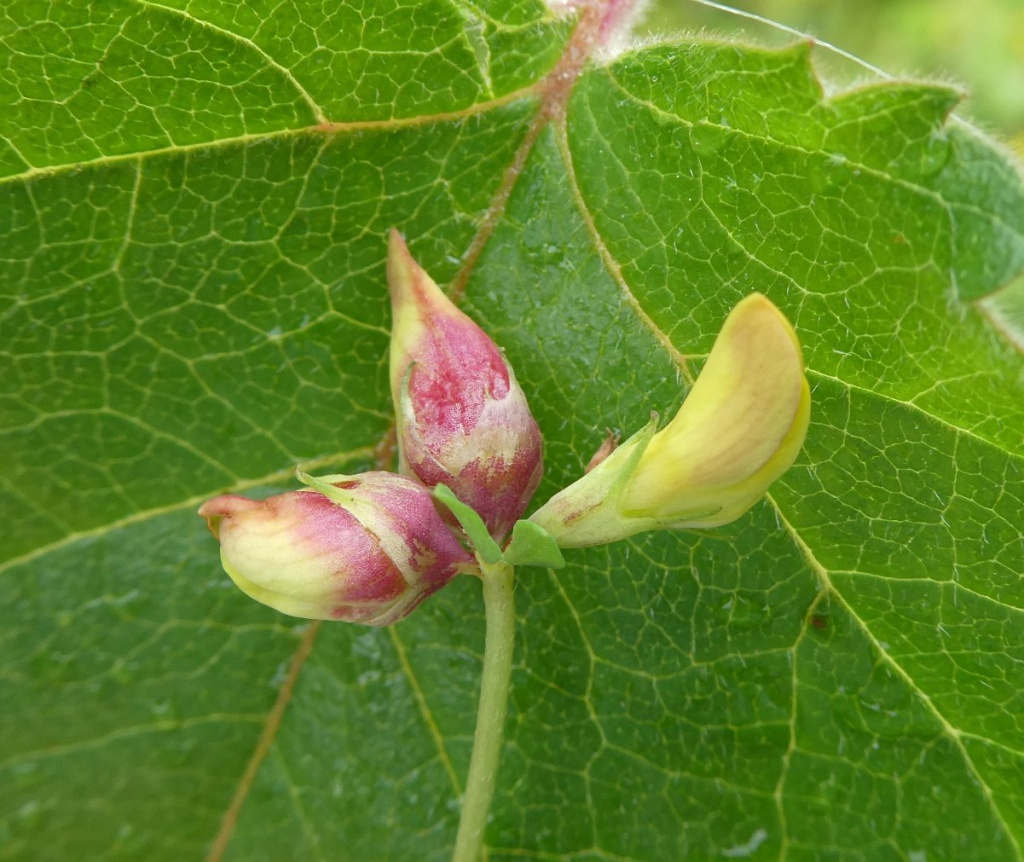
Contarinia loti
The larvae of the gall midge Contarinia loti gall members of the Fabaceae family of plants, particularly causing galls in the flower buds of Bird's-foot-trefoils. The buds may become swollen, up to 12mm long, distorted or remaining closed. The galls are yellow-green and first becoming red later. The galls may contain one, or more, yellow or white larvae which can jump.