Andrena nigroaenea
Andrena nigroaenea
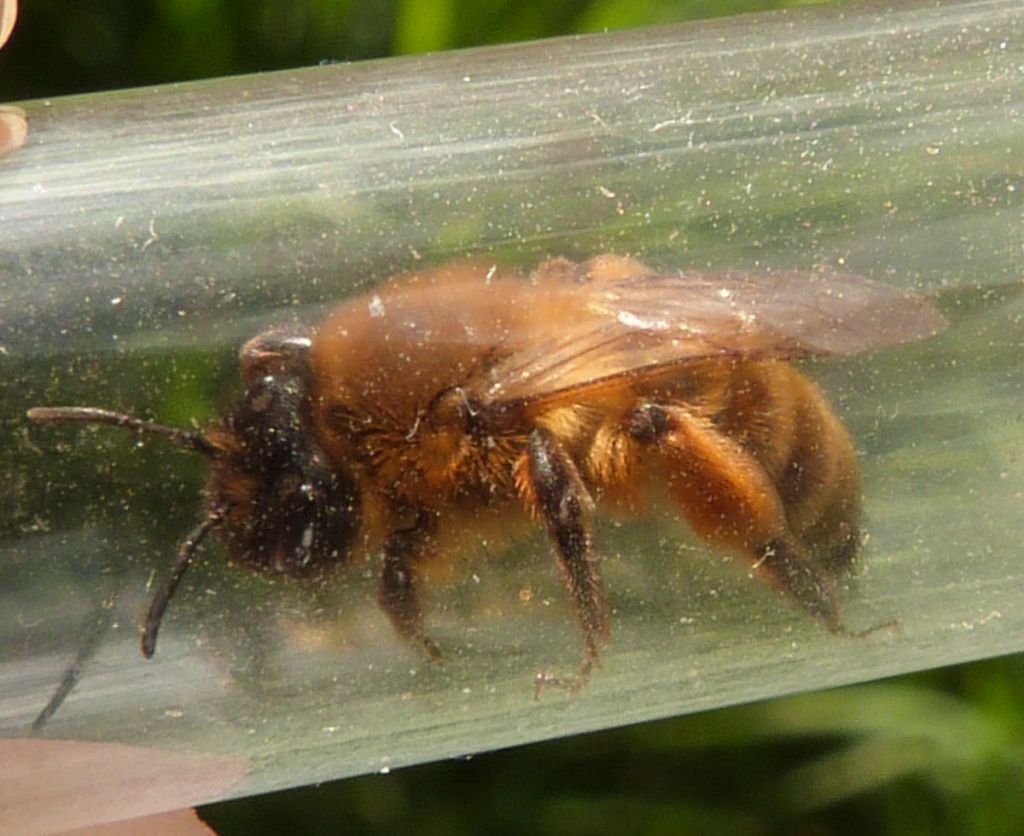
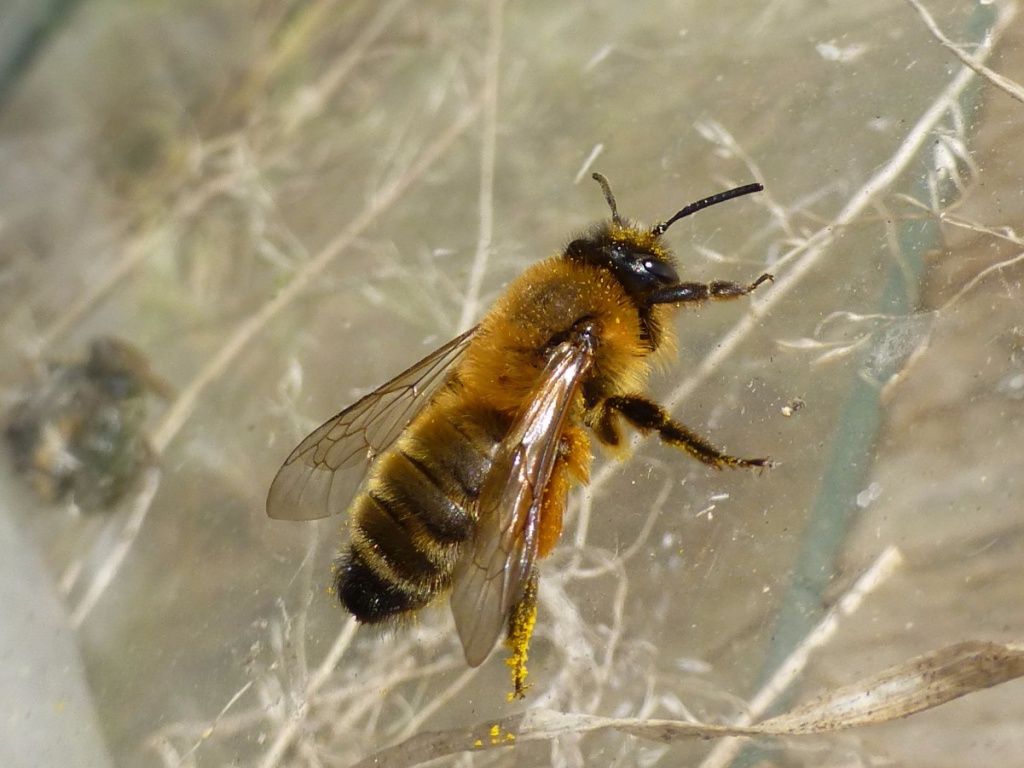
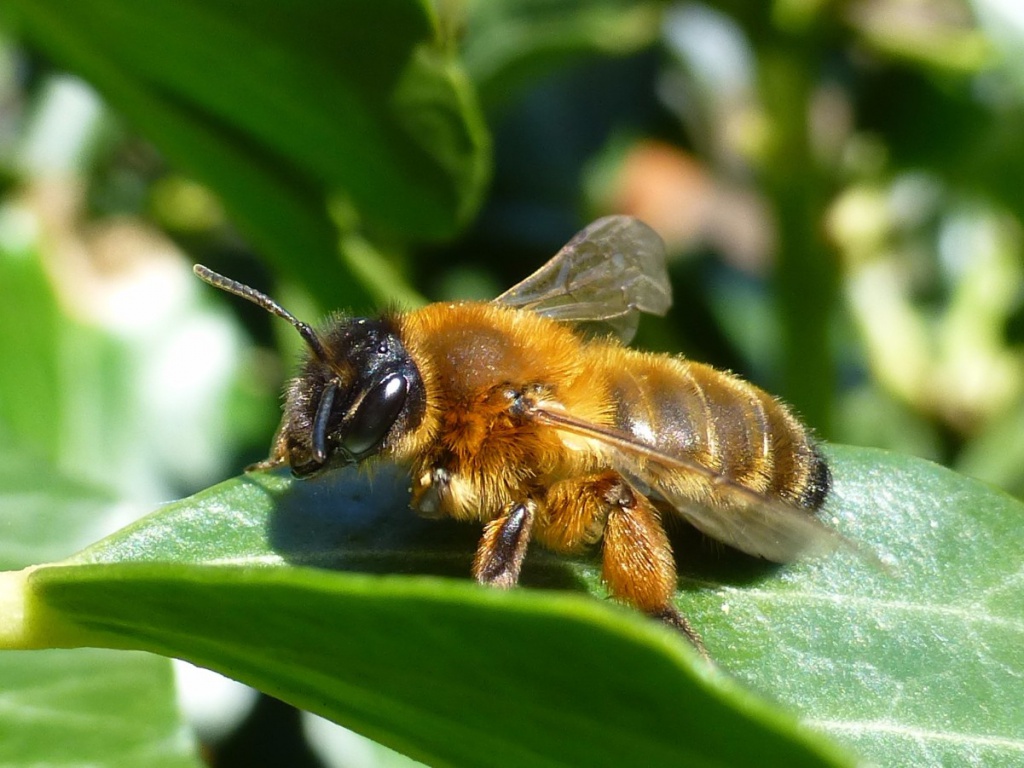
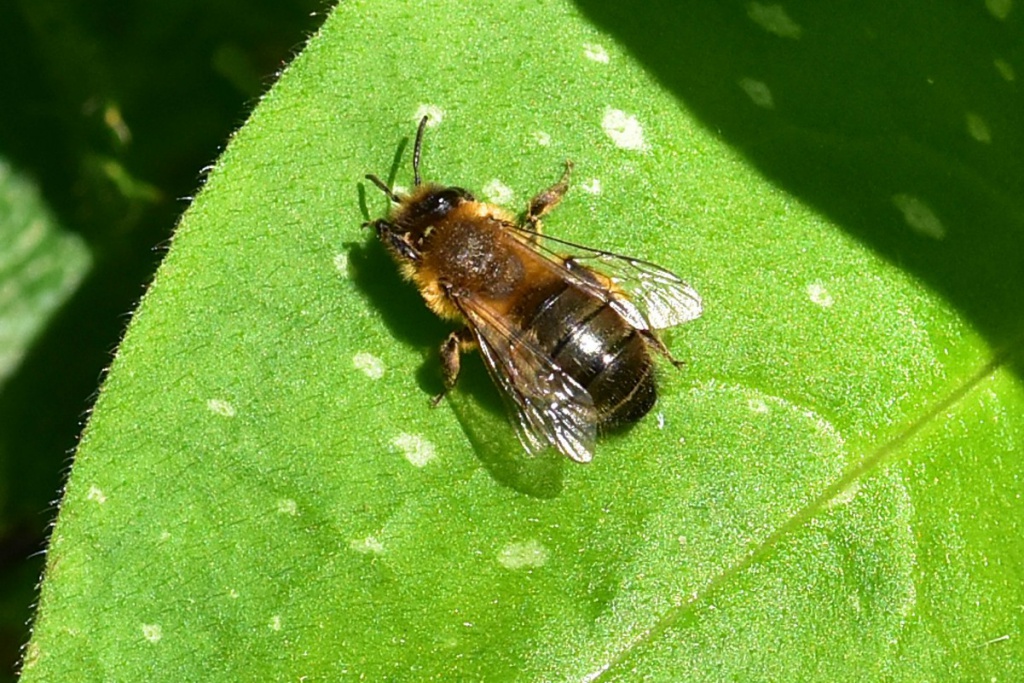
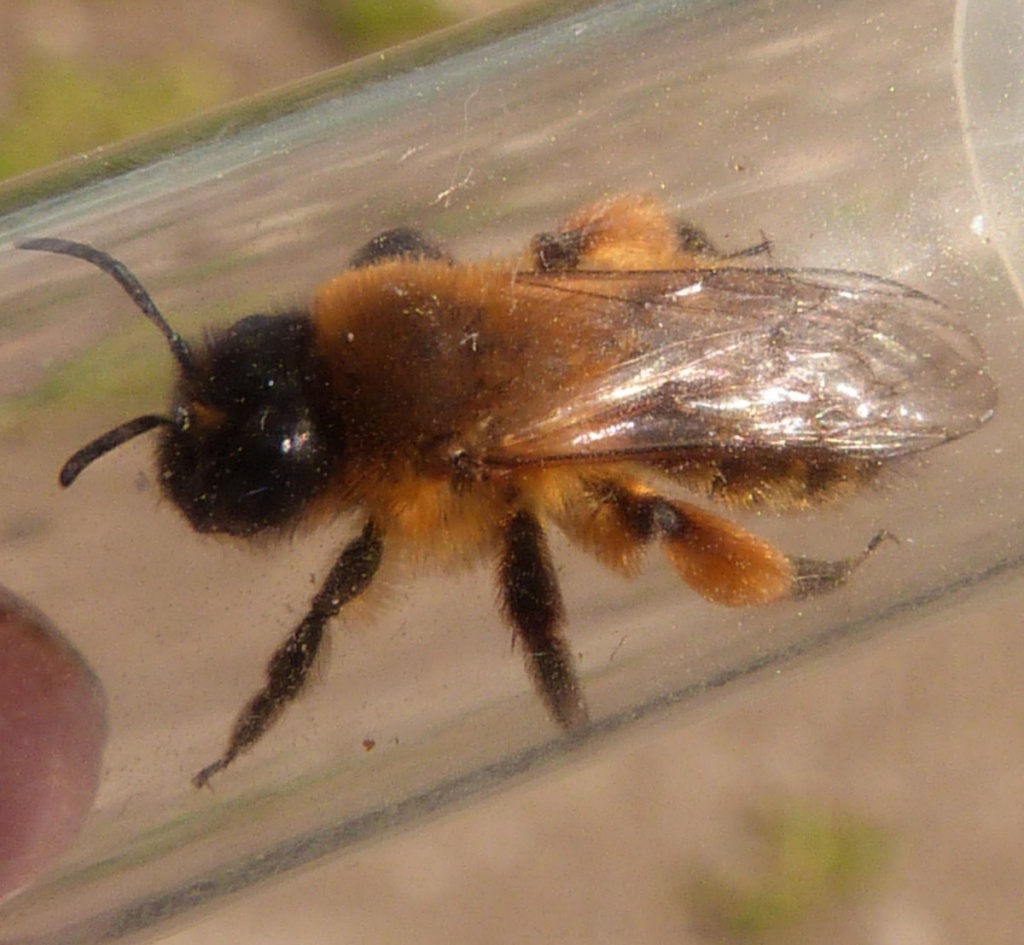
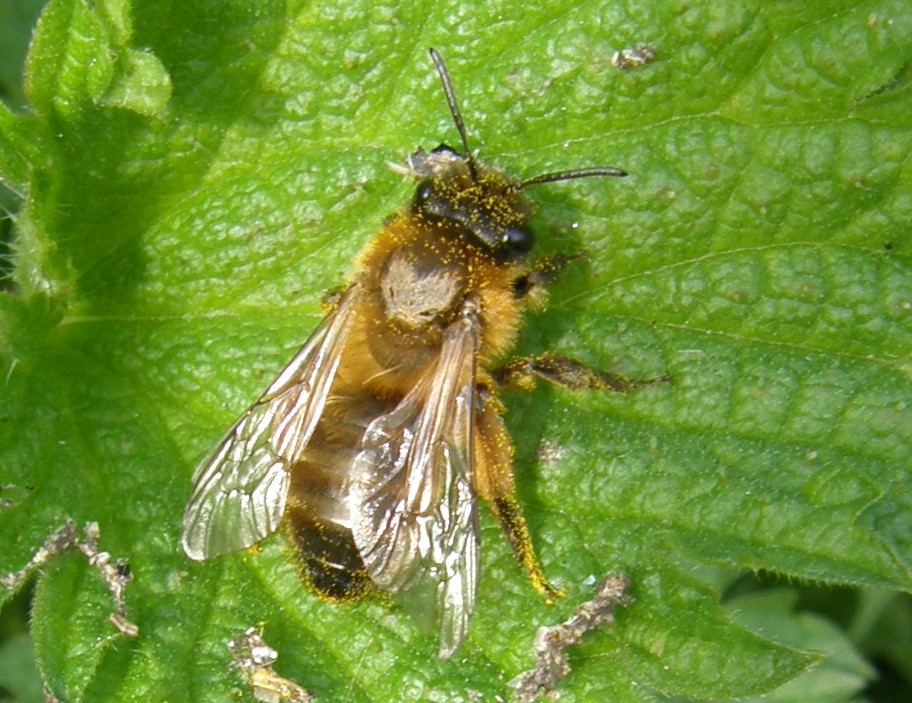
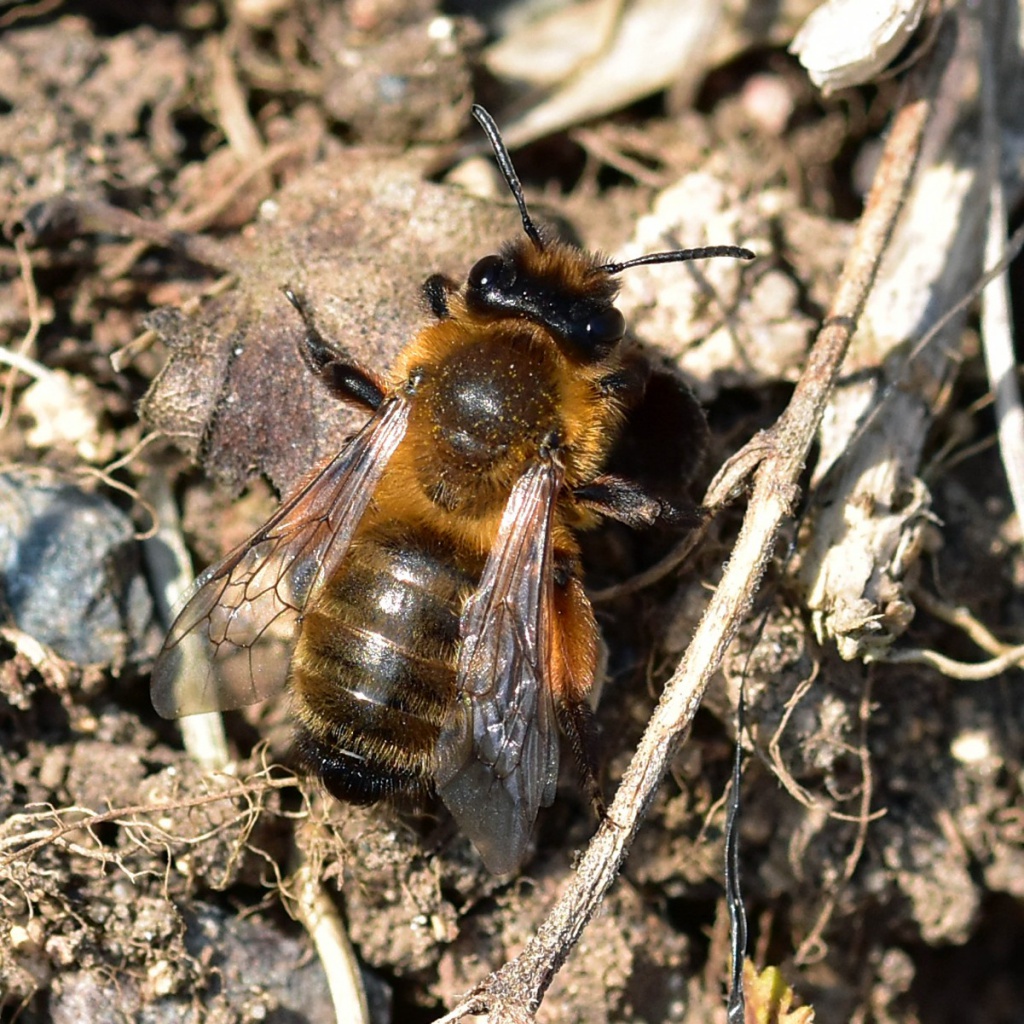
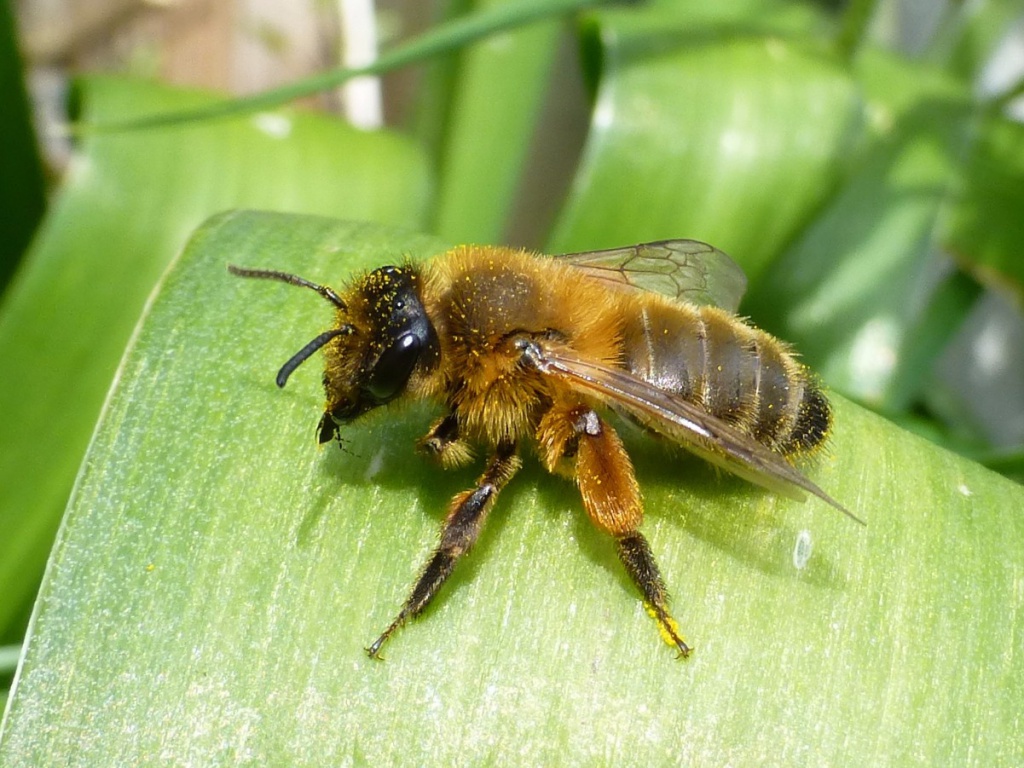
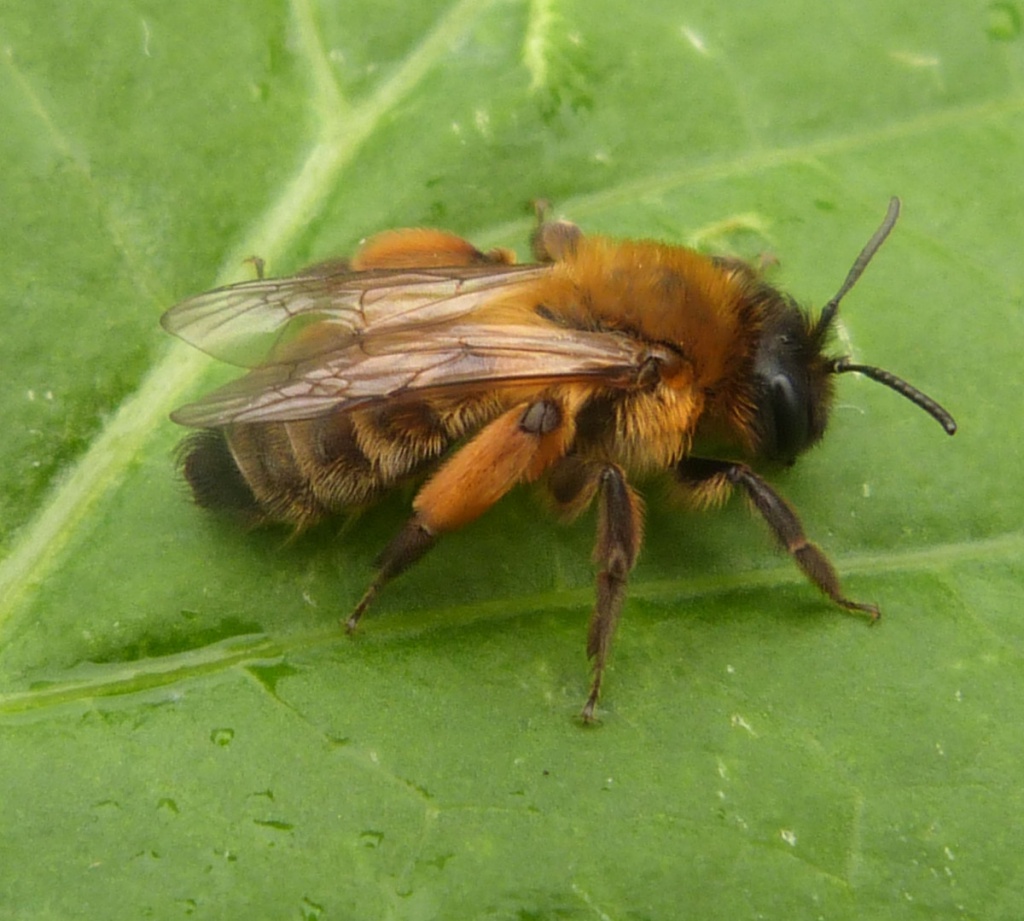
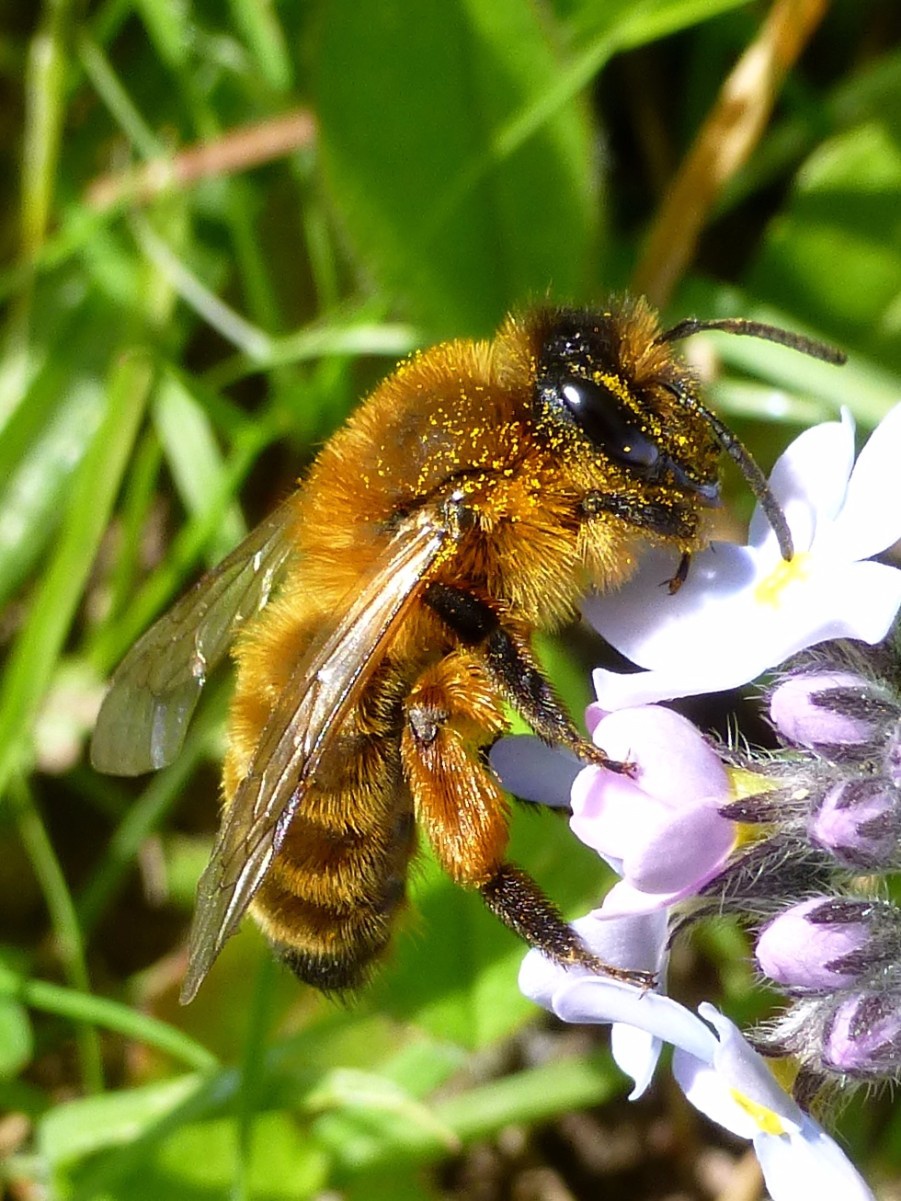
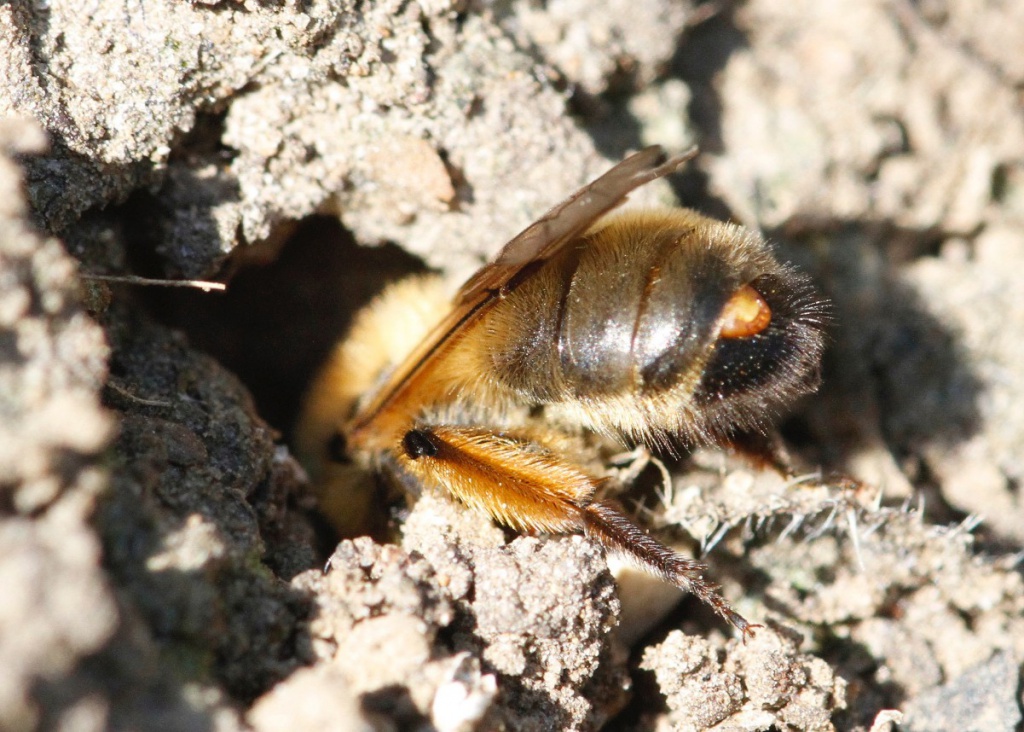
Females are the size of a Honey Bee with dense brown hairs on the thorax and slightly paler hairs covering all of abdominal tergites 1-4, which contrast with the darker, blackish hairs on tergite 5 (which is often dark under the hairs). The pollen brush on the dark hind tibia is neat with even-lengthed orange hairs. It also has dark fairs on the face.
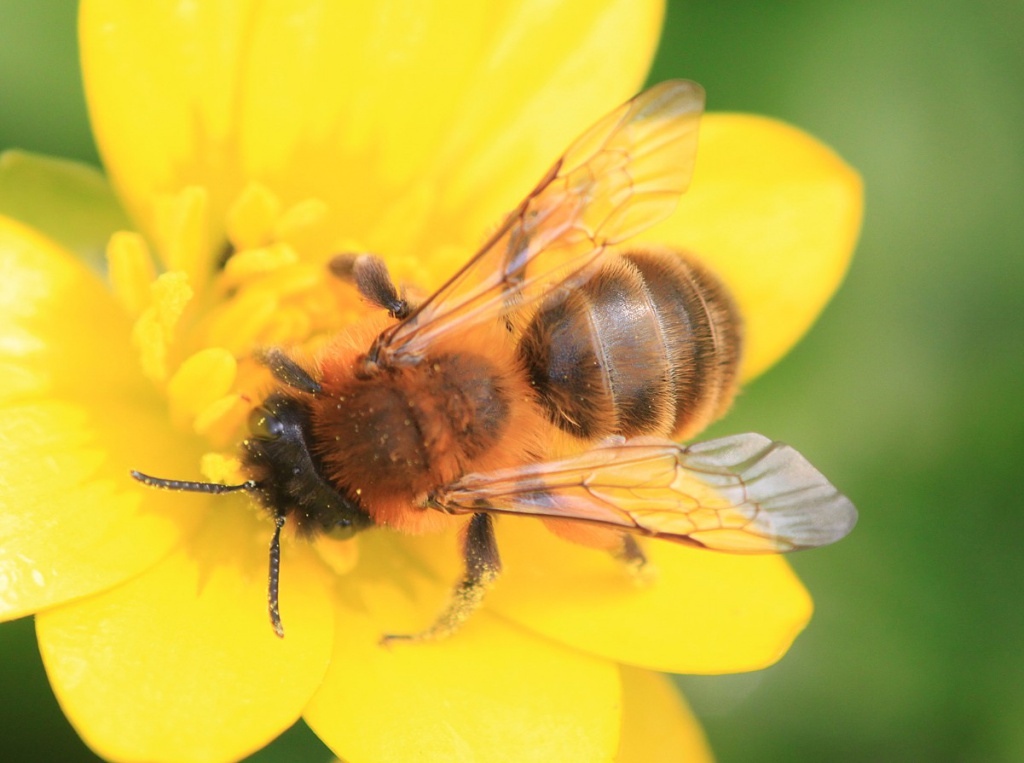
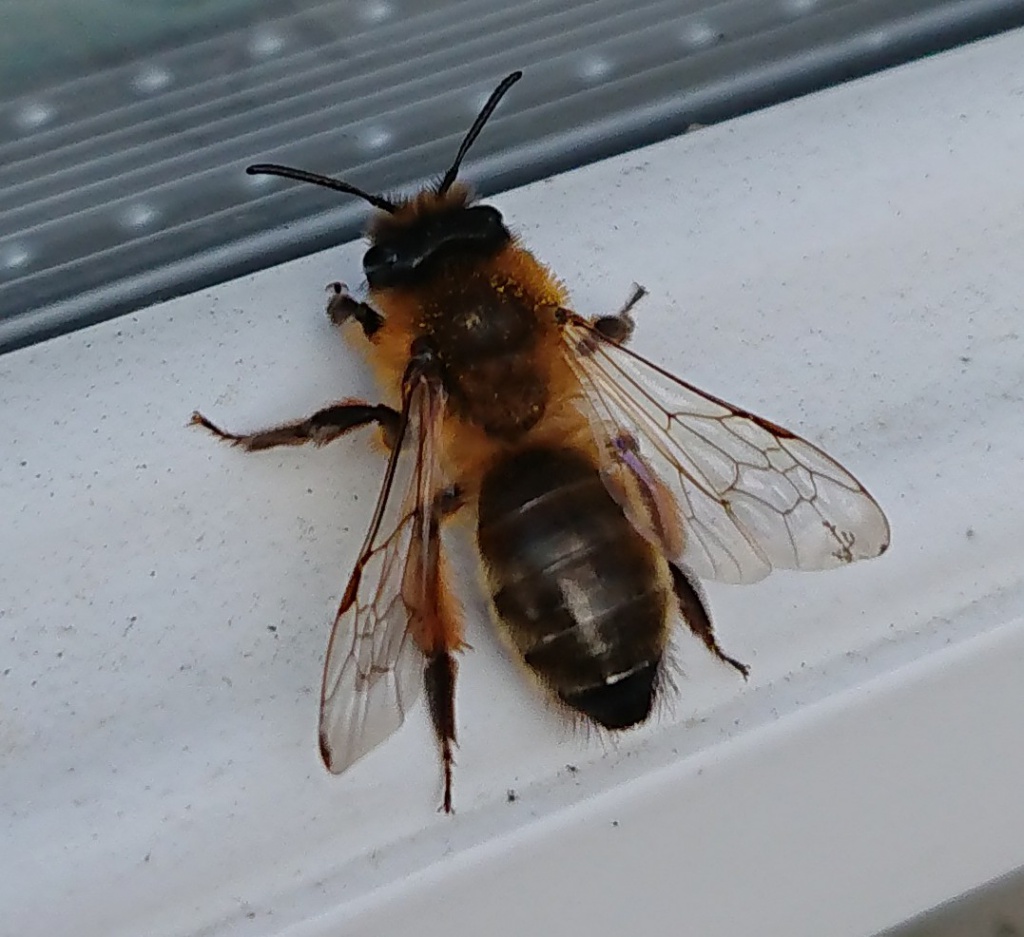
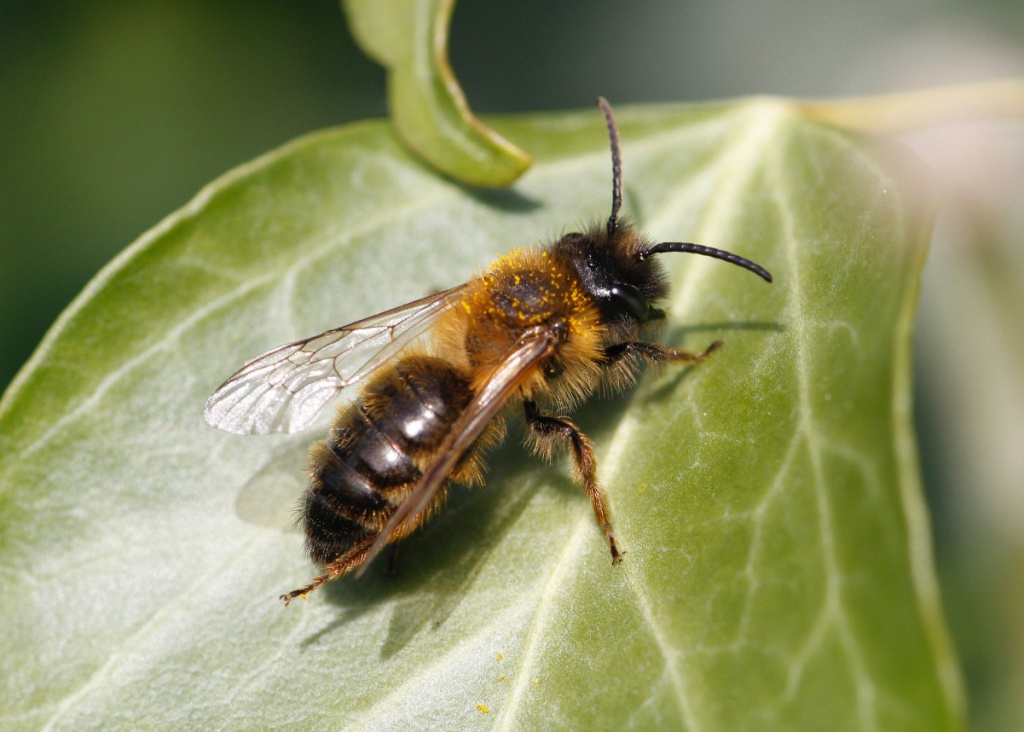
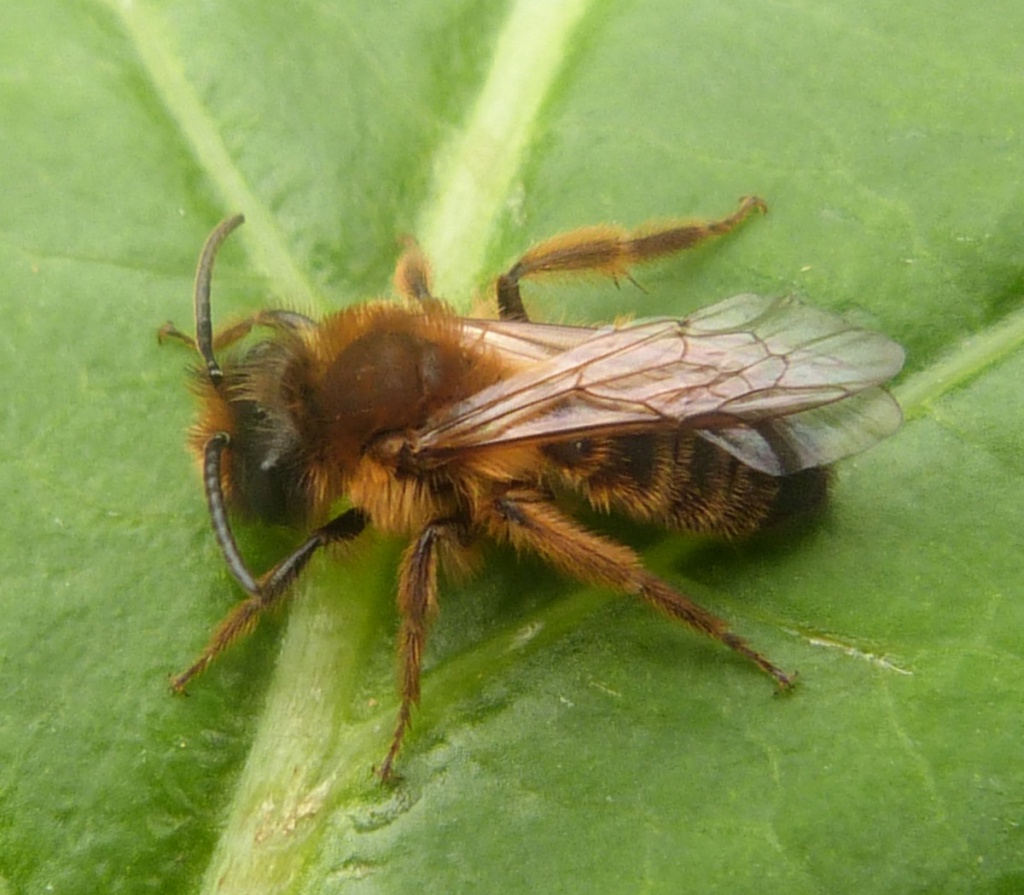
Males are mainly brown-haired with black hairs on the clypeus and up the sides of the face.
 females,
  males
males
- Black hairs on face
- Ginger hairs on top of thorax)
- Ginger hairs on side of thorax
- Wide pale brown hair bands on abdomen T1-4 (contrasting with the black-haired T5)
- Thick ginger pollen brush
- All black hairs at the tip of the abdomen
Good quality images are required showing the key ID features and should include a side image. Note that most solitary bees and wasps are challenging to identify and are seldom identifiable from photographs taken in the field. NatureSpot will accept records identified by a recognised local or national expert, or that have been identified via the BWARS’ Facebook page. If you have obtained this advice, please note the name of the person/organisation identifying the record in the ‘determiner’ field (e.g. ‘Stuart Roberts, BWARS Facebook’) and add the wording received to the comments box.
Areas with dry sandy soil such as heathland.
Males fly from March onwards and are one of the first species to appear in the Spring. Females may be found from April into July.
Fairly frequent and widespread in England and Wales.
Fairly frequent in Leicestershire and Rutland.
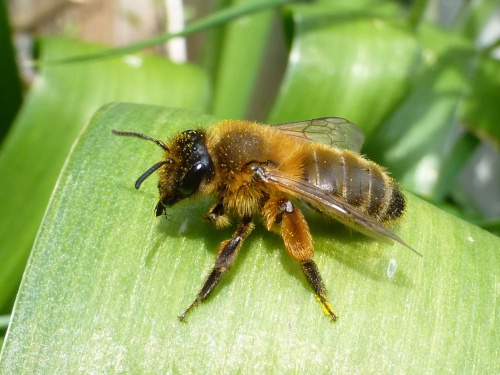 Kate Nightingale
Cropston garden
30 April 2016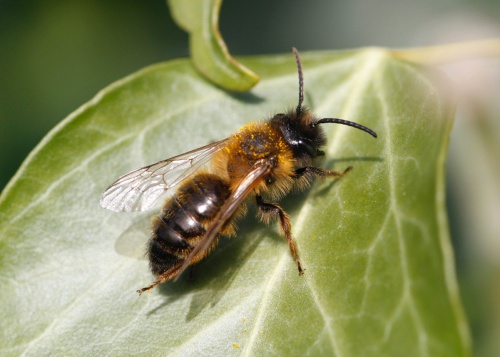 Matthew Berriman
George Henry Wood
10 April 2019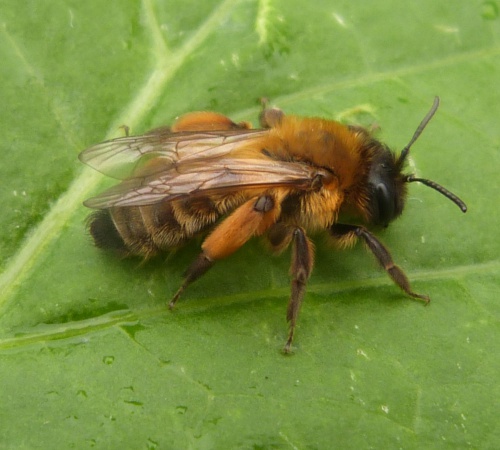 Graham Calow
Sapcote
20 May 2013
female - specimen examined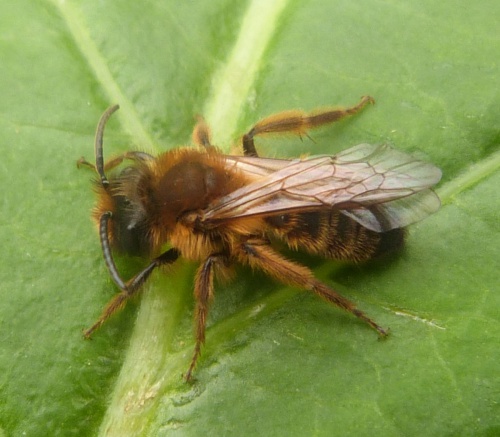 Graham Calow
Sapcote
20 May 2013
male - specimen examined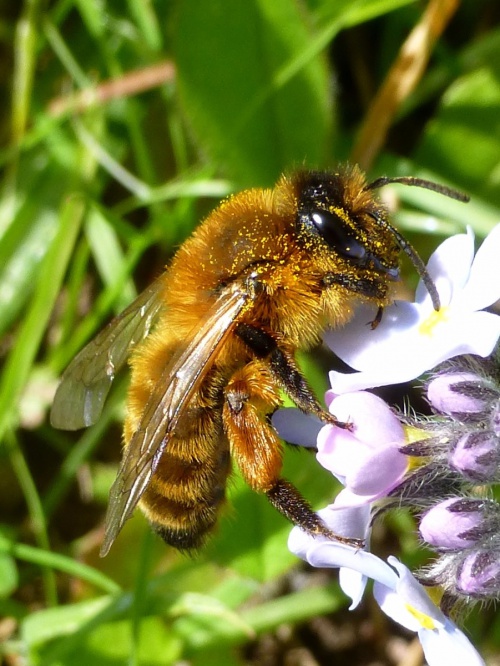 Kate Nightingale
Cropston garden
24 April 2016 Andy's Rutland
Empingham garden
01 April 2024 Matthew Berriman
Seaton
26 March 2020

Leicestershire & Rutland Map
Enter a town or village to see local records
MAP KEY:
Yellow squares = NBN records (all known data)
Coloured squares = NatureSpot records: 2025+ | 2020-2024 | pre-2020
UK Map
Additional images