Amphibious Bistort
Amphibious Bistort - Persicaria amphibia
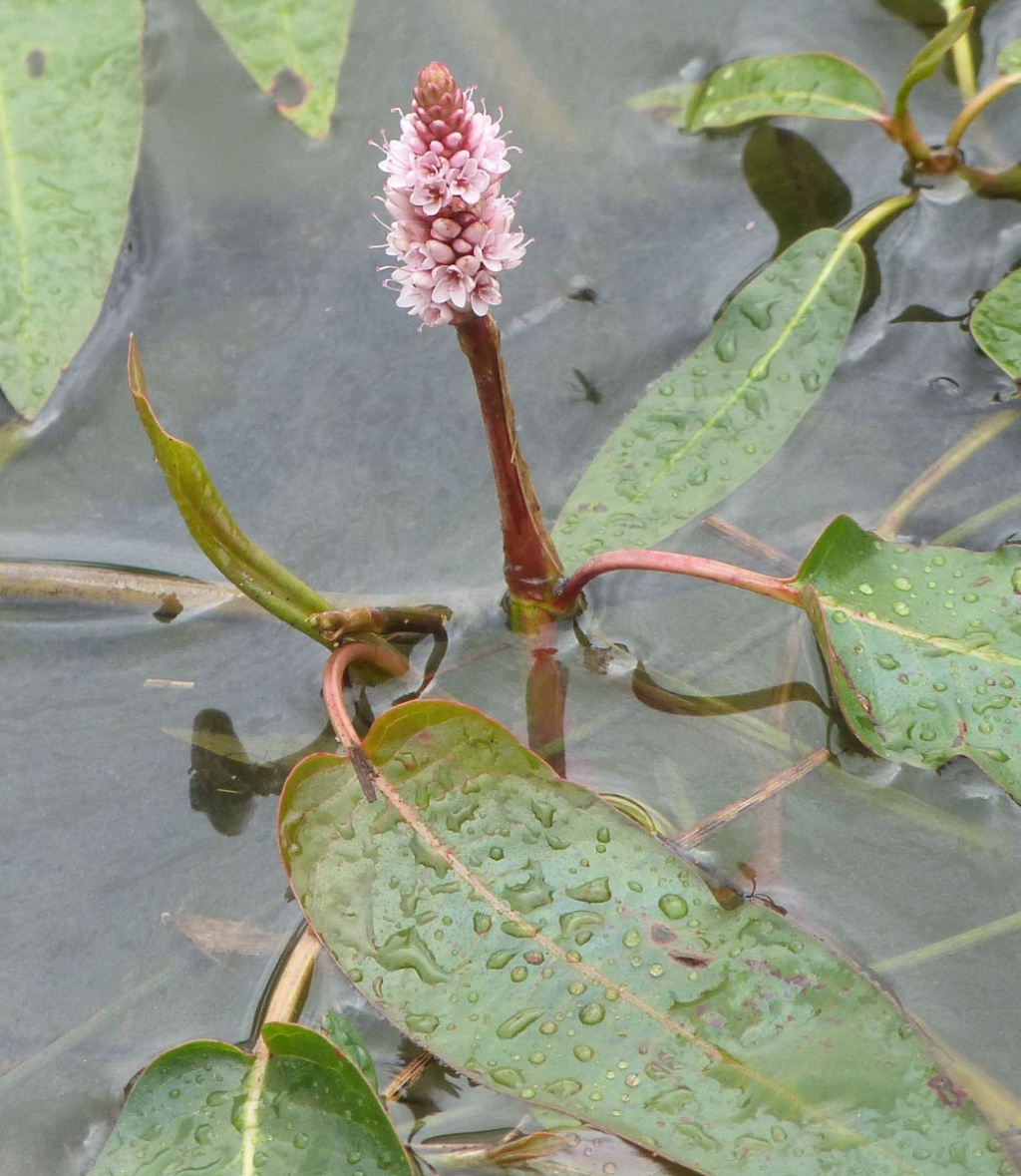
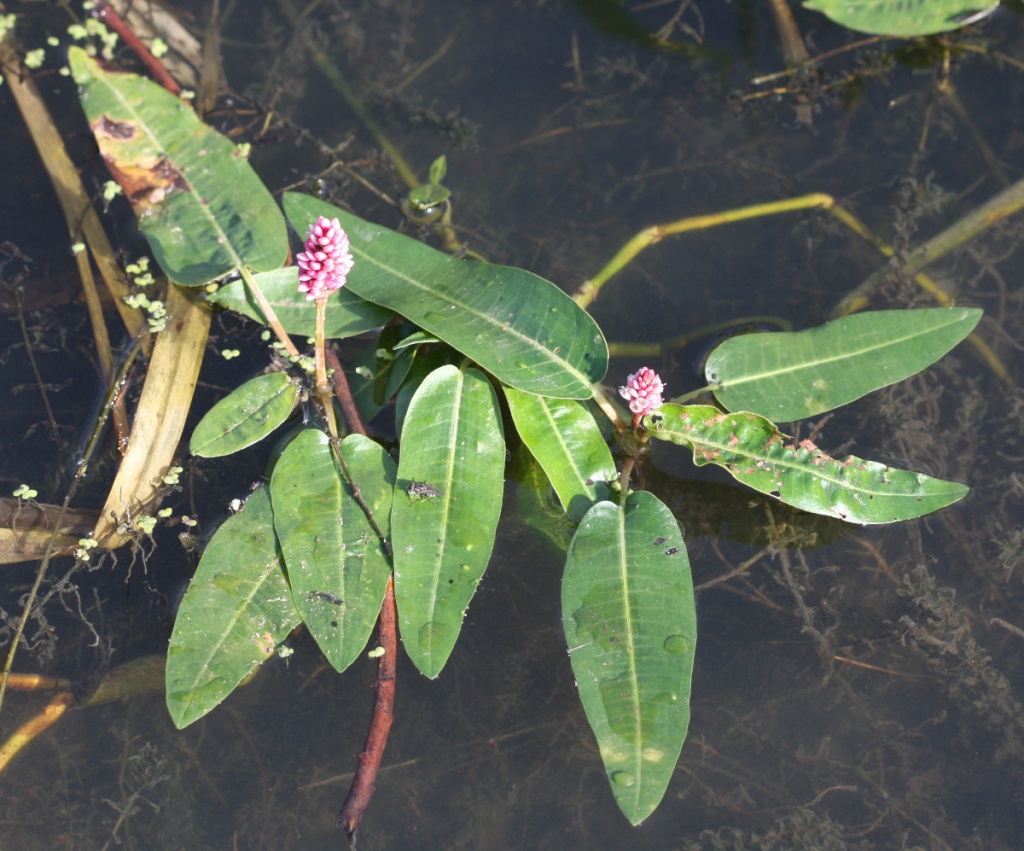
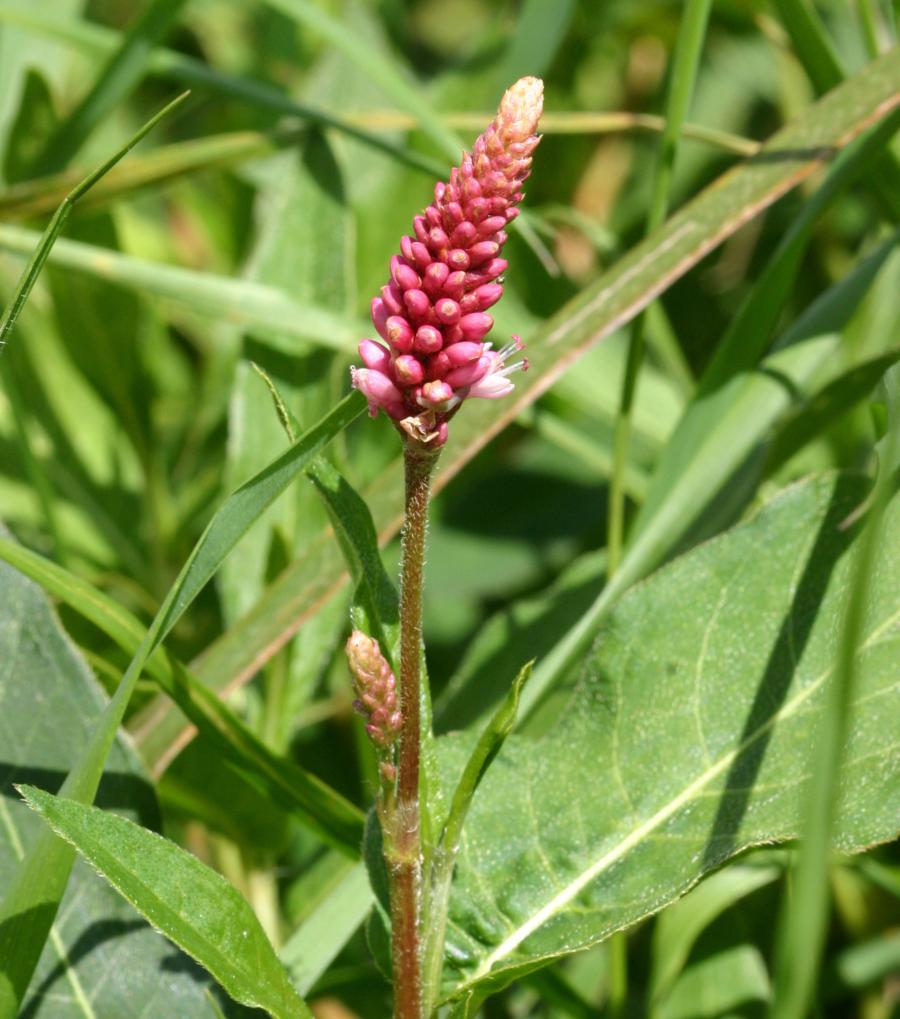
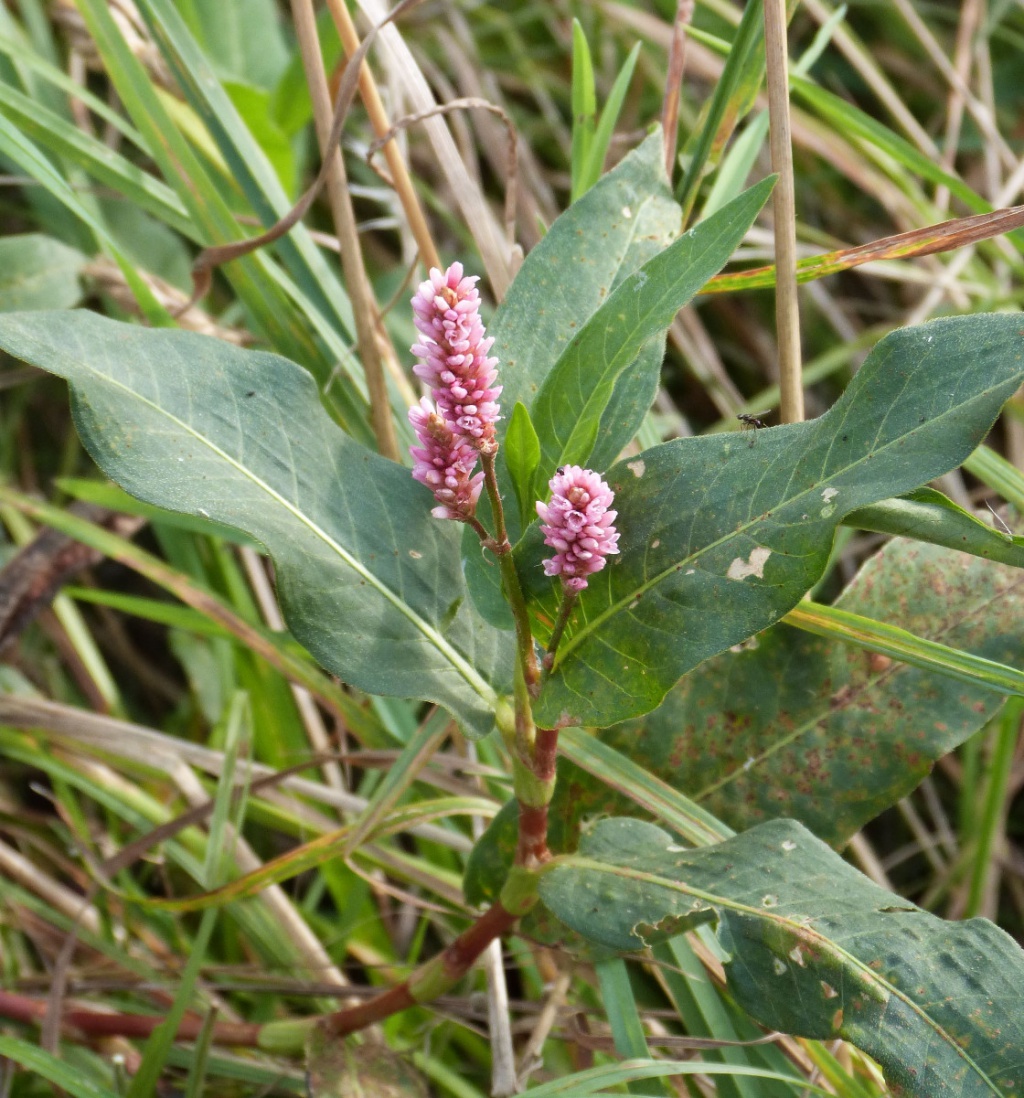
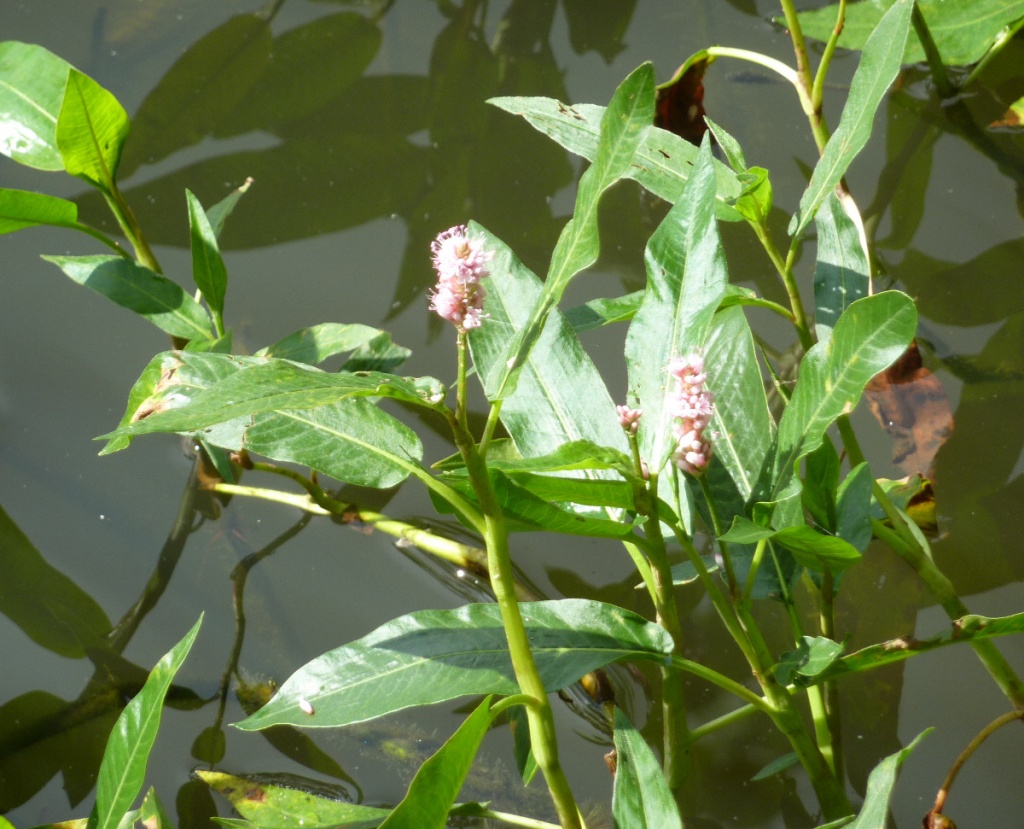
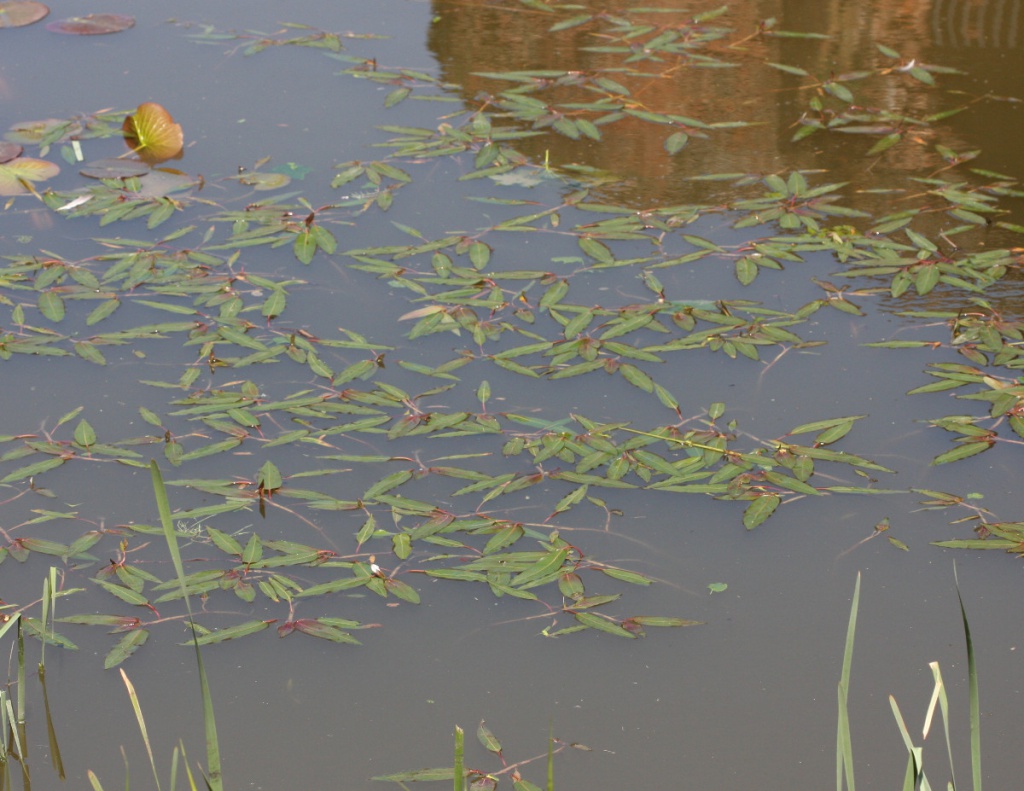
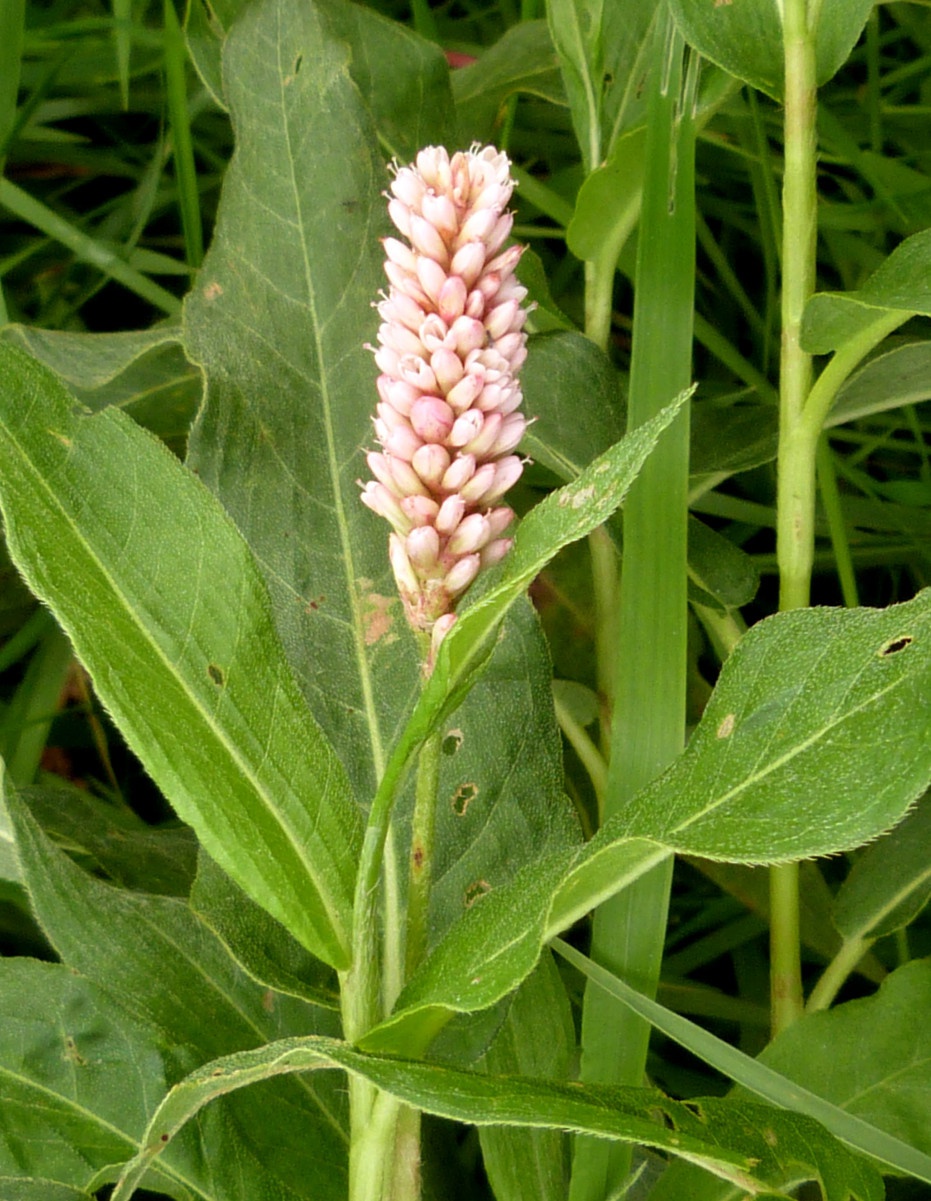
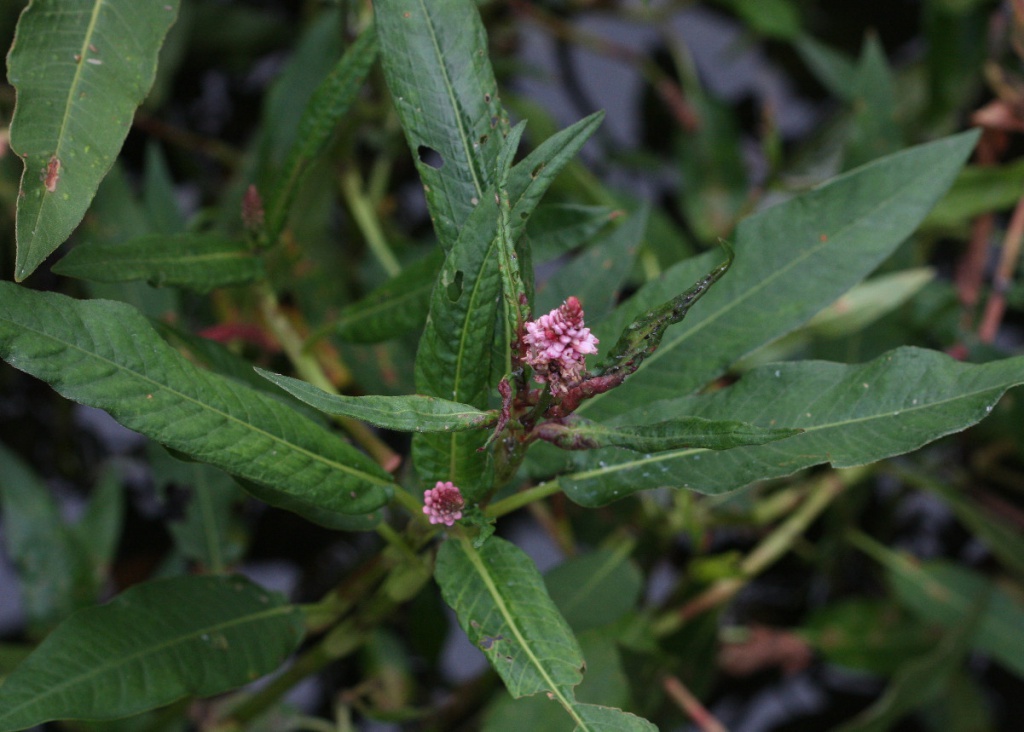
Short to medium height (max 60 cm). It is a creeping plant rooting at the nodes, and has both terrestrial and aquatic forms. Flowers deep pink in short, dense, broad and often solitary spikes.
When on dry land, can be confused with other Persicaria

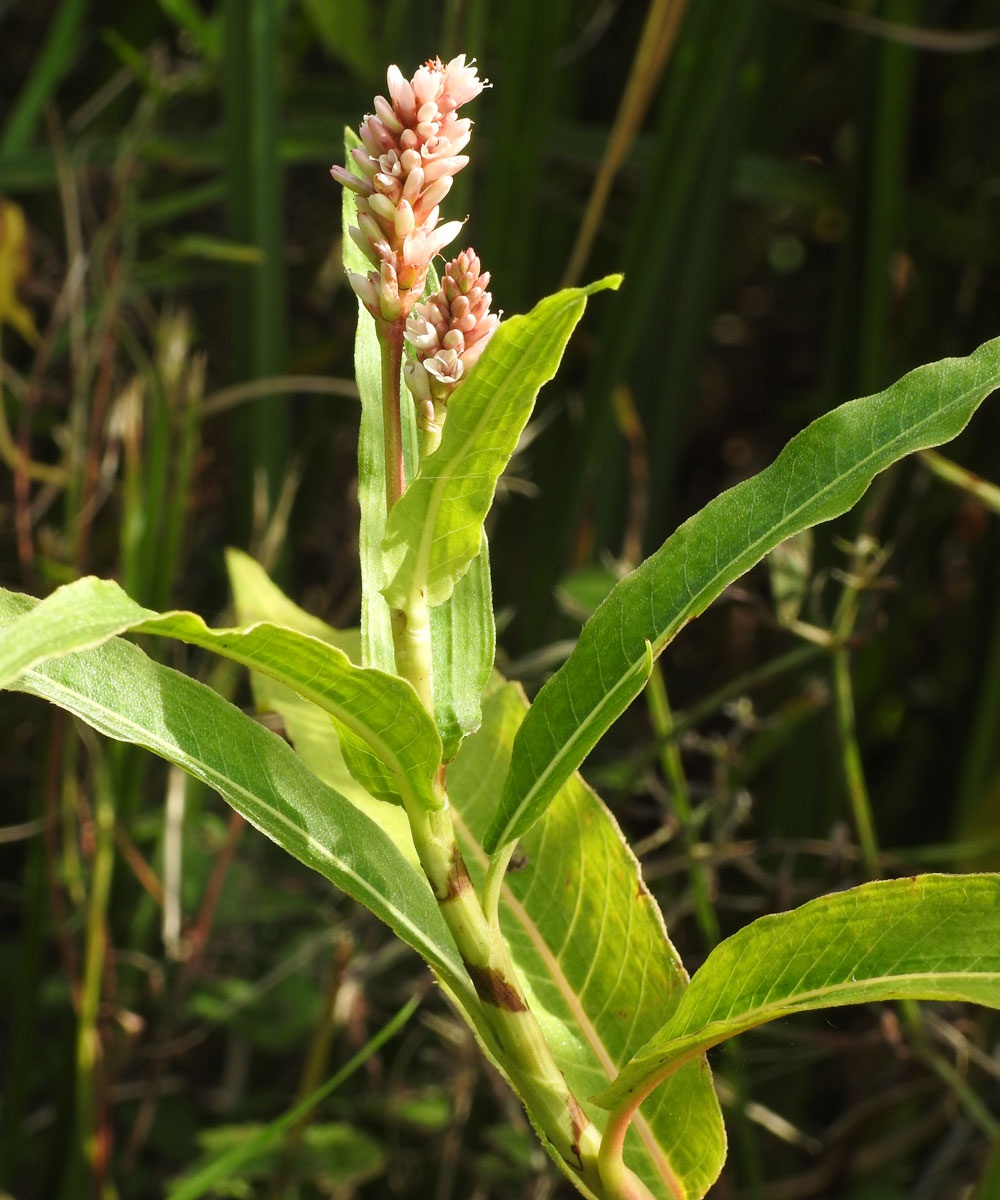
In flower, the stamens are exserted (stick out beyond the tepals). Often several flowerheads per stem. Leaves can be black-blotched; truncate to cordate at base
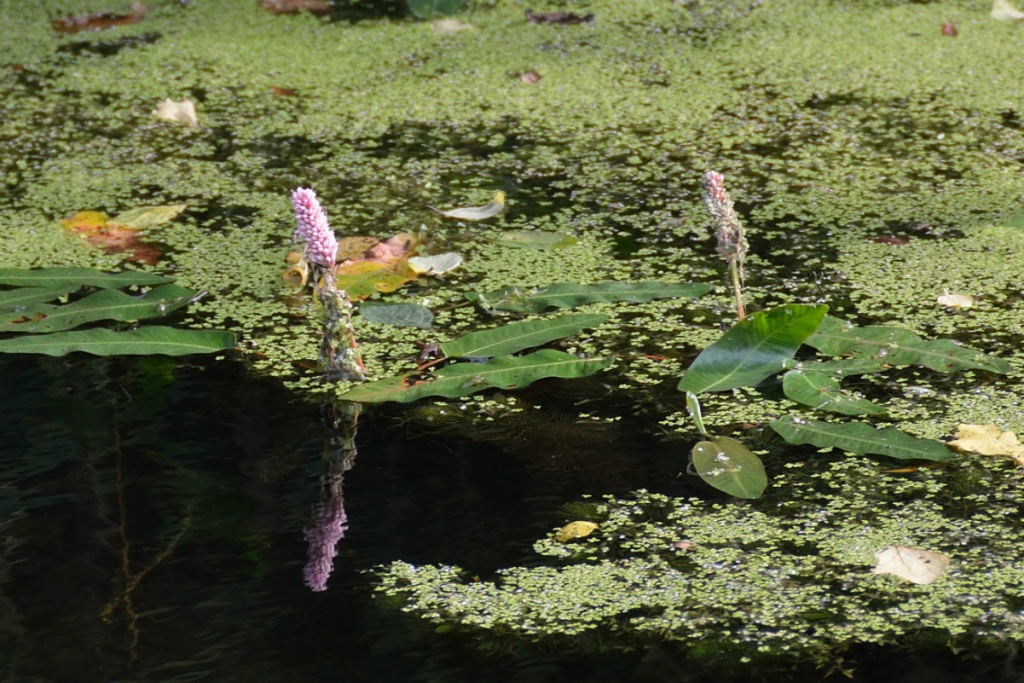
Photos in aquatic state, or in flower showing stamens
In or close to still or slow flowing water.
June to September.
Perennial.
Fairly frequent throughout Britain.
Fairly frequent in Leicestershire and Rutland. In the 1979 Flora survey of Leicestershire it was found in 200 of the 617 tetrads.
In the current Checklist (Jeeves, 2011) it is listed as Native, Locally Frequent
 Stanton Road Sapcote SP 4889 9377 (taken 31.7.2006).JPG) Graham Calow
Graham Calow
Sapcote
31 July 2006 Graham Calow
Billington Rough, Elmesthorpe
16 June 2016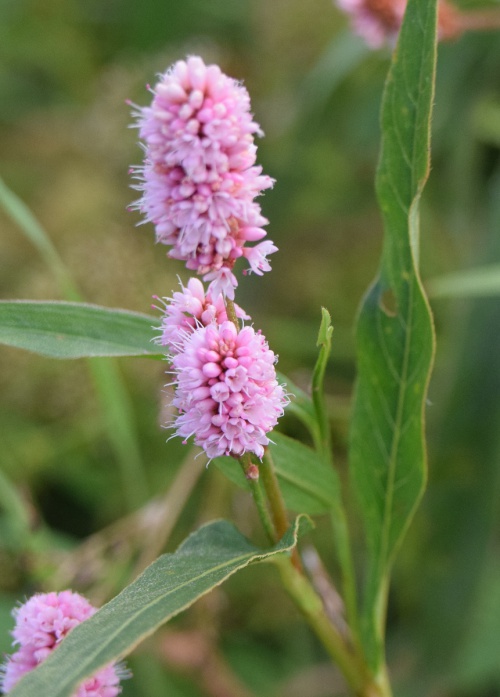 Steve Mathers
Grantham Canal
20 August 2016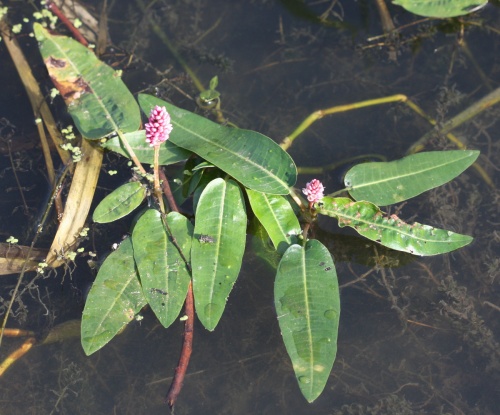 David Nicholls
Watermead Country Park
06 September 2012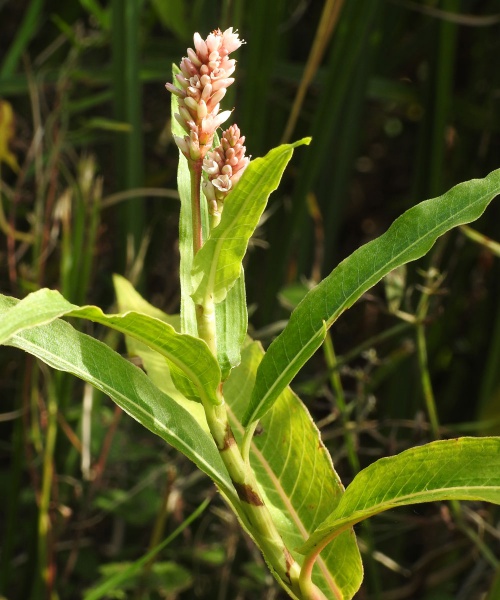 David Gould
G.U. Canal, Glen Parva, Leicester.
25 August 2017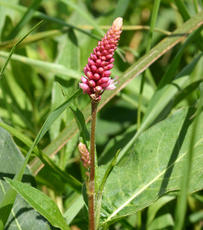 David Nicholls
Thornton Reservoir
07 August 2008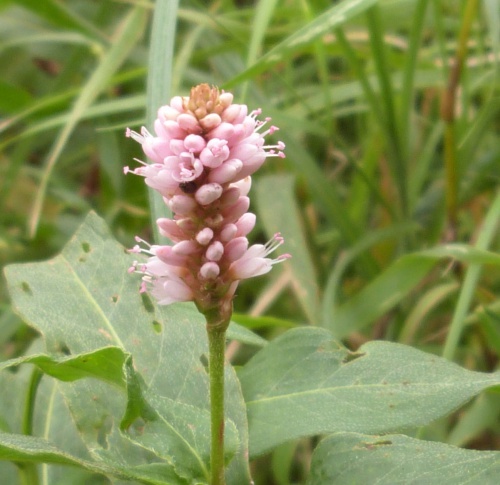 Graham Calow
Foot of Croft Hill
29 August 2014
 Stanton Road Sapcote SP 4889 9377 (taken 31.7.2006).JPG)


Leicestershire & Rutland Map
Enter a town or village to see local records
MAP KEY:
Yellow squares = NBN records (all known data)
Coloured squares = NatureSpot records: 2025+ | 2020-2024 | pre-2020
UK Map
Additional images






All NatureSpot records
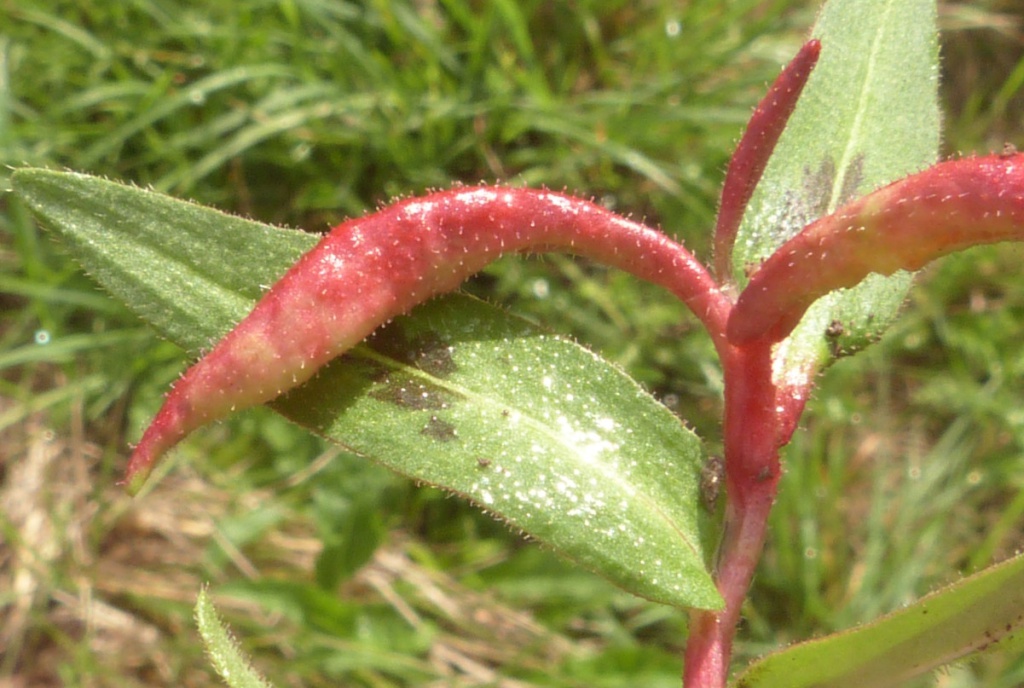
Wachtliella persicariae
The larva of the gall midge Wachtliella persicariae causes galls to form on various plants of the Polygonaceae family including Amphibious Bistort and Redshank. The gall takes the form of marginal rolls, usually on both sides of the leaf which become markedly thickened and often spirally or otherwise contorted. Often several leaves at the shoot tip are affected.
Calybites phasianipennella
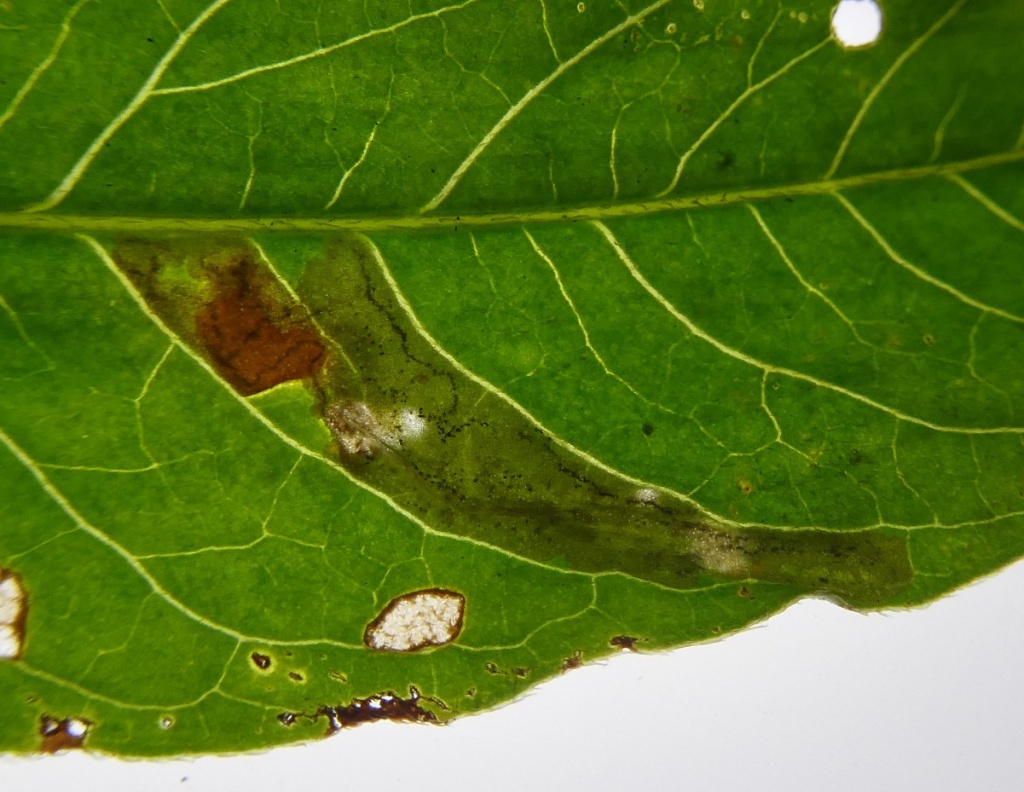
The larva of the moth Calybites phasianipennella mines the leaves of various plants such as Dock species, Loosestrife, Water-pepper, Redshank and Black Bindweed. An initial gallery leads to a blotch; later instars leaves the mine and feeds inside a cone-shaped leaf-roll, made by cutting a strip out of the leaf the leaf alongside the midrib.