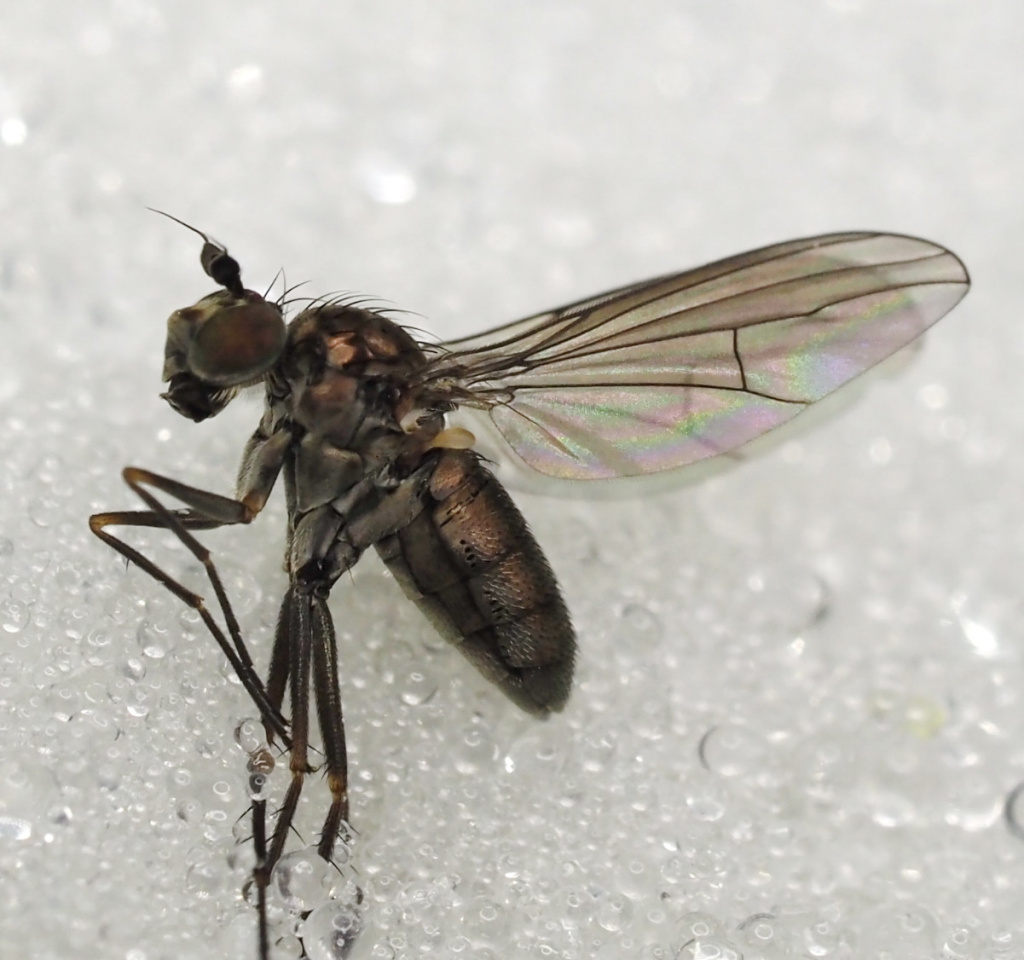
Syntormon denticulatum
Syntormon denticulatum
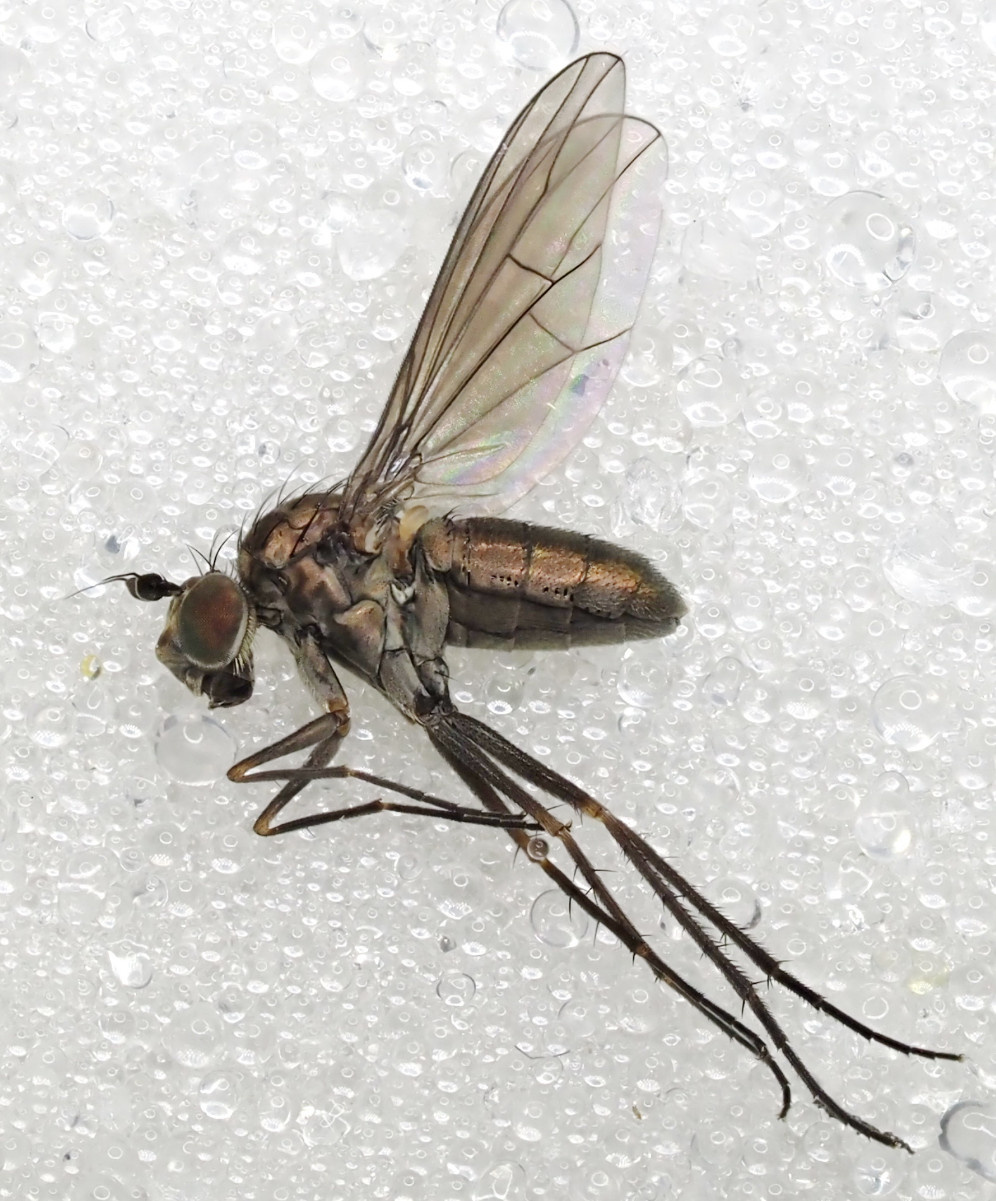
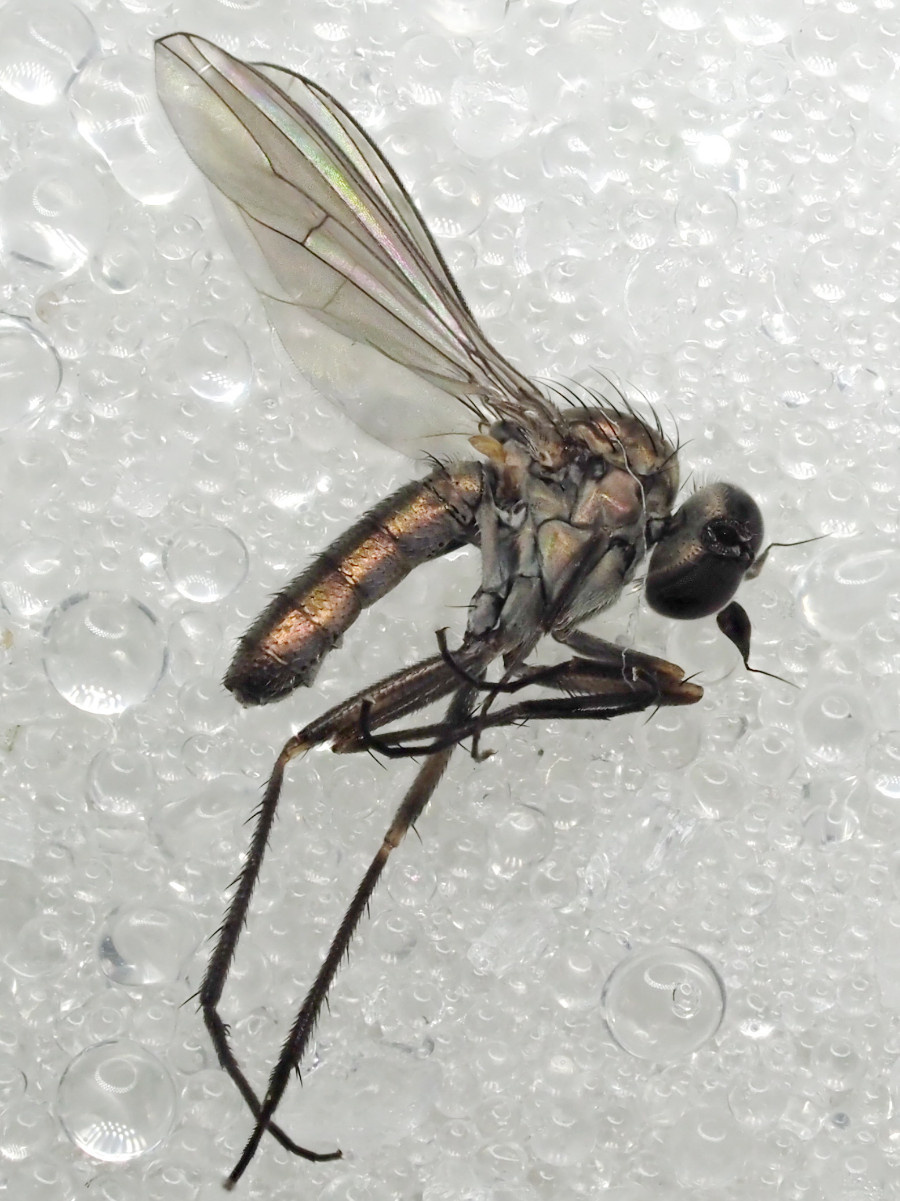
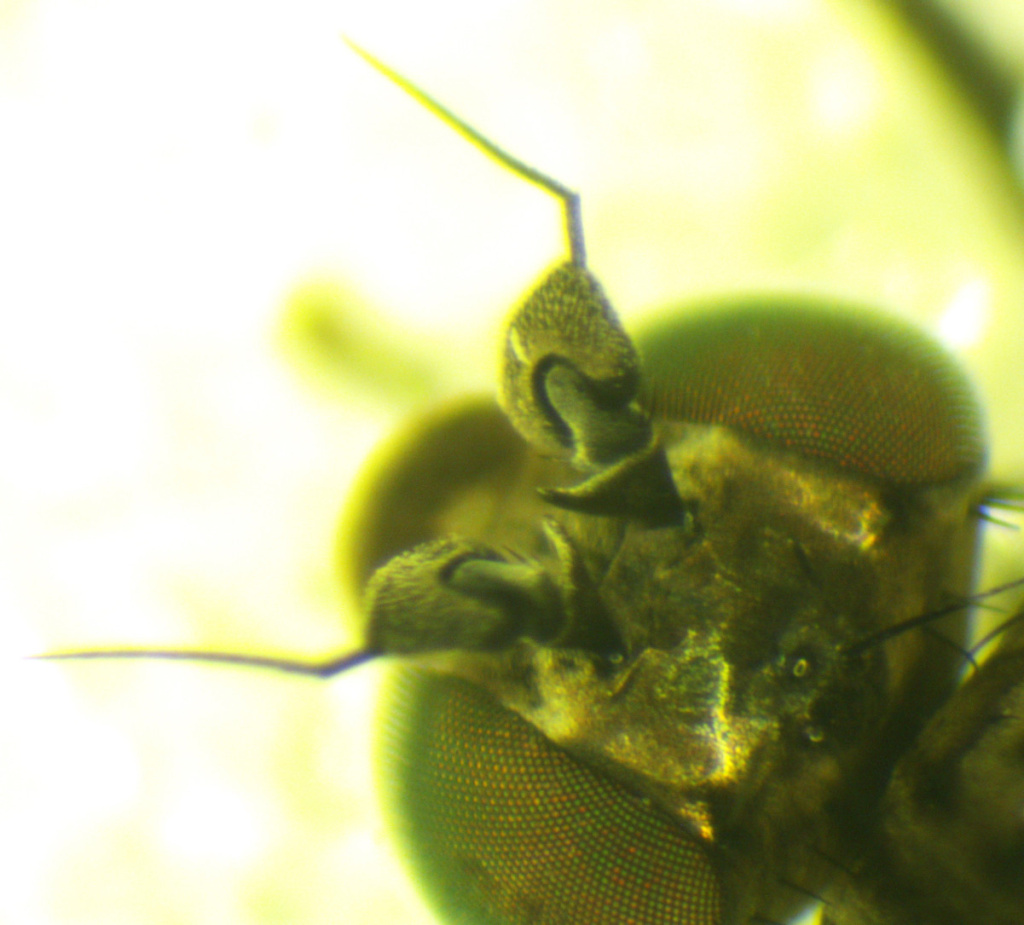
3.5-4.5mm. This small wetland fly has a brassy body and typical dolichopid long legs. The Syntormon genus can be recognised by the thumb-like projection on the 2nd antennal segment (see image below). S. denticulatum has all dark antennae with the 3rd segment broadly triangular and with the arista attached at the tip. The front femora are dark, though maybe yellow just at the apices. The coxa are pale and the front coxa has a covering of all-white hairs. See the ID checklist below for a detailed list of features.

- 3.5-4.5mm
- 2nd antennal segment with ‘thumb’ (see image below)
- Antennae all dark
- 3rd antennal segment triangular with arista attached at the tip
- 1 row of acrostichals
- Face bare
- Coxa pale. Front coxa with all white hairs
- Vein m-cu of similar length to vein m (from the m-cu junction to wing margin)
- Frons brown/brassy
Ponds and wetland edges.
January - November
Common and widespread in England and Wales.
Reasonably common.
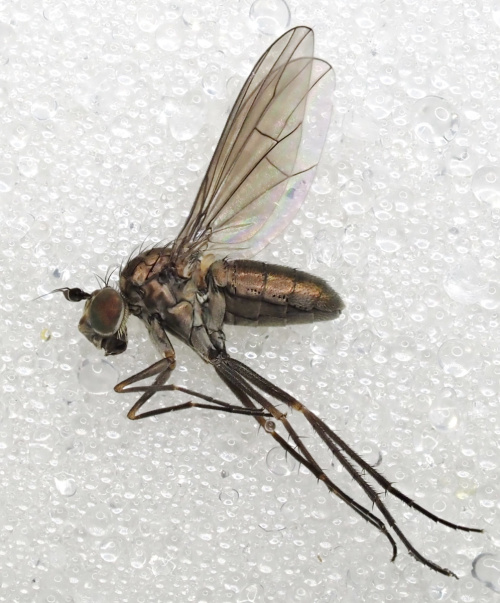 David Nicholls
Castle Hill Country Park
27 February 2025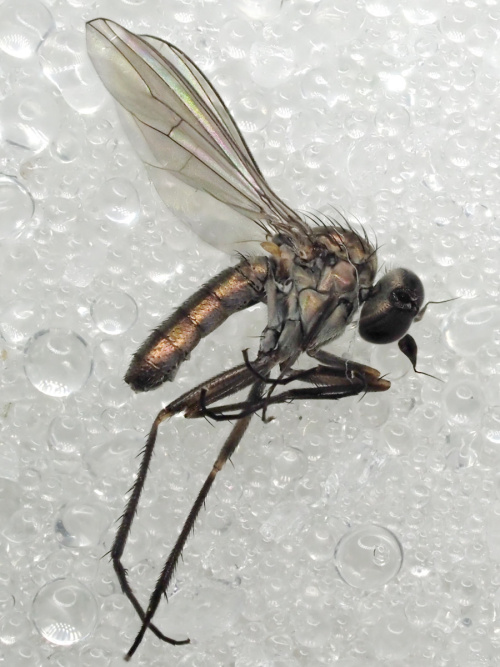 David Nicholls
Ratby, field nr Wirlybones
03 March 2025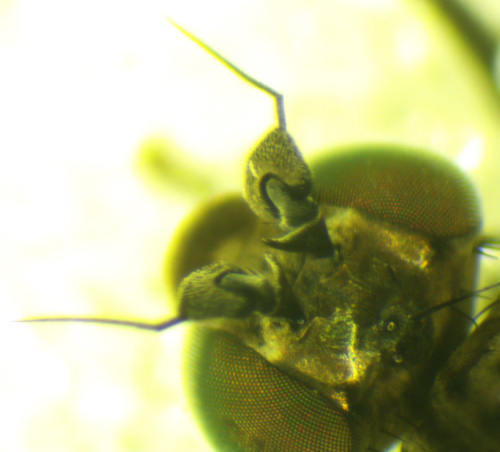 David Nicholls
Castle Hill Country Park
27 February 2025
2nd antennal segment with 'thumb'
Leicestershire & Rutland Map
Enter a town or village to see local records
MAP KEY:
Yellow squares = NBN records (all known data)
Coloured squares = NatureSpot records: 2025+ | 2020-2024 | pre-2020
UK Map
Additional images