Silk-button Gall
Silk-button Gall - Neuroterus numismalis f. agamic
Neuroterus numismalis is a gall wasp that has two generations per year.
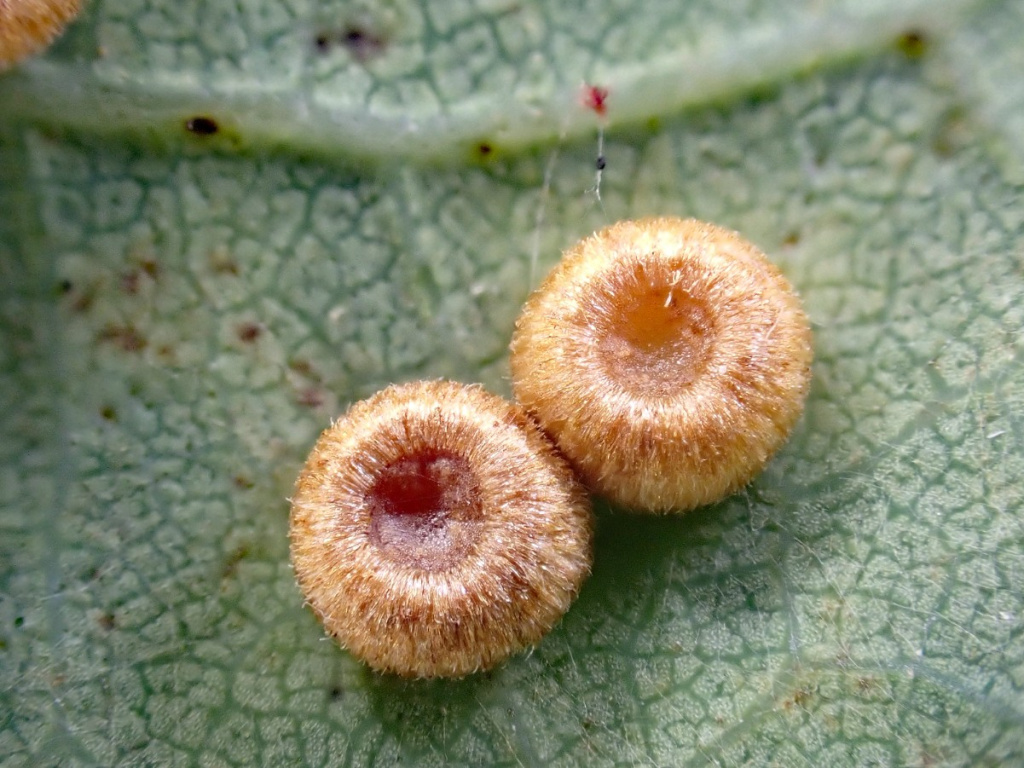
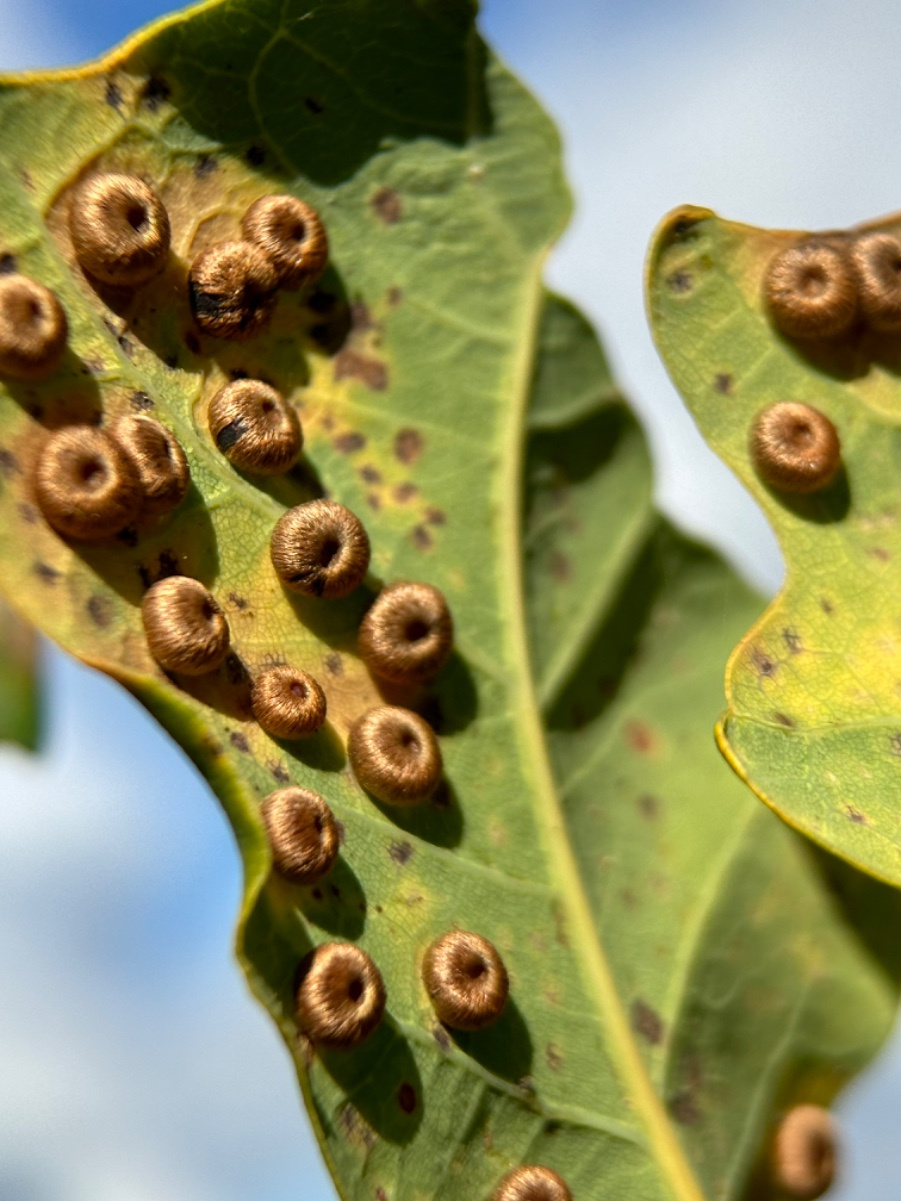
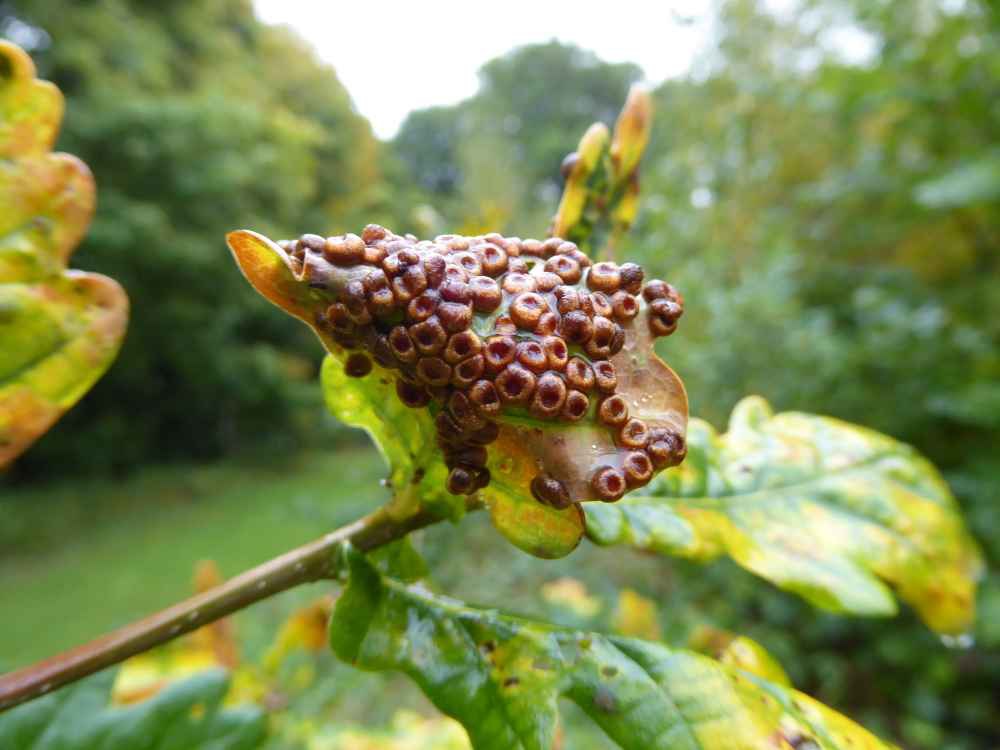
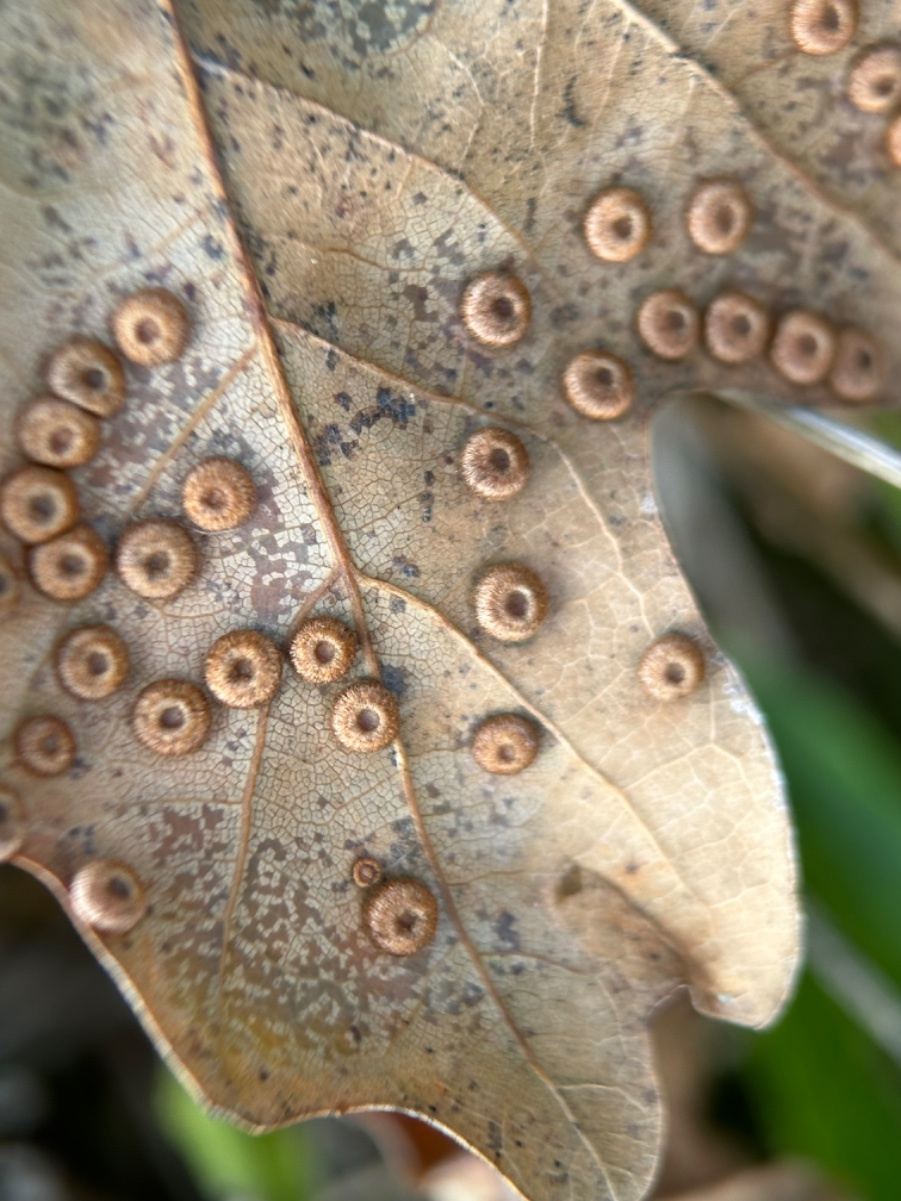
The agamic generation causes Silk-button Galls on the underside of Oak leaves. These are small (up to 3mm across) and look like a doughnut or a thick, rolled-edge disk with gold hairs and a deep central depression. There is no structure on the top of the leaf but it is sometimes discoloured. The galls can be extremely abundant.

Under "Species", please select "f. agamic" or "f. sexual" as appropriate. Provide photographs of the gall on the host plant, and note the host species.
English, Sessile and Turkey Oaks.
The Silk-button Galls are the agamic generation and can be seen from August to October, until the leaves fall in autumn. Each gall contains a single cell holding one wasp. The larva will mature in August but remain in the gall on the ground throughout the winter, emerging the following year from February to April.
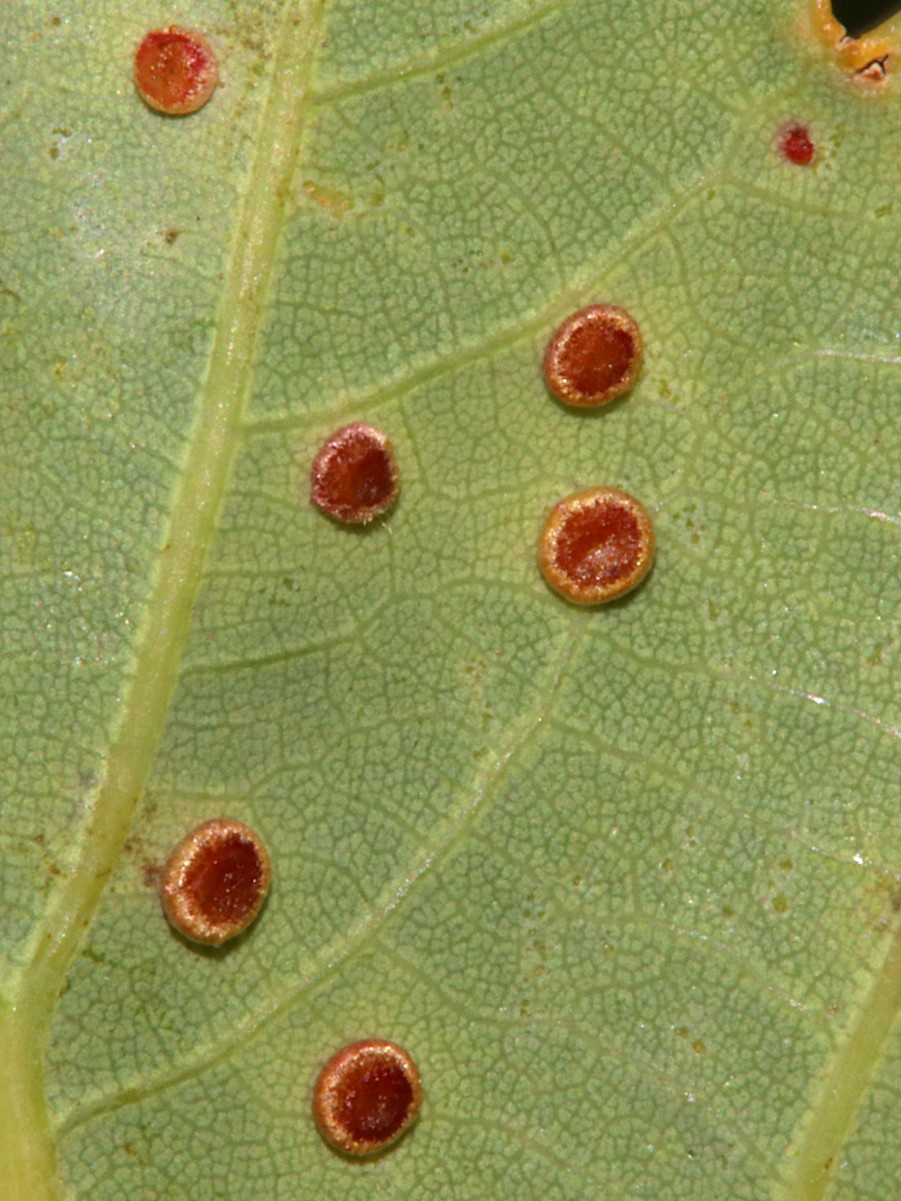
The females that emerge in spring lay their unfertilised eggs on Oak leaves, causing the Blister Galls of the sexual generation. Male and female wasps emerge from the Blister Galls in mid-summer and their fertilised eggs result in the next generation of Silk-button Galls.
Common and widespread in Britain.
Common in Leicestershire and Rutland.
See British Plant Galls (Redfern & Shirley, 2023)
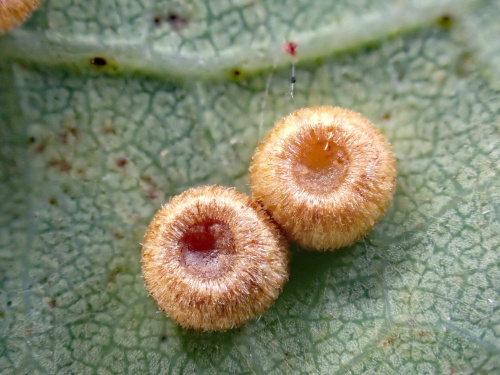 Mark Skevington
Burbage Common
14 September 2024
on Oak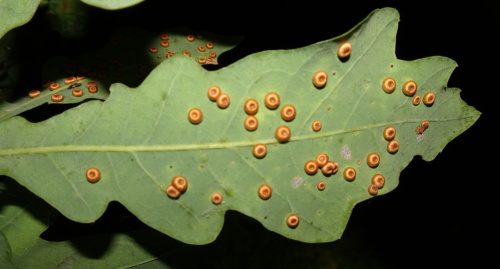 Hazel Graves
Ulverscroft Valley
16 September 2024
on Oak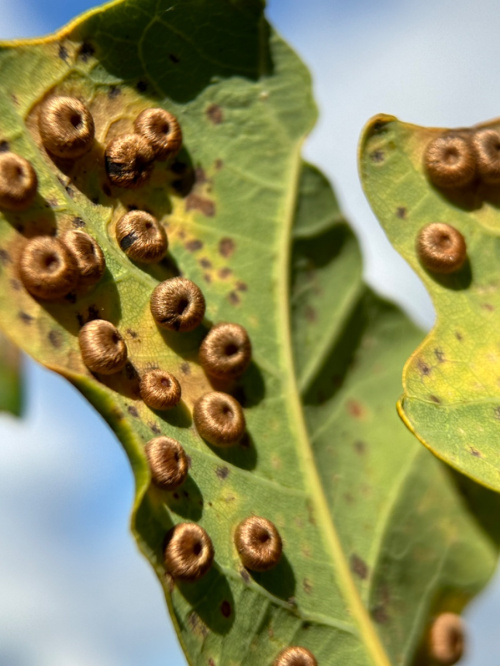 CAPochin
Evington Village Green
03 October 2024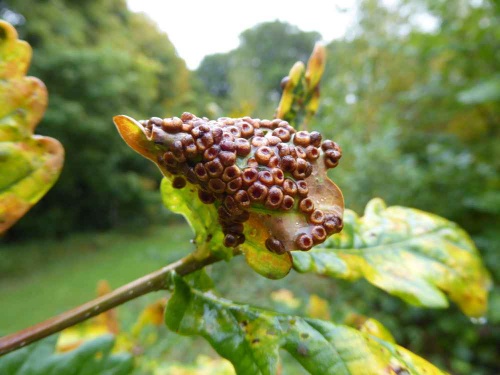 Donna Oxbrough
Loughborough
04 October 2020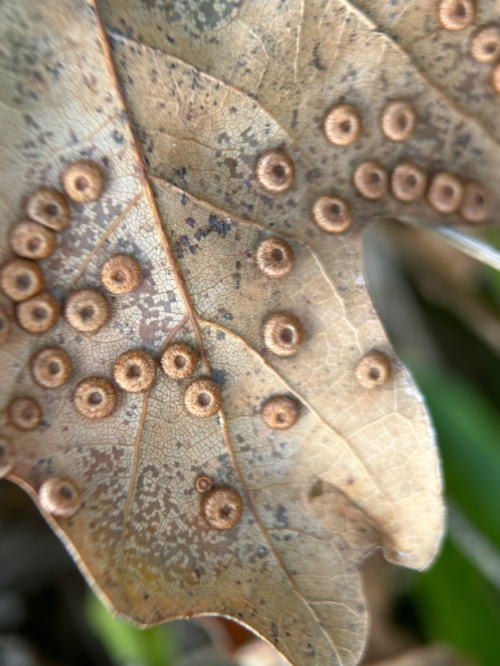 CAPochin
Billesdon Woodland Pool
10 October 2024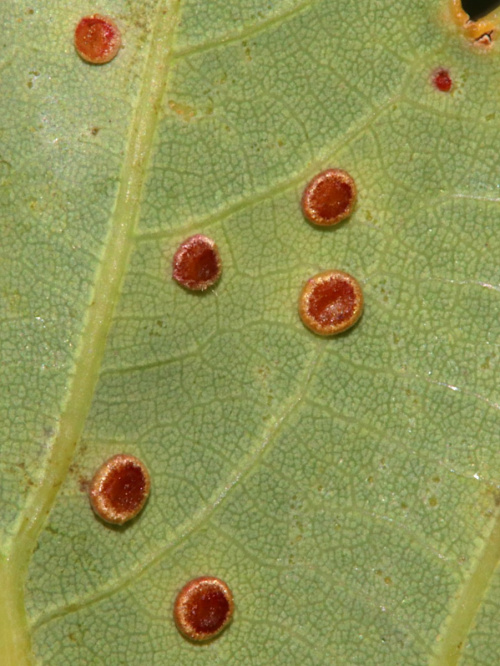 Mike Higgott
Windmill Hill, Woodhouse Eaves
23 July 2024
Young galls
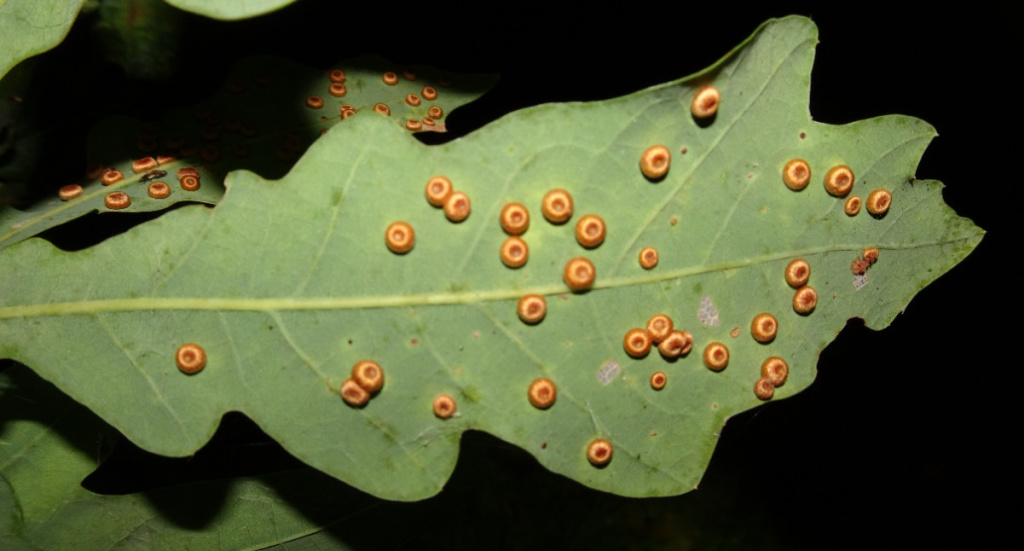
Leicestershire & Rutland Map
Enter a town or village to see local records
MAP KEY:
Yellow squares = NBN records (all known data)
Coloured squares = NatureSpot records: 2025+ | 2020-2024 | pre-2020
UK Map
Additional images
No additional images available for this species.