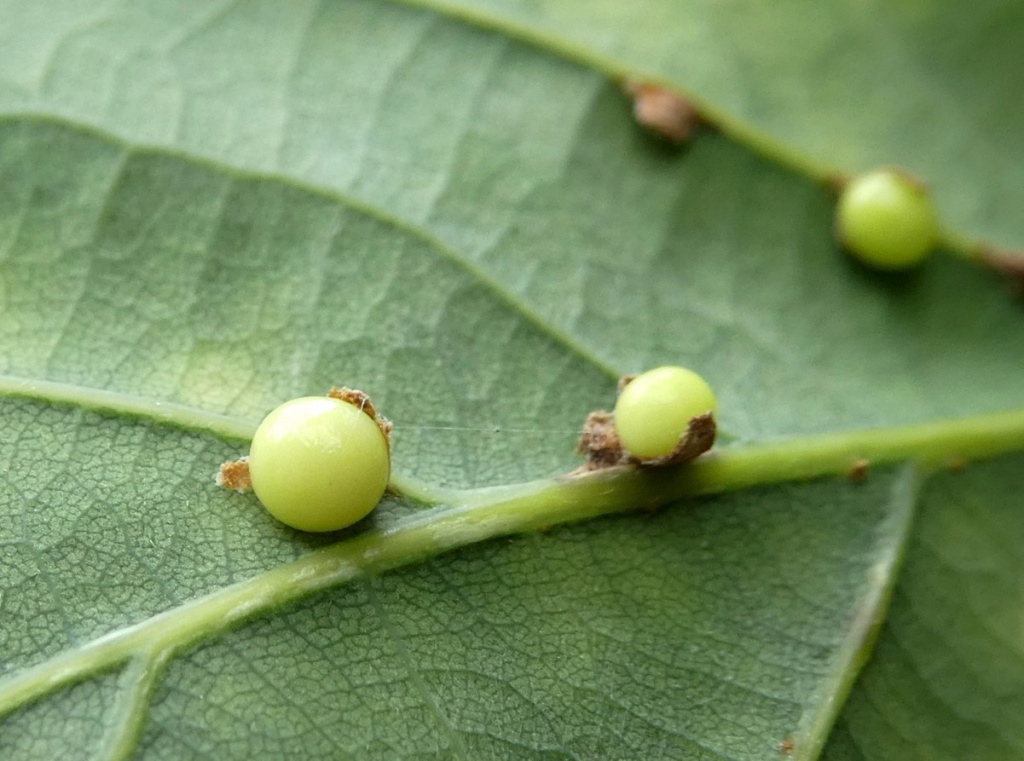
Oyster Gall
Oyster Gall - Neuroterus anthracinus f. agamic
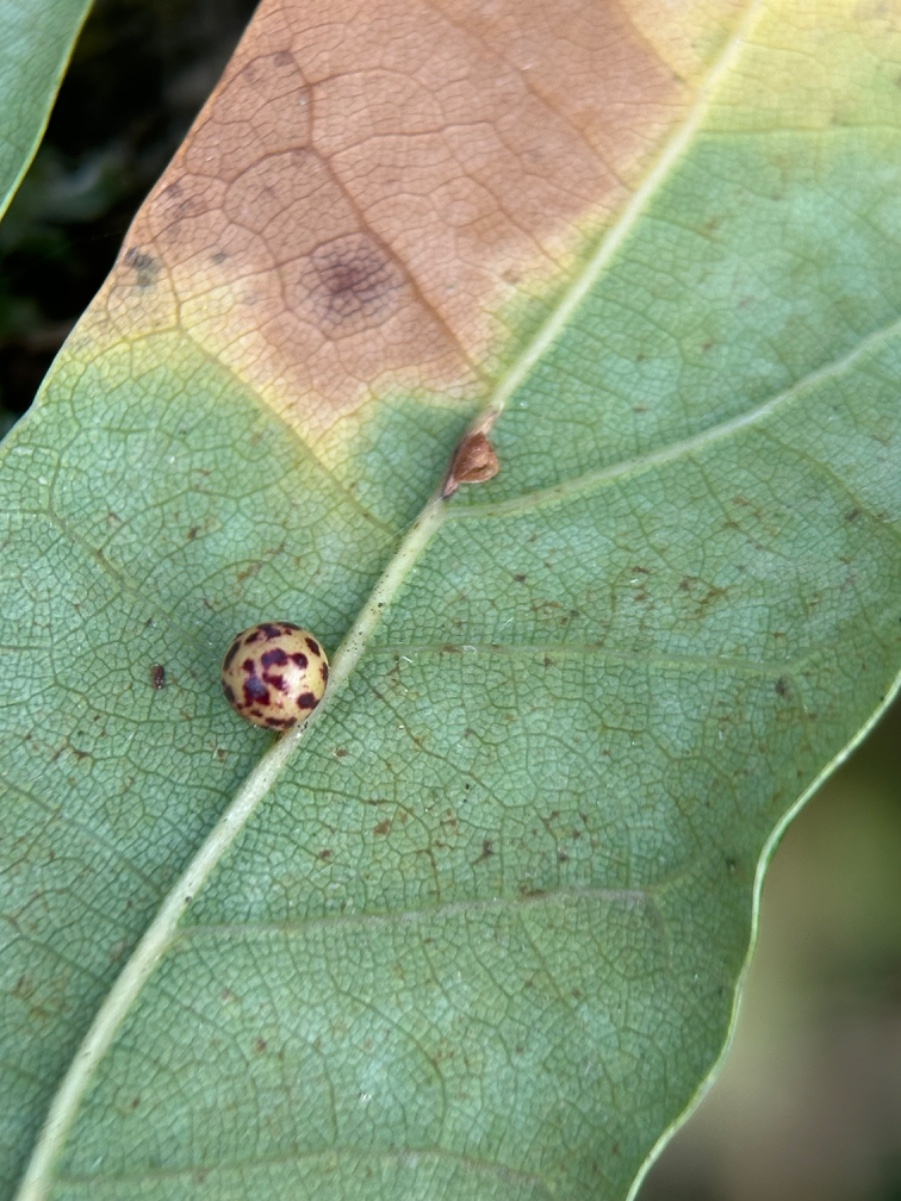
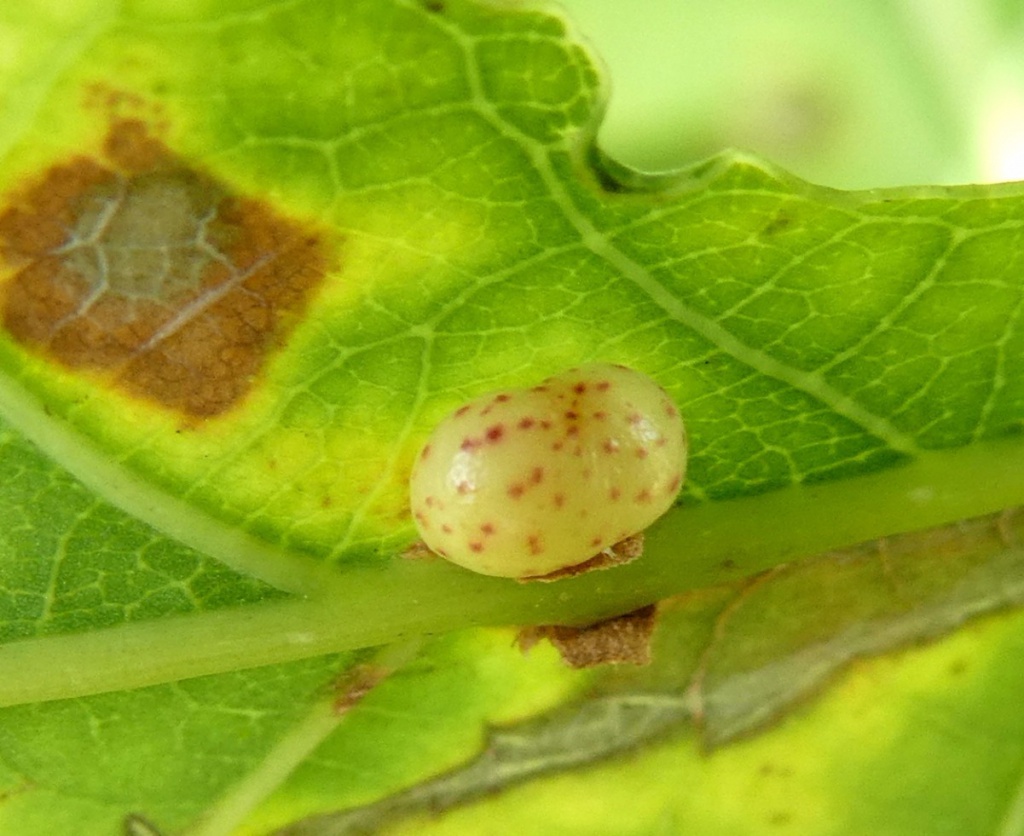
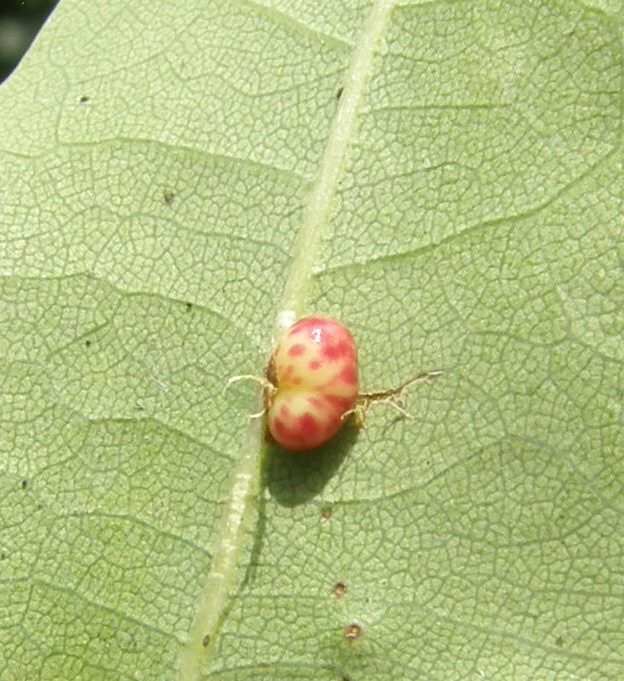
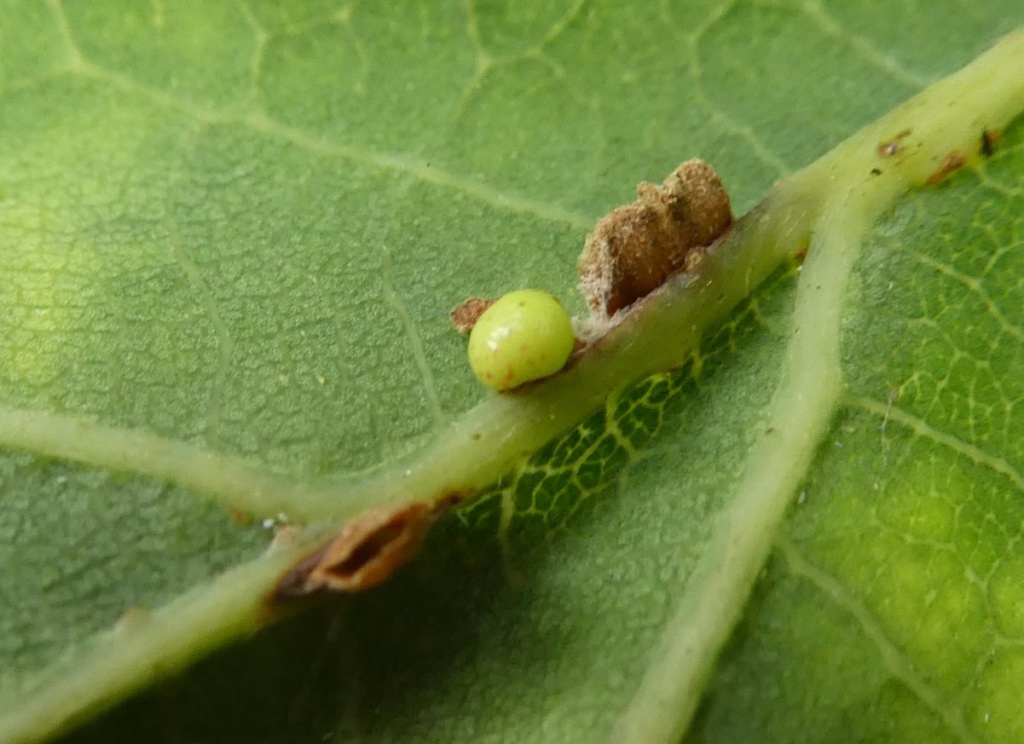
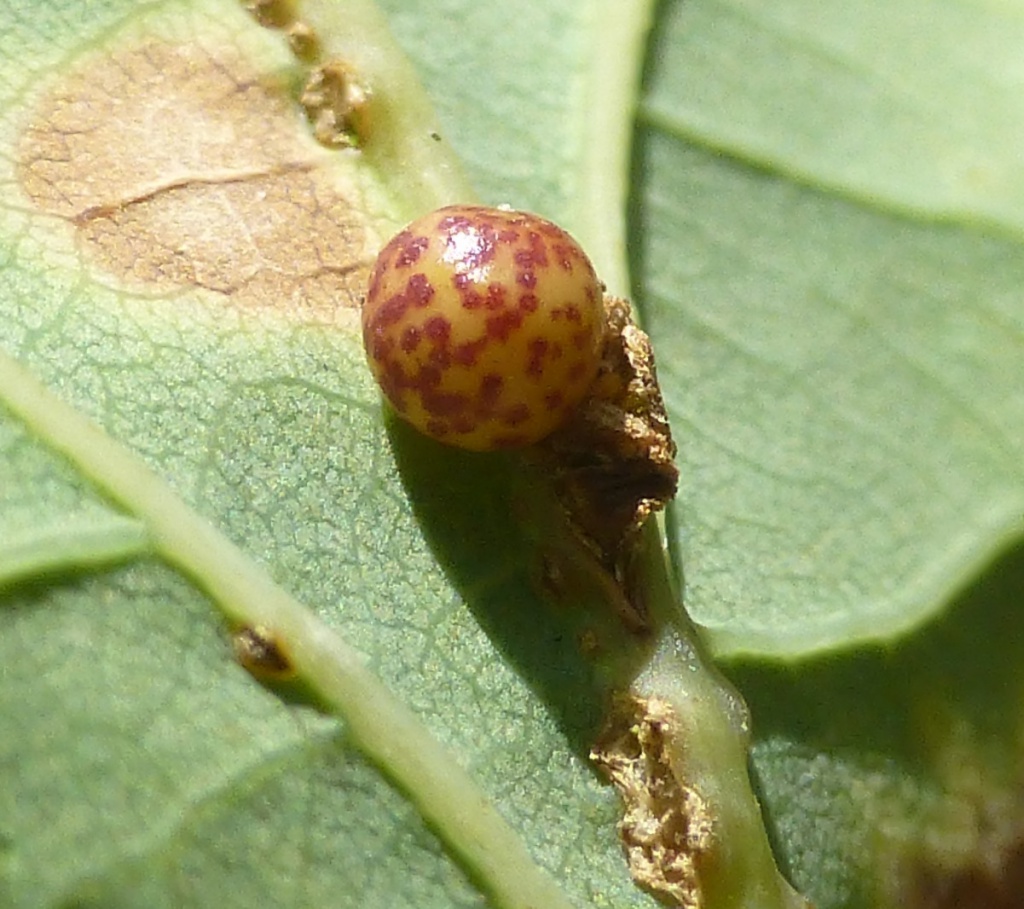
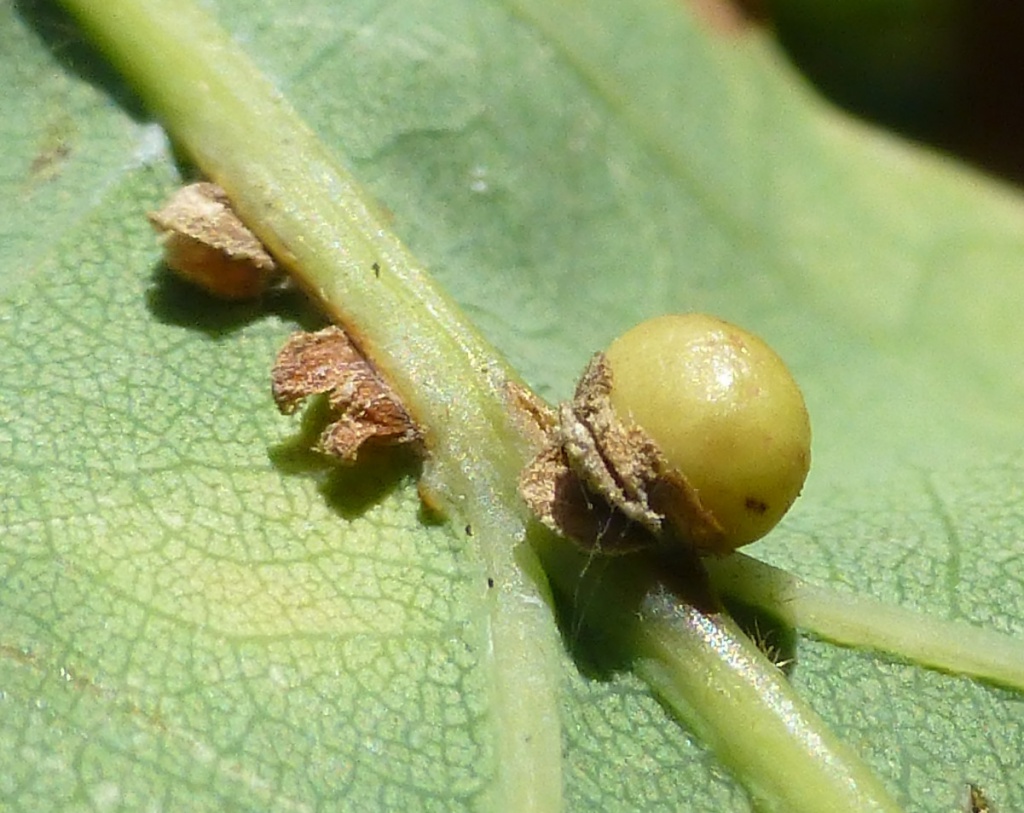
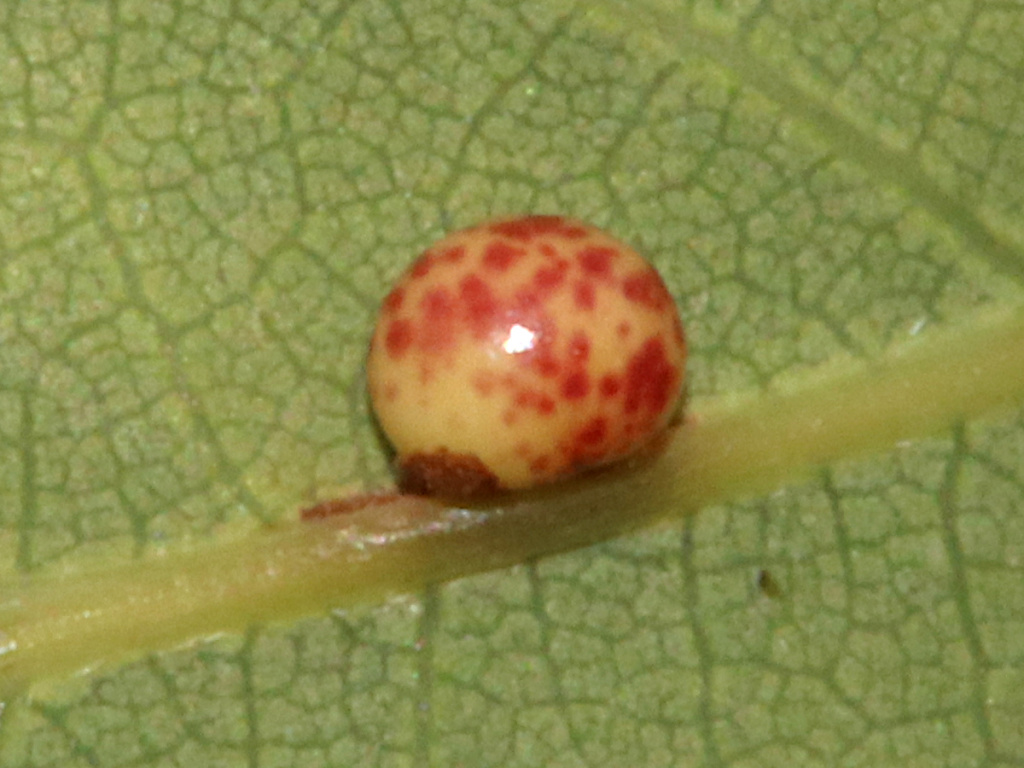
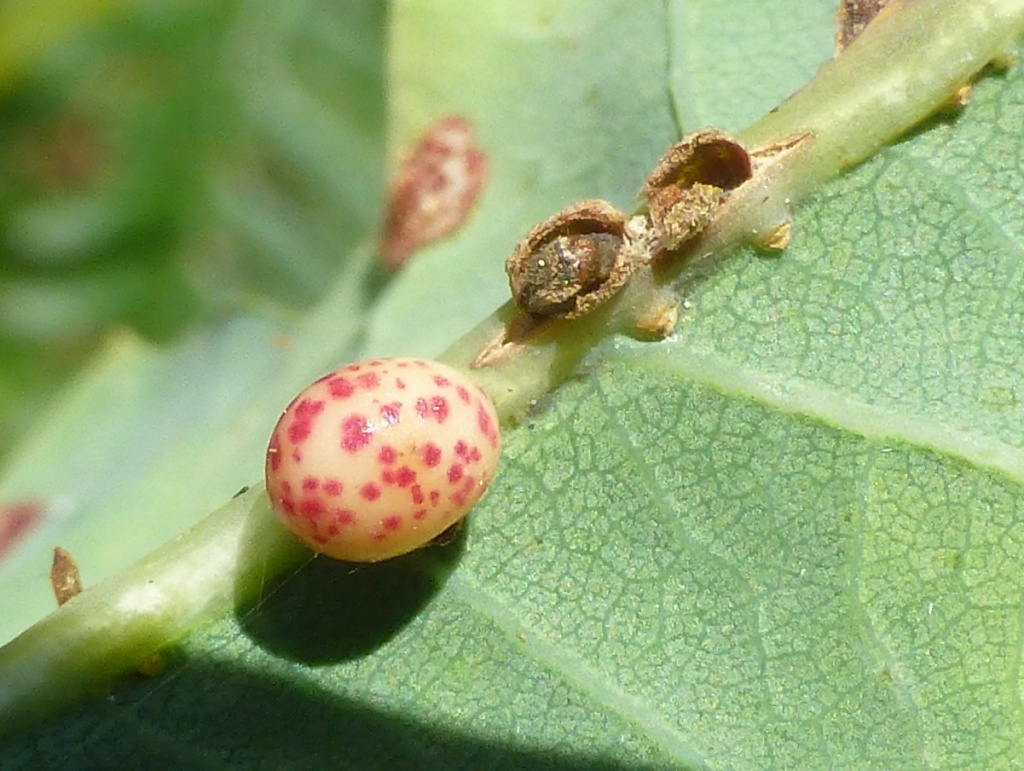
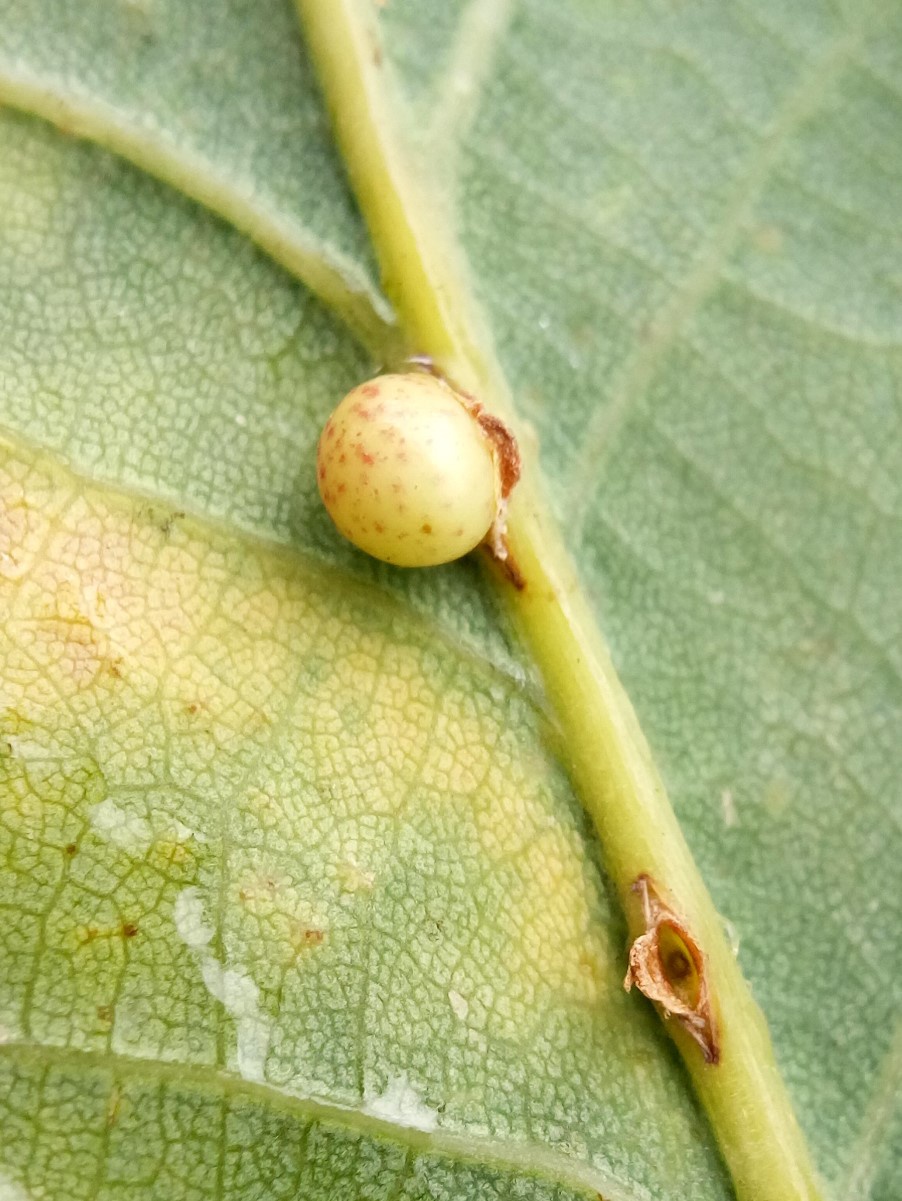
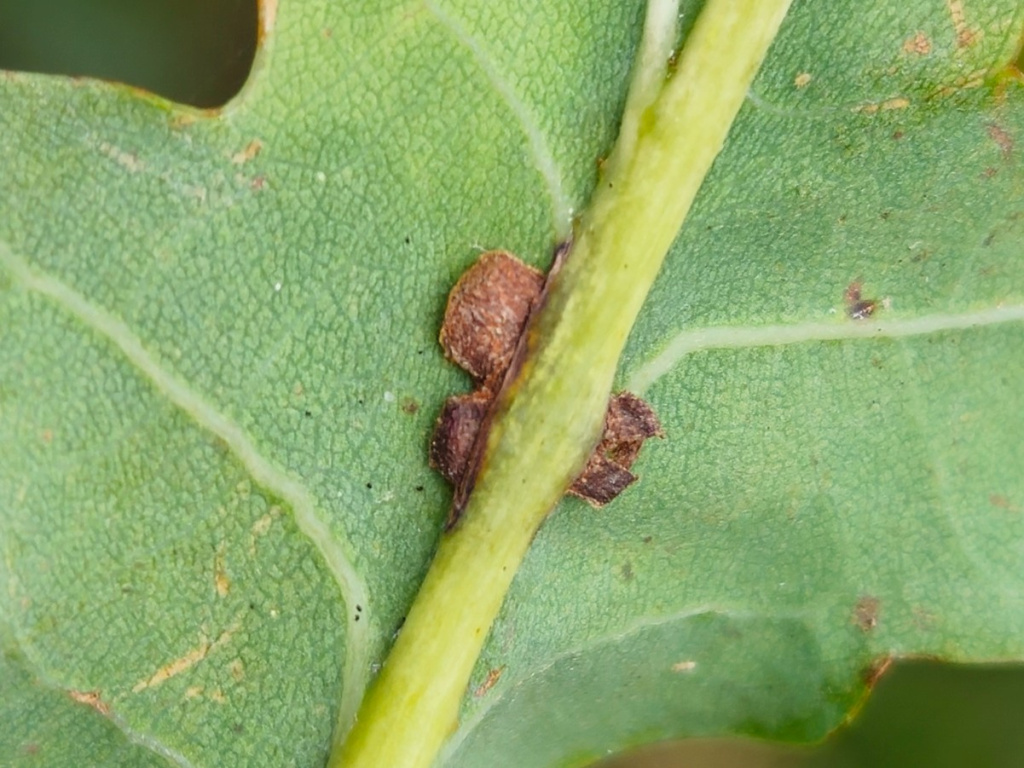
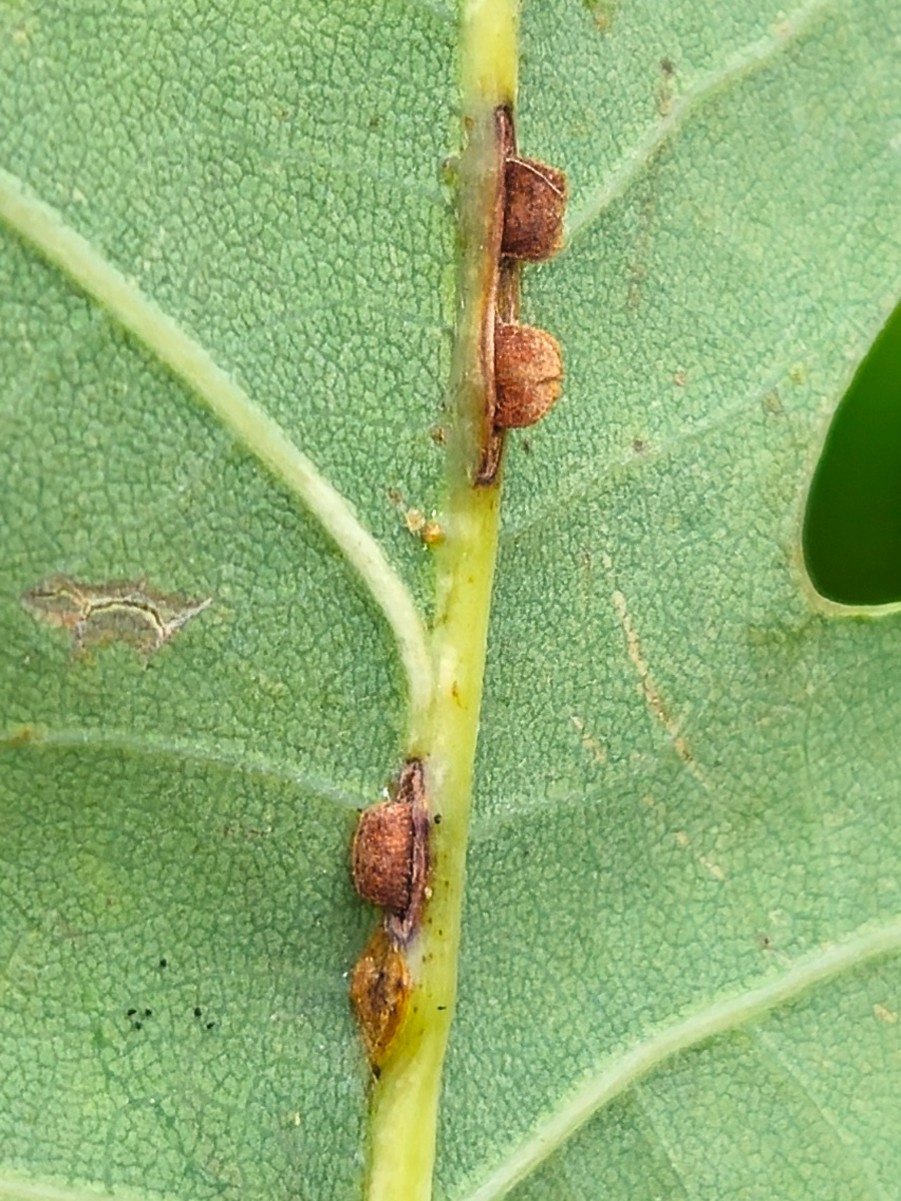
Oyster Galls are found on the the underside of oak leaves and are around 3 mm across with flaps of tissue either side where the gall is attached to the the midrib (or occasionally a main vein). The gall is yellowy cream and may have red or brown spots. The flaps can often still be found on the leaf after the gall has fallen. The gall is more likely to be seen than the adult wasp.
Several Cynips species also form spherical galls on Oak leaves but without the adjacent flaps of tissue.

Check that the 'saddle' or tissue flaps beneath the gall are present, provide a photograph of these and note the host species.
Oak leaves.
The parthenogenetic females of the agamic generation hatch from the Oyster Galls. They lay eggs within the buds which result in the sexual generation. These April-bud galls are of brief duration, the bud swelling and the insect emerging within a week. The males and females emerge from the buds around May; their fertilised eggs placed in the leaf lamina result in the Oyster Gall described above.
See British Plant Galls (Redfern & Shirley, 2023)
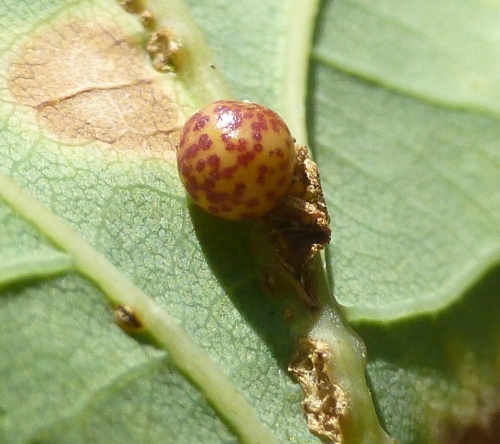 Annie Smith
Charnwood Lodge NR
14 September 2017
on oak leaf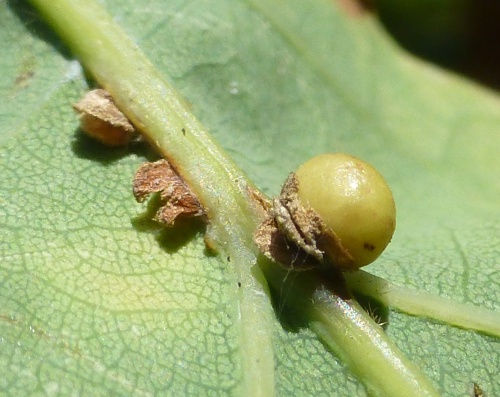 Annie Smith
Charnwood Lodge NR
14 September 2017
underside of oak leaf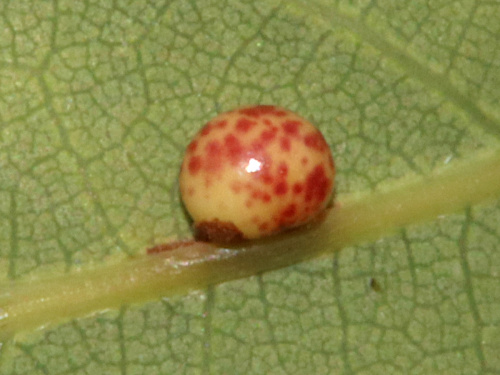 Mike Higgott
Bagworth Heath Woods
28 July 2024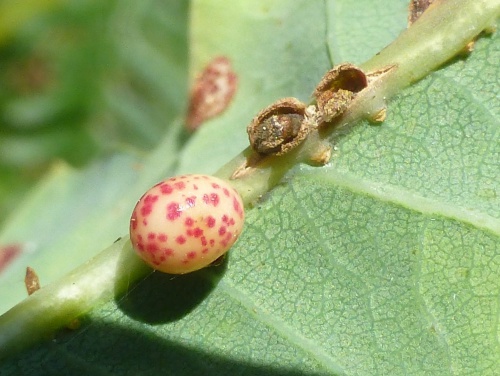 Annie Smith
Charnwood Lodge NR
14 September 2017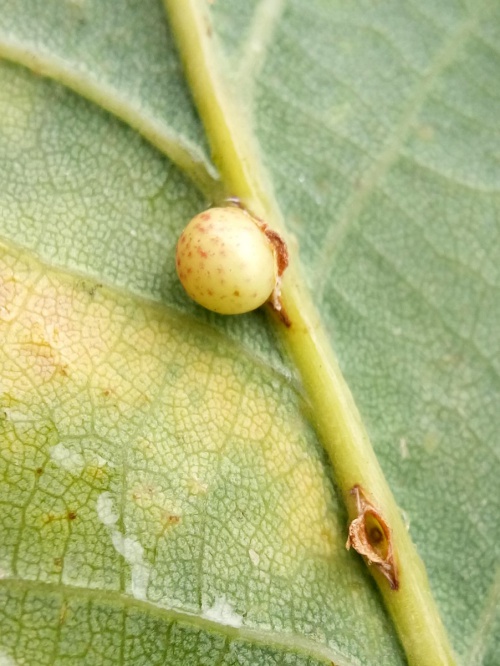 Peter Smith
Puddledyke, Cropston
23 July 2017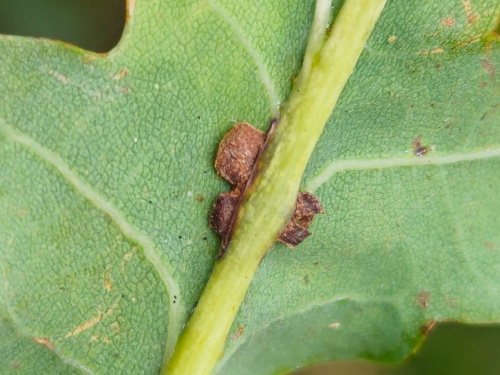 Peter Smith
Thurcaston, Brooky Lane
25 September 2024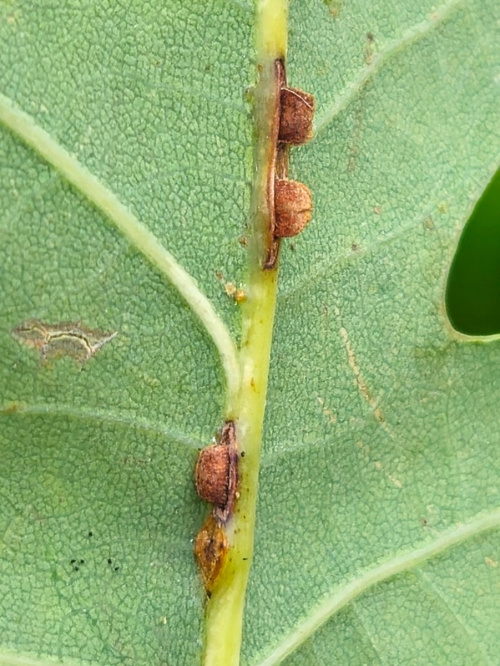 Peter Smith
Thurcaston, Brooky Lane
25 September 2024
Leicestershire & Rutland Map
Enter a town or village to see local records
MAP KEY:
Yellow squares = NBN records (all known data)
Coloured squares = NatureSpot records: 2025+ | 2020-2024 | pre-2020
UK Map
Additional images