Heterischnus truncator
Heterischnus truncator
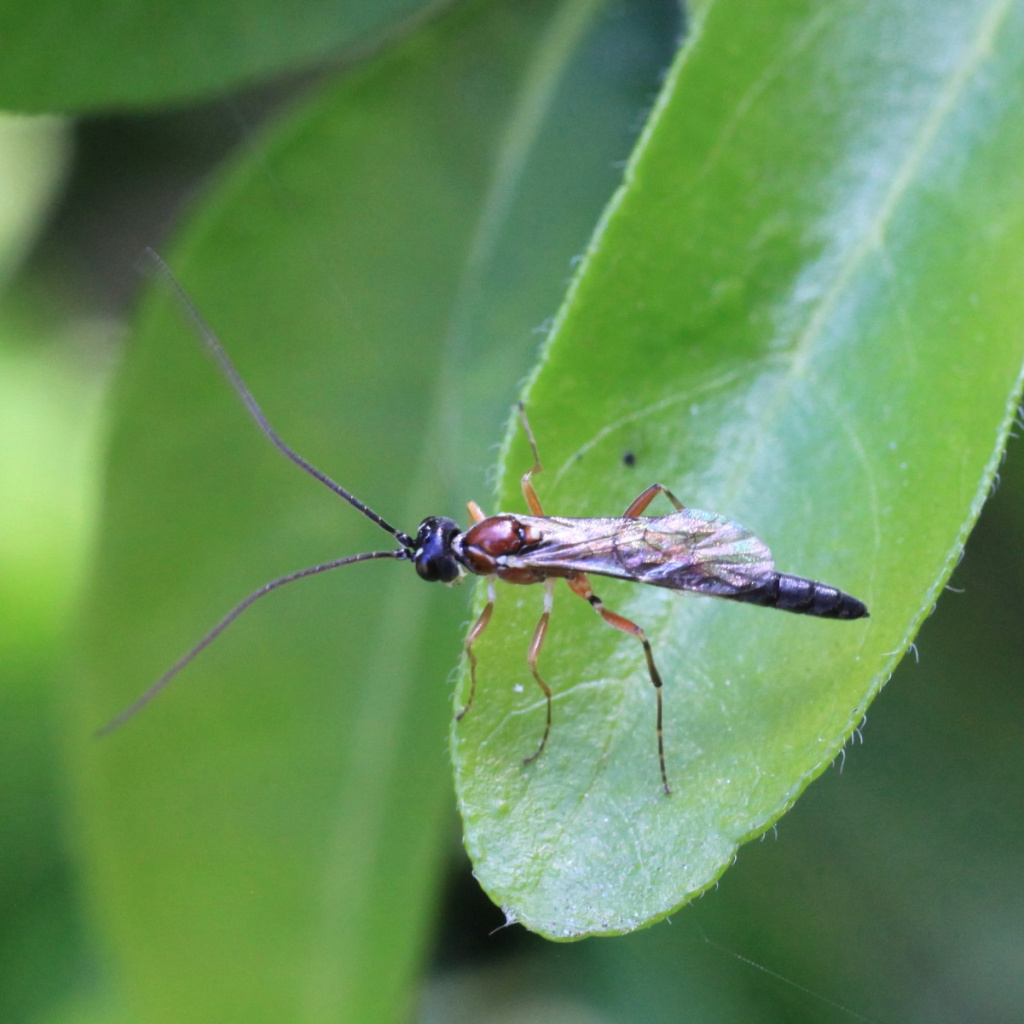
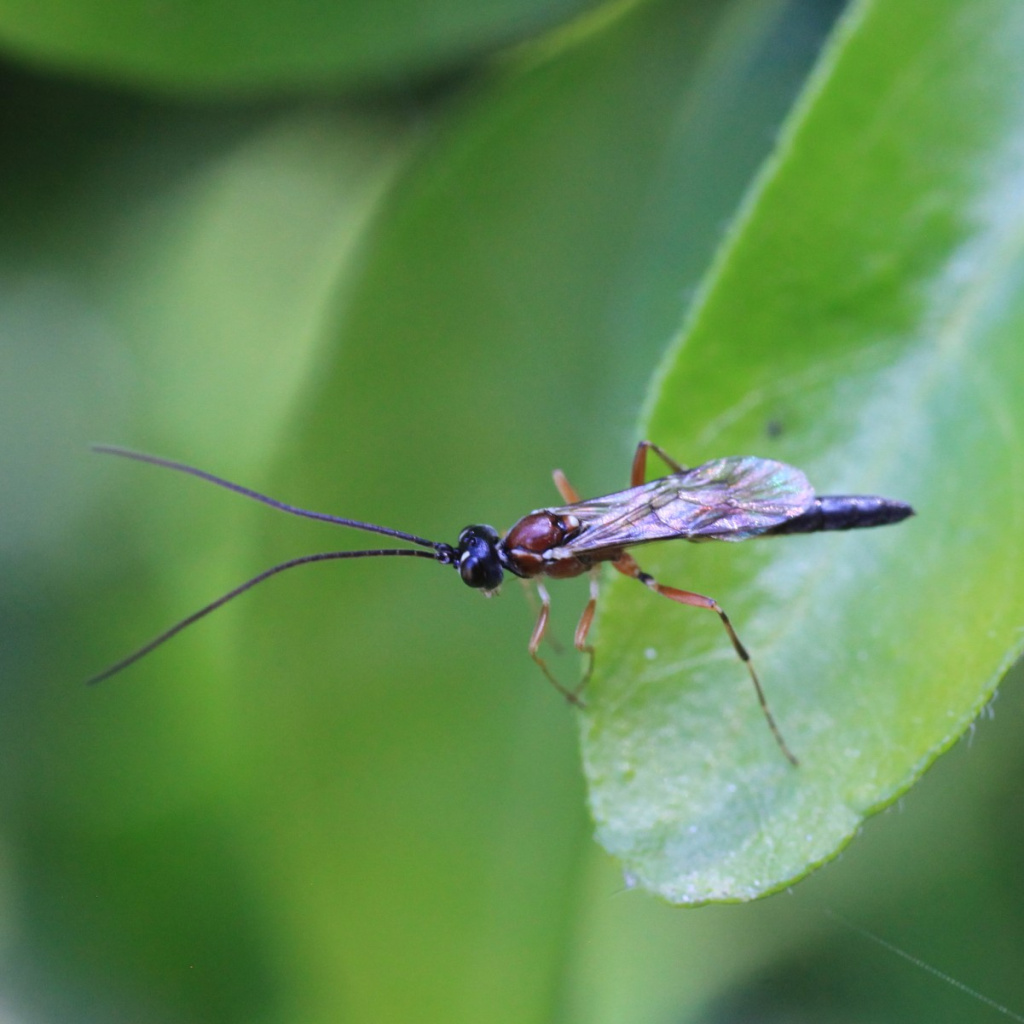
Heterischnus truncator is a relatively small Ichneumon wasp from the tribe Phaeogenini. It has black head, predomiantely red thorax and the propodeum is also red. The scutellum in females can be yellow marked with males it is red with yellow at the apex and the abdomen is black although sometimes reddish centrally. In females the antennae have a white band centrally and the frontal orbits are yellow marked, in males the face, clypeus and orbits are ivory. The legs are broadly red but the anterior coxae are ivory in males and yellow in females. The hind trochanters are black then yellow in females, black then ivory in males. Hind tibia have white markings which darken apically in females and prominant white stripe to the outer surface in males.
Body length ~ 8 - 9 mm (females) c 10mm (males)
Other Heterischnus spp.

- Predominantly red thorax
- Red propodeum
- Black markings to hind trochanters
- Hind tibia has white stripe to outer surface in males and white basal markings darkening apically in females
Ideally a specimen should be keyed using Perkins, J.F. 1959 Hymenoptera: Ichneumonoidea: Part I, Ichneumonidae, keys to subfamilies and Ichneumoninae-1
Handbooks for the Identification of British Insects, Vol VII. Part 2(ai), 116pp, The Royal Entomological Society of London
Identification advice should be sought from British Ichneumonoidea Facebook
We recommend that records of this species are verified by an expert before submitting to NatureSpot
Wherever the host (plume moths) are found
Flight period July - September hibernating females may be found under bark or in crevices of deadwood
Fertilized females hibernate overwinter then lays an egg in larvae of the host (Plume Moth) and larva develops within the larvae of the host to emerge as an adult from the host from its pupa stage.
widespread but underrecorded
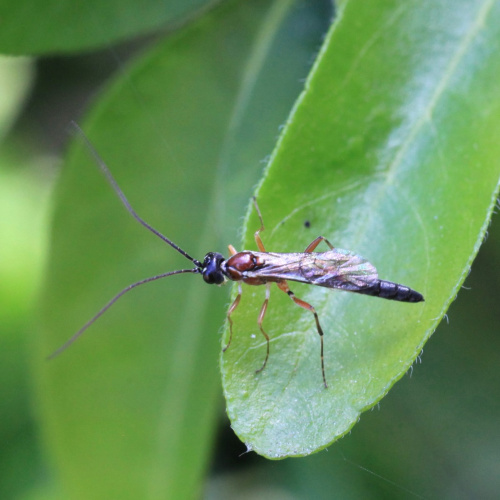 GHunt
GHunt
Oadby garden
30 June 2025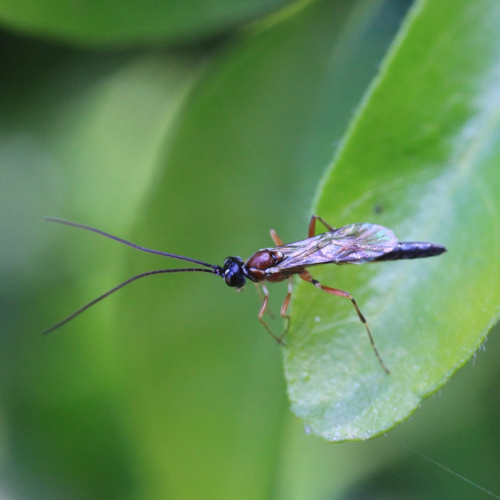 GHunt
GHunt
Oadby garden
30 June 2025
Leicestershire & Rutland Map
Enter a town or village to see local records
MAP KEY:
Yellow squares = NBN records (all known data)
Coloured squares = NatureSpot records: 2025+ | 2020-2024 | pre-2020
UK Map
Additional images
No additional images available for this species.