Gyrinus substriatus
Gyrinus substriatus
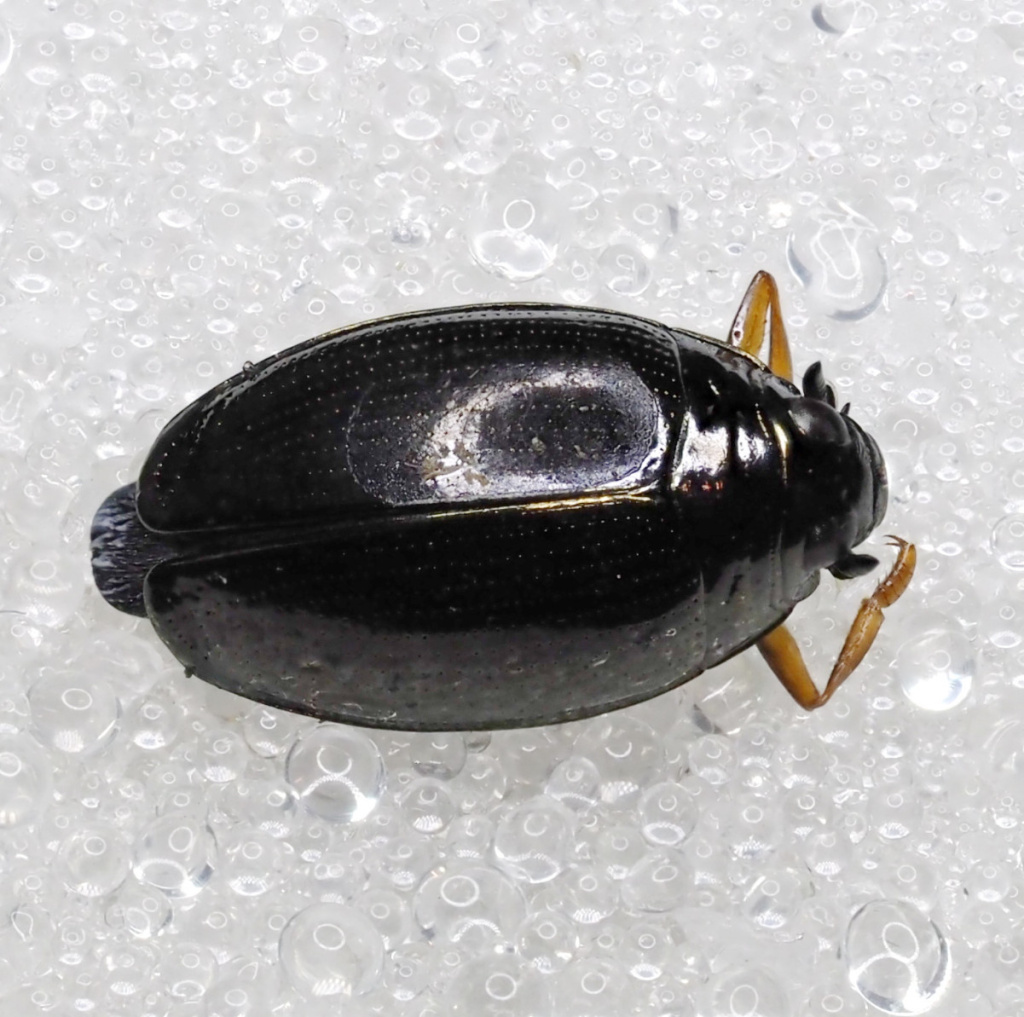
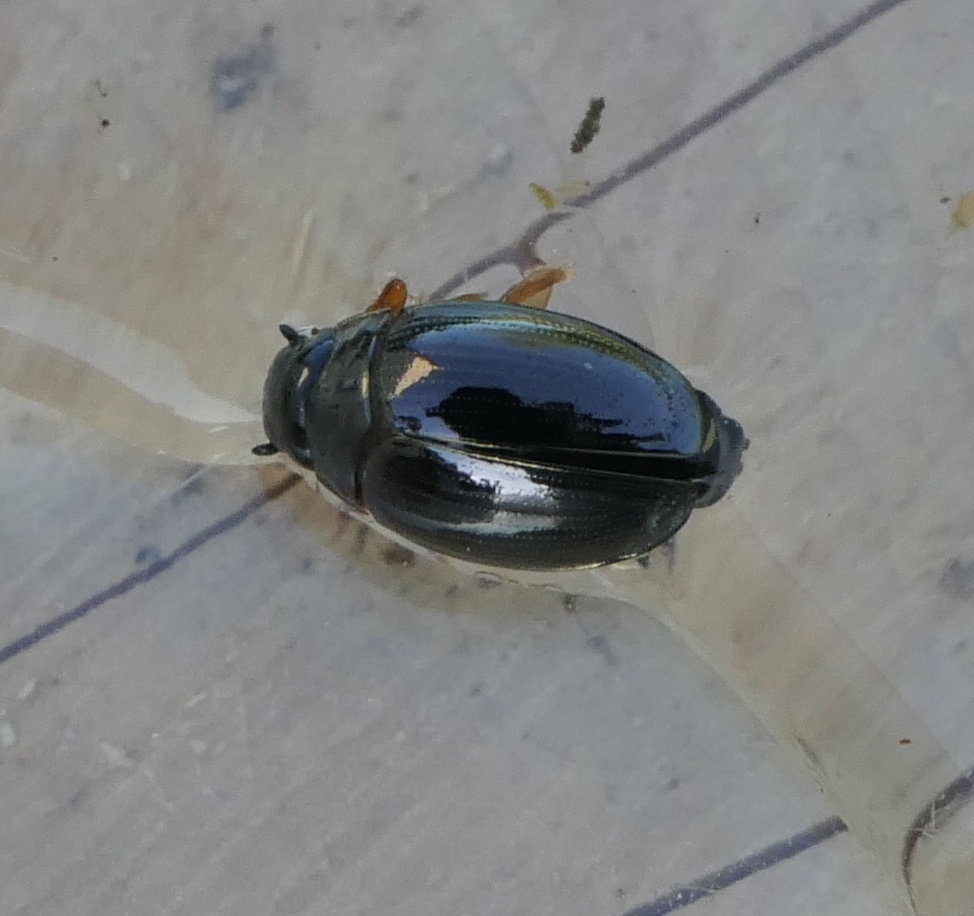
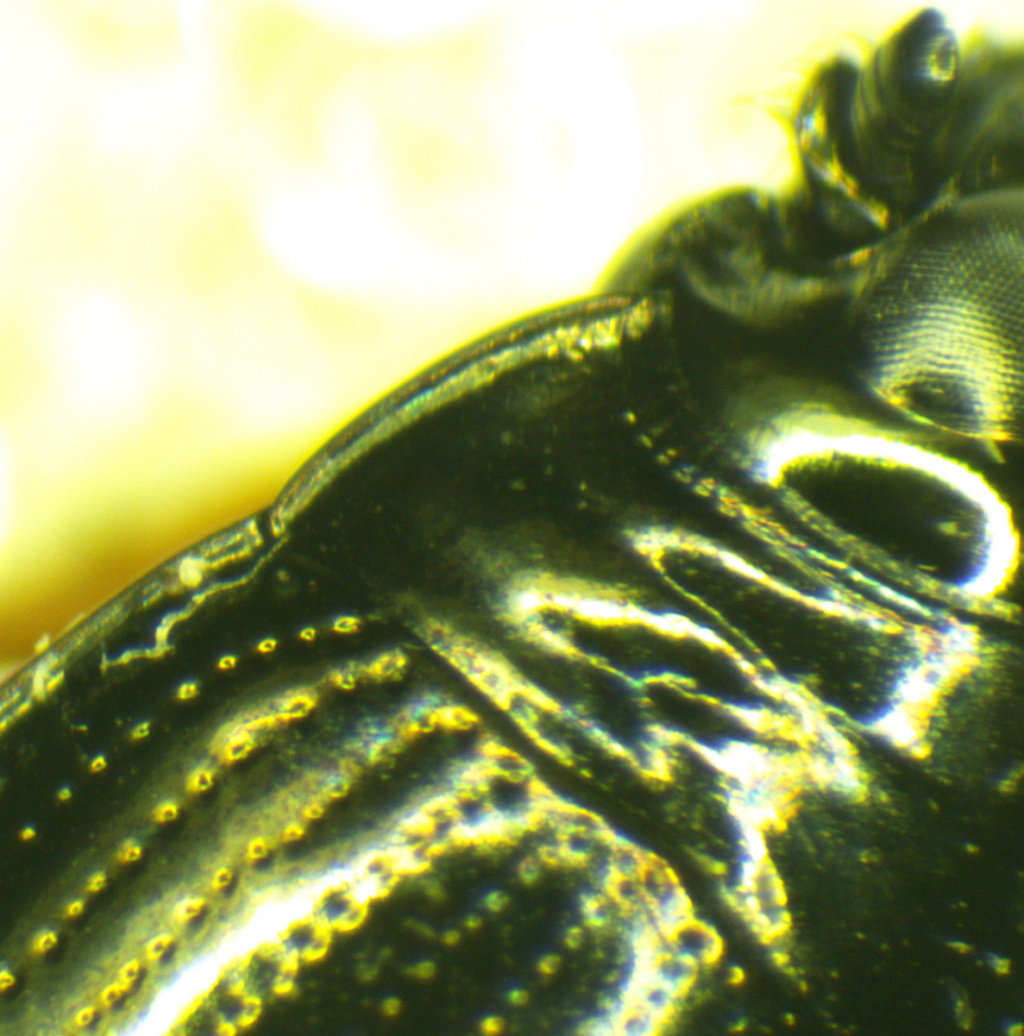
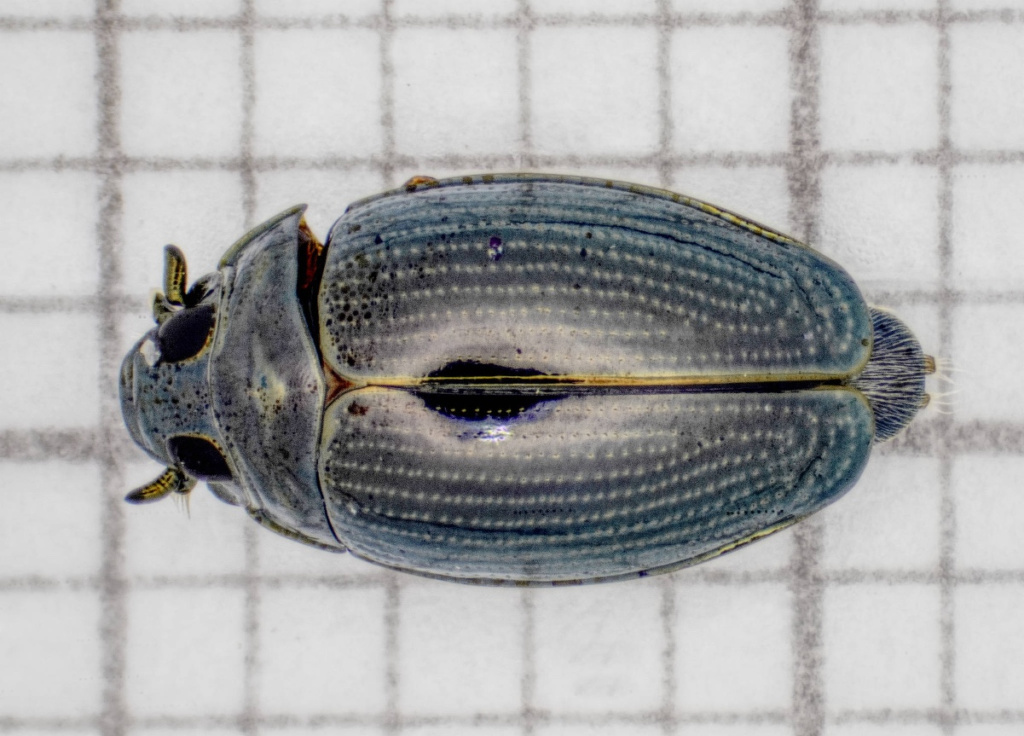
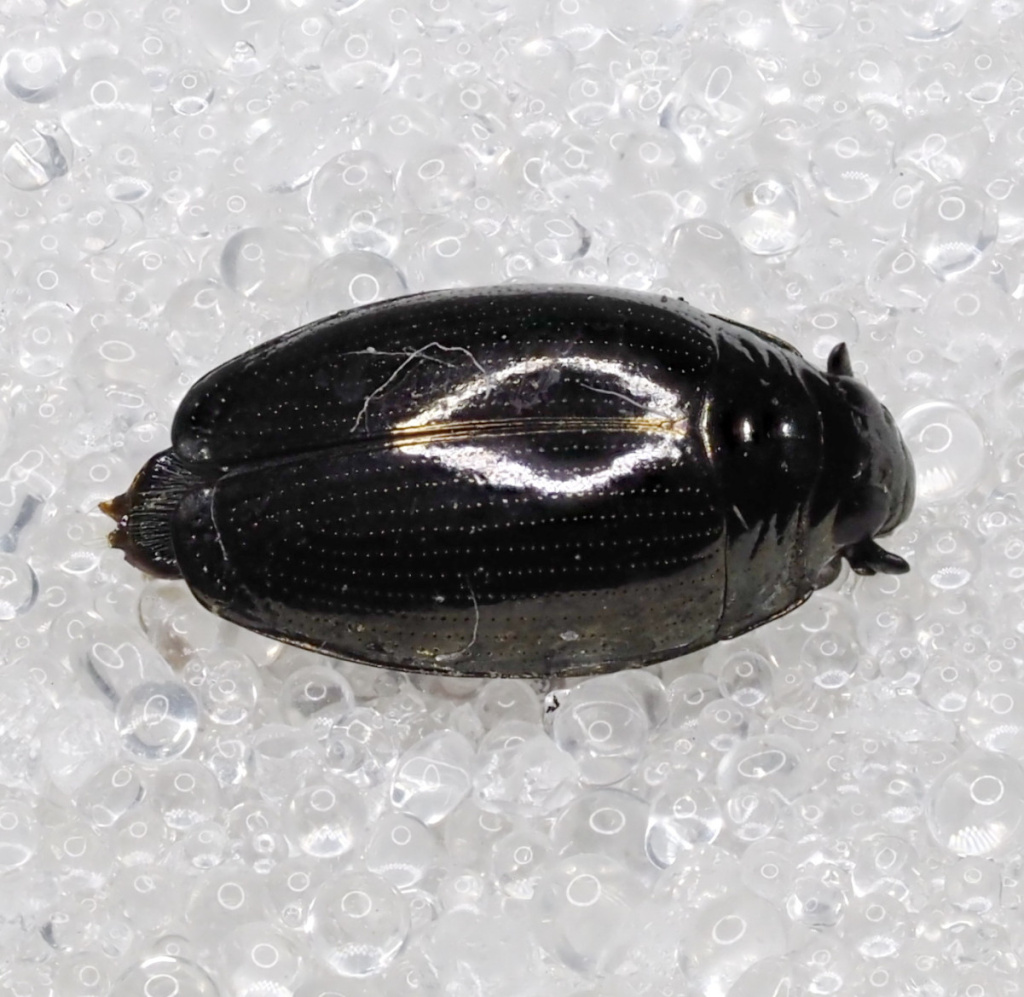
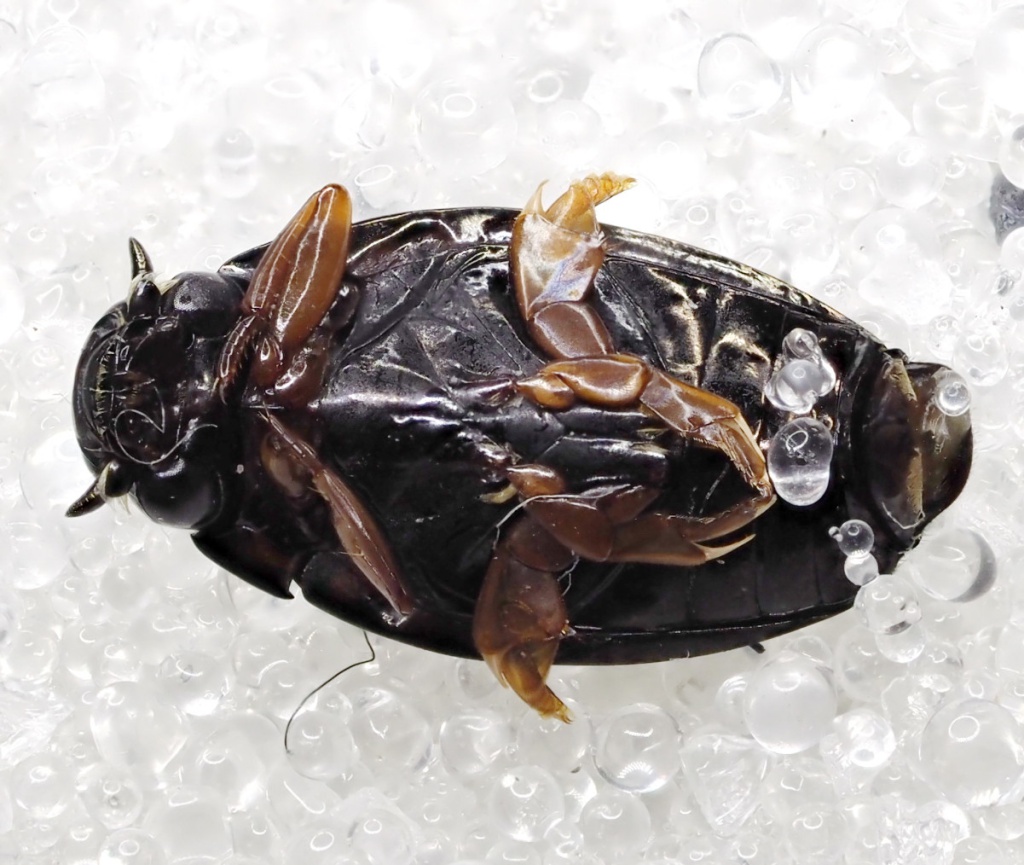
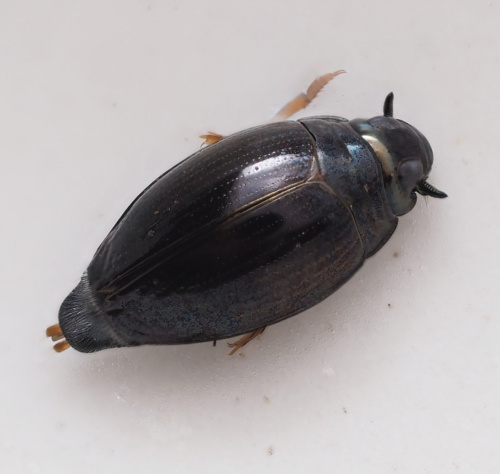
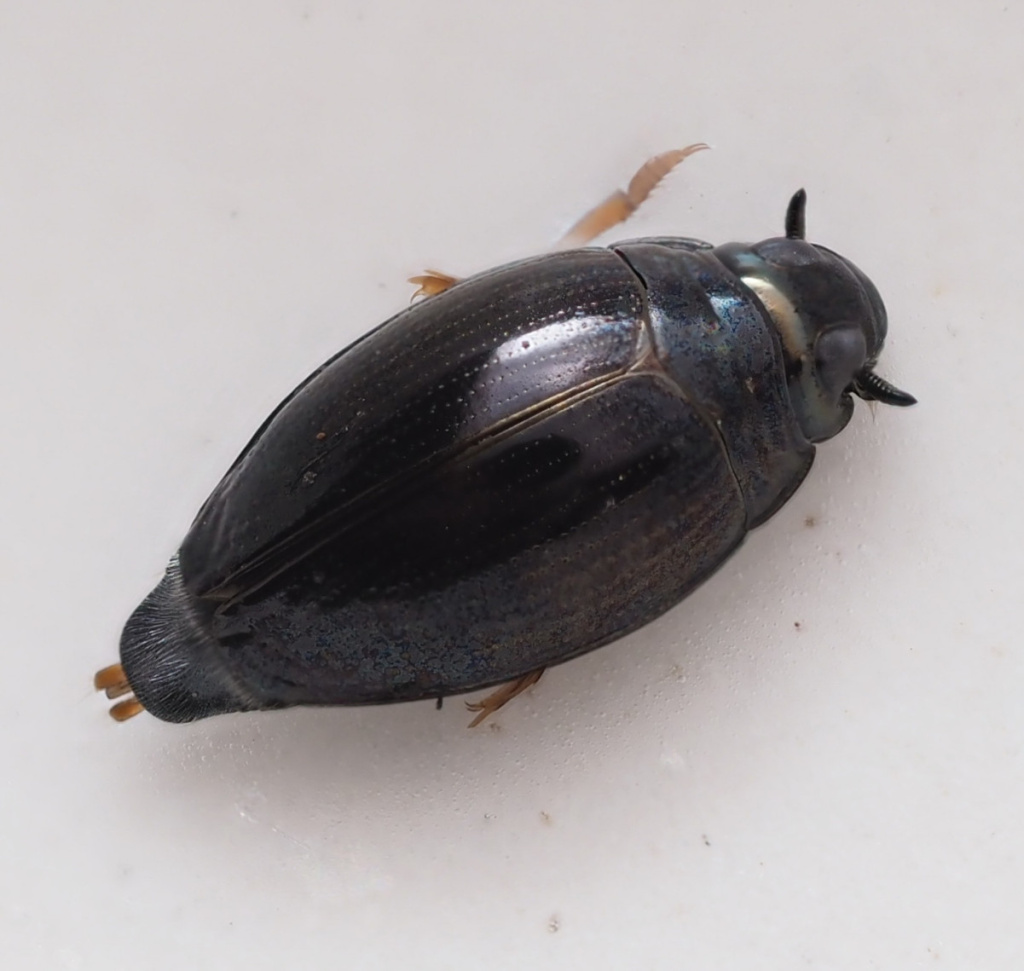
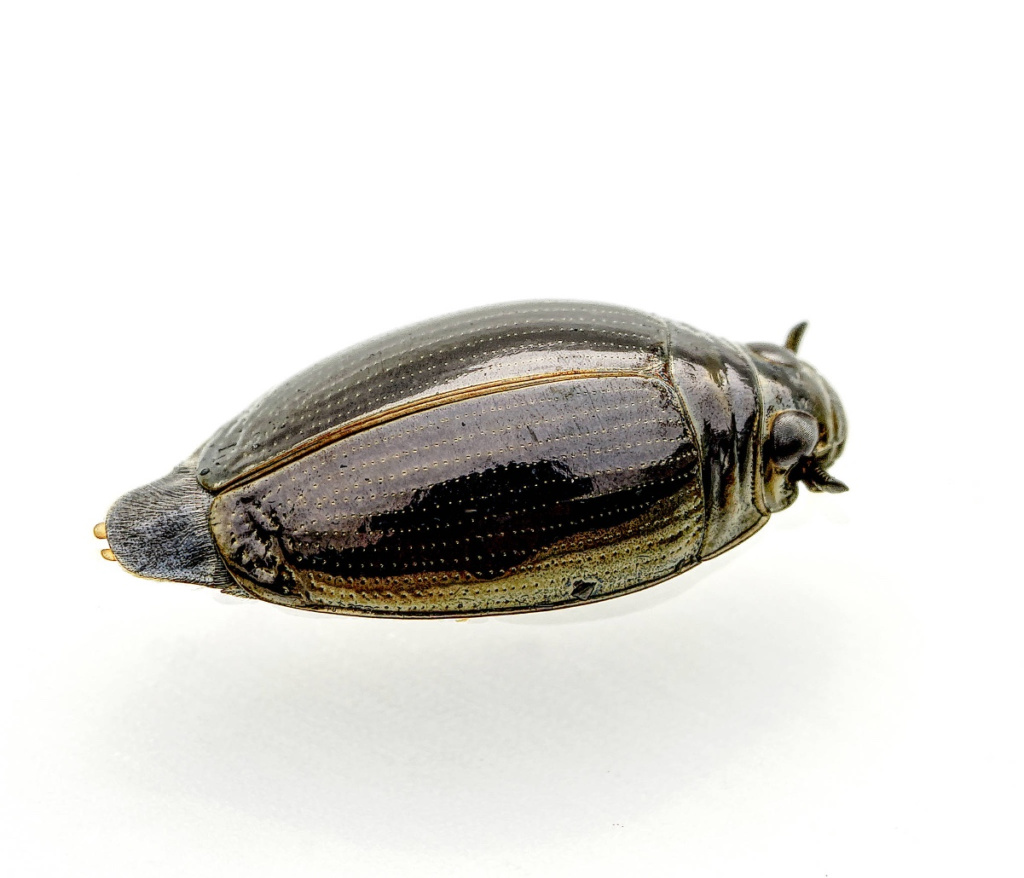
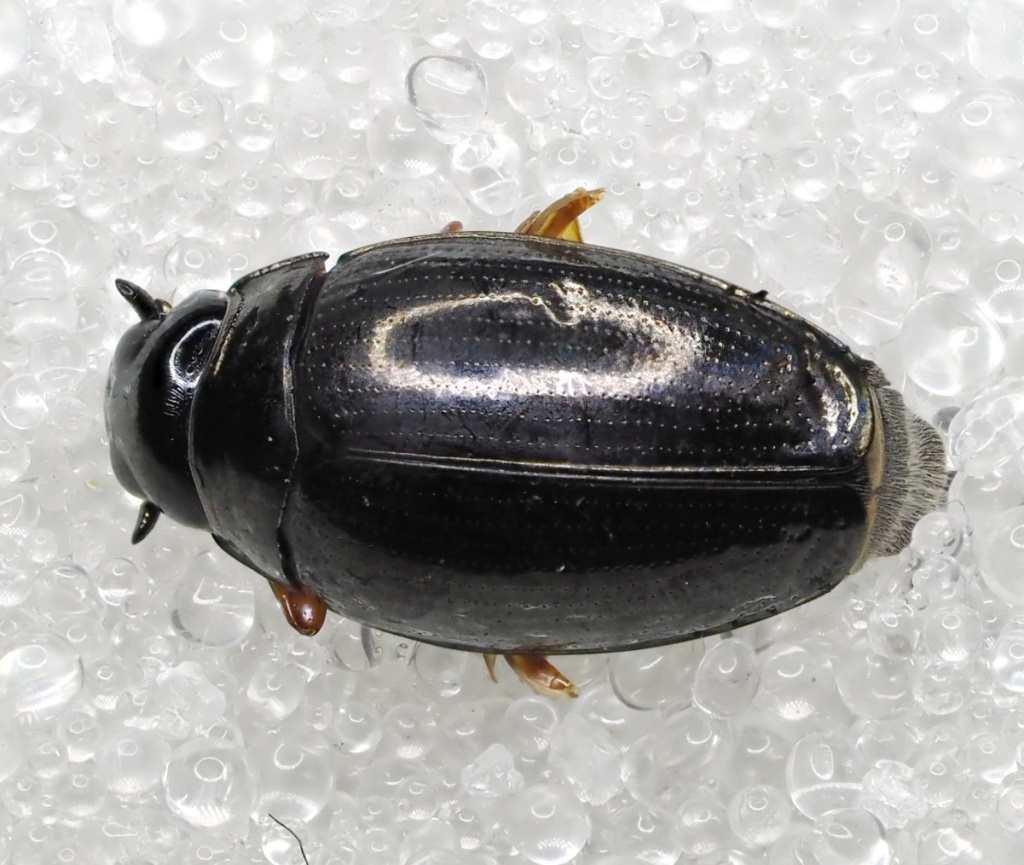
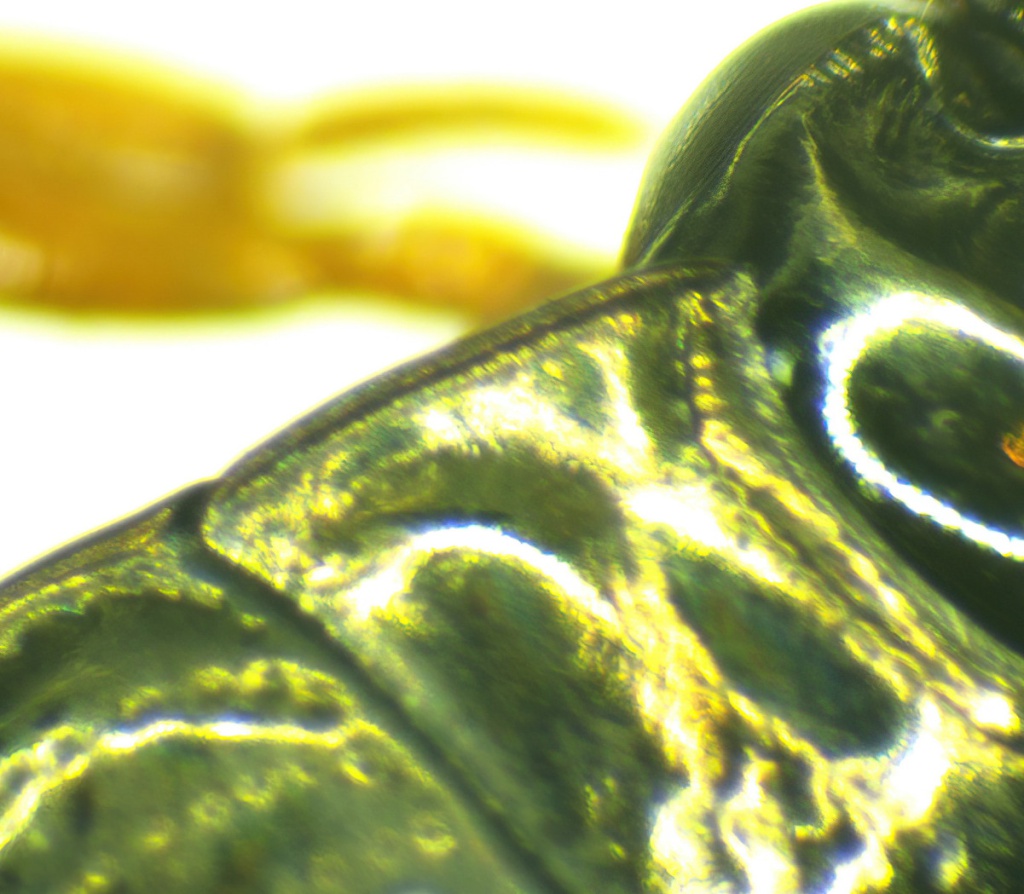
5-7.5mm. Generally all black but with yellow legs. The tarsal claws on the mid and hind legs are not darkened and generally the same colour as the legs. It has a prominent lip on the lateral edge of the pronotum that then creates a groove along the inner edge.
Gyrinus marinus is a similar size but has darkened claws on the mid and hind tarsi, lacks the rim and groove on the edge of the pronotum and the elytral rim widens slightly after the mid-point.

Your specimen should have these features:
- 5-7.5mm
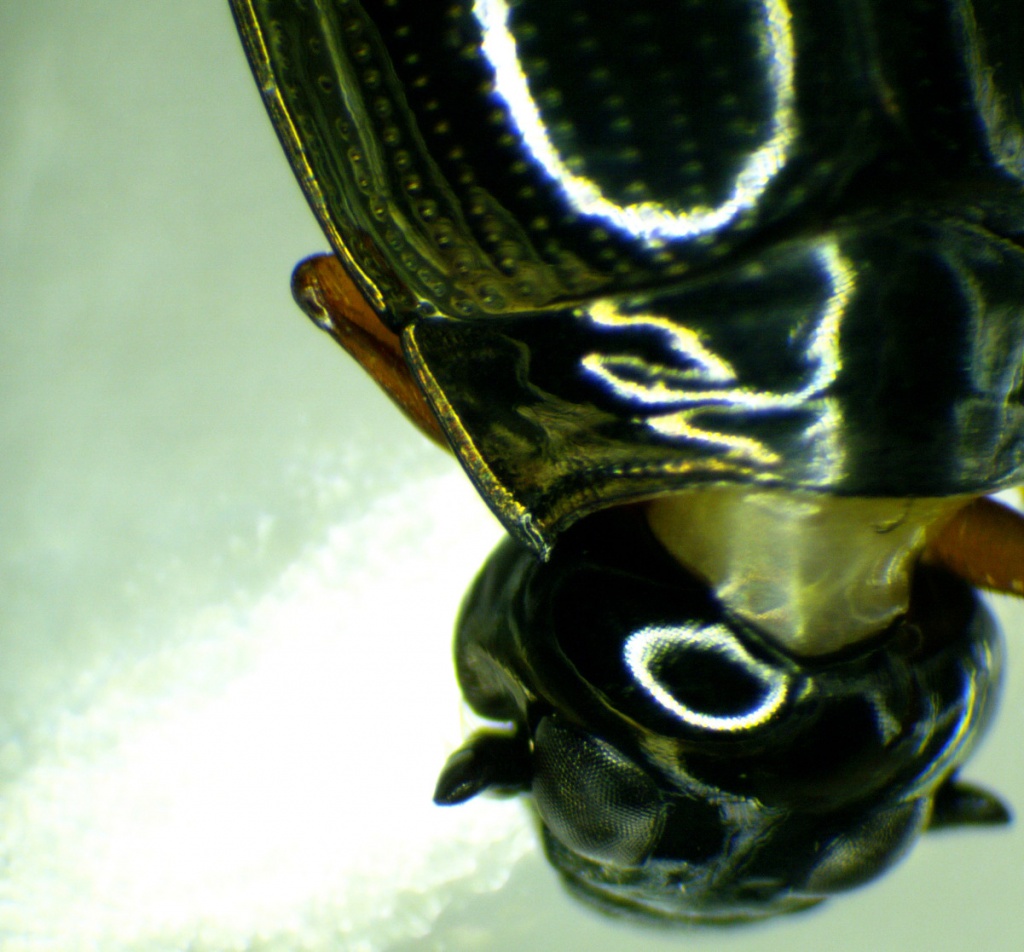
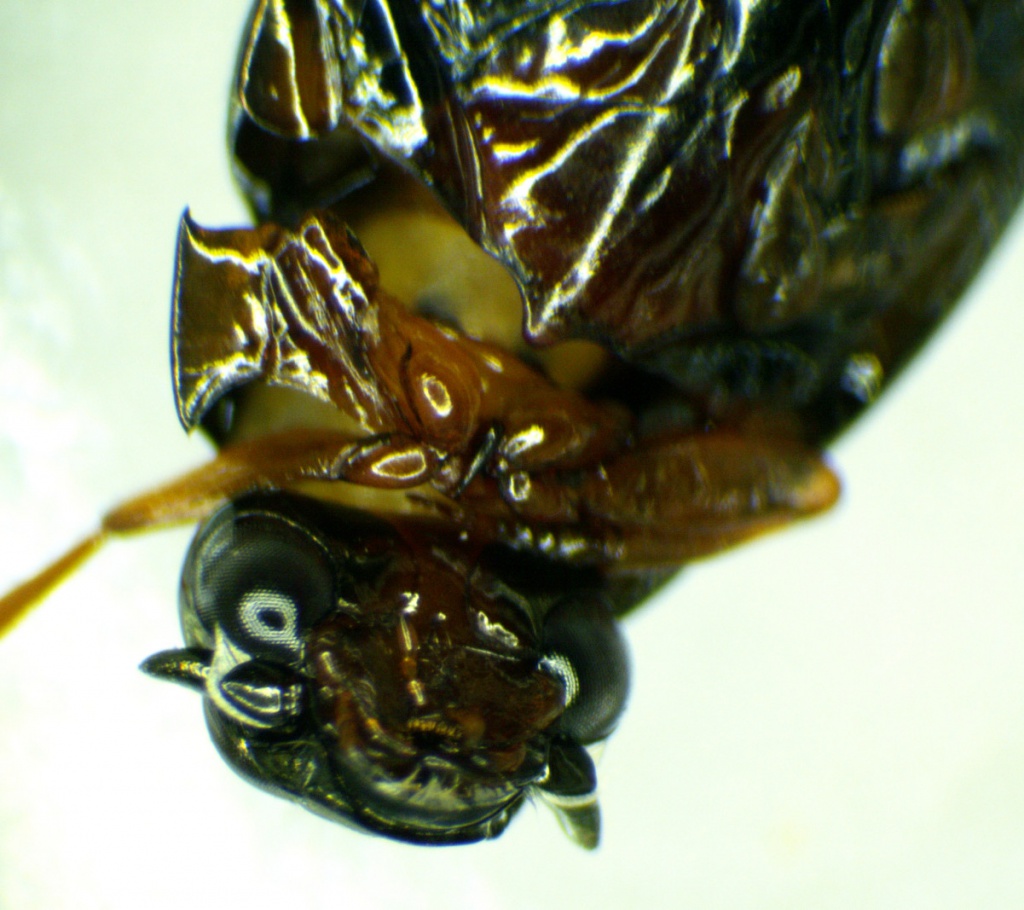
- all black body, yellow legs, orange prosternum
- mid and hind tarsal claws same colour as the legs (ie, not darkened)
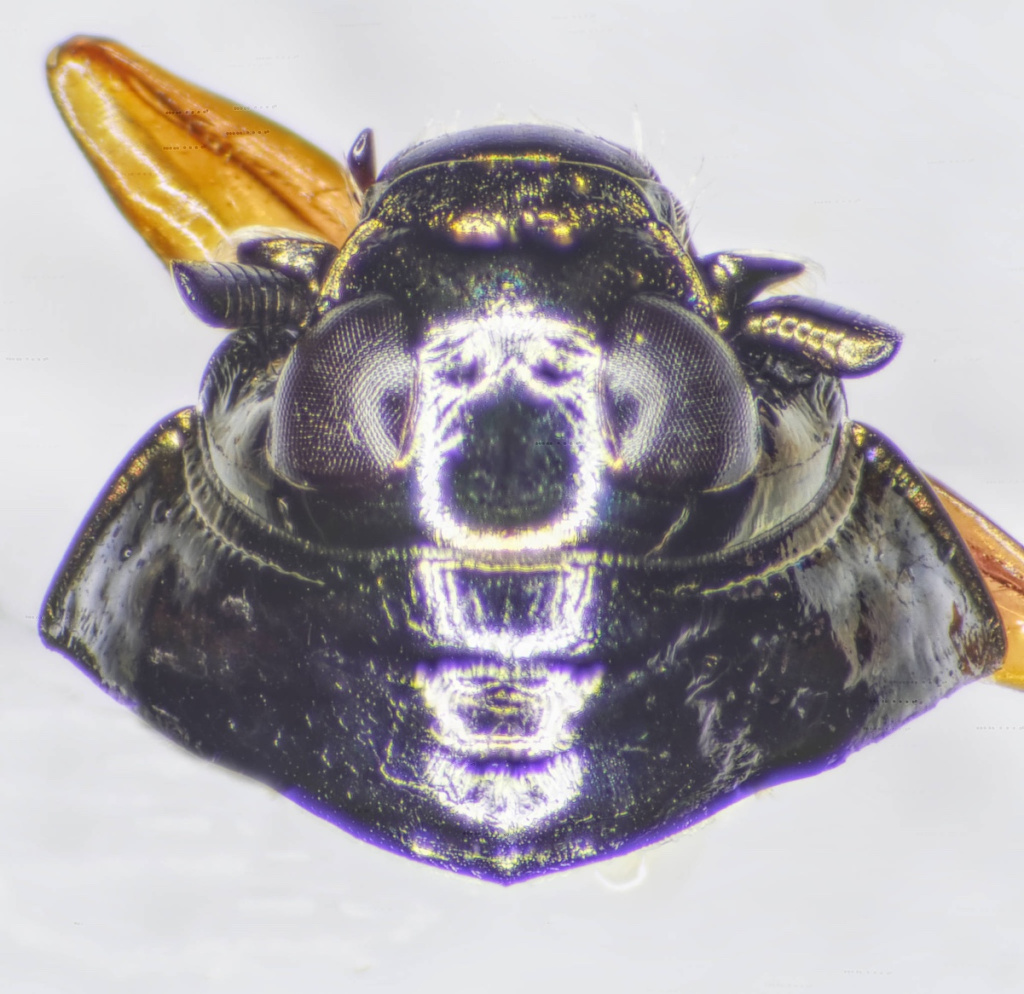
- a lip and internal groove on the lateral edge of the pronotum
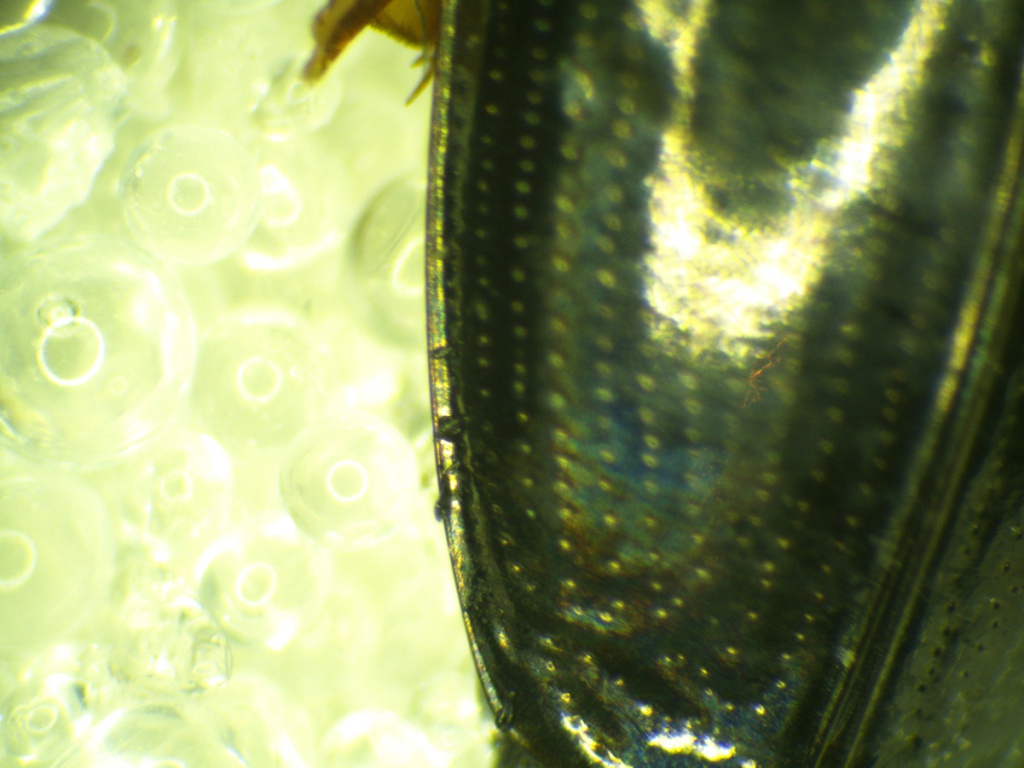
- the elytral rim is more or less parallel along its full length
Found in pools and ponds.
Best seen from March to November.
This whirligig beetle is active during the day, and is often found in large numbers, whirling around on the surface of the water; when disturbed they are able to dive to safety. They carry an air bubble around with them on the tip of the abdomen, which is periodically replenished, and enables them to stay submerged for long periods. During autumn, the adults fly at night in search of new ponds. In July and August the larvae undergo pupation on land, protected by a cocoon of plant matter and sand grains; the adults emerge 10 days later. Both the larvae and adults are predatory, taking prey such as mosquito larvae and other aquatic invertebrates.
Common and widespread in Britain.
Frequent in Leicestershire and Rutland.
 David Nicholls
Ratby, Brook Meadow
12 April 2025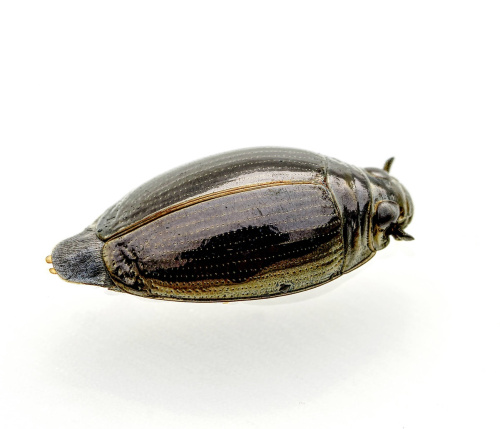 AJ Cann
Knighton Park Washbrook
05 July 2024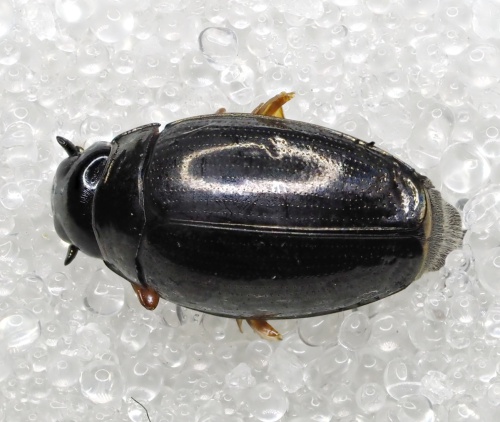 David Nicholls
Glenfield, Optimus Point NA
21 March 2023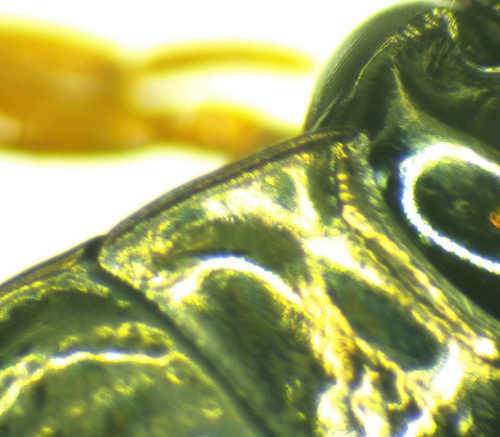 David Nicholls
Glenfield, Optimus Point NA
21 March 2023
Rim & groove at edge of pronotum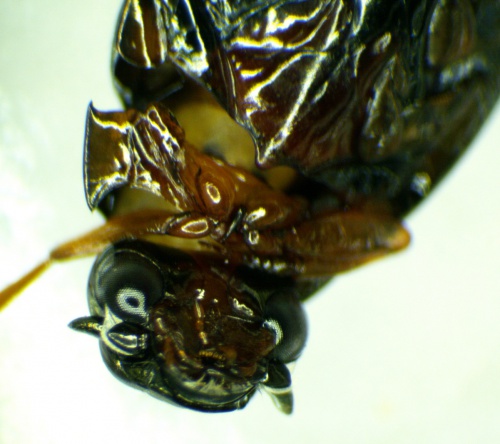 David Nicholls
Stockhill Farm
19 April 2018
orange prosternum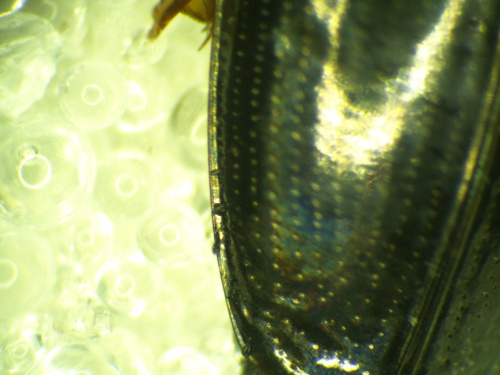 David Nicholls
Glenfield, Optimus Point NA
21 March 2023
Elytral rim parallel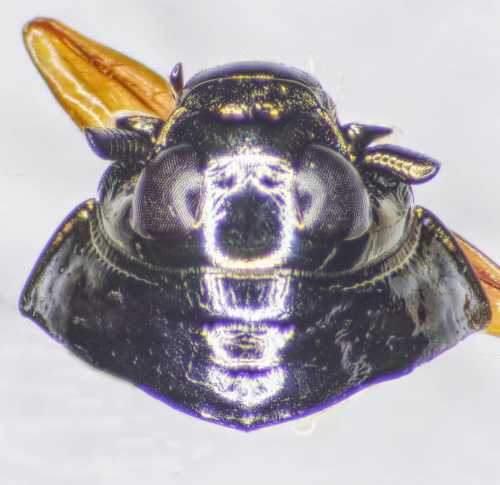 AJ Cann
Knighton Park Washbrook
05 July 2024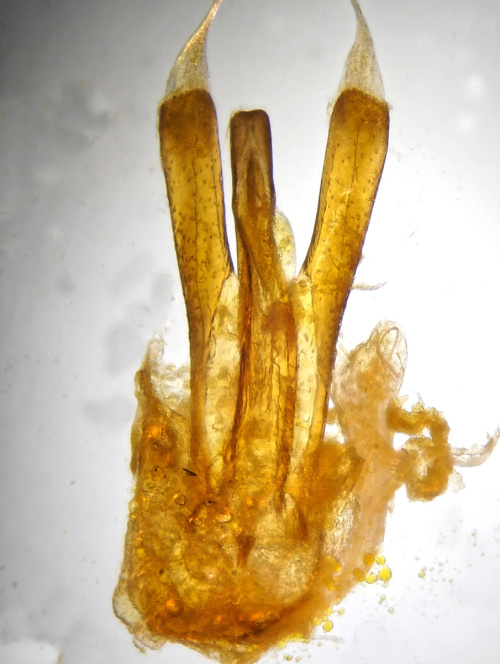 AJ Cann
Leicester Botanic Garden
21 June 2024
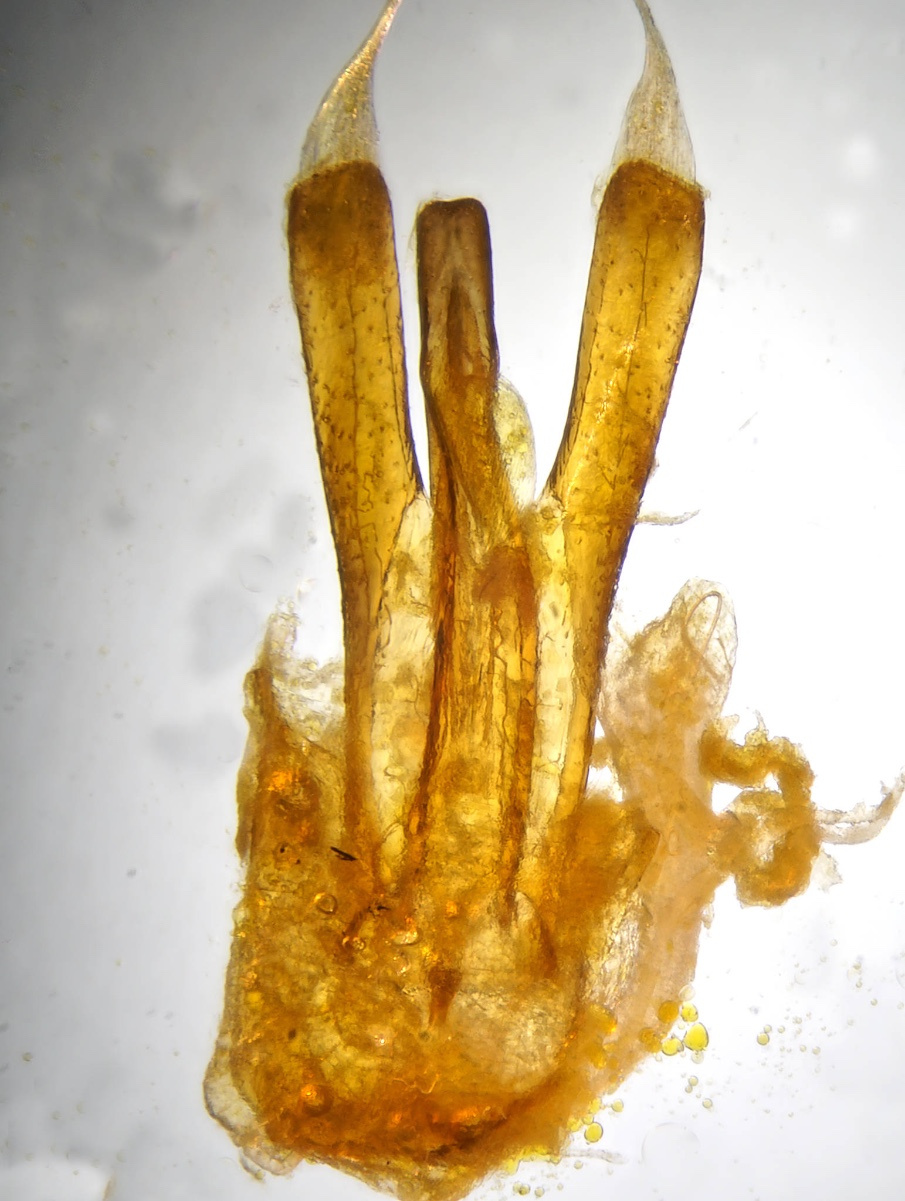
aedeagus
Leicestershire & Rutland Map
Enter a town or village to see local records
MAP KEY:
Yellow squares = NBN records (all known data)
Coloured squares = NatureSpot records: 2025+ | 2020-2024 | pre-2020
UK Map
Additional images