Earthtongue
Earthtongue - Geoglossum
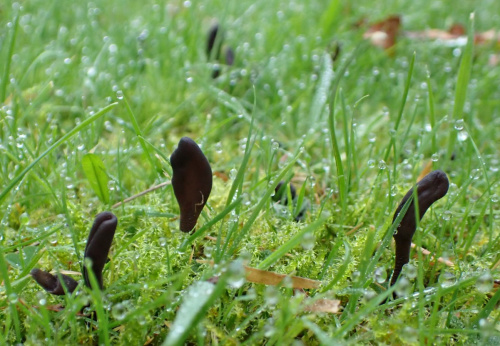
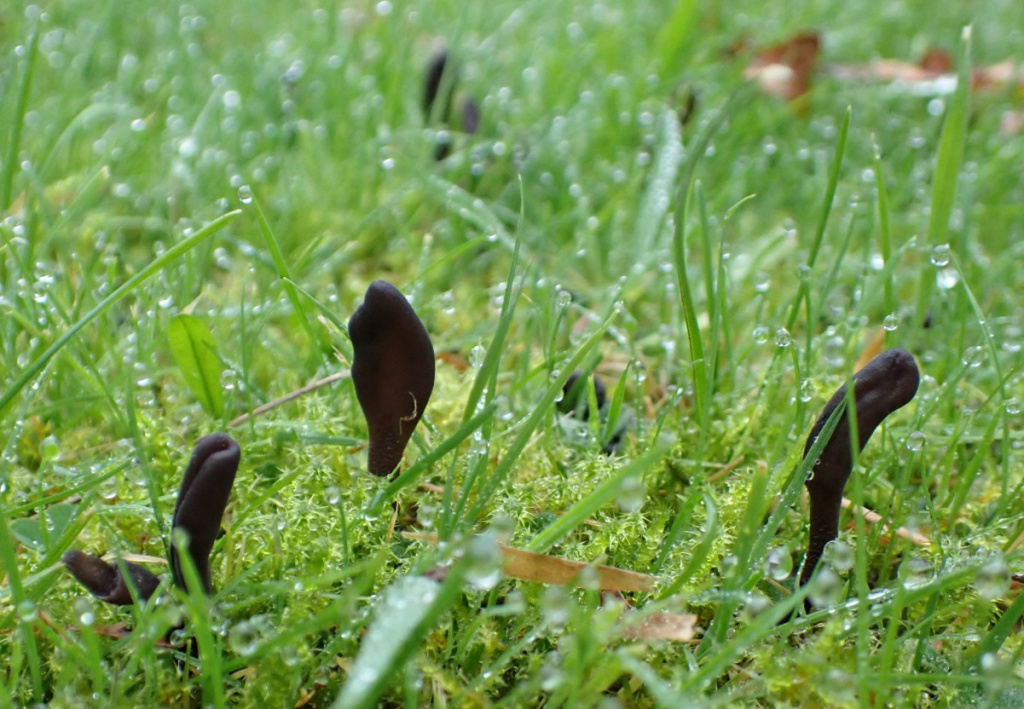
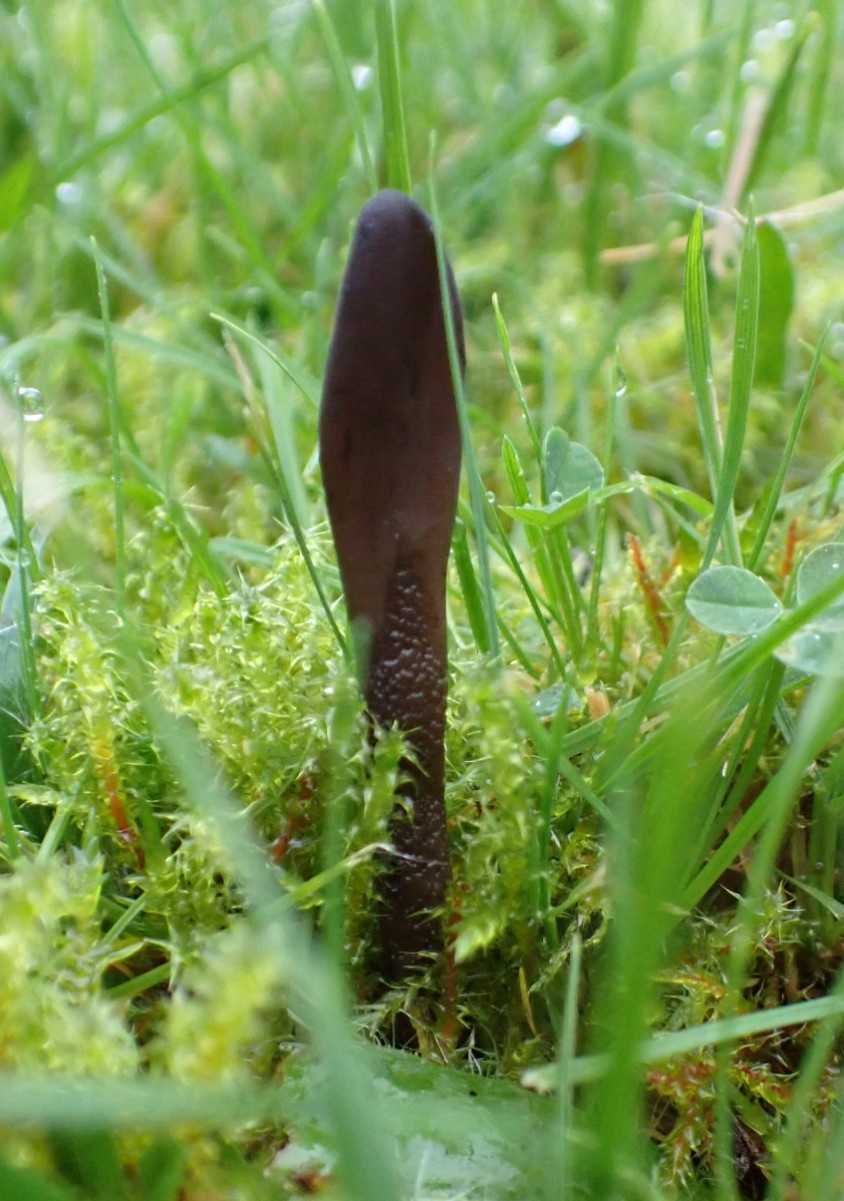
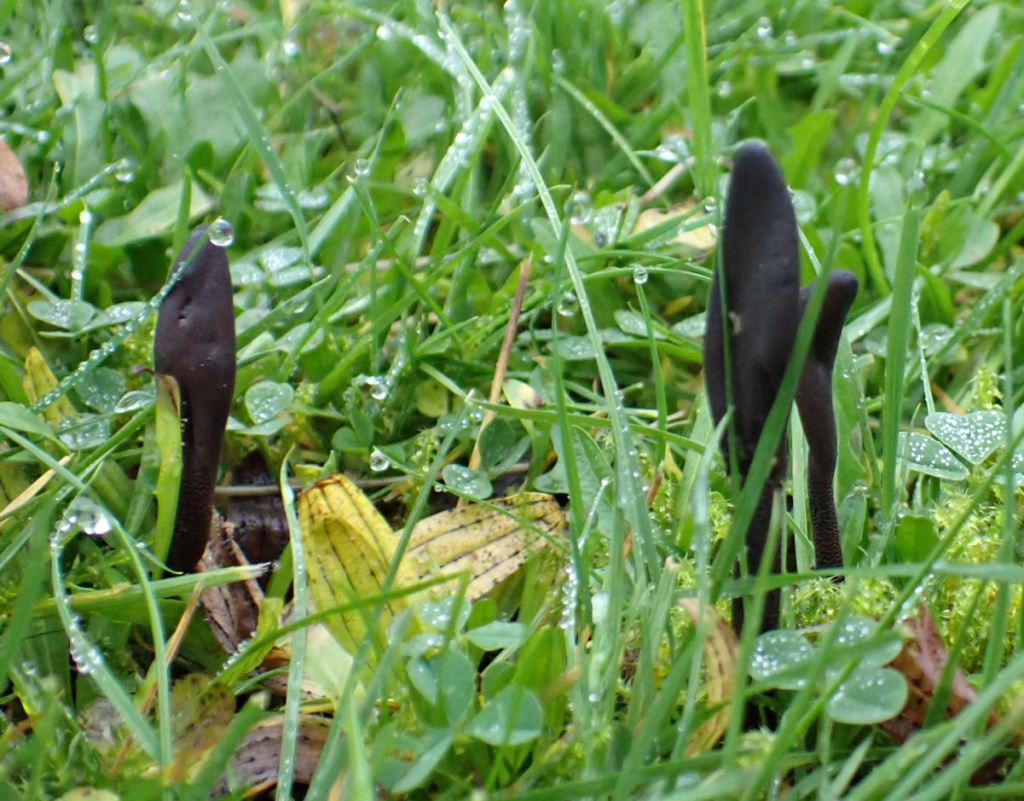
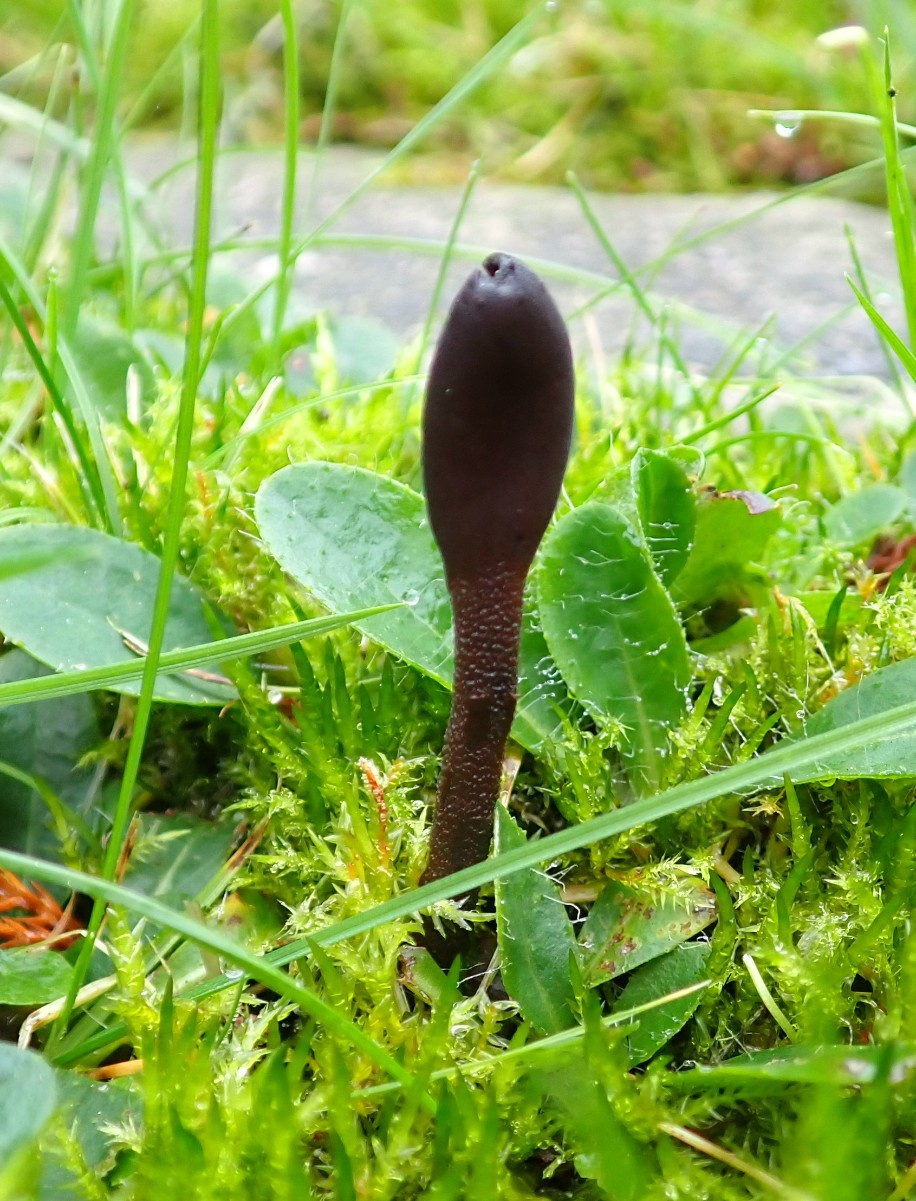
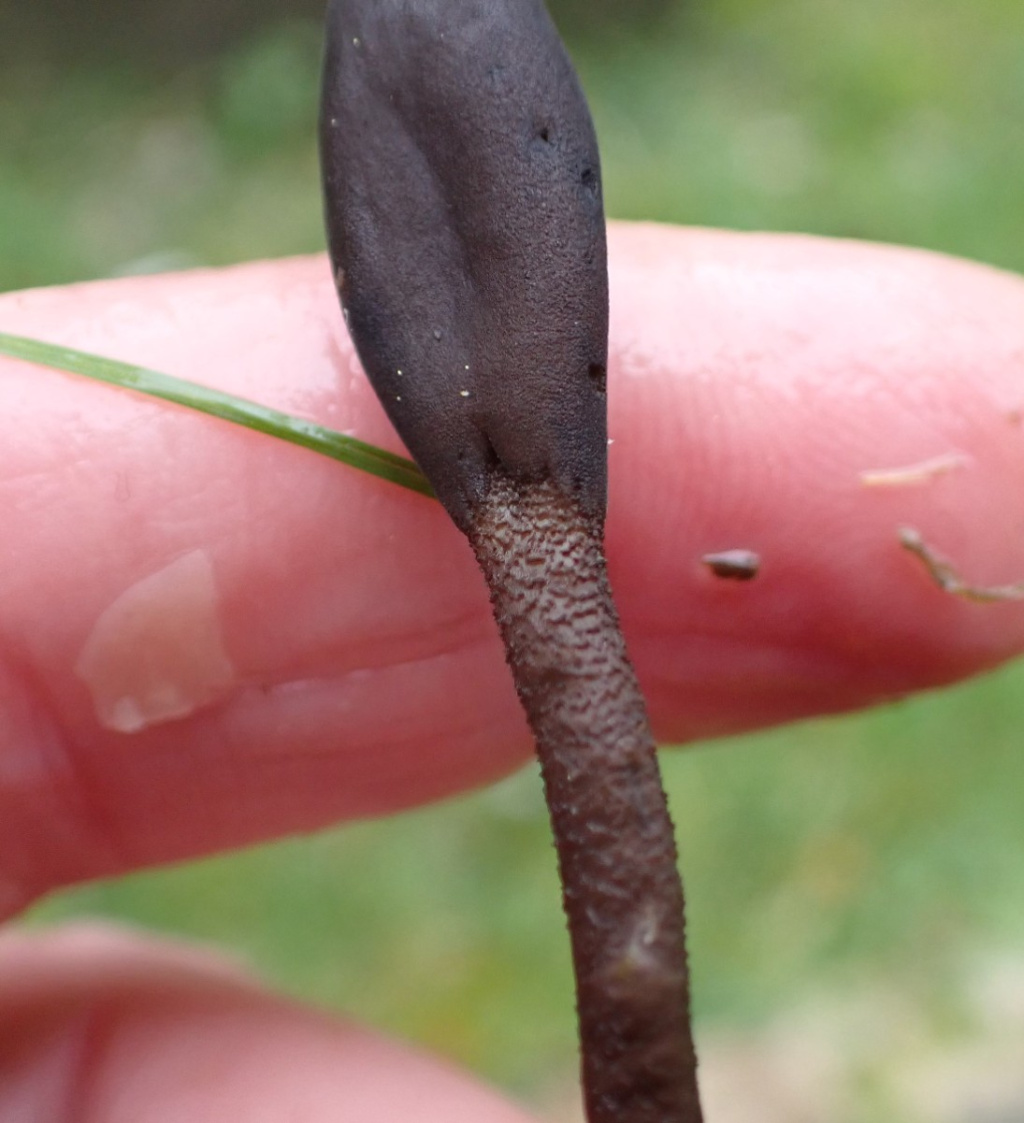
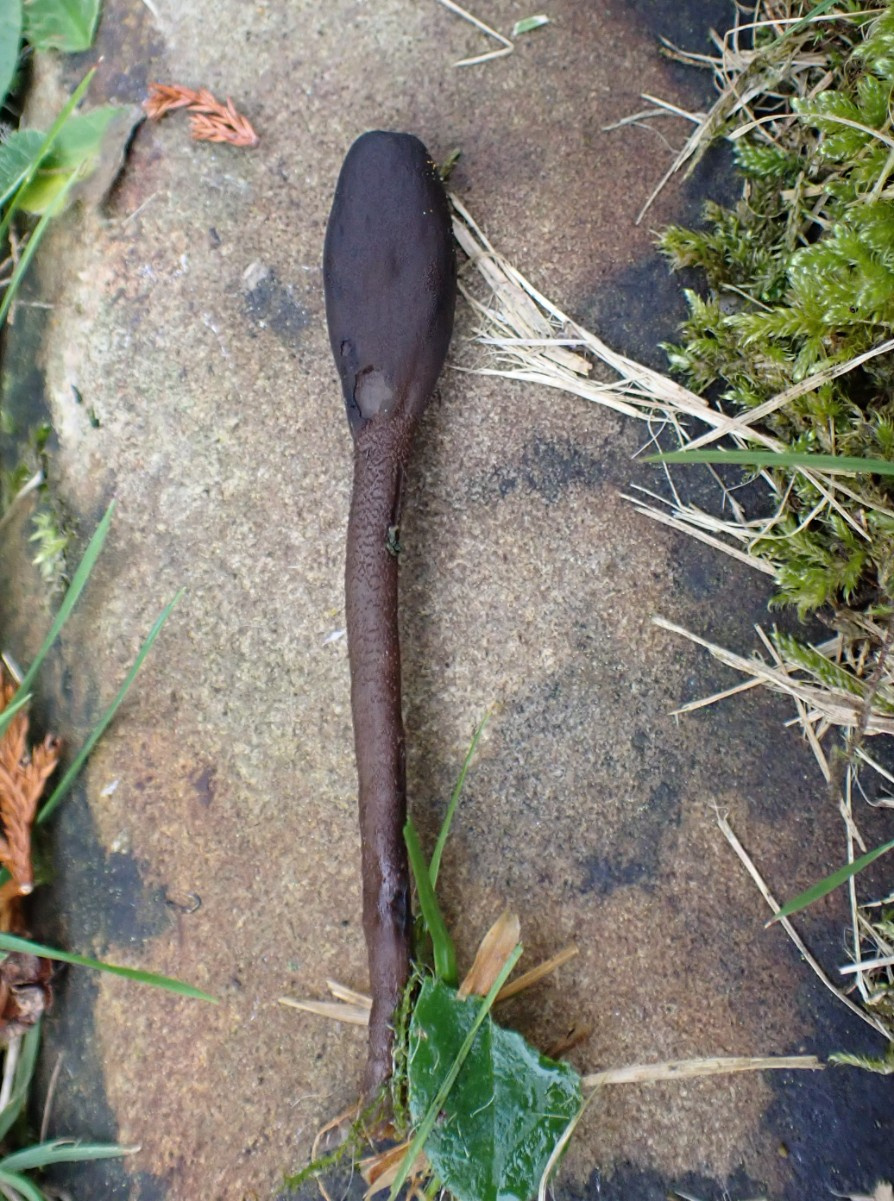
Earthtongues are tongue or club-shaped, black or dark brown, with a hard rubbery texture, and may be up to 7cm long. The top of the stalk is usually expanded into a spore-bearing head that is often grooved and flattened and can appear smooth to the naked eye. The stalk is usually scaly. Under a hand lens, the fertile head may appear velverty due to projecting asci. Examination of spores from fully mature specimens is usually needed to identify the species.
Together with Waxcaps (Hygrophoraceae), clubs, spindles and corals (Clavaria, Clavulinopsis, etc., pinkgills (Entoloma) and Dermoloma species, Earthtongues are important indicators of unimproved grassland of conservation value.
Hairy Earthtongues (Trichoglossum) have a minutely bristly (not scaly) stalk, and fine hairs on the fertile head which are visible with a hand lens. Dead Man's fingers or Dead Moll's Fingers (Xylaria) are similar but found on stumps or decaying wood.

Photograph it in its habitat, and provide a close-up photograph of the head and stalk of the club or tongue. If you have not examined your specimen under the microscope or had it confirmed form a specimen by an expert, record it here. Because earthtongues indicate conservation-value grasslands, all records even to genus are important.
Unimproved grasslands especially on lawns, cemeteries, churchyards
October - November
uncommon
A 'Beginner's Guide to Earthtongues' (Irene Ridge) was published in the North-west Fungi Group's newsletter of June 2006 - available here
Pat O'Reilly's 'First Nature' website has some helpful infiormation - e.g Geoglossum fallax
 sue
sue
Woodhouse Eaves, Church Hill cemetery
07 November 2024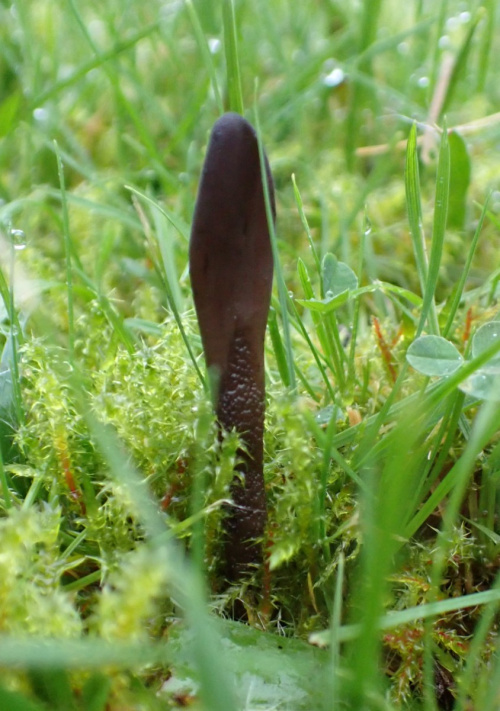 sue
sue
Woodhouse Eaves, Church Hill cemetery
07 November 2024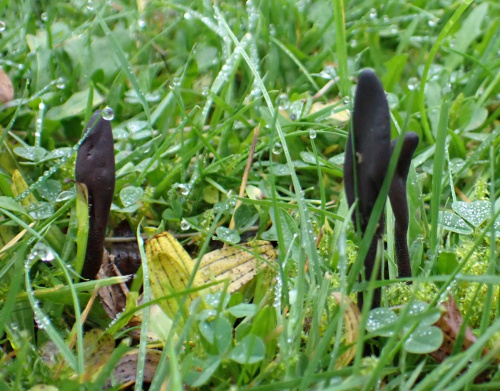 sue
sue
Woodhouse Eaves, Church Hill cemetery
07 November 2024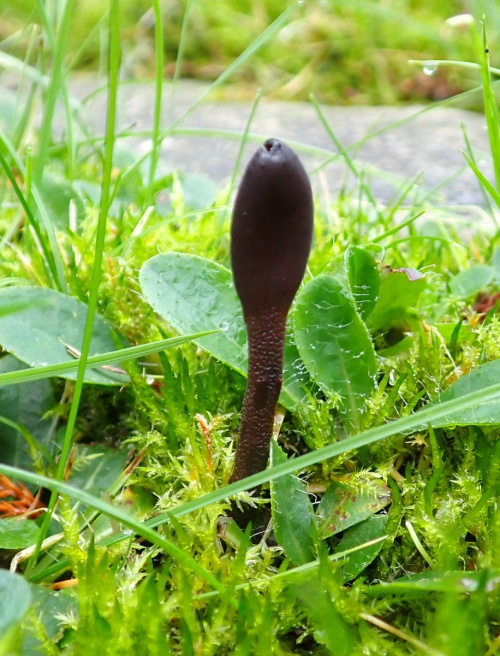 sue
sue
Shepshed Cemetery
06 November 2024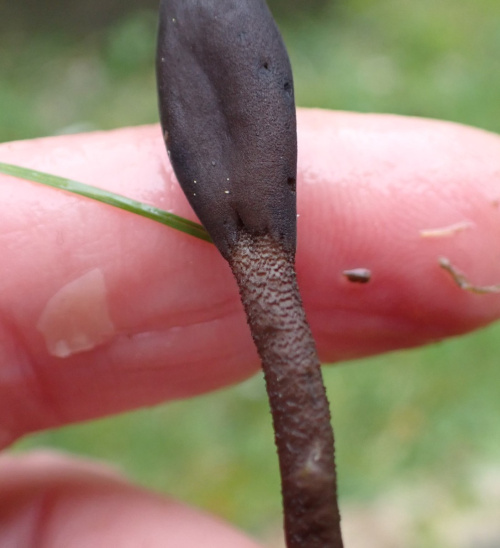 sue
sue
Shepshed Cemetery
06 November 2024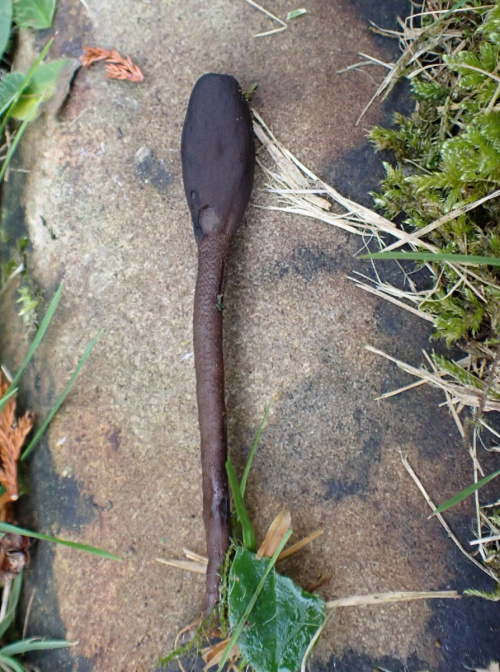 sue
sue
Shepshed Cemetery
06 November 2024
Leicestershire & Rutland Map
Enter a town or village to see local records
MAP KEY:
Yellow squares = NBN records (all known data)
Coloured squares = NatureSpot records: 2025+ | 2020-2024 | pre-2020
UK Map
Additional images
No additional images available for this species.