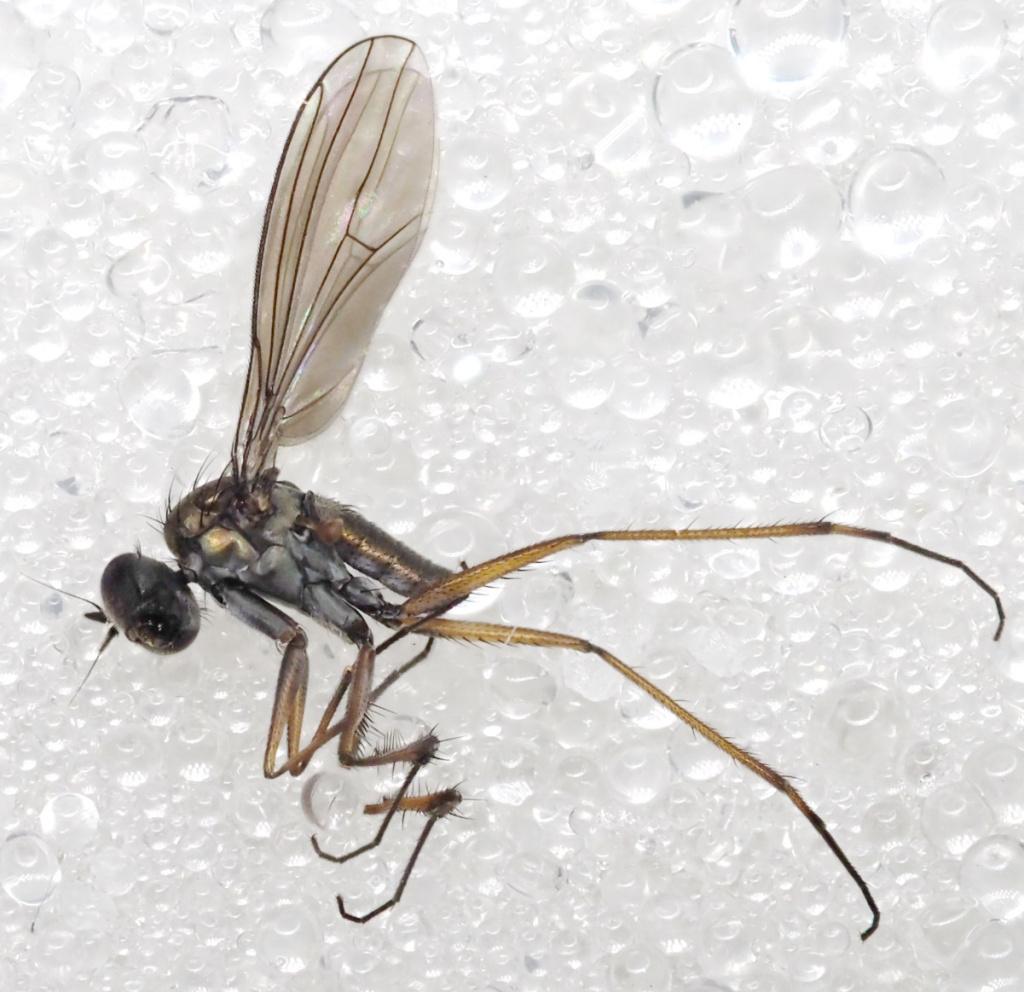
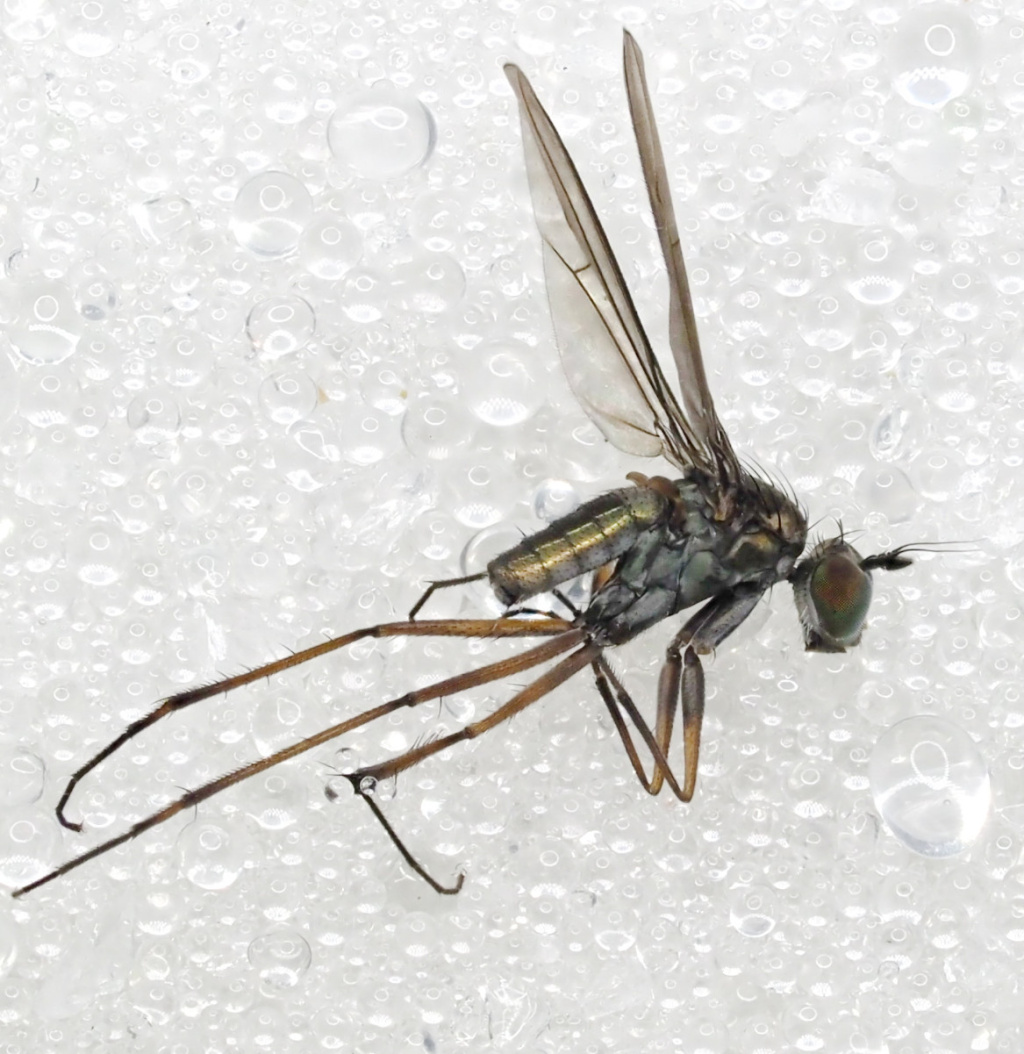
Campsicnemus curvipes
Campsicnemus curvipes
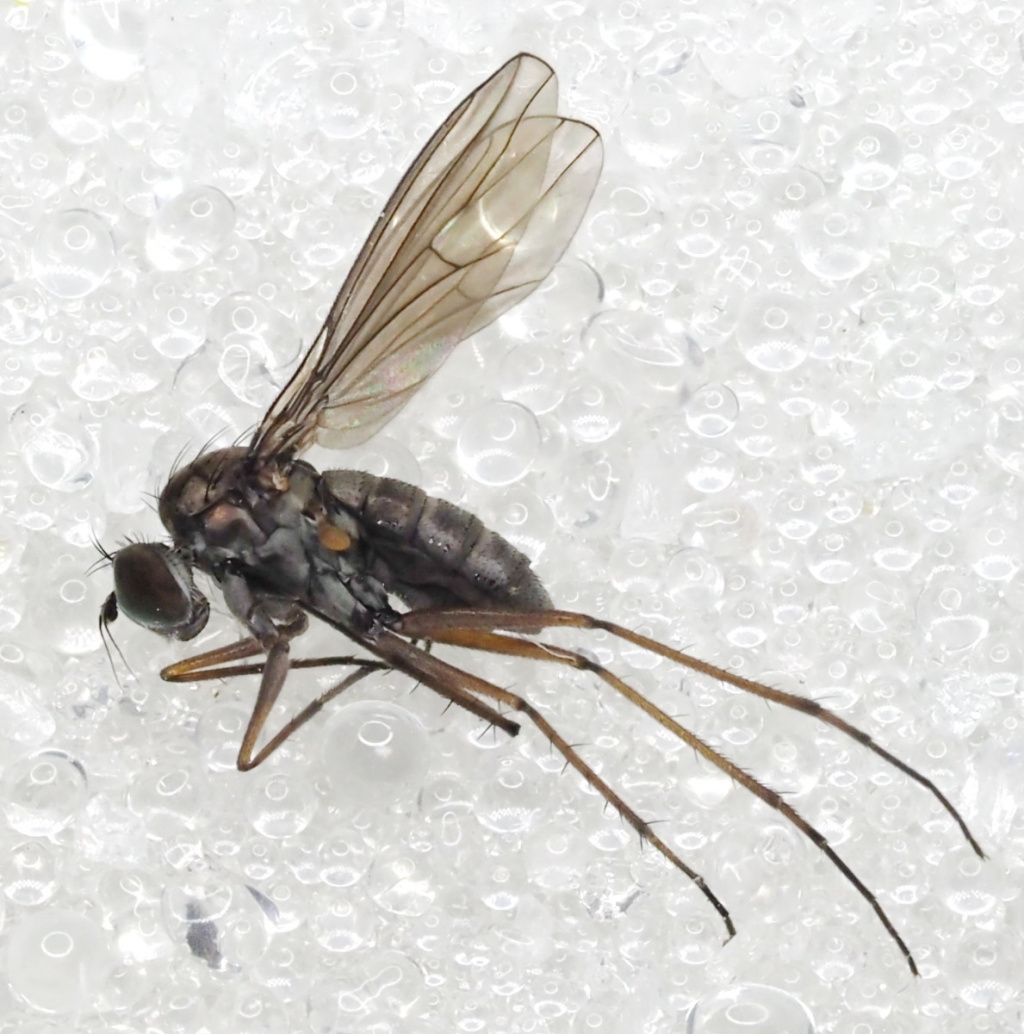
2-2.75mm. Whilst this has the general appearance of a Dolichopid fly (green/brassy metallic body and long legs), the genus can be identified by having either just one row, or no, acrostichal bristles and the arista arising from the base of antennal segment 3.
C. curvipes is the commonest in the genus and can be found all year round. Males are different to females and generally have some kind of modified legs - either a varying thickness and/or an unusual arrangement of bristles. See the ID checklist for more details.

Genus
- Acrostichals absent or in 1 row
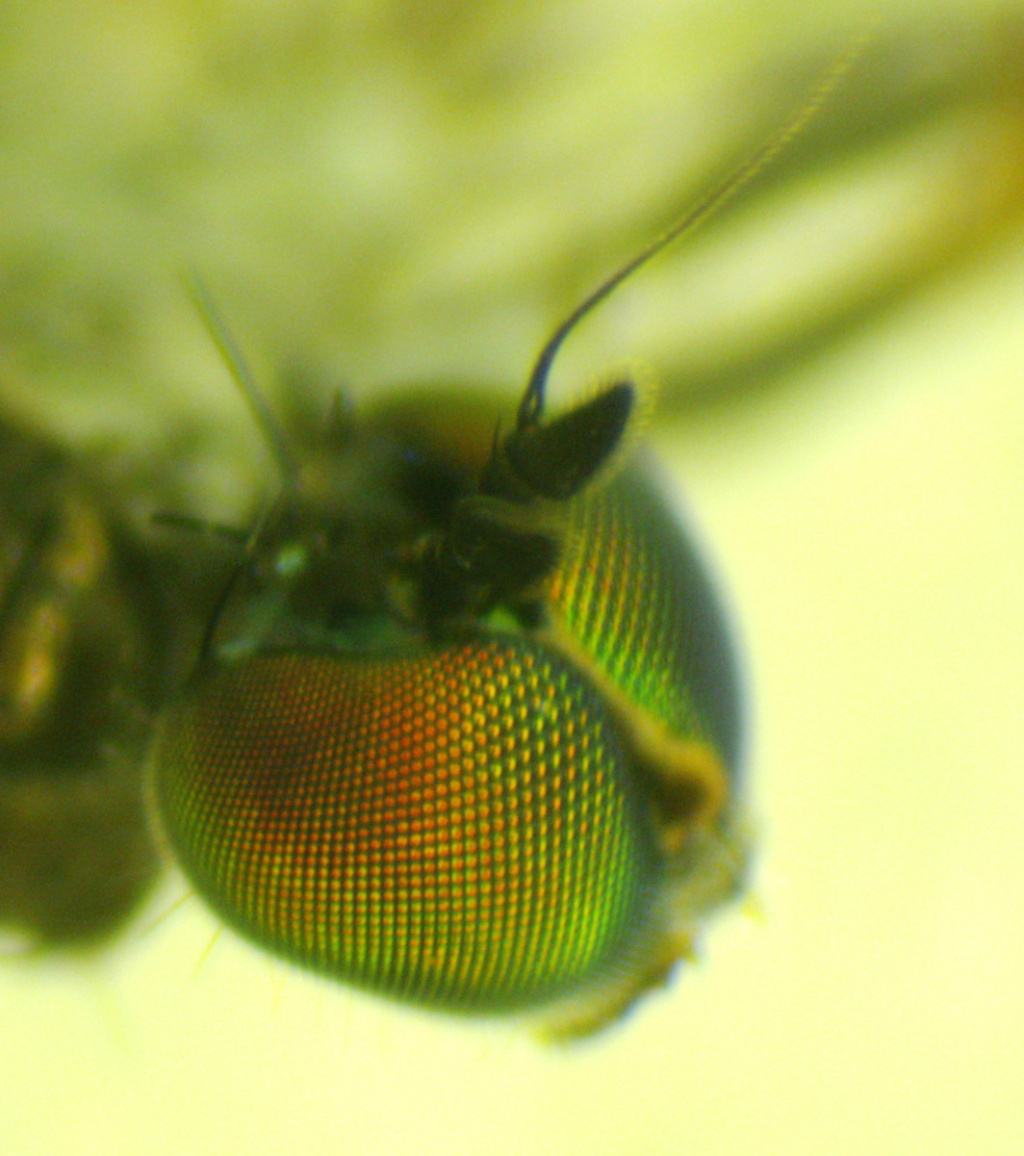
- Arista arising from base of antennal segment 3
- First antennal segment bare
- Cubital vein and discal vein roug
- hly parallel
Males
- 2-2.75mm
- Eyes touching
- Antennae all black
- Front coxa with all white hairs and black setae at the apices
- Short setae along the costa are all the same length
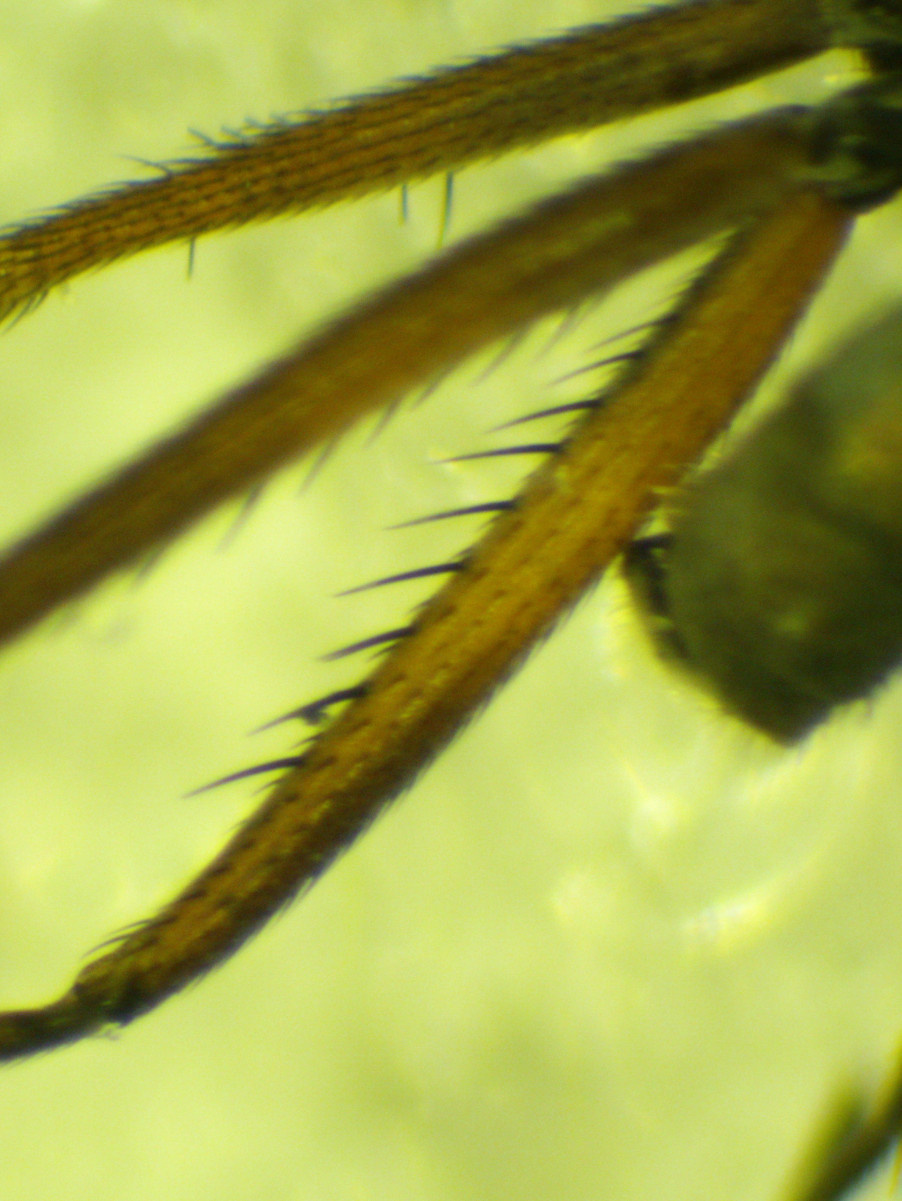
- Hind femur with a row of ventral bristles
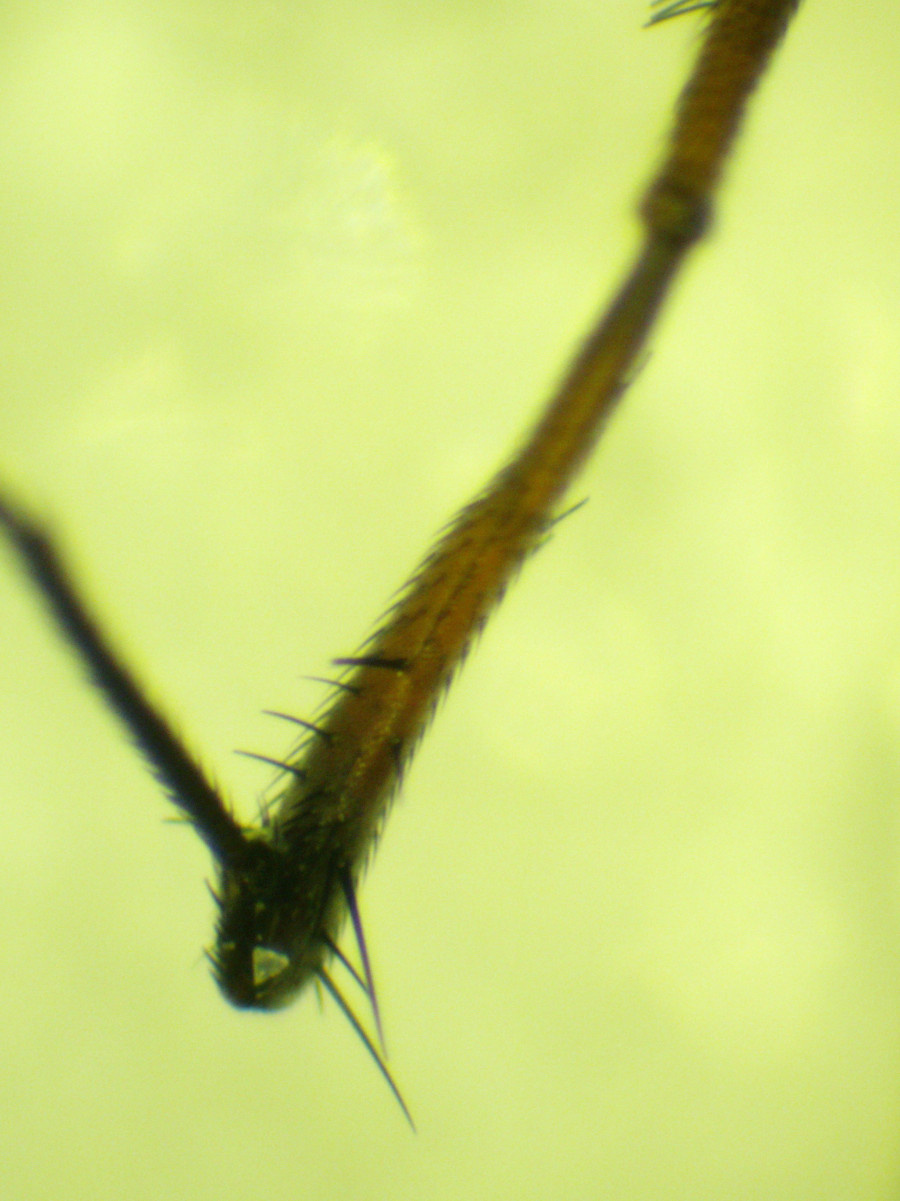
- Hind tibia 'club-shaped' with many setae at the thicker apical end
- First segment of the mid tarsus very short
Females
- 2.5-3mm
- Antennae all dark
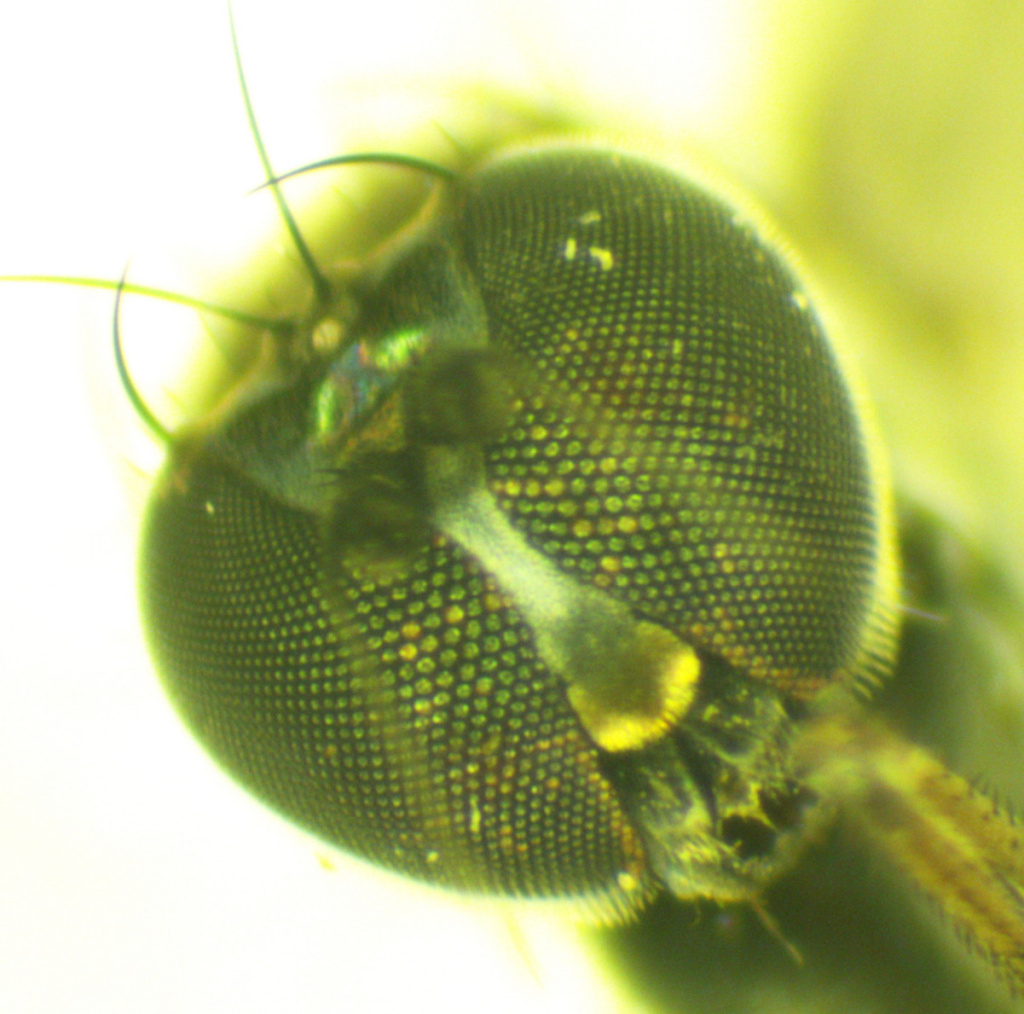
- Face narrows below the antennae then widens
- Clypeus with bright yellow lower edge
- Front coxa dark but with whitish hairs and black bristles
- Hairs on costa all of same length
- Basal section of vein M more or less equal in length to the apical section
- Apical section of vein Cu not more than twice as long as the outer cross-vein
Pond edges, damp grassland.
All year
Common and widespread
Common
 David Nicholls
Ratby, Wirlybones Wood
03 March 2025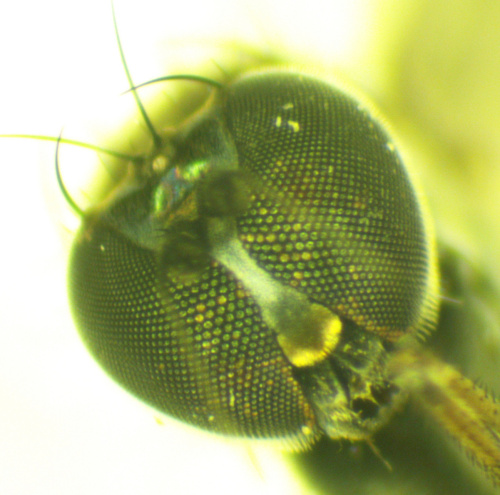 David Nicholls
Ratby, Brook Meadow
12 April 2025
Female. Face narrows between eyes. Clypeus bright yellow.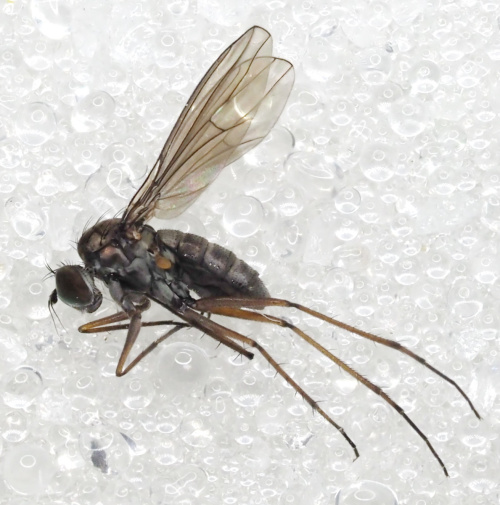 David Nicholls
Ratby, Brook Meadow
12 April 2025
female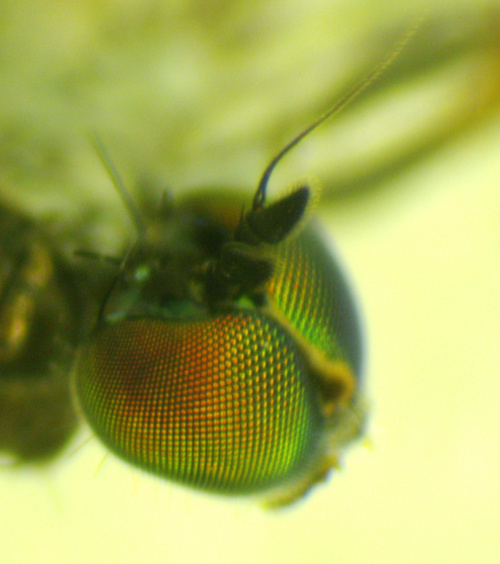 David Nicholls
Ratby, Wirlybones Wood
03 March 2025
Arista attached at base of 3rd segment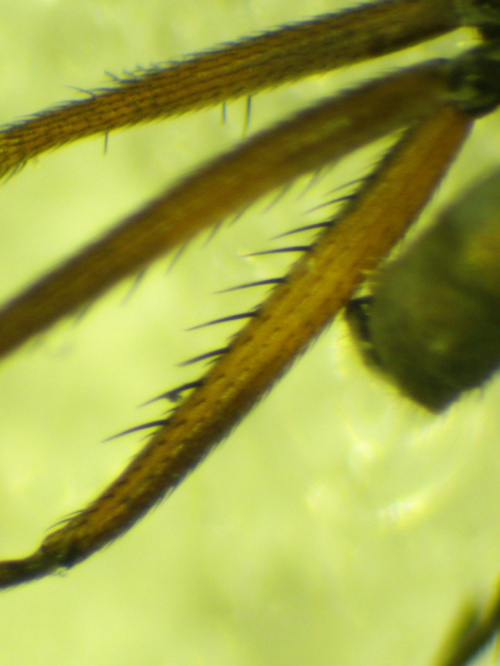 David Nicholls
Ratby, Wirlybones Wood
03 March 2025
Ventral setae on mid femur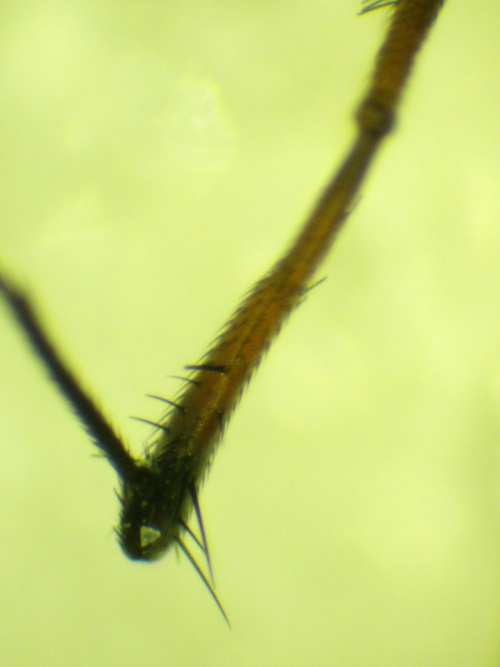 David Nicholls
Ratby, Wirlybones Wood
03 March 2025
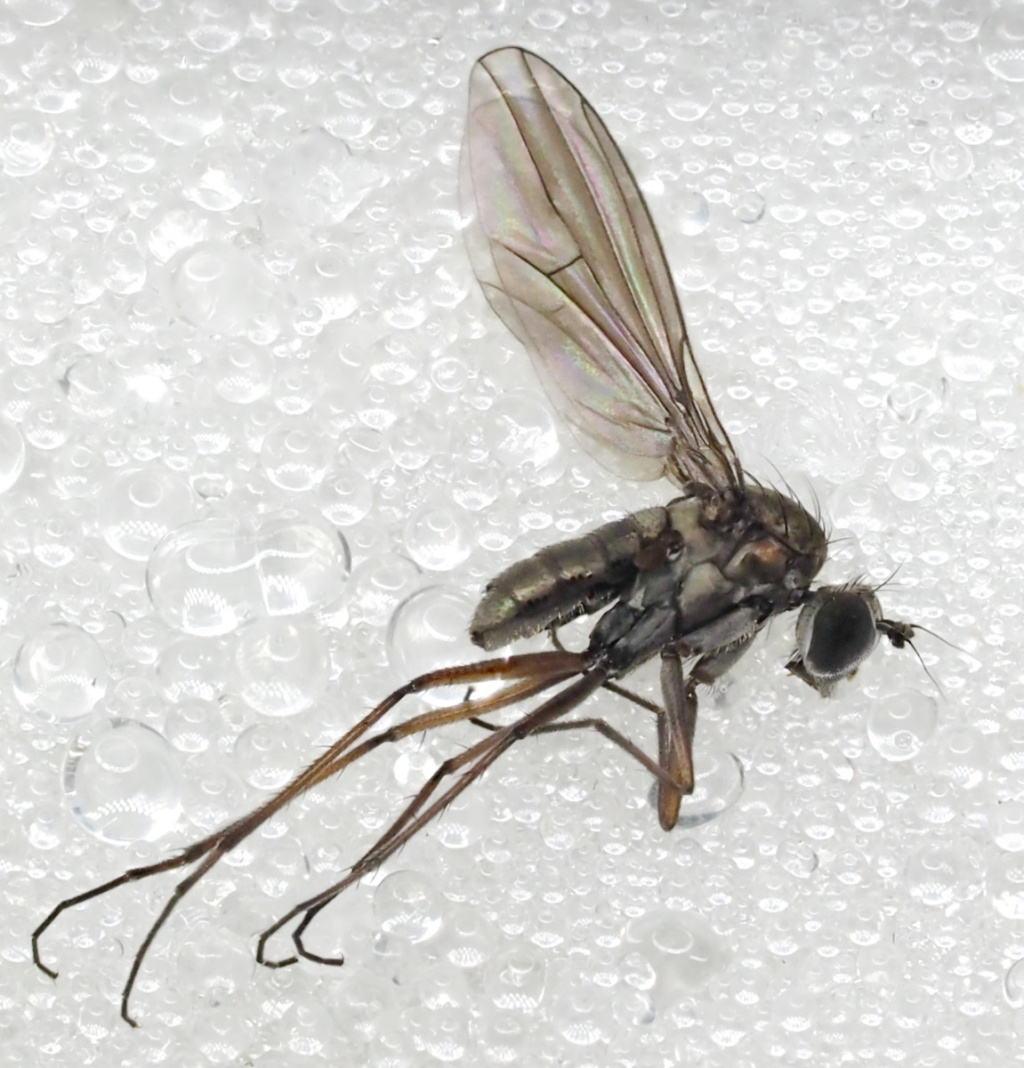
Club-shaped mid tibia
Leicestershire & Rutland Map
Enter a town or village to see local records
MAP KEY:
Yellow squares = NBN records (all known data)
Coloured squares = NatureSpot records: 2025+ | 2020-2024 | pre-2020
UK Map
Additional images