Houdini Fly
Houdini Fly - Cacoxenus indagator
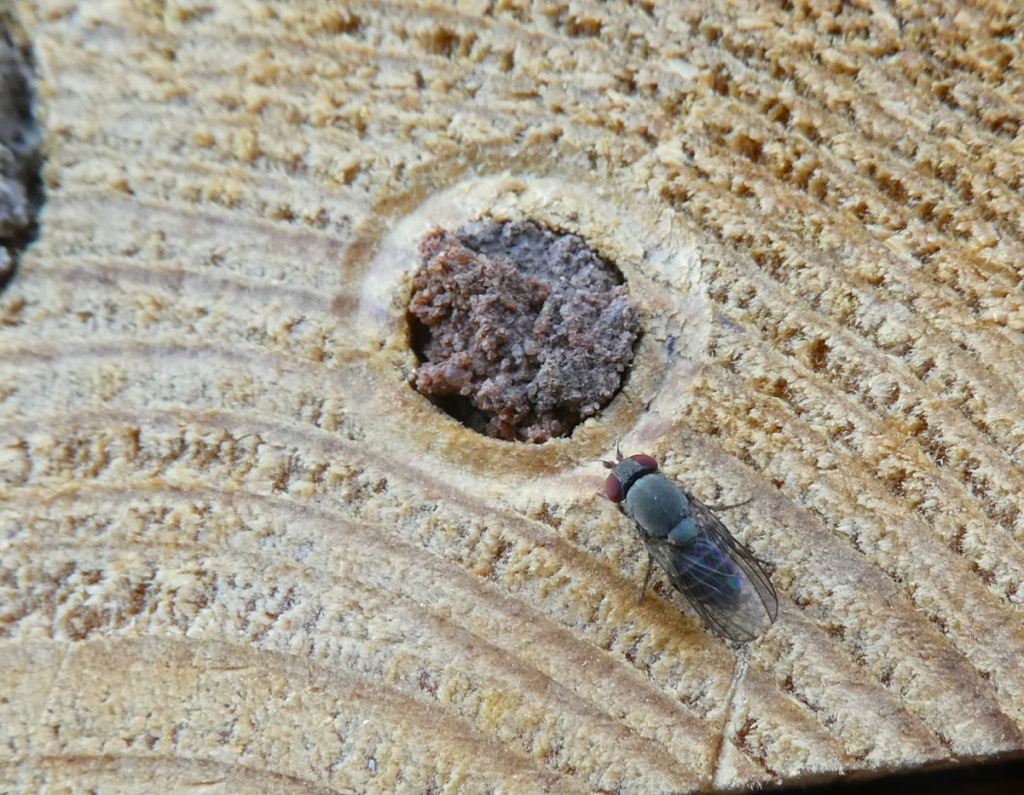
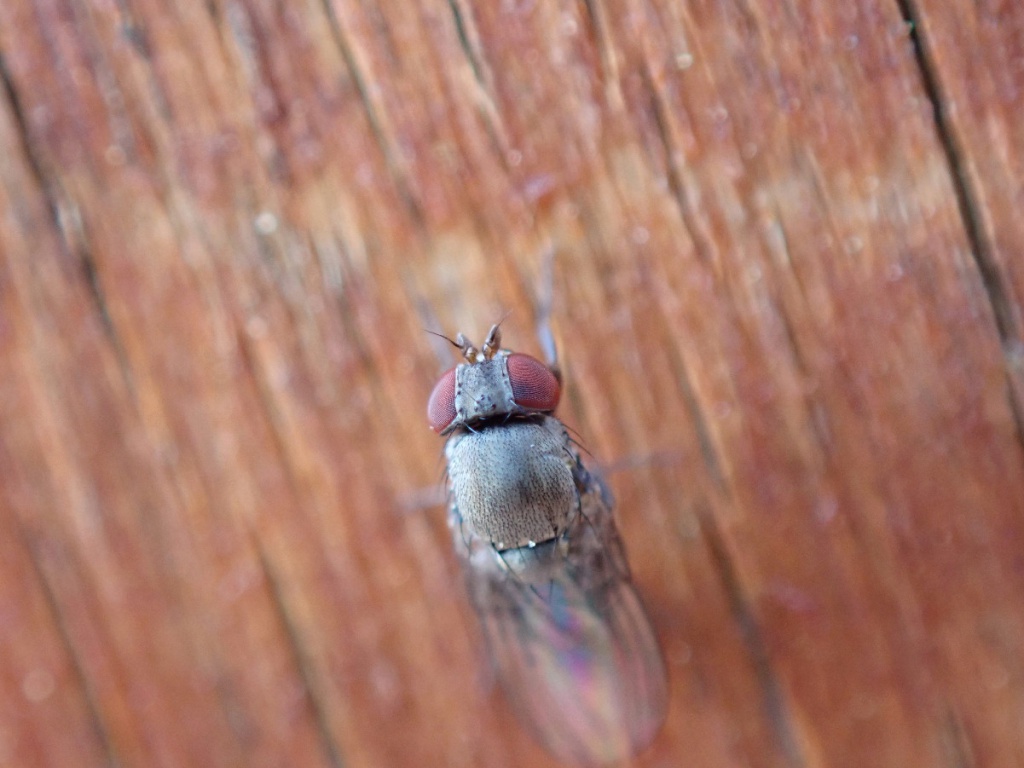
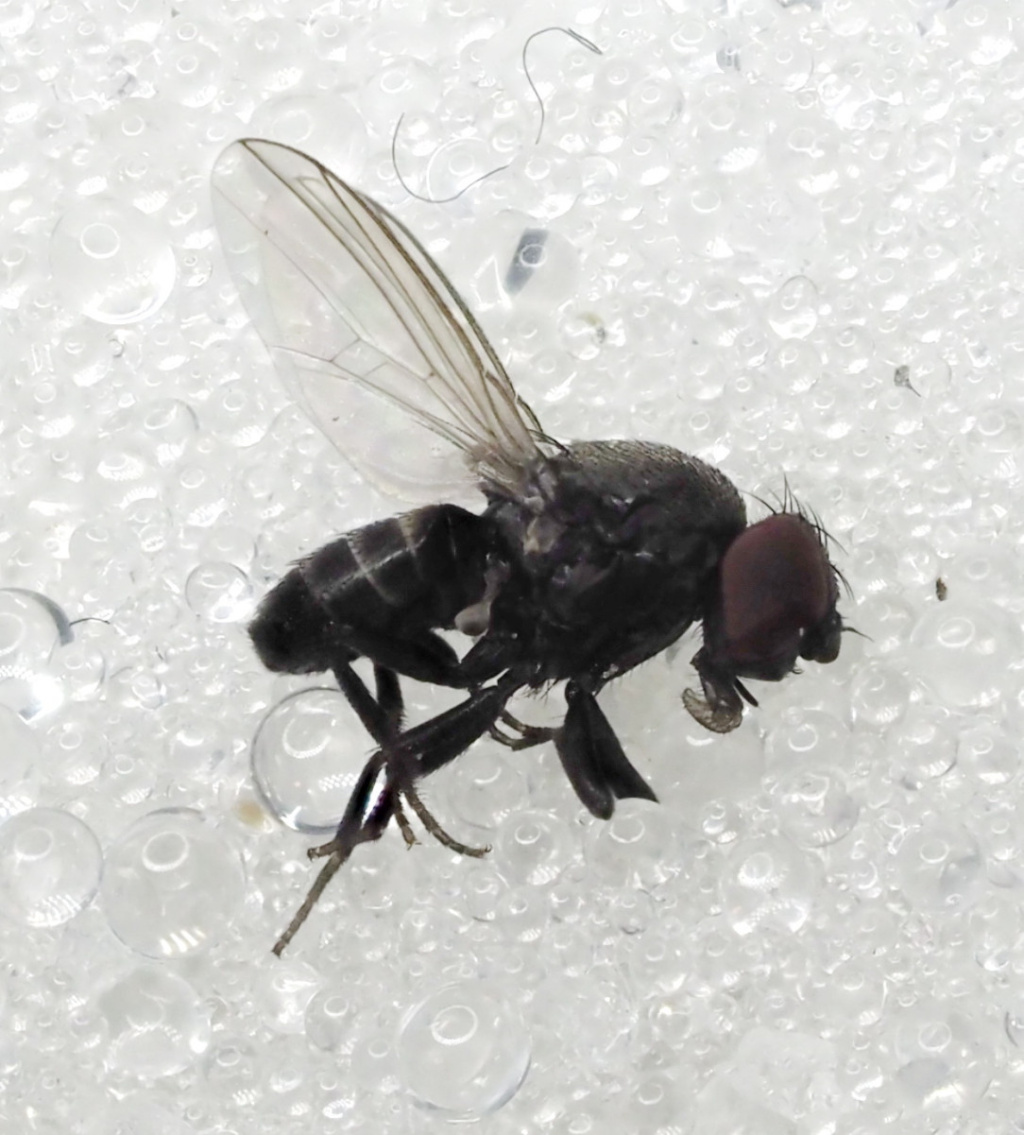
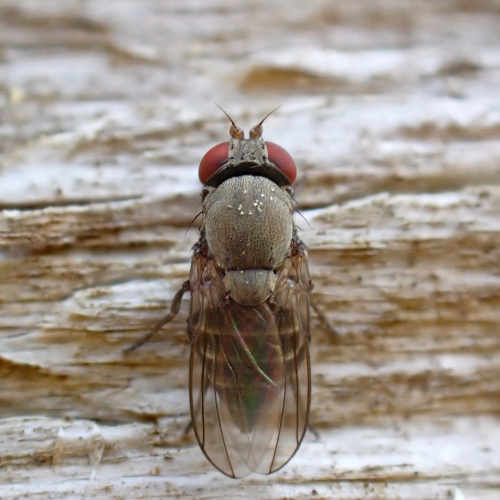
Sometimes called the Houdini Fly, this fruit fly is a cleptoparasite of mason bees, particularly the Red Mason Bee Osmia bicornis, where the larvae feed mainly on stored pollen but may also eat the bee larvae. It is a small brown fly (wing length 2.5mm) with a dumpy body, clear wings and large red eyes.

- arista pubescent
- wings clear
- brown body and legs
- wing length 2.5mm or longer
- costa extends no further than R4+5
- acrostichal bristles in 14-20 irregular rows
- frons black, dusted grey
- preapical bristles on all tibia
- hind leg metatarsus slightly swollen
Around nesting mason bees.
Summer
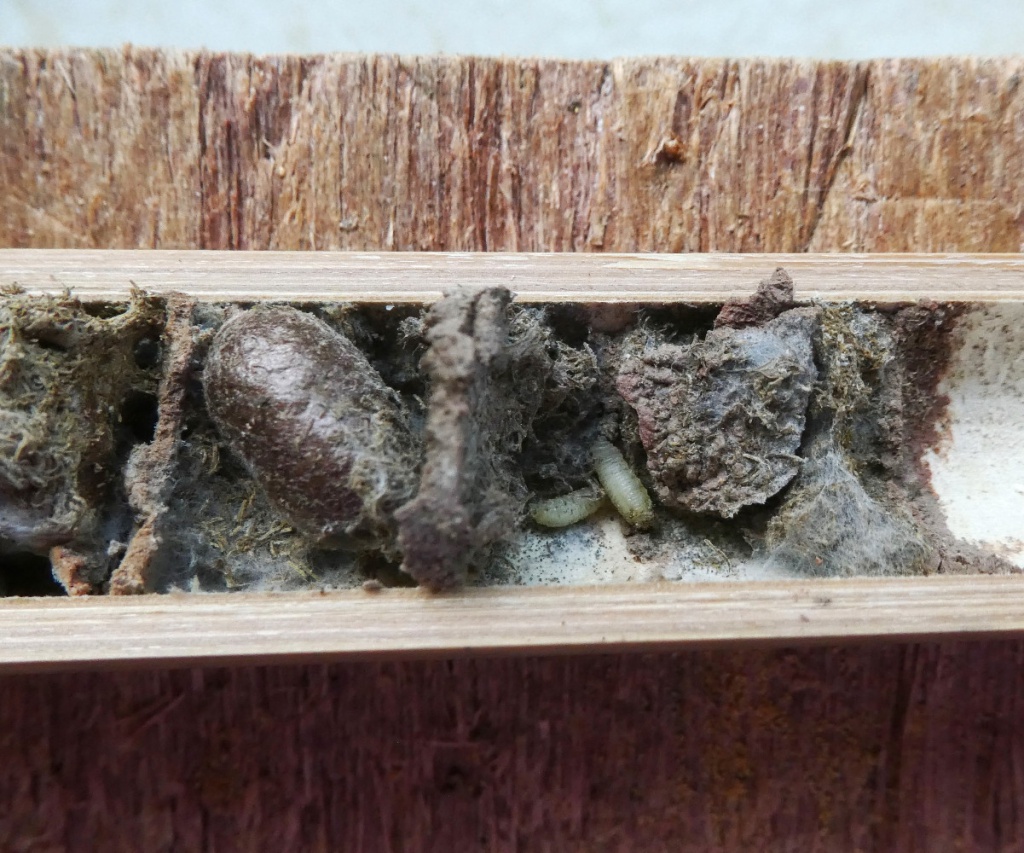
Adult flies enter newly constructed bee larval cells and lay eggs on the pollen store. The newly emerged flies have soft bodies and initially under-developed wings to aid their escape by breaking through the mud wall of the cell using an expandable head capsule. Not all flies make it and many die trying to escape.
Fairly common and widespread.
Seemingly uncommon but most probably under-recorded.
Nurturing Nature - description and video of Cacoxenus indagator in a bee nest chamber
 Mark Skevington
Whetstone
10 May 2025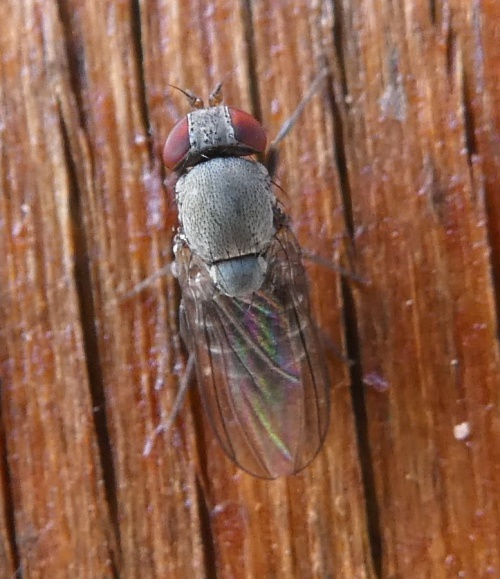 Kate Nightingale
Cropston garden
12 May 2021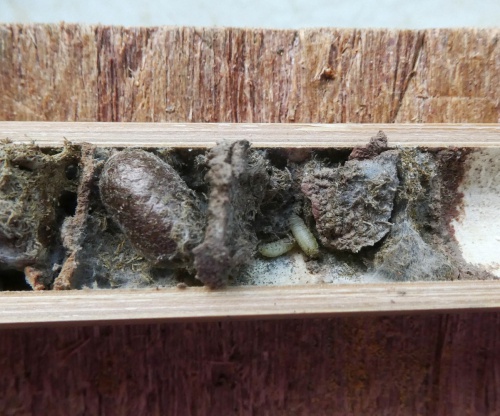 Kate Nightingale
Cropston garden
23 February 2020
fly larvae within bee larval cell
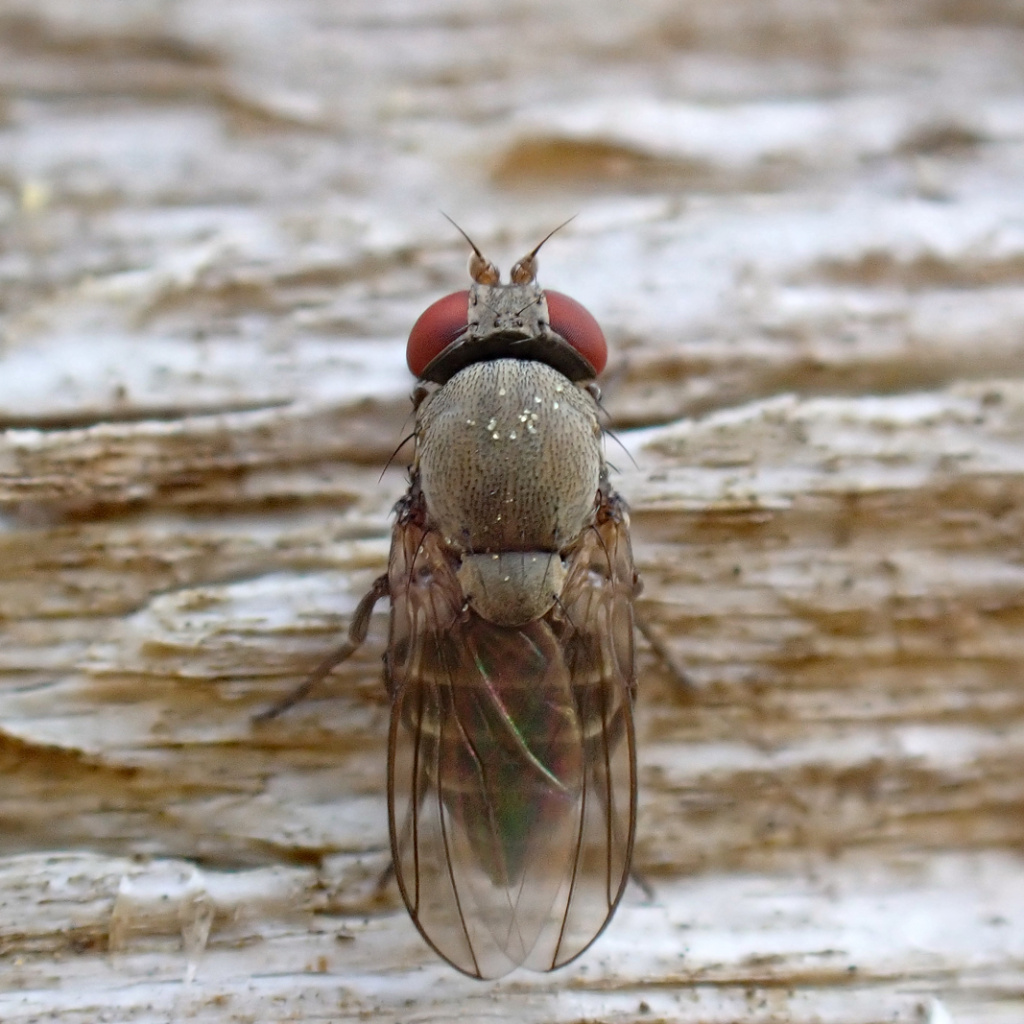
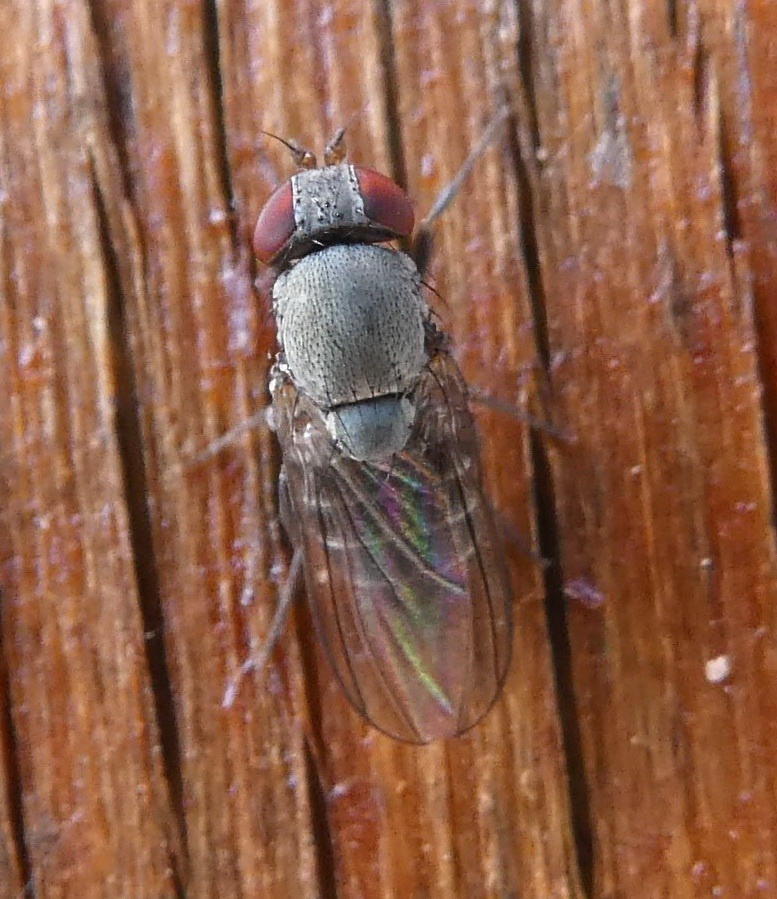
Leicestershire & Rutland Map
Enter a town or village to see local records
MAP KEY:
Yellow squares = NBN records (all known data)
Coloured squares = NatureSpot records: 2025+ | 2020-2024 | pre-2020
UK Map
Additional images