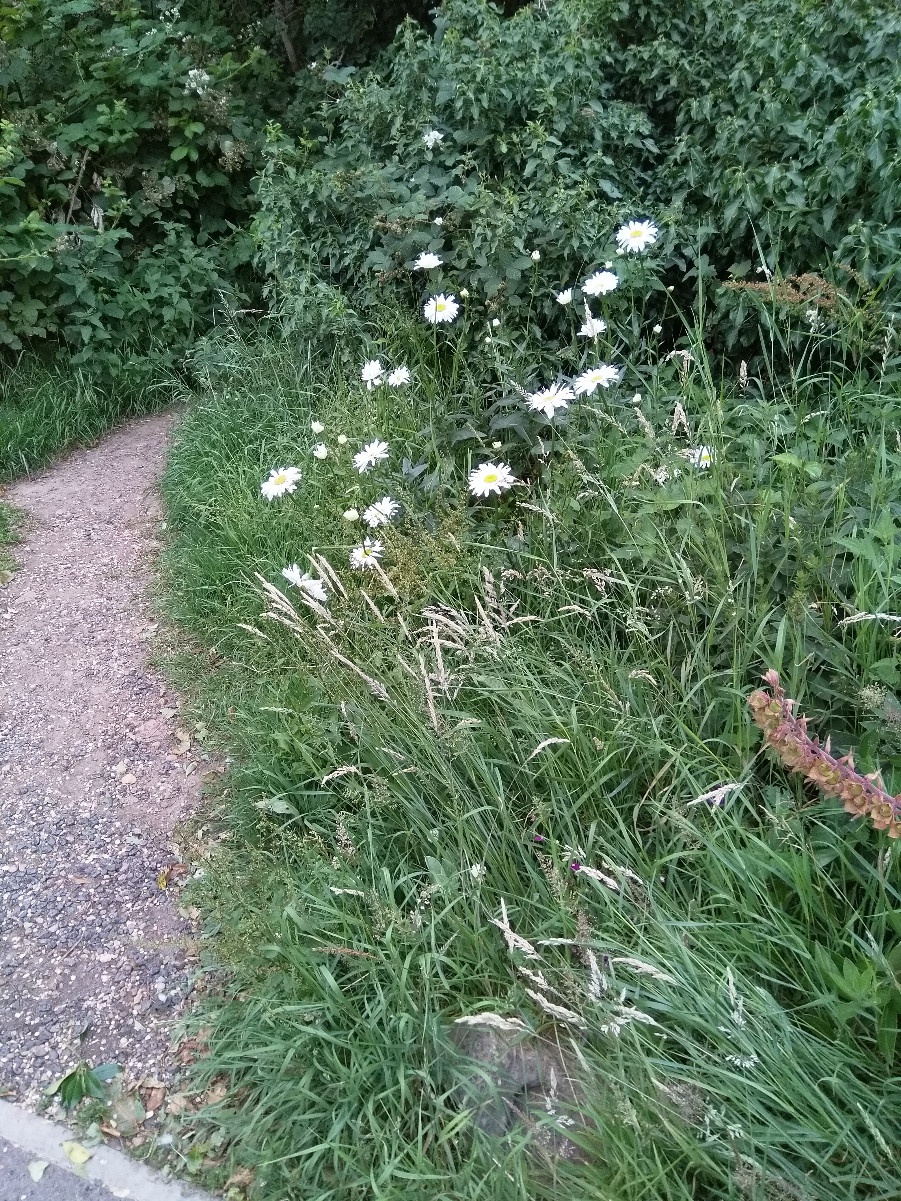
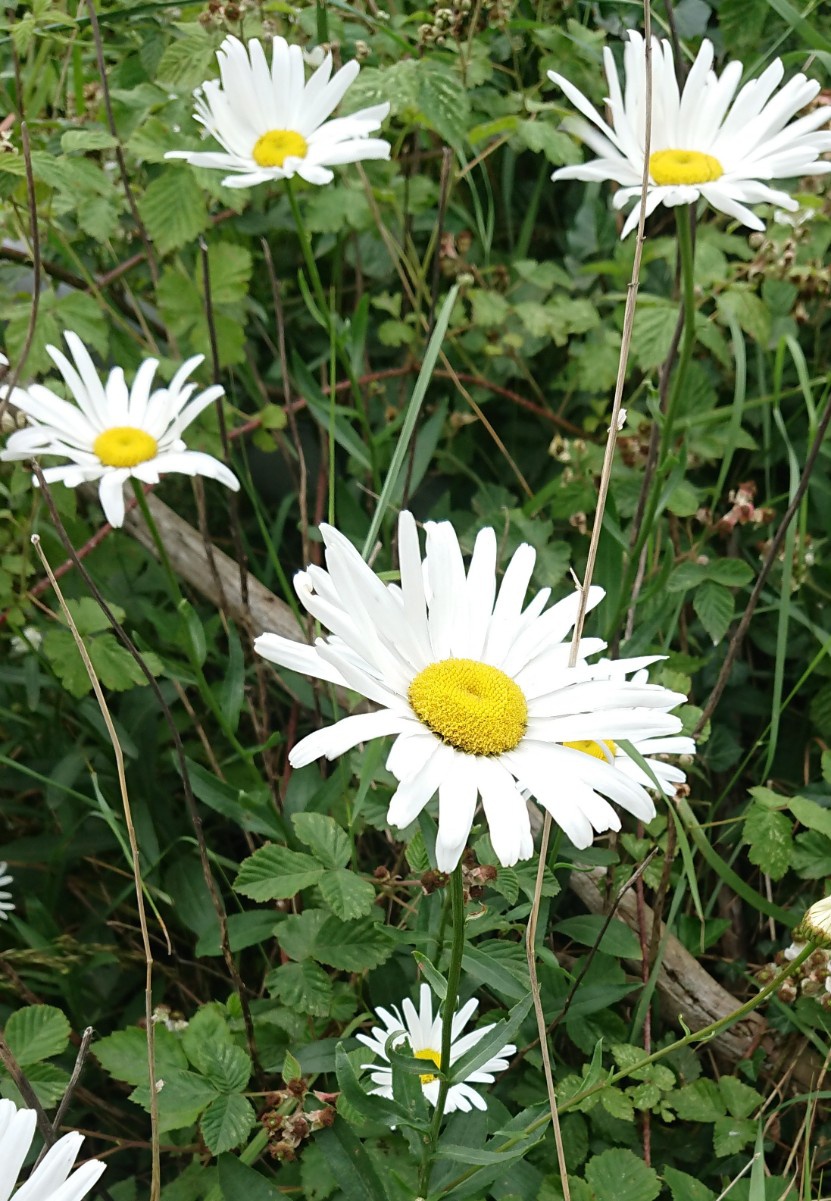
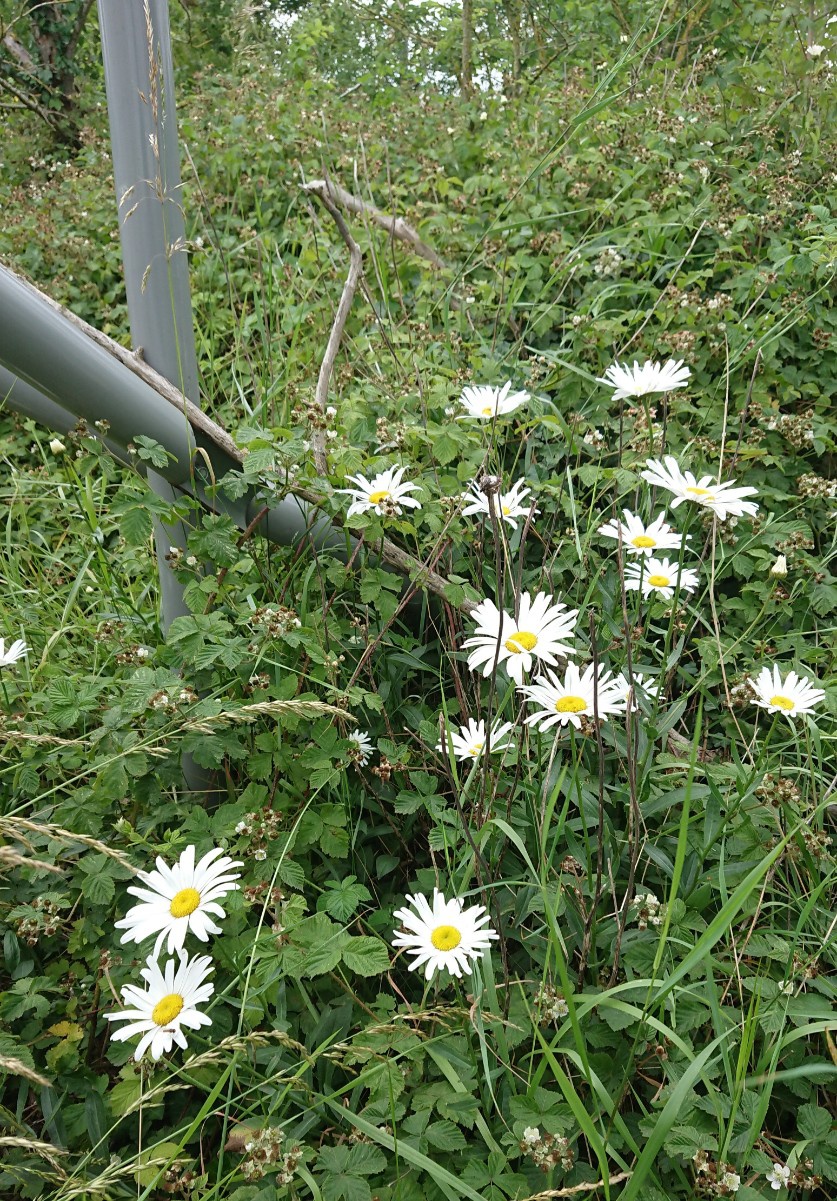
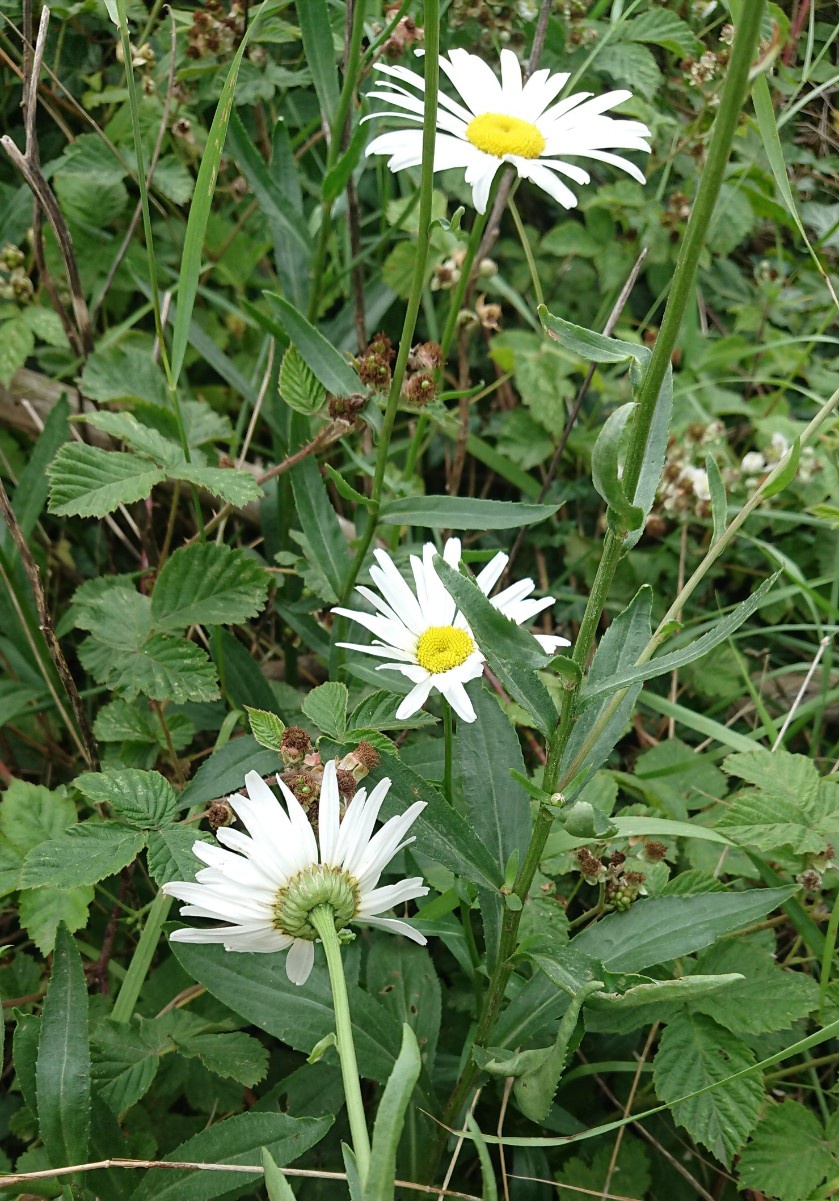
Shasta Daisy
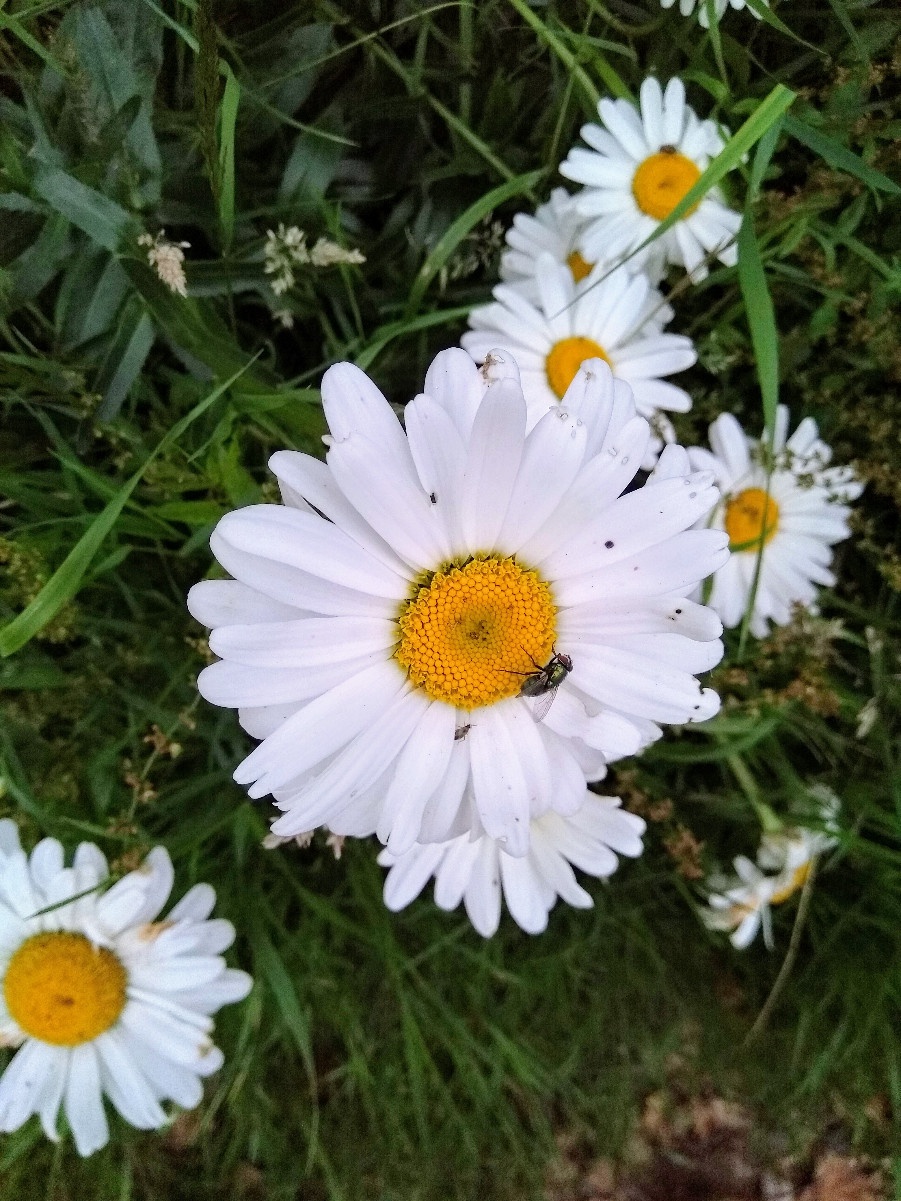
Shasta Daisy - Leucanthemum lacustre x maximum = L. x superbum
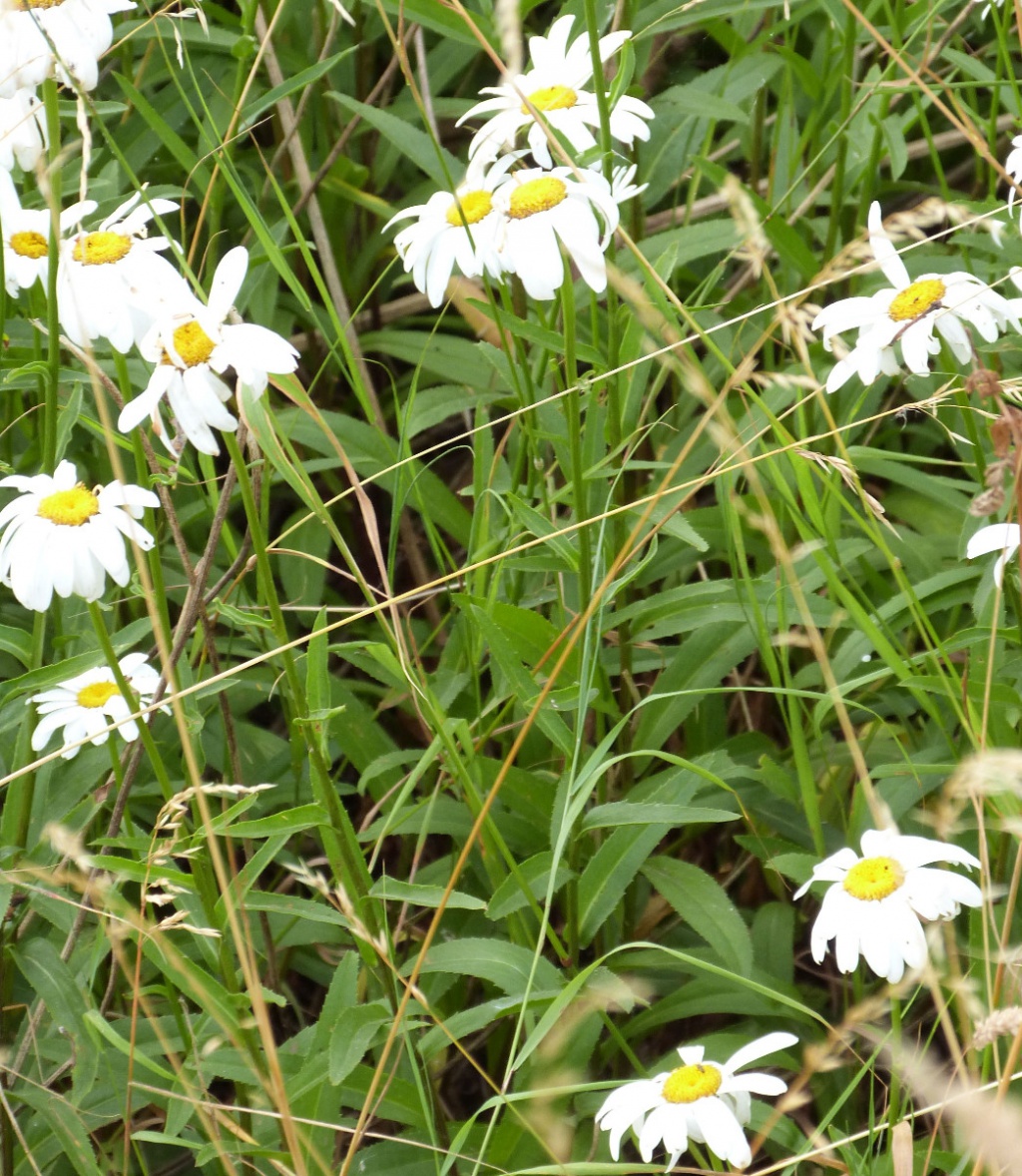
Similar to Oxeye Daisy (Leucanthemum vulgare) but a more vigorous plant with larger flowerheads (70 to 90 mm) and broader, toothed leaves.
Ox-eye Daisy (Leucanthemum vulgare) and Autumn Ox-eye (Leucanthemella serotina)

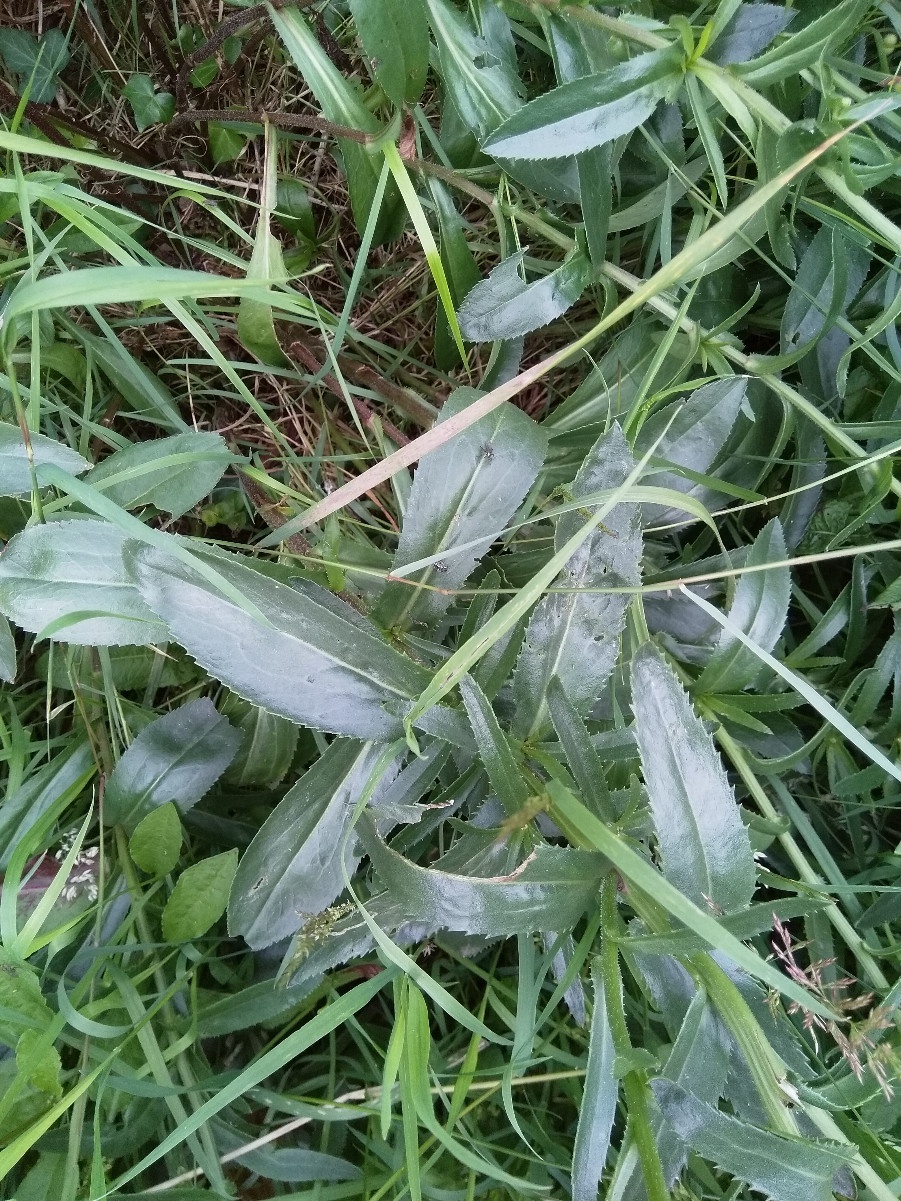
Larger and taller than Ox-eye Daisy; basal and lower stem-leaves elliptic-oblong, gradually contracted to narrowly cuneate base. Upper stem leaves usually shallowly serrate to entire. Strongly aromatic; Autumn Oxeye is not aromatic, and has paler green, thinner, more sharply and deeply serrate leaves.
The photo must include basal, upper and lower leaves; this species cannot be verified from a photo of the flowers alone
Often cultivated, this plant occasionally escapes and establishes in the wild. It may be found on disturbed ground, embankments, verges and roadsides.
Flowering mid May to late July.
Perennial.
Widespread in Britain as an escape from cultivation which has become established in the wild.
Infrequent or under recorded in Leicestershire and Rutland. In the 1979 Flora survey of Leicestershire it was found in 13 of the 617 tetrads.
 Graham Calow
Verge of M69 Sapcote
27 July 2016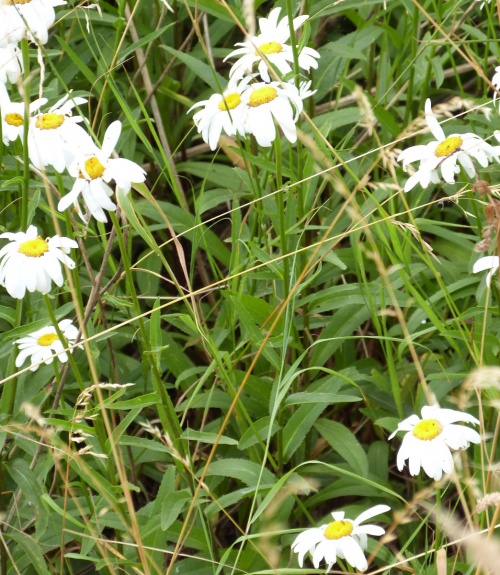 Graham Calow
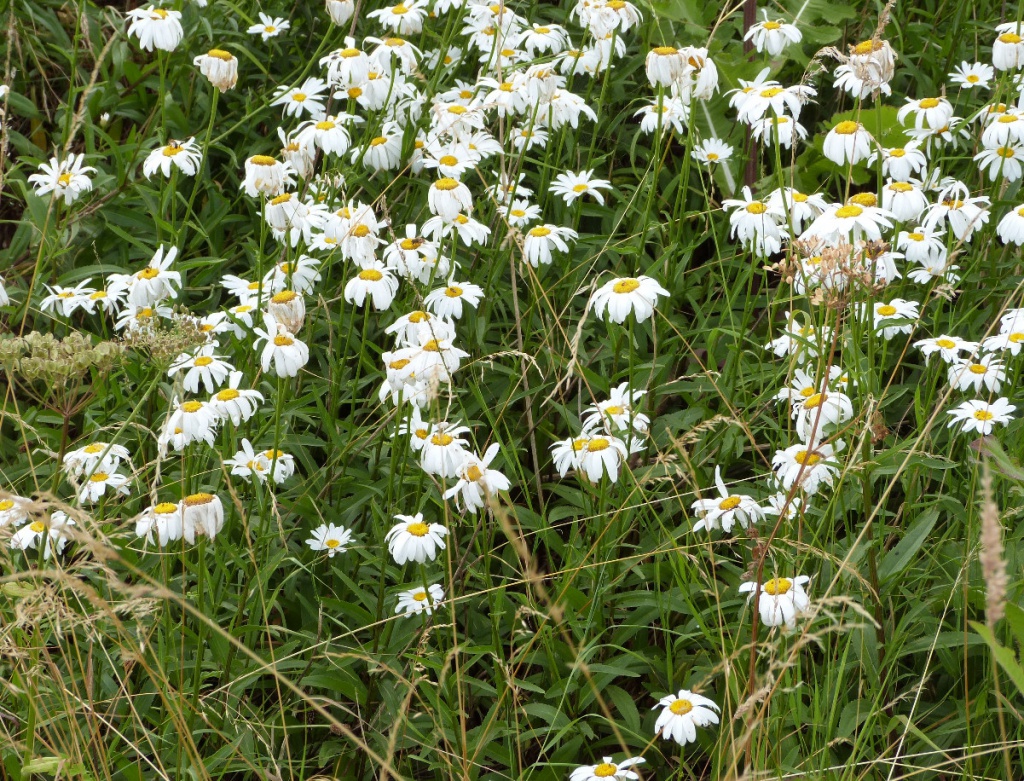
Verge of M69 Sapcote
27 July 2016
Leicestershire & Rutland Map
Enter a town or village to see local records
MAP KEY:
Yellow squares = NBN records (all known data)
Coloured squares = NatureSpot records: 2025+ | 2020-2024 | pre-2020
UK Map
Additional images