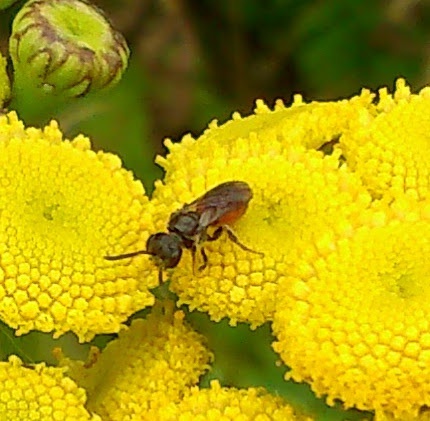
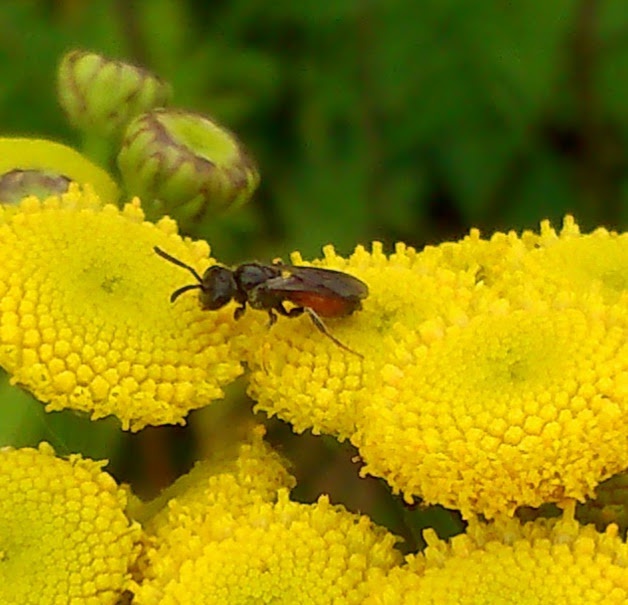
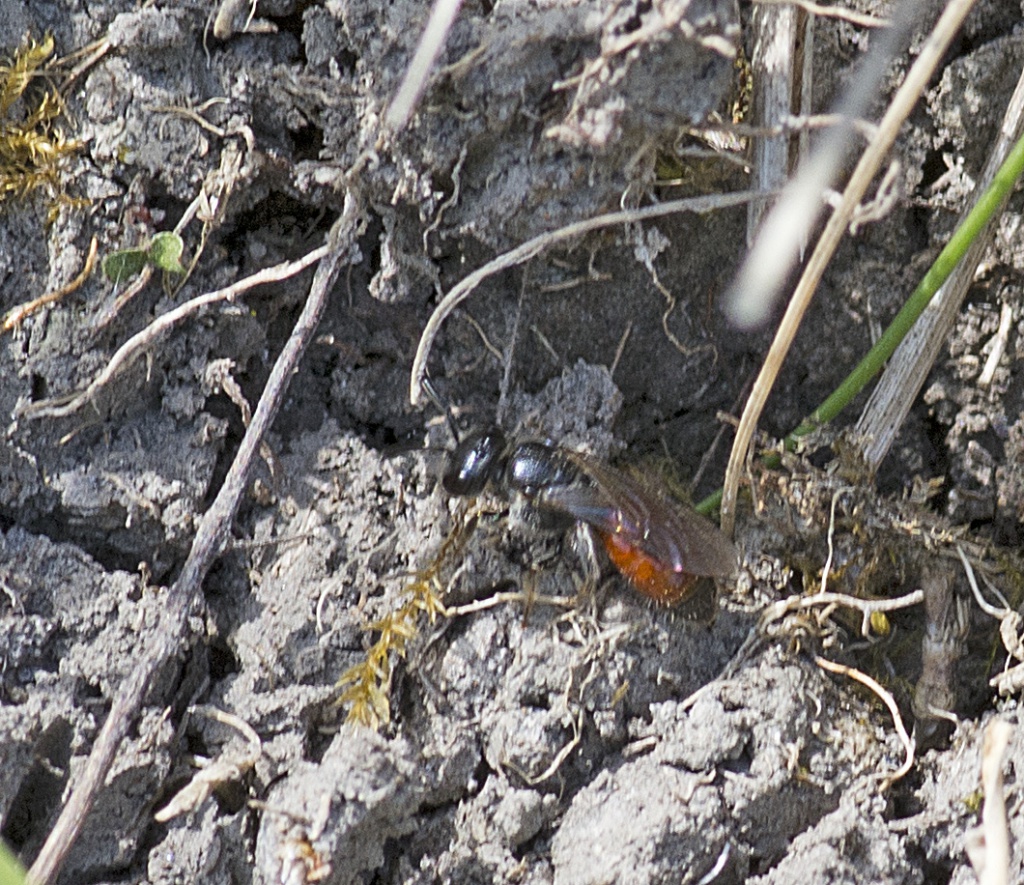
Box-headed Blood-bee
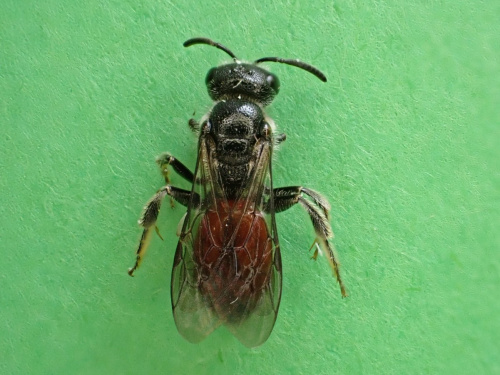
Box-headed Blood-bee - Sphecodes monilicornis
One of three medium-sized to large Sphecodes (Blood-bees), in which females have punctures (rather than just rugosity) behind the ocelli. Males are one of a number of species with somewhat compressed and shiny antennal flagellar segments and are best confirmed using genitalia.
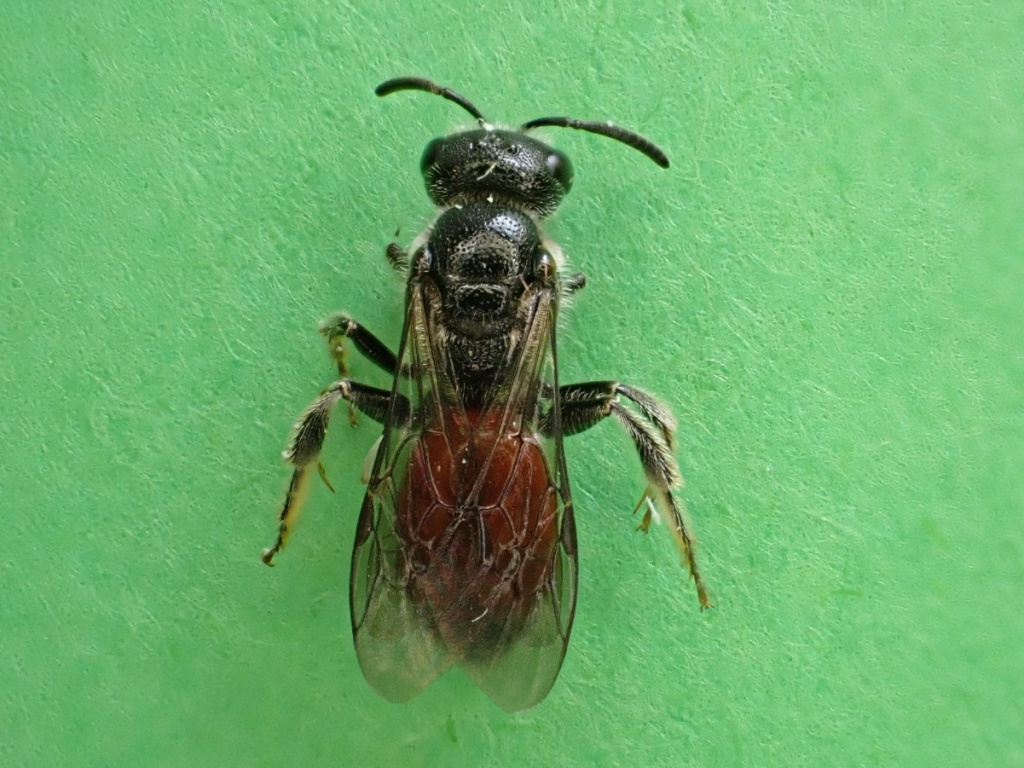
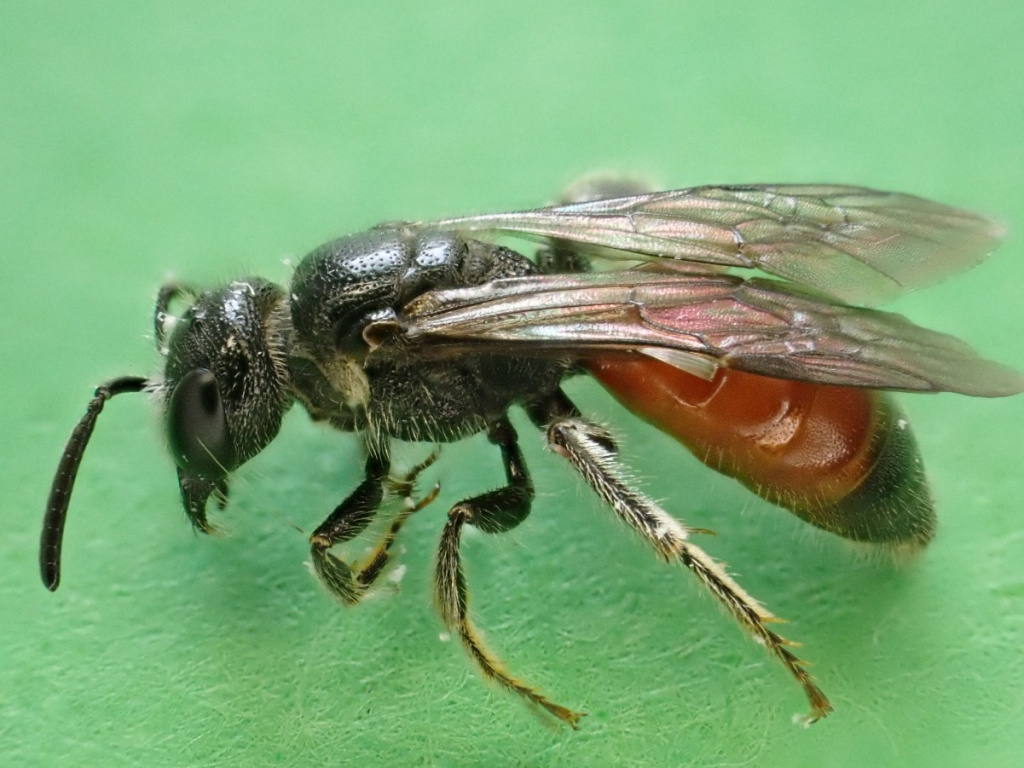
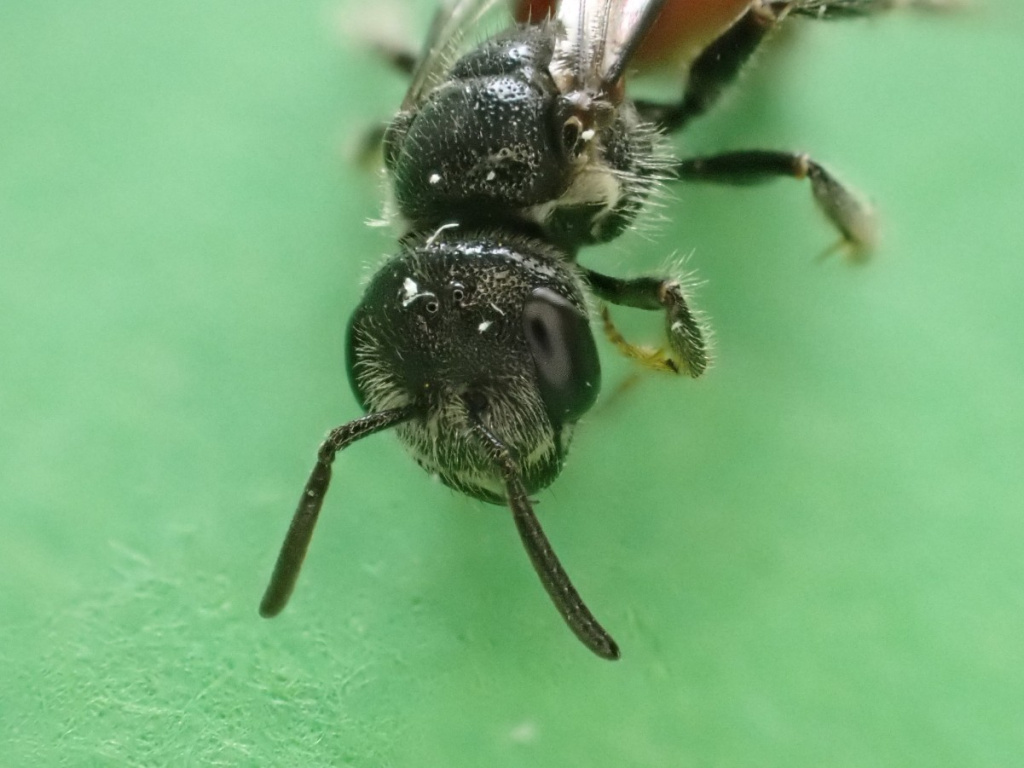
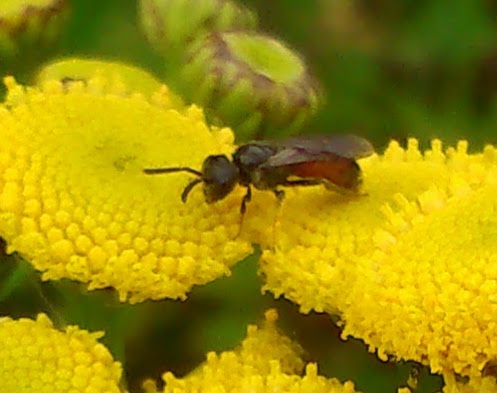
S. monilicornis is easily separated from the other two (S. gibbus and S. reticulatus) by the box-shaped head when seen in top view, with the hind corners well formed. The hairs of the hind tibiae are also whitish rather than dark like the other two, and the pygidium is broader.

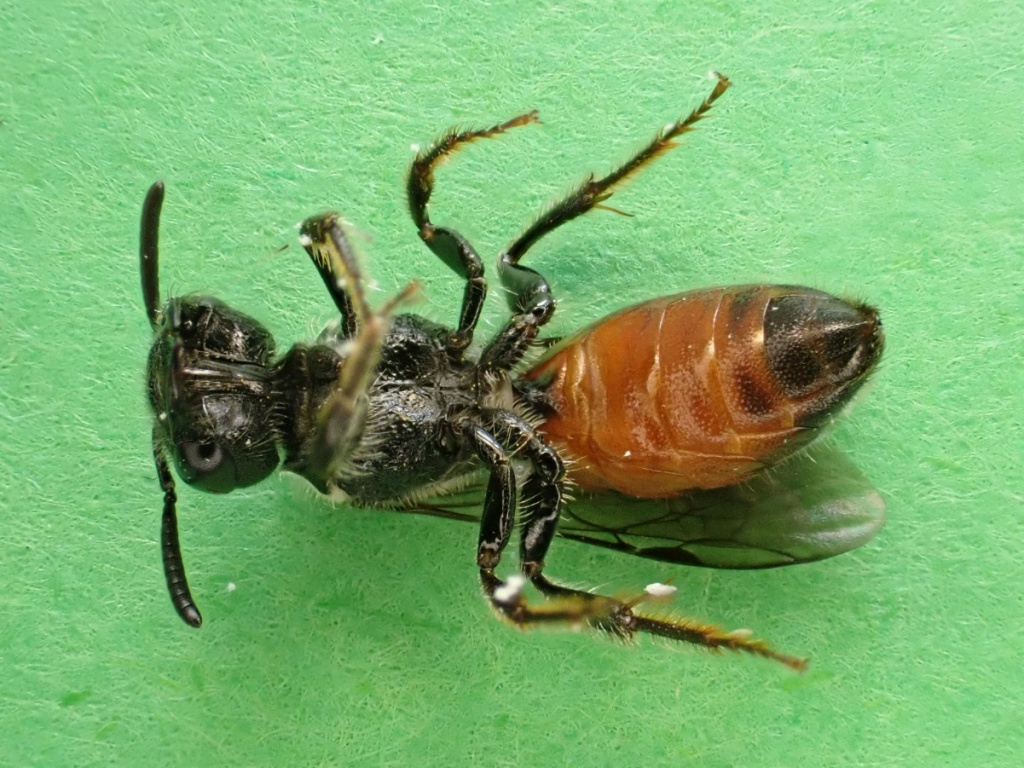
Most solitary bees and wasps are difficult to identify, and can rarely be identified from photos taken in the field. All red-rated records should include a photo or set of photos of the specimen, illustrating the key characters taken from a standard key, which should also be referenced (e.g. ‘Falk, 2015’). The full set of key characters are generally not visible in field photos and photos are rarely sharp enough. To aid in the verification of your records, please include face shot, side, top and wings. The notes should state whether male or female, and explain how the specimen met the key characters. Although NS may not be able to identify the species even if these reference photos are provided, the photos will be stored with the record and may allow it be identified in future. Alternatively, NS will accept records identified by a recognised local or national expert, or that have been identified via BWARS Facebook Group. If you have obtained this advice, please note the name of the person/organisation identifying the record in the ‘determiner’ field (e.g. ‘Stuart Roberts, BWARS Facebook’) rather than just a comment of ‘BWARS Facebook’.
Wherever the hosts are found.
Females fly from late March to mid-September. Males from July to September.
Cleptoparasite of several species of ground nesting bee including Lasioglossum calceatum, albipes and malachurum.
Widespread and locally common in the southern half of Britain with records extending north to Scotland.
Status in Leicestershire and Rutland not known.
 Adam Poole
Broughton Astley Garden
26 April 2026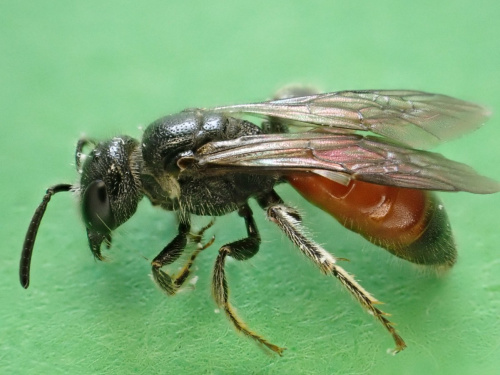 Adam Poole
Broughton Astley Garden
26 April 2026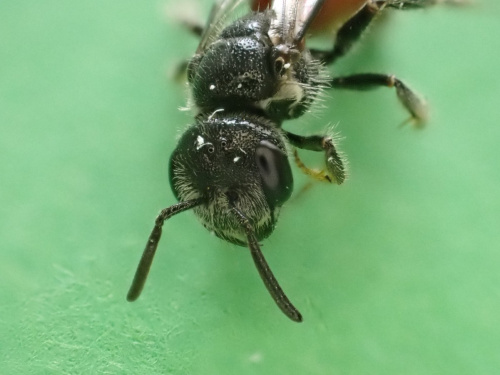 Adam Poole
Broughton Astley Garden
26 April 2026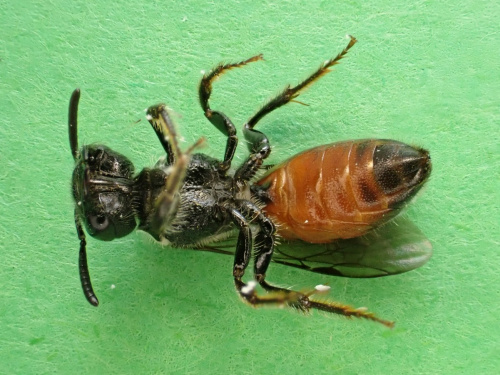 Adam Poole
Broughton Astley Garden
26 April 2026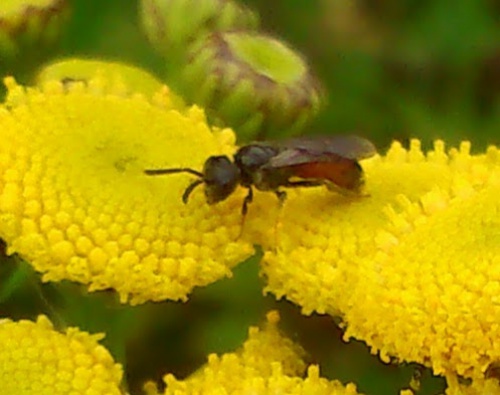 steven lewis
welby
29 July 2017
Leicestershire & Rutland Map
Enter a town or village to see local records
MAP KEY:
Yellow squares = NBN records (all known data)
Coloured squares = NatureSpot records: 2025+ | 2020-2024 | pre-2020
UK Map
Additional images