Fern-leaved Hook-moss
Fern-leaved Hook-moss - Cratoneuron filicinum
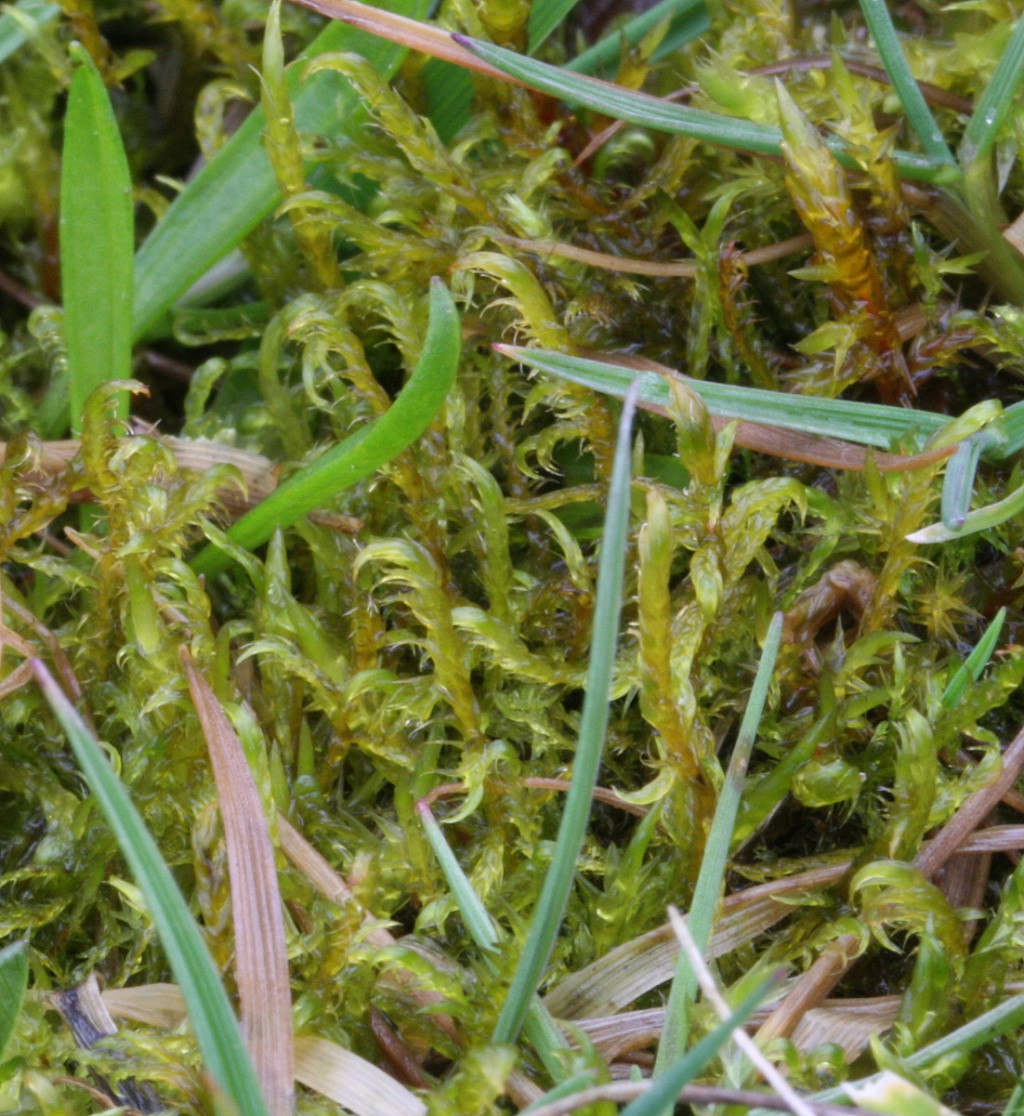
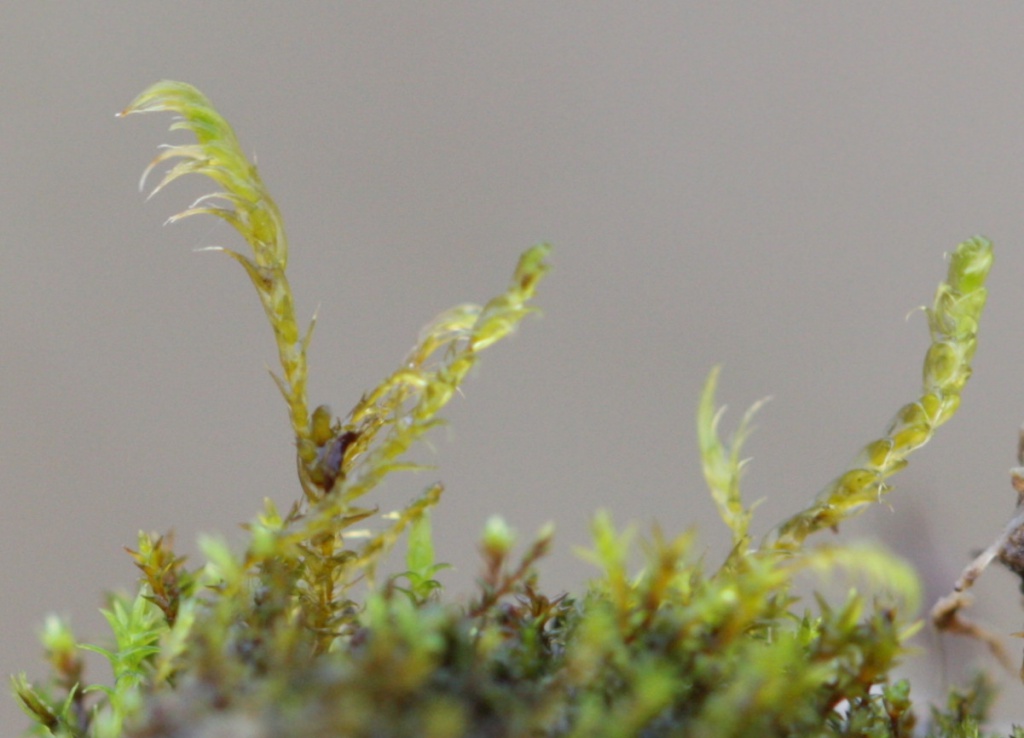
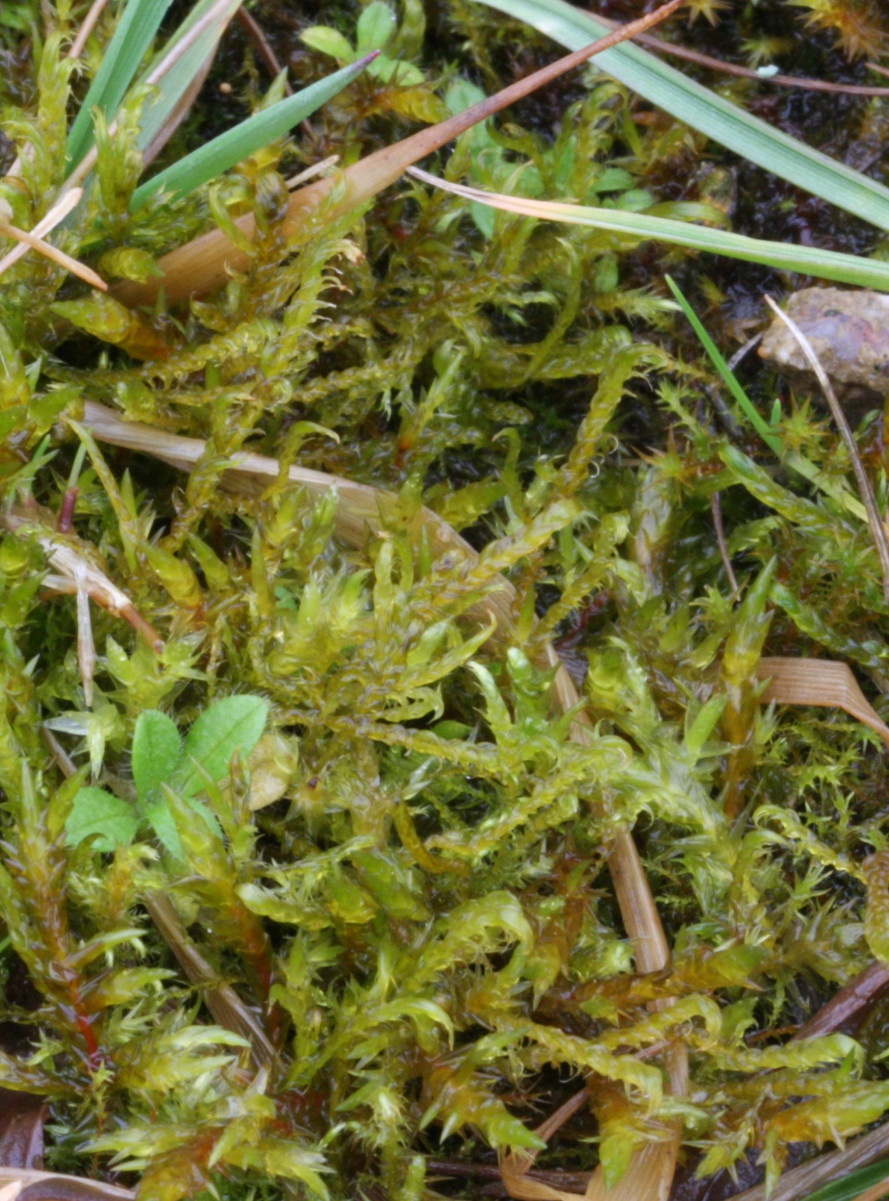
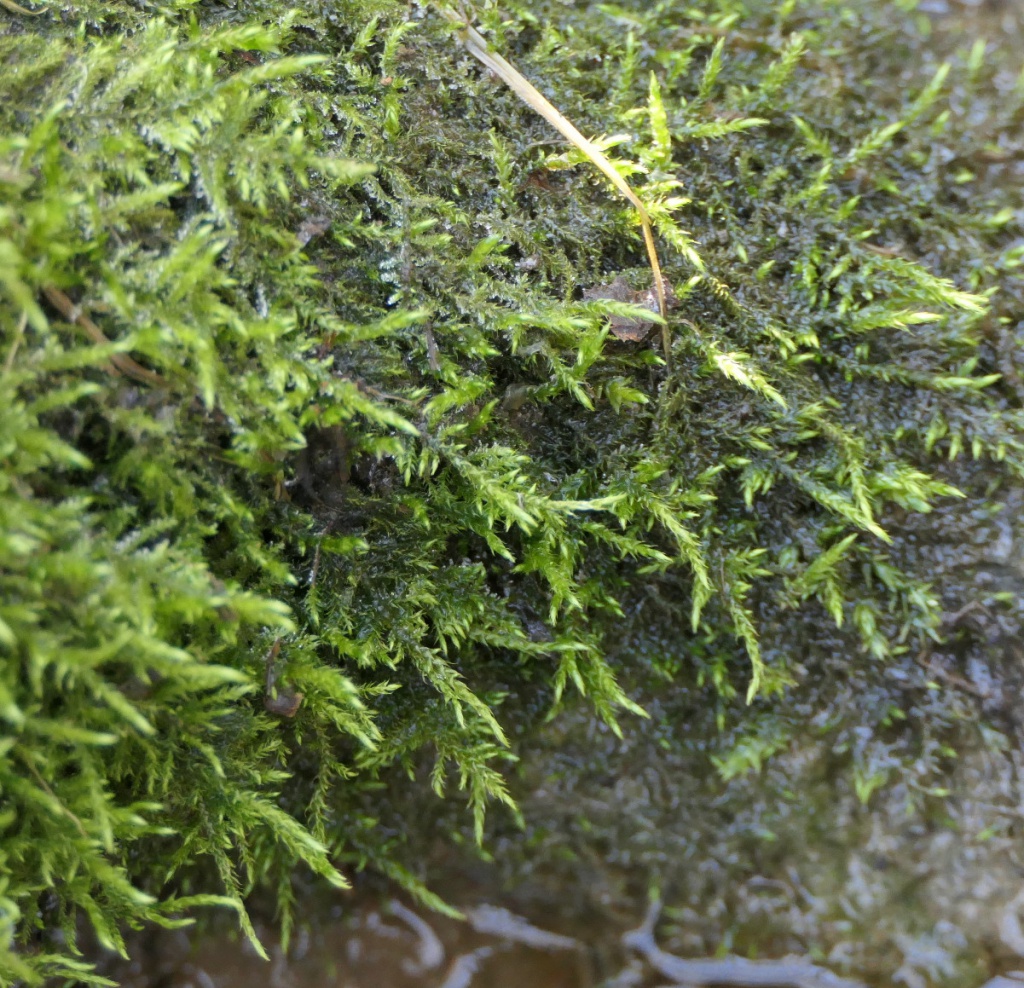
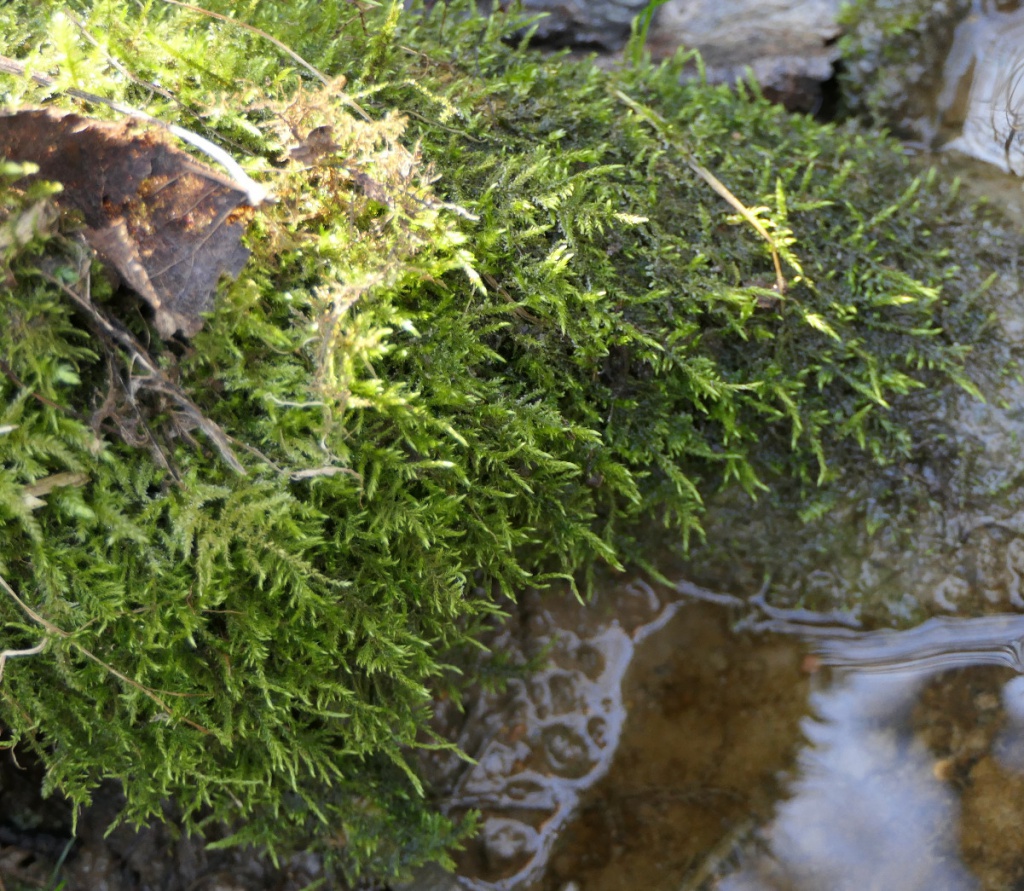
The pinnate shoots of this very variable moss are typically 1 to 3 cm long, with a rather pale tip. The leaves are rigid, with a stout nerve prominent all the way to the tip, making the shoots look spiky. Leaves are 1 mm long, and straight or slightly or strongly curved; in the latter case the branches may look hooked. Stem leaves are triangular, broadest just above the base, and taper evenly to a fine, acute tip. With a good hand lens, it is possible to see patches of enlarged cells in the leaf base. Branch leaves are narrower: broadly spearhead-shaped to egg-shaped. The stem bears red-brown rhizoids, and may also have tiny leaf-like structures, but the latter can be sparse and confined to upper parts of shoots. Capsules are uncommon.
Drepanocladus aduncus can look very similar but C. filicinum has rhizoids and paraphyllia on the stem which are lacking in Drepanocladus.

C. filicinum occurs naturally in moist or wet, base-rich habitats, including springs, flushes, rock ledges and stony ground. It is also a common species of weedy habitats, especially in gravelly gateways and tracksides, and on old tarmac.
All year round.
Widespread and fairly frequent in Britain.
Fairly frequent in Leicestershire and Rutland.
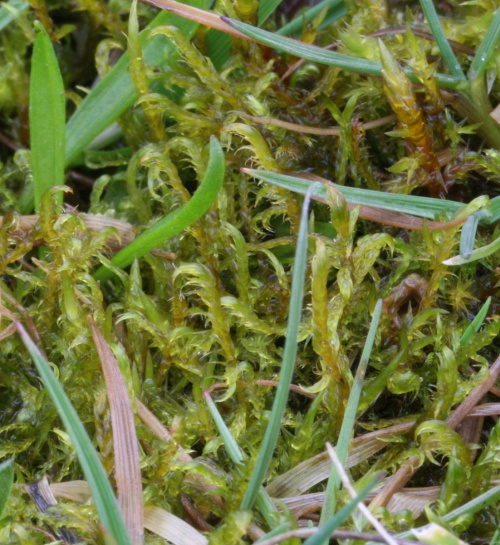 David Nicholls
Cossington Meadows
25 February 2017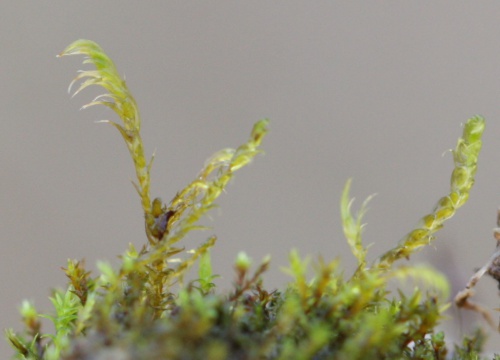 David Nicholls
Cossington Meadows
25 February 2017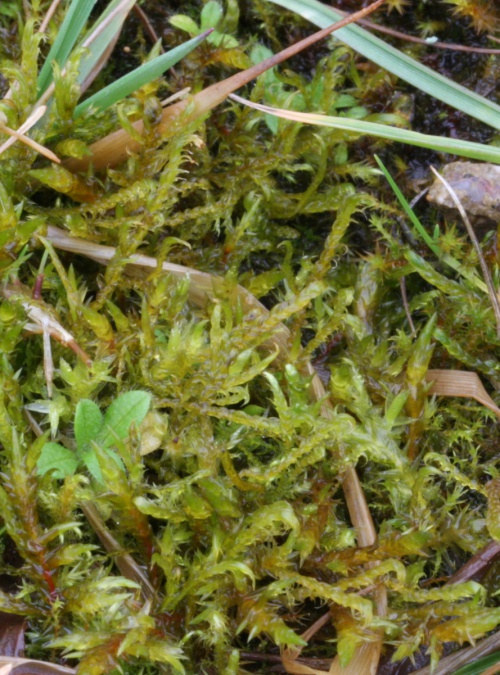 David Nicholls
Cossington Meadows
25 February 2017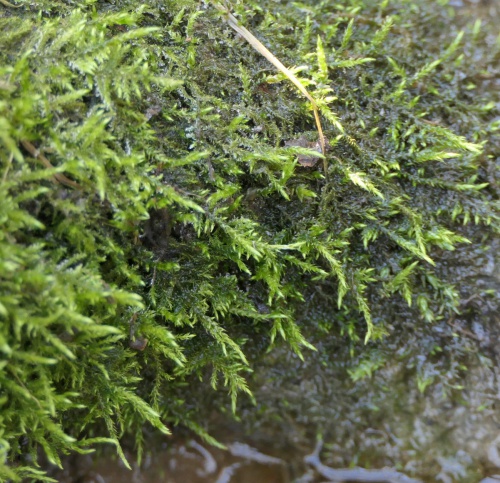 David Nicholls
Tugby Wood
24 February 2018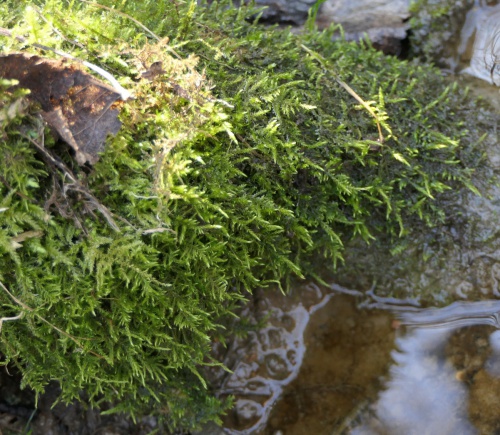 David Nicholls
Tugby Wood
24 February 2018
Leicestershire & Rutland Map
Enter a town or village to see local records
MAP KEY:
Yellow squares = NBN records (all known data)
Coloured squares = NatureSpot records: 2025+ | 2020-2024 | pre-2020
UK Map
Additional images
No additional images available for this species.