Acute-leaved/Red Bog-moss species aggregate
Acute-leaved/Red Bog-moss species aggregate - Sphagnum capillifolium
Sphagnum capillifolium used to be split into two subspecies (subsp. rubellum and subsp. capillifolium) but these are now considered to be separate species. Shoots of both sub-species are small to medium in size. Records below apply to the species aggregate, but are likely to be S rubellum.
They are in Section Acutifolia, characterised by stem-leaves that are mostly erect, often with reddish or pinkish tints and slender growth-habit.
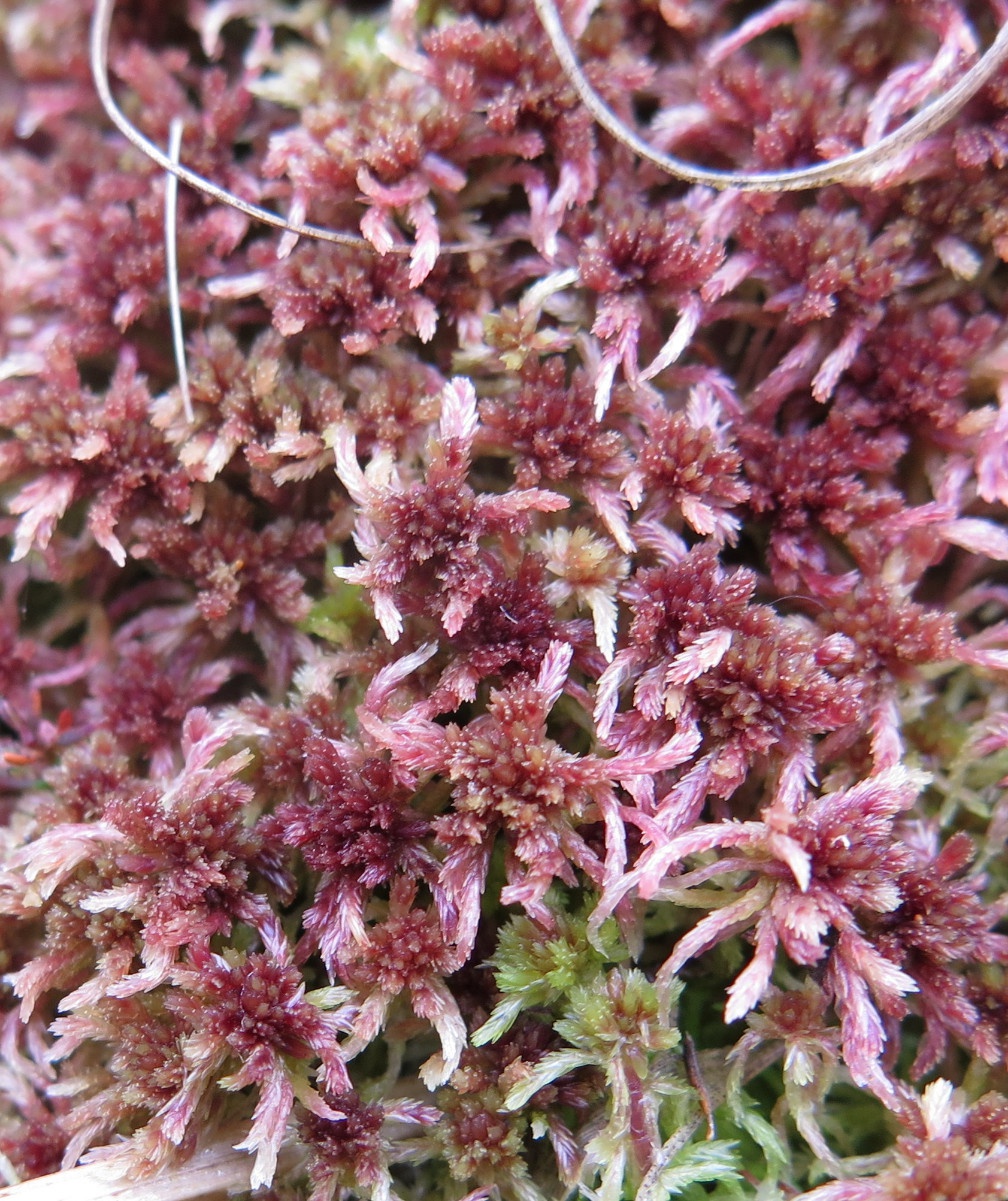
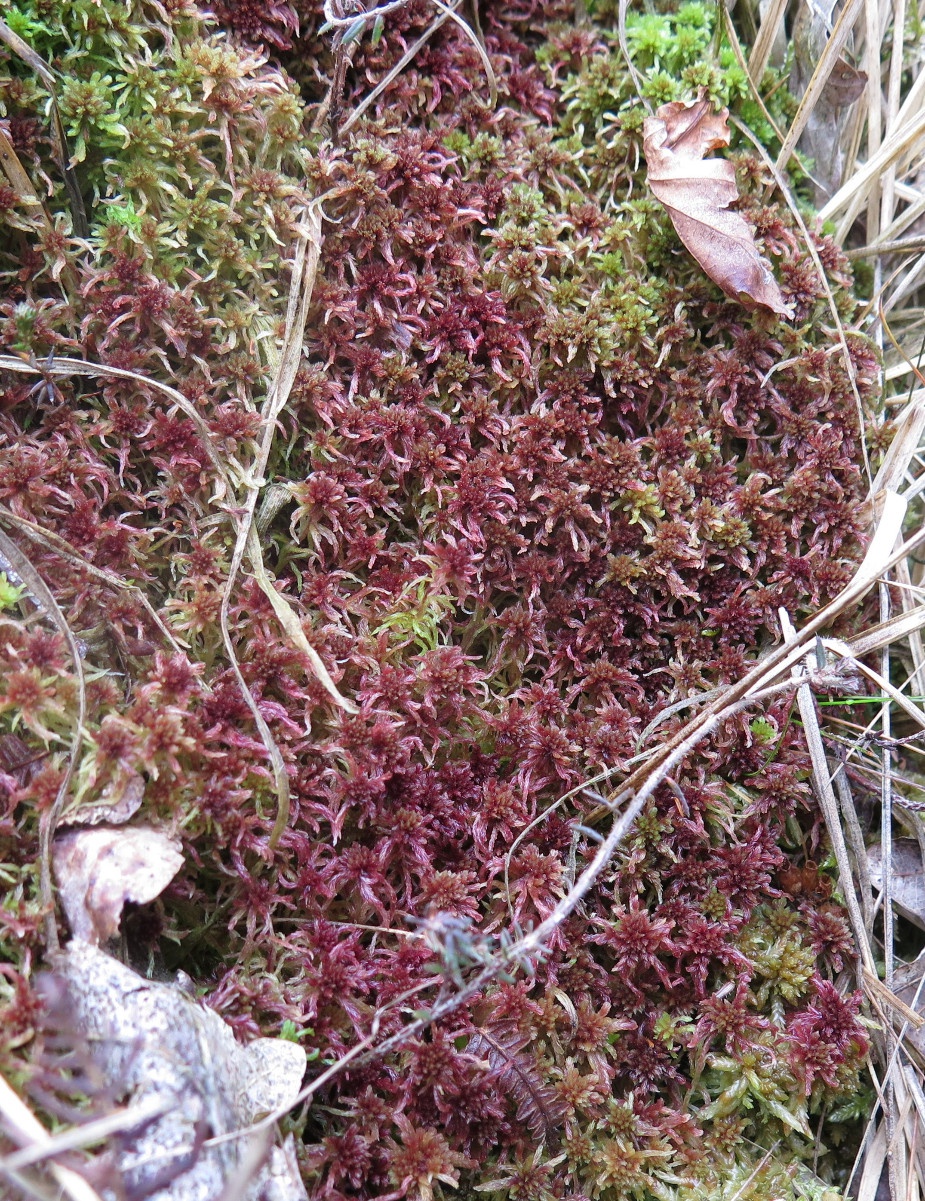
Both species are all or mostly red, but can be green if shaded. Sphagnum capillifolium occurs in hummocks with shoots packed tightly together. Each capitulum is like a pom-pom, causing the surface of the hummock to be bumpy, like cauliflower florets. The hummocks are so dense that it is difficult to insert your hand into the hummock or remove an individual shoot. Sphagnum rubellum has flat capitula and grows in loose carpets and softer hummocks, into which you can easily press your hand. Both species have tongue-shaped stem-leaves.
Sphagnum subnitens is also found in VC55 in similar habitats. It has salmony-pink coloration and stem-leaves that are more triangular in shape

Detailed photographs taken in the field and from a specimen. We recommend that a detailed note of location or GPS reading is made and that a small specimen - e.g. two or three shoots - is retained in case this is needed for verification; all Sphagnum are rare or scarce in VC55 and should not be over-collected.
Bogs, wet heath, peat and occasonally wet woodland.
All year round.
Peat-forming species indicative of good quality habitat
Rare
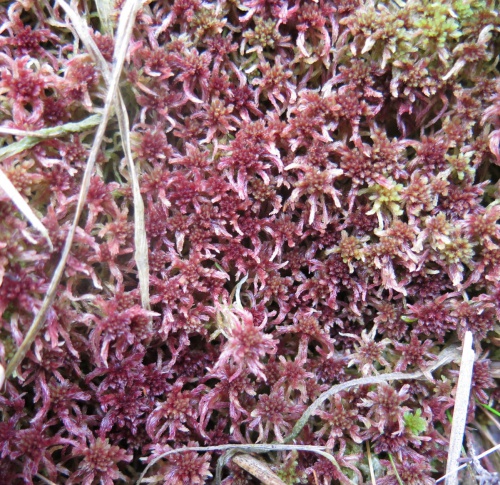 David Nicholls
Charnwood Lodge
28 March 2015 David Nicholls
Charnwood Lodge
28 March 2015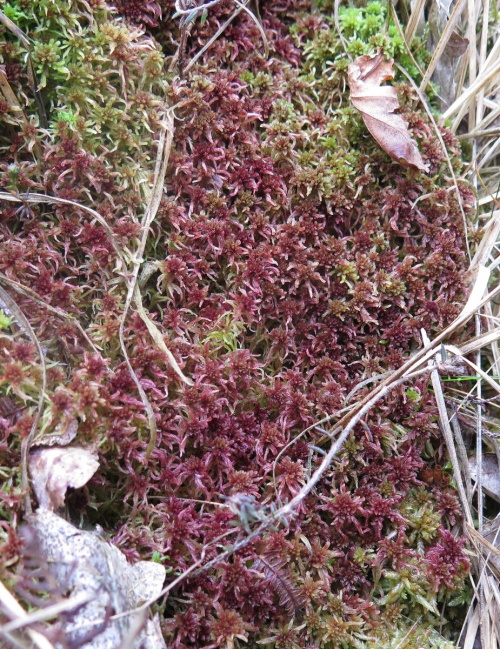 David Nicholls
Charnwood Lodge
28 March 2015

Leicestershire & Rutland Map
Enter a town or village to see local records
MAP KEY:
Yellow squares = NBN records (all known data)
Coloured squares = NatureSpot records: 2025+ | 2020-2024 | pre-2020
UK Map
Additional images
No additional images available for this species.