Slender Mouse-tail Moss
Slender Mouse-tail Moss - Isothecium myosuroides
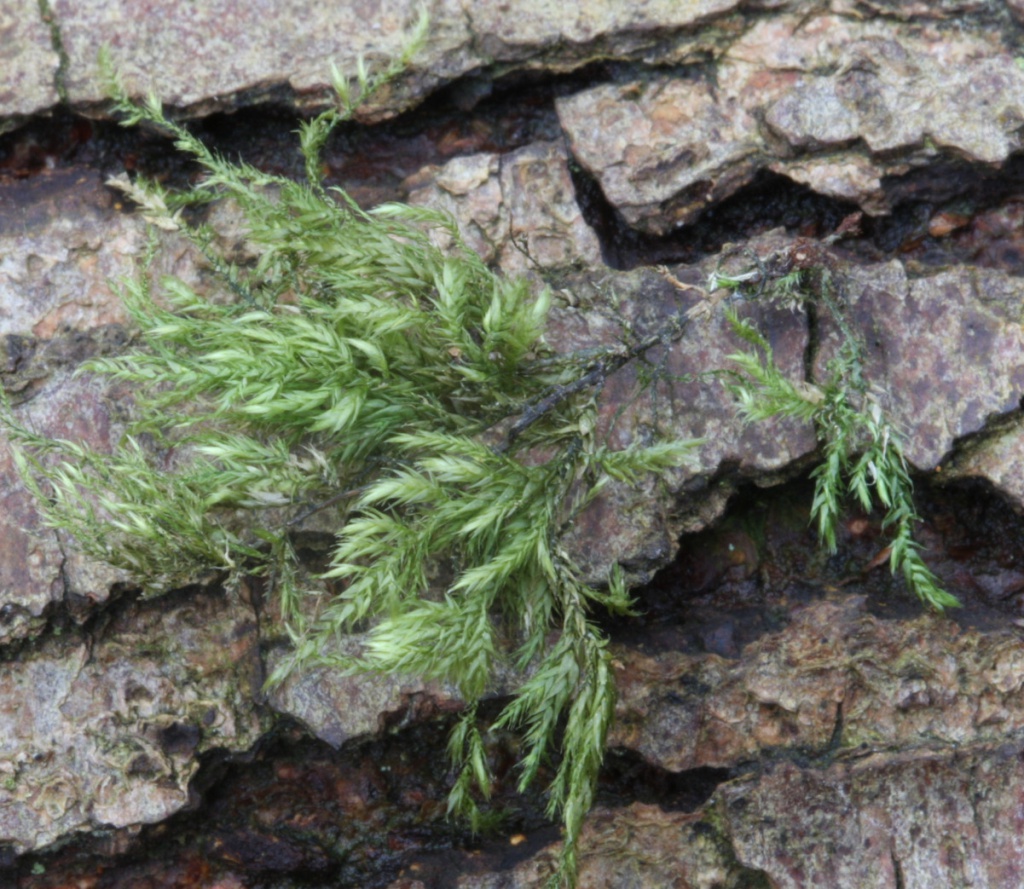
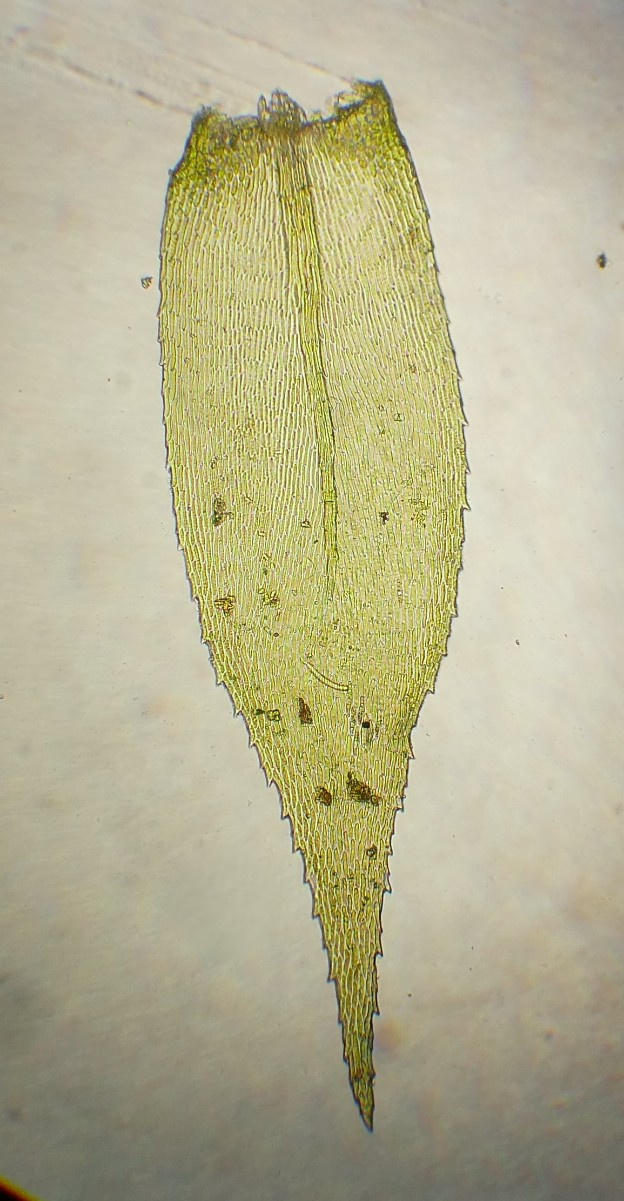
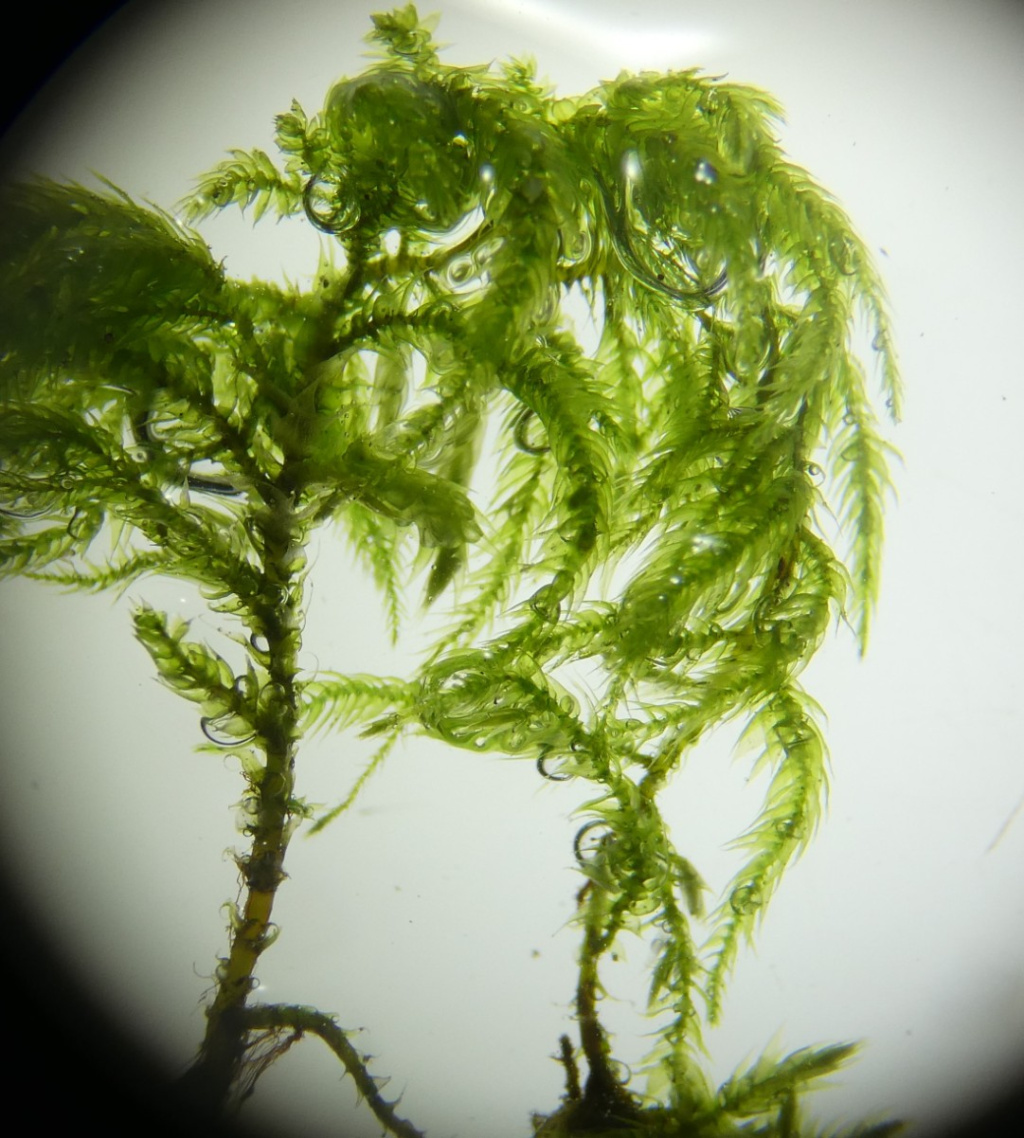
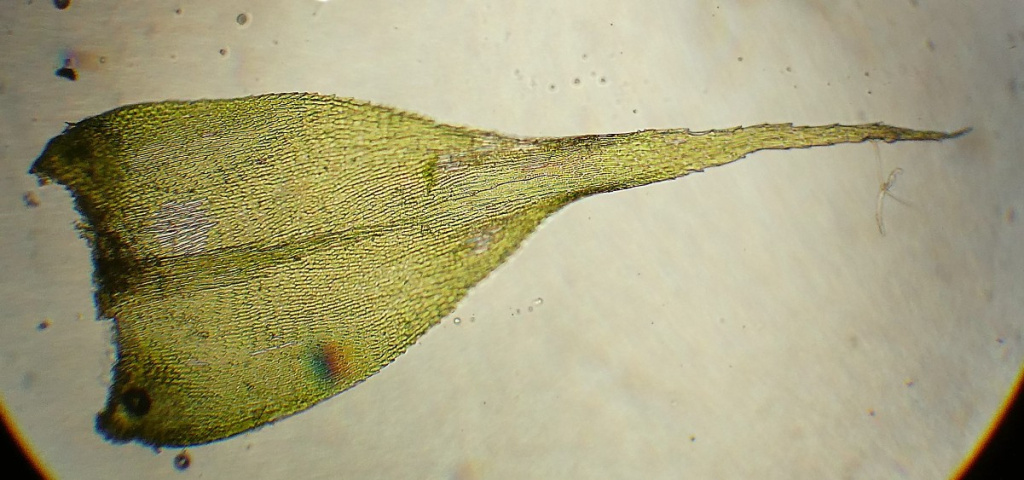
Isothecium myosuroides has a distinctly tree-like growth form, its main stems growing away from the substrate, unbranched in the lower part, and bushily branched above. It often occurs in pure, dense mats, so its tree-like form may not be immediately apparent. It often grows on inclined or vertical surfaces, with the stems and branches curving downwards. Shoots are typically 1 to 2 cm tall. Stem leaves, especially towards the base of the stem, are about 2 mm long, broadly egg-shaped to triangular with a heart-shaped base, rapidly contracting to a finely tapering tip. Branch leaves are 1 to 1.5 mm long, narrower, triangularly spearhead-shaped, and taper to a shorter but still slender, rather sharply toothed tip. The single nerve ceases above mid-leaf. Capsules are 2 to 2.5 mm long, frequent in some regions, elliptical, slightly asymmetrical and inclined. The lid has a long beak.

It grows on boulders and tree trunks in woodland and shaded places, but may occur in the open. It does not grow on strongly base-rich rocks such as limestone. It is abundant in rocky, upland woods on siliceous and non-calcareous substrates, and in western areas may dominate trunks of oak and other trees.
All year round.
Widespread and fairly frequent in Britain.
Fairly frequent in Leicestershire and Rutland.
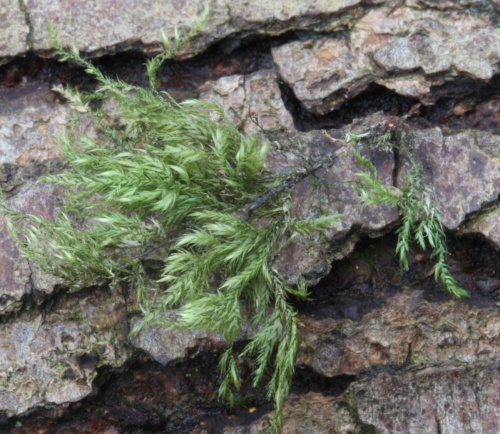 David Nicholls
White's Wood, Swithland
28 February 2015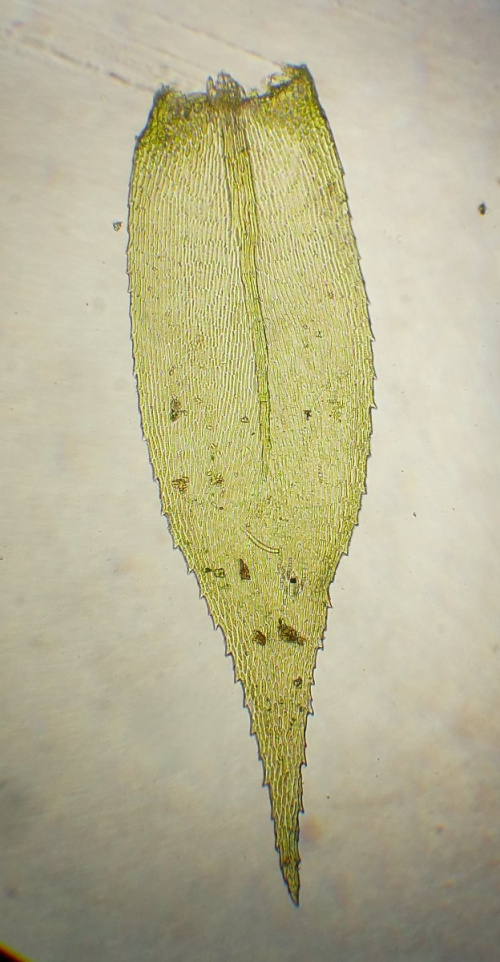 sue
sue
Beacon Hill
18 March 2025
branch leaf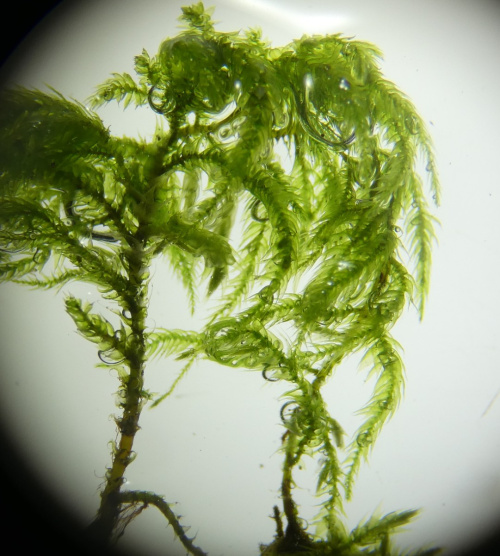 sue
sue
Beacon Hill
18 March 2025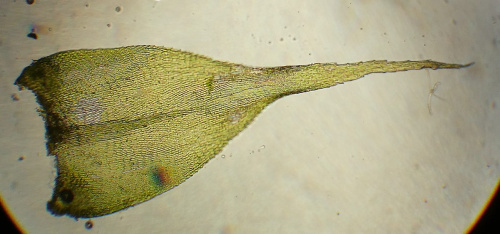 sue
sue
Beacon Hill
18 March 2025
stem leaf
Leicestershire & Rutland Map
Enter a town or village to see local records
MAP KEY:
Yellow squares = NBN records (all known data)
Coloured squares = NatureSpot records: 2025+ | 2020-2024 | pre-2020
UK Map
Additional images
No additional images available for this species.