Polydrusus formosus
Polydrusus formosus
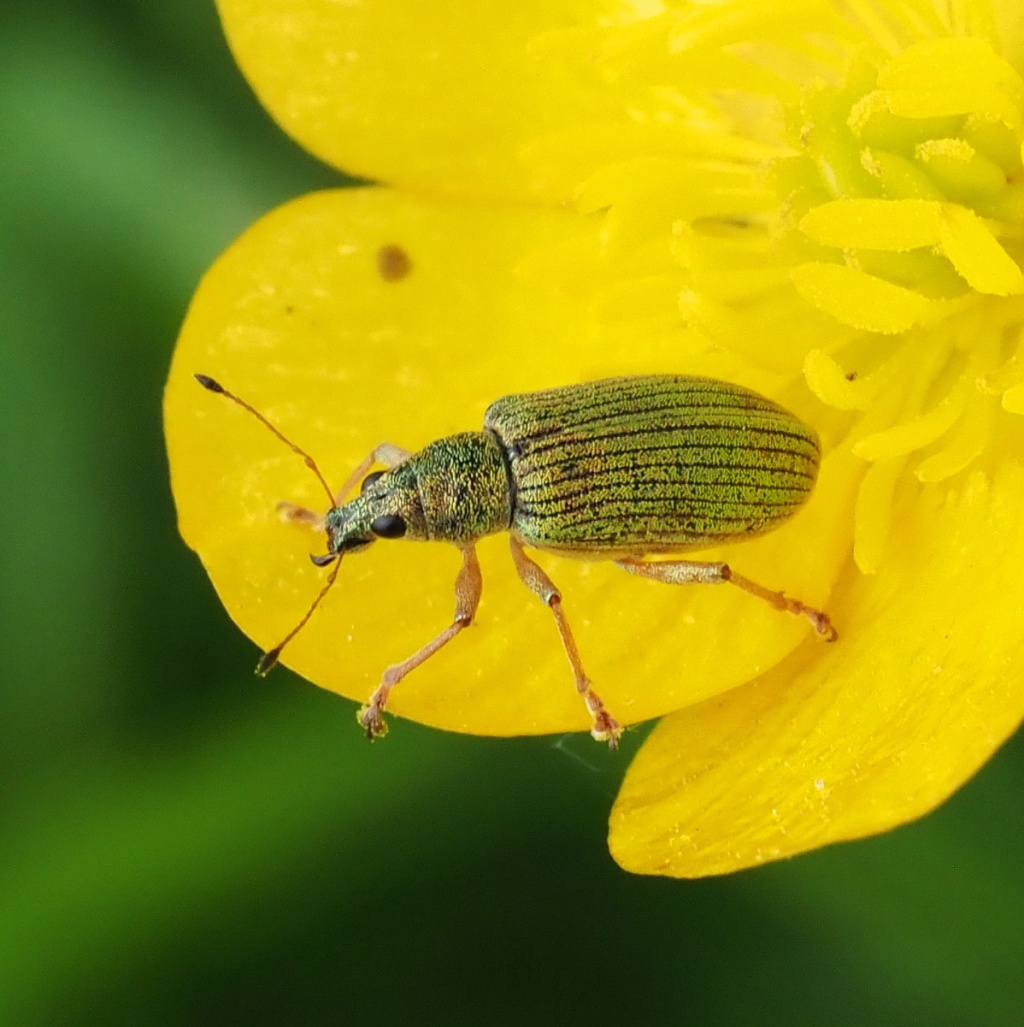
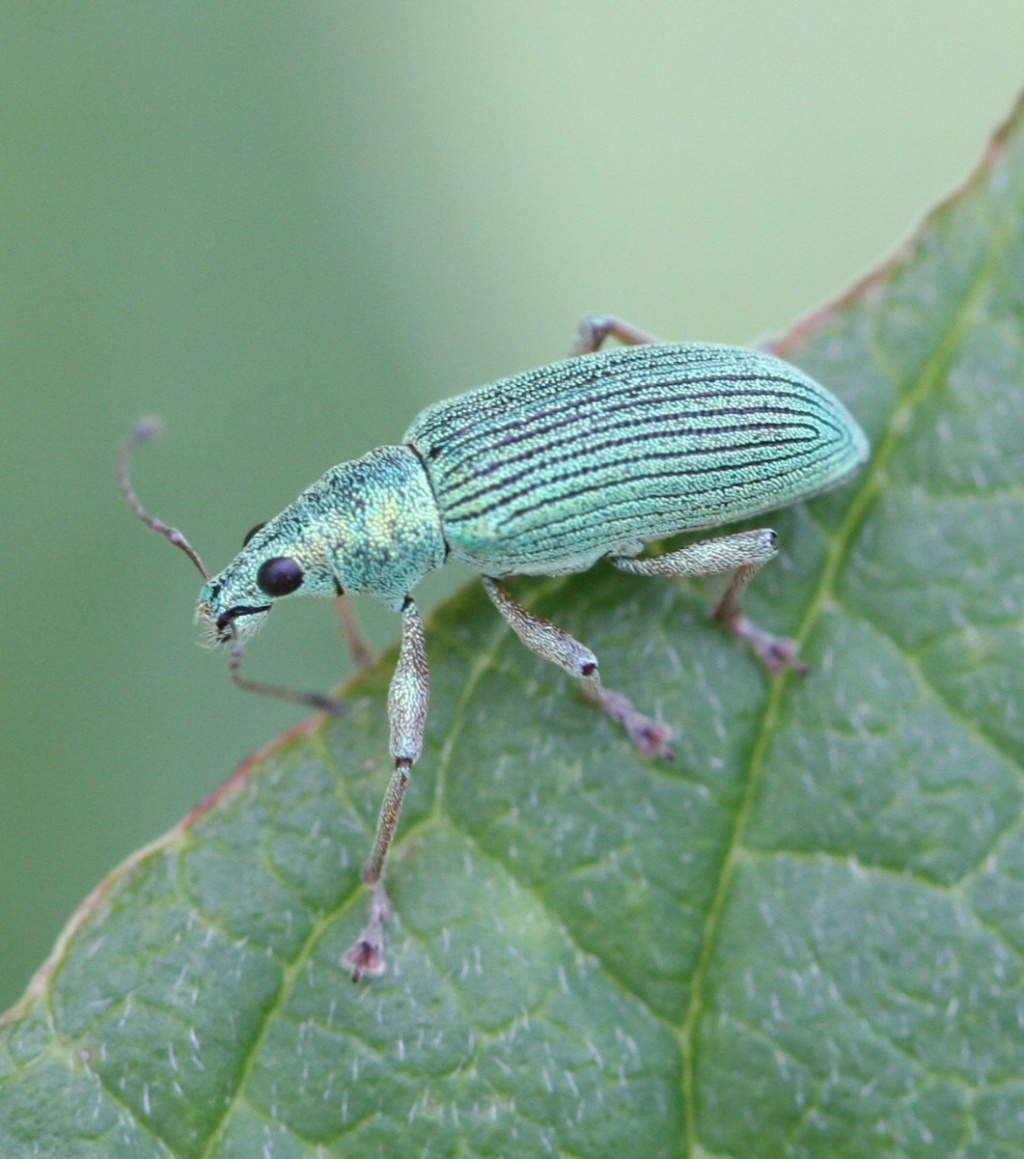
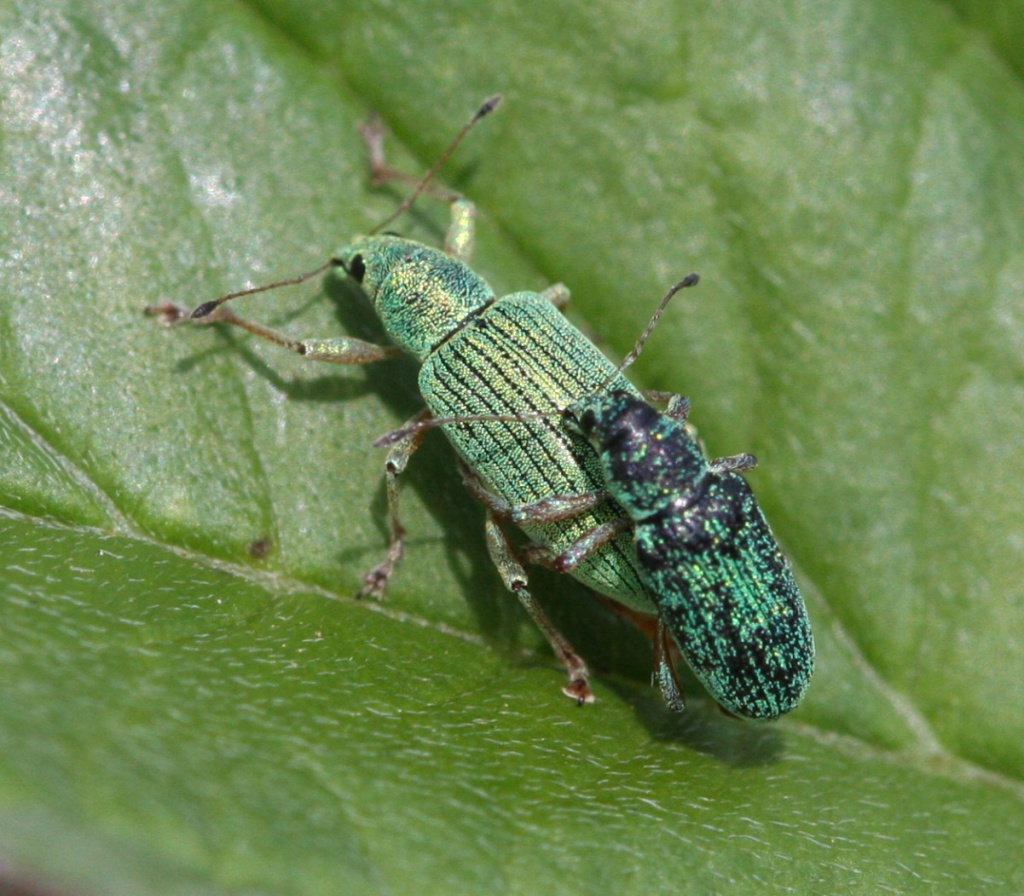
Length 5 to 6 mm. A bright metallic green weevil with round scales, a dark club to the pale antennae and a short groove between the eyes. It does not have any setae (bristles). It has conspicuous striae on the elytra. The scales can wear off to reveal the dark body beneath.

- 5-7mm
- Elongate, slender shape
- Green, oval-round scales. No erect hairs
- Antennae red with a black club.
- Legs red. All femora with a tiny tooth
- Pronotum barrel-shaped
Unless identified by a recognised expert, photographic evidence is required and the specimen should be examined with a microscope. In the comments box, state the key or ID method used. Note the beetle's size and describe the identifying characters. It is advisable to retain the specimen in case further checks are needed.
Found on various broadleaved trees and bushes.
April to August.
Adults of this beetle lay their eggs in the bark or leaves of the host-plants. The soil inhabiting larvae grow up to 7 millimetres long feeding on juicy plant roots. In Autumn their development is complete. They overwinter and pupate in Spring.
Widespread in England but previously very scarce, it is now undergoing an increase in numbers.
Uncommon or under recorded in Leicestershire and Rutland.
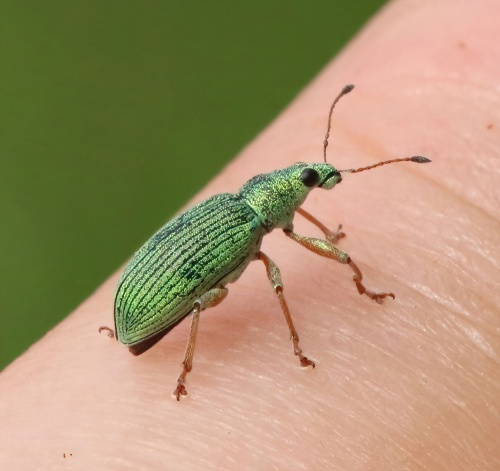 Ian Harding
Woodcote Wood
16 June 2022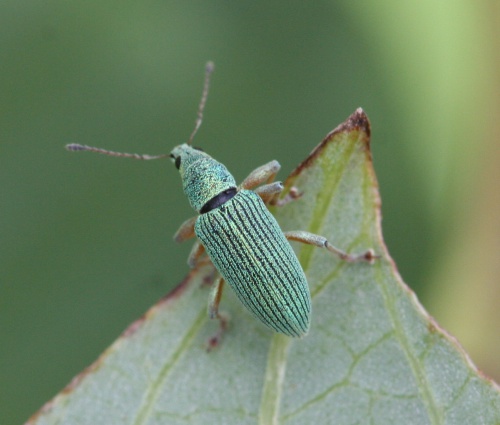 David Nicholls
Ratby
05 June 2014 David Nicholls
Newtown Linford, Groby Rd verge
28 May 2022 David Nicholls
Sarahs Wood
04 June 2016 David Nicholls
Ratby
05 June 2014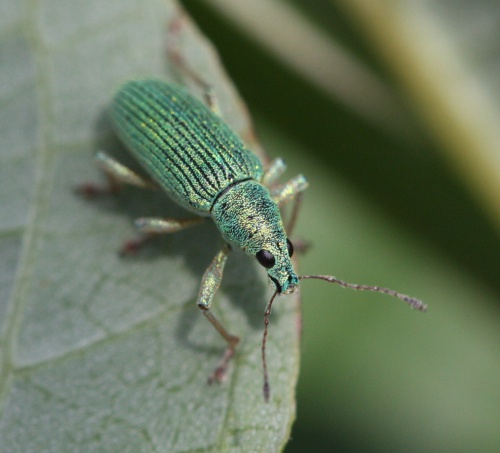 David Nicholls
Ratby
05 June 2014 David Nicholls
Ratby
05 June 2014




Leicestershire & Rutland Map
Enter a town or village to see local records
MAP KEY:
Yellow squares = NBN records (all known data)
Coloured squares = NatureSpot records: 2025+ | 2020-2024 | pre-2020
UK Map
Additional images

