Andrena humilis
Andrena humilis
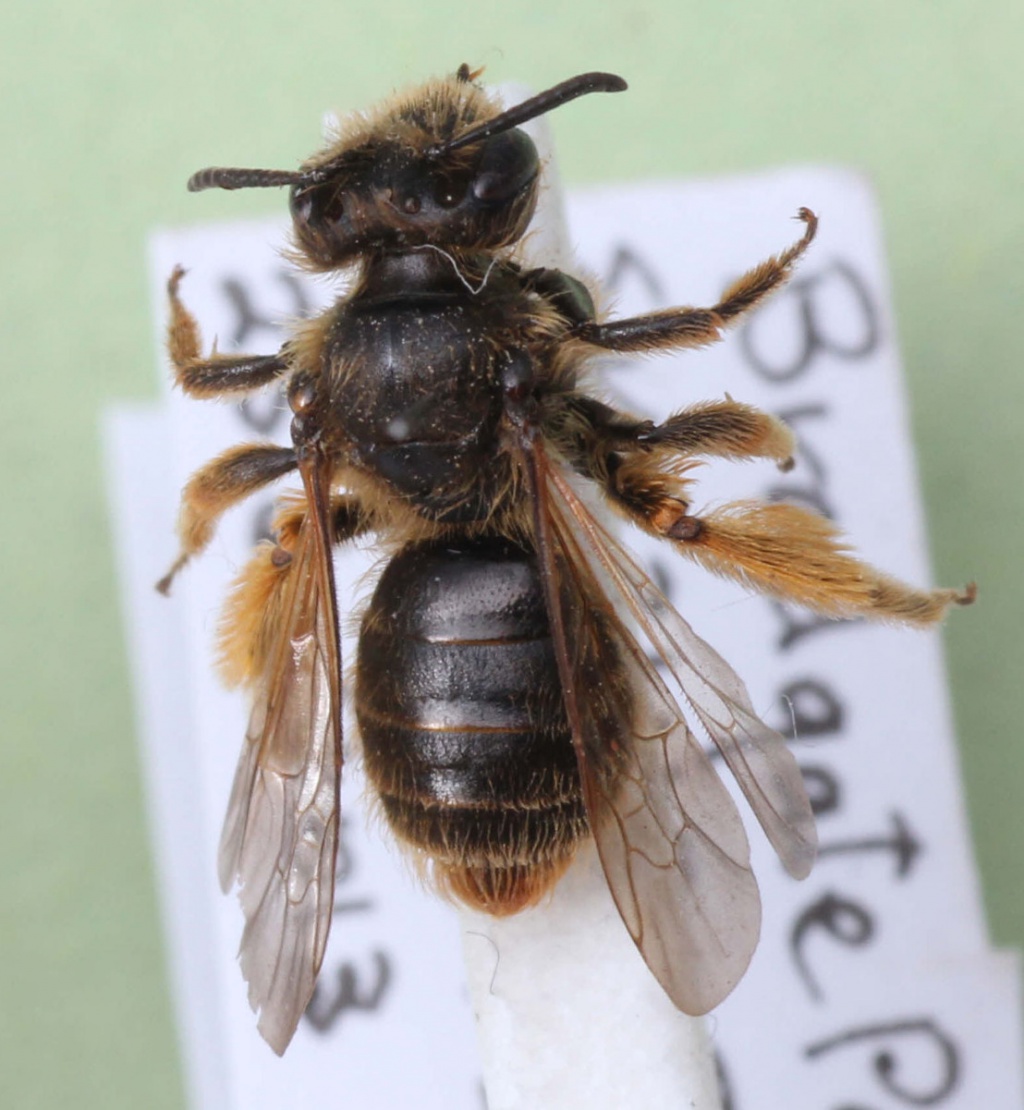
Length 10 to 12 mm. This species of solitary bee has a rather gingery, slightly hairy appearance.

Most solitary bees and wasps are difficult to identify, and can rarely be identified from photos taken in the field. All red-rated records should include a photo, or set of photos, showing the key characters, which may require the specimen. Please include a face shot, side, top and wings. Note whether male or female, explain how the specimen met the key characters and the key used. We will accept records identified by a recognised local or national expert, or that have been identified via the BWARS’ Facebook noting the name of the person/organisation identifying the record (e.g. ‘Stuart Roberts, BWARS Facebook’).
It occurs in a variety of sandy and disturbed situations such as hard, well-trodden paths and sandy banks.
Usually seen in May and June.
There is believed to be a close association with yellow composites (Asteraceae).
Found mostly in England and Wales where it is often local and infrequent, frequently favouring sandy coastal locations.
Uncommon in Leicestershire and Rutland.
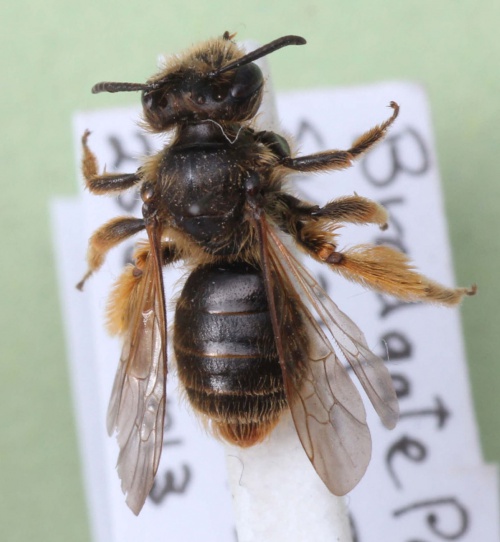 Steve Woodward
Bradgate Park
15 July 2013
Leicestershire & Rutland Map
Enter a town or village to see local records
MAP KEY:
Yellow squares = NBN records (all known data)
Coloured squares = NatureSpot records: 2025+ | 2020-2024 | pre-2020
UK Map
Additional images
No additional images available for this species.