Ear Pond Snail
Ear Pond Snail - Radix auricularia
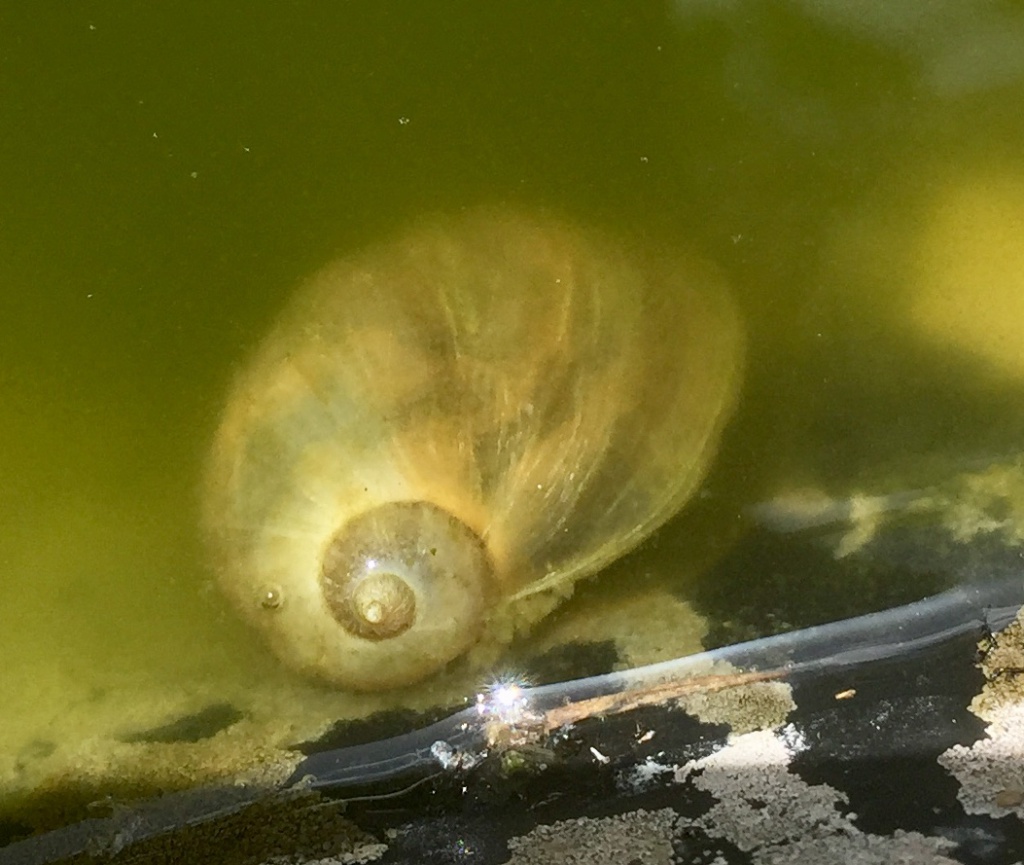
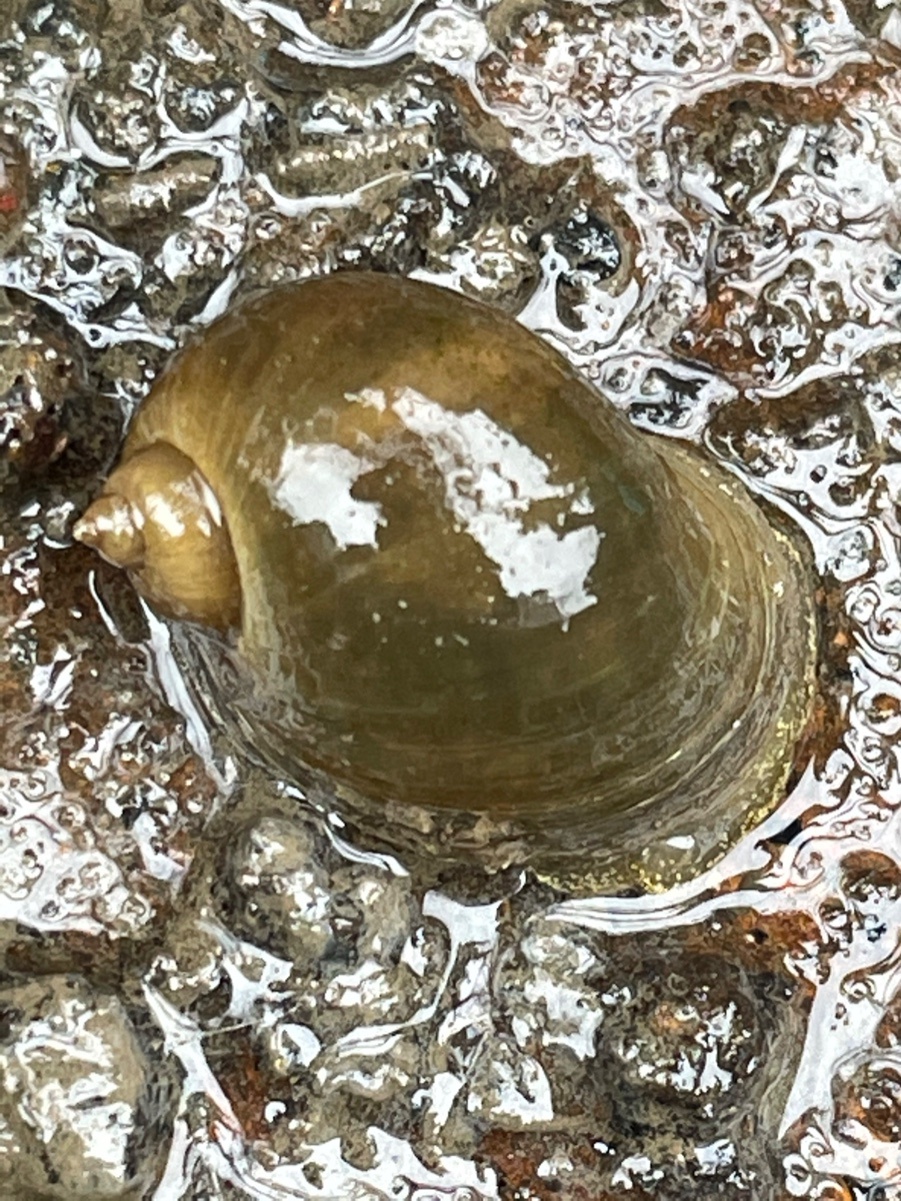
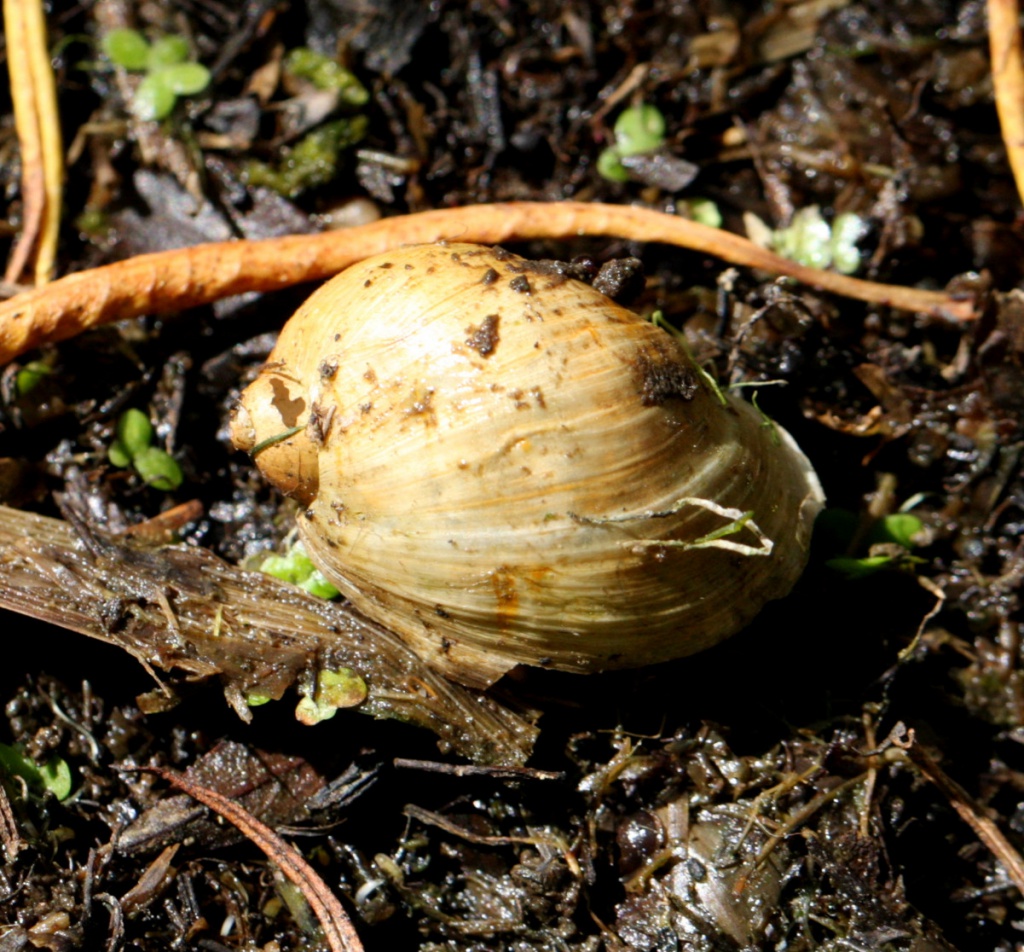
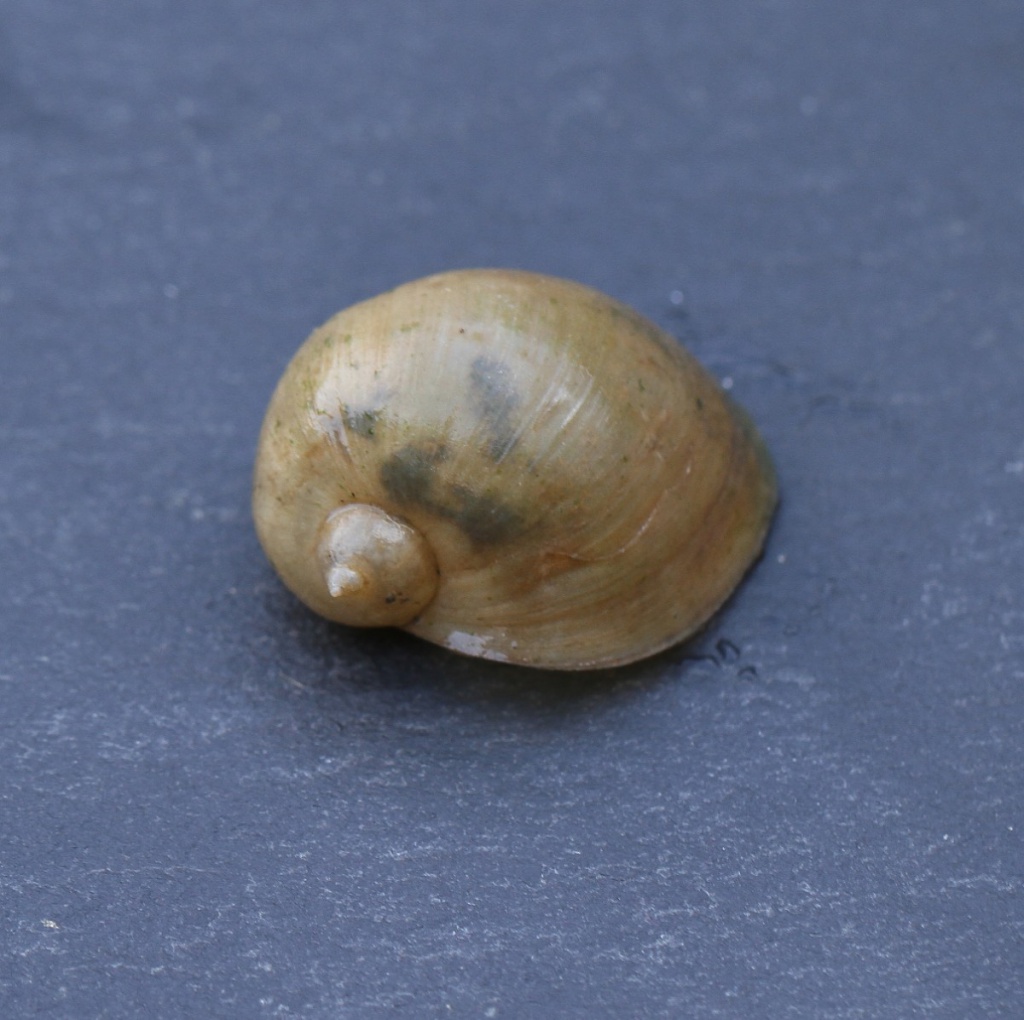
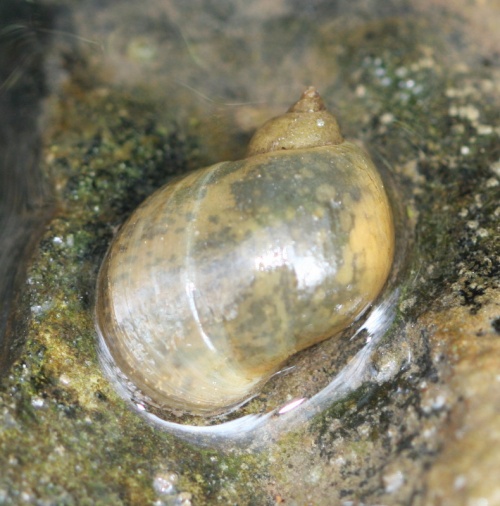
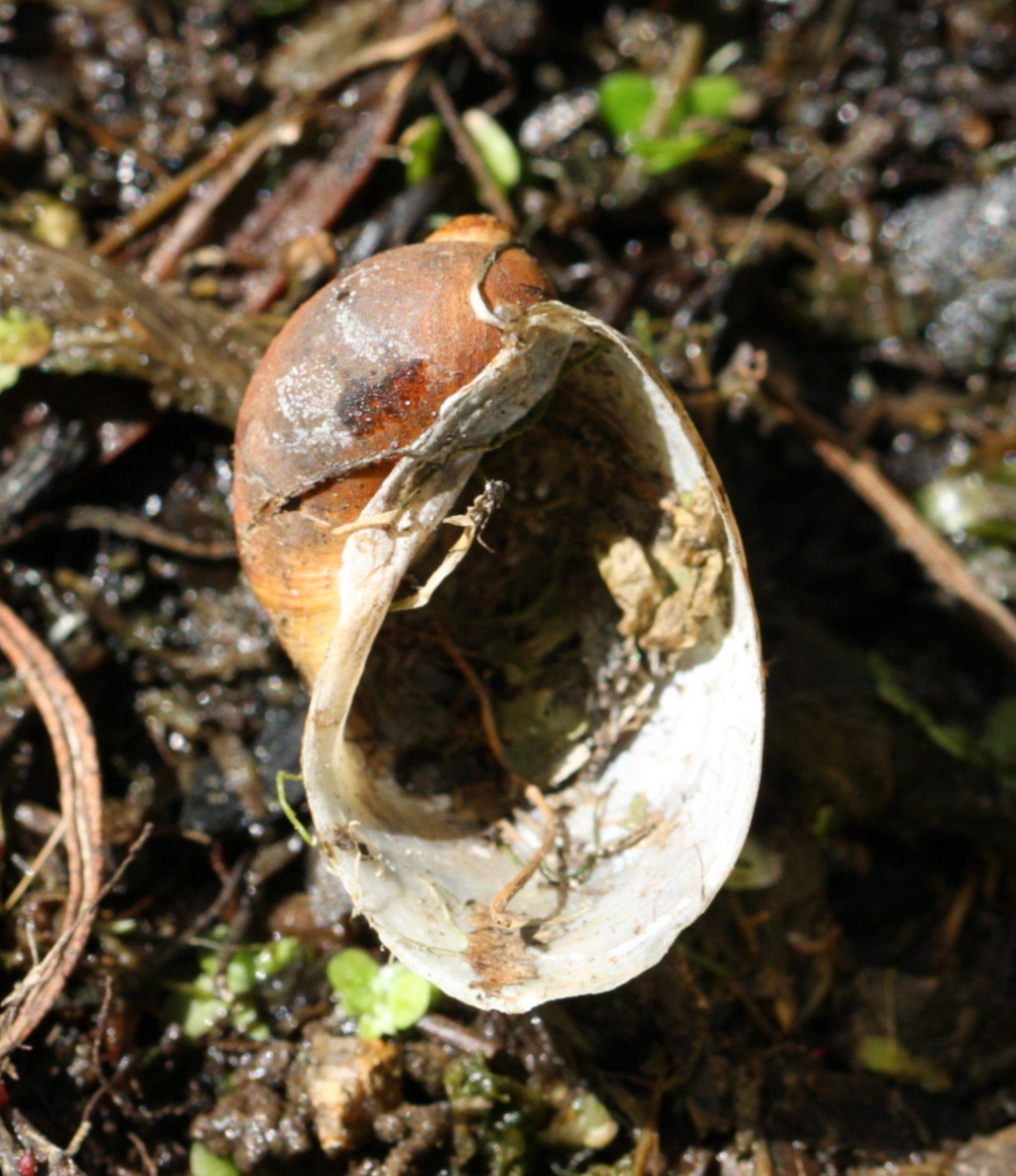
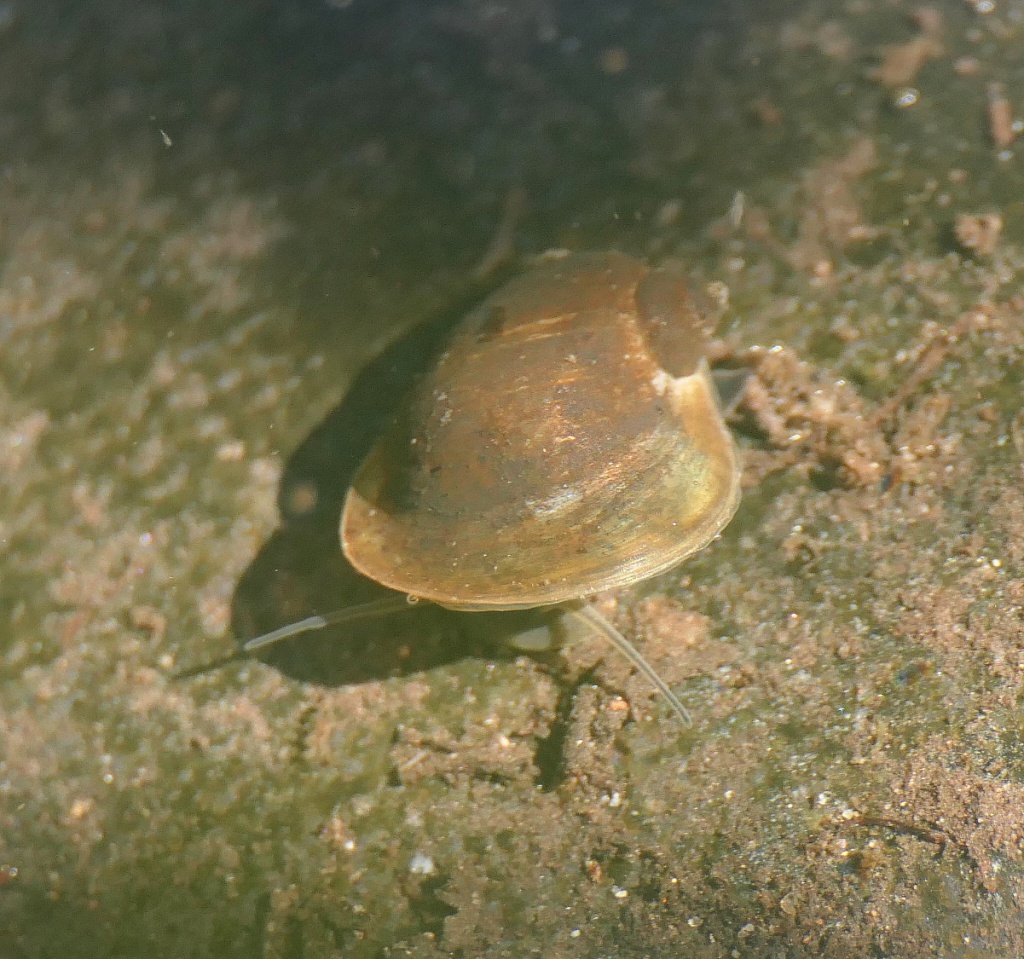
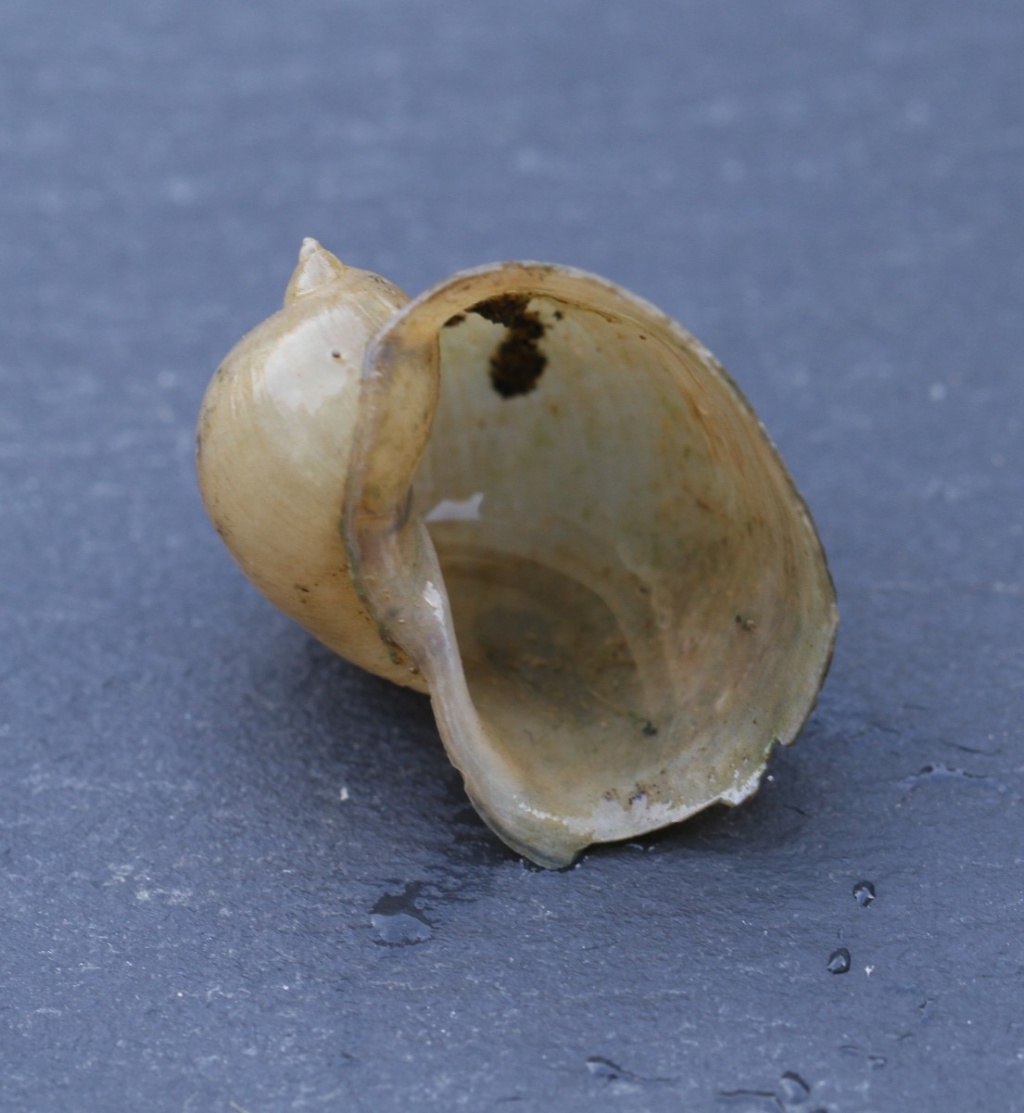
The yellowy beige shell is thin, roundly ovate and very inflated such that the last whorl comprises 90% of its volume. The shell has a rounded and broad spire that pinches in steeply at the apex. The spire is very short compared with the body whorl. The width of the shell is from 12 o18 mm, and the height of the shell is 14 to 24 mm.
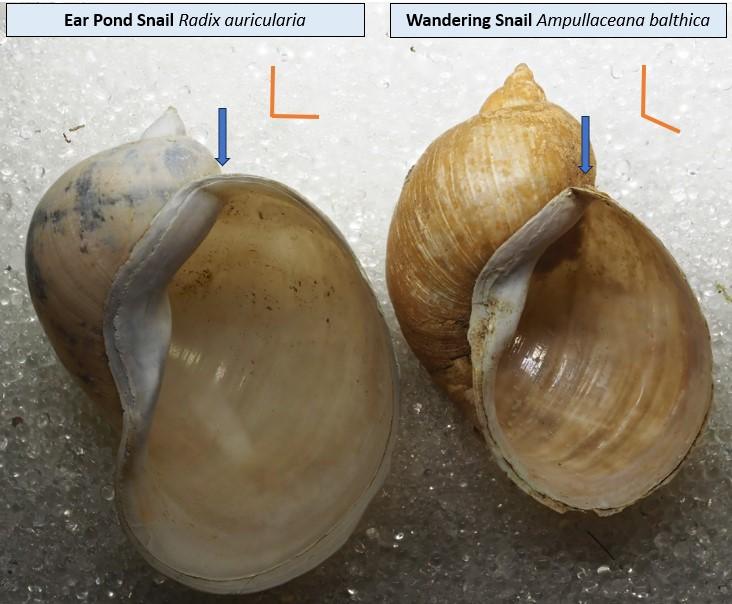
Ampullaceana balthica is very similar but doesn't have such a large, flared mouth. The other good ID feature is the sharp spire in R. auricularia compared to the relatively blunt spire point in A. balthica - a feature that can be felt with the tip of a finger. The angle of the shell forming the top of the mouth is also different, being more or less a right angle in R. auricularia.

Both snails have a large mouth opening which is more than half the height of the shell. Whilst large specimens of the Ear Pond Snail usually have a flared last whorl which is distinctive, smaller specimens look very similar to the Wandering Snail. However they can be separated by looking at the angle of the aperture lip where it projects from the main shell. In the Ear Pond Snail this is more or less a right angle, whereas in the Wandering Snail it slopes downwards.
Freshwater ponds, lakes and slow moving streams with muddy bottoms.
All year round.
Widespread in Britain though less common in the far north and the west.
Status in Leicestershire and Rutland not known.
 David Nicholls
Wirlybones Wood
30 March 2012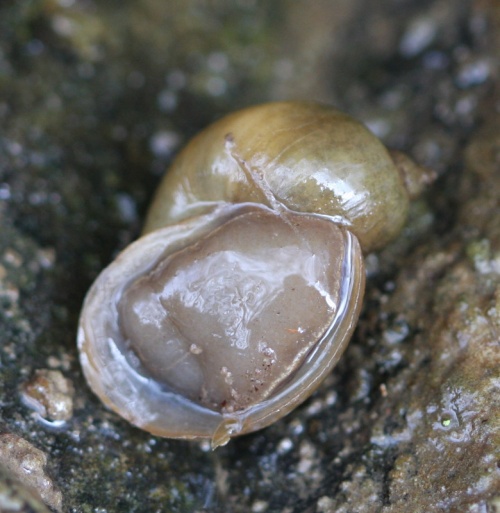 David Nicholls
Wirlybones Wood
30 March 2012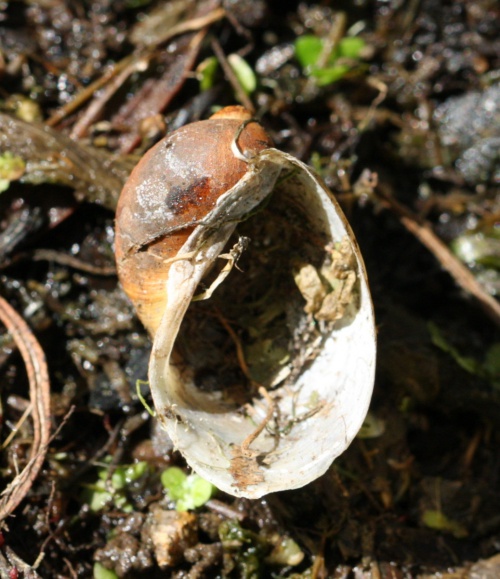 David Nicholls
Priory Water
13 August 2016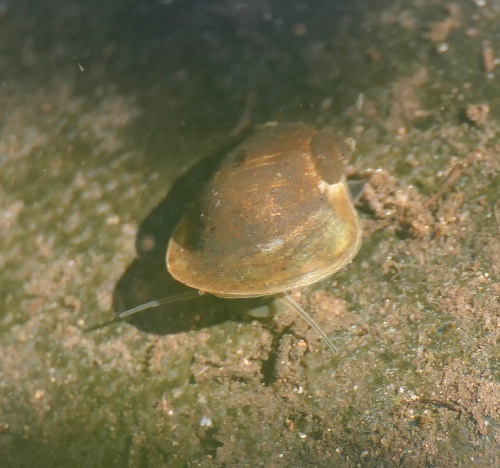 David Nicholls
Groby Pool
30 June 2018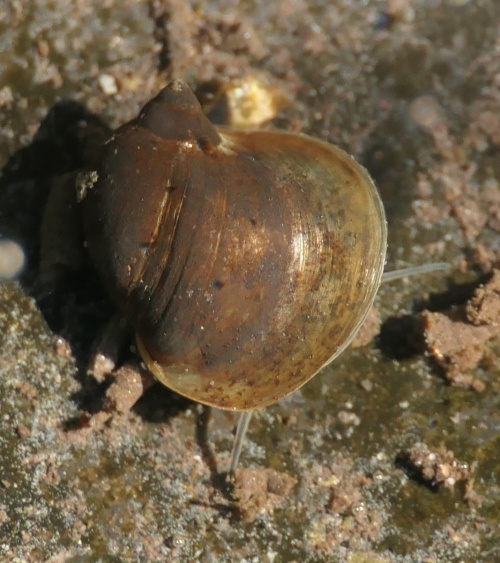 David Nicholls
Groby Pool
30 June 2018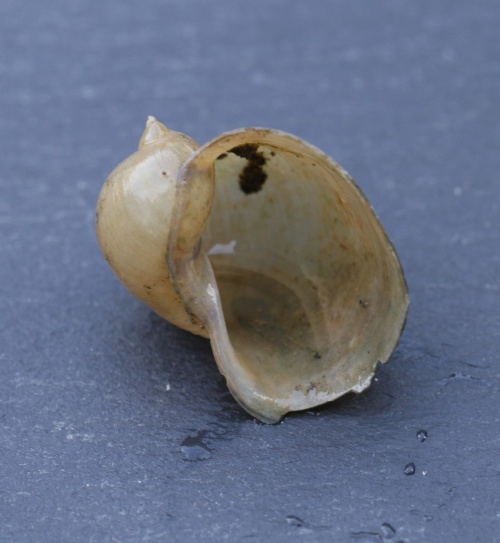 Craig Mabbett
Saddington Resevoir
28 August 2021

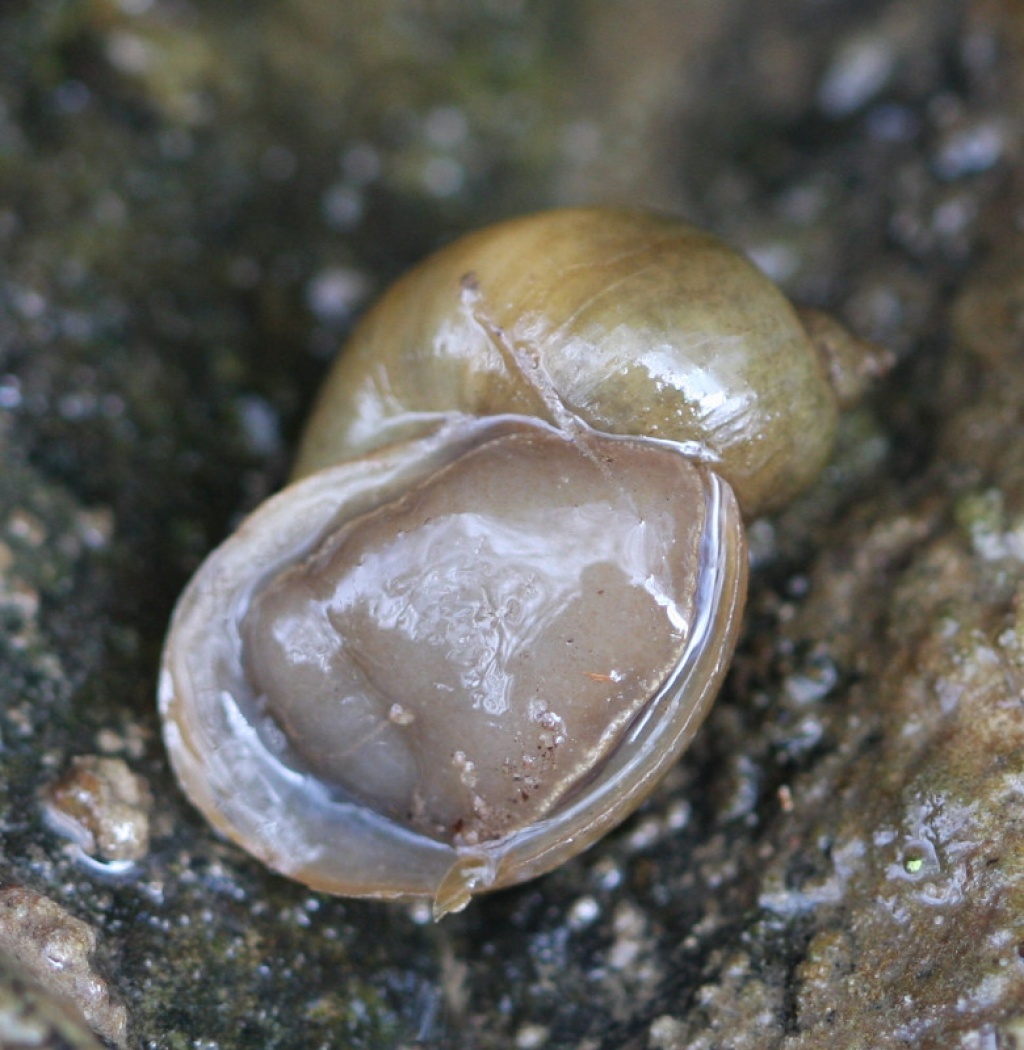

Leicestershire & Rutland Map
Enter a town or village to see local records
MAP KEY:
Yellow squares = NBN records (all known data)
Coloured squares = NatureSpot records: 2025+ | 2020-2024 | pre-2020
UK Map
Additional images