Sepsis cynipsea
Sepsis cynipsea
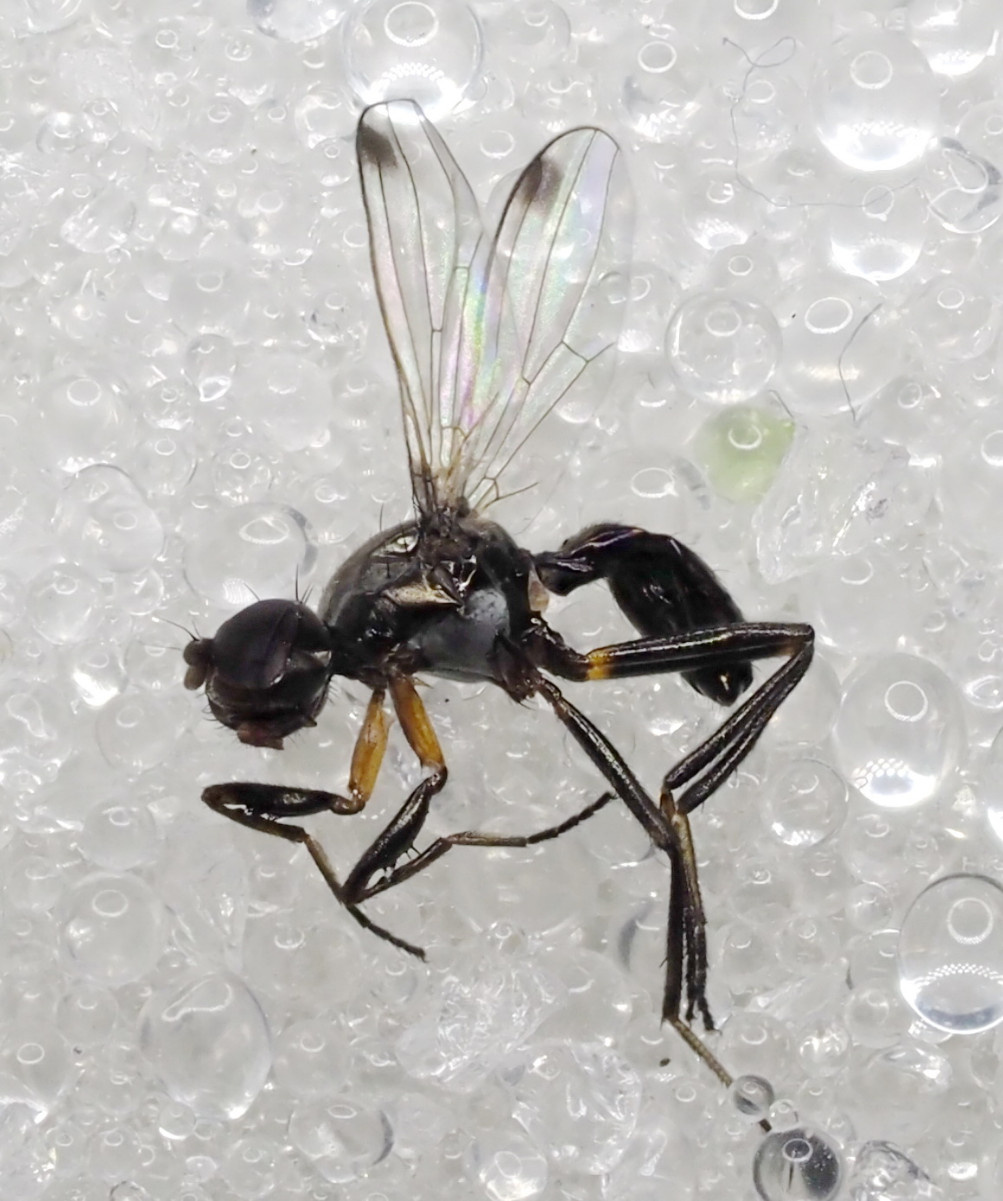
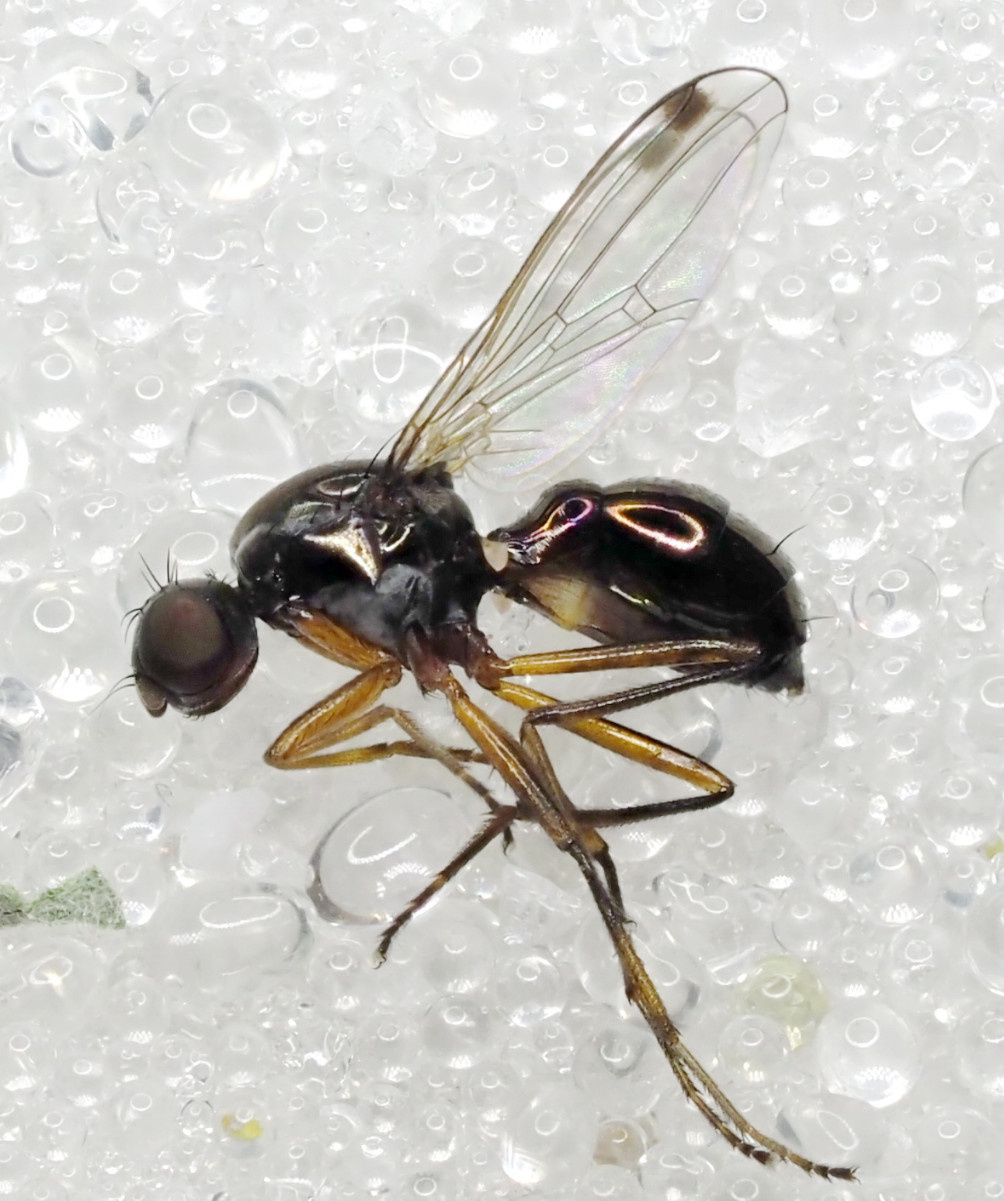
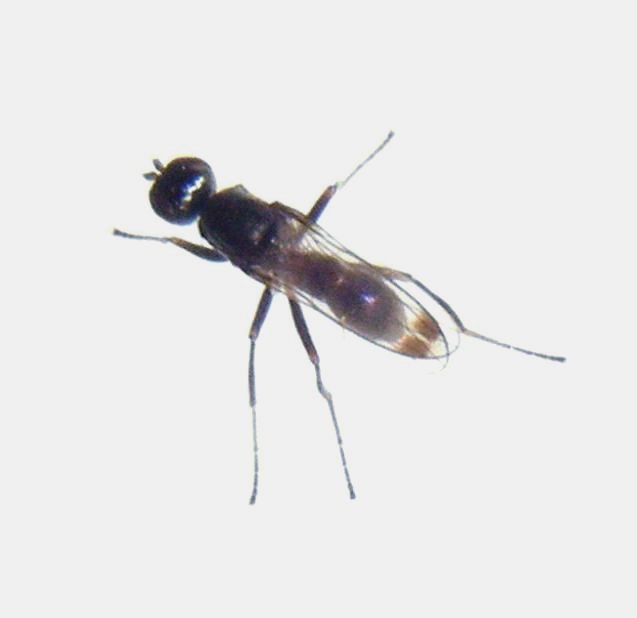
2.5 to 3 mm long. There is a dark wing spot on each wing, typical of the Sepsis genus. The hypopleuron (between the haltere and the hind coxa) is pruinose in the anterior part but glossy black on the posterior part. The sternopleuron is entirely pruinose. (Adjust the angle of light to view the pruinosity). The mid femur lacks an anterior seta near the middle (don't confuse with a ventral or anterior-ventral setae) and the mid tibia has 0-1 posterior setae.
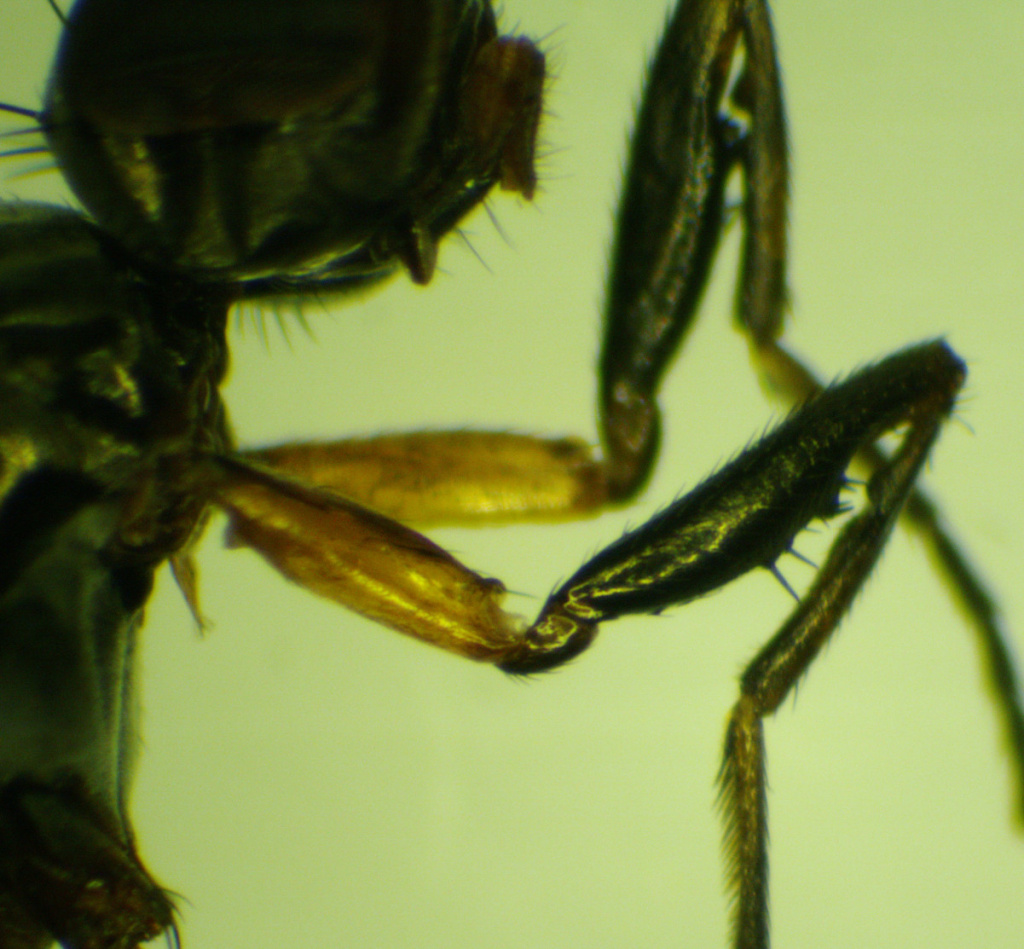
Males have a unique ornamentation on the front tibia which is a helpful key ID feature.
Other Sepsis.

- black wing spot
- sternopleuron all pruinose
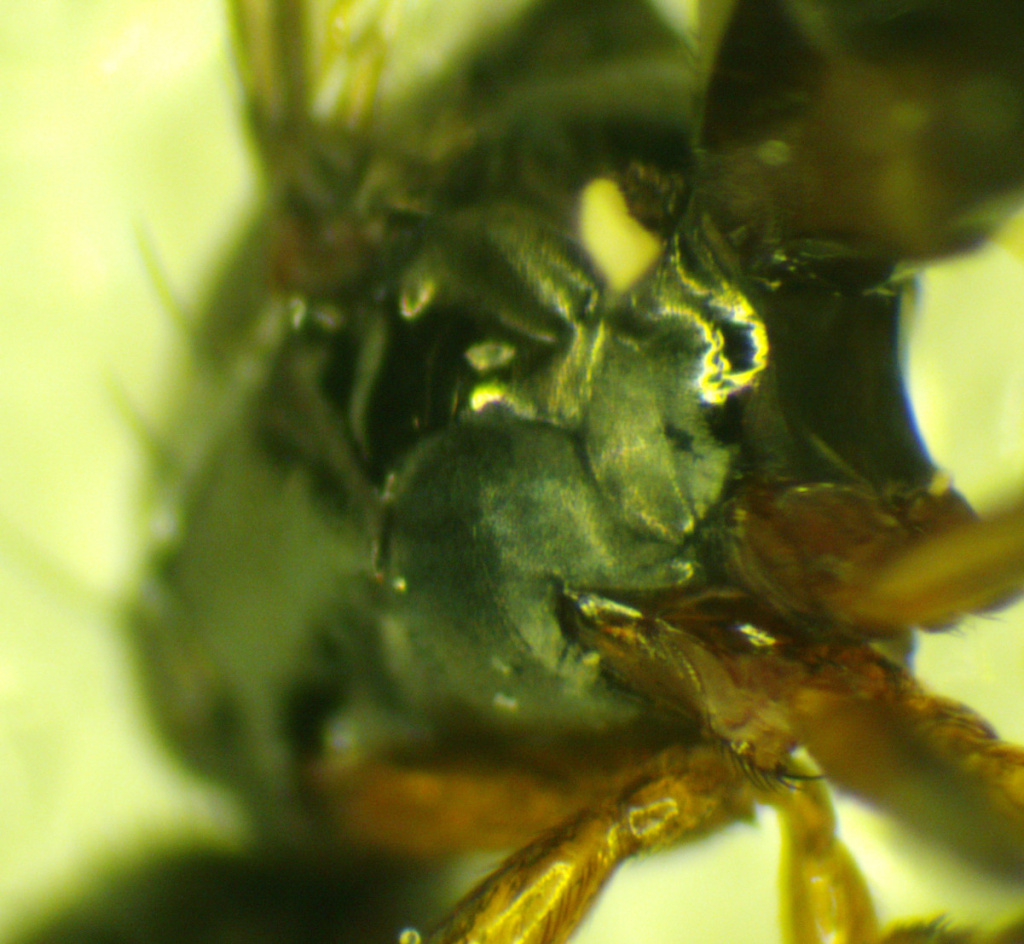
- hypopleuron pruinose at the front but glossy black at the rear
- no anterior setae on the mid femur
- 0-1 posterior setae on the mid tibia
Unless identified by a recognised expert, a photo is required and the specimen should be examined with a microscope. In the comments box, state the key or ID method used and describe the size and identifying characters.
Around fresh dung.
Although the species might be encountered at any time, the main period is between May and September with a peak in July and early August.
The flies are active by day, and the sexes usually meet for mating around fresh dung where the eggs will be laid.
Widespread and fairly frequent in Britain.
Fairly frequent in Leicestershire and Rutland.
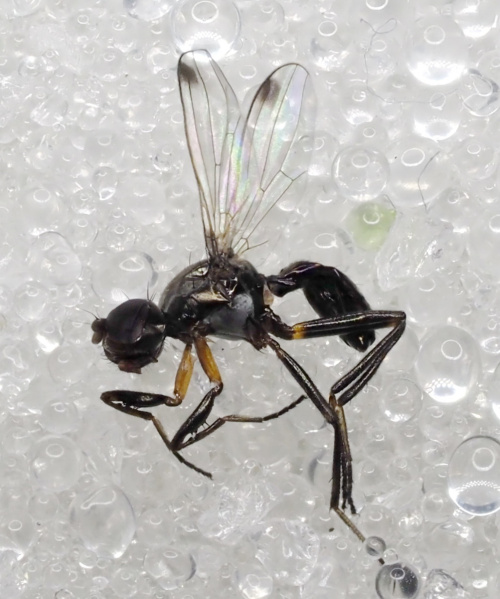 David Nicholls
Lodge Farm, Hoby
08 July 2024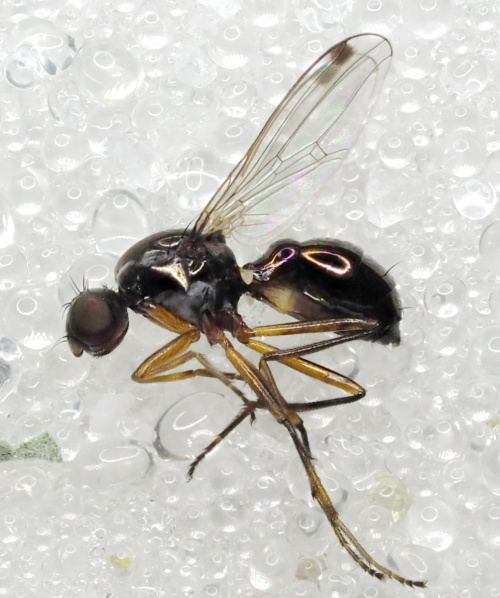 David Nicholls
Cloud Wood
10 July 2024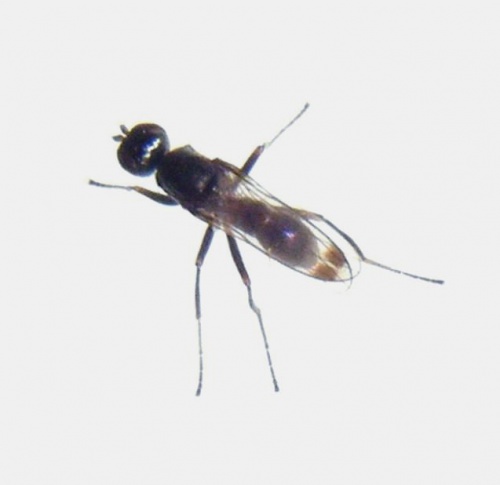 Graham Calow
Sapcote garden1
11 February 2013
male - specimen examined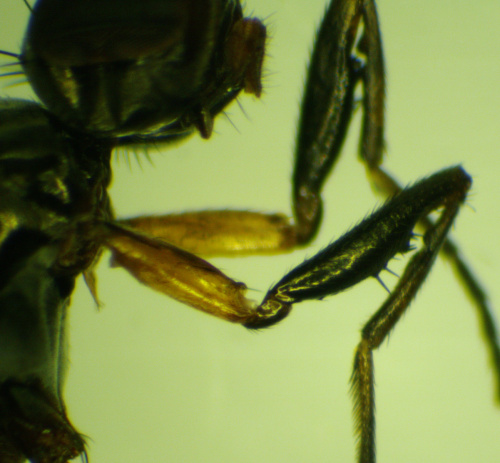 David Nicholls
Lodge Farm, Hoby
08 July 2024
male front femur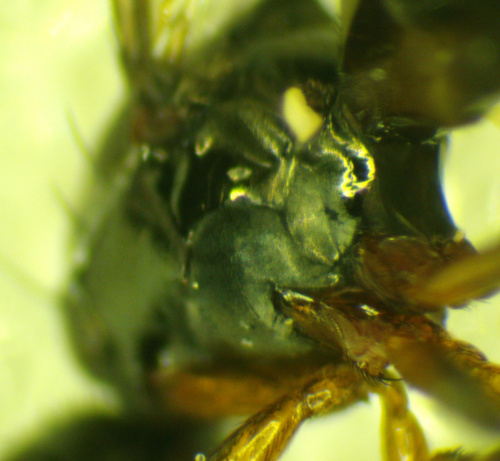 David Nicholls
Cloud Wood
10 July 2024
hypopleuron - glossy at rear
Leicestershire & Rutland Map
Enter a town or village to see local records
MAP KEY:
Yellow squares = NBN records (all known data)
Coloured squares = NatureSpot records: 2025+ | 2020-2024 | pre-2020
UK Map
Additional images
No additional images available for this species.