Silver-moss
Silver-moss - Bryum argenteum
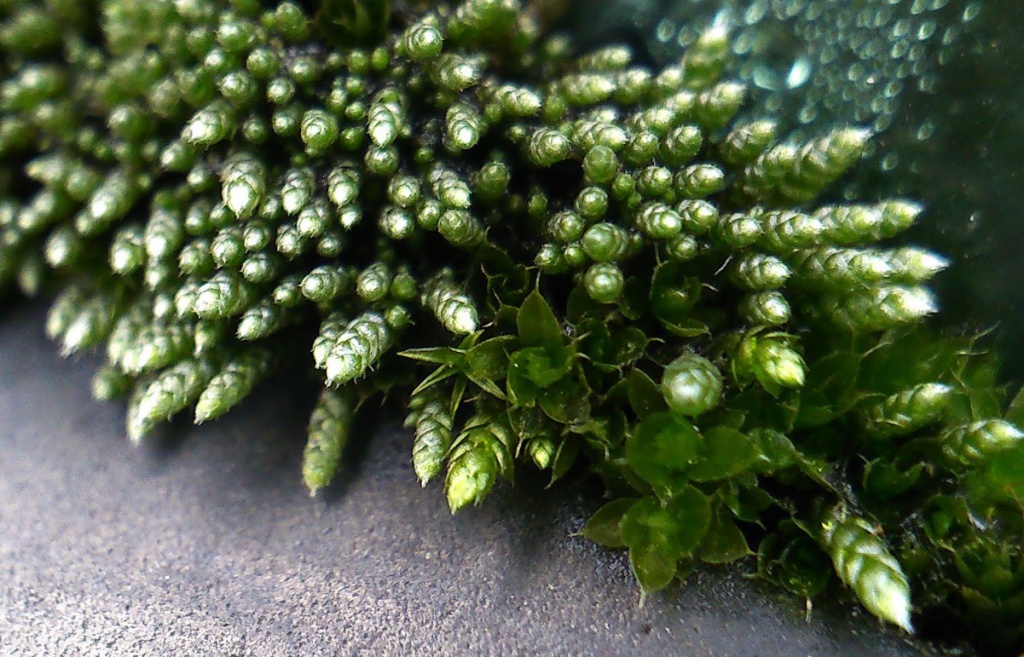
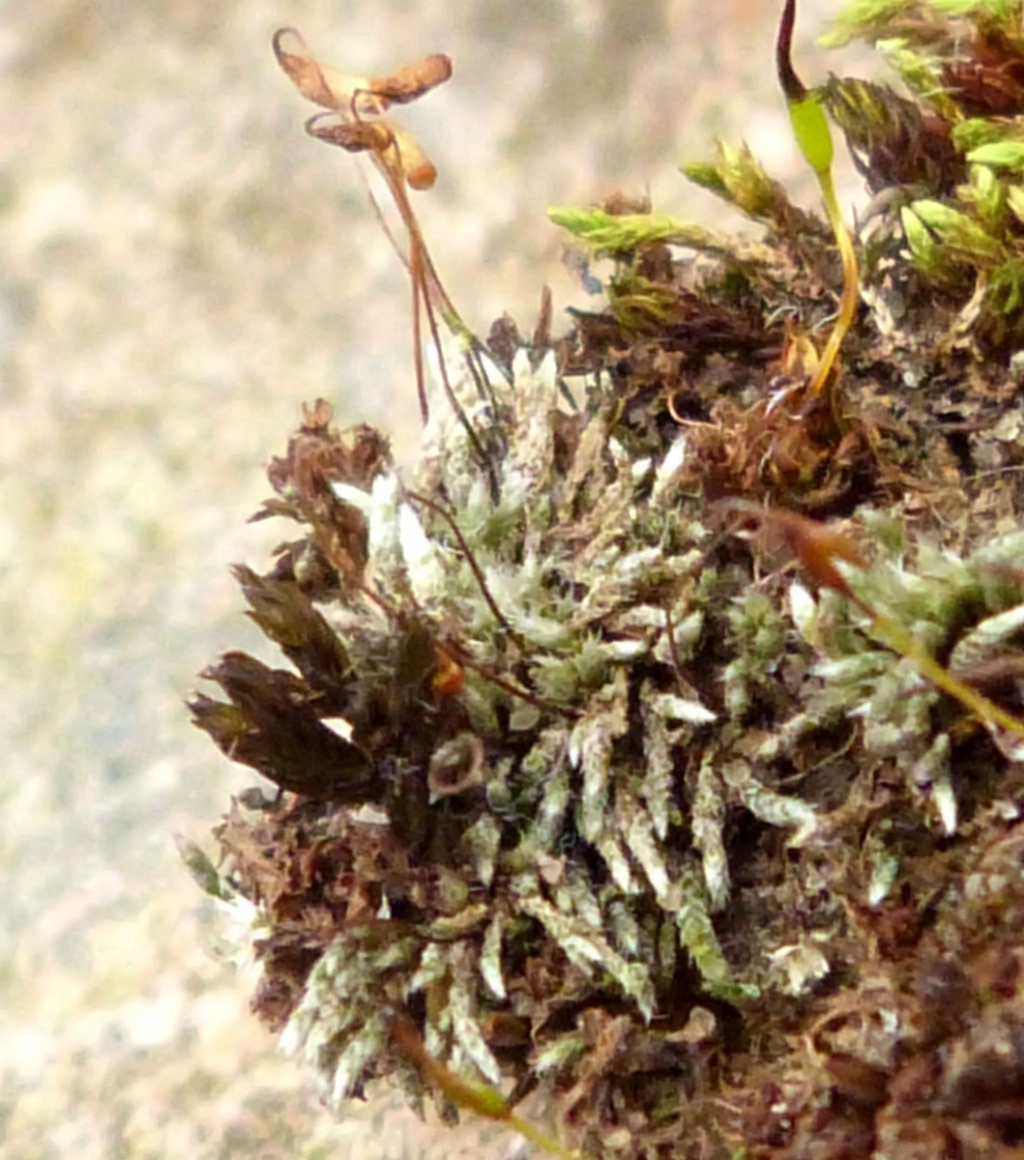
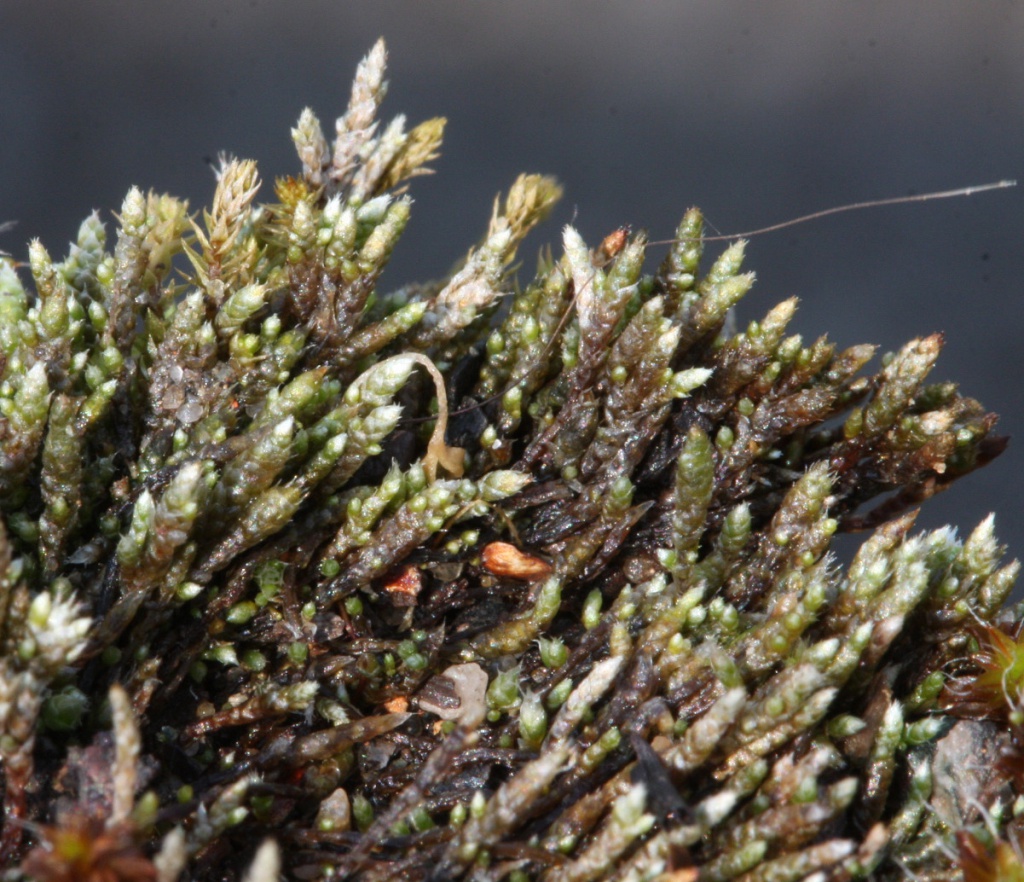
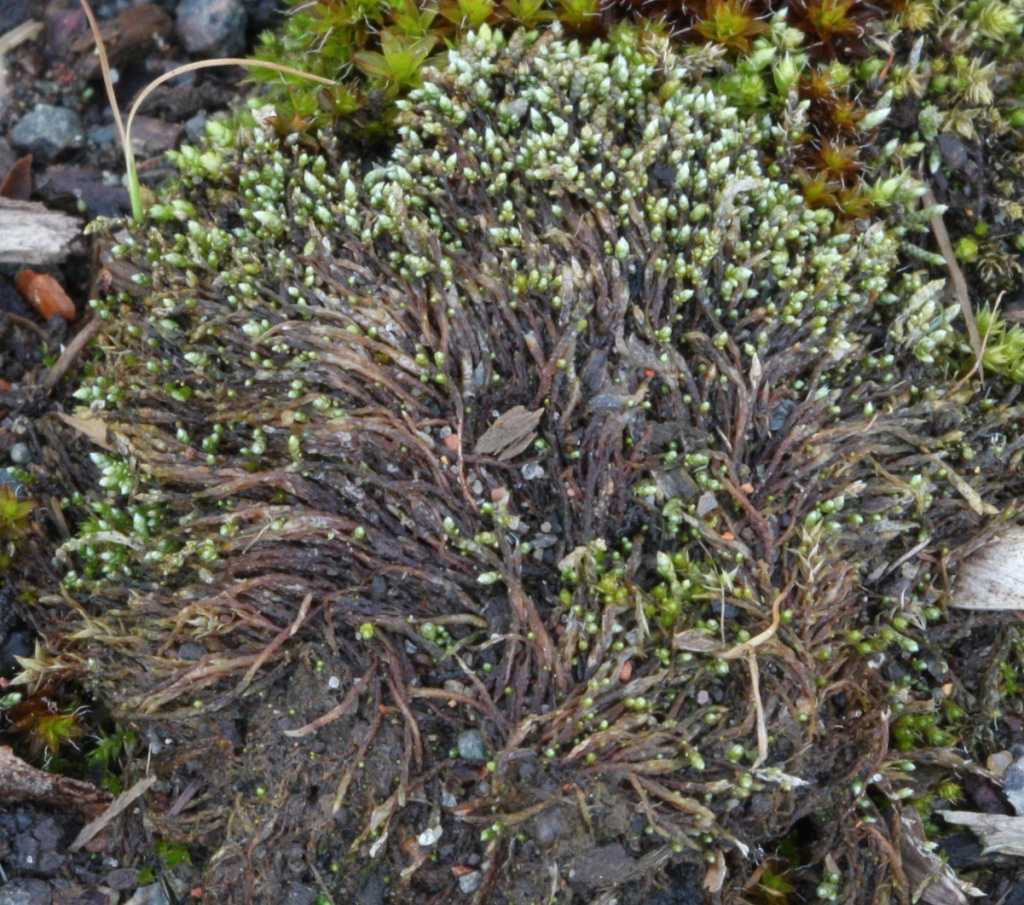
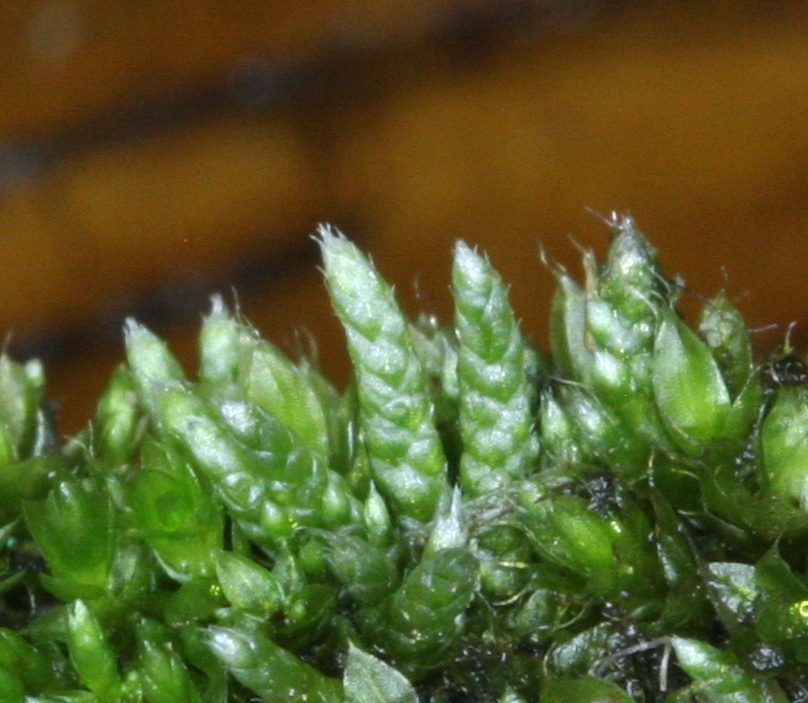
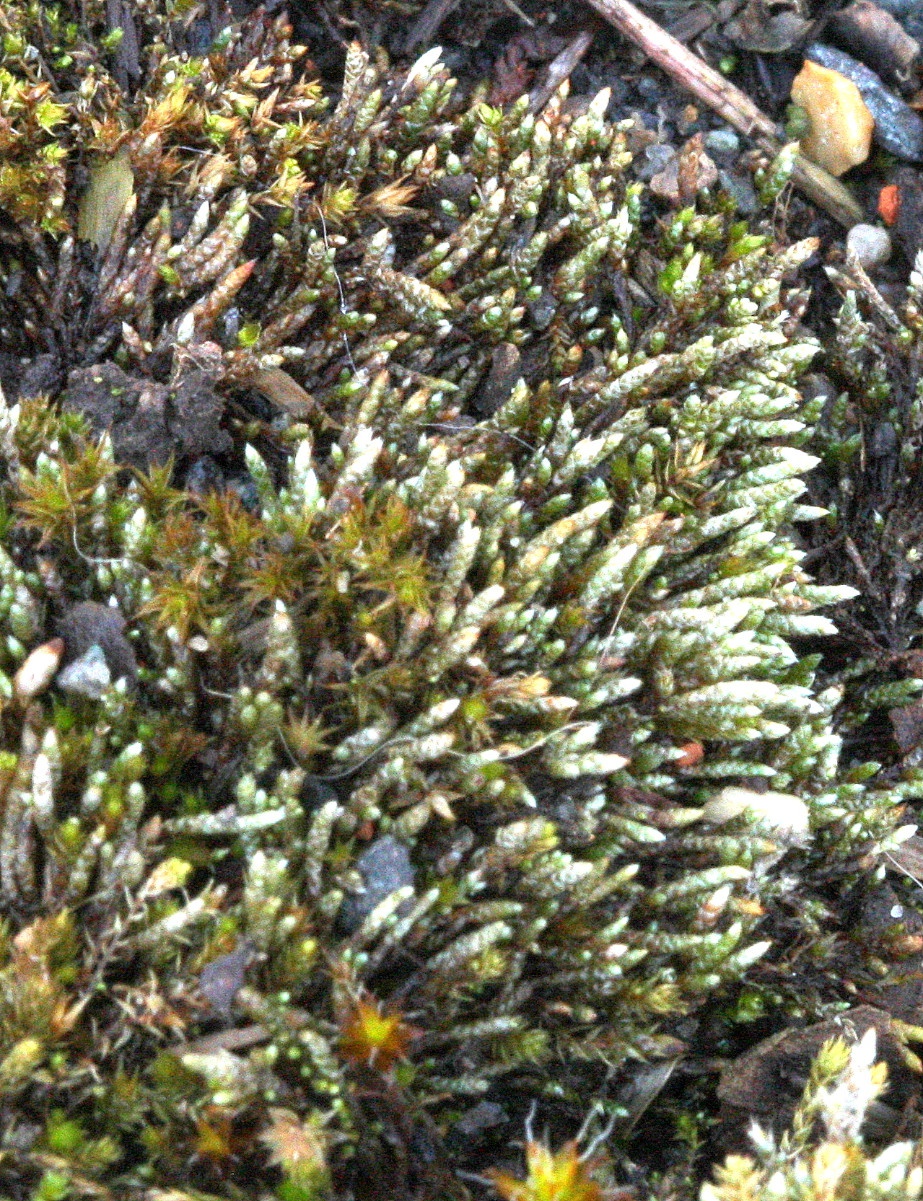
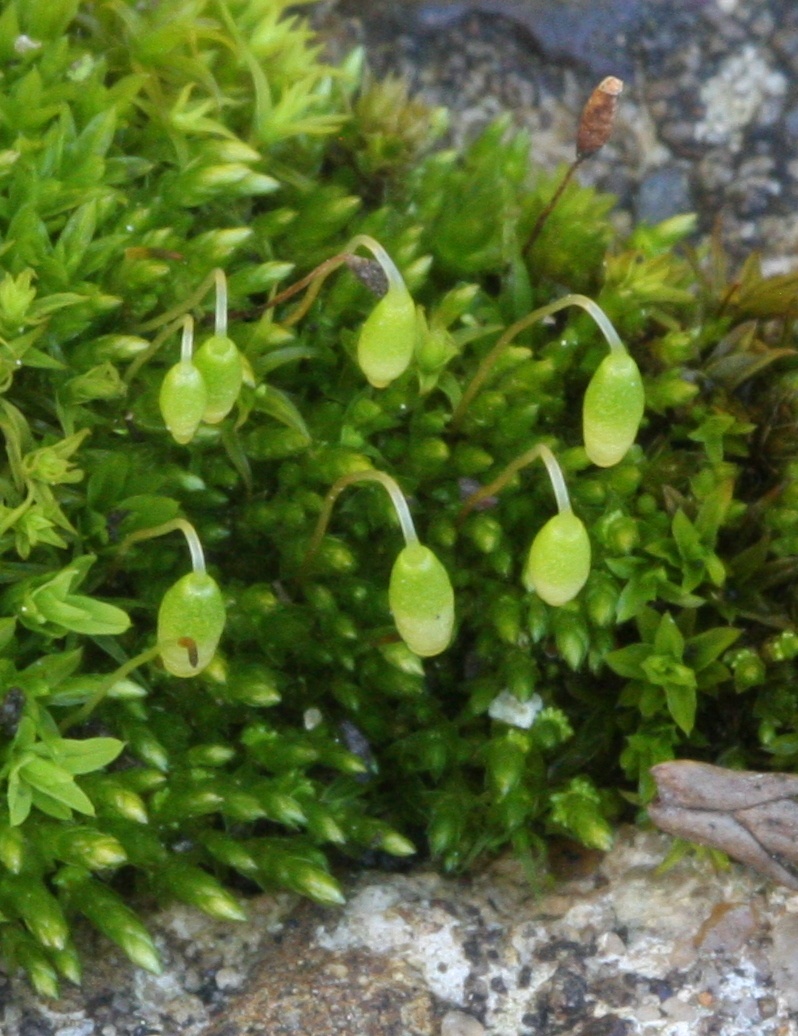
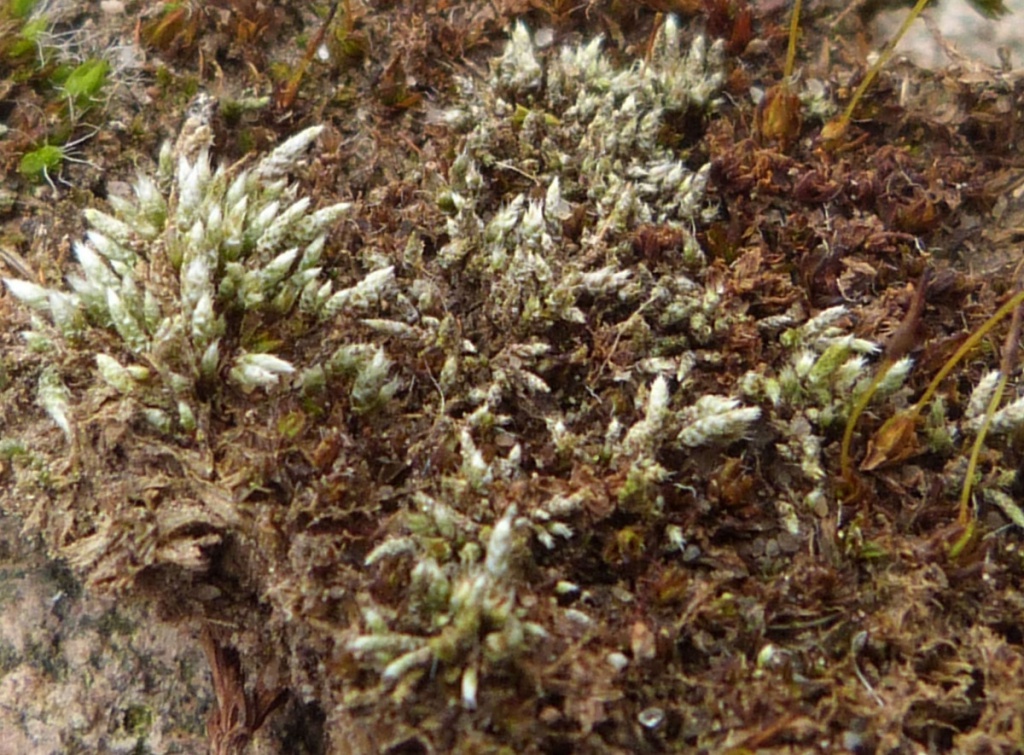
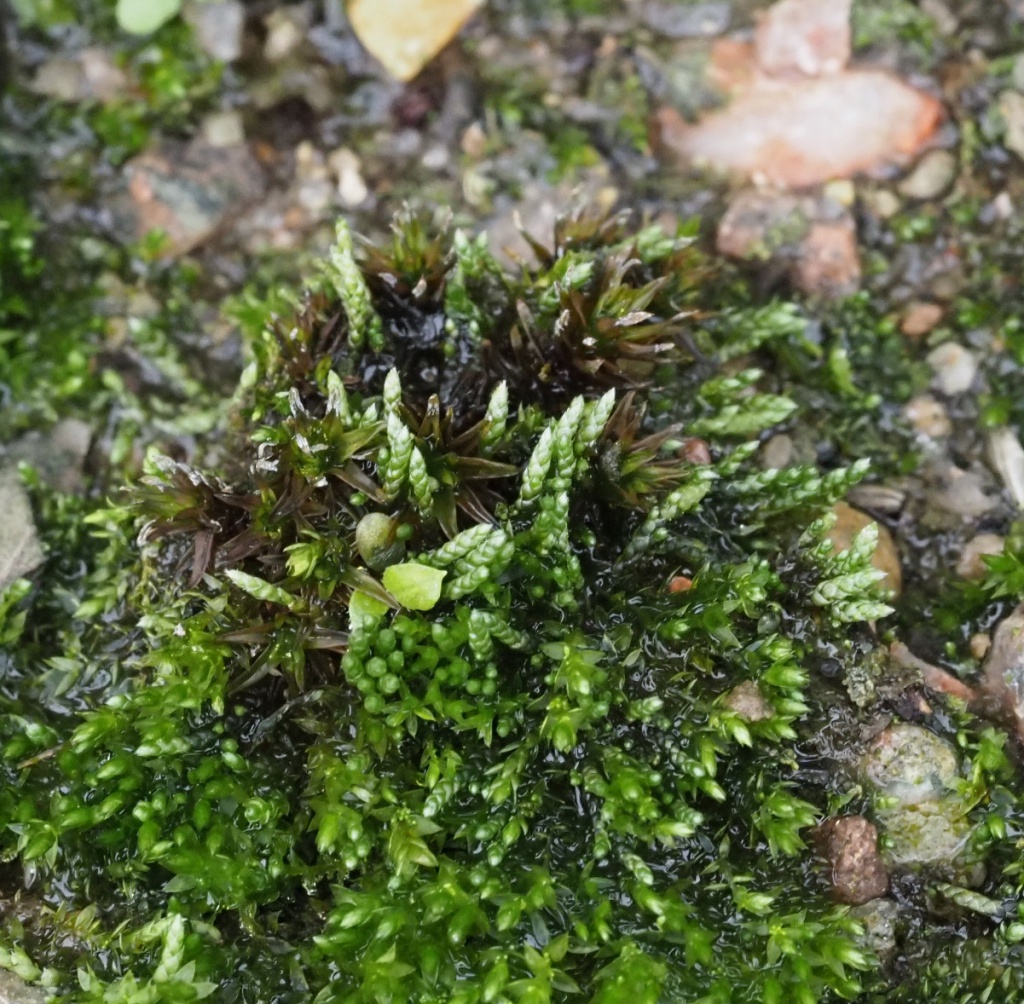
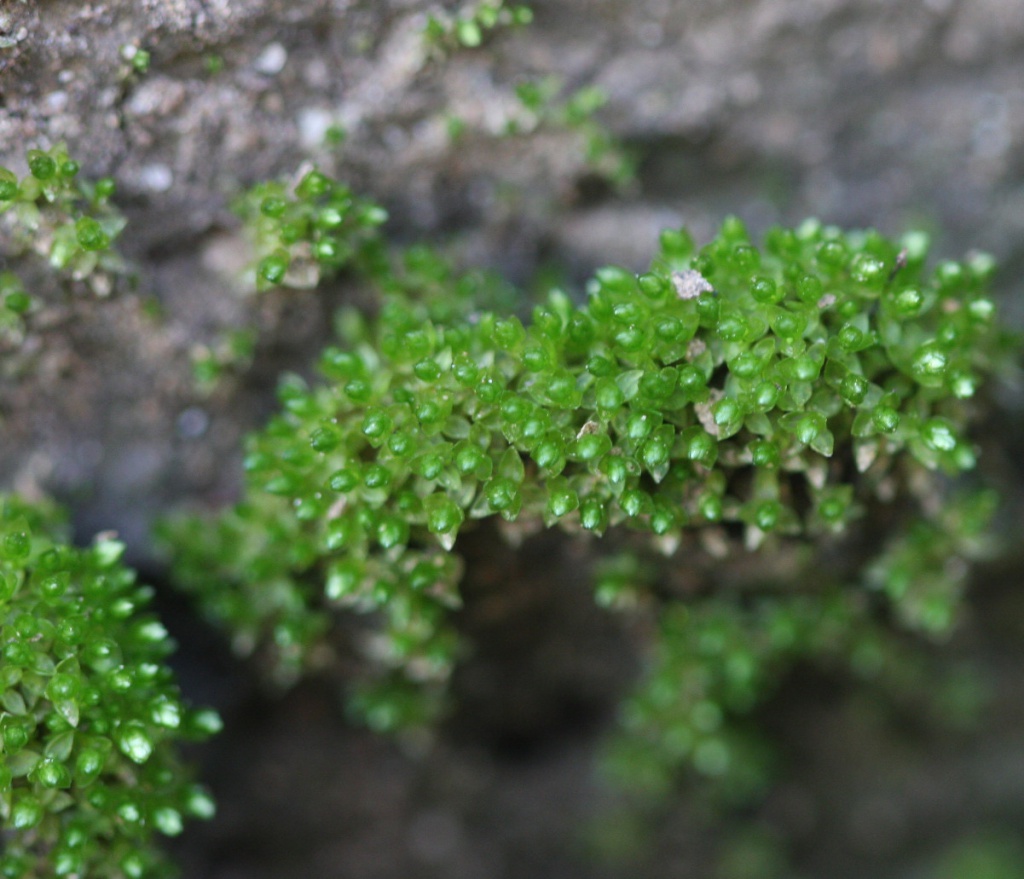
This is the most recognisable of all British mosses. B. argenteum forms pale green or almost white, compact tufts or patches which look shiny and silvery grey when dry. The crowded shoots are usually less than 1 cm tall, and the rounded, concave leaves (0.75 to 1.25 mm long) cause the shoots to look smoothly cylindrical, hardly altered when dry. The nerve ends well below the leaf tip. The shortly oblong, pendulous (or rarely nearly horizontal) capsules are small (about 1.5 mm long) and borne on a short seta (about 1 cm long). They are usually produced between autumn and spring.

A good photo is needed showing sufficient detail to confirm the ID.
Found in disturbed habitats which may become very dry and are usually rich in nutrients such as nitrates. These include soil on and by paths (including cracks between paving slabs), roads, in arable fields, on waste ground and railway lines. It may also be found on stone rather than soil, as on walls, buildings, roofs, and concrete and tarmac. Habitats less influenced by man include sand dunes, eroding banks of streams and rivers, and unstable soil on lowland cliffs.
All year round.
Widespread and common in Britain.
Frequent in Leicestershire and Rutland.
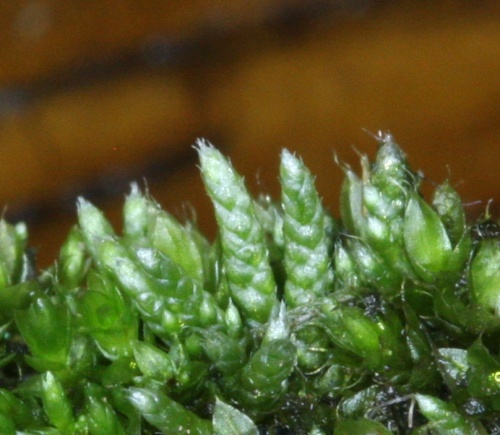 David Nicholls
Ratby garden
07 December 2012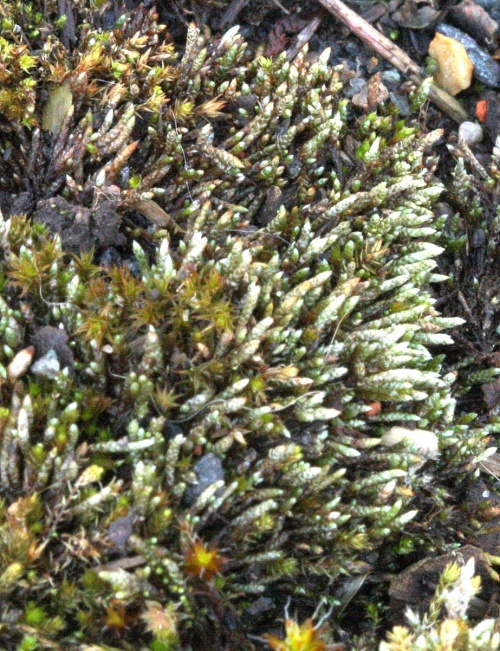 David Nicholls
Bagworth Heath
27 March 2014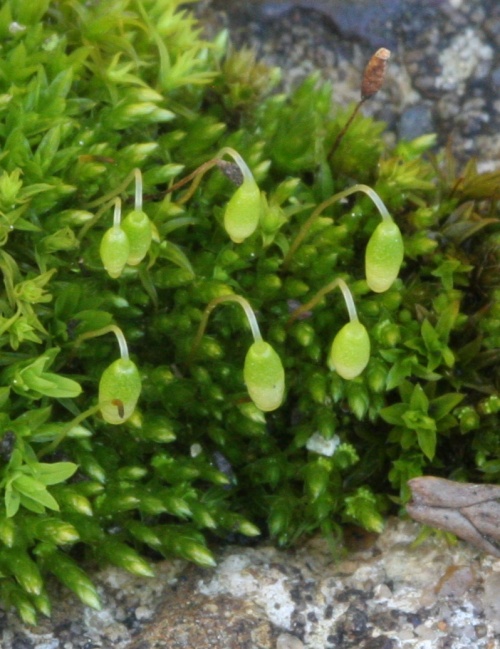 David Nicholls
Ratby garden
07 December 2012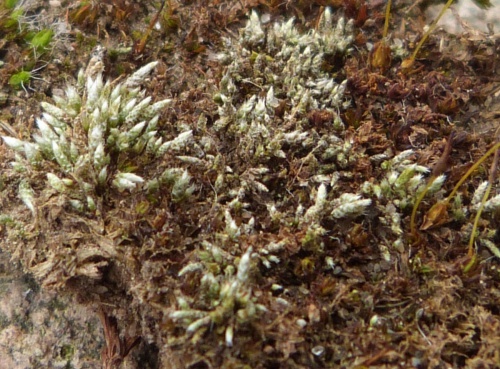 Graham Calow
Sapcote
01 March 2013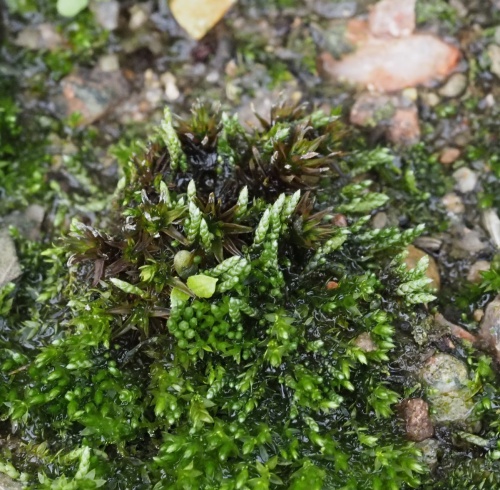 David Nicholls
Brascote-Cadeby
31 January 2021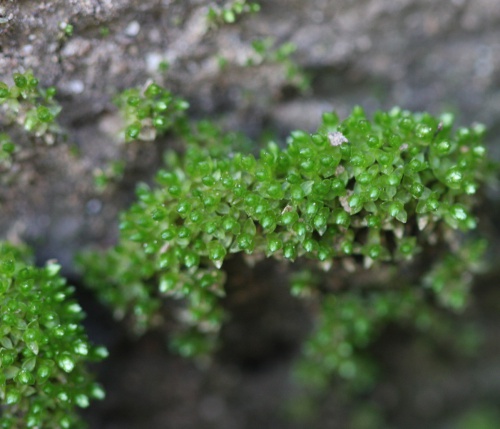 David Nicholls
Ratby Disused Railway
28 February 2014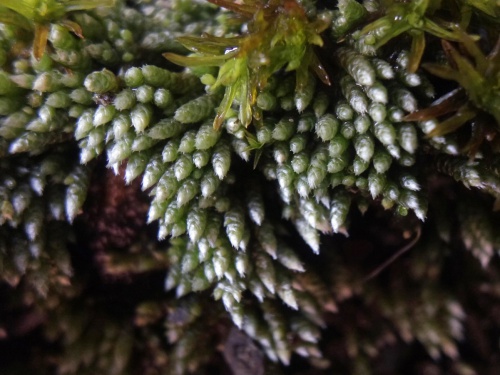 Peter Smith
Cropston garden
30 March 2021

Leicestershire & Rutland Map
Enter a town or village to see local records
MAP KEY:
Yellow squares = NBN records (all known data)
Coloured squares = NatureSpot records: 2025+ | 2020-2024 | pre-2020
UK Map
Additional images