Globe-thistle
Globe-thistle - Echinops agg
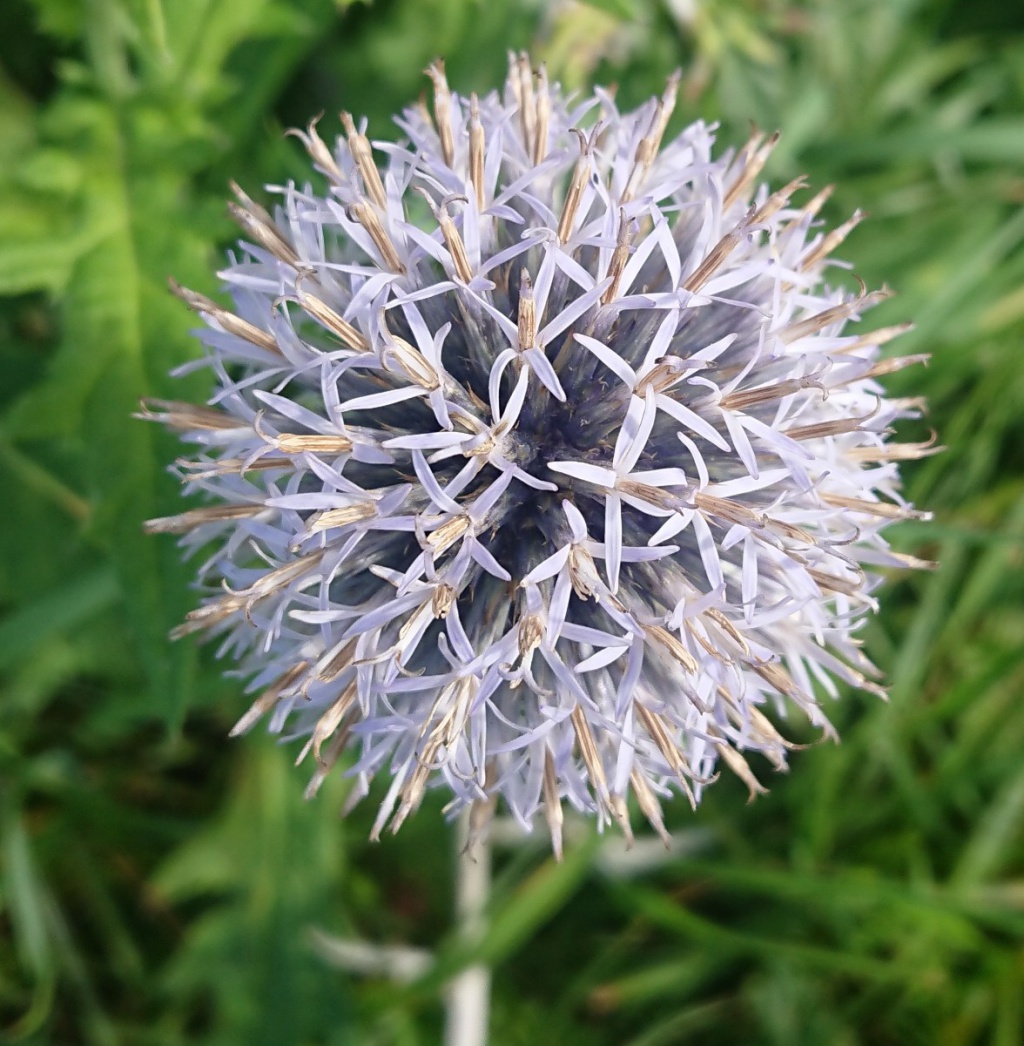
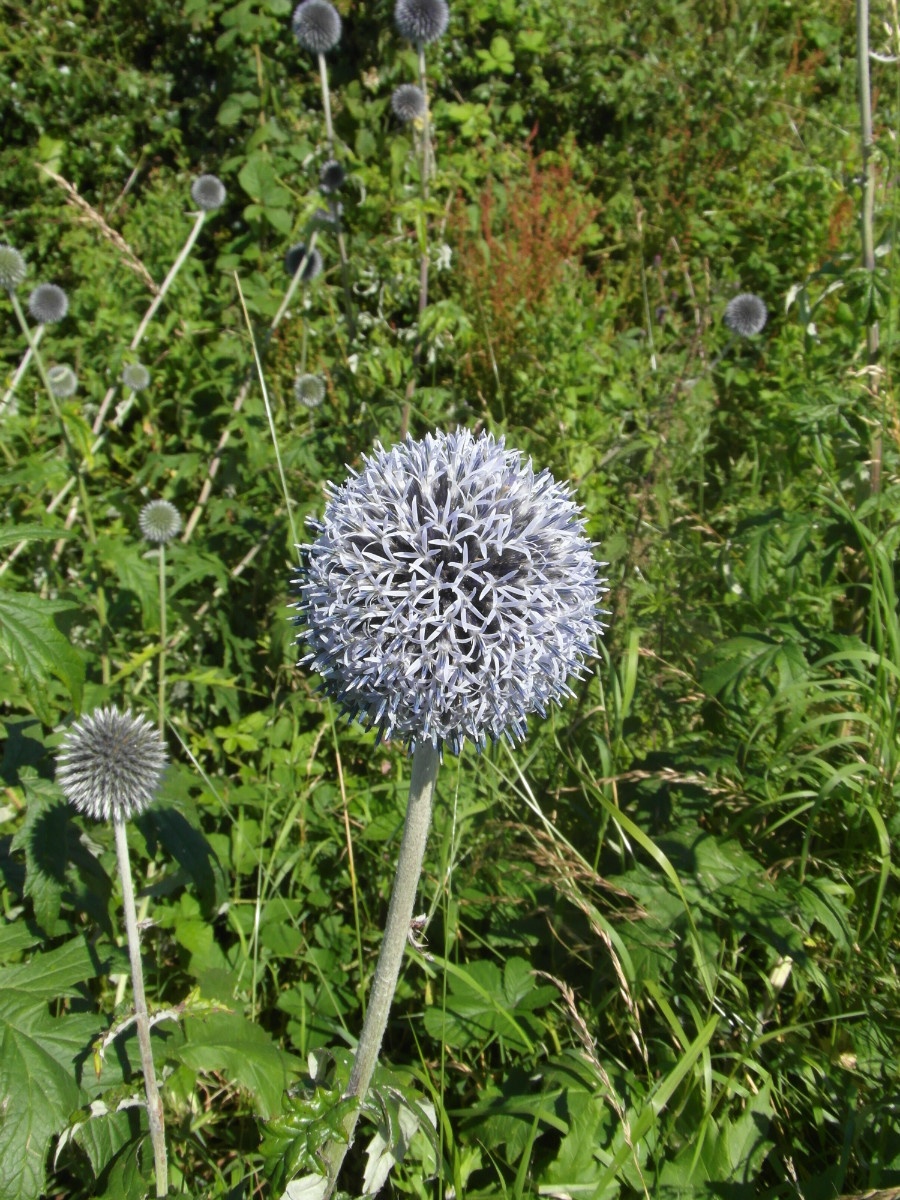
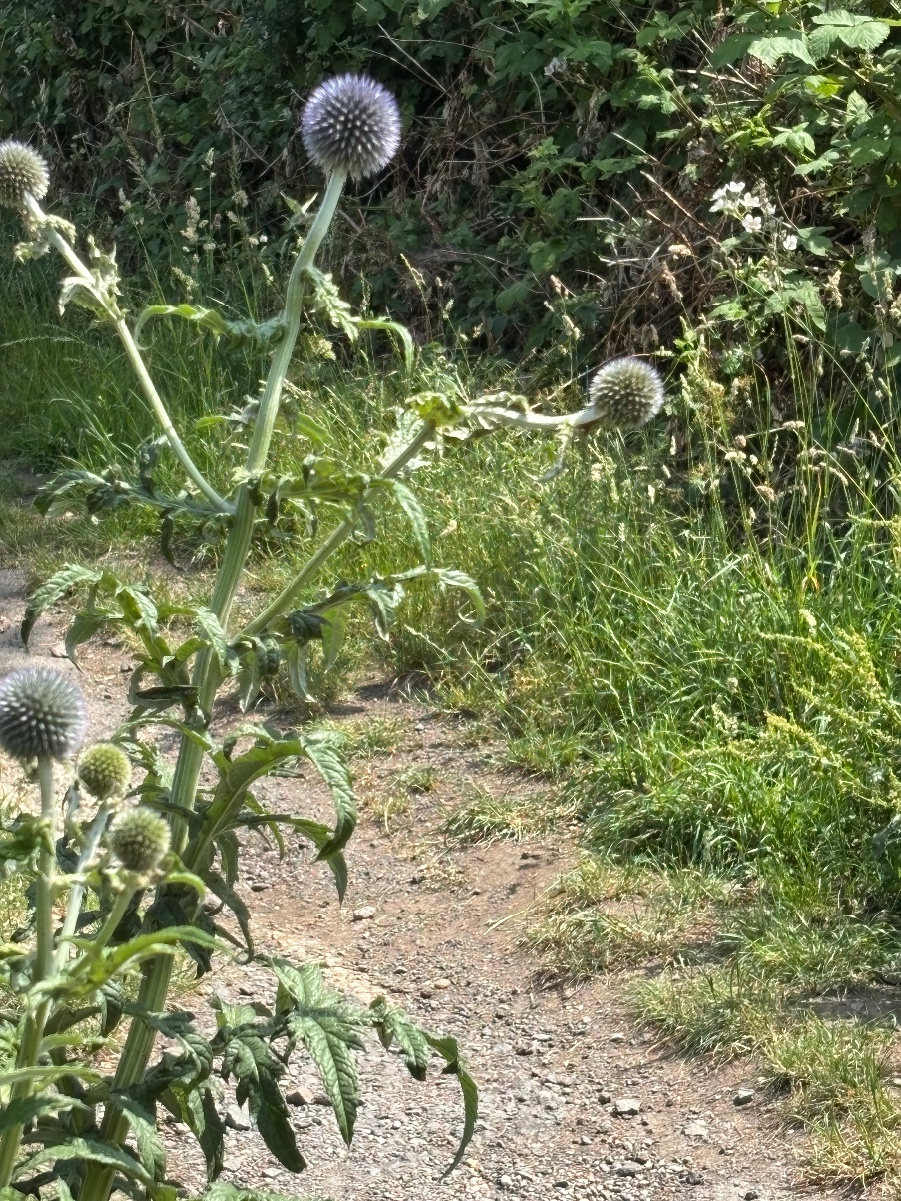
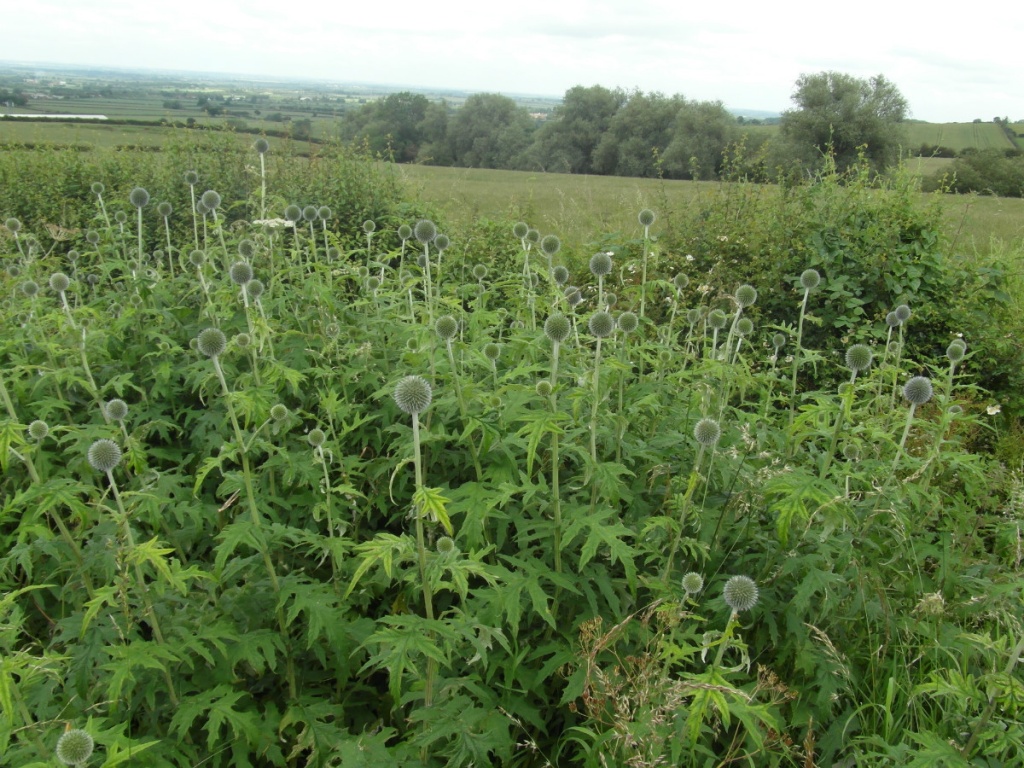
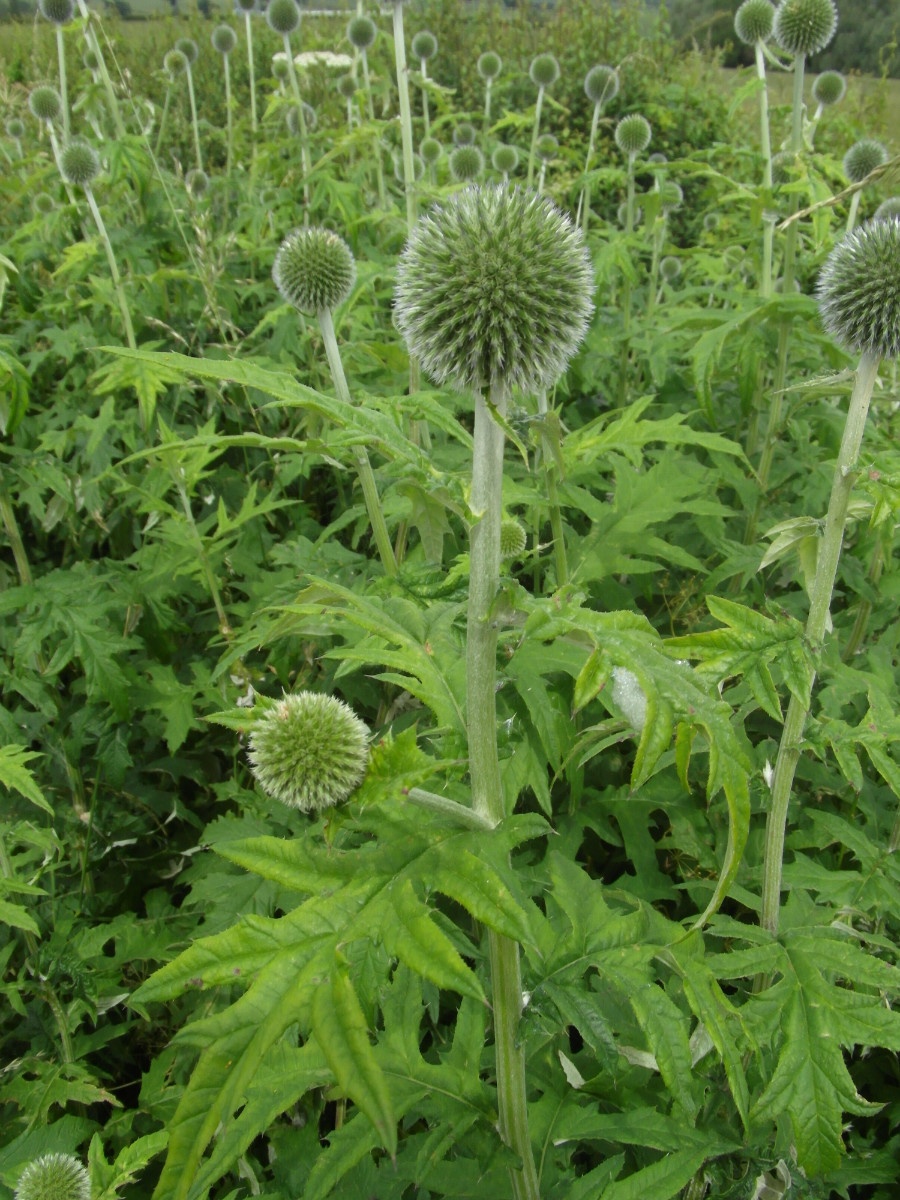
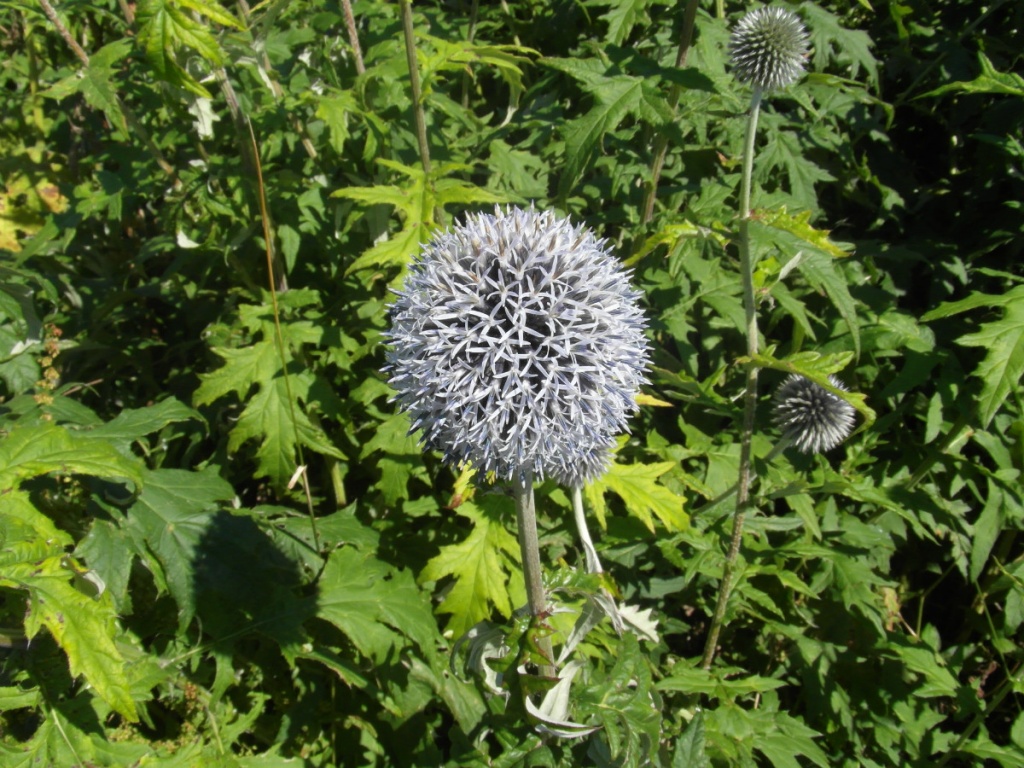
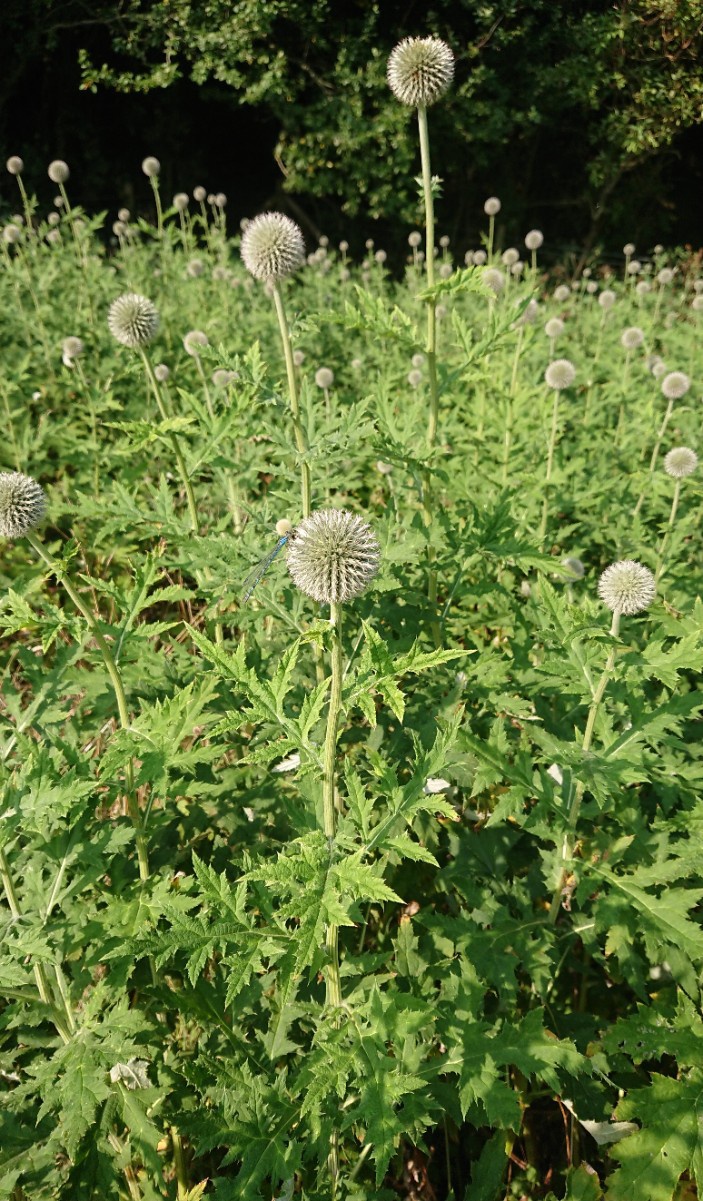
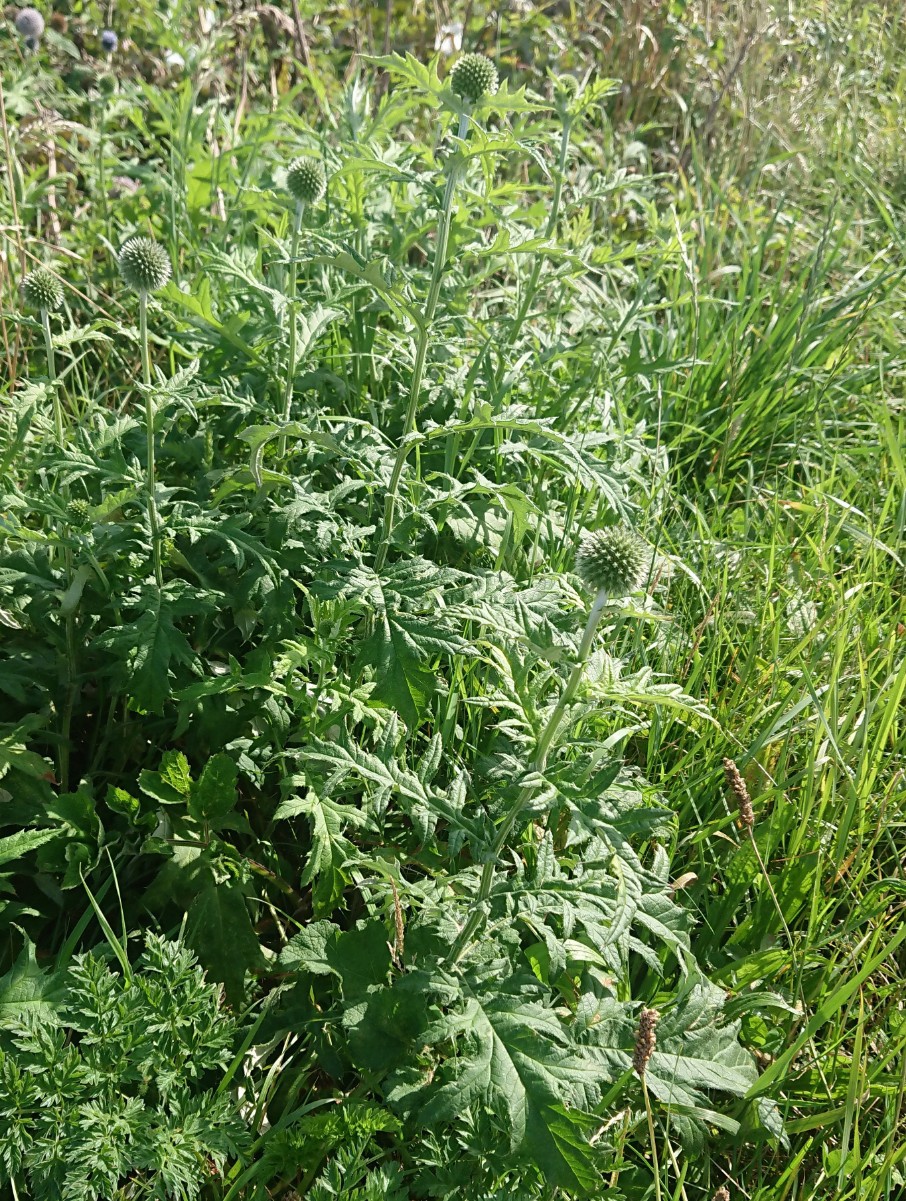
This is a glandular, woolly herbaceous plant which reaches on average 50 to 100 centimetres in height, up to a maximum of two metres. Each 'globe' is made up of many individual flowerheads, each of which is a single flower surrounded by 3 rows of bracts. Several species and hybrids of Globe-thistle are grown in gardens, and since any may escape and become established we have decided to treat them as an aggregate for NatureSpot purposes.

Identification to species-level depends on details of the phyllaries (the bracts beneath each flower) and the presence or absence of glandular hairs on leaves or phyllaries.
A specimen will be needed to verify species records
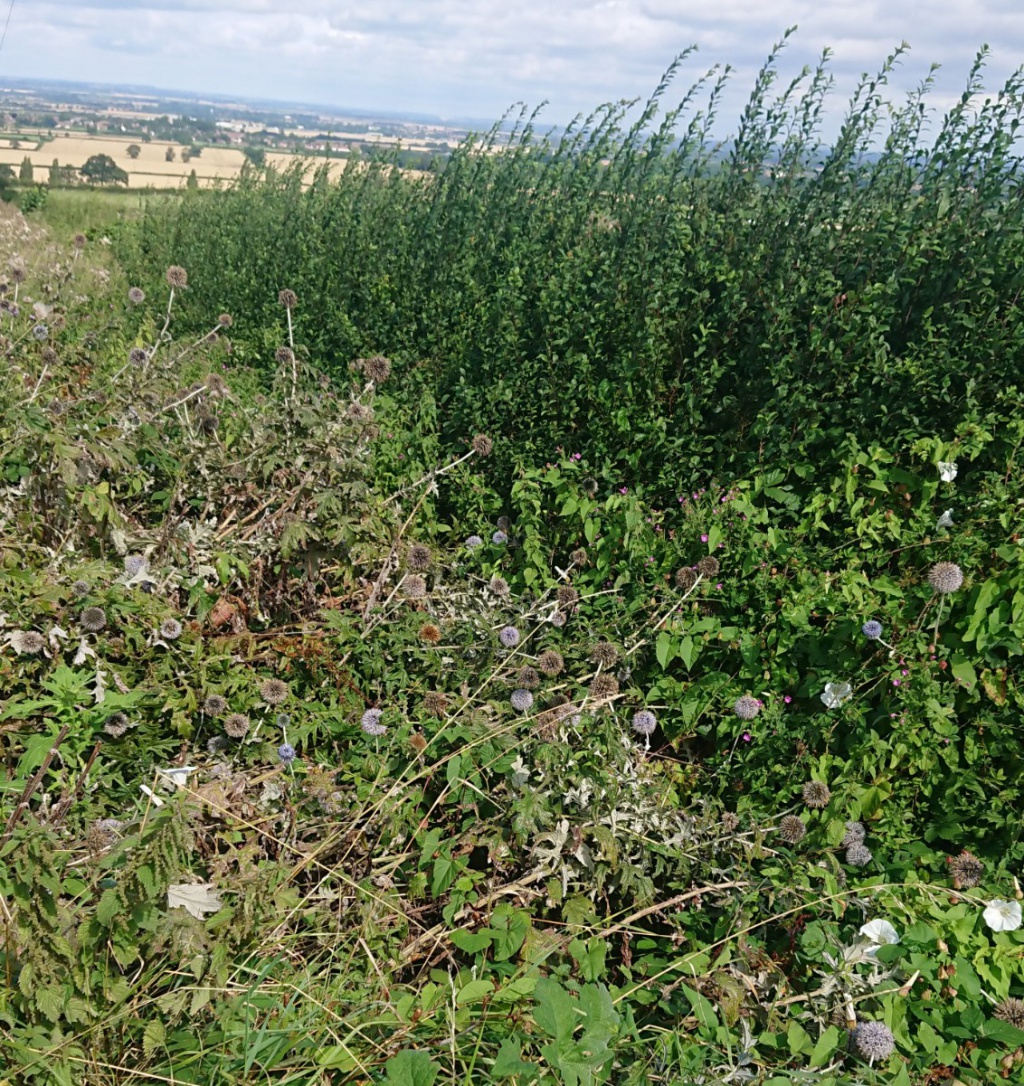
Roadside verges and waste areas, often close to habitation as a garden escape which has persisted in the wild.
Flowers June to August.
Perennial.
Scattered thinly, but widely around much of Britain.
Uncommon in Leicestershire and Rutland. It was not recorded in the 1979 Flora survey of Leicestershire.
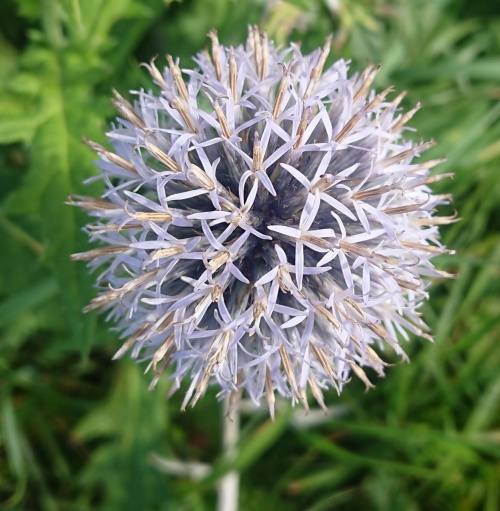 steven lewis
Near Eastwell, Waltham Road
07 August 2019
Identified as Echinops bannaticus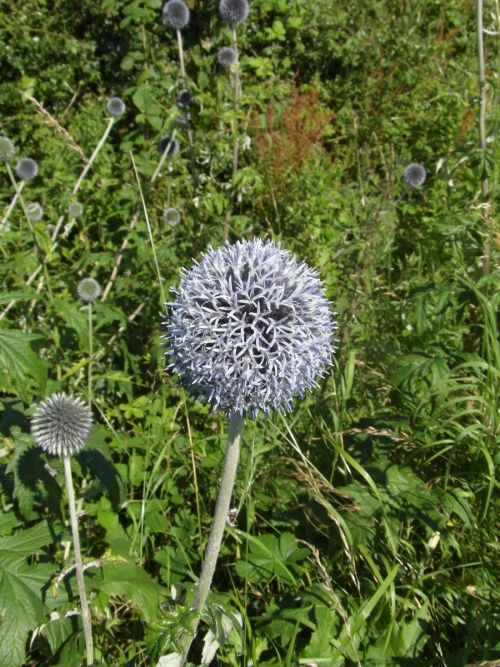 Alan Semper
Harby roadside verge
05 July 2012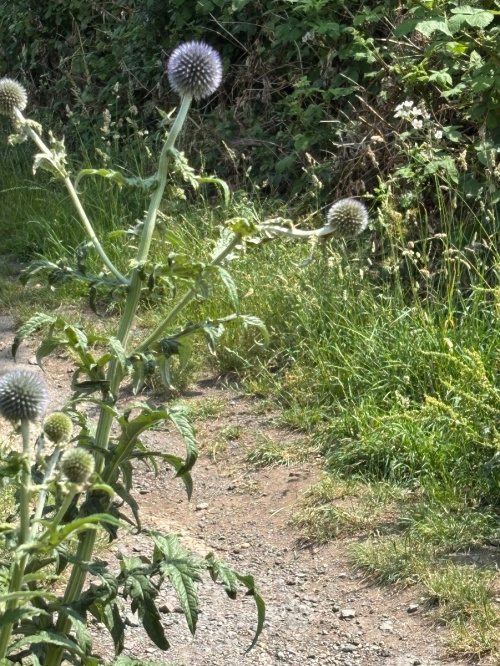 Dylan
Dylan
Melton Kirby Lane
16 June 2025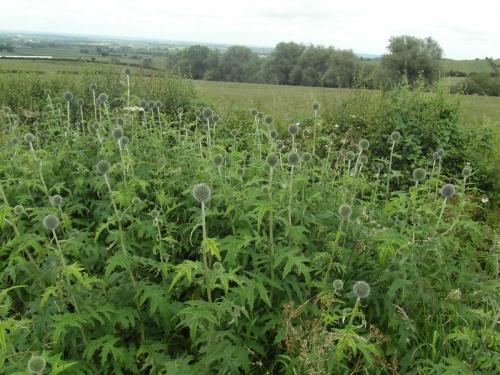 Alan Semper
Harby roadside verge
05 July 2012
Leicestershire & Rutland Map
Enter a town or village to see local records
MAP KEY:
Yellow squares = NBN records (all known data)
Coloured squares = NatureSpot records: 2025+ | 2020-2024 | pre-2020
UK Map
Additional images
All NatureSpot records
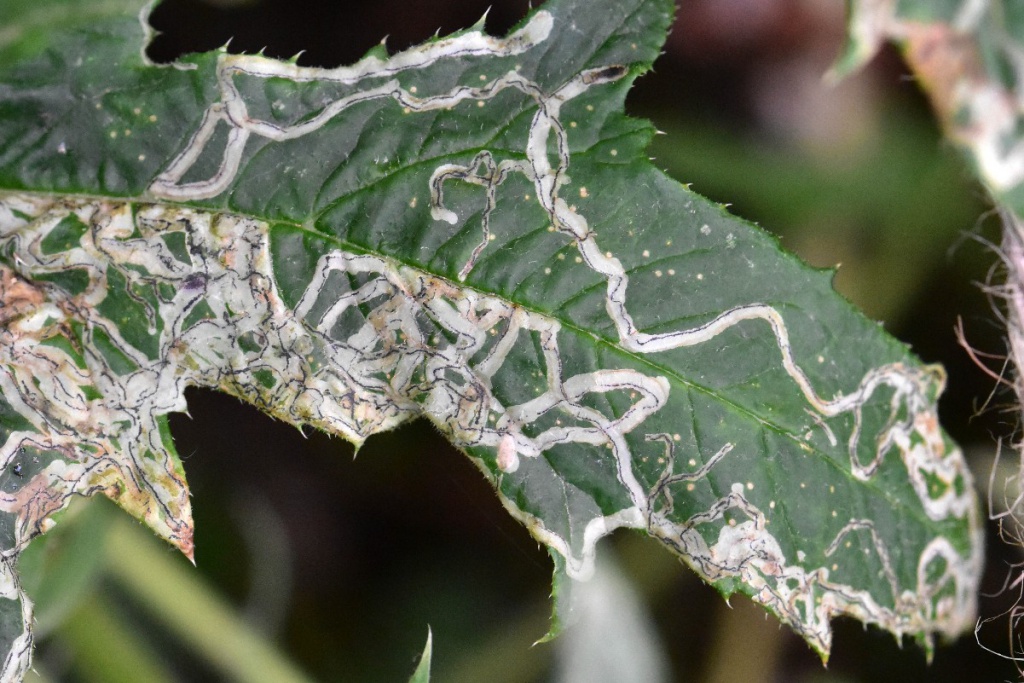
Phytomyza bipunctata
The larva of the Agromyzid fly Phytomyza bipunctata mines the leaves of Echinops species (Globe Thistles). The long, white mines have frass in long strips on alternate sides of the gallery.