Coot
Coot - Fulica atra
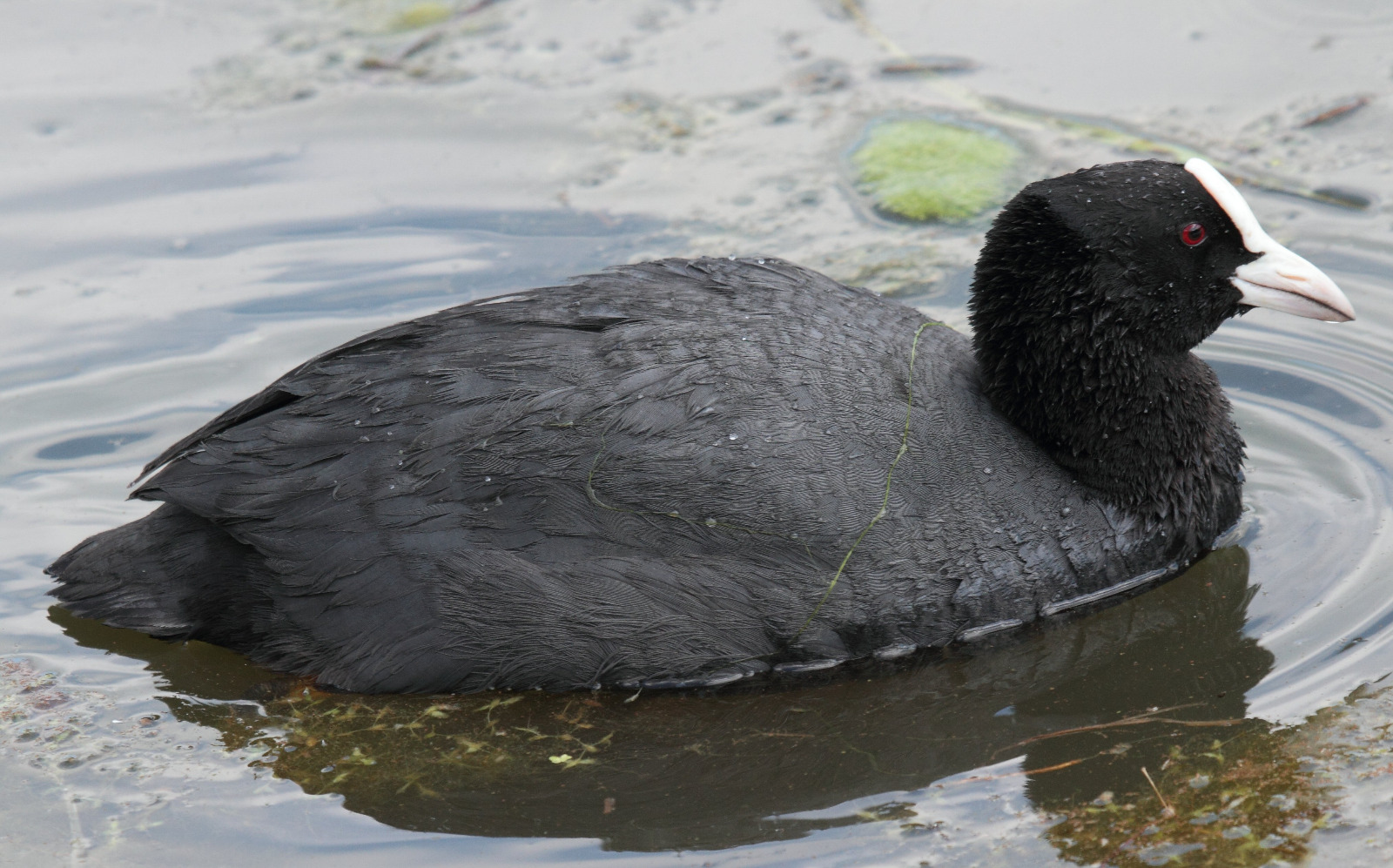
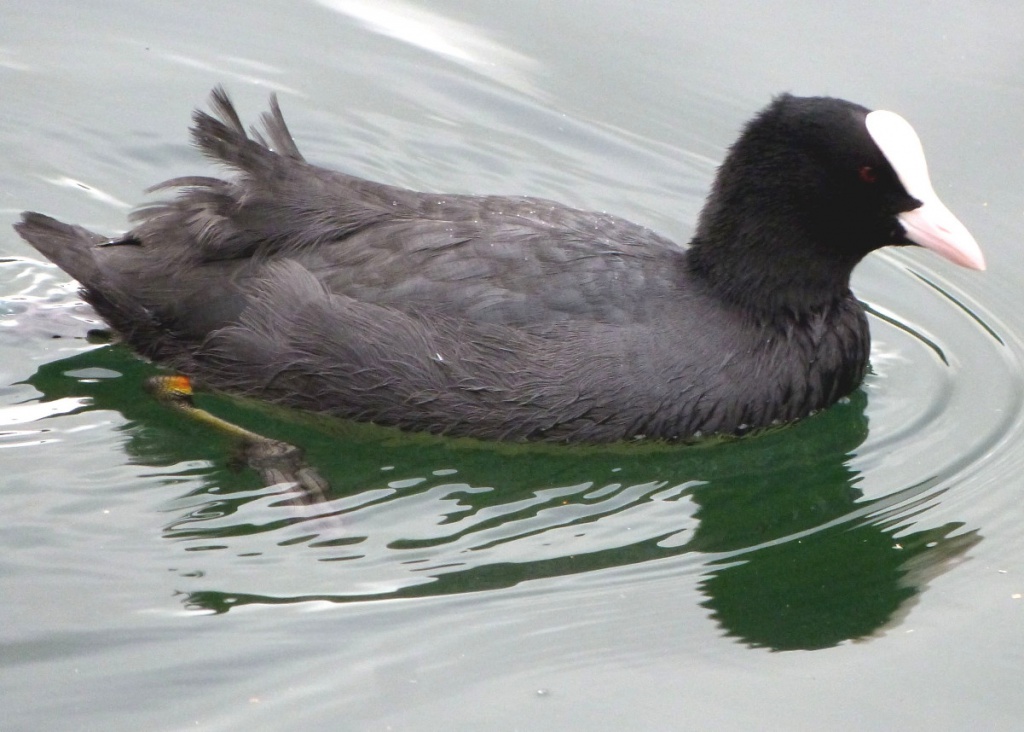
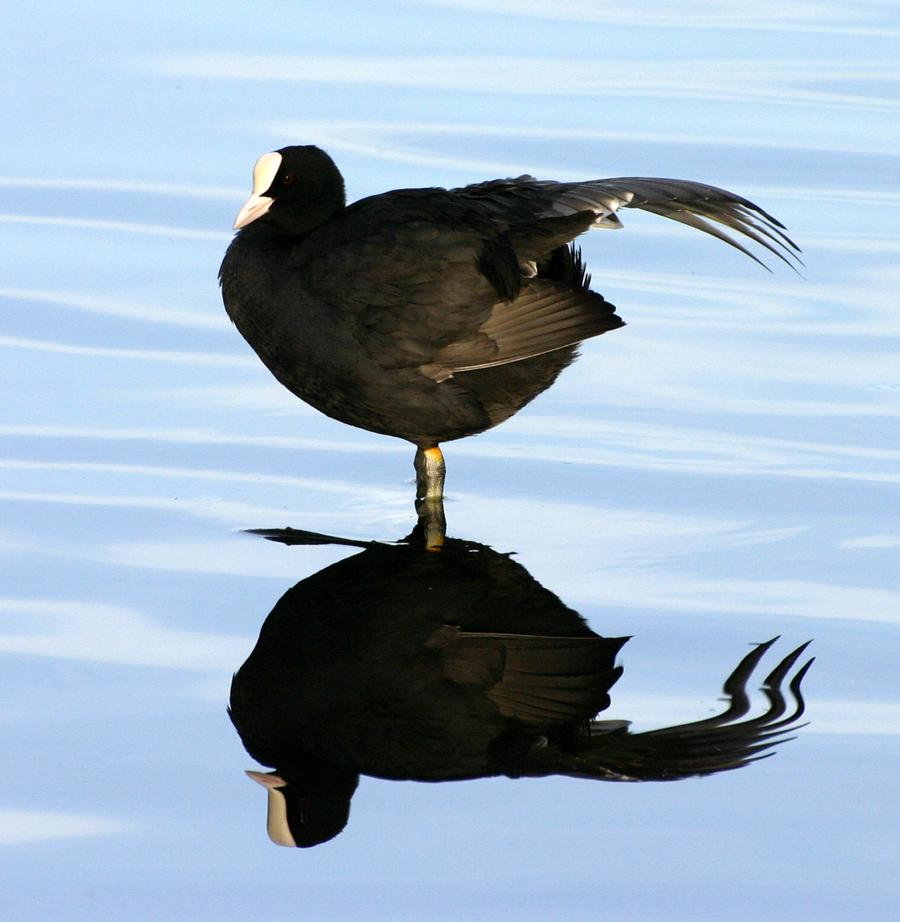
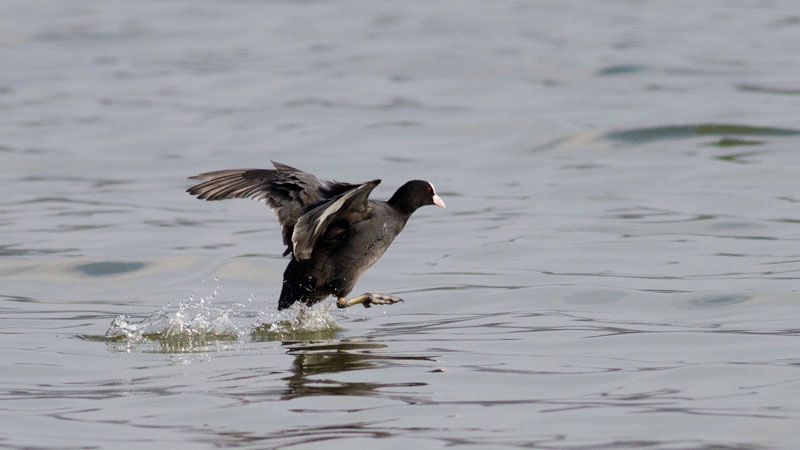
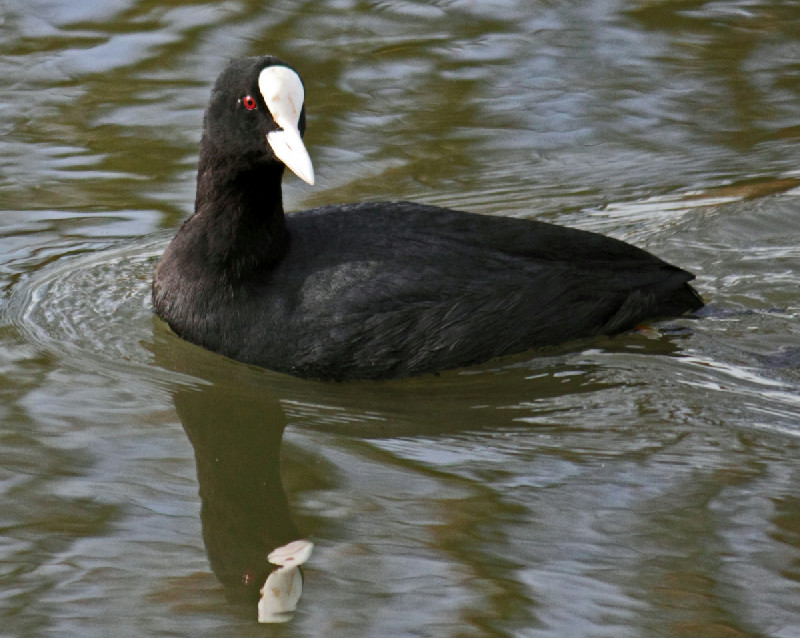
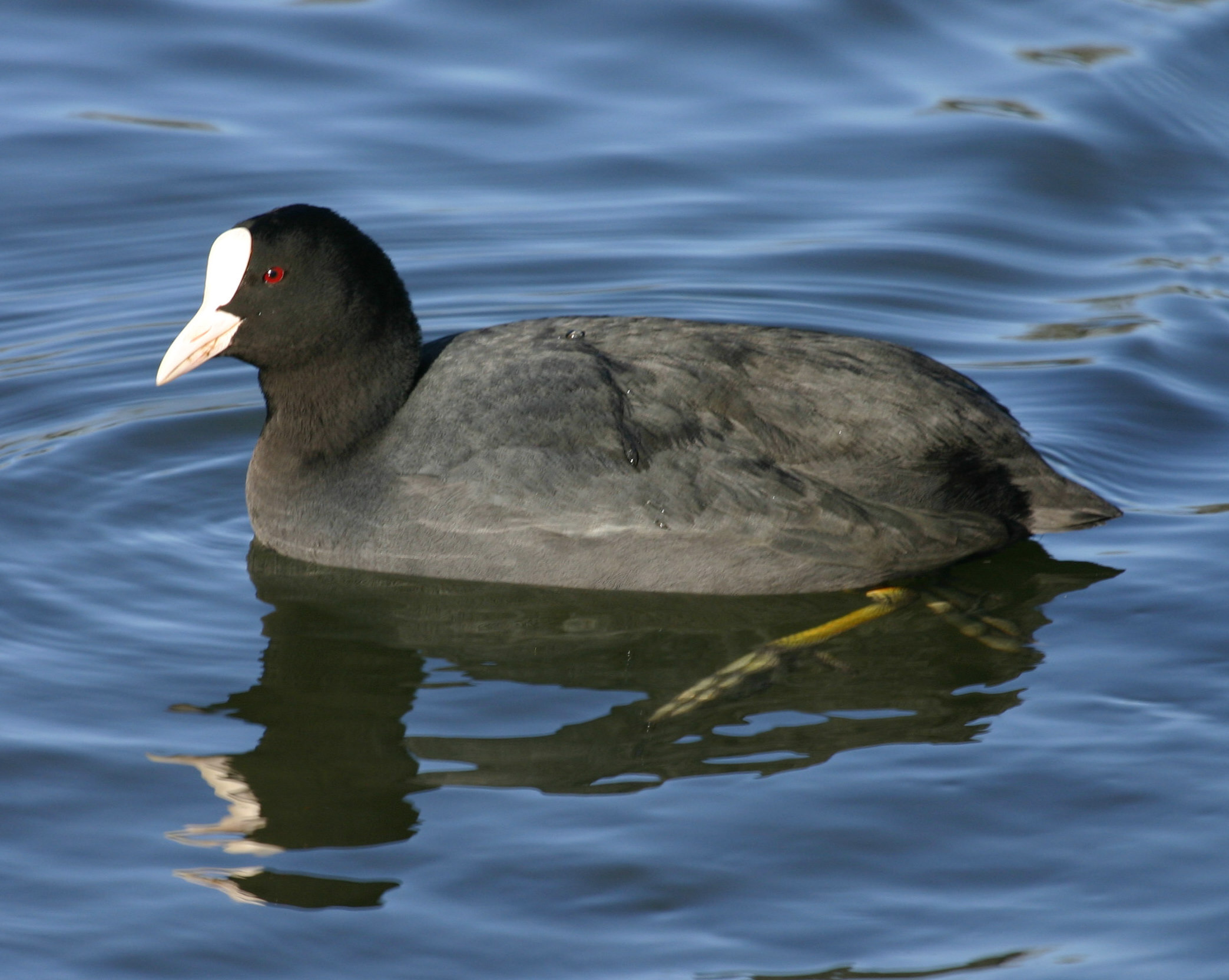
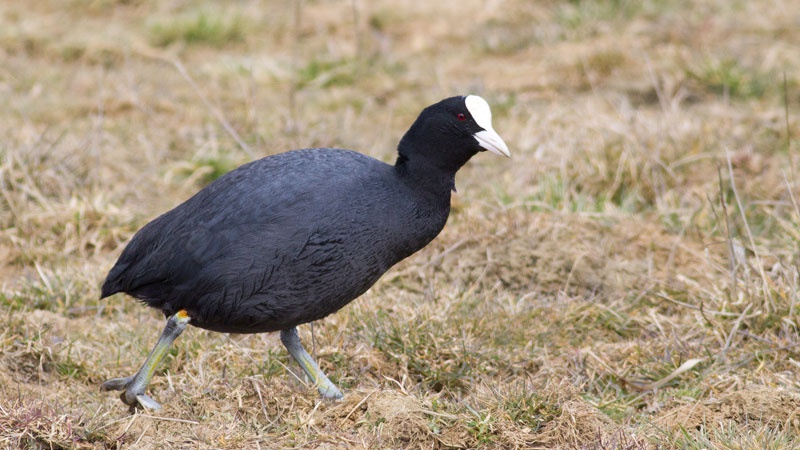
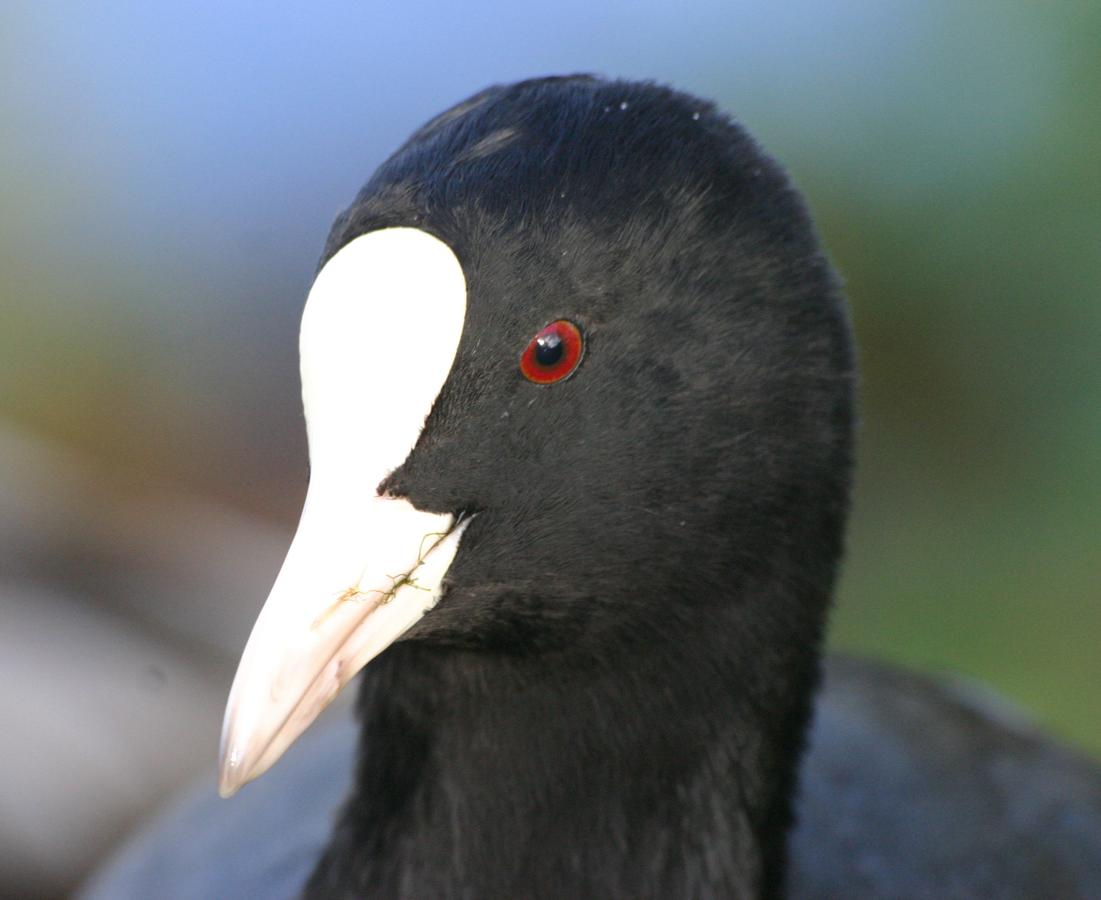
All black and larger than its cousin, the Moorhen, it has a distinctive white beak and 'shield' above the beak which earns it the title 'bald'. Its greenish feet have distinctive lobed flaps of skin on the toes, which act instead of webs when swimming. It patters noisily over the water before taking off and can be very aggressive towards others.

Mainly on freshwater lakes, gravel pits, reservoirs, rivers and town park lakes when deep enough. Sometimes seen offshore, especially in winter if freshwater areas are frozen.
All year round
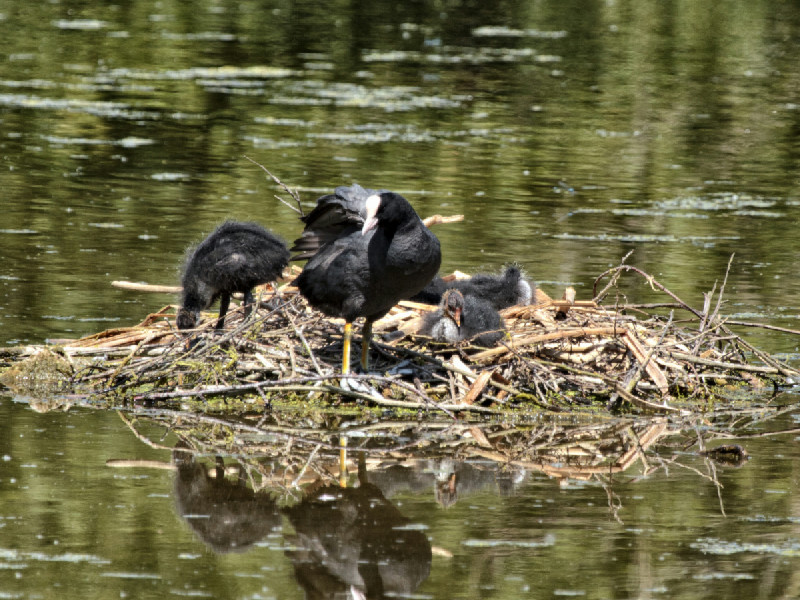
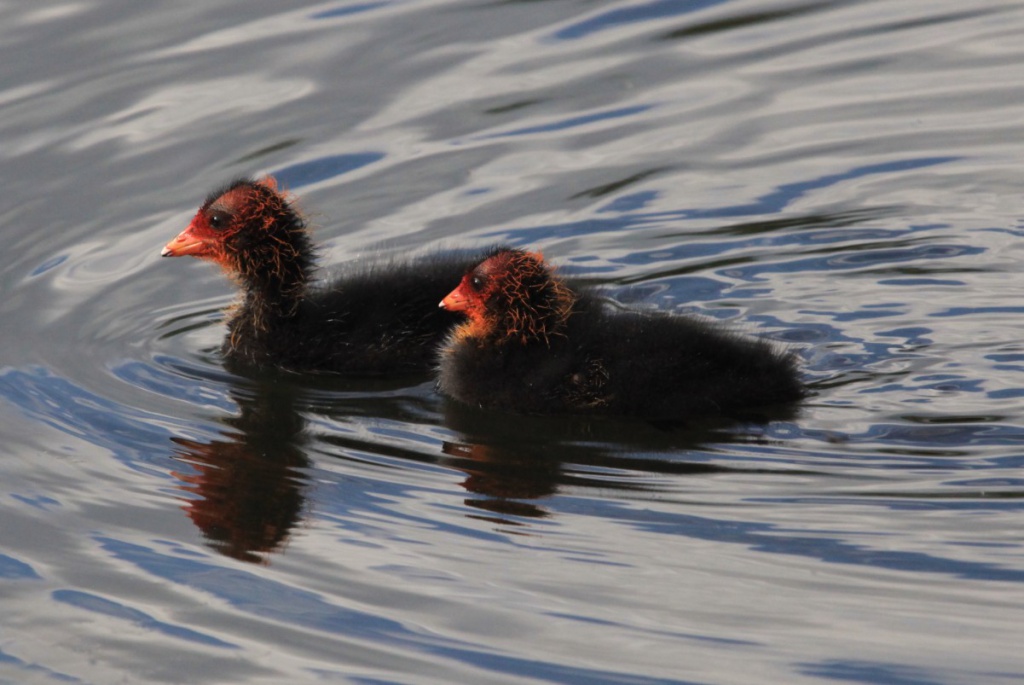
Coots feed on aquatic plants, like duckweed and grasses, and animals such as snails and larvae brought up from the bottom of the pond or river. The nest is built in shallow water from vegetation, and usually in the shelter of vegetation but can be in the open. The young are able to leave the nest and swim (nidifugous) soon after hatching.
Common and widespread in Britain
Quite common in Leicestershire and Rutland both breeding and over-wintering in our area.
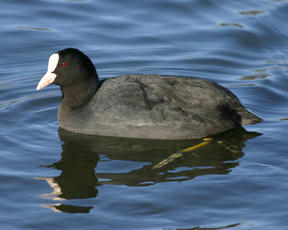 David Nicholls
Watermead Country Park
19 January 2007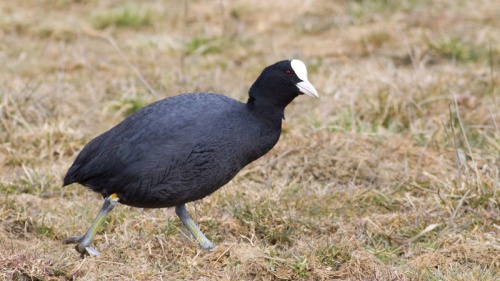 Rod Baker
Rutland Water
06 April 2013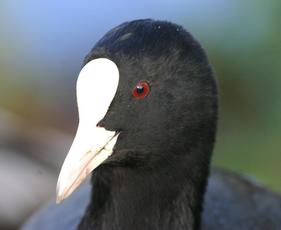 David Nicholls
Swithland Reservoir
22 January 2006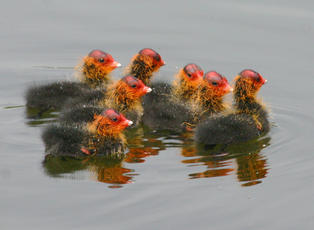 David Nicholls
Watermead Country Park
16 June 2006
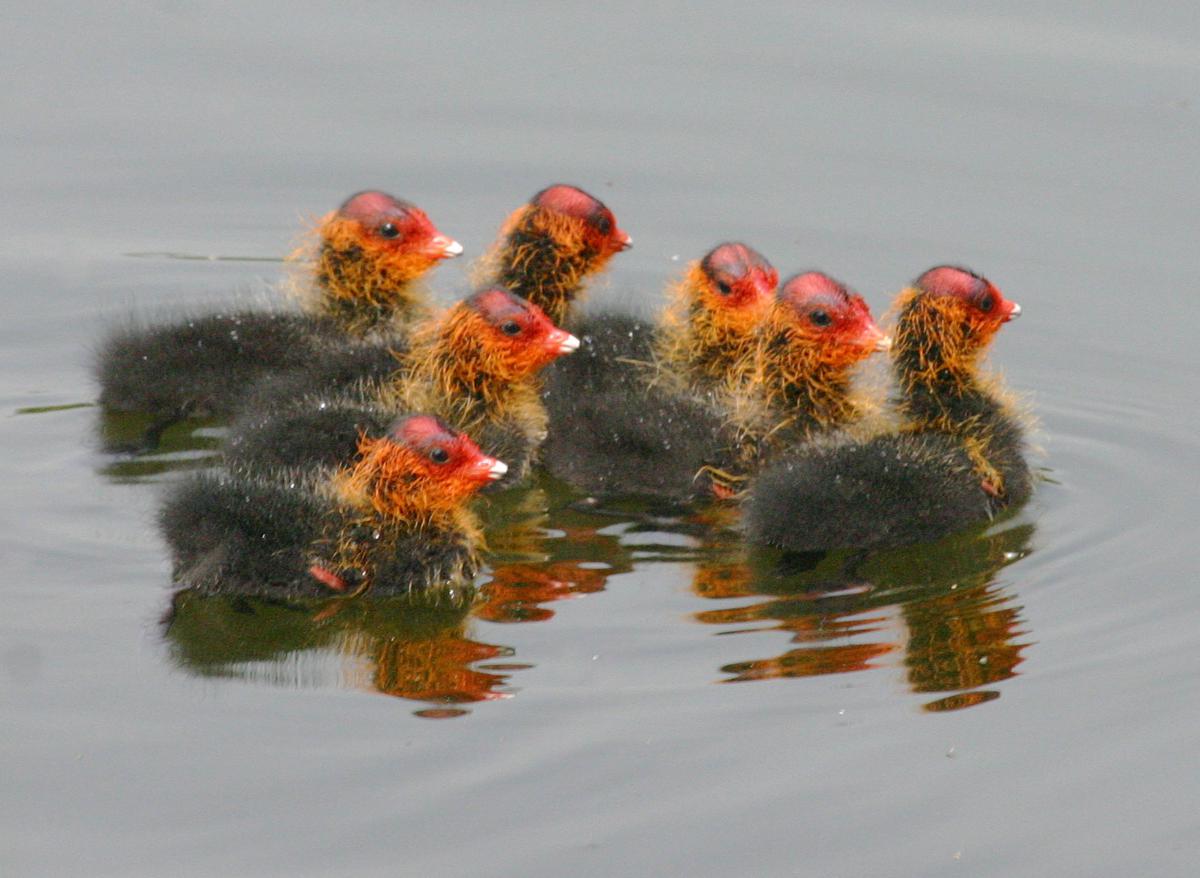
newly hatched chicks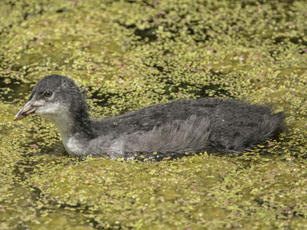 HAPeacock
Watermead Country Park
09 June 2011
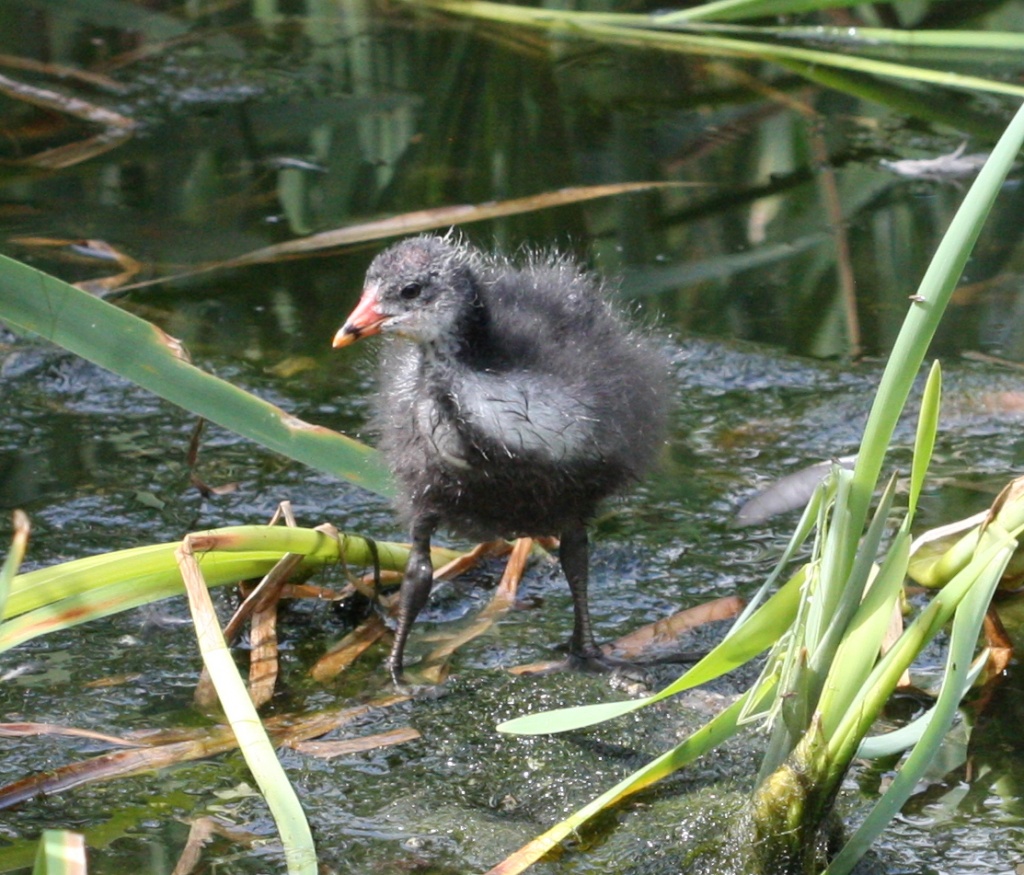
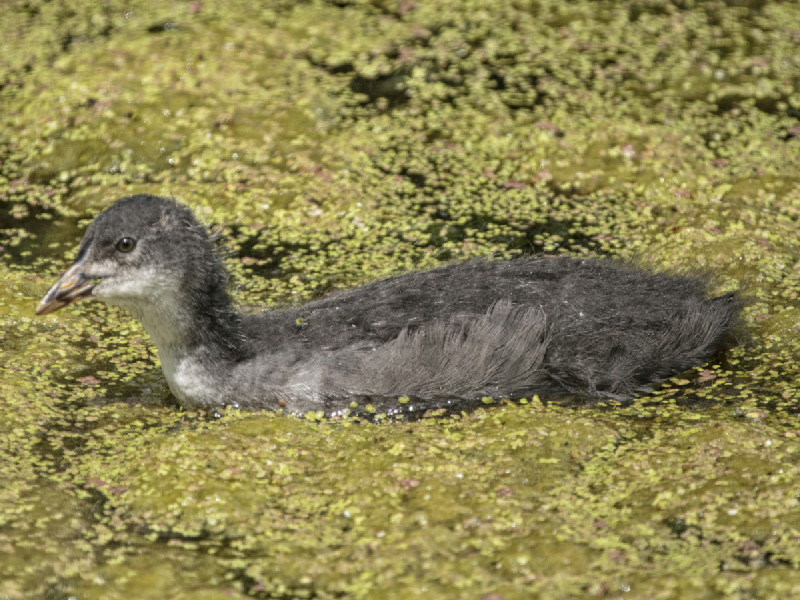
juvenile
Leicestershire & Rutland Map
Enter a town or village to see local records
MAP KEY:
Yellow squares = NBN records (all known data)
Coloured squares = NatureSpot records: 2025+ | 2020-2024 | pre-2020
UK Map
Additional images