Hawthorn Mining Bee
Hawthorn Mining Bee - Andrena chrysosceles
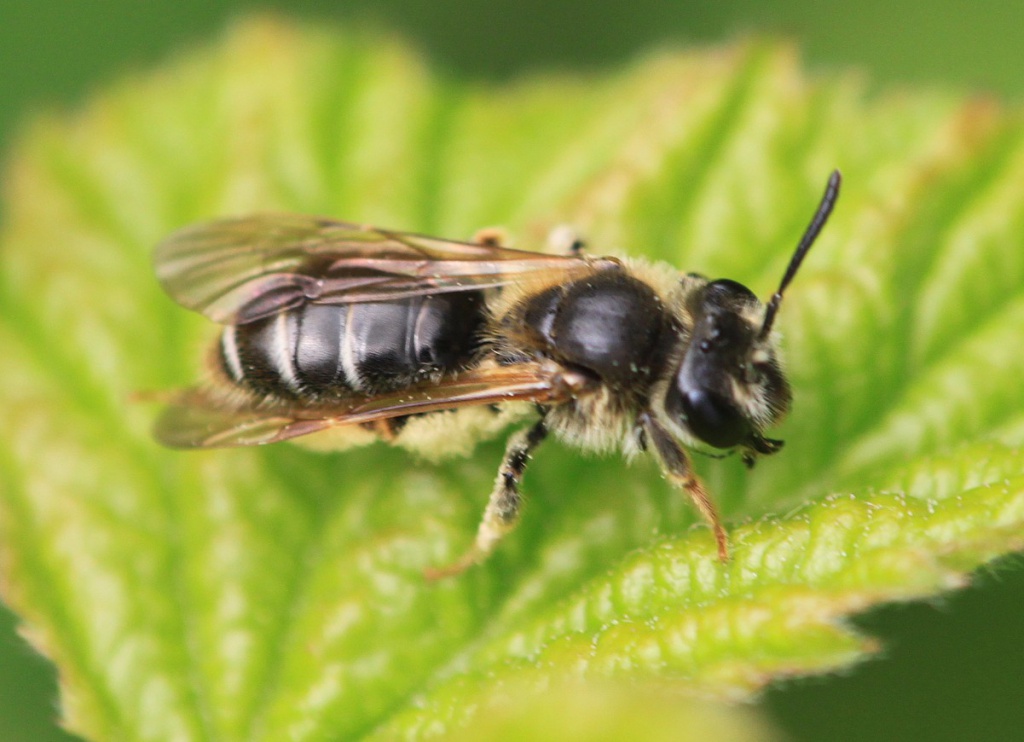
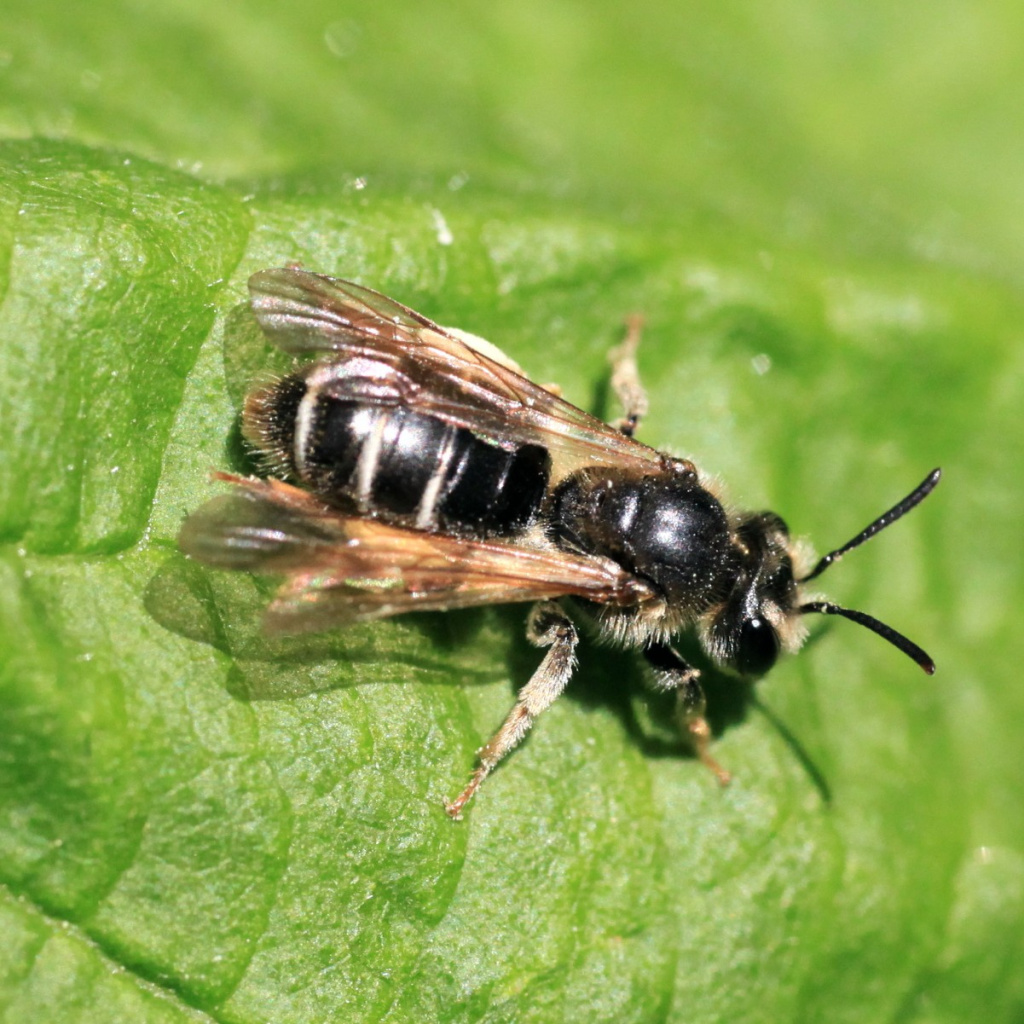
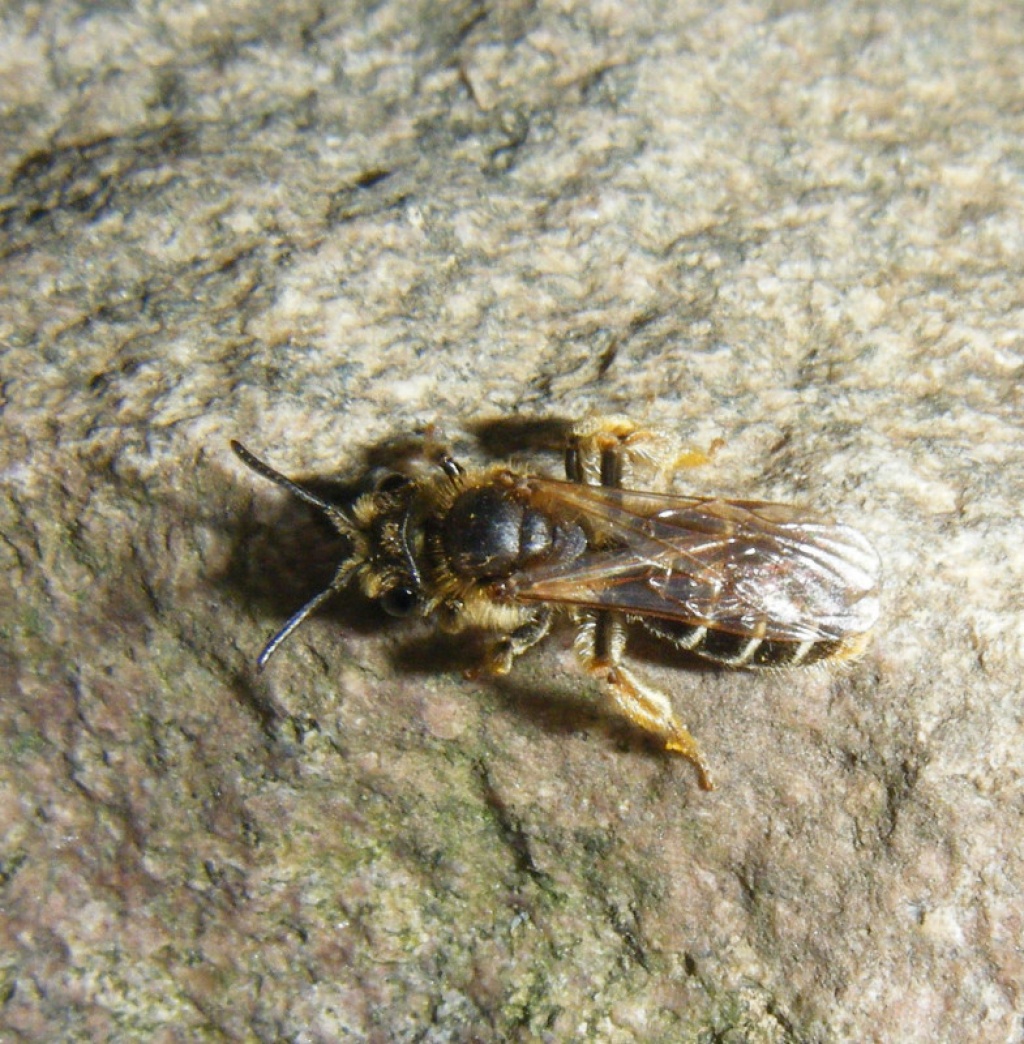
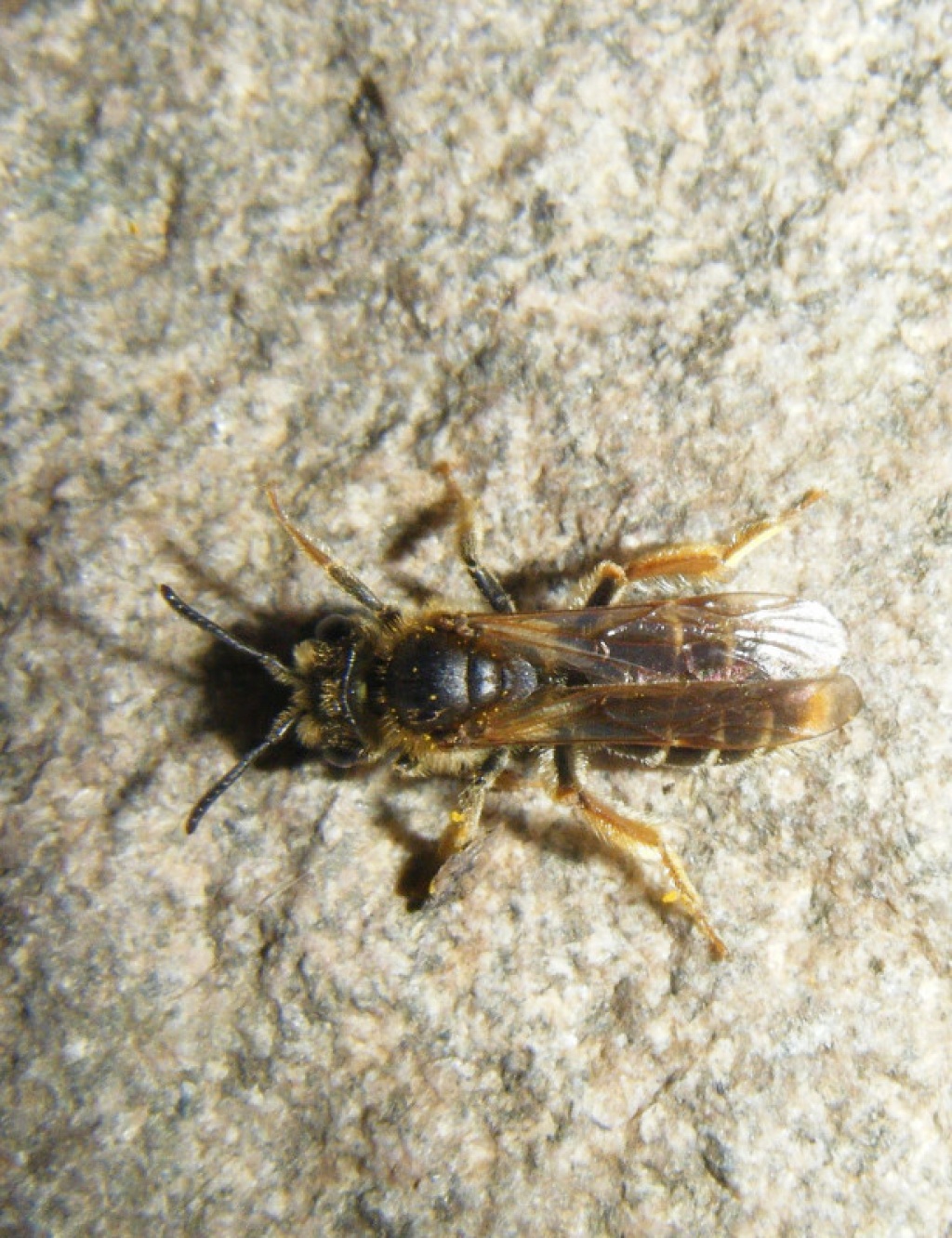
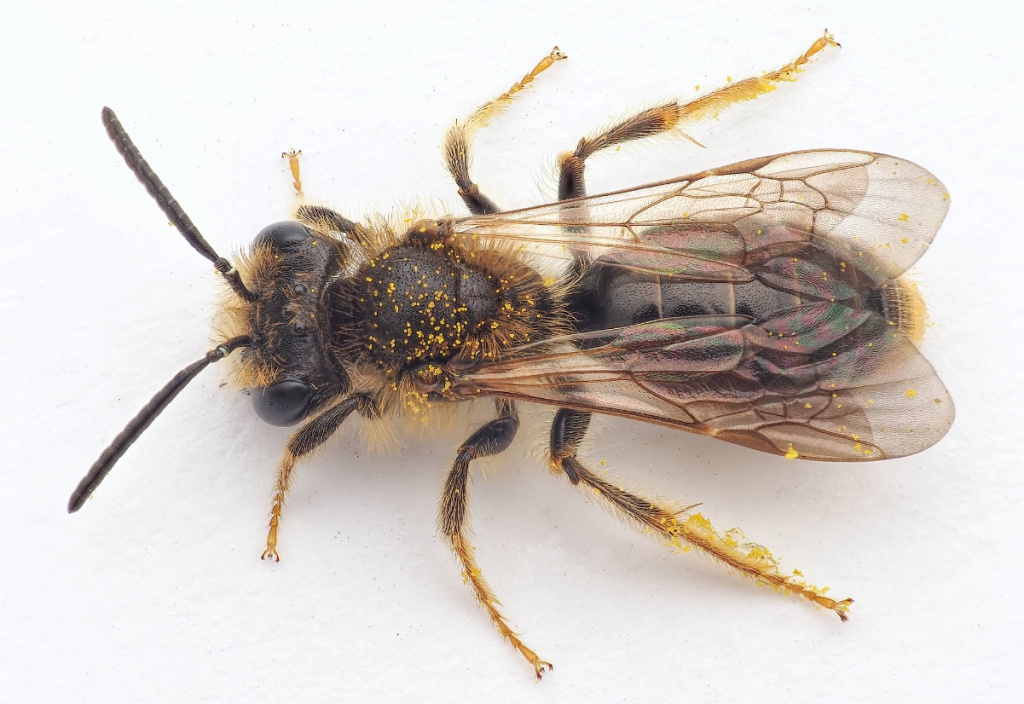
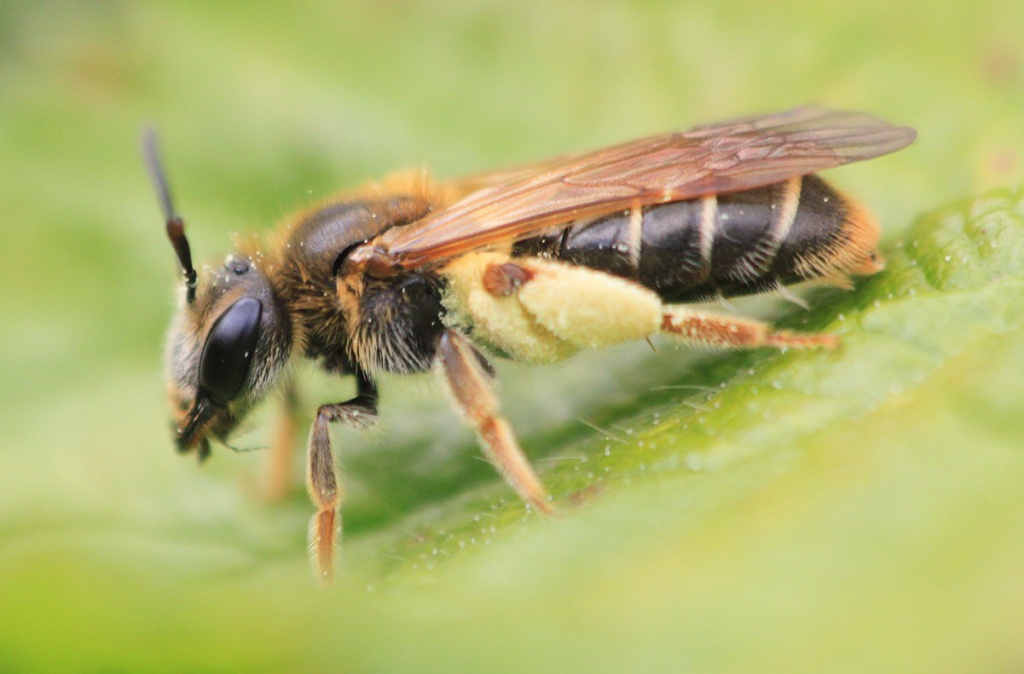
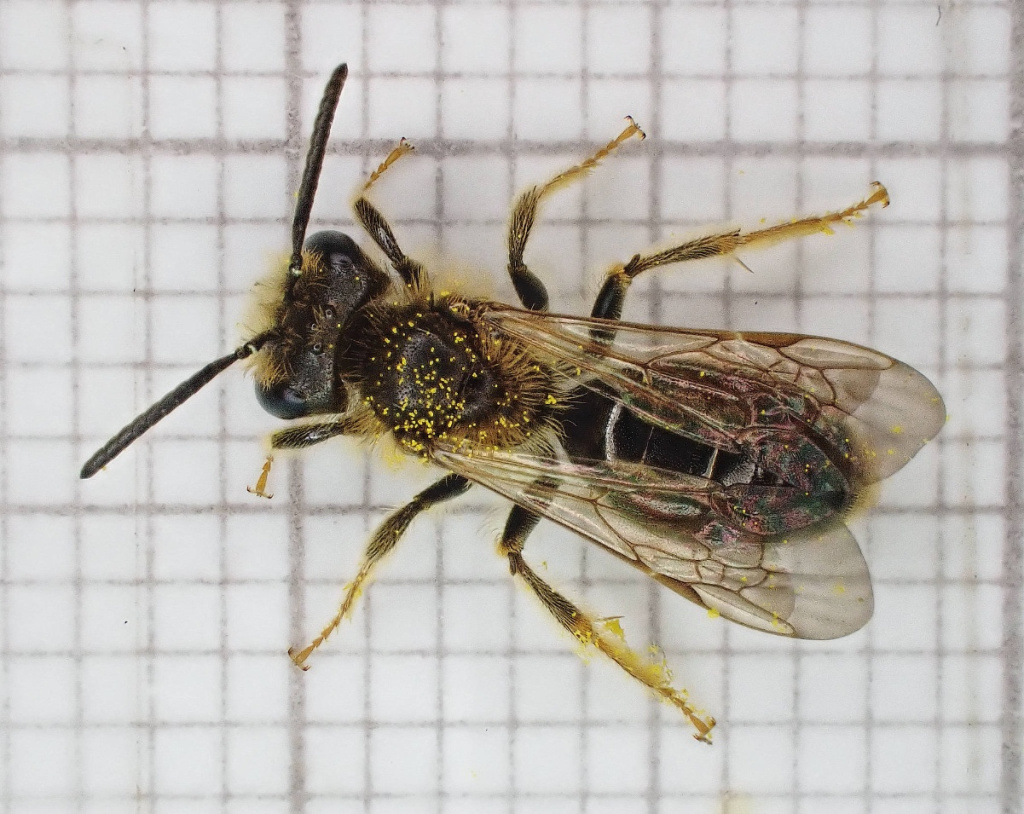
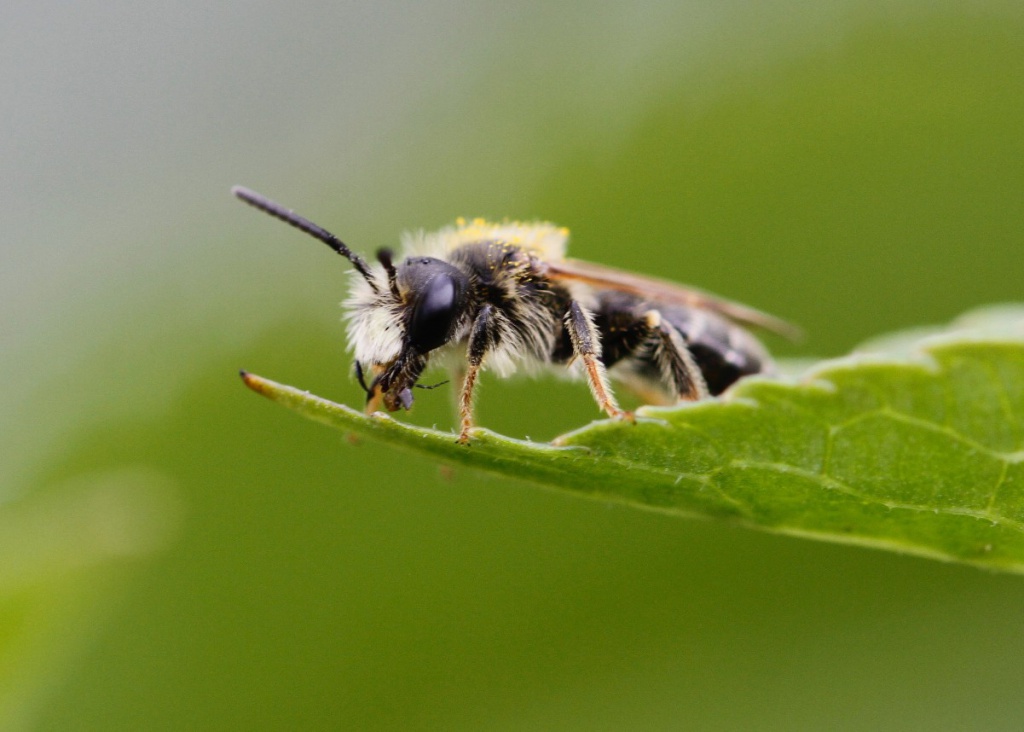
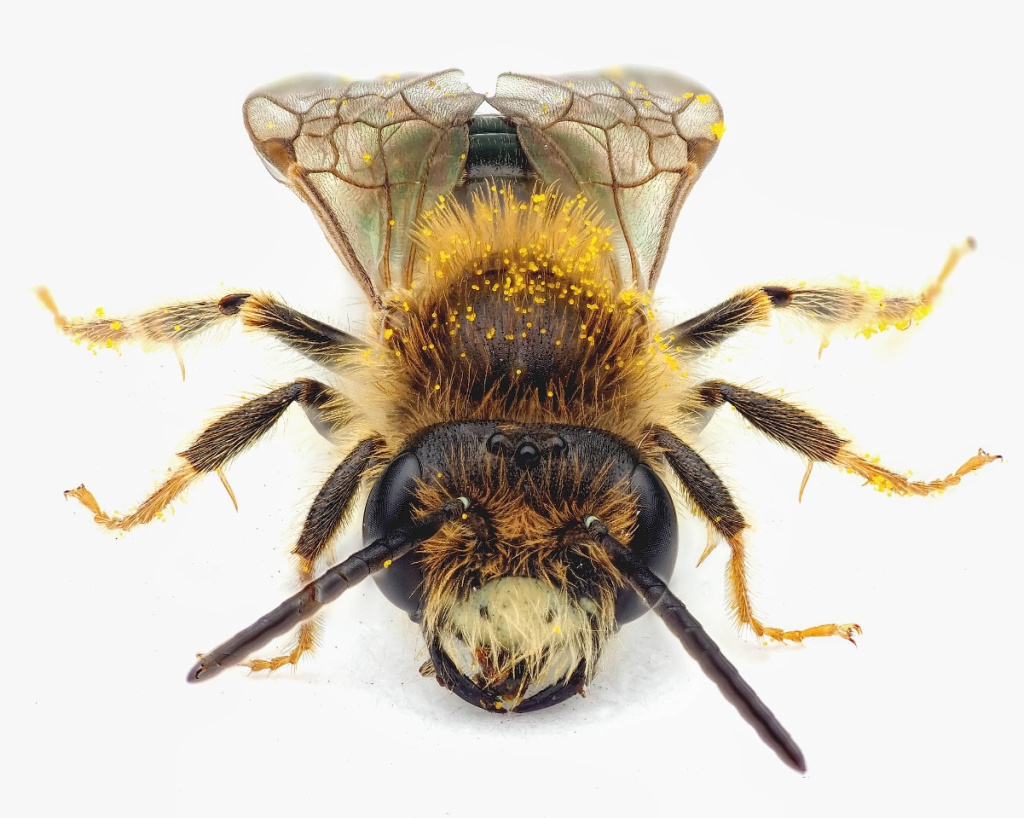
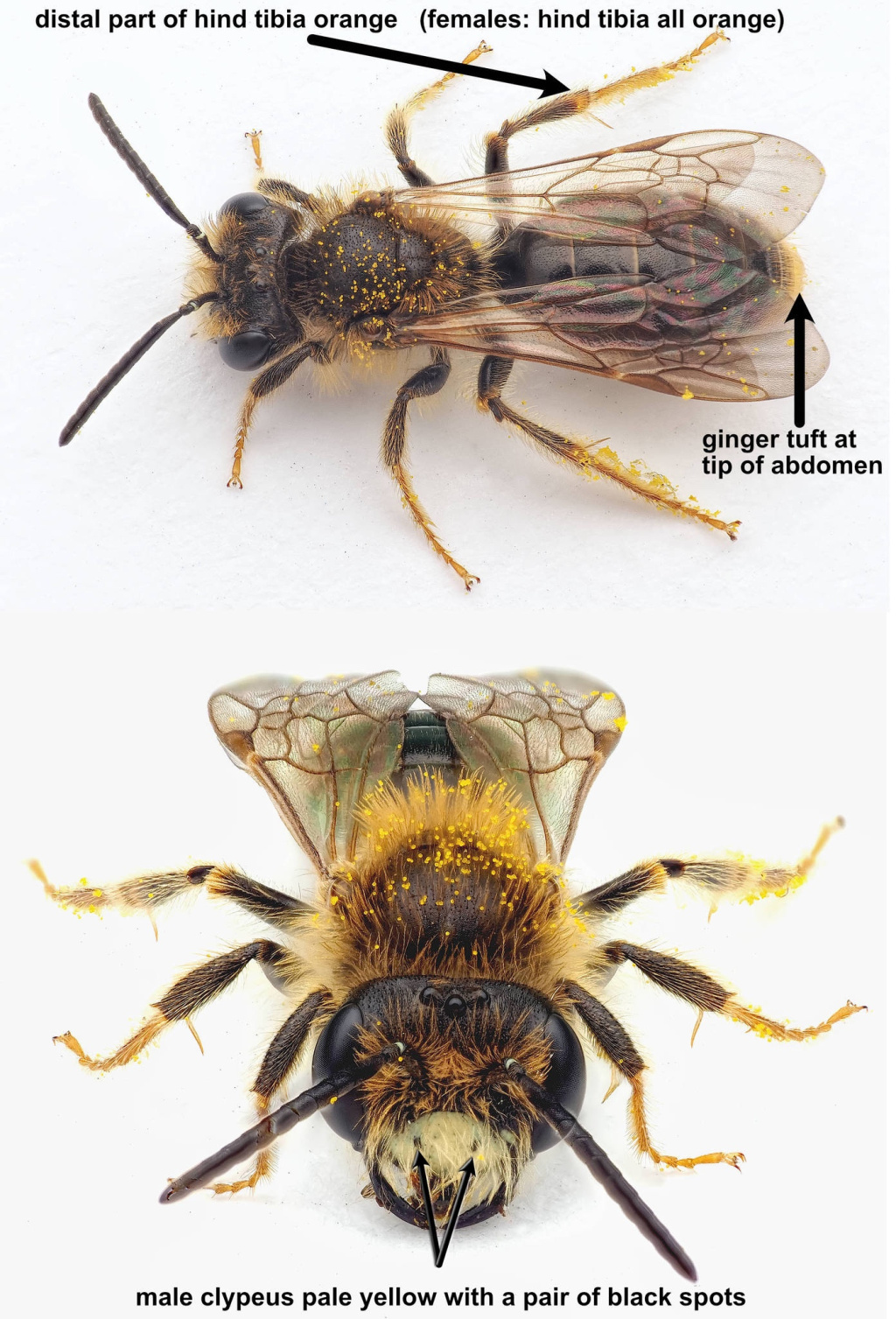
Females 6-8mm, males 6-7mm. Females have dull brown thorax, orange hind tibiae and bare abdomen with white bands. Males have partly orange tibiae. There is a ginger tuft at the tip of the abdomen.

Most solitary bees and wasps are difficult to identify, and can rarely be identified from photos taken in the field. All red-rated records should include a photo, or set of photos, showing the key characters, which may require the specimen. Please include a face shot, side, top and wings. Note whether male or female, explain how the specimen met the key characters and the key used. We will accept records identified by a recognised local or national expert, or that have been identified via the BWARS’ Facebook noting the name of the person/organisation identifying the record (e.g. ‘Stuart Roberts, BWARS Facebook’).
Often seen on spring or early summer flowers. More tolerant of heavy clay than most mining bees.
Mainly March to July with occasional specimens around October.
Spring emerging specimens have over-wintered as adults, but those that emerge later in the year have probably over-wintered as diapausing prepupae.
Common and widespread.
Fairly frequent in Leicestershire and Rutland.
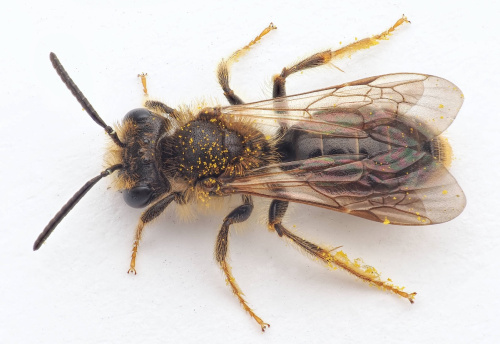 AJ Cann
Leicester Attenborough Arboretum
15 April 2025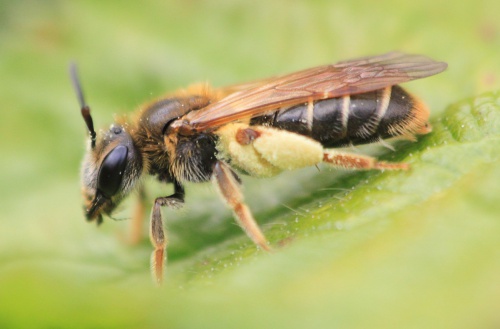 Paul Ruddoch
Melton Country Park
16 May 2016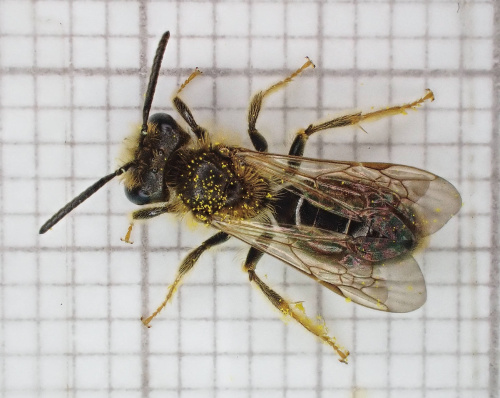 AJ Cann
Leicester Attenborough Arboretum
15 April 2025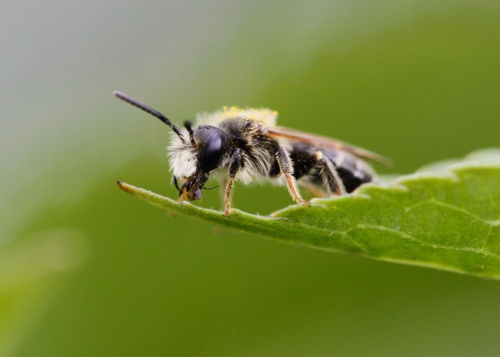 Matthew Berriman
George Henry Wood
30 April 2019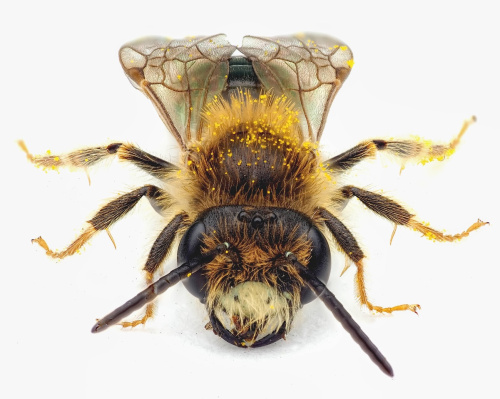 AJ Cann
Leicester Attenborough Arboretum
15 April 2025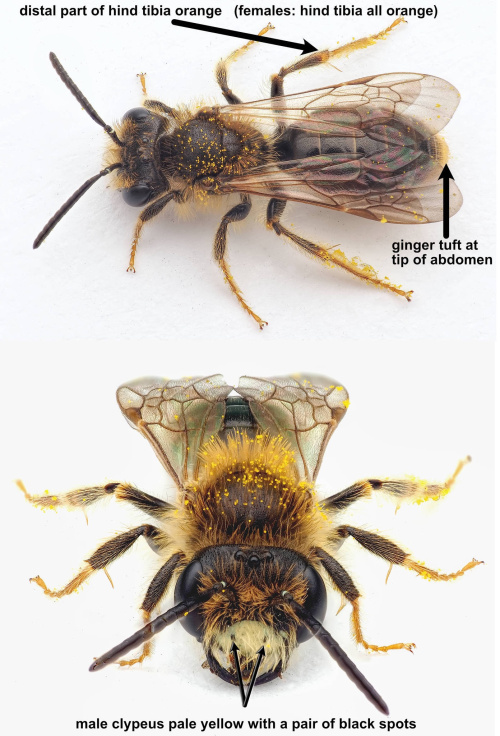 AJ Cann
Leicester Attenborough Arboretum
15 April 2025
Leicestershire & Rutland Map
Enter a town or village to see local records
MAP KEY:
Yellow squares = NBN records (all known data)
Coloured squares = NatureSpot records: 2025+ | 2020-2024 | pre-2020
UK Map
Additional images