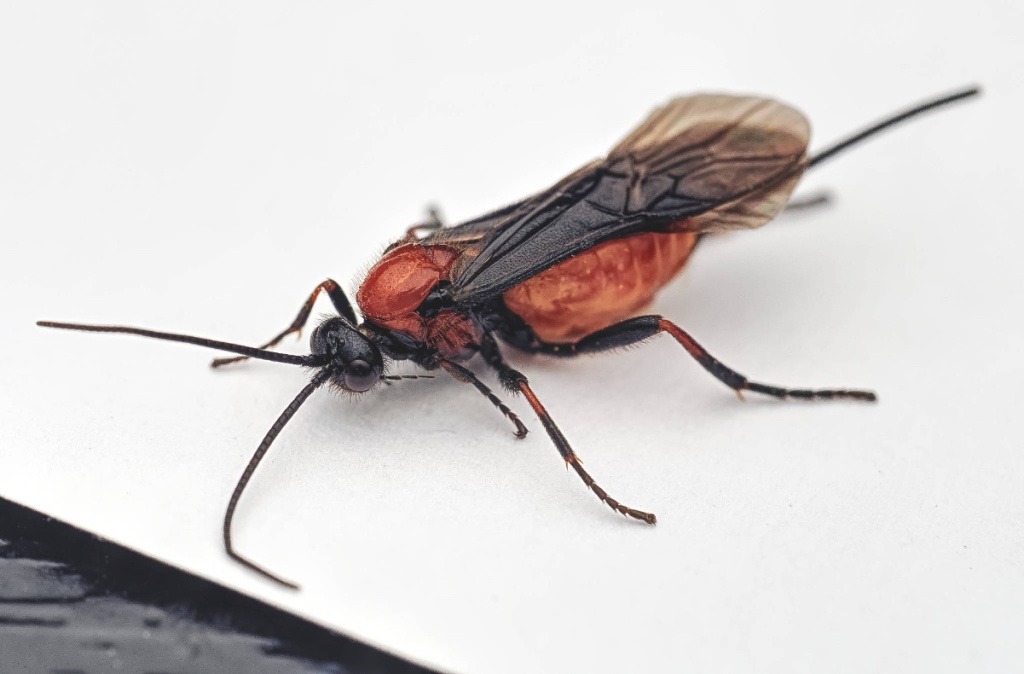
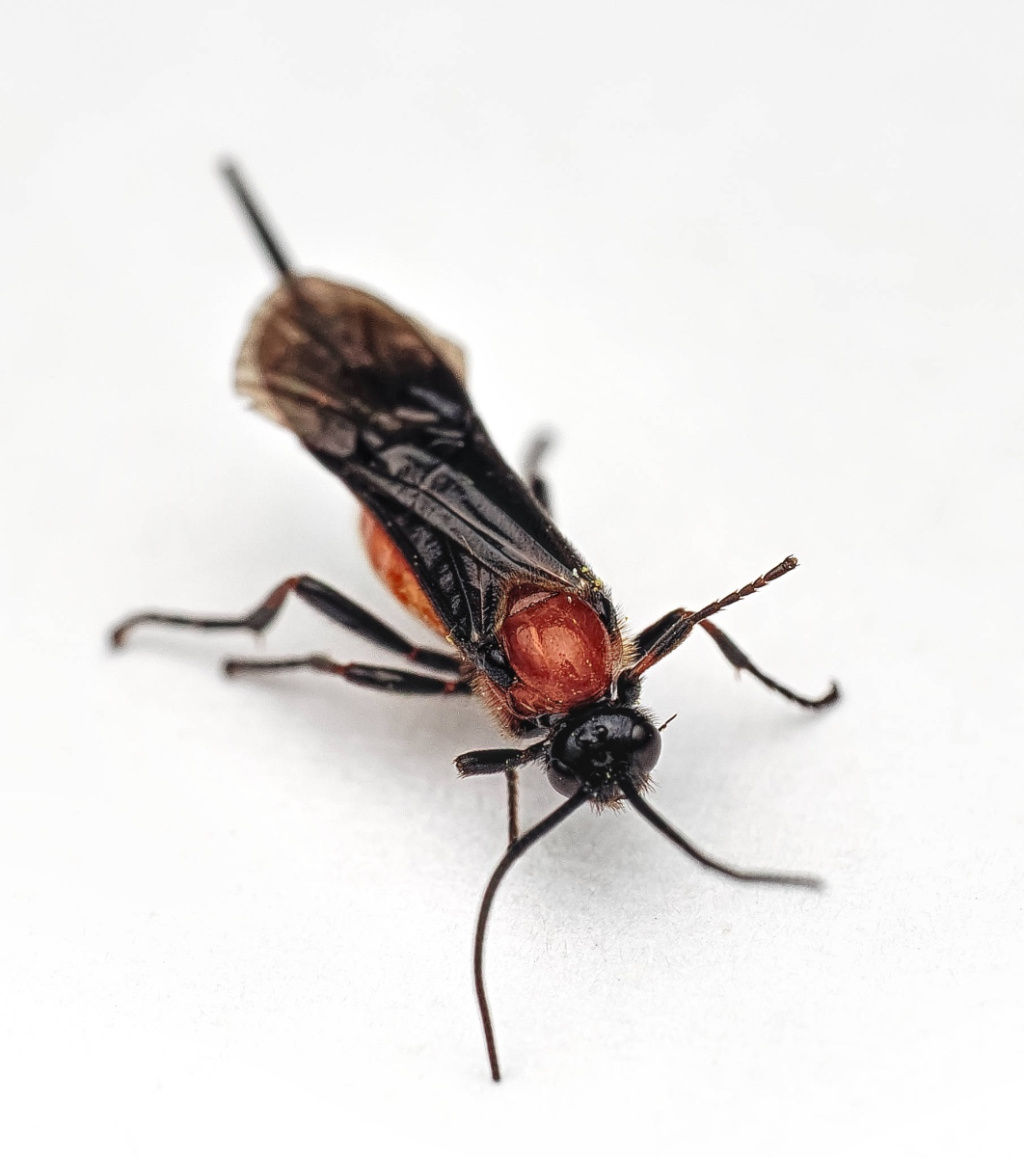
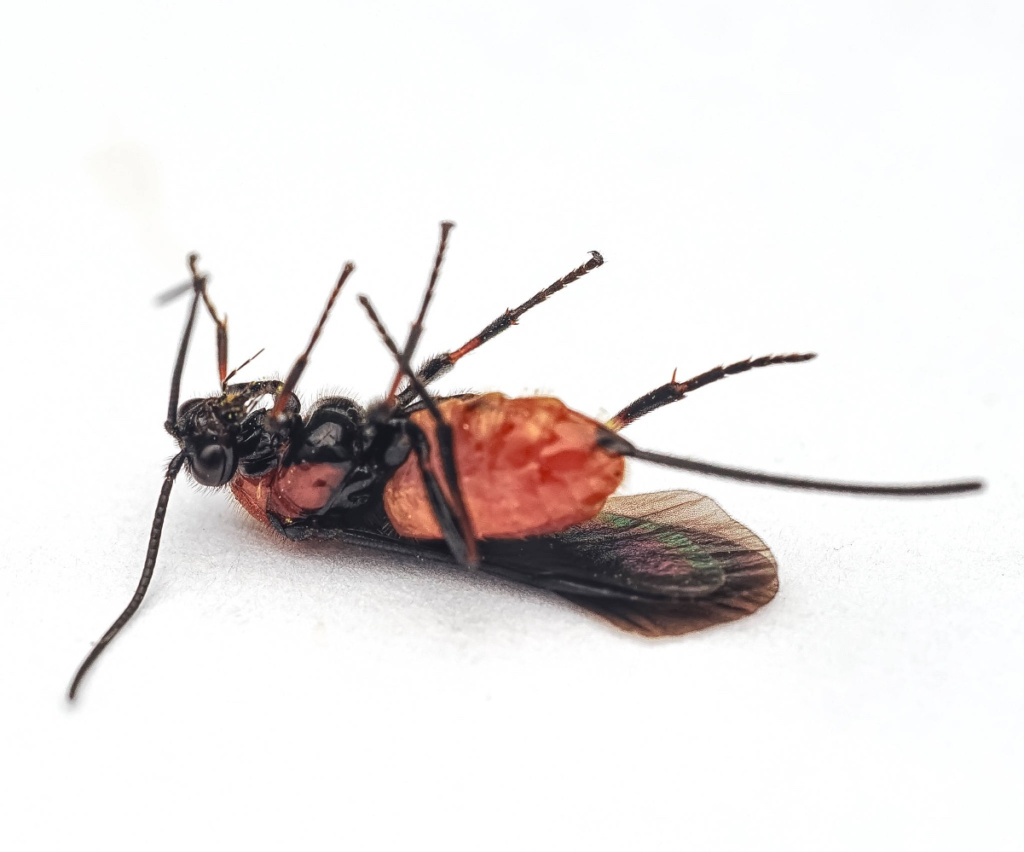
Bracon
Bracon
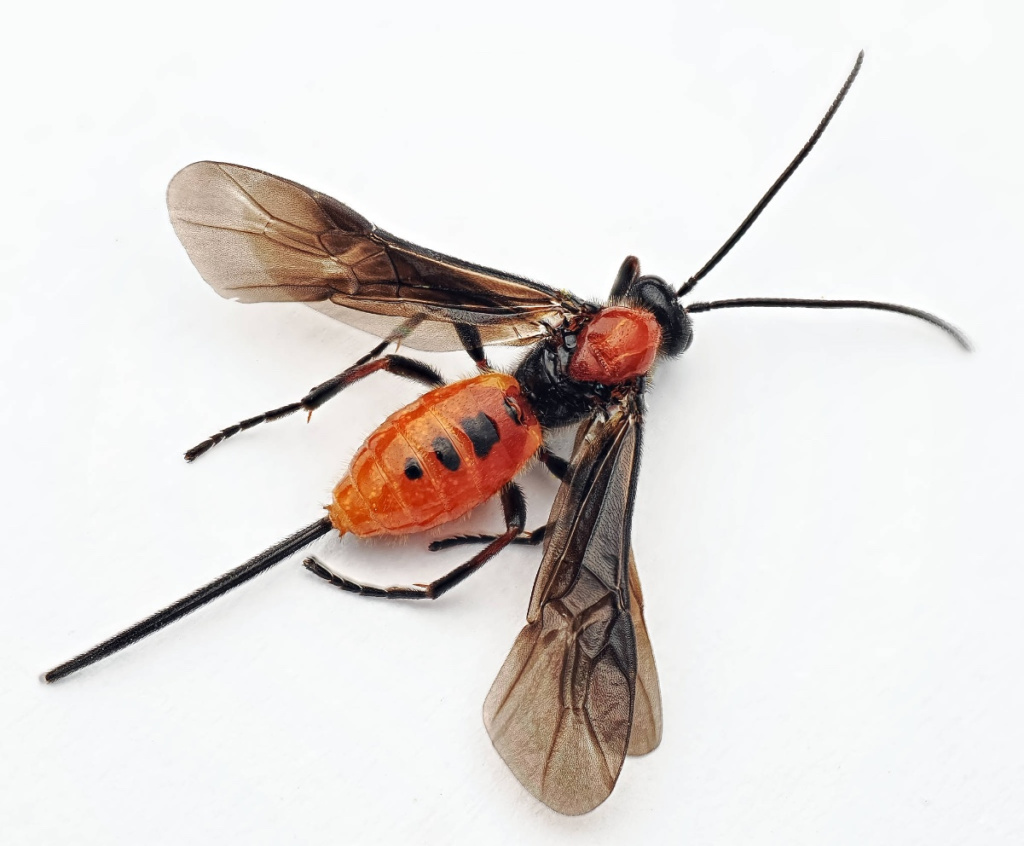
Cyclostome mouthparts - a distinct circular or semicircular opening above the mandibles formed by a deeply concave, recessed clypeus and an exposed, hollowed-out labrum. Occipital carina entirely absent (the back of the head lacks a transverse bounding ridge). Antennae long, thread-like (filiform). Forewing venation is characteristic. First tergite (T1) broad (less than 2x as long as wide) with a domed median area and lateral longitudinal grooves. Female ovipositor varies in length from shorter than the metasoma to several times its body length depending on host biology, with setose ovipositor sheaths.
Over 80 UK species, very difficult to identify.

Unless identified by a recognised expert, a photo is required and the specimen should be examined with a microscope. In the comments box, state the key or ID method used and describe the size and identifying characters.
Parasitoids of the larvae of Lepidoptera (moths and butterflies), Coleoptera (beetles), Diptera (true flies), and Hymenoptera (sawflies), especially species concealed inside plant tissues, seed pods, or stored grain.
Widespread.
Not commonly recorded.
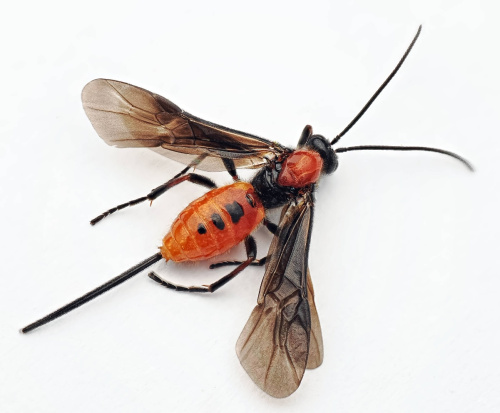 AJ Cann
Knighton
11 August 2026
Leicestershire & Rutland Map
Enter a town or village to see local records
MAP KEY:
Yellow squares = NBN records (all known data)
Coloured squares = NatureSpot records: 2025+ | 2020-2024 | pre-2020
UK Map
Additional images