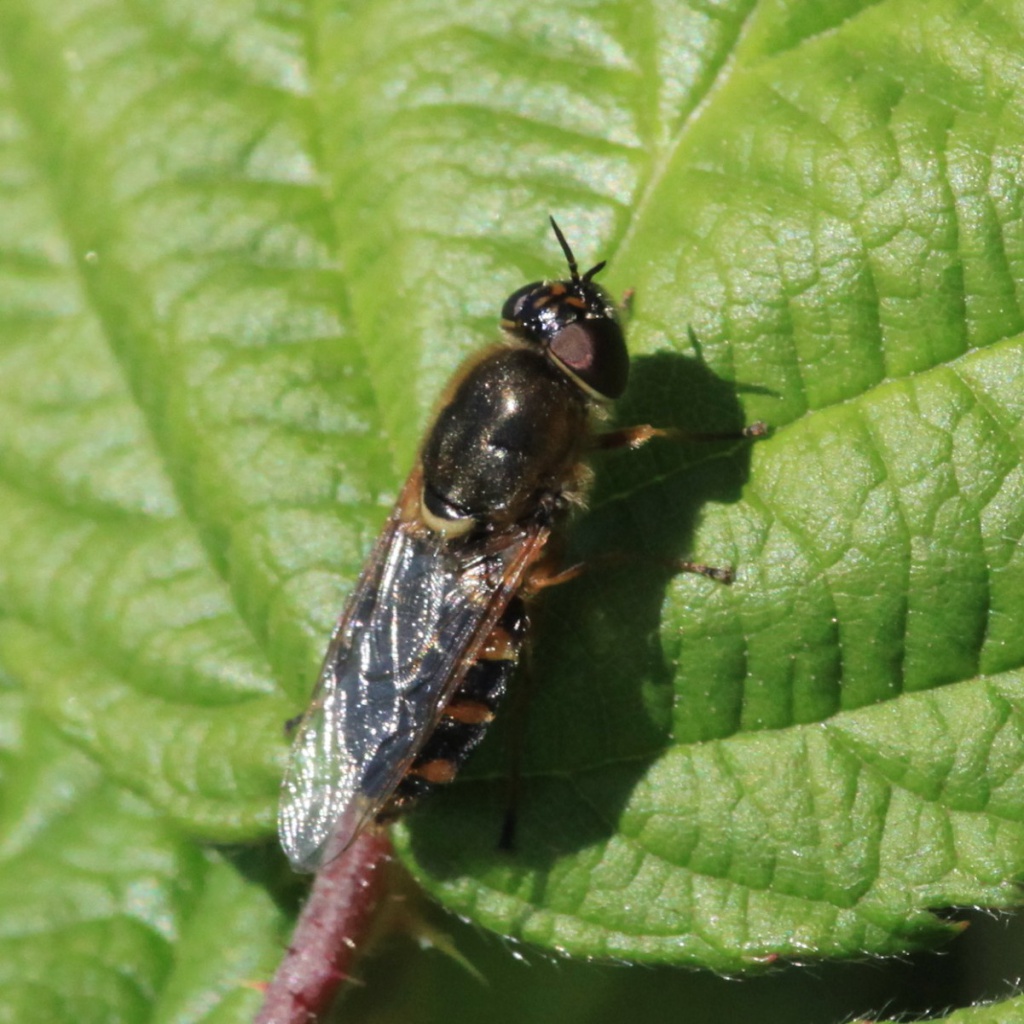
Odontomyia ornata
Odontomyia ornata
A large (up to 15mm) bee or wasp-mimicking fly. The tergites (the plates on its upper abdomen) are primarily black but feature striking orange or bright yellow markings along the lateral margins.

Detailed photographs required.
An indicator of healthy, high-quality wetland ecosystems. This species reacts poorly to pollution, ditch clearance, etc, so indicates a wetland ecosystem which is clean and well-managed.
Late spring-summer.
The larvae are aquatic, breathing via a delicate, feathery ring of respiratory hairs at the tip of their tail, which they poke through the surface film of the water. Their diet is primarily detritivorous, meaning they feed on decaying organic matter and microorganisms at the water's surface. The adults emerge in early summer. They are diurnal and are strong fliers but usually stay close to their larval water bodies. They feed heavily on nectar to fuel their short lives, showing a strong preference for large, white umbellifer flowers.
Mainly in the south east but localized. This species is spreading but still currently classed as Nationally Scarce.
Rare in Leicestershire and Rutland.
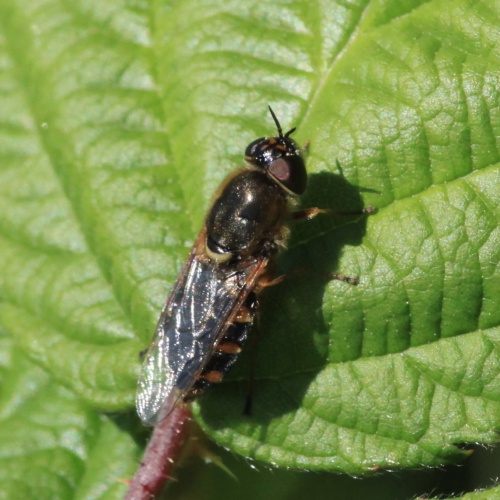 GHunt
GHunt
Oadby Pool
14 June 2023
Leicestershire & Rutland Map
Enter a town or village to see local records
MAP KEY:
Yellow squares = NBN records (all known data)
Coloured squares = NatureSpot records: 2025+ | 2020-2024 | pre-2020
UK Map
Additional images
No additional images available for this species.