Arcyria incarnata
Arcyria incarnata
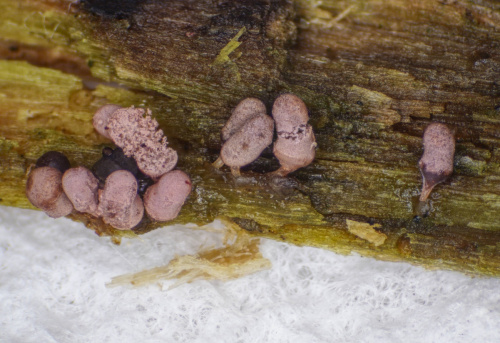
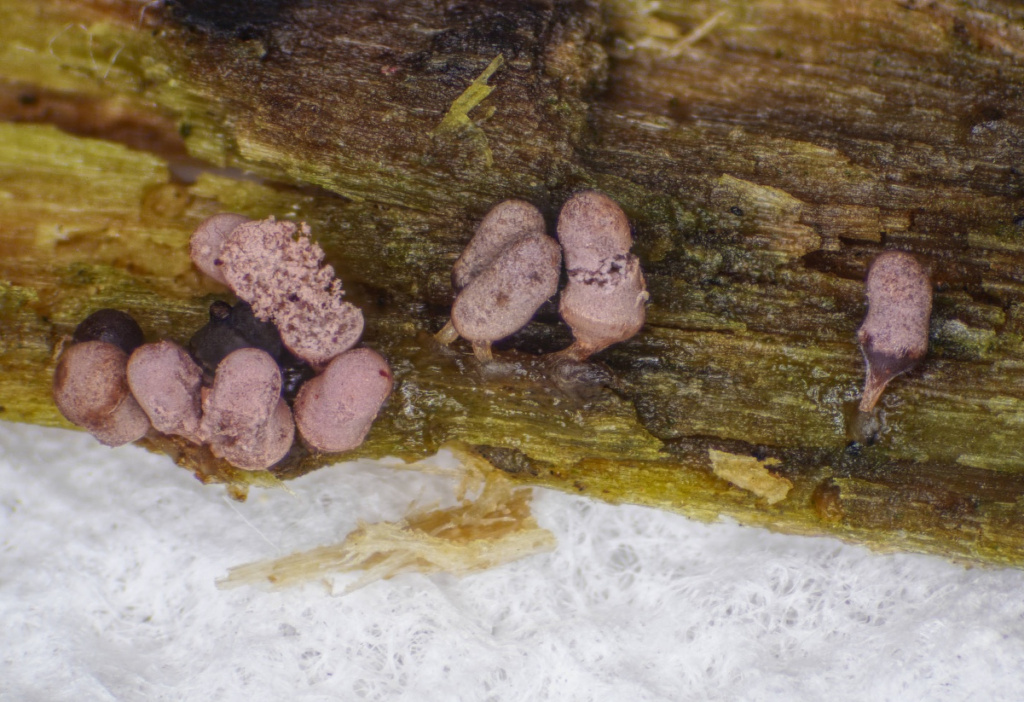
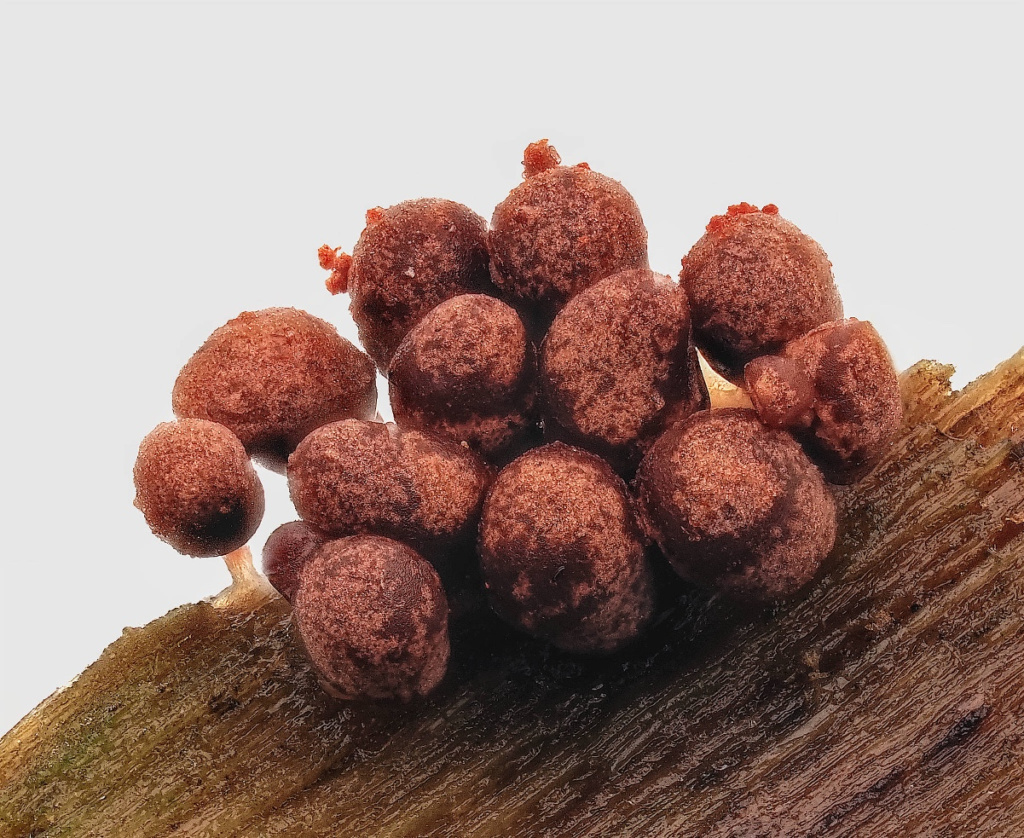
Crowded clusters of tiny, pink, candy floss-like cylinders on rotting wood (lignivorous).
Colour: Fresh: Bright rose-pink, flesh-coloured, or crimson; Aged: fades to dull brown or ochre as spores are released.
Sporangia (Heads): Cylindrical to ovoid (egg-shaped), typically 1–2 mm tall.
Stalk (Stipe): Very short (0.1–0.3 mm) and weak. Often looks nearly sessile (sitting almost directly on the wood), unlike other Arcyria species that have distinct, long stalks.
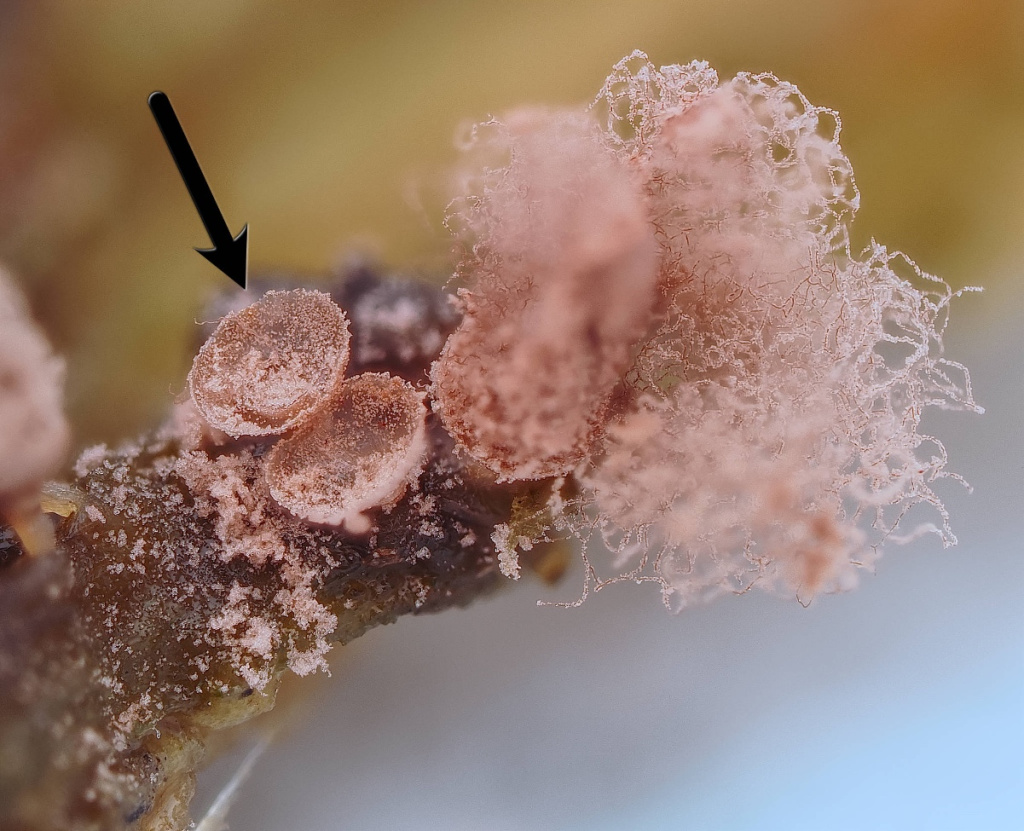
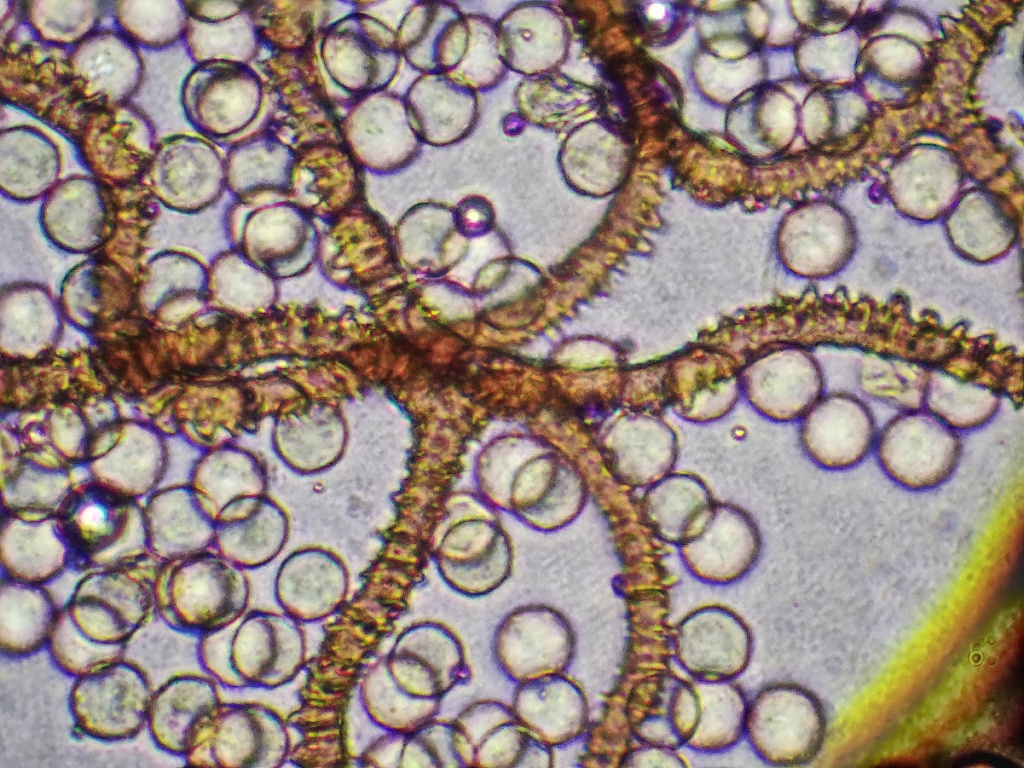
Capillitium - A network of branching threads (3–5 µm wide). Pale pink. Decorated with sharp cogs, half-rings, or spines (often in a spiral). The capillitium is attached to the basal cup (calyculus) only at the very center. There is no attachment at the margins/sides of the cup. The shallow cup left behind after the spores disperse is smooth or has faint ridges/warts on the inside.
Spores 6–8 µm in diameter, pale pink in mass, colourless individually. Marked with a few scattered, faint warts.
Other Arcyria species. The most common confusion is with Arcyria denudata.

The network of threads holding the spores (capillitium) is very loose and elastic. If you gently blow on a mature specimen or touch it lightly, the pink cottony mass will easily expand and often detach completely from the cup (calyculus) at the base, or remain attached only by a tiny central point. In contrast in similar species like Arcyria denudata, the capillitium remains firmly attached to the cup and does not blow away easily.
For a definitive ID, you must examine the capillitium and attachment points under a microscope.
Almost exclusively on damp, rotting wood (logs, stumps, fallen branches); favours broadleaf (deciduous) wood but can occur on conifers.
Most common from late spring to autumn. Like many slime molds, it appears frequently after periods of rain.
Common and widespread.
Unknown.
Download: Arcyria incarnata cribsheet
 AJ Cann
Croft Glebe
18 November 2025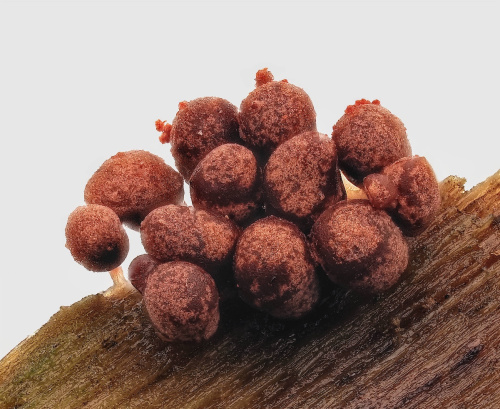 AJ Cann
Croft Glebe
18 November 2025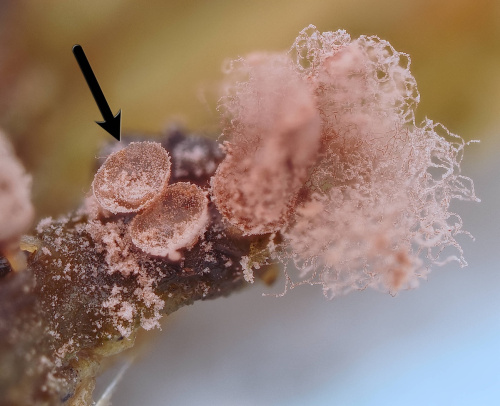 AJ Cann
Croft Glebe
18 November 2025
empty cups (calyculus) after detachment of capillitium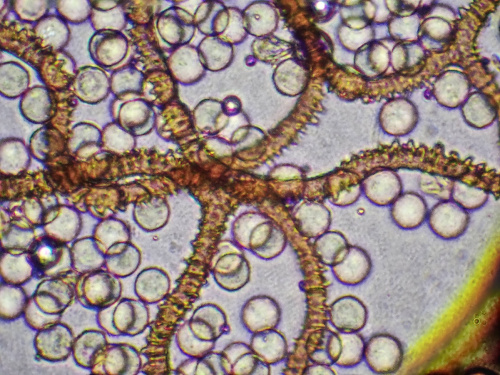 AJ Cann
Croft Glebe
18 November 2025
spores and capillitium
Leicestershire & Rutland Map
Enter a town or village to see local records
MAP KEY:
Yellow squares = NBN records (all known data)
Coloured squares = NatureSpot records: 2025+ | 2020-2024 | pre-2020
UK Map
Additional images
No additional images available for this species.