Wood Spurge
Wood Spurge - Euphorbia amygdaloides subsp. amygdaloides
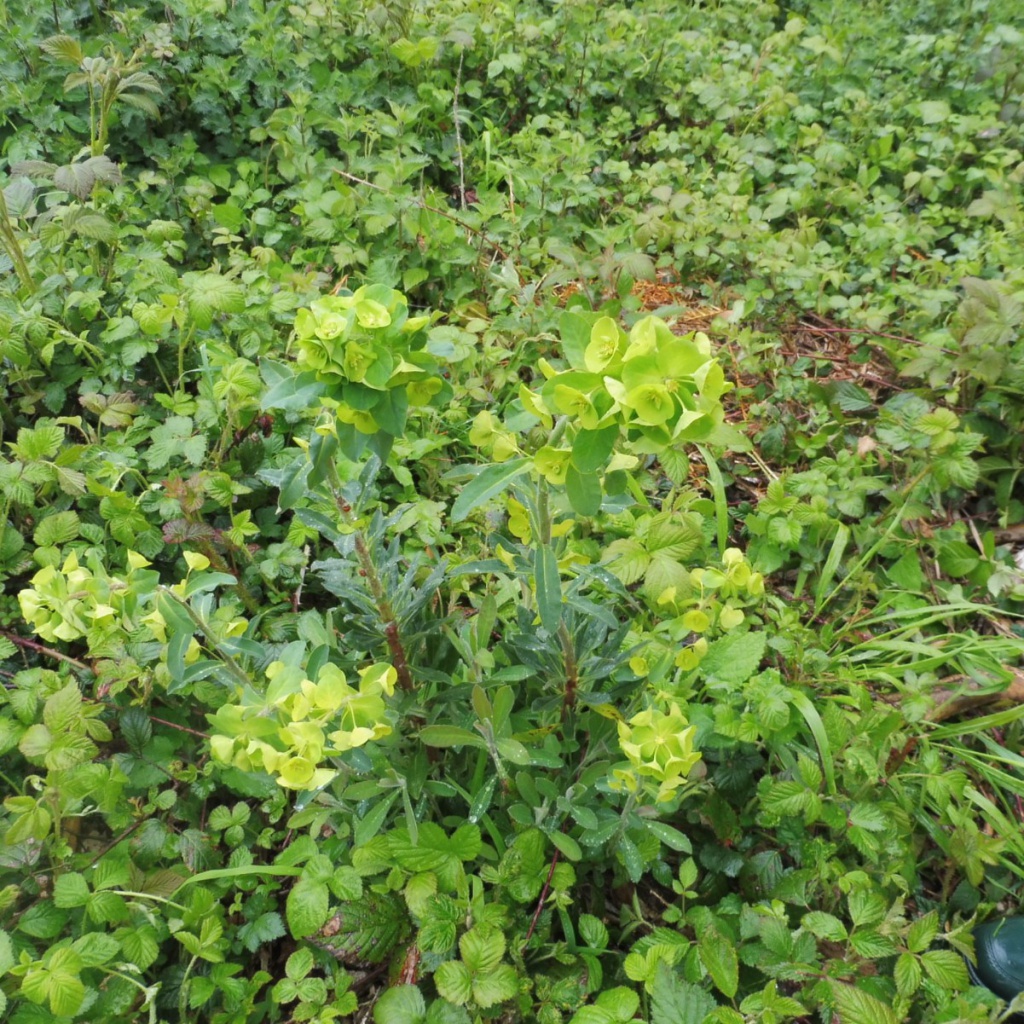
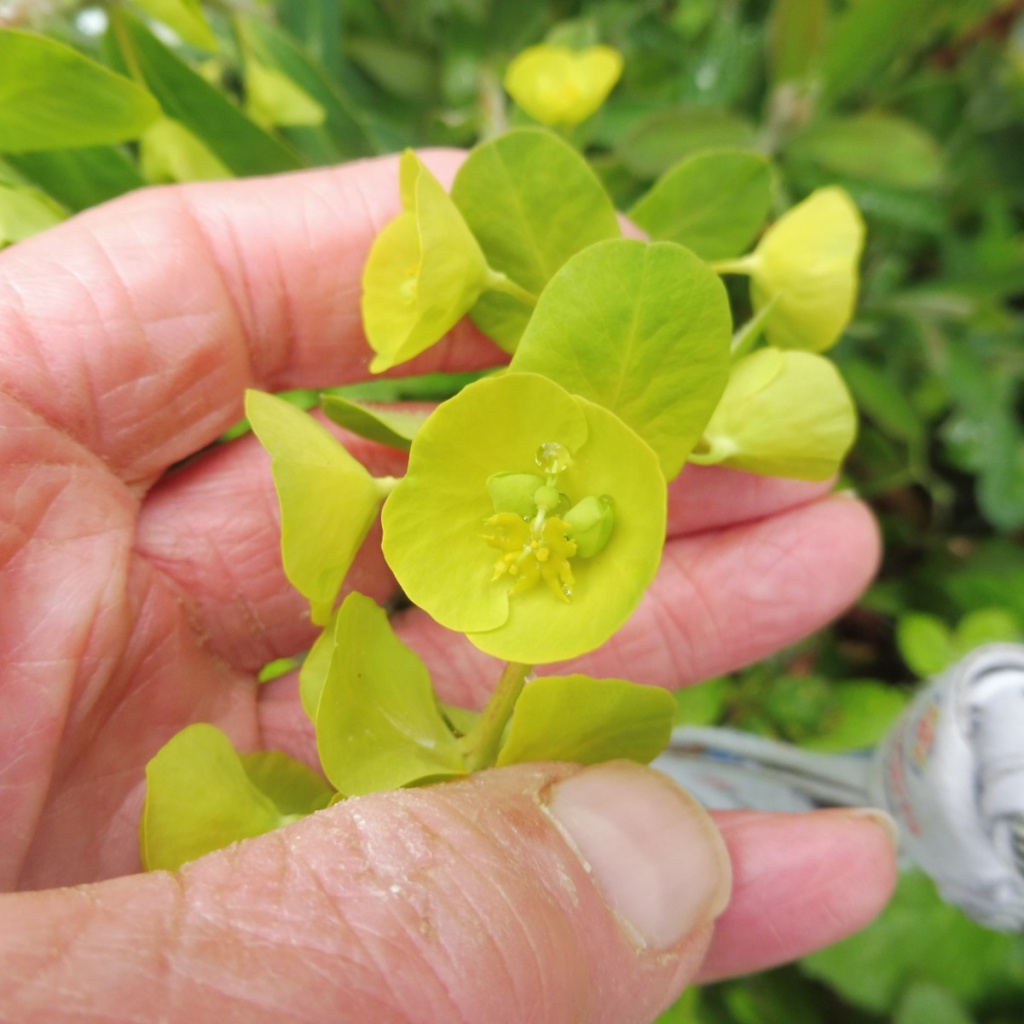
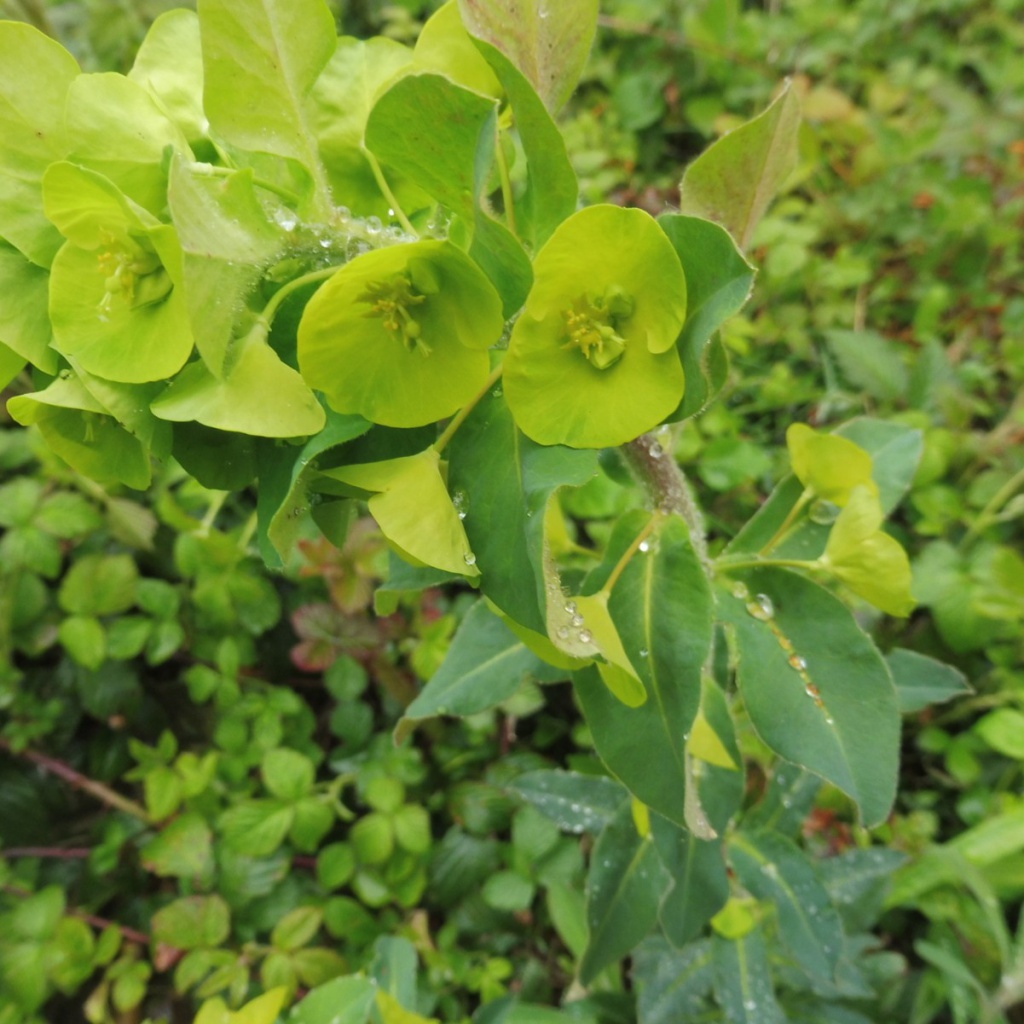
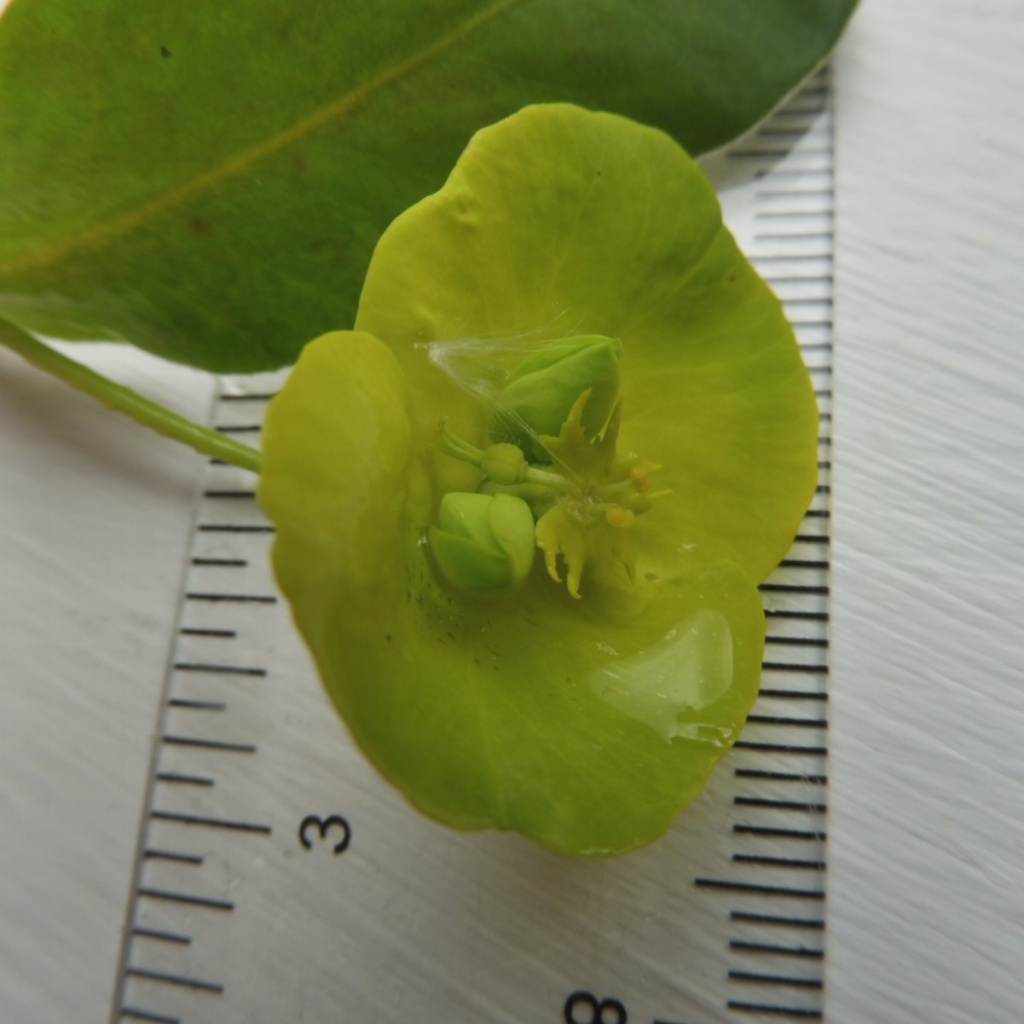
A perennial plant of old woodlands, with short rhizomes. The flowering stems are biennial, arising from the stem tops in the second year. The leaves on the first year stems are obovate (wider near the tip) or oval, dull, light to mid green, hairy on undersides and edges.
Euphorbia amygdaloides subsp. robbiae - a garden plant, native of Turkey, which often escapes or is planted. It is much commoner in VC55 than the native plant, and most recent records are for this

Records for this species should be confirmed by a County Recorder for botany. It is rare and decreasing in VC55, and therefore a specimen should not be taken. Take detailed field photos and submit to NatureSpot as soon as possible; and if you think you have found it in a new location, inform the County Recorder as soon you can.
Old woodlands and hedges
The native species is rare in Leicestershire and Rutland, with recent records from a couple of ancient woodlands in Rutland (Pickworth Great Wood, Stretton Wood) and Ketton Quarry
It is on the VC55 Rare Plant Register (Hall & Woodward 2022) as Locally Rare and decreasing.
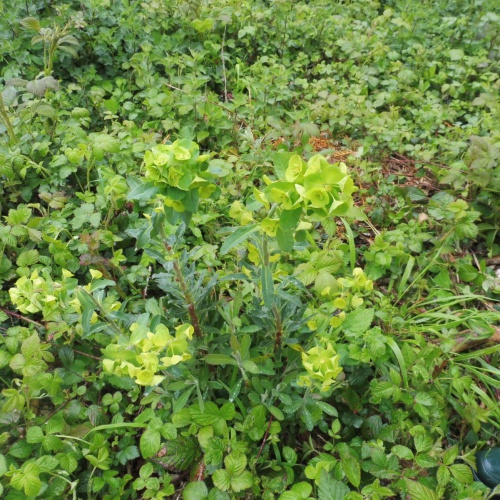 martindgrimes
Clipsham Park Wood
04 May 2022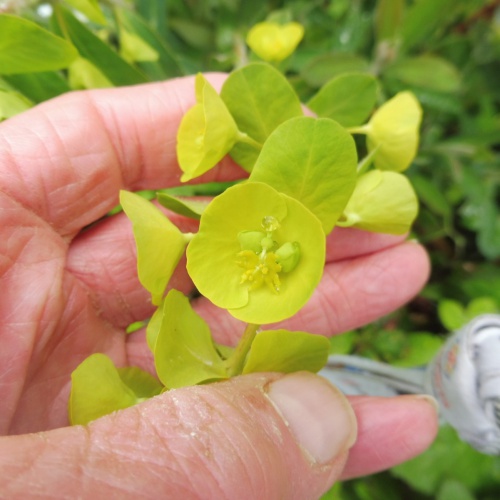 martindgrimes
Clipsham Park Wood
04 May 2022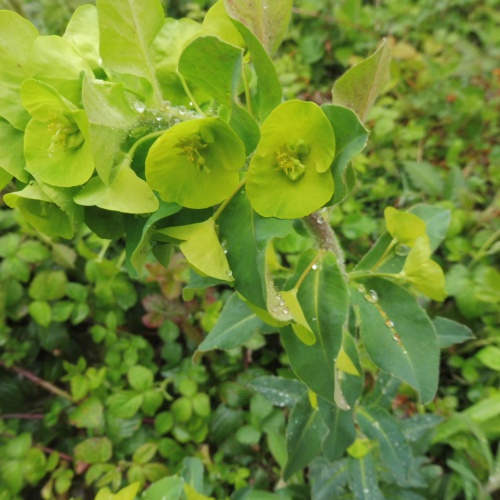 martindgrimes
Clipsham Park Wood
04 May 2022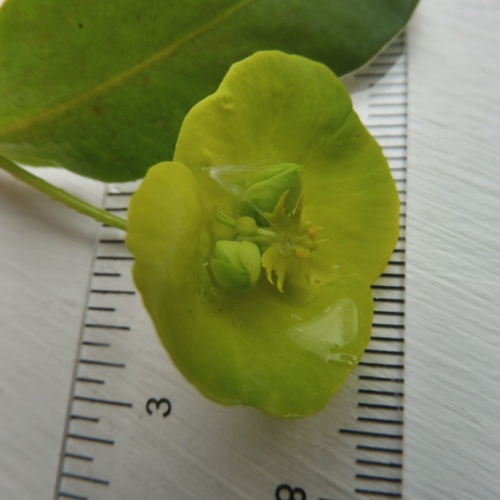 martindgrimes
Clipsham Park Wood
04 May 2022
Leicestershire & Rutland Map
Enter a town or village to see local records
MAP KEY:
Yellow squares = NBN records (all known data)
Coloured squares = NatureSpot records: 2025+ | 2020-2024 | pre-2020
UK Map
Additional images
No additional images available for this species.
All NatureSpot records
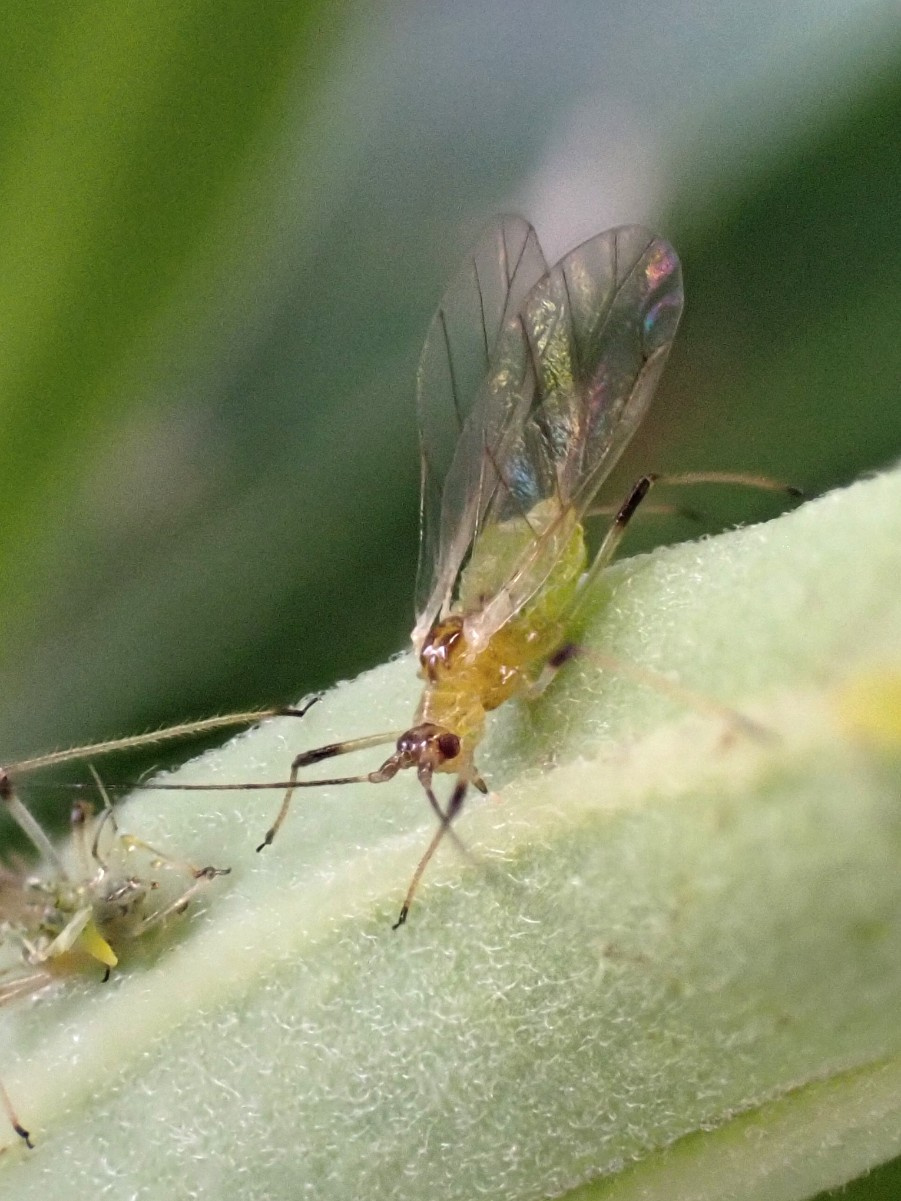
Macrosiphum euphorbiellum
Macrosiphum euphorbiellum lives year-round among the leaves of spurge. Apterae are spindle-shaped and 2.0 - 4.0 mm long. They are usually green, with dark femoral apices ("knees") and long siphunculi that are dark only at the tips. The sixth segment of each antenna has a terminal process that is 4.2 to 5.2 times the length of the base. Alates are similar but also have brownish markings on the head and thorax.
Macrosiphum euphorbiellum
Macrosiphum euphorbiellum lives year-round among the leaves of spurge. Apterae are spindle-shaped and 2.0 - 4.0 mm long. They are usually green, with dark femoral apices ("knees") and long siphunculi that are dark only at the tips. The sixth segment of each antenna has a terminal process that is 4.2 to 5.2 times the length of the base. Alates are similar but also have brownish markings on the head and thorax.
Macrosiphum euphorbiellum
Macrosiphum euphorbiellum lives year-round among the leaves of spurge. Apterae are spindle-shaped and 2.0 - 4.0 mm long. They are usually green, with dark femoral apices ("knees") and long siphunculi that are dark only at the tips. The sixth segment of each antenna has a terminal process that is 4.2 to 5.2 times the length of the base. Alates are similar but also have brownish markings on the head and thorax.
Macrosiphum euphorbiellum
Macrosiphum euphorbiellum lives year-round among the leaves of spurge. Apterae are spindle-shaped and 2.0 - 4.0 mm long. They are usually green, with dark femoral apices ("knees") and long siphunculi that are dark only at the tips. The sixth segment of each antenna has a terminal process that is 4.2 to 5.2 times the length of the base. Alates are similar but also have brownish markings on the head and thorax.