Epinotia rubiginosana
Epinotia rubiginosana
Pine Bell
Wingspan about 14mm.

Areas where the larval foodplants are present.
Flying in June, the adults can sometimes be seen flitting around the tops of pine trees in the late afternoon sunshine, but will come to light after dark.
The larvae feed between spun needles of Scots Pine and Stone Pine during September and October.
This species is generally distributed throughout mainland Britain and is reasonably common in places. In the Butterfly Conservation's Microlepidoptera Report 2011 this species was classified as local.
It appears to be uncommon in Leicestershire and Rutland, where there are few records. L&R Moth Group status = D (rare or rarely recorded).
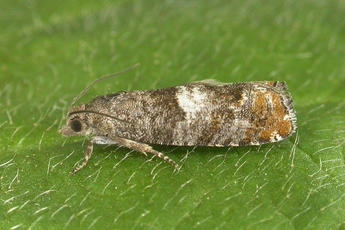 Mark Skevington
Ketton Quarry
02 June 2007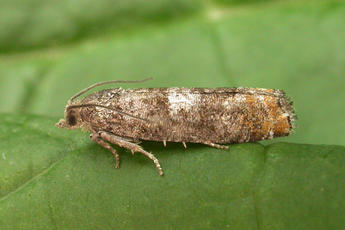 Mark Skevington
Whetstone Garden
23 June 2010
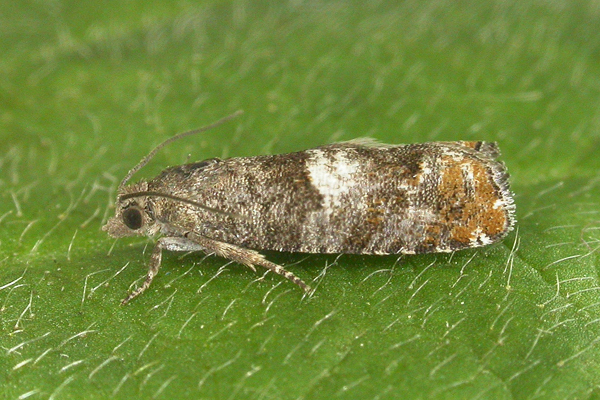
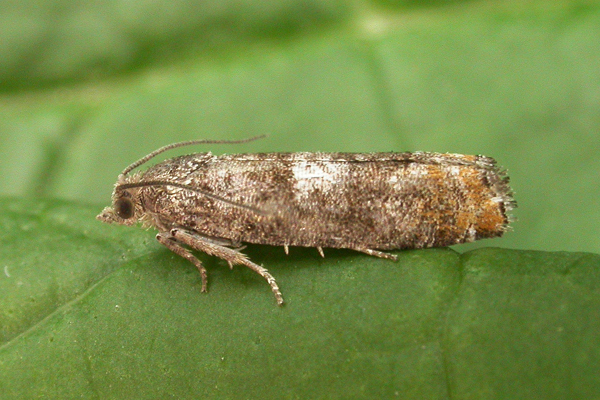
Leicestershire & Rutland Map
Enter a town or village to see local records
MAP KEY:
Yellow squares = NBN records (all known data)
Coloured squares = NatureSpot records: 2025+ | 2020-2024 | pre-2020
UK Map
Additional images
No additional images available for this species.