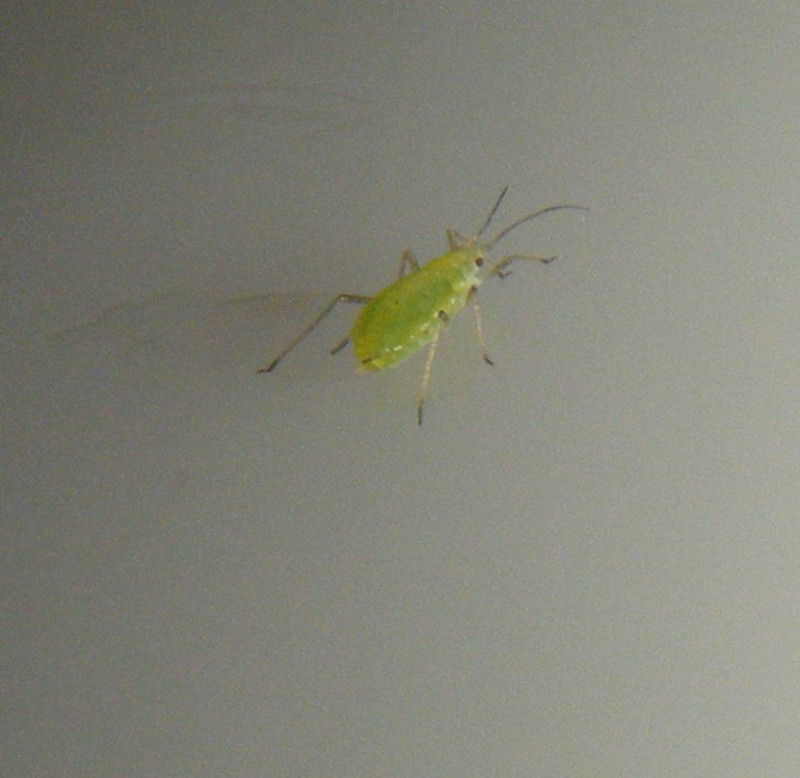
Shallot Aphid
Shallot Aphid - Myzus ascalonicus
The adult wingless form is 1.1 to 2.2 mm long and shiny pale green to dirty yellow. Its appendages are all pale except for the ends of the antennae and the 'ankles/feet' which are all quite black. The two tubes (siphunculi) at the rear end are pale, short to medium in length with the apical part slightly swollen. The tail (cauda) is roughly triangular in shape and short. Winged forms are produced in spring, and migrate from late April through to mid June.

It has been recorded on over 200 plant species from 20 plant families. Overwintering takes place in glasshouses and other protected places such as potato stores, on onions, shallots, swede or beet. It can also pass the winter in the open on plants such as chickweed and cranes-bill under hedges or similar shady spots.
All year round
This species is not known to produce overwintering eggs at all, but the adult overwinters (see above) and seems well able to tolerate the cold.
Common and widespread in Britain.
Status in Leicestershire and Rutland not known, but thought to be common.
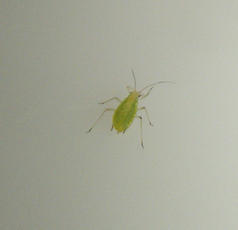 Graham Calow
Sapcote garden1
26 January 2012
specimen examined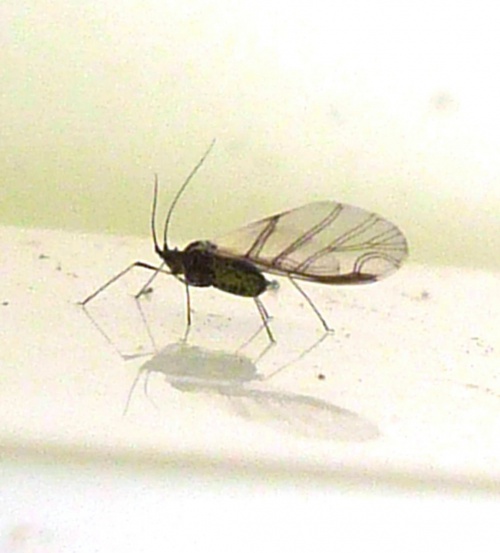 Graham Calow
Sapcote garden1
14 May 2014
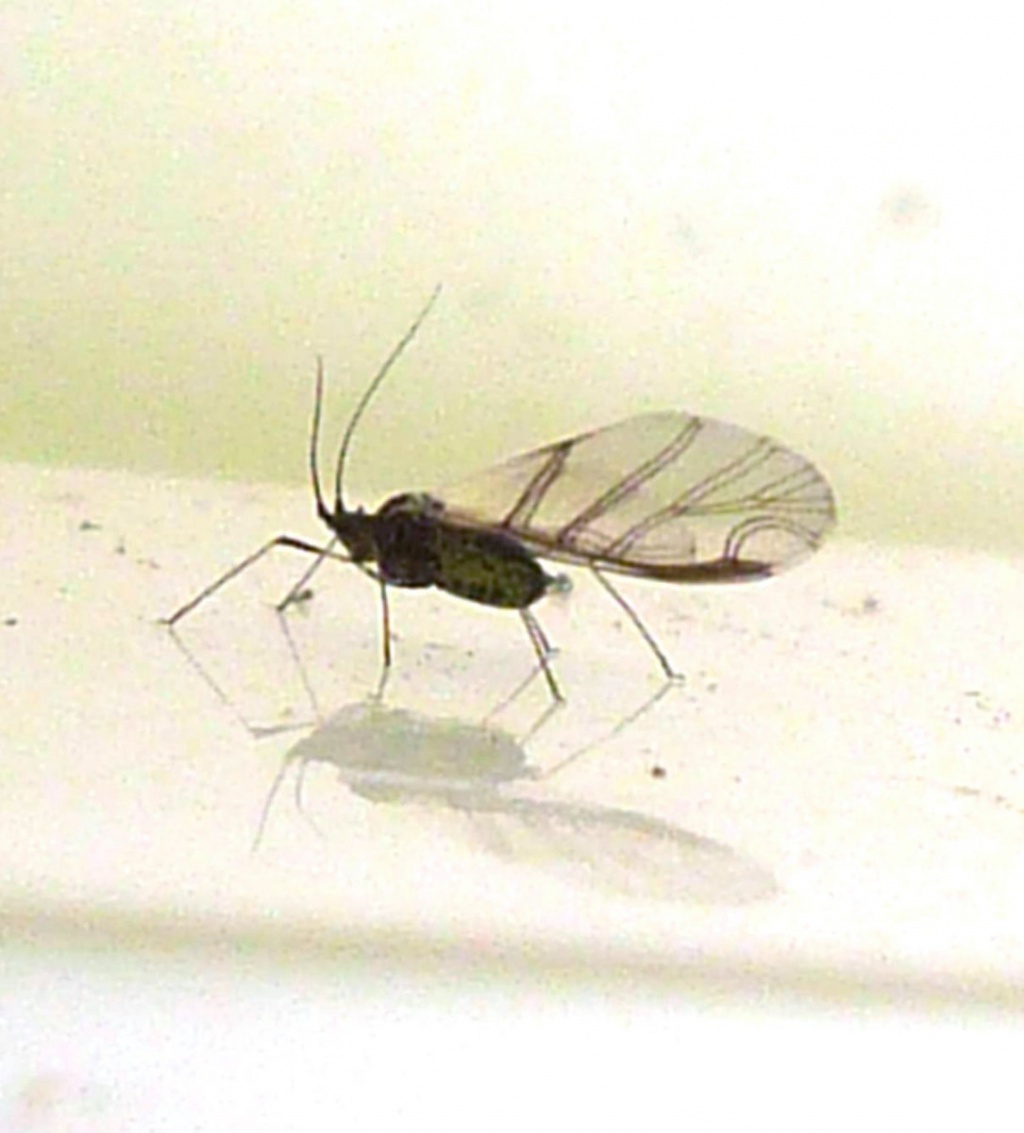
winged form

Leicestershire & Rutland Map
Enter a town or village to see local records
MAP KEY:
Yellow squares = NBN records (all known data)
Coloured squares = NatureSpot records: 2025+ | 2020-2024 | pre-2020
UK Map
Additional images